Category: Pioneer

  • Kyaw Myint (Bar-at-Law)

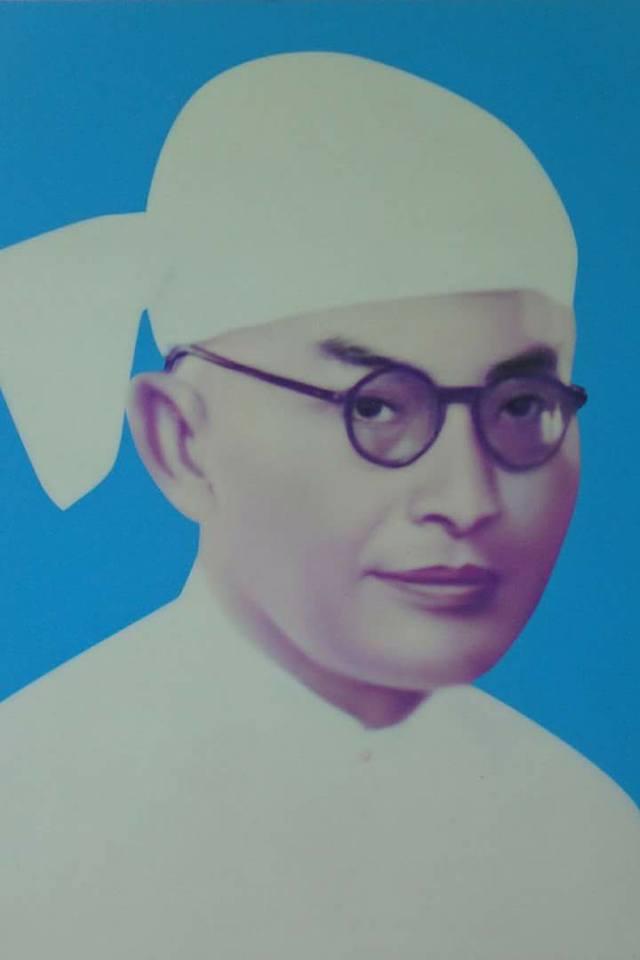
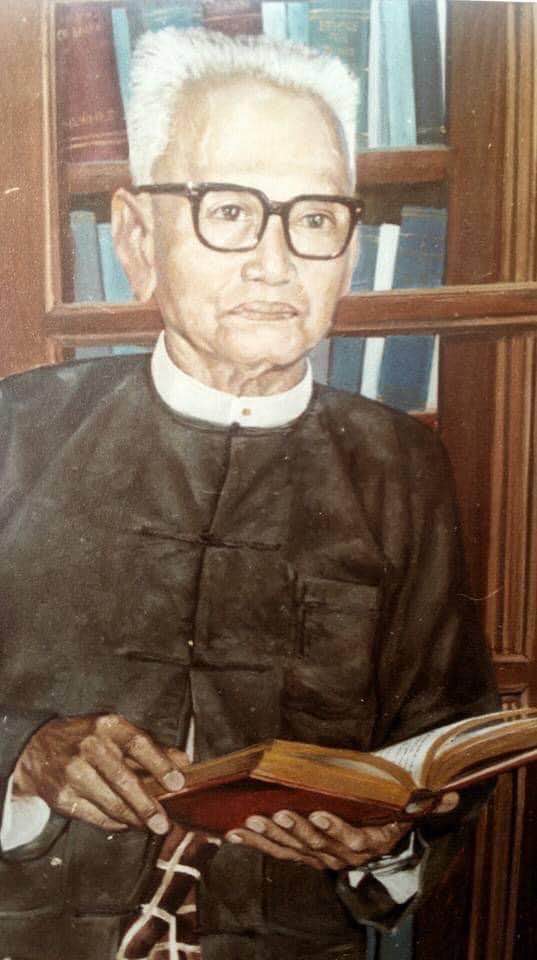
    Kyaw Myint (Bar-at-Law)

    by TOKM & Hla Min

    Updated : Oct 2025

    Introduction by Hla Min

    U Kyaw Myint

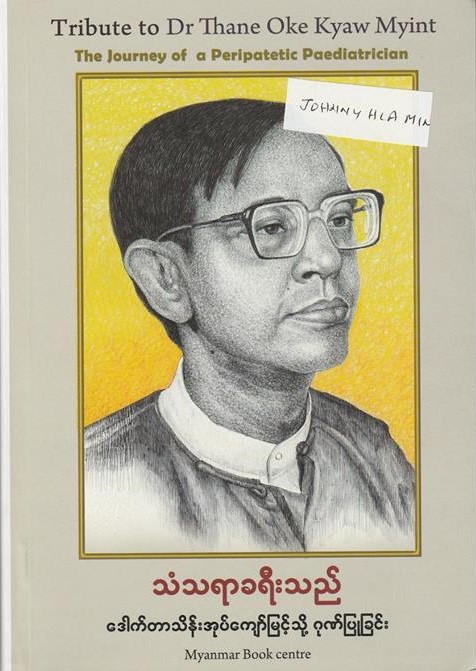
    He had a checkered life with a a series of setbacks and victories. His life is brilliantly recounted by his son Dr. Thane Oke Kyaw Myint (Pediatrician).

    Several readers have compared the accounts as befitting a romantic novel or historical episodes.

    Connections

    I first knew him as a dhamma friend of my parents. The two families helped build the Dat Poung Zon Aung Min Gaung Pagoda and supported Mon Sayadaw U Thilawuntha.

    Two paternal uncles (who are Barristers) worked at his Law firm.

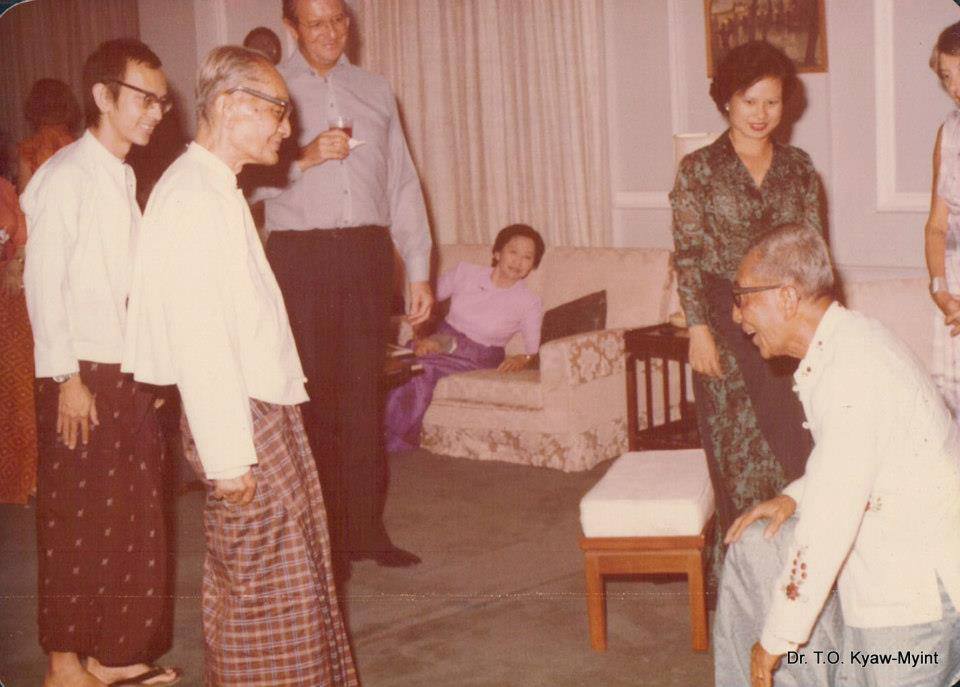
    His son Dr. TOKM was my senior at SPHS. He became a saya of my beloved spouse at IM(1). He took care of my two young sons. When I published “Trivia” posts, he provided comments and details to several posts.

    I learned more about his father, uncles and aunts first via his commentaries and now via his articles (e.g. the value of emotional intelligence and brotherhood, the indomitable spirit). He also covered notable events and people.

    The Brief Biography of U Kyaw Myint appeared in “Who’s Who in Burma”.
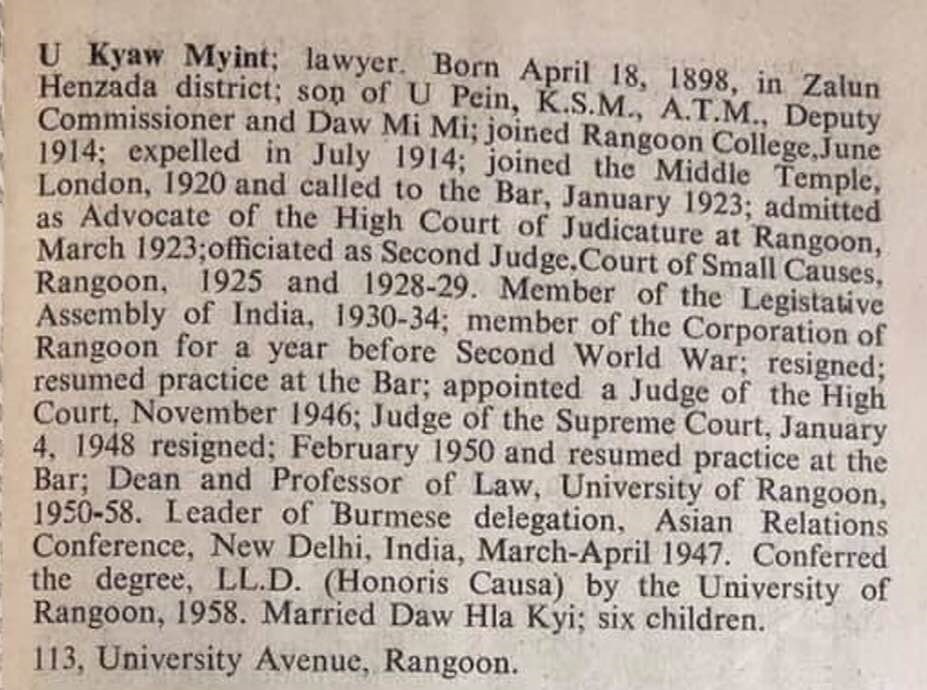
    U Kyaw Myint’s Brief Biography

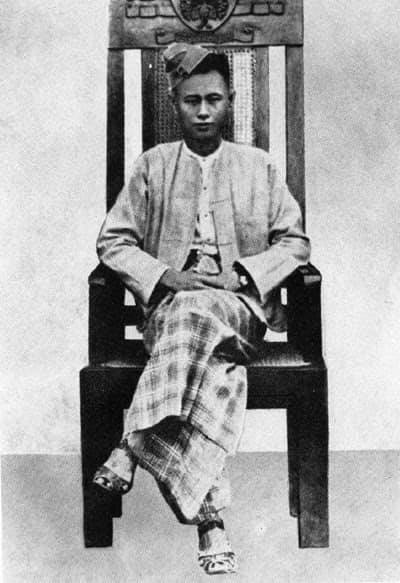
    He was born in April 18, 1898 in Zalun Henzada district. He is the second son of U Pein, K.S.M, A.T.M, Deputy Commissioner and Daw Mi Mi.

    Seven Siblings / Outstanding Burmans

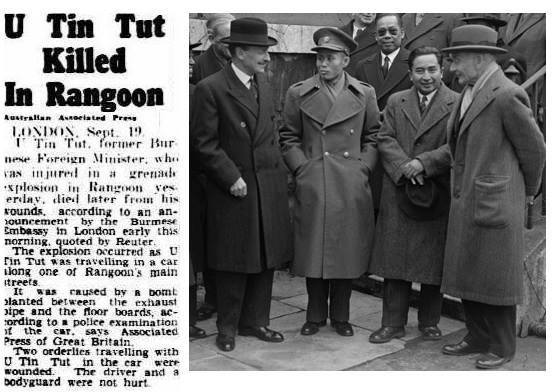
    • ICS U Tin Tut is known as a diplomat, journalist and for being a victim of the the political assassination. Details can be found in the post “The Empty Tomb” and related articles on the unsolved mysteries of Burma. He is the first Burmese ICS by invitation.
    • U Kyaw Myint
      His life is covered in this post. It was first published as a series of articles in Facebook.
    • U Myint Thein was Chief Justice of the Union of Burma. He was detained in the Coup d’etat on March 2, 1962. He was Ambassador to China.
      Pen name : MMT
      Spouse : Daw Phwa Mi (first Burmese Female Barrister)
    • Dr. Htin Aung
      Principal, Rangoon College
      First native Rector, Rangoon University
      Vice Chancellor, Rangoon University
      Diplomat, Ceylon
      Scholar : Oxford & Cambridge
      Author, Historian & Folklorist
    • Daw Khin Mya Mu
      Kyauk Sar Specialist
      Thamadi Myo Wun
      Spouse : Professor U E Maung
    • Daw Khin Saw Mu
      Early graduate of Burmese Department, RU
      Khit San Poet
      Spouse : ICS U Ba Tint
      Children : Daw Khin Saw Tint & Nay Oke
      Daw Khin Saw Tint wrote an article about her mom and aunts
    • Daw Tin Saw Mu
      Lecturer, English Department, RU
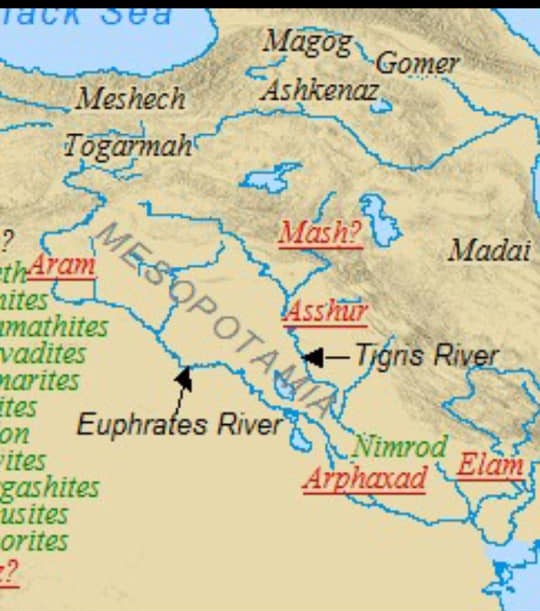
    Mesopotamia (Action during WWI)

    My Father

    U Kyaw Myint

    By Dr. Thane Oke Kyaw Myint (SPHS60)

    My father had a very chequered life.

    Early Life

    Short stay at Rangoon College

    He stood first in the Matriculation examination at the age of sixteen. He had distinction in all subjects including shorthand and typing. He got scholarship when he entered Rangoon College in June 1914 but was expelled from the College in July 1914.

    There was going to be a scholarship exam to enter Calcutta University. The Principal of Rangoon College, Mr. Mathew Hunter had chosen two bright young men to take the exams to enter medical college in Calcutta. The two students for this exam were my father and Sayagyi U Ba Than. They were very close friends.

    Just before the exams, my grandmother passed away in upper Burma where my grandfather was working. Father went to the Principal to give him leave to attend his mother’s funeral. But the dates would clash with the exams and Mr Hunter refused his permission. Father was told that if he went without the Principal’s agreement, he would be expelled on return.

    My father went in time for the funeral but on return, as told to him earlier he was expelled from the College.

    Self Support

    My grandfather was very angry with my father being expelled. Father was told not to come back to the family.

    Father supported himself by doing a unique job. He traveled from Pegu passing through small towns and villages. At that time, there were many Burmese women who had children by Englishmen, and were common law wives. The Englishmen had left Burma, but they did not money regularly.

    On behalf of the women, father wrote letters in English to the men in England. He was offered food, small amounts of money, and a place to stay.

    He continued doing this, going up the country till he reached Myitkyina some months later.

    Bombay Burma Company

    Due to father’s expertise in short hand and typing, a young English man from Bombay Burma Company gave father a job as a clerk and secretary. Father told me about the kindness of the English couple who let him stay with them.

    Apart from Secretary work, he had to go with workers to the teak trees that had been cut down and later sent them down the Irrawaddy to Rangoon. Father had to supervise that the Bombay Burma Company seal was hammered deep at the end of the logs. The logs were floated down the Irrawaddy river. Logs with the seal were collected and exported to England.

    Illness

    A year later father had cerebral malaria and it was the young couple who looked after him during the illness.

    Enlistment and Assignments

    Father stayed on with the English couple till the end of 1916. By that time the war that was said to last only one year had to gone into its third year with no resolution. There were many casualties and new fronts for the conflict. The English government intensified their recruiting efforts.

    The young Englishman and his wife returned to England. The husband joined the army.

    Father did not want to continue working in Myitkyina. He also thought of enlisting for the war.

    He first went to Pegu to reconcile with his father. Grand father was doing a job what would be equivalent to a District Commissioner (DC) but being Burmese was given the post as Extra Assistant Commissioner (EAC) but doing the same job.

    Burmese doctors were appointed as Sub Assistant Surgeon (SAS). They had to work like surgeons and civil surgeons.

    NB: the status of Burmese doctors before Independence can be read in the books by Dr. U Myint Swe.

    In spite of my grandfather telling him not to enlist, father went ahead for enlistment.

    The place for enlistment was the at the Cantonment (which was Burmanized as “Kan Daw Min” Park). It is the place with a small lake near the Shwe Dagon Pagoda.

    At that time, no Burmese would be accepted. One must either be an Anglo-Burman or and Anglo-Indian.

    When asked, father gave his name as “John Henry Wilson”. He could be taken for an Anglo because he was very fair with sharp facial features.

    Next he was asked to go against the wall to measure his height. Father was only five foot two inches. When the sergeant cane to measure him, he stood up on his toes so that it would be five foot four (the required height for a soldier).

    The sergeant asked him whether he really wanted to serve, and getting an affirmative, the sergeant write down on his enlistment as “John Henry Wilson, Anglo-Burman, five foot six”. Father became a soldier.

    Note:

    Since, the English keeps excellent records, there must be enlistment records for the regiment that above item written down above, would still be there in their archives.

    I visited the Middle Temple Inn in London, from where my father was called to the Bar. I wanted know about my father, the Librarian asked me for date of being called, went in, back in about 15 mins and gave me a copy of information of my father as recorded in their archives.Will write more about this in a later post “My father: the Barrister”

    I tried to remember but still could not get the place in India where he was sent. I only remembered that it was in a cantonment not far from Dehli.

    Father was sent to where the Gloucester Regiment, the 12th Battalion was billeted. He got his training, stayed there for some time rising to the rank of corporal.

    Mesopotamia Campaign and “the war to end all wars”

    At the start of the war, the British army and its allies thought that it would be a short war lasting for a year or so. But it didn’t as the allies were fighting on different fronts. When the Turkish Ottoman army joined the war, that opened a new front of the war: the “Mesopotamia Front / Campaign”. Father’s regiment was sent to that front.

    Germany had sent a fleet of submarines to attack British ships carrying either troops or cargo.

    Although not entirely, the British army and navy were depending on oil from Burma Oil Company in Yenangyaung. But when their ships sailing from Burma were being sunk, they looked for an alternative.

    Apart from Burma, the oil fields from Mesopotamia were near to England and likely to have less loss during transport.

    Just like Burma Oil Company (BOC), there was another company that could offer the required crude oil. Like BOC, the Anglo-Persian Oil Company (AOC) was owned by an Englishman. Both BOC and AOC were taken over by the British government for the war efforts.

    The Mesopotamia Campaign happened mainly to save and have access to AOC refineries.

    For some years now, whenever I heard about Iraq, Iran, Syria, two words often appeared: Basra and Mosul.

    Mesopotamia was the area between the Tigris and the Euphrates rivers. It covered what would later become most of Iraq, parts of Northern Arabia, Eastern part of Syria and South East Turkey.

    The oil rigs were in Basra and Mosul within Mesopotamia.

    And that was where my father’s regiment was sent: to guard the oil fields from the Germans.

    As the German army was engaged in other fronts, it was the Turkish (Ottaman) soldiers and Nomadic Arabs attacking these two areas.

    It was mainly skirmishes and attacks mainly by the nomadic Arabs who were given arms by the Germans. The disciplined regiment could repel the poorly planned attacks and thus England still had access to the oil.

    Armistice: 11-11-11 11AM

    Father and did comrades stayed on in that area till Armistice, the end of the war at: “the 11th hour, of the 11th day of the 11th. month of the year”.

    President Woodrow Wilson in his speech said, “the war to end all wars” had ended, using H.G. Wells’ words from the book “The War of the Worlds”. How ironic it was as only three decades later the Second World War happened.

    Return Home

    Not too long after that soldiers including my father were demobilized and could return to their home countries.

    Father returned home to be with his family.

    Study at Cambridge University

    Since he was expelled from the College, he had never given up his hope to gain a good education. The demob and savings from his salary and other benefits on leaving the army, he now had enough money to go to England to get what he had wanted to do since 1914.

    He applied to be admitted to Queens’ College Cambridge, where his elder brother [U Tin Tut] had attended gaining MA, LLB.

    Father landed on the shores of England in the spring of 1919. He was twenty one years old.

    After spending time in London for a week or so he got to Cambridge to seek admission. Father told me that it was a vibrant time to be as there were so many young men like him, veterans of the war, some who had left their studies and had left to fight the war as well as those like him who had come to be admitted for the first time. He wanted to study at Cambridge as this was where his elder brother studied for his BA (later MA) and LLB.

    Both Oxford and Cambridge gave dispensation for veterans, so that they did not have to undergo a strict entrance exam but only had to take what was known as “the little go”.

    Father went to the College with all that he had was his matriculation certificate from Burma. He had to go through an interview first to see whether he should be admitted. Father impressed the examiners that he was admitted without the need to take entrance exams.

    Finally he thought he was going to get the education he had missed before. He had enough money to sustain him for the four years at the university.

    During the two years he was in Cambridge, he actively participated in debates conducted by the Cambridge Union, where he sharpened not only his oratory but also would help him at the courts when he became a practising barrister in Burma. It also helped when he became a well known politician in Burma.

    Two things happened that would affect his ambition to be a college graduate.

    First when he was in the second year, U Tin Tut arrived. He was sent to Oxford to do his training for the Indian Civil Service (ICS). He was to be the very first Burmese to be admitted to the Service. And unlike the others who later joined, he was the only Burmese to be admitted by nomination and not by selection examinations.

    On 29th December 1920, there was a nation wide students strike against the British government. Schools and the Rangoon University was closed down.

    U Myint Thein was then studying in the junior BA class at the University. Not knowing when the university would be reopened, even without telling my father he traveled by ship to England. This he did without any funds for tuition fees. He arrived and requested my father to pay for his tuition and upkeep in Cambridge.

    U Tin Tut gambled a lot on the races and he also was asking father to help pay some of his gambling debts.

    Father decided to leave Cambridge so that he could support his younger brother. He searched for a job to sustain the three of them.

    For the second time in his life, his education had to be postponed.

    At that time, there was Burma Club. Many years later — at the time when Saya U Maung Nyo was studying in London — there would be the Britain Burma Club. And Prof. Woodruff, who was a visiting professor of tropical medicine in Rangoon, was a Patron.

    The Burma Club was for the people who have served in Burma both before and during the war. Father got a job as the secretary of the Club. It enabled him to sustain the needs of his two brothers and allowed him to prepare for the barrister examinations.

    I have titled this part of my post as “Cambridge — here I come”, but for father in 1920 was “Cambridge — here I leave”.

    Yet again he was thwarted from gaining a university degree.

    P.S. In spite of all the obstacles, in 1948, on gaining independence, my father, the college dropout, was appointed as one of the first three Supreme Court Justices of our country. And also later became the very first Dean of the Faculty of Law at the Rangoon University.

    The Four Brothers and Inns of Court
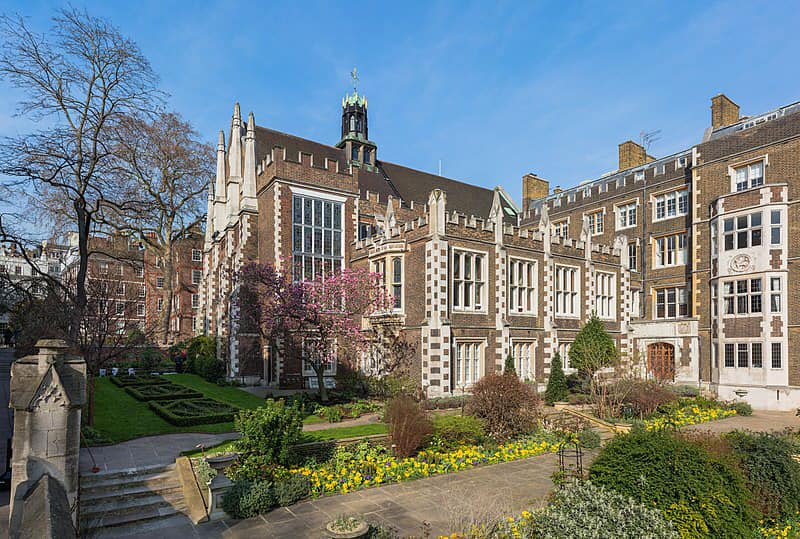
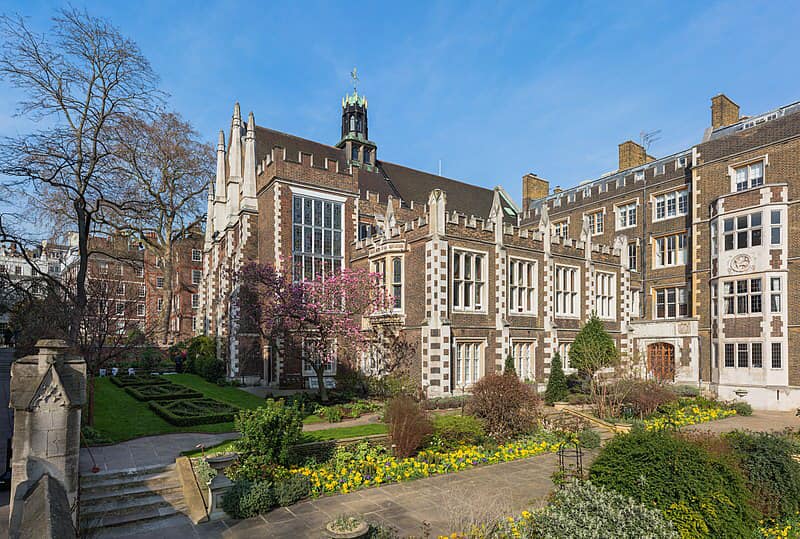
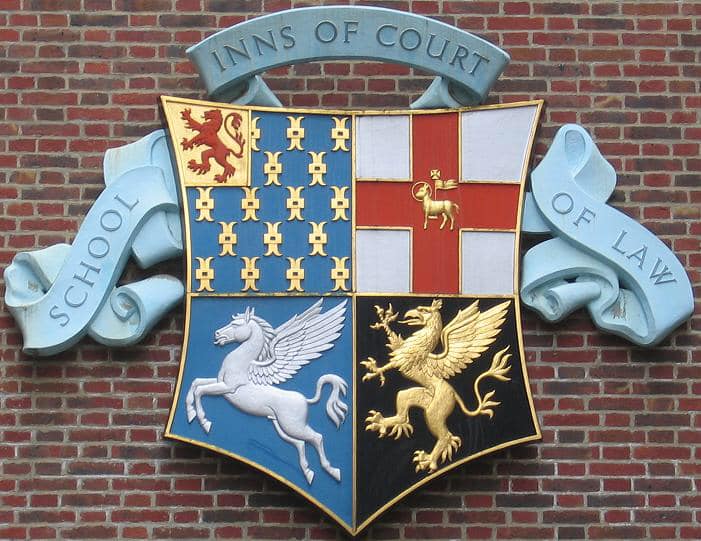
    May I give some information about the Honorable Societies of Barristers: the four Inns of the Court of England and Wales. namely The Inner Temple, The Middle Temple, Grey’s Inn and Lincoln’s Inn.

    The first photo is the Temple and second is the current School of Law, under University of London, showing the shields of the four Inns: On top Lincoln’s Inn and Middle Temple. below Grey’s and Inner Temple.

    The full name of the Temple was Solomon’s Temple.

    Originally the temple was for a Catholic Military Order (Fellow Soldiers of Christ) and the members of the Order were known as Knight Templars. This order was to protect pilgrims going to the the holy land as well as to fight with Muslim armies trying to expand their territories.

    This change must be made as seen in the photo as the four Honorable Societies do not give degrees, no scrolls, no diploma nor parchment. There was only entries of a person being called to the bar in the records of the four inns.

    According to my uncles (U Myint Thein and Dr Htin Aung) the exams were tougher in the Inner and Middle Temple compared to Grey’s and Lincoln’s. They therefore chose to go to Lincoln’s Inn.

    There were no formal lectures nor teaching. Candidates had to attend and listen to trials going on and listen to some tutorials given at the Temple by senior barristers. And mainly one studied on his own.

    The way assessments were made was for each subject, written papers had to be submitted followed by “dinings”.

    When a candidate felt that he was ready to be assessed, he would invite three senior barristers to actually dine with him in the dining hall. Over dinner, questions were asked and discussions were made. The candidate was told whether he had satisfied the senior barristers and could now go to the next subject i.e. next dining.

    If unsuccessful, the candidate had to undergo another dining for that subject.

    Father succeeded in at the first attempt of all subjects except on Roman Civil Law which was examined in Latin. Father could answer only one question as he had to learn Latin only on arriving in England. Father had been preparing himself for the bar exams while he was in Cambridge.

    At his last dining, the senior most barrister said, “young man you had answered only one out of the four questions in Roman Civil Law. But you had written it like a brief by an experienced barrister. If need be, we hope that you will study more. We are satisfied with you and you need not come back for a second dining”.

    Father, the College drop out, the ex- soldier, had finally been called to the Bar on 26 January 1923 at the age of 25 years.

    He would then go on to be a Judge of Court of Small Causes at the age of 25 (after only ten months as a practicing barrister), a High Court Judge in 1946 and one of the first three Supreme Court Judges at independence in 1948. He resigned in 1950 in protest against the Prime Minister’s interference with the judiciary. (This will have to be told later).

    He became the Professor and Dean of Law, Rangoon University and was conferred with a honorary doctorate (LL D in honoris causa) on his retirement.

    …………………..

    In 1972, when I was living and studying in London, I became a friend with South African (of Dutch descent) who was taken his bar exams at Middle Temple Inn. He had stayed on to do an academic degree in law.

    Candidates were allowed to bring friends to dinner even when they were not being examined.

    Each table was for four. My friend and I were joined by two senior barristers. It was such a pleasant evening.

    There were two entrances to the dinning hall. Barrister had to go in one, where they were given barrister gowns to wear. Visitors in formal wear had to enter from another entrance. He took me through the visitors entrance, moved to the other entrance, donned the robe and came back to me to go to the dining tables.

    There were tables on a stage. My friend told me that the tables were for for judges called the Benchers.

    My friend told the senior barristers about my father. They wanted to know whether father was still practising. I told them about my father being a Supreme Court Judge but had retired and had resumed his legal practice.

    On another day, my friend took me to the Temple Library where records of people who been called to the Bar from Middle Temple.

    When I told the librarian that I only knew about my father being called in 1923, she went to look at the records for that year, found my father’s name and brought out the to me to show me the entry for my father.

    It was a very brief entry:

    “Maung Kyaw Myint, of the Burma Club, St. Peter’s Square, Hammersmith W.6. (21) second son of Maung Pein, A.T.M of Pegu, Burma, special power magistrate. Called 26 January 1923”.

    Then she said, “would you like to have a copy of the entry? I said yes. I was given a xerox copy of that page.

    P.S: U Tin Tut and U Kyaw Myint were called to the Bar from Middle Temple. U Myint Thein and Dr. Htin Aung from Lincoln’s Inn.

    Daw Phwa Hmi, who would become the wife of U Myint Thein, was the first Burmese woman to be called to the bar from Inner Temple. There was a story behind this about U Myint Thein and Daw Phwa Hmi.

    P. S. in case I might forget to write about my uncles, I want to add two amusing anecdotes of them.

    Anecdote #1: U Myint Thein

    When U Myint Thein was studying in school at Pegu, he and his friends had a fight with another group of young men. U Myint Thein hit a man from the other side with an iron rod and broke his head.

    Both groups were arrested for fighting and disturbance of peace by the police and brought before the magistrate. It was my grandfather as the EAC had magisterial function. The young men had to appear before him. All meekly accepted the fines to be given but not for Maung Myint Thein.

    When each of them were asked why and the fight started, and what should be their sentence. All accepted to pay the fine for bring public nuisance.

    Except my uncle, who was being given a sentence more than others because of the assault with an iron rod. He was made to pay a fine and seven days custody at the police station.

    He would not keep his mouth shut that it was not fair as what he said that what he did was according to the Buddhist literature.

    His father asked him to explain why. He quoted a stanza of the Mingala Sutta:

    He said that in the 20 stanza of the sutta,
    “Garavo ca Novato ca
    Suntutthi ca katannuta”

    The Burmese pronounced the Pali words differently: the word “suntutthica” was pronounced as “than dote thi sa” and therefore he said he should not be given a punishment more than the others as he was doing what was mentioned in the scripture.

    Grandfather was very angry with his insolence and sacrilege in using a Pali word to be equal to an iron rod, he had not only to pay to stay in custody for fourteen days for not only assault but also sacrilege.

    And that was the my uncle Myint Thein the jailbird who would many years later became the Chief Justice of the Union.

    Anecdote 2: Dr Htin Aung

    Badwe was studying in Trinity College Dublin for his doctorate which he finished in nine months. To celebrate, he and some friends went on the town. Although he did not drink himself, he plied his college friends with as much alcoholic drinks that they could drink.

    After some time, the group became very rowdy and disturbing to other people. They became such a nuisance that the bar tender called the police and all were arrested by the police.

    The next morning they were brought in front of the magistrate accused of disturbance of peace in the community. The magistrate asked whether they were all inebriated at the time of arrest. The arresting policemen said yes except for one person who happened to be my uncle.

    The magistrate gave a sentence of a fine of one pound for all his friends “disorderly while being drunk”.

    My uncle was fined five pounds. The magistrate said while he did not partake in the drinking but was equally rowdy and disturbing people he was fined more because of “disorderly without being drunk”. Said he should have known better than other not to disturb people.

    The Age of Barristocracy

    Father came back to Burma in 1923 and started practicing as a barrister in Rangoon.

    Ten months later he was appointed as a judge of the Court of Small Causes, similar to a magisterial Court. He was the youngest lawyer to be made a judge, not just in Burma but in India also.

    How it came about was that the sitting English judge had to return to England. The Court clerk asked the then Chief Justice as to who should be appointed in that position.

    The Chief Justice said “the very bright young barrister who had appeared in court. He knows the laws and is very impressive”. The court clerk explained that father had only been working as a barrister for only ten months. The Chief Justice nevertheless decided to give the post to my father.

    Father was the youngest ever — at the age of twenty three — to be become a judge in colonial India and Burma.

    Nationalism

    But at that time, the political climate has begun to change. Nationalism had emerged in both India and Burma.

    After two years as a judge, father at twenty five years of age resigned to return to practice as well as to enter the political arena.

    He stood for and won the elections of the Members of the Legislative Assembly (MLA), which was equivalent for the lower house in Parliament. The Imperial Council was similar to the upper house but their members were appointed by the Governor General and was by nomination rather then by election.

    Seeing the work of many well known barristers in Indian made father stand for election and winning the position from the Kyimindaing (Kemmendine) constituency in Rangoon where he served for two terms.

    It was the senior barristers of India and Burma whom he wanted to emulate. While serving as a member of the Legislative Assembly, he got to know and learn from these barristers.

    As most of the MLA were barristers and he got to know them well. It seemed as though one would have to be a barrister to become a politician that was why the term “barristocracy” came into being.

    Eminent barristers and political leaders

    The following eminent barristers in India and Burma were the political leaders at that time.

    Mahatma Gandhi : Inner Temple

    Pandit Nehru : Inner Temple

    Mohamed Jinnah : Lincoln’s Inn, the youngest to be called to the bar at the age of nineteen

    Solomon Bandaranaike : Inner Temple

    Another activist barrister was Dr. Ambedkar, a dalit, from the scheduled caste, who entered the legislative assembly to fight for the Dalits and formed the “scheduled cast federation”. He was a highly educated and committed lawyer and activist.

    Dr. Ambedkar studied at Columbia University and London School of Economics and he was called to the bar at Grey’s Inn. He attained following degrees: BA, MA, PhD, MSc, DSc, LL D, D Litt, Barrister at Law (Grey’s Inn).

    He founded the Scheduled Caste Alliance. One tactic he used was to have the untouchable to change their religion from Hinduism where they were at the bottom of the ladder, to Buddhism which had no hierarchy.

    Father was to become close to Nehru from India and Mr. Bandaranaike, who not only knew fellow barristers but also MLAs.

    He visited Calcutta to meet with Dr. Ambedkar and also with Nataji (Subaru Chandra Bose).

    Father also visited Mahatma Gandhi in his ashram, every time when he was in India when he and his disciples were doing “satyagraha” the nonviolence movement.

    Nehru and Indira

    Nehru was arrested and put in prison. On being released, he and the young Indira came to visit Burma and stayed with my father for three weeks. Nehru gave copies of his books “Letters to a daughter” and “Glimpses of India”. The first book was signed by both the father and the daughter.

    When U Myint Thein was arrested by Ne Win, the MI (Military Intelligence) people came, ransacked and took away many of my father’s books. We did not know why the Nehru books, books by Jung and Freud, a complete collection of Gandhi’ speeches, law books and even some books of fairy tales were taken.

    Father was told that the books would be returned after some time but they never came back. May be most of them were illiterate and could not read them.

    Father knew Nataji very well. Apart from members of the Indian community, my father visited him often in the Mandalay jail where he was imprisoned from 1924 to 1925. Later U Myint Thein also did the same.

    In Burma not just the barrister but also eminent lawyers entered politics:

    Dr. Ba Maw, MA Calcutta, LL D Bordeaux

    U Pu, Barrister at Law

    Dr Ba U, MA, LL D (Cambridge).

    Non-separation versus Separation

    During the separation movement, Dr. Ba Maw, Rambyae U Maung Maung and my father U Kyaw Myint founded a political party. They were for non-separation.

    U Ba Pe (a journalist), Barrister U Pu and U Shein were for separation from India. U Ba Pe was the founder of the Burmese Newspaper: Thuriya (the Sun). Their stand was for separation from India.

    During the campaigning, U Ba Pe called his faction as “Pe Pu Shein” the initials of the three leaders of their party. But he addressed my father’s party as “Maw Myint Byae” – the “byae” was a derogatory word meaning “disorderly”.

    Due to standing for non-separation, father did not win in the next legislative assembly and returned to his practice as a barrister.

    Deciding late for standing in the election, the Kemmendine constituency went to another candidate. Father was given the Kungyangone constituency where he lost mainly because of his non-partition stance.

    The positive side of standing for election in Kungyangone was that he met my mother. And married her.

    The Eligible Bachelor and a Man About Town

    Father returned to his practice as a barrister and became very busy. As Burma had been annexed to India, the Burmese Courts were under the judicial system of India.

    There were many Indians businessman in Burma who had kept some of their enterprises in India. Father was traveling from Burma to appear before the courts in India. For some cases, Burma not having a Supreme Court at that time, he had to travel to New Dehli from time to time.

    Being an eligible bachelor had “dalliances” with young ladies but never serious except for a couple of them: Daw Yin May and Daw Khin Khin Gyi. As both my father as well as the two ladies had passed away, I think I could write a few sentences about my father’s love life!

    One of the main reasons he stayed a bachelor was because of his three younger sisters, Daw Khin Mya Mu, Daw Khin Saw Mu and Daw Tin Saw Mu. Grandfather had remarried and the step mother was very unkind to father’s sisters. In spite of grandfather objections, father took them under his wings and they lived together in Lewis Street Rangoon.

    Father and Daw Yin May did have a serious relationship. I was told by one of father’s previous staff that, father would as much as possible visit Daw Yin May in the evenings whenever she was less busy. She was then living in the house in the Dufferin Hospital compound.

    Father had left his job as a judge to enter politics. According to my father, she asked father what would happen then. It was about the time when Nehru was in jail. He said there could a chance of being imprisoned.

    Due to this uncertainty, Daw Yin broke her relationship with my father and eventually married Col. Min Sein.

    When they were still favouring each other, father sent a bouquet of flower to Daw Yin May every day.

    According to Prof. Daw Hla Kyi, Daw Yin May told her about receiving daily bouquets from father. She said that she also received flowers every day from the gardener of the hospital!

    Prof. Daw Hla Kyi was from Pegu and her father worked under my grandfather in Pegu. She had many stories of my father and his three brothers.

    Father also had a relationship with Daw Khin Khin Gyi but again he was looking after his sisters on top of being involved in politics.

    Father told me that Daw Khin Khin Gyi asked him to give a pair of velvet slippers from Mandalay adorned with semiprecious stones. This he did get a pair (setting semiprecious stones into the slippers was not easy and they were more expensive).

    She married lCS U Shwe Baw. Father told me that he was very happy that both of them got married to very good men.

    Dr. Daw Yin Yin Nwe asked me when did my father got to become a life long friend the princes of Shan State.

    And below is the answer.

    At the time, Shan States were different in governance to the mainland Burma. The British allowed the Sawbwas to retain their status and administer and govern as before. But the British foresaw that it would be to the advantage of the Shans to be part of Burma even though the Shan rulers were more closer and related to the kings of Thailand.

    Father was appointed as the legal (constitutional) adviser to the Shan rulers. He had to travel to the Shan States and explain why a constitution would be drafted even before getting independence. That a consultation and an agreement would be made (which would be the Pinlon conference).

    Father was helping the Shan royalties to understand definitely how things would be or should not be when the time came.

    It was a lengthy process as father was going to each of the Sawbwas and later as a group.

    The Mongrai family was related to the Thai royalty and efforts were made so that they would stay in the Union of Burma, with state governance for the Shans.

    During his visits he stayed with Nyaung Shwe Sawbwa and came very close to Sao Shwe Thaike. Similarly he became very close with the Sawbwas of Kengtung and Sipaw.

    I would like to mention two ladies who had made their marks in not just in the history of the Shan States and the Sawbwas, bit also internationally.

    They were:

    Daw Mi Mi Khaing : educationalist/author

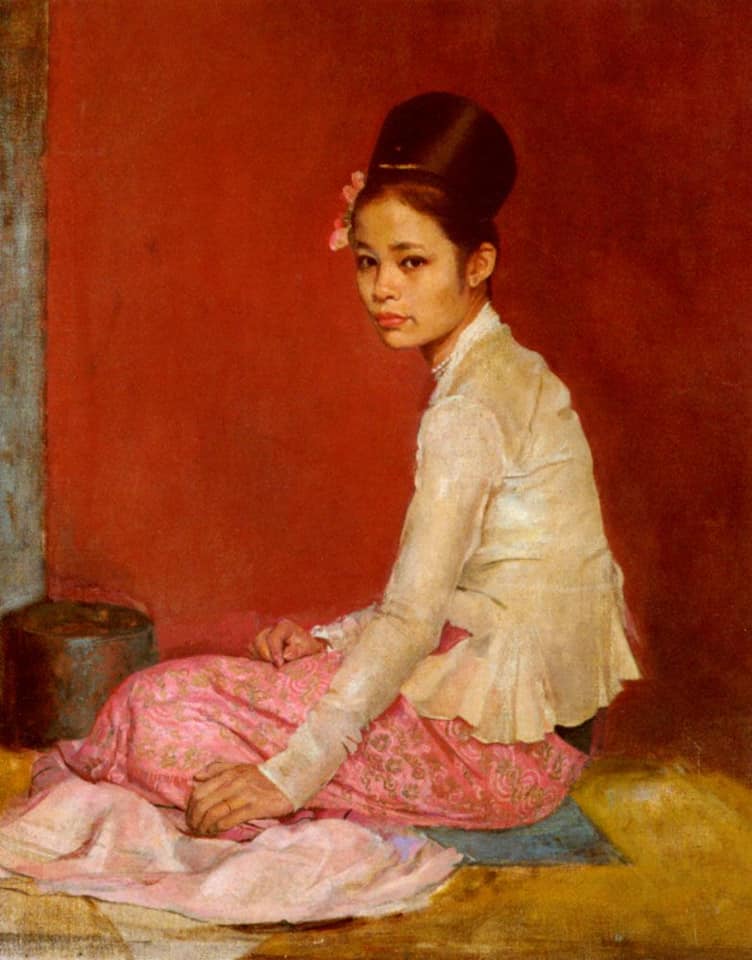
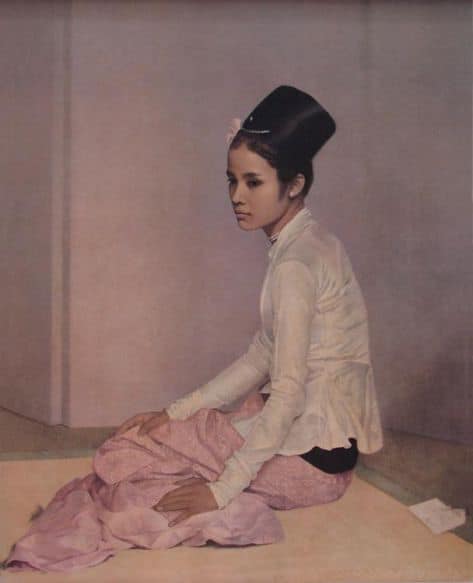
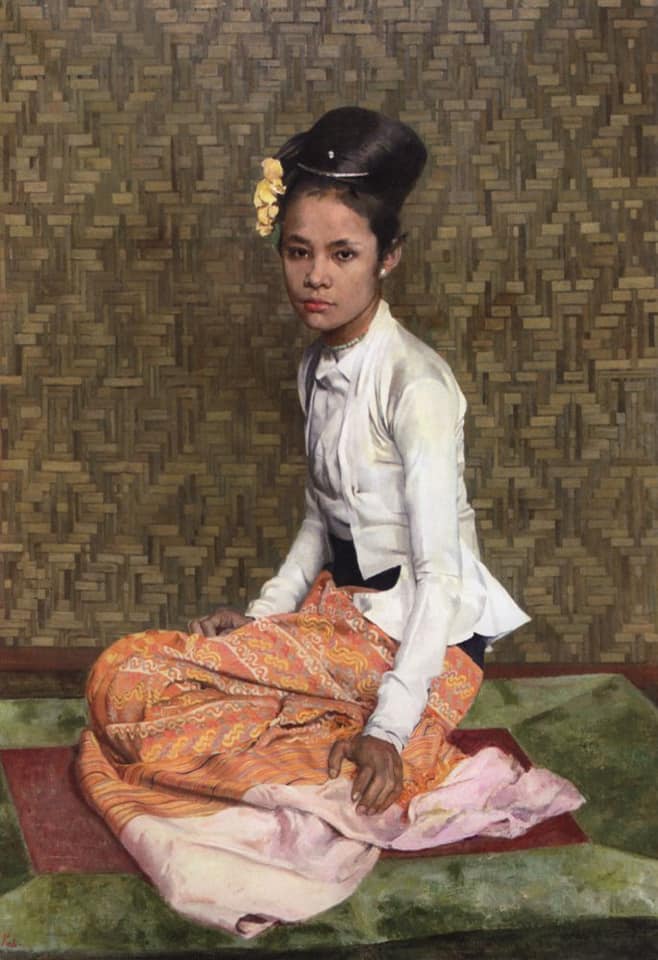
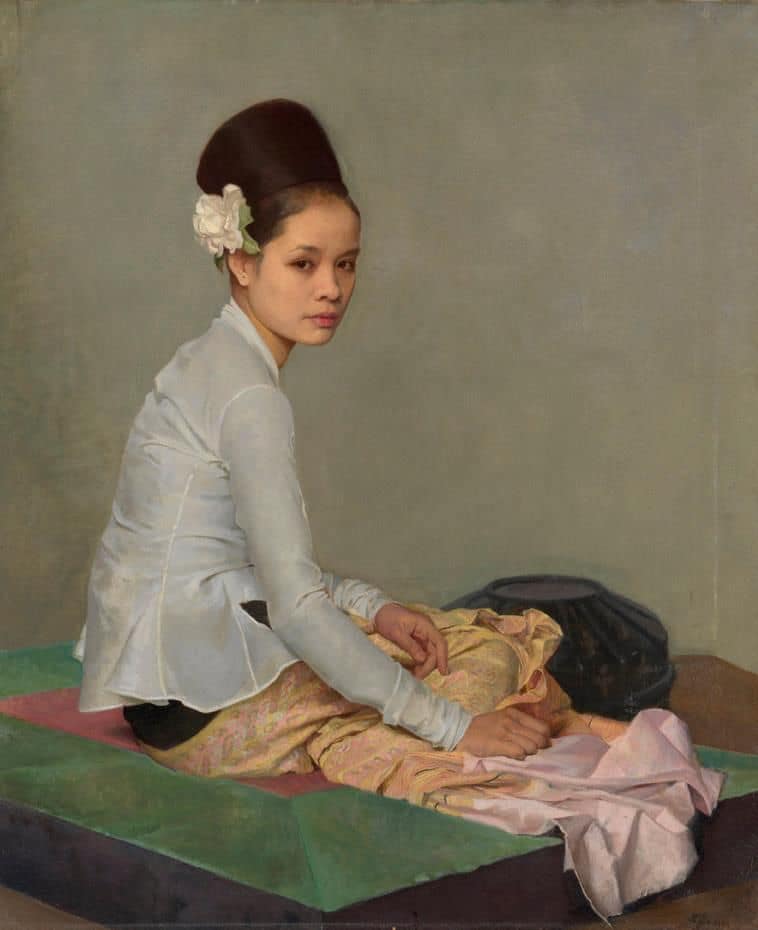
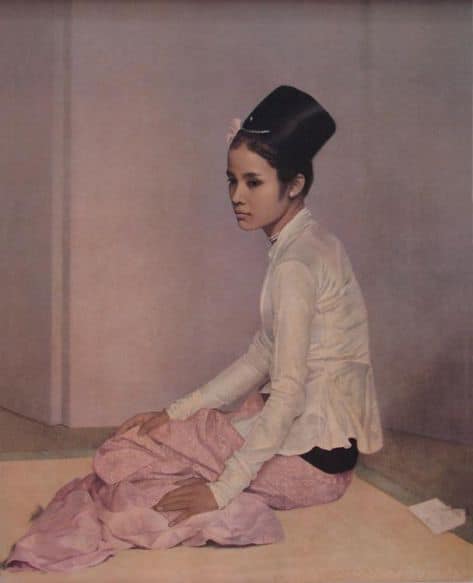
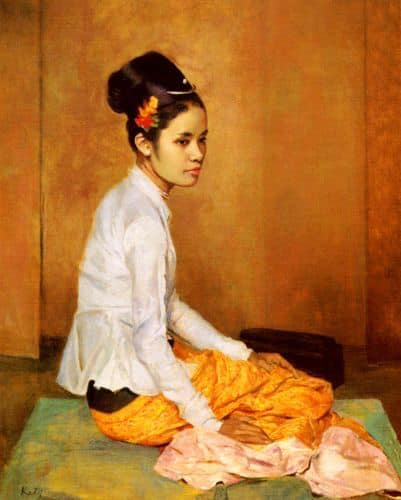
    Sao Ohn Nyunt: paintings of her by Sir Gerald Kelly became international renowned, for her beauty and demeanor: I have put up only right of the paintings by Kelly.

    The two photos in black and white are photos of Daw Mi Mi Khaing, again good friends with father.

    Interludes

    Interlude (1) : Daw Phwa Hmi

    She was Burma’s first barrister at Law from Inner Temper Inn. She became my aunt when she married U Myint Thein. My uncle was an eligible young man, Cambridge graduate and barrister at Law (Lincoln’s Inn). They would be the first Burmese couple to be barristers. How did they meet?

    While working at the Burma Club and studying to be called to the Bar, father had taken down very complete notes on various laws and on trials that he observed in courts. Father unlike me had a very fine and readable writing. Younger Burmese preparing for the Bar exams used his notes even when he went home.

    One evening, U Myint Thein was at the Club to borrow the notebooks. He found that it was already taken by a lady. He got to know her by him telling her that he was the brother of the person who wrote the Notes. And gentlemanly let the books be taken by the lady. He also offered to come to wherever she was residing to collect the books and return them to the Club.

    The “young lady” was no other than Daw Phwa Hmi. Letting her have the notes first, offering to collect them from her residence just my uncle’s ploy to get to know about this young lady!

    In the pretext of studying together, he became very friendly with her. Both were called to the Bar about the same time. Ba Dwe wooed her and was accepted so that they were to get married on return.

    Father was told about his engagement and was asked to prepare for the wedding. But on his way back by ship, father had just reached Aden he received an urgent telegram from his younger brother:

    “HAVE MET EVA. STOP. MARRYING HER SOON. STOP. CAN YOU MARRY MA PHWA HMI IN MY PLACE. ENDS

    Father was very upset and sent back the following telegram:

    YR TELEGRAM RECEIVED. STOP. AM SUEING YOU FOR BREACH OF PROMISE. STOP. ON BEHALF OF MA PHWA HMI. ENDS.

    At that time, if a gentleman after betrothal, would not marry the lady, he could be sued and would be usually ordered by the court to give substantive amount of cash to the lady. And gentlemen’s clubs could “black ball” him and would lose memberships of the clubs.

    U Myint Thein knew that his elder brother would and could do as per the telegram. He came back and married Daw Phwa Hmi. Father was upset because his brother would not keep his promise to not only a fellow barrister but the country’s first woman barrister.

    Sadly, they had not any children. My aunt got pregnant, difficult labour during which she had what must had been amniotic embolism that caused a stroke and she was left with paralysis on one side of her body. The baby did not survive.

    P.S. Eva, the English lady whom my uncle would like to marry, kept in touch with him. She died two years later of cancer. My aunt magnanimously allowed my uncle to put a framed photo of Eva on the mantelpiece in their dining room.

    Interlude (2) : Daw Mi Mi Khaing

    She was a prominent educator and writer.

    During the British times, the Sawbwas were initially living on levies from their subjects and the income for mining of silver.

    Their eyes were opened by seeing bright young men like U Kyaw Myint as well as how these Western educated young men were holding important jobs,, They wanted their sons to have similar education. As mining was important, few of the Shan princes were sent to University of Colorado to get degrees in Geology.

    Saopha Kuang Kiao Intakeng, father of Sao Sai Mong Mangrai, decided to send his son Sao Sai Mong Mangrai for studies in the West. He studied at the University of London, Cornell University, University of Michigan. Cambridge. He became famous as historian, scholar, linguist, lexicographer of the Shan script and language. His most well known publication was “Shan States and British Annexation” published by Cornell.

    Sai Saing Mong met and married Daw Mi Mi Khaing, the first Burmese lady to write about Burmese Culture and traditions in English.

    Well known publications of Daw Mi Mi Khaing were:

    • Burmese Family: University of Indiana 1962
    • Cook and Entertain the Burmese way 1973, Karoma Publishers.
    • The World of Burmese Women 1984
    • People of the Golden Land
    • Burmese Characters and Customs 1958
    • Burmese Names and a guide 1955

    And many more: the most well known of her books was “Burmese Family”.

    And many more articles in various English magazines and periodicals.

    Daw Mi Mi Khaing was also very well known for the Kanbawza College.

    There was earlier a College in Taunggyi only for the son’s of the sawbwas.

    Daw Mi Mi Khaing opened the first private college in Burma, in the Shan States, a school very much like the well known colleges of England. (My elder brother attended this college after he studied at the St. Joseph College in Darjeeling India).

    I did not meet either of them but learn about both from my father telling me about the two famous intellectuals.

    I only had the good fortune to meet and know of their brilliant daughter Dr. Yin Yin Nwe PhD (Cantab) doctorate in geology. Due to the connections between the Shan Lords and my father, I got to know members of the Mangrai family, and Yin became a “sister” to me.

    The daughter took after both parents, worked for many years in UNICEF and currently a well sought adviser on development in many countries.

    Most of what I knew was from my father and from my uncle U Myint Thein, who succeeded my father as the legal adviser to the Shan princes. When my father got appointed as a High Court Judge, his younger brother to take over his responsibilities in the Shan State.

    POST SCRIPT:

    1. My father became close friends with the families of the Sawbwas , Mahadevis, other consorts. And he was showered with gifts, mainly products of the Shan States. This included many silk cloths and other woven clothes for his “Gaung Paung” headdresses, shirts, jackets and long gyi.

    All of these became very handy during the Japanese Occupation: mother told me that dress materials were very scant during this period. Most of the clothes that my mother, my sisters and other members of the family were by using these gifts given to father.

    Other source was material from parachutes.

    2. There was one episode told me without mentioning names. One of the wives of a Prince eloped with a member of the household staff. The Prince was so upset. My father was there at that time. He asked my father to get back his wife (also a close friend of father). Father said he gave his car, a driver and a bodyguard who was armed. He asked my father to persuade her to come back. Failing this the bodyguard was to shoot both of them.

    Father caught up with them before they have reached May Myo. The lady told father about why she had left. Father stopped the body guard from harming them and the two left. He went back and told the prince that they must have left early and could not catch them in time.

    I was very intrigued with what father told me.

    Request for corrections

    I have been jotting down what I remember about my father. He had led a very full life.

    If there are mistakes in my writings please let me know and correct me. I will change or delete the affected parts as needed.

    I do not want to hurt people’s feelings. My memory is not as good as before. I forget some names and events from the past.

    Writing about my father and the family is in some way catharsis for me. It is also very poignant because memories about what happened on 2nd March 1962. The dark day in Burma left psychological scars on the family.

    It was also sad to experience 8-8-88 and the aftermath. I had to resign from my job in 1990 and eventually leave our country.

    With Metta,
    Thane Oke Kyaw-Myint

    More to come

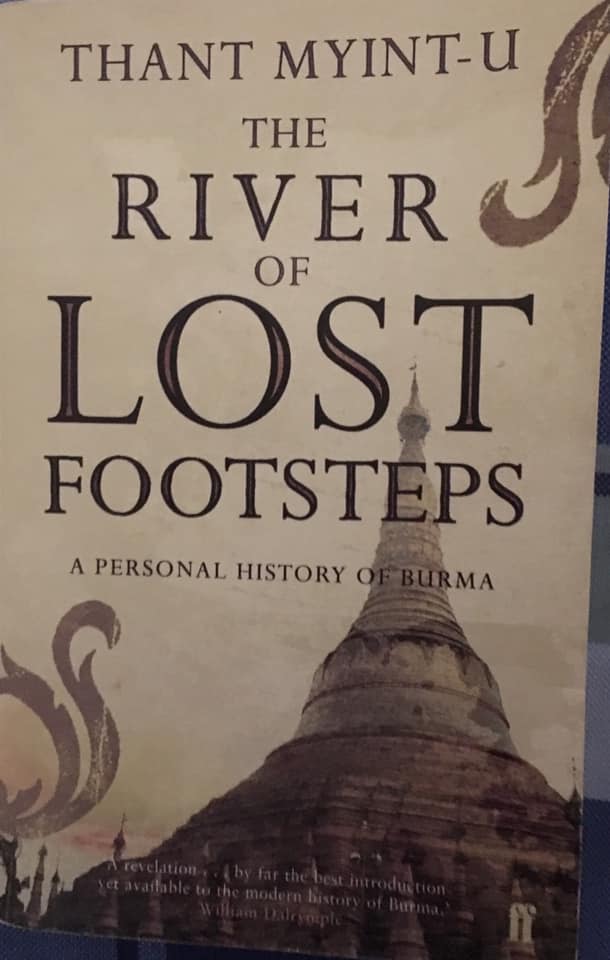
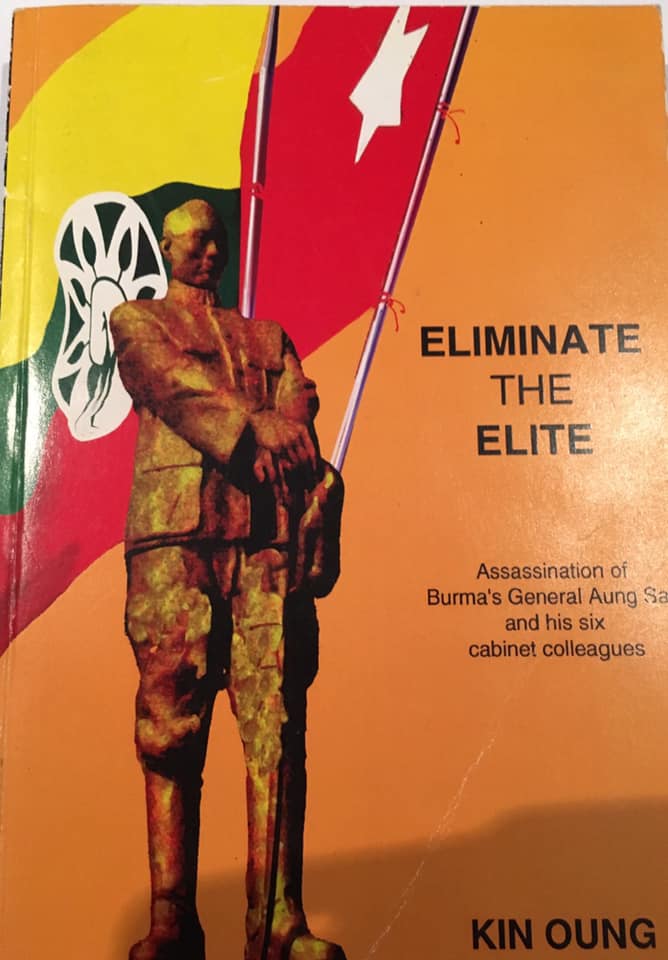
    Before I write further, I reread the following books, as I would like write about

    1. assassination of Aung San and associates, as my father was the Chairman of the Special Tribunal
    2. assassination of U Tin Tut, my father’s elder brother
    3. Why my father resigned from the Supreme court, in protest

    The books are:

    1. A History of Burma by Dr Htin Aung (my father’s younger brother)
    2. The River of Lost Footsteps by Thant Myint U
    3. Eliminate the Elite by U Kin Oung
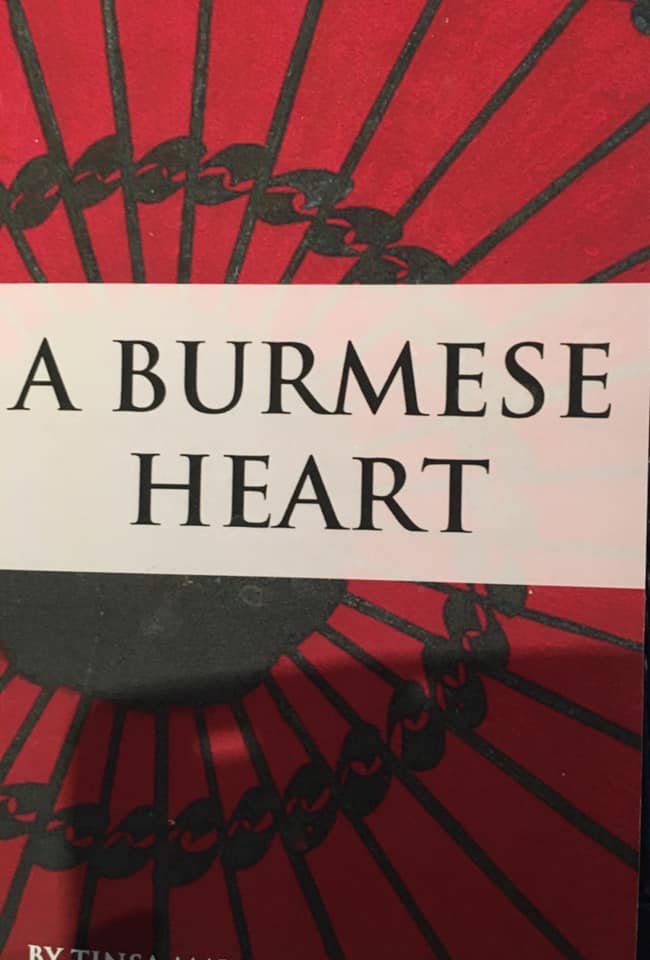
    4. A Burmese Heart by Daw Tinsar Maw Naing
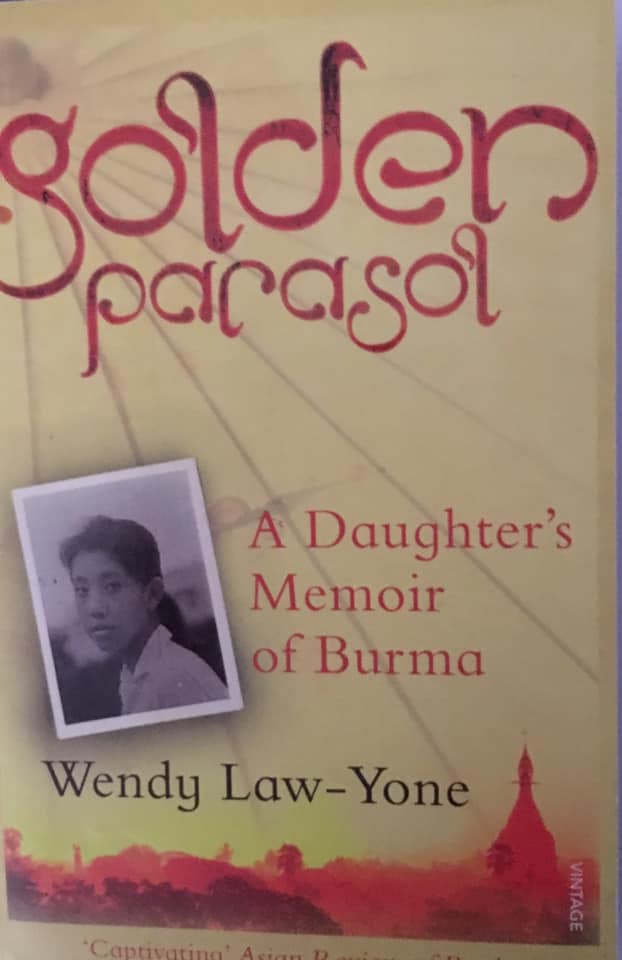
    5. Golden Parasol by Wendy Law-Yone
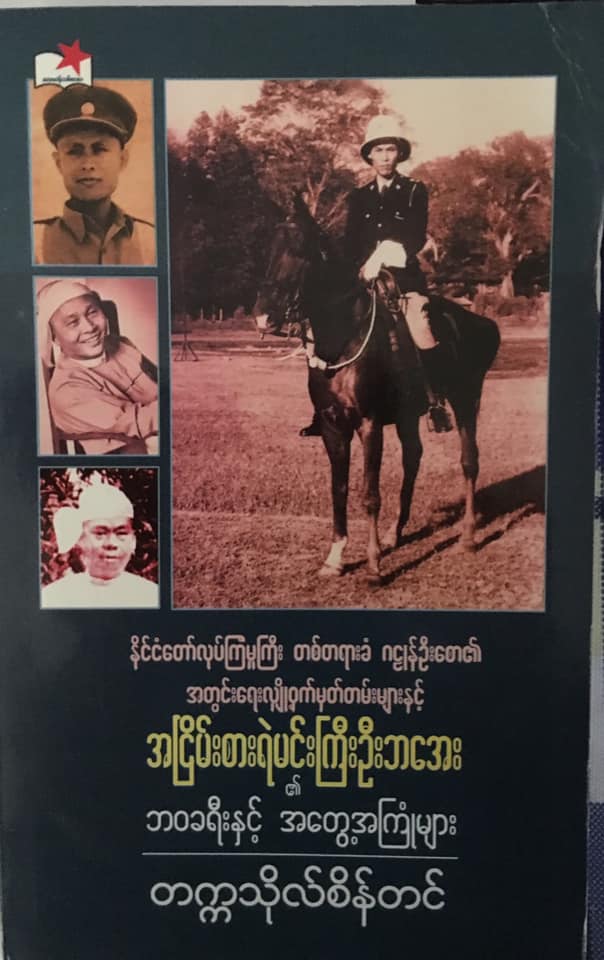
    6. Biography of Commissioner of Police (Rest.) U Ba Aye. (In Burmese)

  • Final Year Engg Students 1948 & 1949

    Final Year Engg Students 1948 & 1949

    by Hla Min

    Updated : Aug 2025

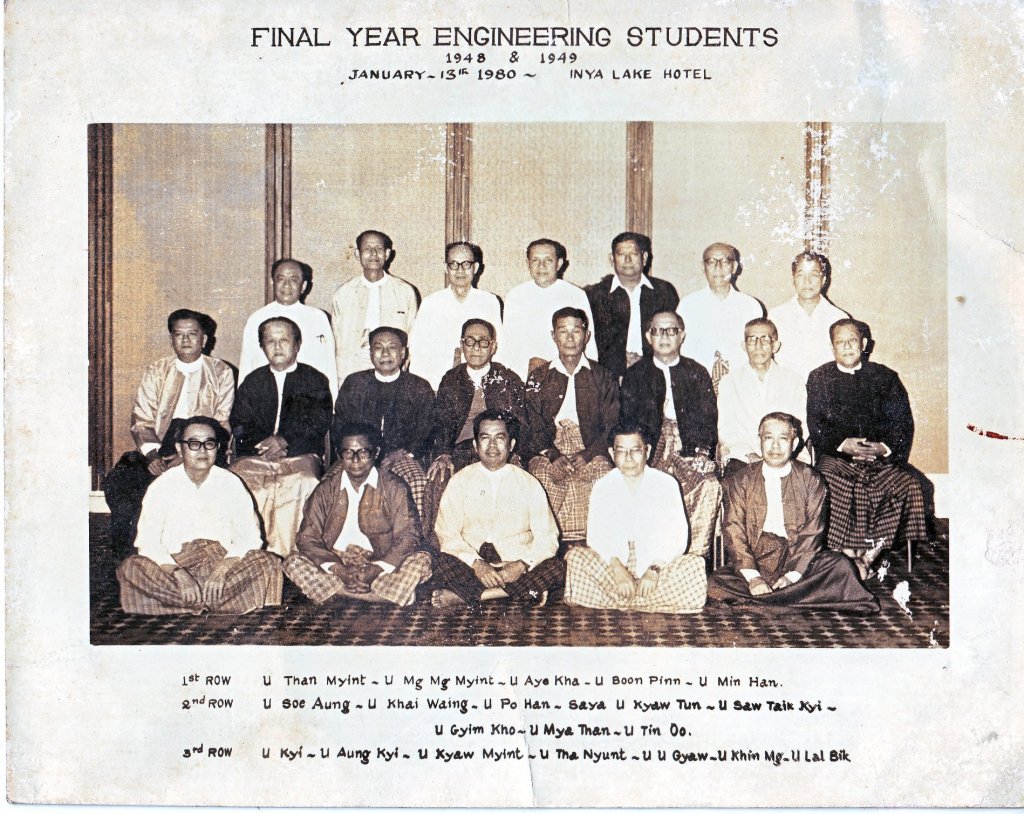
    48 – 49 Engg

    Reunion of Final Year Engineering Students 1948 & 1949

    Date : January 13th, 1980
    Place : Inya Lake Hotel
    Photo : provided by Mrs. Gyim Kho and U Myo Myint (EC67, RUBC Gold, Nephew of U Gyim Kho).

    First Row :

    • U Than Myint
    • U Maung Maung Myint
    • U Aye Kha
    • U Boon Pin
      Deputy Chief Engineer, Burma Railways
      Son : U San Lin / Robert (EC73)
      Passed away a few years back in Taiwan
    • U Min Han
      Son : U Nyein Min / Johnny (C79)

    Second Row :

    • U Soe Aung
      Chief Engineer, PWD
      Children : Daw Thynn Thynn Khaing / Janet (EP70) and U Nyunt Aung (C73)
    • U Khai Waing
    • U Po Han
      Deputy Minister of Construction
    • U Kyaw Tun
      Saya of our Sayas (including Professor U Sein Hlaing)
      Taught at BOC College of Engineering
      Retired Lecturer of Electrical Engineering, RIT
      Children : Dr. Daw Tin Nu (Elizabeth, English), Dorothy (ex-RIT)
      Passed away in Burma after visiting Dorothy and family in Australia
    • U Saw Taik Kyi
    • U Gyim Kho
      Spouse gave a copy of the photo for use by HMEE-2012
      Nephew : U Myo Myint (EC67, RUBC Gold)
    • U Mya Than
    • U Tin Oo

    Third Row :

    • U Kyi
    • U Aung Kyi
      Retired from GE.
      Worked as a Private Contractor
    • U Kyaw Myint
    • U Tha Nyunt
    • U U Gyaw
    • U Khin Maung
    • U Lal Bik

    Comments

    • U Aye (M62) provided information about U Saw Taik Kyi and U Aung Kyi
    • Ye Win wrote :
      ကျေးဇူးပါ. ဦးမြသန်းကကျွန်တော့ယောက္ခမပါ. ၂၀၀၅ အောက်တိုဘာလ အသက်၈၆နှစ်မှာအေးချမ်းစွာကွယ်လွန်သွားပါတယ်. ဆောက်လုပ်ရေးမှာလုပ်ကြသော အင်ဂျင်နီယာအတော်များများကိုသိပါသည်. ဦးကြင်ခို ဦးသာညွန့် ဦးစိုးအောင် ဦးဘိုးဟန်.. စသည်တို့ပါ. ကျွန်တော့အကို ဦးခင်က ဆရာဦးစိန်လှိုင်တို့နဲ့တနှစ်ထဲပီးကြပြီး ဆောက်လုပ်ရေးမှာ အင်ဂျင်နီညွှန်ကြားရေးမှုးအဖြစ်နဲ့ပင်စင်စားပြီး အသက်၈၅ နှစ်၂၀၁၂ (မသေချာပါ) လောက်မှာဆုံးပါတယ်.
  • Kyaw Myint (Bar-at-Law)

    Kyaw Myint (Bar-at-Law)

    by TOKM & Hla Min

    Updated : Aug 2025

    Introduction by Hla Min

    U Kyaw Myint

    He had a checkered life with a a series of setbacks and victories. His life is brilliantly recounted by his son Dr. Thane Oke Kyaw Myint (Pediatrician).

    Several readers have compared the accounts as befitting a romantic novel or historical episodes.

    Connections

    I first knew him as a dhamma friend of my parents. The two families helped build the Dat Poung Zon Aung Min Gaung Pagoda and supported Mon Sayadaw U Thilawuntha.

    Two paternal uncles (who are Barristers) worked at his Law firm.

    His son Dr. TOKM was my senior at SPHS. He became a saya of my beloved spouse at IM(1). He took care of my two young sons. When I published “Trivia” posts, he provided comments and details to several posts.

    I learned more about his father, uncles and aunts first via his commentaries and now via his articles (e.g. the value of emotional intelligence and brotherhood, the indomitable spirit). He also covered notable events and people.

    The Brief Biography of U Kyaw Myint appeared in “Who’s Who in Burma”.

    U Kyaw Myint’s Brief Biography

    He was born in April 18, 1898 in Zalun Henzada district. He is the second son of U Pein, K.S.M, A.T.M, Deputy Commissioner and Daw Mi Mi.

    Seven Siblings / Outstanding Burmans

    • ICS U Tin Tut is known as a diplomat, journalist and for being a victim of the the political assassination. Details can be found in the post “The Empty Tomb” and related articles on the unsolved mysteries of Burma. He is the first Burmese ICS by invitation.
    • U Kyaw Myint
      His life is covered in this post. It was first published as a series of articles in Facebook.
    • U Myint Thein was Chief Justice of the Union of Burma. He was detained in the Coup d’etat on March 2, 1962. He was Ambassador to China.
      Pen name : MMT
      Spouse : Daw Phwa Mi (first Burmese Female Barrister)
    • Dr. Htin Aung
      Principal, Rangoon College
      First native Rector, Rangoon University
      Vice Chancellor, Rangoon University
      Diplomat, Ceylon
      Scholar : Oxford & Cambridge
      Author, Historian & Folklorist
    • Daw Khin Mya Mu
      Kyauk Sar Specialist
      Thamadi Myo Wun
      Spouse : Professor U E Maung
    • Daw Khin Saw Mu
      Early graduate of Burmese Department, RU
      Khit San Poet
      Spouse : ICS U Ba Tint
      Children : Daw Khin Saw Tint & Nay Oke
      Daw Khin Saw Tint wrote an article about her mom and aunts
    • Daw Tin Saw Mu
      Lecturer, English Department, RU
    Mesopotamia (Action during WWI)

    My Father

    U Kyaw Myint

    By Dr. Thane Oke Kyaw Myint (SPHS60)

    My father had a very chequered life.

    Early Life

    Short stay at Rangoon College

    He stood first in the Matriculation examination at the age of sixteen. He had distinction in all subjects including shorthand and typing. He got scholarship when he entered Rangoon College in June 1914 but was expelled from the College in July 1914.

    There was going to be a scholarship exam to enter Calcutta University. The Principal of Rangoon College, Mr. Mathew Hunter had chosen two bright young men to take the exams to enter medical college in Calcutta. The two students for this exam were my father and Sayagyi U Ba Than. They were very close friends.

    Just before the exams, my grandmother passed away in upper Burma where my grandfather was working. Father went to the Principal to give him leave to attend his mother’s funeral. But the dates would clash with the exams and Mr Hunter refused his permission. Father was told that if he went without the Principal’s agreement, he would be expelled on return.

    My father went in time for the funeral but on return, as told to him earlier he was expelled from the College.

    Self Support

    My grandfather was very angry with my father being expelled. Father was told not to come back to the family.

    Father supported himself by doing a unique job. He traveled from Pegu passing through small towns and villages. At that time, there were many Burmese women who had children by Englishmen, and were common law wives. The Englishmen had left Burma, but they did not money regularly.

    On behalf of the women, father wrote letters in English to the men in England. He was offered food, small amounts of money, and a place to stay.

    He continued doing this, going up the country till he reached Myitkyina some months later.

    Bombay Burma Company

    Due to father’s expertise in short hand and typing, a young English man from Bombay Burma Company gave father a job as a clerk and secretary. Father told me about the kindness of the English couple who let him stay with them.

    Apart from Secretary work, he had to go with workers to the teak trees that had been cut down and later sent them down the Irrawaddy to Rangoon. Father had to supervise that the Bombay Burma Company seal was hammered deep at the end of the logs. The logs were floated down the Irrawaddy river. Logs with the seal were collected and exported to England.

    Illness

    A year later father had cerebral malaria and it was the young couple who looked after him during the illness.

    Enlistment and Assignments

    Father stayed on with the English couple till the end of 1916. By that time the war that was said to last only one year had to gone into its third year with no resolution. There were many casualties and new fronts for the conflict. The English government intensified their recruiting efforts.

    The young Englishman and his wife returned to England. The husband joined the army.

    Father did not want to continue working in Myitkyina. He also thought of enlisting for the war.

    He first went to Pegu to reconcile with his father. Grand father was doing a job what would be equivalent to a District Commissioner (DC) but being Burmese was given the post as Extra Assistant Commissioner (EAC) but doing the same job.

    Burmese doctors were appointed as Sub Assistant Surgeon (SAS). They had to work like surgeons and civil surgeons.

    NB: the status of Burmese doctors before Independence can be read in the books by Dr. U Myint Swe.

    In spite of my grandfather telling him not to enlist, father went ahead for enlistment.

    The place for enlistment was the at the Cantonment (which was Burmanized as “Kan Daw Min” Park). It is the place with a small lake near the Shwe Dagon Pagoda.

    At that time, no Burmese would be accepted. One must either be an Anglo-Burman or and Anglo-Indian.

    When asked, father gave his name as “John Henry Wilson”. He could be taken for an Anglo because he was very fair with sharp facial features.

    Next he was asked to go against the wall to measure his height. Father was only five foot two inches. When the sergeant cane to measure him, he stood up on his toes so that it would be five foot four (the required height for a soldier).

    The sergeant asked him whether he really wanted to serve, and getting an affirmative, the sergeant write down on his enlistment as “John Henry Wilson, Anglo-Burman, five foot six”. Father became a soldier.

    Note:

    Since, the English keeps excellent records, there must be enlistment records for the regiment that above item written down above, would still be there in their archives.

    I visited the Middle Temple Inn in London, from where my father was called to the Bar. I wanted know about my father, the Librarian asked me for date of being called, went in, back in about 15 mins and gave me a copy of information of my father as recorded in their archives.Will write more about this in a later post “My father: the Barrister”

    I tried to remember but still could not get the place in India where he was sent. I only remembered that it was in a cantonment not far from Dehli.

    Father was sent to where the Gloucester Regiment, the 12th Battalion was billeted. He got his training, stayed there for some time rising to the rank of corporal.

    Mesopotamia Campaign and “the war to end all wars”

    At the start of the war, the British army and its allies thought that it would be a short war lasting for a year or so. But it didn’t as the allies were fighting on different fronts. When the Turkish Ottoman army joined the war, that opened a new front of the war: the “Mesopotamia Front / Campaign”. Father’s regiment was sent to that front.

    Germany had sent a fleet of submarines to attack British ships carrying either troops or cargo.

    Although not entirely, the British army and navy were depending on oil from Burma Oil Company in Yenangyaung. But when their ships sailing from Burma were being sunk, they looked for an alternative.

    Apart from Burma, the oil fields from Mesopotamia were near to England and likely to have less loss during transport.

    Just like Burma Oil Company (BOC), there was another company that could offer the required crude oil. Like BOC, the Anglo-Persian Oil Company (AOC) was owned by an Englishman. Both BOC and AOC were taken over by the British government for the war efforts.

    The Mesopotamia Campaign happened mainly to save and have access to AOC refineries.

    For some years now, whenever I heard about Iraq, Iran, Syria, two words often appeared: Basra and Mosul.

    Mesopotamia was the area between the Tigris and the Euphrates rivers. It covered what would later become most of Iraq, parts of Northern Arabia, Eastern part of Syria and South East Turkey.

    The oil rigs were in Basra and Mosul within Mesopotamia.

    And that was where my father’s regiment was sent: to guard the oil fields from the Germans.

    As the German army was engaged in other fronts, it was the Turkish (Ottaman) soldiers and Nomadic Arabs attacking these two areas.

    It was mainly skirmishes and attacks mainly by the nomadic Arabs who were given arms by the Germans. The disciplined regiment could repel the poorly planned attacks and thus England still had access to the oil.

    Armistice: 11-11-11 11AM

    Father and did comrades stayed on in that area till Armistice, the end of the war at: “the 11th hour, of the 11th day of the 11th. month of the year”.

    President Woodrow Wilson in his speech said, “the war to end all wars” had ended, using H.G. Wells’ words from the book “The War of the Worlds”. How ironic it was as only three decades later the Second World War happened.

    Return Home

    Not too long after that soldiers including my father were demobilized and could return to their home countries.

    Father returned home to be with his family.

    Study at Cambridge University

    Since he was expelled from the College, he had never given up his hope to gain a good education. The demob and savings from his salary and other benefits on leaving the army, he now had enough money to go to England to get what he had wanted to do since 1914.

    He applied to be admitted to Queens’ College Cambridge, where his elder brother [U Tin Tut] had attended gaining MA, LLB.

    Father landed on the shores of England in the spring of 1919. He was twenty one years old.

    After spending time in London for a week or so he got to Cambridge to seek admission. Father told me that it was a vibrant time to be as there were so many young men like him, veterans of the war, some who had left their studies and had left to fight the war as well as those like him who had come to be admitted for the first time. He wanted to study at Cambridge as this was where his elder brother studied for his BA (later MA) and LLB.

    Both Oxford and Cambridge gave dispensation for veterans, so that they did not have to undergo a strict entrance exam but only had to take what was known as “the little go”.

    Father went to the College with all that he had was his matriculation certificate from Burma. He had to go through an interview first to see whether he should be admitted. Father impressed the examiners that he was admitted without the need to take entrance exams.

    Finally he thought he was going to get the education he had missed before. He had enough money to sustain him for the four years at the university.

    During the two years he was in Cambridge, he actively participated in debates conducted by the Cambridge Union, where he sharpened not only his oratory but also would help him at the courts when he became a practising barrister in Burma. It also helped when he became a well known politician in Burma.

    Two things happened that would affect his ambition to be a college graduate.

    First when he was in the second year, U Tin Tut arrived. He was sent to Oxford to do his training for the Indian Civil Service (ICS). He was to be the very first Burmese to be admitted to the Service. And unlike the others who later joined, he was the only Burmese to be admitted by nomination and not by selection examinations.

    On 29th December 1920, there was a nation wide students strike against the British government. Schools and the Rangoon University was closed down.

    U Myint Thein was then studying in the junior BA class at the University. Not knowing when the university would be reopened, even without telling my father he traveled by ship to England. This he did without any funds for tuition fees. He arrived and requested my father to pay for his tuition and upkeep in Cambridge.

    U Tin Tut gambled a lot on the races and he also was asking father to help pay some of his gambling debts.

    Father decided to leave Cambridge so that he could support his younger brother. He searched for a job to sustain the three of them.

    For the second time in his life, his education had to be postponed.

    At that time, there was Burma Club. Many years later — at the time when Saya U Maung Nyo was studying in London — there would be the Britain Burma Club. And Prof. Woodruff, who was a visiting professor of tropical medicine in Rangoon, was a Patron.

    The Burma Club was for the people who have served in Burma both before and during the war. Father got a job as the secretary of the Club. It enabled him to sustain the needs of his two brothers and allowed him to prepare for the barrister examinations.

    I have titled this part of my post as “Cambridge — here I come”, but for father in 1920 was “Cambridge — here I leave”.

    Yet again he was thwarted from gaining a university degree.

    P.S. In spite of all the obstacles, in 1948, on gaining independence, my father, the college dropout, was appointed as one of the first three Supreme Court Justices of our country. And also later became the very first Dean of the Faculty of Law at the Rangoon University.

    The Four Brothers and Inns of Court
    May I give some information about the Honorable Societies of Barristers: the four Inns of the Court of England and Wales. namely The Inner Temple, The Middle Temple, Grey’s Inn and Lincoln’s Inn.

    The first photo is the Temple and second is the current School of Law, under University of London, showing the shields of the four Inns: On top Lincoln’s Inn and Middle Temple. below Grey’s and Inner Temple.

    The full name of the Temple was Solomon’s Temple.

    Originally the temple was for a Catholic Military Order (Fellow Soldiers of Christ) and the members of the Order were known as Knight Templars. This order was to protect pilgrims going to the the holy land as well as to fight with Muslim armies trying to expand their territories.

    This change must be made as seen in the photo as the four Honorable Societies do not give degrees, no scrolls, no diploma nor parchment. There was only entries of a person being called to the bar in the records of the four inns.

    According to my uncles (U Myint Thein and Dr Htin Aung) the exams were tougher in the Inner and Middle Temple compared to Grey’s and Lincoln’s. They therefore chose to go to Lincoln’s Inn.

    There were no formal lectures nor teaching. Candidates had to attend and listen to trials going on and listen to some tutorials given at the Temple by senior barristers. And mainly one studied on his own.

    The way assessments were made was for each subject, written papers had to be submitted followed by “dinings”.

    When a candidate felt that he was ready to be assessed, he would invite three senior barristers to actually dine with him in the dining hall. Over dinner, questions were asked and discussions were made. The candidate was told whether he had satisfied the senior barristers and could now go to the next subject i.e. next dining.

    If unsuccessful, the candidate had to undergo another dining for that subject.

    Father succeeded in at the first attempt of all subjects except on Roman Civil Law which was examined in Latin. Father could answer only one question as he had to learn Latin only on arriving in England. Father had been preparing himself for the bar exams while he was in Cambridge.

    At his last dining, the senior most barrister said, “young man you had answered only one out of the four questions in Roman Civil Law. But you had written it like a brief by an experienced barrister. If need be, we hope that you will study more. We are satisfied with you and you need not come back for a second dining”.

    Father, the College drop out, the ex- soldier, had finally been called to the Bar on 26 January 1923 at the age of 25 years.

    He would then go on to be a Judge of Court of Small Causes at the age of 25 (after only ten months as a practicing barrister), a High Court Judge in 1946 and one of the first three Supreme Court Judges at independence in 1948. He resigned in 1950 in protest against the Prime Minister’s interference with the judiciary. (This will have to be told later).

    He became the Professor and Dean of Law, Rangoon University and was conferred with a honorary doctorate (LL D in honoris causa) on his retirement.

    …………………..

    In 1972, when I was living and studying in London, I became a friend with South African (of Dutch descent) who was taken his bar exams at Middle Temple Inn. He had stayed on to do an academic degree in law.

    Candidates were allowed to bring friends to dinner even when they were not being examined.

    Each table was for four. My friend and I were joined by two senior barristers. It was such a pleasant evening.

    There were two entrances to the dinning hall. Barrister had to go in one, where they were given barrister gowns to wear. Visitors in formal wear had to enter from another entrance. He took me through the visitors entrance, moved to the other entrance, donned the robe and came back to me to go to the dining tables.

    There were tables on a stage. My friend told me that the tables were for for judges called the Benchers.

    My friend told the senior barristers about my father. They wanted to know whether father was still practising. I told them about my father being a Supreme Court Judge but had retired and had resumed his legal practice.

    On another day, my friend took me to the Temple Library where records of people who been called to the Bar from Middle Temple.

    When I told the librarian that I only knew about my father being called in 1923, she went to look at the records for that year, found my father’s name and brought out the to me to show me the entry for my father.

    It was a very brief entry:
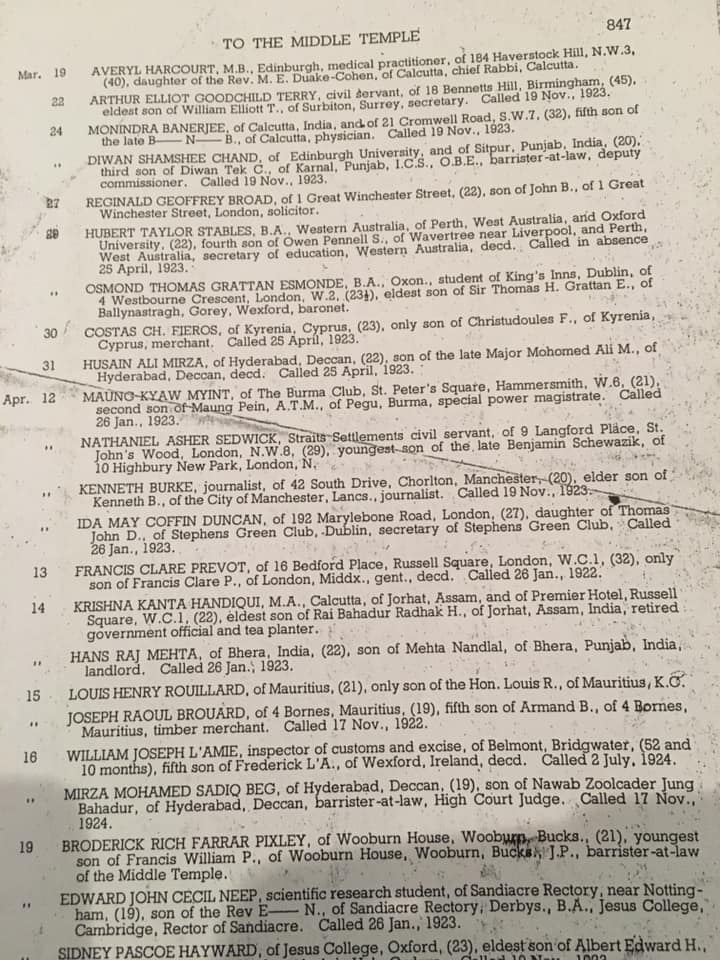
    “Maung Kyaw Myint, of the Burma Club, St. Peter’s Square, Hammersmith W.6. (21) second son of Maung Pein, A.T.M of Pegu, Burma, special power magistrate. Called 26 January 1923”.
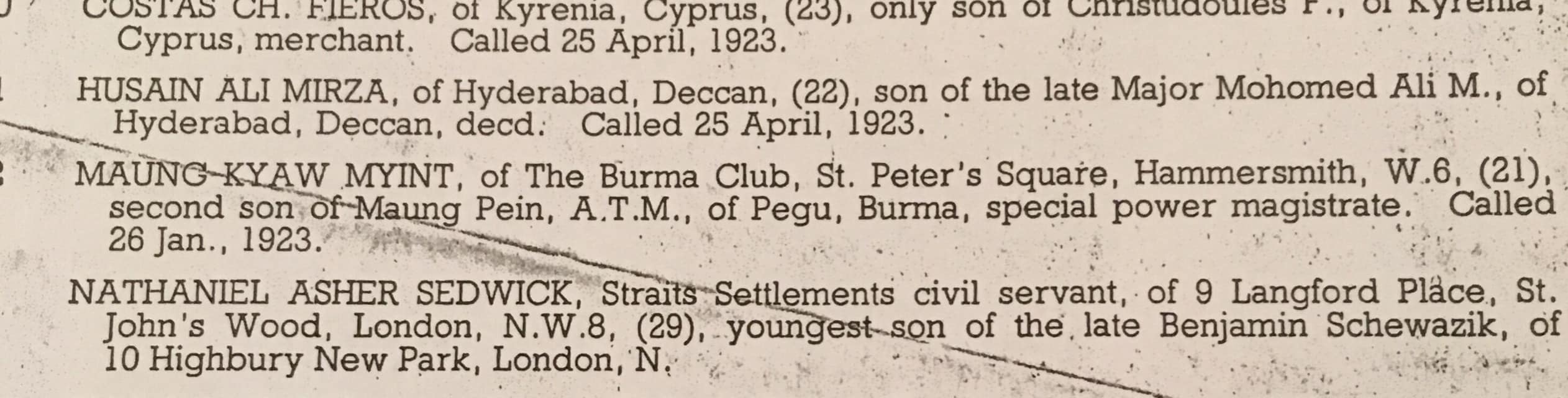
    Then she said, “would you like to have a copy of the entry? I said yes. I was given a xerox copy of that page.

    P.S: U Tin Tut and U Kyaw Myint were called to the Bar from Middle Temple. U Myint Thein and Dr. Htin Aung from Lincoln’s Inn.

    Daw Phwa Hmi, who would become the wife of U Myint Thein, was the first Burmese woman to be called to the bar from Inner Temple. There was a story behind this about U Myint Thein and Daw Phwa Hmi.

    P. S. in case I might forget to write about my uncles, I want to add two amusing anecdotes of them.

    Anecdote #1: U Myint Thein

    When U Myint Thein was studying in school at Pegu, he and his friends had a fight with another group of young men. U Myint Thein hit a man from the other side with an iron rod and broke his head.

    Both groups were arrested for fighting and disturbance of peace by the police and brought before the magistrate. It was my grandfather as the EAC had magisterial function. The young men had to appear before him. All meekly accepted the fines to be given but not for Maung Myint Thein.

    When each of them were asked why and the fight started, and what should be their sentence. All accepted to pay the fine for bring public nuisance.

    Except my uncle, who was being given a sentence more than others because of the assault with an iron rod. He was made to pay a fine and seven days custody at the police station.

    He would not keep his mouth shut that it was not fair as what he said that what he did was according to the Buddhist literature.

    His father asked him to explain why. He quoted a stanza of the Mingala Sutta:

    He said that in the 20 stanza of the sutta,
    “Garavo ca Novato ca
    Suntutthi ca katannuta”

    The Burmese pronounced the Pali words differently: the word “suntutthica” was pronounced as “than dote thi sa” and therefore he said he should not be given a punishment more than the others as he was doing what was mentioned in the scripture.

    Grandfather was very angry with his insolence and sacrilege in using a Pali word to be equal to an iron rod, he had not only to pay to stay in custody for fourteen days for not only assault but also sacrilege.

    And that was the my uncle Myint Thein the jailbird who would many years later became the Chief Justice of the Union.

    Anecdote 2: Dr Htin Aung

    Badwe was studying in Trinity College Dublin for his doctorate which he finished in nine months. To celebrate, he and some friends went on the town. Although he did not drink himself, he plied his college friends with as much alcoholic drinks that they could drink.

    After some time, the group became very rowdy and disturbing to other people. They became such a nuisance that the bar tender called the police and all were arrested by the police.

    The next morning they were brought in front of the magistrate accused of disturbance of peace in the community. The magistrate asked whether they were all inebriated at the time of arrest. The arresting policemen said yes except for one person who happened to be my uncle.

    The magistrate gave a sentence of a fine of one pound for all his friends “disorderly while being drunk”.

    My uncle was fined five pounds. The magistrate said while he did not partake in the drinking but was equally rowdy and disturbing people he was fined more because of “disorderly without being drunk”. Said he should have known better than other not to disturb people.

    The Age of Barristocracy

    Father came back to Burma in 1923 and started practicing as a barrister in Rangoon.

    Ten months later he was appointed as a judge of the Court of Small Causes, similar to a magisterial Court. He was the youngest lawyer to be made a judge, not just in Burma but in India also.

    How it came about was that the sitting English judge had to return to England. The Court clerk asked the then Chief Justice as to who should be appointed in that position.

    The Chief Justice said “the very bright young barrister who had appeared in court. He knows the laws and is very impressive”. The court clerk explained that father had only been working as a barrister for only ten months. The Chief Justice nevertheless decided to give the post to my father.

    Father was the youngest ever — at the age of twenty three — to be become a judge in colonial India and Burma.

    Nationalism

    But at that time, the political climate has begun to change. Nationalism had emerged in both India and Burma.

    After two years as a judge, father at twenty five years of age resigned to return to practice as well as to enter the political arena.

    He stood for and won the elections of the Members of the Legislative Assembly (MLA), which was equivalent for the lower house in Parliament. The Imperial Council was similar to the upper house but their members were appointed by the Governor General and was by nomination rather then by election.

    Seeing the work of many well known barristers in Indian made father stand for election and winning the position from the Kyimindaing (Kemmendine) constituency in Rangoon where he served for two terms.

    It was the senior barristers of India and Burma whom he wanted to emulate. While serving as a member of the Legislative Assembly, he got to know and learn from these barristers.

    As most of the MLA were barristers and he got to know them well. It seemed as though one would have to be a barrister to become a politician that was why the term “barristocracy” came into being.

    Eminent barristers and political leaders

    The following eminent barristers in India and Burma were the political leaders at that time.

    Mahatma Gandhi : Inner Temple

    Pandit Nehru : Inner Temple

    Mohamed Jinnah : Lincoln’s Inn, the youngest to be called to the bar at the age of nineteen

    Solomon Bandaranaike : Inner Temple

    Another activist barrister was Dr. Ambedkar, a dalit, from the scheduled caste, who entered the legislative assembly to fight for the Dalits and formed the “scheduled cast federation”. He was a highly educated and committed lawyer and activist.

    Dr. Ambedkar studied at Columbia University and London School of Economics and he was called to the bar at Grey’s Inn. He attained following degrees: BA, MA, PhD, MSc, DSc, LL D, D Litt, Barrister at Law (Grey’s Inn).

    He founded the Scheduled Caste Alliance. One tactic he used was to have the untouchable to change their religion from Hinduism where they were at the bottom of the ladder, to Buddhism which had no hierarchy.

    Father was to become close to Nehru from India and Mr. Bandaranaike, who not only knew fellow barristers but also MLAs.

    He visited Calcutta to meet with Dr. Ambedkar and also with Nataji (Subaru Chandra Bose).

    Father also visited Mahatma Gandhi in his ashram, every time when he was in India when he and his disciples were doing “satyagraha” the nonviolence movement.

    Nehru and Indira

    Nehru was arrested and put in prison. On being released, he and the young Indira came to visit Burma and stayed with my father for three weeks. Nehru gave copies of his books “Letters to a daughter” and “Glimpses of India”. The first book was signed by both the father and the daughter.

    When U Myint Thein was arrested by Ne Win, the MI (Military Intelligence) people came, ransacked and took away many of my father’s books. We did not know why the Nehru books, books by Jung and Freud, a complete collection of Gandhi’ speeches, law books and even some books of fairy tales were taken.

    Father was told that the books would be returned after some time but they never came back. May be most of them were illiterate and could not read them.

    Father knew Nataji very well. Apart from members of the Indian community, my father visited him often in the Mandalay jail where he was imprisoned from 1924 to 1925. Later U Myint Thein also did the same.

    In Burma not just the barrister but also eminent lawyers entered politics:

    Dr. Ba Maw, MA Calcutta, LL D Bordeaux

    U Pu, Barrister at Law

    Dr Ba U, MA, LL D (Cambridge).

    Non-separation versus Separation

    During the separation movement, Dr. Ba Maw, Rambyae U Maung Maung and my father U Kyaw Myint founded a political party. They were for non-separation.

    U Ba Pe (a journalist), Barrister U Pu and U Shein were for separation from India. U Ba Pe was the founder of the Burmese Newspaper: Thuriya (the Sun). Their stand was for separation from India.

    During the campaigning, U Ba Pe called his faction as “Pe Pu Shein” the initials of the three leaders of their party. But he addressed my father’s party as “Maw Myint Byae” – the “byae” was a derogatory word meaning “disorderly”.

    Due to standing for non-separation, father did not win in the next legislative assembly and returned to his practice as a barrister.

    Deciding late for standing in the election, the Kemmendine constituency went to another candidate. Father was given the Kungyangone constituency where he lost mainly because of his non-partition stance.

    The positive side of standing for election in Kungyangone was that he met my mother. And married her.

    The Eligible Bachelor and a Man About Town

    Father returned to his practice as a barrister and became very busy. As Burma had been annexed to India, the Burmese Courts were under the judicial system of India.

    There were many Indians businessman in Burma who had kept some of their enterprises in India. Father was traveling from Burma to appear before the courts in India. For some cases, Burma not having a Supreme Court at that time, he had to travel to New Dehli from time to time.

    Being an eligible bachelor had “dalliances” with young ladies but never serious except for a couple of them: Daw Yin May and Daw Khin Khin Gyi. As both my father as well as the two ladies had passed away, I think I could write a few sentences about my father’s love life!

    One of the main reasons he stayed a bachelor was because of his three younger sisters, Daw Khin Mya Mu, Daw Khin Saw Mu and Daw Tin Saw Mu. Grandfather had remarried and the step mother was very unkind to father’s sisters. In spite of grandfather objections, father took them under his wings and they lived together in Lewis Street Rangoon.

    Father and Daw Yin May did have a serious relationship. I was told by one of father’s previous staff that, father would as much as possible visit Daw Yin May in the evenings whenever she was less busy. She was then living in the house in the Dufferin Hospital compound.

    Father had left his job as a judge to enter politics. According to my father, she asked father what would happen then. It was about the time when Nehru was in jail. He said there could a chance of being imprisoned.

    Due to this uncertainty, Daw Yin broke her relationship with my father and eventually married Col. Min Sein.

    When they were still favouring each other, father sent a bouquet of flower to Daw Yin May every day.

    According to Prof. Daw Hla Kyi, Daw Yin May told her about receiving daily bouquets from father. She said that she also received flowers every day from the gardener of the hospital!

    Prof. Daw Hla Kyi was from Pegu and her father worked under my grandfather in Pegu. She had many stories of my father and his three brothers.

    Father also had a relationship with Daw Khin Khin Gyi but again he was looking after his sisters on top of being involved in politics.

    Father told me that Daw Khin Khin Gyi asked him to give a pair of velvet slippers from Mandalay adorned with semiprecious stones. This he did get a pair (setting semiprecious stones into the slippers was not easy and they were more expensive).

    She married lCS U Shwe Baw. Father told me that he was very happy that both of them got married to very good men.

    Dr. Daw Yin Yin Nwe asked me when did my father got to become a life long friend the princes of Shan State.

    And below is the answer.

    At the time, Shan States were different in governance to the mainland Burma. The British allowed the Sawbwas to retain their status and administer and govern as before. But the British foresaw that it would be to the advantage of the Shans to be part of Burma even though the Shan rulers were more closer and related to the kings of Thailand.

    Father was appointed as the legal (constitutional) adviser to the Shan rulers. He had to travel to the Shan States and explain why a constitution would be drafted even before getting independence. That a consultation and an agreement would be made (which would be the Pinlon conference).

    Father was helping the Shan royalties to understand definitely how things would be or should not be when the time came.

    It was a lengthy process as father was going to each of the Sawbwas and later as a group.

    The Mongrai family was related to the Thai royalty and efforts were made so that they would stay in the Union of Burma, with state governance for the Shans.

    During his visits he stayed with Nyaung Shwe Sawbwa and came very close to Sao Shwe Thaike. Similarly he became very close with the Sawbwas of Kengtung and Sipaw.

    I would like to mention two ladies who had made their marks in not just in the history of the Shan States and the Sawbwas, bit also internationally.

    They were:

    Daw Mi Mi Khaing : educationalist/author

    Sao Ohn Nyunt: paintings of her by Sir Gerald Kelly became international renowned, for her beauty and demeanor: I have put up only right of the paintings by Kelly.

    The two photos in black and white are photos of Daw Mi Mi Khaing, again good friends with father.
    Interludes

    Interlude (1) : Daw Phwa Hmi

    She was Burma’s first barrister at Law from Inner Temper Inn. She became my aunt when she married U Myint Thein. My uncle was an eligible young man, Cambridge graduate and barrister at Law (Lincoln’s Inn). They would be the first Burmese couple to be barristers. How did they meet?

    While working at the Burma Club and studying to be called to the Bar, father had taken down very complete notes on various laws and on trials that he observed in courts. Father unlike me had a very fine and readable writing. Younger Burmese preparing for the Bar exams used his notes even when he went home.

    One evening, U Myint Thein was at the Club to borrow the notebooks. He found that it was already taken by a lady. He got to know her by him telling her that he was the brother of the person who wrote the Notes. And gentlemanly let the books be taken by the lady. He also offered to come to wherever she was residing to collect the books and return them to the Club.

    The “young lady” was no other than Daw Phwa Hmi. Letting her have the notes first, offering to collect them from her residence just my uncle’s ploy to get to know about this young lady!

    In the pretext of studying together, he became very friendly with her. Both were called to the Bar about the same time. Ba Dwe wooed her and was accepted so that they were to get married on return.

    Father was told about his engagement and was asked to prepare for the wedding. But on his way back by ship, father had just reached Aden he received an urgent telegram from his younger brother:

    “HAVE MET EVA. STOP. MARRYING HER SOON. STOP. CAN YOU MARRY MA PHWA HMI IN MY PLACE. ENDS

    Father was very upset and sent back the following telegram:

    YR TELEGRAM RECEIVED. STOP. AM SUEING YOU FOR BREACH OF PROMISE. STOP. ON BEHALF OF MA PHWA HMI. ENDS.

    At that time, if a gentleman after betrothal, would not marry the lady, he could be sued and would be usually ordered by the court to give substantive amount of cash to the lady. And gentlemen’s clubs could “black ball” him and would lose memberships of the clubs.

    U Myint Thein knew that his elder brother would and could do as per the telegram. He came back and married Daw Phwa Hmi. Father was upset because his brother would not keep his promise to not only a fellow barrister but the country’s first woman barrister.

    Sadly, they had not any children. My aunt got pregnant, difficult labour during which she had what must had been amniotic embolism that caused a stroke and she was left with paralysis on one side of her body. The baby did not survive.

    P.S. Eva, the English lady whom my uncle would like to marry, kept in touch with him. She died two years later of cancer. My aunt magnanimously allowed my uncle to put a framed photo of Eva on the mantelpiece in their dining room.

    Interlude (2) : Daw Mi Mi Khaing

    She was a prominent educator and writer.

    During the British times, the Sawbwas were initially living on levies from their subjects and the income for mining of silver.

    Their eyes were opened by seeing bright young men like U Kyaw Myint as well as how these Western educated young men were holding important jobs,, They wanted their sons to have similar education. As mining was important, few of the Shan princes were sent to University of Colorado to get degrees in Geology.

    Saopha Kuang Kiao Intakeng, father of Sao Sai Mong Mangrai, decided to send his son Sao Sai Mong Mangrai for studies in the West. He studied at the University of London, Cornell University, University of Michigan. Cambridge. He became famous as historian, scholar, linguist, lexicographer of the Shan script and language. His most well known publication was “Shan States and British Annexation” published by Cornell.

    Sai Saing Mong met and married Daw Mi Mi Khaing, the first Burmese lady to write about Burmese Culture and traditions in English.

    Well known publications of Daw Mi Mi Khaing were:

    • Burmese Family: University of Indiana 1962
    • Cook and Entertain the Burmese way 1973, Karoma Publishers.
    • The World of Burmese Women 1984
    • People of the Golden Land
    • Burmese Characters and Customs 1958
    • Burmese Names and a guide 1955

    And many more: the most well known of her books was “Burmese Family”.

    And many more articles in various English magazines and periodicals.

    Daw Mi Mi Khaing was also very well known for the Kanbawza College.

    There was earlier a College in Taunggyi only for the son’s of the sawbwas.

    Daw Mi Mi Khaing opened the first private college in Burma, in the Shan States, a school very much like the well known colleges of England. (My elder brother attended this college after he studied at the St. Joseph College in Darjeeling India).

    I did not meet either of them but learn about both from my father telling me about the two famous intellectuals.

    I only had the good fortune to meet and know of their brilliant daughter Dr. Yin Yin Nwe PhD (Cantab) doctorate in geology. Due to the connections between the Shan Lords and my father, I got to know members of the Mangrai family, and Yin became a “sister” to me.

    The daughter took after both parents, worked for many years in UNICEF and currently a well sought adviser on development in many countries.

    Most of what I knew was from my father and from my uncle U Myint Thein, who succeeded my father as the legal adviser to the Shan princes. When my father got appointed as a High Court Judge, his younger brother to take over his responsibilities in the Shan State.

    POST SCRIPT:

    1. My father became close friends with the families of the Sawbwas , Mahadevis, other consorts. And he was showered with gifts, mainly products of the Shan States. This included many silk cloths and other woven clothes for his “Gaung Paung” headdresses, shirts, jackets and long gyi.

    All of these became very handy during the Japanese Occupation: mother told me that dress materials were very scant during this period. Most of the clothes that my mother, my sisters and other members of the family were by using these gifts given to father.

    Other source was material from parachutes.

    2. There was one episode told me without mentioning names. One of the wives of a Prince eloped with a member of the household staff. The Prince was so upset. My father was there at that time. He asked my father to get back his wife (also a close friend of father). Father said he gave his car, a driver and a bodyguard who was armed. He asked my father to persuade her to come back. Failing this the bodyguard was to shoot both of them.

    Father caught up with them before they have reached May Myo. The lady told father about why she had left. Father stopped the body guard from harming them and the two left. He went back and told the prince that they must have left early and could not catch them in time.

    I was very intrigued with what father told me.

    Request for corrections

    I have been jotting down what I remember about my father. He had led a very full life.

    If there are mistakes in my writings please let me know and correct me. I will change or delete the affected parts as needed.

    I do not want to hurt people’s feelings. My memory is not as good as before. I forget some names and events from the past.

    Writing about my father and the family is in some way catharsis for me. It is also very poignant because memories about what happened on 2nd March 1962. The dark day in Burma left psychological scars on the family.

    It was also sad to experience 8-8-88 and the aftermath. I had to resign from my job in 1990 and eventually leave our country.

    With Metta,
    Thane Oke Kyaw-Myint

    More to come

    Before I write further, I reread the following books, as I would like write about

    1. assassination of Aung San and associates, as my father was the Chairman of the Special Tribunal
    2. assassination of U Tin Tut, my father’s elder brother
    3. Why my father resigned from the Supreme court, in protest

    The books are:

    1. A History of Burma by Dr Htin Aung (my father’s younger brother)
    2. The River of Lost Footsteps by Thant Myint U
    3. Eliminate the Elite by U Kin Oung
    4. A Burmese Heart by Daw Tinsar Maw Naing
    5. Golden Parasol by Wendy Law-Yone
    6. Biography of Commissioner of Police (Rest.) U Ba Aye. (In Burmese)
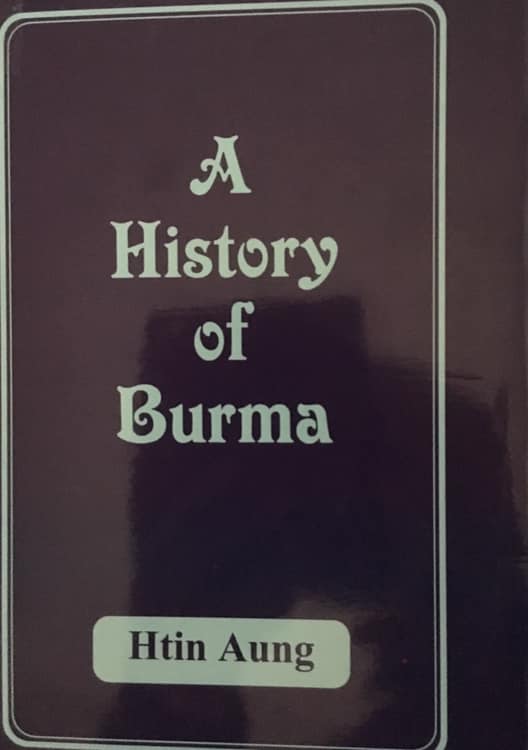
  • K — Burmese Music

    by Khin Zaw

    Updated : July 2025

    U Khin Zaw (“K”), Director, Burma Broadcasting Service

    U Khin Zaw

    Article written in 1958

    What is Burmese music like? To ears accustomed only to Western music, ours may at first be a little disconcerting. It may seem more like a medley of spontaneous, unrelated sounds than a careful composition. And its rhythmic patterns may be hard to follow at first hearing. But I think that if you will listen to some of it a few times—and the Burmese Folk and Traditional Music record in the Ethnic Folkways Library offers a good sampling—you will discover that ours is actually a fully developed musical art. Historically, the traditions of Burmese music go back at least fifteen hundred years. For we know from a fascinating description in a Chinese chronicle of the year 802 A.D. that our musical instruments, and compositions for them, were already highly perfected at that time.

    To begin with the fundamentals, let us first analyze our Burmese scale. It sounds as though it might have quarter tones and microtones, but actually it does not. It is the same as your European diatonic scale, but with this difference, that the fourth and seventh notes are both “neutral,” so that the succession of notes is different. The makers of our early instruments did not provide for the accidentals in an octave. Yet our music does modulate from the tonic to the dominant—say, from C major to G major—and frequently from the tonic to the subdominant — C major to F major, and back again. But we have no F sharp, or B flat. What we do is to put our F halfway between F natural and F sharp, and our B halfway between B flat and B natural.

    Since we do not have the chromatic scale, our music may sound a bit flat to Westerners. Another basic point of difference is its essentially two-dimensional nature. The development of harmony has given Western music enormous depth. Because our instruments were not suitable for harmony, our music has instead developed a complexity of pure melodic patterns. You derive your musical satisfaction from marching in depth with chords. We have to get ours by going in the single file of notes, twisting and turning in graceful patterns. Even our drums play tunes. Thus our putt waing, a circle of tuned drums, is not merely for percussion, but plays a melody itself.

    The rhythmic systems of Burmese music may have been determined by the nature of our language, which is not accentual but tonal. Rhythm in English depends largely on differences of emphasis on the syllables in the words and the words in the sentence. Burmese verse depends rather on the schematic arrangement of words with certain sounds recurring at fixed points. This means that timing and caesuras have great importance. In fact, in our singing the caesuras are even more important than the syllables or words in each measure. Often the singer keeps time with a pair of tiny bells and a small clapper in his hand.

    The most usual time in our music is a simple duple or a simple quadruple beat. In the duple, the bells and the clapper go alternately. In the quadruple there is a rest on one or the other of the middle beats. No great importance is attached to the variation. In one and the same piece the quadruple may sometimes change into the duple, or become faster or slower. But never must a musician get out of rhythmic time. So far as I am aware, compound time has never been used in our music.

    Turning to the instruments which are now most in use, we must give pride of place to the graceful, boat-shaped harp, the thirteen-stringed saung kauk (see Plate 23 in art section). The Burmese orchestra is called a saing. Its ensemble includes the picturesque putt waing, with the player seated in his circle of drums, a circle of gongs (the kyee waing), the big putt ma drum, cymbals, clappers, and wind instruments such as the hnè (like an oboe) and the palwé (a bamboo pipe). The saing accompanies our stage performances (zat pwès), our ritual dances (nat pwès), and others of the many festal occasions that enliven Burmese life.

    Even though Buddhist doctrine has sometimes frowned on music as appealing to the senses, we Burmese must be one of the most music-loving peoples in the world. Folk music is very much alive in our villages, where several interesting kinds of drums are especially popular.

    The bucolic dohpat (which can be heard on Side II, Band 4 of the Folkways record) presides over village roisterings and goes along with itinerant singers. The pot-shaped ozi, boon companion of the bamboo flute, may be trusted to go off on such a spree of tune and rapid rhythm as to make one’s limbs twitch to dance. The big bongyi (Side II, Band 3) is lord of the paddy fields, where its thundering rhythm eases the toil of those who are transplanting the rice. The byaw drum (Side I, Band 2) has its day in such home ceremonies as our almsgivings and shinpyu head-shavings.

    Our classical music is far more elaborate than the instinctive rural drumming and singing, and scholars usually divide it into six main categories, most of which are represented on the Folkways record. But I must not risk tiring you with too many strange names and will say only that these classical compositions are usually songs, ranging in theme and tone from simple lyrics to courtly measures eulogizing the king or the royal city and solemn chants composed in adoration of Lord Buddha.

    One of the most important events in the history of Burmese music—and all Burmese culture for that matter— was the second conquest of Siam by King Hsinbyushin in 1767. It is pleasant to think that although our wars with Siam were generally motivated by the Siamese king’s white elephants, we brought back something which was by no means a white elephant to us! Craftsmen, entertainers, musicians, dancers numbering many hundreds were imported from Siam to Burma, and they brought about a vast augmentation of our culture. New life and new forms were infused into our theater, our classical dance style is far closer to that of Siam than, say, to that of India, and a principal type of our classical song, the yodaya (Side I, Band 3 and Side II, Band 8), takes its name from Ayuthia, the old capital of Thailand.

    In the years following this Thai “invasion,” there lived a remarkable man named U Sa, a veritable Leonardo da Vinci, who was poet, musician, playwright, soldier, diplomat, and statesman all combined. In a long lifetime, he was constantly creating and adapting new literary, dramatic, and musical forms, and over two hundred of our finest songs are attributed to him. Another important school of classical music comes down to us from the Mons; their beautiful songs were long ago enshrined in a collection called the Mahagita.

    Finally, some of the purest and oldest forms of our traditional music are preserved in the propitiatory rituals of rural Nat worship. As Dr. Htin Aung explains in his essay, these spirits from the old animist cults have been welcomed into Buddhism, and the country folk still honor them with wayside shrines, or by hanging a coconut turbaned with a piece of red and white cloth from the king post of the house, to which offerings of fruit or cooked rice are made with music and dancing.

    Now what has been happening to Burmese music since the radio and the cinema have vastly magnified the influence of Western music upon us? For my purist taste, far too much! But, to speak for the other side — and I fear they are numerous — let me bring in the views of my much admired and musically learned friend Ko Thant of Mandalay.

    Ko Thant is scornful of our Burmese instruments because they lack the precision of the Western ones. But does he stop to consider that, in a sense, their very precision has made a slave of the instrumentalist? Our Burmese players attain extraordinary virtuosity with their crude instruments — making them the slaves — and achieve the most subtle shadings in moving from one note to the next. And because they do not read from a written score, but play entirely from memory, our musicians create the music anew at each playing, with full scope for the expression of personal art.

    Ko Thant likes the strict discipline of the Western orchestra and condemns the free-for-all of the Burmese saing. He rails at Sein Beda for tuning a recalcitrant drum in the middle of a concert. Ile does not realize that this really does not matter, that Western music is a compound, whose object is harmonious coalescence, whereas ours is a mixture, the pleasure lying in the artful mixing of sounds. A European listens for the total effect of all, a Burmese for the individual effect of each voice in the orchestra.

    In our music, accompaniment to singing does not mean a harmonic background to vocal melody, but a partnership in patterns. In and out of the framework of musical time and melodic direction provided by the instruments, the vocal part weaves another, related pattern and direction. So long as they keep to the framework, both singer and player may embellish and improvise. It is skill in weaving sounds, rather than voice production, which determines the quality of the singer.

    Ko Thant maintains that music is an “international language” and that we should allow Western instruments and melodies to overwhelm us so that our musicians may speak the same musical tongue as the rest of the world. But does not this idea stem from a basic misconception of the nature of art? Is not the individual voice the really important thing? And will not the community of world culture be far richer and more stimulating if each regional culture seeks to develop its own traditions?

    And since we already have improvisation in our music do we really need Western jazz and popular songs? But perhaps that question has already been answered: we have them. As long ago as 1940, Daw Than E wrote this little sketch on that subject:

    An old-fashioned Burmese gentleman was visited by a radio salesman. He settled down expectantly as the set was hooked up; perhaps he would hear the soothing strains of a song from the Mahagita. But what came out shocked him; he looked puzzled. “That’s Johnny, the Burmese yodeller,” explained the salesman, “the public adores Johnny; the new trend in Burmese music, you know. Oh, you’ll hear wonderful things with this set. To give you an idea, there’s Good Morning Tin Tin singing Thama-wa-yama to the tune of John Brown’s Body and Eingyipa to a rumba called Mañana mañana. They have Bei mir bist du schoen and Isle of Capri with Burmese words and even the old favorites like Good King Wenceslas —-that’s a duck of a tune —and Come to the Savior, make no delay . . .” At this point the old Burmese gentleman became unconscious.

    Yes, we have been flooded with Hawaiian guitars, hillbilly banjos, and Harlem saxophones. Where will it end? As director of broadcasting in Burma I am trying to fight the menace. There are good modern pieces in the Burmese vein still being produced, and a number of popular songs based on our own folk tunes have become hits. And to preserve our old music—since little of it has been written down—we have been making tapes of the best classical pieces and folk songs.

    For certainly our Burmese music is worth preserving, just as Gujarat painting, Khmer architecture, Chinese porcelain, and Mayan sculpture are worth preserving. The tragedy in those cases is that the art of the craftsmen has been lost. We cannot let that happen. We must not hope vainly for the evolution of a style that will be neither Burmese nor Western. Rather, we must go back to the purest traditions of our own music—relearn them, safeguard them, and present them to the world in a way the world can understand. For there is a strange beauty in the remote flowering of Burmese music

    Updates

    K & family members
  • Burmese Nursery Songs

    Burmese Nursery Songs

    by Hla Min

    Updated : July 2025

    Minthuwun

    Minthuwun
    Nursery Songs
    • Minthuwun (U Wun) is a Laureate Poet.
    • He published a book titled “Maung Khway Boh မောင်ခွေးဘို့ (For Maung Khway)”.

    U Khin Zaw

    U Khin Zaw (“K”)
    • He is Founder / Director of Burma Broadcasting Service.
    • Pen name : “K”
    • He wrote the Preface.
    • He provided music for the poems (kabyars).
    • He also translated the poems (with Professor G H Luce) into English.

    U Ba Nyan

    Book 1
    • Distinguished artist
    • He drew the illustrations.

    Content

    Preface

    Book 2
    Book 3

    Burmese Poem & English Translation

    Book 4

    Nursery Songs

    Book 5
    Book 6
    Book 7
    Book 8
    Book 9
    Book 10
    Book 11
  • TOKM — Posts

    TOKM — Posts

    by Dr. Thane Oke Kyaw Myint

    Updated : June 2025

    My Father (U Kyaw Myint)

    This image has an empty alt attribute; its file name is u-kyaw-myint-1-3.jpg
    U Kyaw Myint’s Brief Biography
    U Kyaw Myint
    This image has an empty alt attribute; its file name is u-kyaw-myint-3-1.jpg
    Mesopotamia (Action during WWI)

    My father had a very chequered life.

    Short stay at Rangoon College

    He stood first in the Matriculation examination at the age of sixteen. He had distinction in all subjects including shorthand and typing. He got scholarship when he entered Rangoon College in June 1914 but was expelled from the College in July 1914.

    There was going to be a scholarship exam to enter Calcutta University. The Principal of Rangoon College, Mr. Mathew Hunter had chosen two bright young men to take the exams to enter medical college in Calcutta. The two students for this exam were my father and Sayagyi U Ba Than. They were very close friends.

    Just before the exams, my grandmother passed away in upper Burma where my grandfather was working. Father went to the Principal to give him leave to attend his mother’s funeral. But the dates would clash with the exams and Mr Hunter refused his permission. Father was told that if he went without the Principal’s agreement, he would be expelled on return.

    My father went in time for the funeral but on return, as told to him earlier he was expelled from the College.

    Self Support

    My grandfather was very angry with my father being expelled. Father was told not to come back to the family.

    Father supported himself by doing a unique job. He traveled from Pegu passing through small towns and villages. At that time, there were many Burmese women who had children by Englishmen, and were common law wives. The Englishmen had left Burma, but they did not money regularly.

    On behalf of the women, father wrote letters in English to the men in England. He was offered food, small amounts of money, and a place to stay.

    He continued doing this, going up the country till he reached Myitkyina some months later.

    Bombay Burma Company

    Due to father’s expertise in short hand and typing, a young English man from Bombay Burma Company gave father a job as a clerk and secretary. Father told me about the kindness of the English couple who let him stay with them.

    Apart from Secretary work, he had to go with workers to the teak trees that had been cut down and later sent them down the Irrawaddy to Rangoon. Father had to supervise that the Bombay Burma Company seal was hammered deep at the end of the logs. The logs were floated down the Irrawaddy river. Logs with the seal were collected and exported to England.

    Illness

    A year later father had cerebral malaria and it was the young couple who looked after him during the illness.

    Enlistment and Assignments

    Father stayed on with the English couple till the end of 1916. By that time the war that was said to last only one year had to gone into its third year with no resolution. There were many casualties and new fronts for the conflict. The English government intensified their recruiting efforts.

    The young Englishman and his wife returned to England. The husband joined the army.

    Father did not want to continue working in Myitkyina. He also thought of enlisting for the war.

    He first went to Pegu to reconcile with his father. Grand father was doing a job what would be equivalent to a District Commissioner (DC) but being Burmese was given the post as Extra Assistant Commissioner (EAC) but doing the same job.

    Burmese doctors were appointed as Sub Assistant Surgeon (SAS). They had to work like surgeons and civil surgeons.

    NB: the status of Burmese doctors before Independence can be read in the books by Dr. U Myint Swe.

    In spite of my grandfather telling him not to enlist, father went ahead for enlistment.

    The place for enlistment was the at the Cantonment (which Burmanized as “Kan Daw Min” Park). It is the place with a small lake near the Shwe Dagon Pagoda.

    At that time, no Burmese would be accepted. One must either be an Anglo-Burman or and Anglo-Indian.

    When asked, father gave his name as “John Henry Wilson”. He could be taken for an Anglo because he was very fair with sharp facial features.

    Next he was asked to go against the wall to measure his height. Father was only five foot two inches. When the sergeant cane to measure him, he stood up on his toes so that it would be five foot four (the required height for a soldier.

    The sergeant asked him whether he really wanted to serve, and getting an affirmative, the sergeant write down on his enlistment as “John Henry Wilson, Anglo-Burman, five foot six”. Father became a soldier.

    NOTE:

    Since, the English keeps excellent records, there must be enlistment records for the regiment that above item written down above, would still be there in their archives.

    I visited the Middle Temple Inn in London, from where my father was called to the Bar. I wanted know about my father, the Librarian asked me for date of being called, went in, back in about 15 mins and gave me a copy of information of my father as recorded in their archives.: Will write more about this in a later post “My father: the Barrister”

    I tried to remember but still could not get the place in India where he was sent. I only remembered that it was in a cantonment not far from Dehli.

    Father was sent to where the Gloucester Regiment, the 12th Battalion was billeted. He got his training, stayed there for some time rising to the rank of corporal.

    Mesopotamia Campaign and “the war to end all wars”

    At the start of the war, the British army and its allies thought that it would be a short war lasting for a year or so. But it didn’t as the allies were fighting on different fronts. When the Turkish Ottoman army joined the war, that opened a new front of the war: the “Mesopotamia Front / Campaign”. Father’s regiment was sent to that front.

    Germany had sent a fleet of submarines to attack British ships carrying either troops or cargo.

    Although not entirely, the British army and navy were depending on oil from Burma Oil Company in Yenangyaung. But when their ships sailing from Burma were being sunk, they looked for an alternative.

    Apart from Burma, the oil fields from Mesopotamia were near to England and likely to have less loss during transport.

    Just like Burma Oil Company (BOC), there was another company that could offer the required crude oil. Like BOC, the Anglo-Persian Oil Company (AOC) was owned by an Englishman. Both BOC and AOC were taken over by the British government for the war efforts.

    The Mesopotamia Campaign happened mainly to save and have access to AOC refineries.

    For some years now, whenever I heard about Iraq, Iran, Syria, two words often appeared: Basra and Mosul.

    Mesopotamia was the area between the Tigris and the Euphrates rivers. It covered what would later become most of Iraq, parts of Northern Arabia, Eastern part of Syria and South East Turkey.

    The oil rigs were in Basra and Mosul within Mesopotamia.

    And that was where my father’s regiment was sent: to guard the oil fields from the Germans.

    As the German army was engaged in other fronts, it was the Turkish (Ottaman) soldiers and Nomadic Arabs attacking these two areas.

    It was mainly skirmishes and attacks mainly by the nomadic Arabs who were given arms by the Germans. The disciplined regiment could repel the poorly planned attacks and thus England still had access to the oil.

    Armistice: 11-11-11 11AM

    Father and did comrades stayed on in that area till Armistice, the end of the war at: “the 11th hour, of the 11th day of the 11th. month of the year”.

    President Woodrow Wilson in his speech said, “the war to end all wars” had ended, using H.G . Wells’ words from the book “The War of the Worlds”. How ironic it was as only three decades later the Second World War happened.

    Return Home

    Not too long after that soldiers including my father were demobilized and could return to their home countries.

    Father returned home to be with his family.

    Study at Cambridge University

    Since he was expelled from the College, he had never given up his hope to gain a good education. The demob and savings from his salary and other benefits on leaving the army, he now had enough money to go to England to get what he had wanted to do since 1914.

    He applied to be admitted to Queens’ College Cambridge, where his elder brother had attended gaining MA, LLB.

    Father landed on the shores of England in the spring of 1919. He was twenty one years old.

    After spending time in London for a week or so he got to Cambridge to seek admission. Father told me that it was a vibrant time to be as there were so many young men like him, veterans of the war, some who had left their studies and had left to fight the war as well as those like him who had come to be admitted for the first time. He wanted to study at Cambridge as this was where his elder brother studied for his BA (later MA) and LLB.

    Both Oxford and Cambridge gave dispensation for veterans, so that they did not have to undergo a strict entrance exam but only had to take what was known as “the little go”.

    Father went to the College with all that he had was his matriculation certificate from Burma. He had to go through an interview first to see whether he should be admitted. Father impressed the examiners that he was admitted without the need to take entrance exams.

    Finally he thought he was going to get the education he had missed before. He had enough money to sustain him for the four years at the university.

    During the two years he was in Cambridge, he actively participated in debates conducted by the Cambridge Union, where he sharpened not only his oratory but also would help him at the courts when he became a practising barrister in Burma. It also helped when he became a well known politician in Burma.

    Two things happened that would affect his ambition to be a college graduate.

    First when he was in the second year, U Tin Tut arrived. He was sent to Oxford to do his training for the Indian Civil Service (ICS). He was to be the very first Burmese to be admitted to the Service. And unlike the others who later joined, he was the only Burmese to be admitted by nomination and not by selection examinations.

    In December 29th 1920, there was a nation wide students strike against the British government. Schools and the Rangoon University was closed down.

    U Myint Thein was then studying in the junior BA class at the University. Not knowing when the university would be reopened, even without telling my father he traveled by ship to England. This he did without any funds for tuition fees. He arrived and requested my father to pay for his tuition and upkeep in Cambridge.

    U Tin Tut gambled a lot on the races and he also was asking father to help pay some of his gambling debts.

    Father decided to leave Cambridge so that he could support his younger brother. He searched for a job to sustain the three of them.

    For the second time in his life, his education had to be postponed.

    At that time, there was Burma Club. Many years later — at the time when Saya U Maung Nyo was studying in London — there would be the Britain Burma Club. And Prof. Woodruff, who was a visiting professor of tropical medicine in Rangoon, was a Patron.

    The Burma Club was for the people who have served in Burma both before and during the war. Father got a job as the secretary of the Club. It enabled him to sustain the needs of his two brothers and allowed him to prepare for the barrister examinations.

    I have titled this part of my post as “Cambridge — here I come”, but for father in 1920 was “Cambridge — here I leave”.

    Yet again he was thwarted from gaining a university degree.

    P.S. In spite of all the obstacles, in 1948, on gaining independence, my father, the college dropout, was appointed as one of the first three Supreme Court Justices of our country. And also later became the very first Dean of the Faculty of Law at the Rangoon University.

    Four brothers and Inns of Court

    This image has an empty alt attribute; its file name is inns-2-1.jpg
    This image has an empty alt attribute; its file name is inns-of-the-court-1.jpg

    The complete series of articles have been posted in Facebook and archived in hlamin.com

    Magnum Opus

    • Dr. Thane Oke Kyaw Myint e-mailed me a soft copy of “Who’s Who in Heath and Medicine (in Burma/Myanmar)” (Second edition).
    • It is the Magnum Opus of Professor Mya Tu and his wife Daw Khin Thet Hta.
    • There was an attempt to update it, but did not happen.

    Dr. Tin U

    Saya U Tin U was the pioneer of child health and paediatrics in Burma. He was the first Burmese doctor to pass the MRCP (Paediatrics), the first professor of Child Health, the first medical superintendent of the Rangoon Children’s Hospital, the first Principal of the postgraduate school of child health. He was the only Burmese Paediatrician to serve as WHO Professor of Paediatrics in India (Calicut) and Bangladesh (Dhaka).

    Saya called our medical disciple as “child health” rather than Paediatrics as he would like to focus on keeping children healthy rather than looking after them when their are unwell. Saya pioneered the use of Oral Rehydration Solution for diarrhoea in children, setting up center for childhood malnutrition; standardization of treatment of Dengue Haemorhagic Fever. He authored seven books on child health, all of which went into multiple reprints and Saya was awarded the National Literary Prize (Ahmyo Thar Sapay Su). Saya also served as the Member of the parliament for Dagon Township for one term. Saya was the elder brother of Saya U Sein Win (RIT EE).

    Before You Judge People (2015)

    Dr. Su Mon, daughter of Dr. Thane Oke Kyaw Myint, used her strong mental prowess to overcome adversity.

    She posted on Facebook in 2015:

    Dear world, I just want you to know that I am more than the sum of my diseases and limitations, I am more than my usually failing body, I am more than my brains and IQ, I am more than just a person with disability. I am more than my limp and my strange gait (yes it would be good if you stop staring at me when you see me) and I am more than my many scars. And I am definitely stronger (mentally) than you can possibly imagine. Please don’t think my life is easy, that I was born with a silver spoon in my mouth, that all that I have achieved so far came to me easily. I worked damn hard for every little thing, every step forward is hard fought with all that I have in me. I may not meet your definition of success or beauty, or intelligence but I am ok with that. I love who I am, many flaws and all. All I ask before you judge me or dismiss me is that you spend an hour in my shoes. I will do the same for you.

    Dr. Myo Khin (C70) wrote :

    Heartfelt appreciations to your strong spirit and will, all the best. May lord Buddha bless and keep you. Your god uncle, MK.

    Cecilia James wrote :

    A fighter against all adversaries and a risk-taker is to be admired. The world makes way for a person who knows where she / he is going. May God bless you and may you be successful in all your endeavors !

    Historic photo of Burmese Doctors

    Saya Ko Gyi, Ophthalmologist and Medical Superintendent of EENT Hospital, is the father of Dr. Thein Wai (SPHS63, Fifth in Burma) and U Aung Khin (SPHS63, DSA, GBNF).

    Sayagyi Col. Min Sein is the father of Dr. Thein Htut (RUBC Gold).

    Sayagyi U Maung Gale was Dean of the Rangoon Medical College from1959 to 1962. Per Saya Dr. Maung Nyo, “He was our dean, very quiet and peaceful. He translated Grey’s Anatomy to Burmese and he handed over the manuscripts to Dr Norma Saw.”

    Prof. U Khin Maung Win was Pathologist and DG ME. At one time, he headed the Medical Board to examine the people chosen for States Scholar.

    Garawa

    This image has an empty alt attribute; its file name is 1166.jpg

    Garawa means paying respect (especially to elders and mentors).

    U Myint Thein (“MMT”, former Chief Justice of the Union of Burma, former Ambassador to China, and author) paid respect to his elder brother U Kyaw Myint (Barrister, Head of the Tribunal which tried Galon U Saw, and former Dean of the Faculty of Law).

    Dr. Thane Oke Kyaw Myint wrote :

    It was on the occasion of the 80th birthday celebration of [my Ba Dwe] U Myint Thein at the residence of the British Ambassador Mr. Charles Booth.

    Father [U Kyaw Myint] was the Dean of the Faculty of Law, University of Rangoon. He took classes in constitutional law as he explained why it was important to have a comprehensive constitutional law. He also lectured on criminal law.

    One anecdote about father: I was very curious when father marked the answer books of BL students. I once saw father giving pass to a student who answered only one question. Father showed me the book which the single answer almost fill. Father told me that although it was only one answer, he wrote as though it was a real lawyer’s brief while others “regurgitate” what they had learned from lectures and books. Father followed the career of his student. As father predicted he became one of the best lawyers in Burma (sorry, have forgotten the name)

    The Prime Minister was the Chancellor of the Rangoon University. U Nu followed by U Ba Swe were Chancellors. [Ba Dwe] Dr. Htin Aung was Vice Chancellor. It was during U Ba Swe’s time that father was conferred LLD (in honoris causa), together with Emperor Haile Salasi of Ethiopia.

    Among his students was Guardian U Sein Win and Sao Hso Holm.

    Father defended U Sein Win when he was arrested and charged for writing articles about the then government. The trial went on till the last day of summation by both sides. Uncle Sein Win told me about what father did. In that day, father stood up and announced that U Sein Win himself would present the summation. U Sein Win was aghast as he had not been told if this. He turned to my father who said “You can do it. If not you are not my student of law”. U Sein Win gave a very impressive summation of the case which was reported full in both national and international papers. And he was acquitted.

    “Sawbwalay” Sao Hso Holm (Son of Arzanee Sao San Htun) together with [my Ba Dwe] U Myint Thein, was the first to be arrested and last to be released from custody. [He was the Legal Advisor to the Sawbwas.] He visited my father in his office. Father told his former student that he could join their chambers if he was looking for a job. But he was offered a job by UN ending his career as Assistant Resident Representative in Fiji covering the Pacific islands. I recently bought “Burma, My Mother” by Saw Kaemawadde (Ma Ma Biddy, Sawbwalay’s spouse) her autobiography. Very touching narration of her life. You can get a soft copy from Amazon.

    At present is U Mya Thein, senior adviser on the constitution to the present government. He is the son of a brilliant lawyer U Kyin Htone, and also my father’s student. [He is a younger brother of advocate U Tun Tin.]

    Dr. Hla Yee Yee wrote :

    “ Uncle Monty” to everybody

    Dr. Myat Soe wrote :

    I know well about your uncle U Myint Thein Saya [TOKM].

    He was former Myanmar Ambassador to China, and he was a good friend of (Late) Chinese P.M Mr. Chou-Eng-Lai.

    The Student who taught me

    This image has an empty alt attribute; its file name is tokm-1-1.jpg

    In the book of tribute to me, that Prof. Aye Maung Han, Prof. Nyunt Thein, Prof. Ye Myint Kyaw published for my seventieth birthday, many of my former students wrote about what they learned from me when I was teaching and working with them over two decades as a teacher in our medical college.

    I would like to share with whoever gets to read this, learning is not one way but two ways: while the students are learning from the teacher, the teacher himself learn from his students Some of the lessons that I learn from them are work related but many more lessons are about being a good person, being dutiful, respect for people, compassion, humbleness, gratitude, integrity and religiosity. For a significant number of them, being either a medical student, a house surgeon and later as a qualified doctor or specialist, life was never a bed of roses.They juggled to fulfill their professional role as well as the role as the bread earner for either their young families or in support of elderly parents.

    The student who taught me has written and published significant number of books ranging from fiction (based on his life experiences) to belle letters and articles mainly of which are not only sharing knowledge but also inspirational.
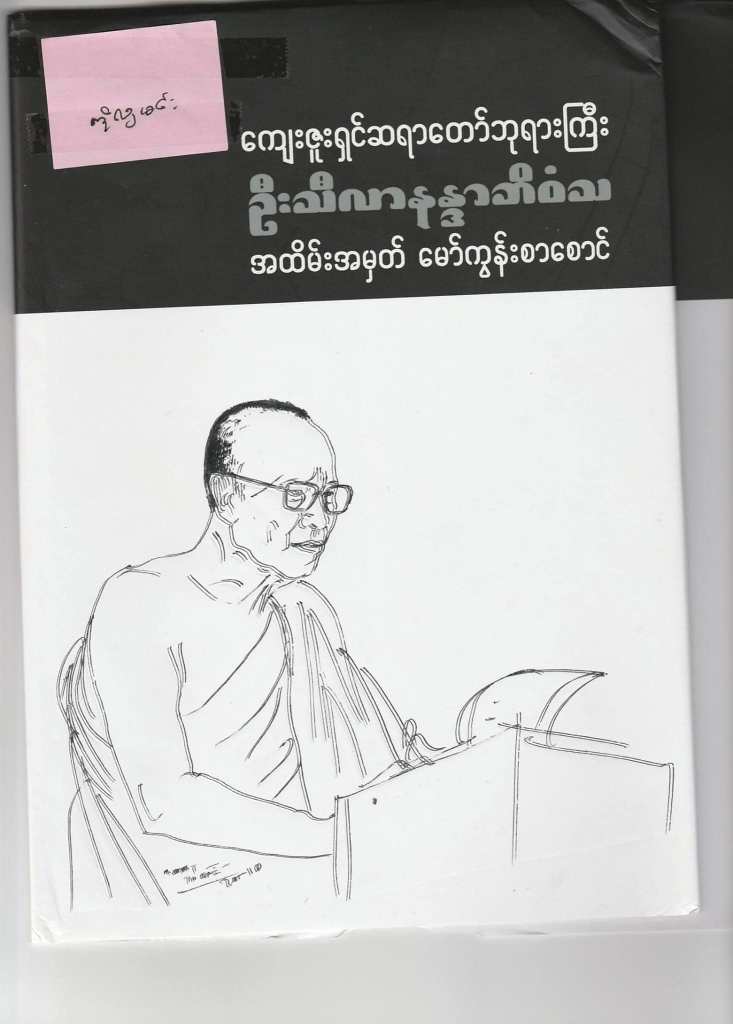
    The last time I went back home, he kindly gave me a book of his.

    I have read his book more than once. I go back to each chapter of his book repeatedly , especially when I come across an incident or experience, which relates very much to a relevant chapter of his book.

    And through this book, my student teaches me.

    I had a strong affinity with my colleagues and students and previously when my memory was better than now, I could remember most of whom I taught by their names and the year they graduated. The author, although I knew him well, was not close to me as student, intern and in service,as unfortunately he was either in units other than where I was in or he did postgraduate studies only I had left the country.

    Some years back, at the request of Prof. U Aye Maung Han, I gave a talk about my experiences of working in UNICEF, which were so different from my life as a paediatrician. I had titled the talk as “Shades of Mediocrity” as I felt that what I would talk about might seem both to the audience as well as to myself as my having gone through a state of mediocrity, as someone who moved from being a clinician to being an UNICEF staff responsible for public health, nutrition, water and sanitation, emergencies and the broader aspects of interventions to ensure that the the rights of children would be fulfilled. I did genuinely wonderd many times, whether I had contributed significantly beyond mediocrity, to areas of work which I had never worked in.

    I had used the title from Simon and Garfunkel’s Homeward Bound lyrics:

    “All my words came back to me
    In shades of mediocrity”.

    And I also quoted the vow in Burmese that appears on the front page of every book written by the well known author Tetkatho Phone Naing. The following is my own translation, more correctly my “transliteration” as I will never be able to give a precise translation of of Saya Phone Naing’s poem:

    THE VOW

    If you should not gain, by reading what I have written,|
    You cannot lose, if it helps to overcome ennui
    If at least a word or a para will make you thoughtful
    If you should find such in my writings, I the slave of writing
    Will feel that my duty is done.

    I will never claim that my writings are to be cherished by the reader,
    Nor through my writing I will claim as being more learned than the readerI will not go over your head, nor claim to enlighten you

    I make this my vow.

    Tetkatho Phone Naing

    (The original “vow” by the author, I have added as a photo as I do not know how to write in Burmese on Facebook)

    After I had just recited the first few lines, someone from the audience stood up and finished the poem for me, the whole passages and vow that had been made by the author..

    On top of that he said the “mediocrity or mediocre” need not be seen as permanent nor to be disparaged, as he himself was once a mediocre student during his college life.

    The person who said that he was “mediocre” was far from being mediocre, he was already a writer of renown and at the time my talk, he had not only acquired more accolades both as doctor and a writer than most of us but also held a senior teaching position at the medical college.

    I must come back to the book he gave me. I want to tell how my ” mediocre” student, whom I know that is never so, with his writings taught me to be a better person.

    The book is “Mingalar shi thaw aung myin gyin” or “Auspicious acts conducive to success”

    I have looked at how the word “mingalar” could has been translated. In the version of Paritta Protective Verses in Pali, Burmese and English, Sayadaw Silannadabhivamsa translated “mingalar” as “highest blessing”. But, I would like to use “auspicious acts” because according to the Oxford English Dictionary, auspicious means “conducive to success” , and thirty eight auspicious acts in the Mingalar Sutta lead towards the highest blessings. Maybe those who are more conversant with Pali may question my translation. But it would be appropriate for the book, to be translated as “auspicious acts that lead to success”

    The author himself has translated “mingalar” as “rules for good and auspicious conduct”

    The writer has written a chapter for each of the Mingalar (act or conduct) with erudite explanation on each of the mingalar, quoting each in Pali and Burmese. He has based these not only by rote or learning but from lessons given by eminent sayadaws of Burma. References are made to books on dhamma and sermons by Ledi Sayadaw, Dr. Pyinneikthara, Sayadaw Seikienda, Shwe Oo Min Sayadaw and many more. He shows not just learning and knowing but how much he has internalized and practiced each of the auspicious act, by referring to his life lessons.

    The fourteenth stanza of the Mingala sutta describes the first three auspicious acts:

    “Asevana ca balanam,
    Panditanan ca sevana,
    Puja ca pujaneyanam”

    “Not to associate with fools,
    to associate with the wise
    And to honor those who are worthy of honor.”

    From: translation by Ashin Silanandabhivamsa

    As I read, I learn and am so impressed not just by the narratives of his life experiences but also by seeing the depth of understanding of Mingalar Sutta. While starting life as a simple young student, he gets to where he is now by following the various tenets of Buddhism. I use the word “erudite” for him as again Oxford English Dictionary gives the meaning of “erudite” as “having or showing great knowledge or learning” as those who have read the book would agree with me that he has not only understands and learns but also practices what he has learned.

    His third chapter is on the third auspicious conduct “pujaca pujaneyyanam” : he wrote about me, as one of the persons whom he considered as his “guru”‘ among those he honors as being worthy of honor. I was very touched on reading this chapter as well as it makes me feel humble to be among those he honored the most as I may not deserve such honor, as I did not have as much contact with him during both his student years nor later as a paediatrician.

    Each chapter of this book carries with it the precise meaning of each mingalar and how he has conducted himself according to his deep understanding of each.

    After the third reading of the book, I feel as though he are saying the words to me and guiding me towards not only just understanding but also ensure that my conduct are within the tenets of each of the mingalar.

    Ko Ye Myint Kyaw, with your book, you have taught me and I would like to thank you for this.

    I have only one wish to ask of you: the wish is to ask you to write a similar book on “Metta Sutta” my favorite sutta in the paritta, as I know the extent of metta (compassion) that you have for the patients, their families and your students.

    May all the highest blessings be upon you.

    With metta,
    Thane Oke Kyaw-Myint
    20 June 2015.

    Sad Loss of Manuscripts

    Daw Khin Mya Mu’s work

    Before U E Maung died, he asked me to bring out exercise books with writings by [my aunt] Daw Khin Mya Mu.

    In the books were transcript of many “Kyauk sar” and translation into Burmese of hundreds of stone scriptures from all over Burma.

    When I asked him why they were not published, he told me that no printing press [in those days] have fonts for the ancient writings.

    [Thus] they were all unpublished.

    U E Maung donated his house and belongings to Tipitaka Sayadaw. When he passed away Dr Tha Hla was given the task of selling the property and have as cash donation for Sayadaw. We were not informed but later on when I asked, I was told that except for some books, the handwritten documents were not saved anywhere. Felt very sad about losing the handwritten books.

    Only some books were chosen to be donated to the Burmese Department of Rangoon University.

    Dr. Htin Aung’s works

    The sad thing was when [my Ba Dwe] Dr. Htin Aung left Burma, he had also left not only his books but drafts of books he wanted to finish and publish, mainly in history.

    Two Fallen Comrades

    Dr. Thane Oke Kyaw Myint shared his memories about two fallen comrades. The first one was about Dr. Myo Myint. The second one was about Dr. Mya Thein (nicknamed “Win Oo” for his mustache and for appearing beside Win Oo in singing “Mee Pone Pwe”).

    Dr. Mya Thein was barely fourteen when he passed the Matriculation examination in 1957. His parents pleaded with Saya Dr. Htin Aung (Rector, Ba Dwe of Dr. Thane Oke Kyaw Myint). Sayagyi had returned the favor he received from the Principal of Rangoon College to let him (then underage) attend college.

    Plan A failed when Dr. Mya Thein missed the cut to study Medicine by a couple of marks. Plan B succeeded when he passed the Bachelors examination with high marks overall (and especially 60+ marks in Biology) to be attend 2nd MBBS.

    For details, read Dr. TOKM’s blog.

    Books

    Dr. Thane Oke Kyaw Myint wrote :

    I am so fortunate that books written by my former students are either given to me by the authors or bought for me by my niece Hnin Wit Yee or Min Thet Aung.

    I got a signed copy of “The Female Voice of Myanmar” by Nilanjana Sengupta, translated into Burmese, by Myae Hmone Lwin. It was given to me by Ma Thida.

    The book consist of articles about and by four eminent lady Burmese writers and activists: Ludu Daw Ah Mar, Daw Khin Myo Chit, Daw Aung San Su Kyi and my “daughter writer” Ma Thida (San Gyaung).

    Please do not say that I am biased towards my daughter but I read the articles on Daw Ah Mar, Daw Khin Myo Chit and Daw Sung Dan Su Kyi once only but read and reread the articles by and on Ma Thida about three times or more.

    Coming from a family whose members were at different times and at different lengths of incarceration by the military government, each article about Ma Thida in prison brought back sad memories of my own family. I had to pause even in the middle of each article as such memories flooded my mind.

    From a very young age Ma Thida stand out among her contemporaries . A multifaceted person with deep attitudes and understanding of right and wrong, justice and injustice, tears welled up in my eyes reading what she went through in prison, and had to stop reading after going through some incidents described by her in the book.

    I am happy and very proud that she can be what she is now, an activist, feminist, author and running PEN Myanmar and many more.

    This book must be read in Burmese as in any other language, much would be lost in translation.

    P.S. Although she left the book for me in May, due to circumstances, I happily received the book only last month.

    Posts

    • Alumni from Myanmar Institutes of Medicine
    • Early Doctors
    • Medical Research
    • SPHS60
    • The Empty Tomb
  • Aung San

    Aung San

    by Hla Min

    Updated : June 2025

    Brief Bio

    • Born on February 13, 1915.
    • Zartar name was Htain Lin.
    • Chose his name to be Aung San to rhyme with that of his elder brother Aung Than.
    Aung San
    • Non-de-plume during the “Thirty Comrades” days was Bo Teza.
    • Editor of Oway Magazine published by RUSU
    Aung San 2
    • Translated “Invictus”.
    Translation
    • Was assassinated on July 19, 1947
    • Spouse : Daw Khin Kyi
    • Children : Aung San Oo, Aung San Lin (GBNF), Aung San Suu Kyi

    Centennial in 2015

    I wrote the following in 2015 for the Centennial Celebration ရာပြည့် of his birthday.

    AUNG SAN
    (Feb 12, 1915 – July 19, 1947)

    AUNG

    A — Architect of Burma’s Independence;
    Signed the Aung San – Atlee Agreement.
    It led to the Nu — Atlee Agreement that gave Independence.

    U — University Student Leader;
    Served as Chief Editor of the Oway Magazine.
    Refused to name the author of “Hell Hound Turned Loose”.
    Was expelled, resulting in the 1938 Universities Student Strike.
    Translated “Invictus”.

    N — National Unity & Solidarity Proponent;
    Organized the Panlong Agreement / Pinlon Sar Choke
    Agreement was signed on February 12, 1947.
    February 12 is celebrated as Pyi Daung Su Nay / Union Day

    G —  Gone but not forgotten;
    General, who promised to step down after Independence.
    Gunned down at the tender age of 32.

    SAN

    S — Showed leadership & personal sacrifice;
    Wore torn uniforms.
    Ate Pebyoke ပဲပြုတ် and Nanbya နံပြား

    A — Anti Fascist People’s Freedom League (AFPFL); ဖဆပလ
    Co-founder

    N — National Planning Advocate;
    Displayed Nationalism and Patriotism by deeds and not words.

    Memories

    Arzani

    Arzani Nay

    Delegation to UK

    UK

    Posts

    • Arzani Nay (Martyrs’ Day)
    • Centennial
    • Khalay
    • Pioneers
    • Rangoon University
  • Unsolved Mystery

    Unsolved Mystery

    by Hla Min

    Updated : June 2025

    1949

    • Assassination of U Tin Tut in 1949
    • Someone informed of the “probable assassination attempt” to U Kyaw Myint (younger brother of U Tin Tut).
    • Senior Police Officials in charge of the investigation were retired with generous offers.

    Memories

    Tin Tut 1
    Tin Tut 2
    Tin Tut 3

    Post by Thant Myint-U (on September 15, 2015)

    66th anniversary of Myanmar’s tragic assassination

    Friday (18 September) will be the 66th anniversary of the assassination of U Tin Tut, ICS. He was mortally wounded when a bomb exploded in his car on Sparks Street (now Bo Aung Kyaw Street). He died shortly after in Rangoon General Hospital. The mystery of who killed U Tin Tut has never been solved. His death changed the course of Burmese history.

    U Tin Tut was educated at Dulwich and Queen’s College, Cambridge. He was a top scholar and athlete (captaining his college rugby team) and the first Burmese admitted into the elite Indian Civil Service. After World War Two, he was the only Burmese fluent in both financial and constitutional affairs and widely seen as the most brilliant Burmese of his generation.

    He was in many ways U Aung San’s principal deputy and a key figure at both the January 1947 London negotiations and at Panglong. He was seriously injured on 19 July 1947 when U Aung San and the others were killed.

    He was Burma’s first foreign minister but resigned during the increasingly chaotic and violent days of mid-1948 to become the Inspector General (i.e. commander) of the new Union Auxiliary Force, meant to counter the communists and other ‘Leftists’.

    He was a nationalist but not a socialist, and wanted to maintain good relations with the West. The more radical factions in Burmese politics and in the Burma Army saw him as a threat.

    Posts

    • ICS
    • Seven Siblings
    • The Empty Tomb
    • U Tin Tut
  • Ah Ba U Hla Myint

    Ah Ba U Hla Myint

    by Dr. Thane Oke Kyaw Myint

    Updated : June 2025

    “Have you ever really had a teacher? One who saw you as a raw but precious thing, a jewel that, with wisdom, could be polished to a proud shine? If you are lucky enough to find your way to such teachers, you will always find your way back. Sometimes it is only in your head. Sometimes it is right alongside their beds.”

    At the end of his book “Tuesdays with Morrie”, Mitch Albom wrote the above about his teacher, Morrie Schwatz, his professor of sociology in Brandeis. I am sure that Ko Nyunt Thein who asks me to write about Ah Ba will agree that the words can be said of Ah Ba U Hla Myint who passed away yesterday. Like Prof. Schwartz, Ah Ba had or must have seen each and every student that he had taught as “precious things” that he could polish to a “proud shine”.

    Ko Nyunt Thein and I are among thousands of doctors who were fortunate to be polished by Ah Ba in many ways. While Ko Nyunt Thein was able to be “alongside” Ah Ba’s bed till the last day of Ah Ba’s life, I can close my eyes, and in my head and in my memories of saya, I know I would never be lost because of what Saya taught me and made me to be who I am .

    …………………………………………………

    May I tell the readers a few anecdotes that would make them understand the various aspects of saya:

    “Put their names on HPD list”

    “Sister Florence, make sure their names are on the high protein diet list every day. And tell U Gyi Hla, to make sure that they eat”. Sister Florence was his ward sister for many years, U Gyi Hla was responsible for getting the prescribed diets from the hospital kitchen and give it out to each patient . And “their names” meant the names of Ko Myo Myint and myself.

    I might have mentioned to some that the two of us literally lived in Ah Ba’s wards from April 1964 onwards, and for myself, from then till November 1970 when I moved to Children’s hospital for my paediatrics training. Saya Bobby, with Ah Ba’s agreement, had given us this little room which used to be the “ECG room” to live in, while we were learning from both of them. Ah Ba asked me one day, coming into the room where I was studying and said,” I should have asked you before. What are you doing for your meals?” I replied, “If we have time, we go to Latha Lan or 19th. Street for food (this was the cheap affordable roadside food eaten by med students and interns)”. “This wouldn’t do!” saya said and turned away calling for Sister. That was how we remained on Wards 5 & 6 High Protein Diet for about three years.

    This was in the really good days when there was no “ko htu ko hta ကိုယ်ထူကိုယ်ထ” i.e self help or “sa zeit hmya pay စရိတ်မျှပေး” cost sharing as it was now. All the patients’ needs, from linen, mosquito nets, food, medicines were all provided free of charge by the hospital.

    And being on HPD, we got a jug of milk, two toasts, two boiled eggs for breakfast, and a meat of our choice together with veggies on the side, either a fruit or a portion of a custard pie as dessert! Talk about eating in style.

    The only complaints came from the interns, our seniors: they had to write up the diet sheet every night making sure that the right diet be asked for each patient, by name and bed number. And some literally got “pissed off” (pardon my French!) to have to add our names to the list every night!

    Was Saya wrong in doing this? No, saya was just caring for us and making sure that we ate and ate well!!!

    “Shit Gyi Kho Par Yae, Ta gar pwint pae bar”

    (For goodness sake, please open the door)

    This was the time when junior doctors could not afford to own cars. At that time, there were about a dozen doctors senior to me who had already passed the selection examinations and were being trained in RGH. Only Ma Ma Thelma who could drive herself and Ah Ko Thein Han who had a driver, could be in time every day. The other three, Ko Harry, Ko Sein Oo and Ko Ko Hla, posted to our wards came by bus, buses that they had to take after a long walk from where they lived to the bus station on the nearest main roads. And with the erratic bus schedules and crowded buses, they were often just a few minutes late. But, by Ah Ba’s rules, every entrance must be closed and locked by 8.00am. and nobody could enter the ward when Ah Ba did his rounds.

    The “shit gyi kho pa yae.. ..” was a common refrain that we could hear from my three elder brothers, making a plea with the ward boy to let them in. And of course, the ward boy would never dare to go against saya’s orders.

    Many ploys were tried: going up one story up to the surgical wards and coming down by the stairs pretending to be busy at the other end or returning from a surgical referral; coming up to the way that dead bodies were carried down to the mortuary through the basement; going around towards Lanmadaw, climbed to the X-ray department, got an old X-ray to pretend that you were fetching an urgent X-ray – with Ah Ba, none would work. You got caught by Ah Ba and Ah Ba kept on closing every entrance!

    Ko Tin Maung Htun who lived in the AS quarters across the street and for me living in the ward, we escaped the scolding and enjoyed the discomfort of our seniors!

    “No, saya, it wasn’t me, it was Shwe Shwe”

    One essential duty before Ah Ba saw patients was what we called “the cheroot rounds”. We had many cases of Cor Pulmonale (COPD) cases all the time in the wards. Many were heavy smokers of cheroots. We had to do one round to check their bedside lockers that the cheroots were either not there or at least well hidden.

    If by chance, Ah Ba opened the locker and found cheroots, I got a scolding. But I was lucky when Shwe Shwe got posted to us. I only had to say, “I didn’t check saya, it was Shwe Shwe”, Ah Ba would just frowned at us but no scolding! With Ah Ba, Shwe Shwe could get away with anything short of murder!

    The same would be for diabetics and their “locker rounds” – nothing of high sugar or carbohydrate content must be found or woes betide the house surgeons to whom the bed had been assigned.

    “Saya, it is time for me to change my glasses”

    Ah Ba got very upset if we missed physical signs. If he had time, he would thoroughly examine each patient on his rounds and expected all of us to have detected relevant physical signs present. His “favorite thing” was to detect “pericardial rub” which we tended to miss. It happened once to me. I thought I had done well with that patient but when Ah Ba turned to me, handed the earpieces for me to listen, while holding the chest piece where he heard the rub, I knew I was in trouble.

    Frowning, he said, “I did not expect that you would miss this, Johnny”.

    I was so frightened of being scolded, blurted out, “Saya, it is time for me to change my glasses, at such times, my hearing gets less acute.” Only later I realized that I had given him a ridiculous excuse. He did not say anything. Just said, “When I go back for lunch, come with me.”

    I thought I would be in for a “one to one” “monhinga kywae” – we called being scolded as being given mohinga. Instead, on arriving at his house, he pulled open a drawer and gave me a new Littman, so that I could hear well!!!

    “Silence ! Johnny is sleeping”

    It was just one of those bad days: That admission day, we had so many patients, many coming in very ill. All beds were full and we had to put up what we called “centre beds” i.e. setting up beds between the two lines of regular beds as well as “stretcher cases”, those whom we could not give beds had to be kept on the stretchers on which they were brought in. On top of that I got called away twice to Dufferin to see and bring back two cases of septic abortion with acute renal failure.

    By 7.00, having requested Emergency to kindly stop sending patients to us but to wait and send them to the next admitting wards, I laid down for a short nap. But, I must have fallen asleep, because it was past 10.00 when I woke up. Strangely, the wards were very quiet and I could not imagine why. I washed my face, changed clothes and got out. Then I saw the reason why.

    Ah Ba had told Sister to close off the passage way, between his office and my little room with trolleys at each end. I was so embarrassed that Saya had also put up two signs on cardboards on the trolleys that said “Silence, Johnny is sleeping” in Burmese!!! Talk about being so priviledged to be treated like his very own little son!

    “Rosalind, Johnny is here”

    Every Thadingyut, I would go to Ah Ba’s house to pay homage to Ah Ba and Ma Ma. The moment he saw me coming in he would shout, “Rosalind, Johnny is here.” He would not accept anything from me, either expensive or inexpensive, as homage. If I did, he would give it back to me. He preferred that I came empty handed so that Ma Ma could give me a plastic bag containing either white shirts and black material for trousers or later white collarless shirt, a yaw longyi (my favorite) and a length of cloth to make a Burmese jacket.

    Only once he accepted: I was leaving Burma and had asked Ko Sein Aung, an artist whose children I looked after, for a painting to give as a farewell present to Ah Ba, especially as I did not know when I might be able to come back to Burma.

    I got off the car, carrying this painting wrapped in brown paper. The first thing he said was, “How many times did I tell you not to bring anything for me.” I said, “Saya, I am leaving Burma and do not know when I can come back again. I asked a friend to paint what I would like to say to you for everything that you have done for me.”

    I kowtowed and paid homage and handed the wrapped painting to Ah Ba.

    He opened it, looked at it and said, “Why this painting?” I replied, “Saya, I were Rahula, you would be Buddha to me”. It was a copy of one of U Ba Kyi’s paintings of Rahula asking for his inheritance from Buddha.

    The painting will still be in Saya’s prayer room till now. And like Rahula, I did inherit from my father Ah Ba who as a Buddhist, I revered as being equal to the Enlightened one, inherited not material riches but lessons for life that made me a good person and a good doctor.

    …………………………………………………

    No, Ah Ba did not die yesterday: he lived on in each of us who were his students, now scattered all over the world.

    Thane Oke Kyaw-Myint

    14 September 2012

    Memories

    Ah ba and me
    Ah Ba, with Marie, Ko Nyunt Thein and me, Jan 2011
    This is the mural of Buddha and Rahula in my old office in Children’s Hospital. The painting given to Ah Ba is a smaller version of my mural

    Posts

    • Dr. Mohan
    • Dr. Thane Oke Kyaw Myint
    • Early Doctors
    • Medical Research
  • Memories of U Silananda

    Memories of U Silananda

    by Hla Min

    Updated : June 2025

    U Silananda
    • First Rector of ITBMU (International Theravada Buddhist Missionary University)
    • Passed away on August 13, 2005.
    • I served as Master of Ceremony at the Service.
    • I carried the Box of his Ashes and accompanied Saya U Myat Htoo (C68, President of TBSA) for the Scattering of the Ashes near Golden Gate Bridge, San Francisco.

    Publication

    • Book in memory of U Silananda
    • I was a member of the Committee & Contributing Editor
    Book

    August 30, 2015

    • Attended 10th Anniversary of Sayadaw U Silananda’s demise
    • Dhammanda Vihara, Half Moon Bay
    Invitation

    Ceremony

    C 1
    C 2
    C 3
    C 4
    C 5
    C6
    C 7
    C 8
    C 9
    C 10

    Posts

    • Abhidhamma
    • Dhamma Publications
    • Sayadaws
    • Trail blazers
    • TBSA