First Rector of ITBMU (International Theravada Buddhist Missionary University)
Passed away on August 13, 2005.
I served as Master of Ceremony at the Service.
I carried the Box of his Ashes and accompanied Saya U Myat Htoo (C68, President of TBSA) for the Scattering of the Ashes near Golden Gate Bridge, San Francisco.
Publication
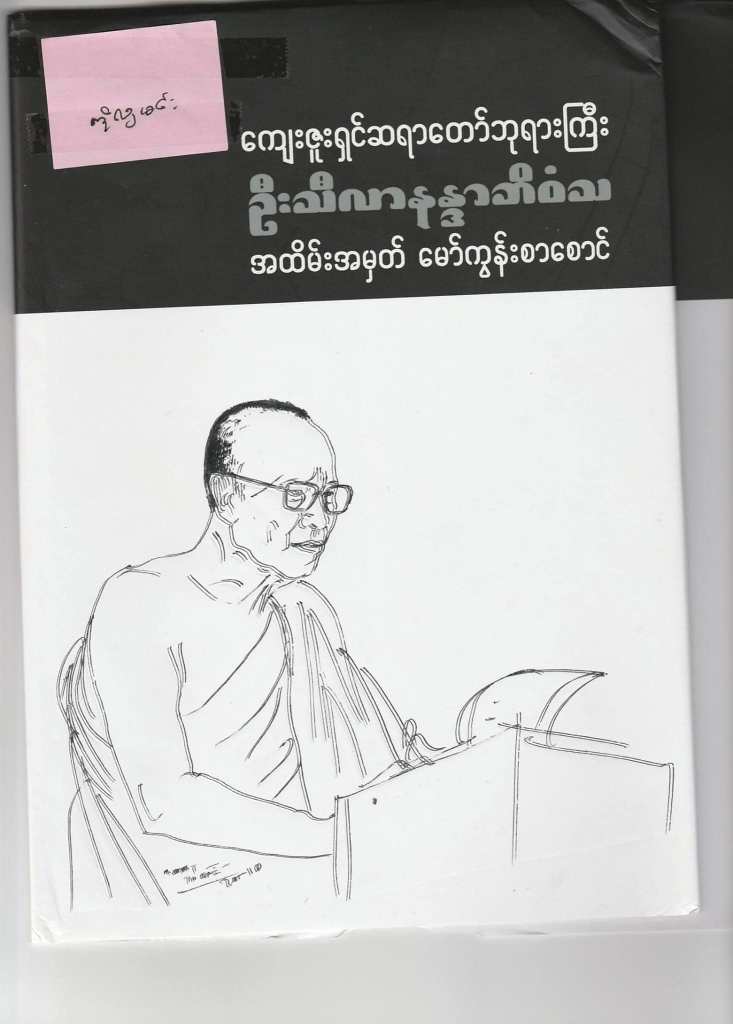
Book in memory of U Silananda
I was a member of the Committee & Contributing Editor
Book
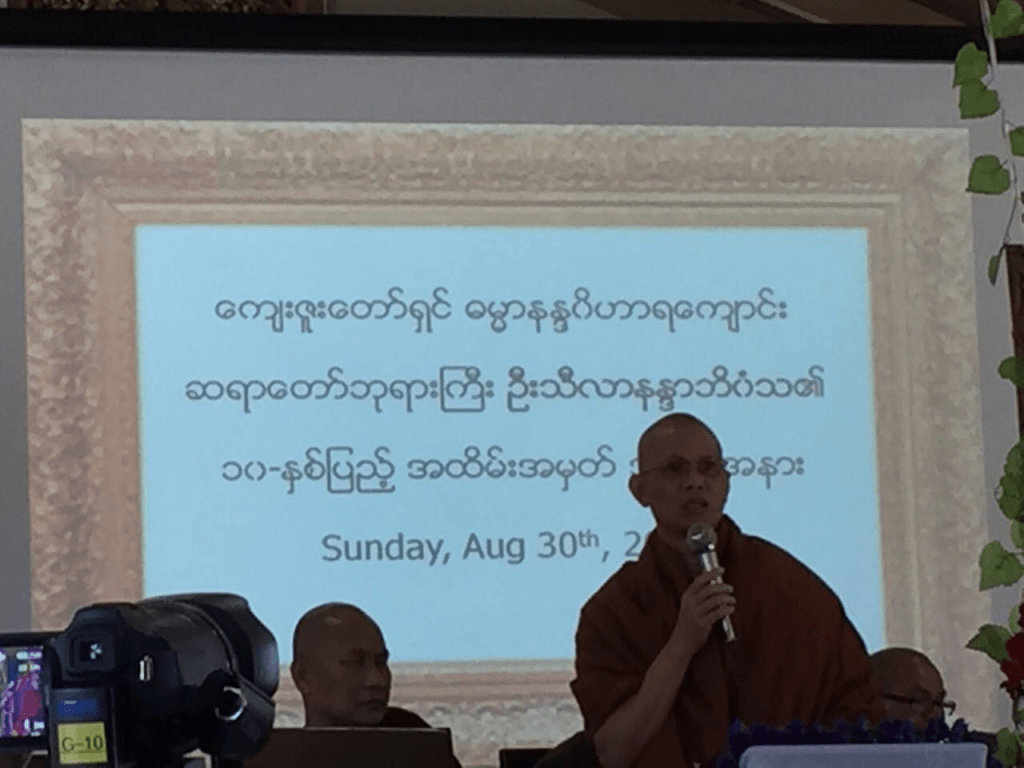
August 30, 2015
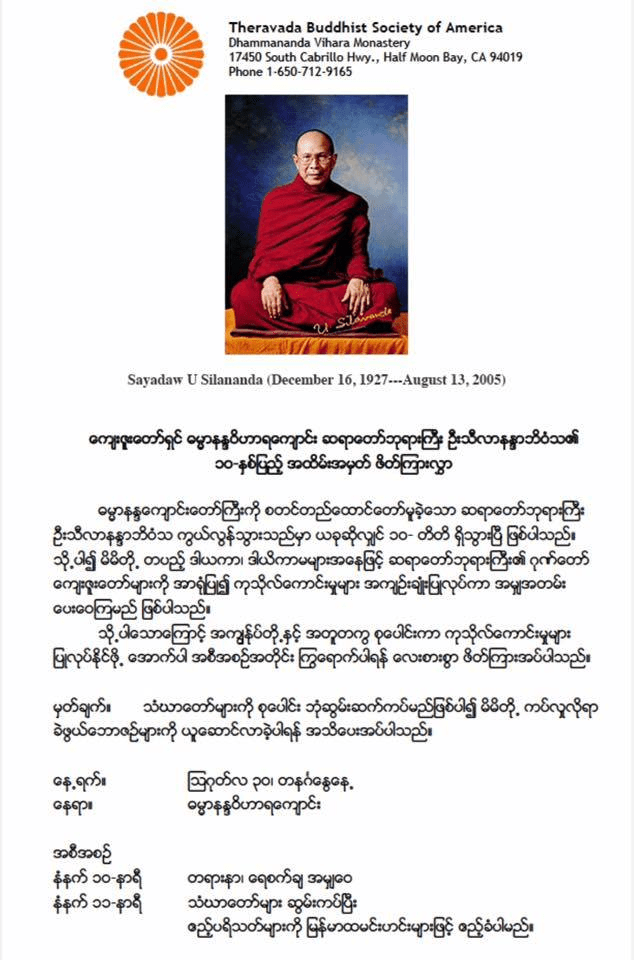
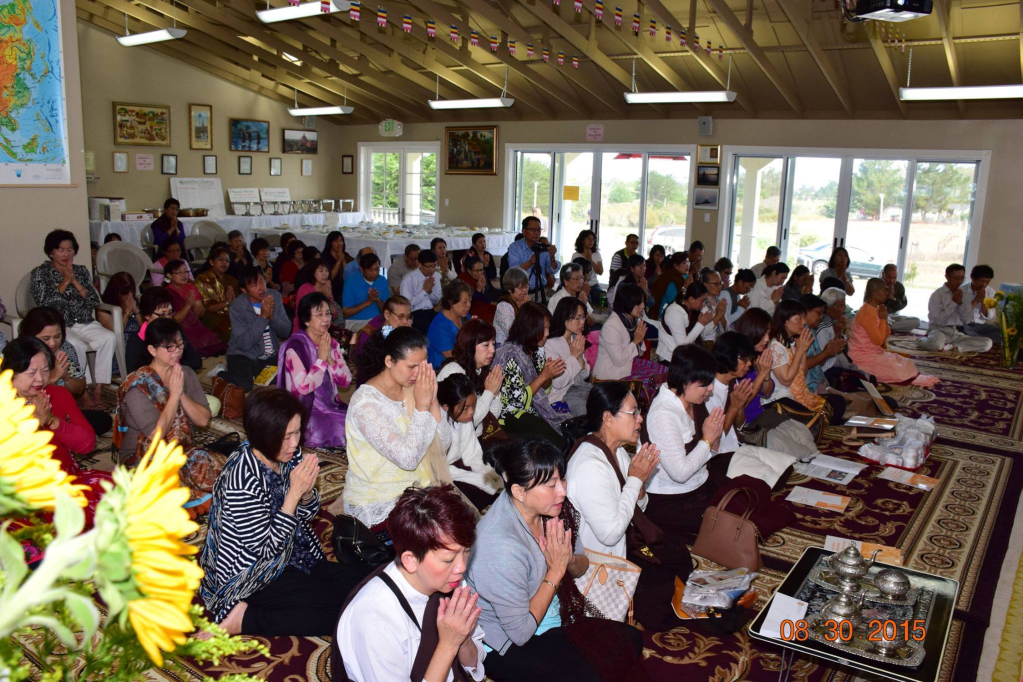
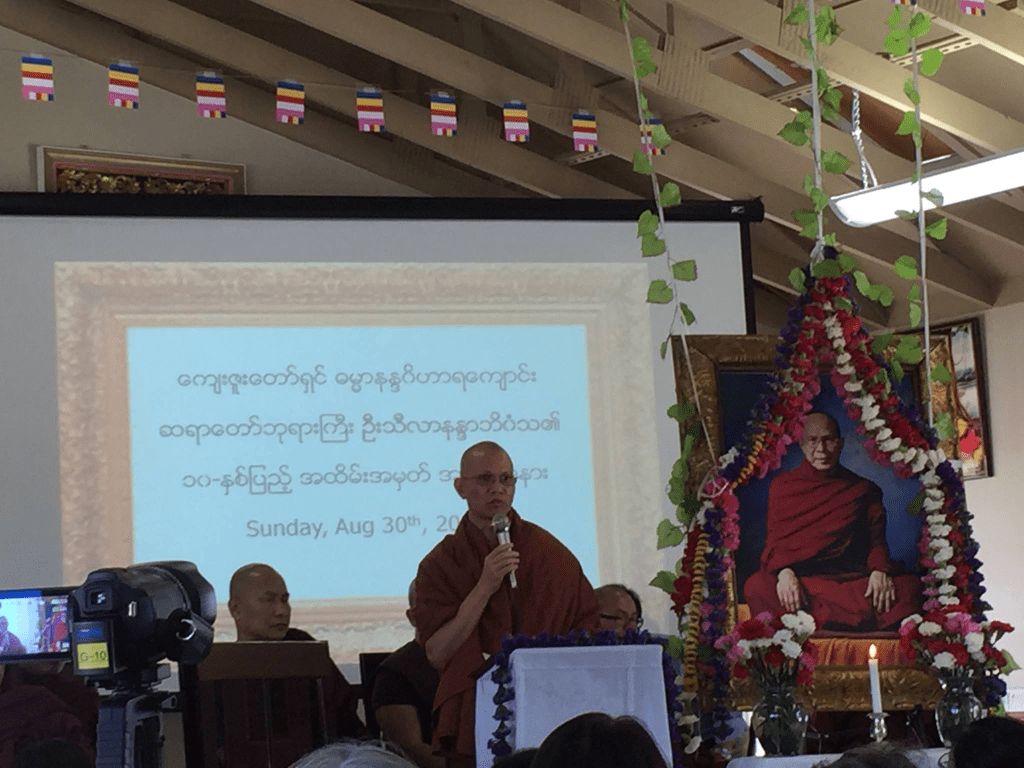
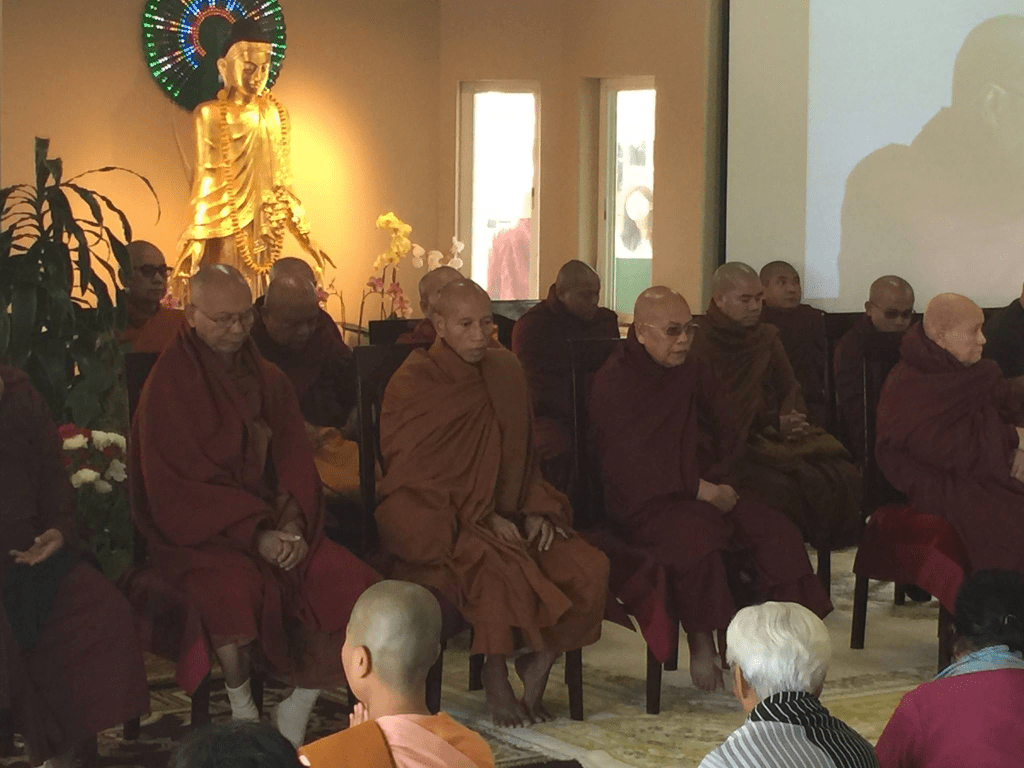
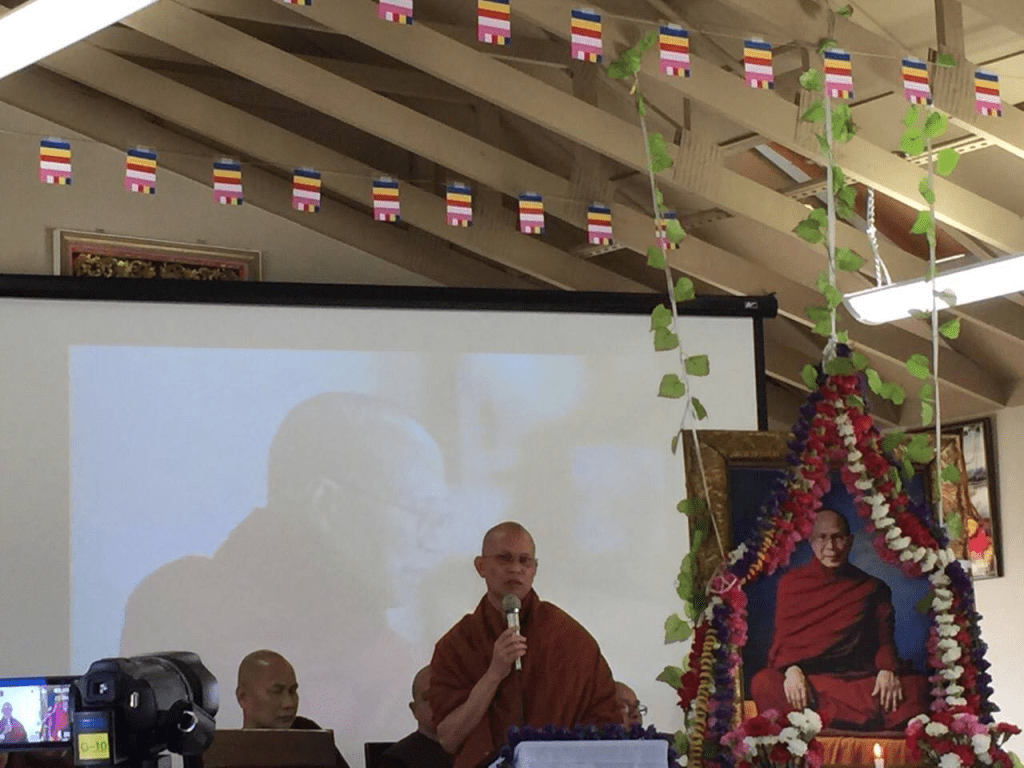
Attended 10th Anniversary of Sayadaw U Silananda’s demise
Prolific writer, an outstanding lecturer, and a teacher of teachers
Lay people in Burma were not known to teach Vipassana meditation
The Ledi tradition has a lineage of Vipassa teachers who are not ordained monks: Sayagyi U Thet, Sayagyi U Ba Khin, Sayagyi S. N. t
Mingun Jetawun Sayadaw U Narada (1868 – 1955)
Credited as one of the major revivers of Vipassana meditation
Went to one Mingun Sayadaw, who presumably had studied meditation under Thee Gon Sayadaw, and asked for guidance. Was told to study Sattipattha (from the Scriptures) deeply and then practice meditation
Prominent disciples : Mahasi Sayadaw and Taung Pulu Sayadaw
Sayadaw U Thittila (1896-1997)
Did missionary work in UK
Came back to Burma and taught at the Pali Department for several years before continuing his missionary work abroad
Lectured in 25+ countries (including US, UK, France)
Ovadacariya to Sanagha Maya Nayaka, trustees of renowned pagodas
Outstanding teacher and writer
Played an important role in reviving Buddhism in India and propagating the study of Abhidhamma
Very modest; rarely talked about his many achievements
Patamagyaw scholar of all Burma (1918) : selected from among 5000 candidates
Panyattisasanahita (1923) : among the 4 out of 150 entrants who passed the toughest monastic examination
Studied Sanskrit in India; English in India and England
Translated Vibhanga (second of the seven Adbhidhamma texts) from Pali to English : published by the Pali Text Society in 1969 under the title of The Book of Analysis
Mahagandaryone Sayadaw Ashin Janakabhivamsa
Wrote several books in Pali and Burmese
Several of his students including Thamane Kyaw Sayadaw and U Hla Myint are teaching “Pali Sikkha (Training)” to lay persons without overwhelming with Pali Grammar
Mahasi Sayadaw U Sobhana
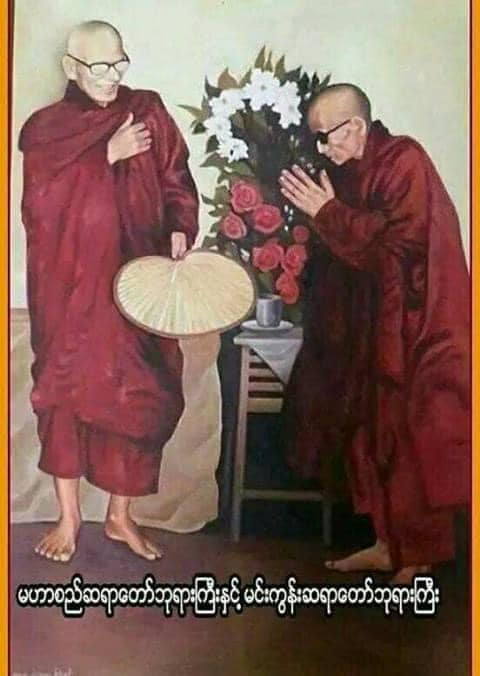
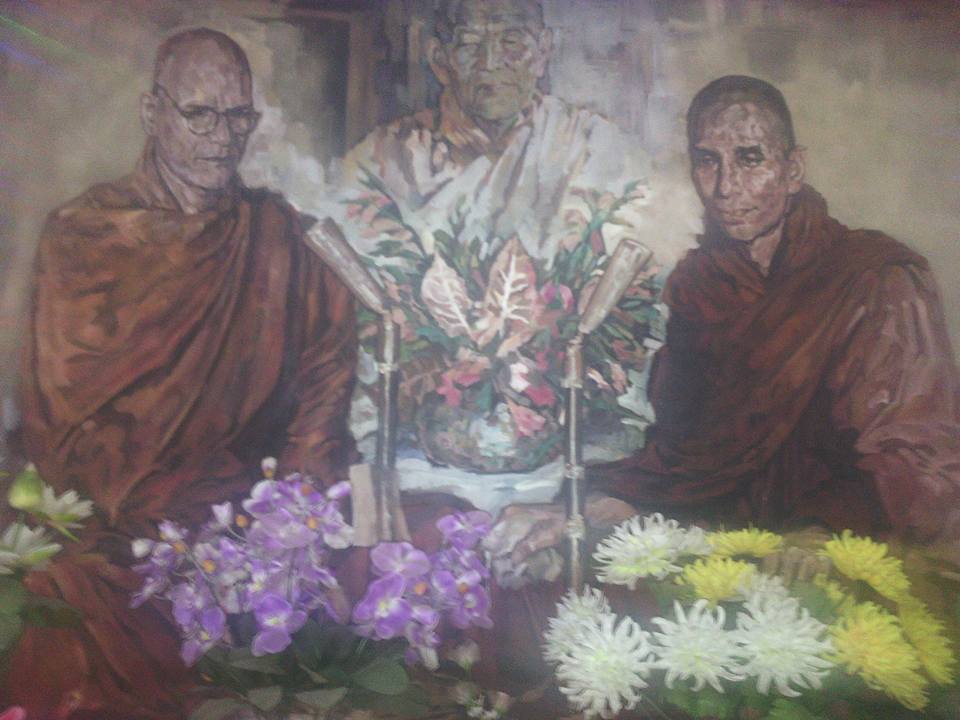
Mahasi & Mingun SayadawsMahasi Sayadaw
Renowned Meditation Master and author
Served as Questioner at the Sixth Buddhist Council held at Kaba Aye, Rangoon, Burma
Chief Resident Monk of Mahasi Sasana Yeiktha
Mentees : Sayadaws U Pandita, U Kundala, U Janabhivamsa and many meditation teachers
Panditarama Sayadaw U Pandita
Senior disciple of Mahasi Sayadawgyi
Renowned Meditation Master and author
Succeeded Mahasi Sayadaw U Sobhana at Sasana Yeiktha
Established Panditarama
Saddhamaransi Sayadaw U Kundala
Senior disciple of Mahasi Sayadawgyi
Outstanding meditation teacher
Made Dhamma Duta missions abroad (until his health forced him to stop going on long, tedious trips).
Practiced vipassana meditation with the instruction of Mahasi Sayadawgyi in 1953-54
Served as Palipatiwisodhaka (editor of Pali scriptures) at the Sixth Buddhist Council.
Meditation teacher at the Sasana Yeiktha from 1967 – 1977.
Member of Mahasi Sayadaw’s Dhamma Dhuta Mission to Europe and US in 1978 – 80
Established the Chanmyay Yeiktha Buddhist Meditation Center in Myanmar chanmyay.org Branches in several countries (e.g. US, Singapore, Australia)
Mingun Tipitaka Sayadaw Ashin Vicittathara
Two Sayadaws at Sixth Buddhist Council
The Guinness Book of World Records listed Sayadaw as having an outstanding memory — the best at that time [in 1954].
Served as the Chief Reciter (a la Ashin Upali and Ashin Ananda at the First Buddhist Council) at the Sixth Buddhist Council held at KabaAye (World Peace) Pagoda in Rangoon, Burma from 1954 – 1956.
Could memorize, recall, and give exposition on 8027 pages of the Buddhist Scriptures known as Tipitaka [“Three Baskets”] : Vinaya – Rules of monastic conduct Sutta – Buddha’s discourses Abhidhamma – Ultimate reality)
Mogok Sayadaw U Vimala (1899 – 1962)
Renowned Vipassana meditation master
500 (or more) audio tapes of Sayadaw’s recordings have been transcribed into books (some e-books), and CDs Available at the Mogok Vipassana Meditation Centers
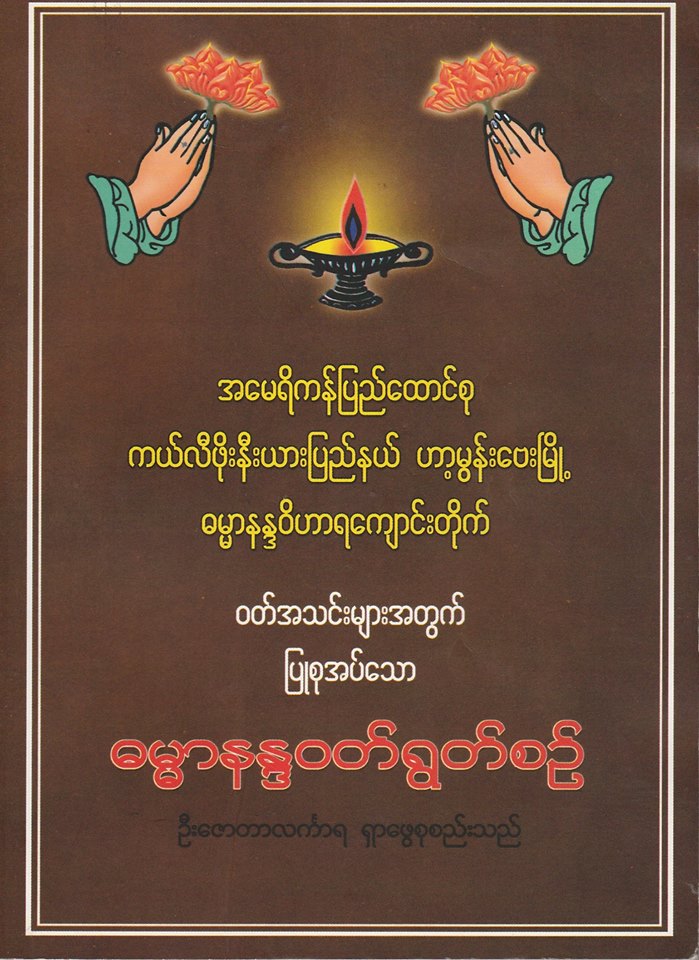
Featured in “Yahanda Hnit Poke Ko Htoo Myar” book by Dhammacariya U Htay Hlaing
Dhammananda Sayadaw U Silanandabhivamsa
External examiner for the Pali Department
Rector of ITBMU
Chief Resident Monk of Dhammananda Vihara
Spiritual Advisor of several monasteries and meditation centers
Wrote books in Pali, Burmese and English
Served as Chief Compiler of the Tipitaka Pali-Myanmar Dictionary for the Sixth Buddhist Council.
In April of 1979, Mahasi Sayadawgi made a Dhamma Duta mission to the US. At the request of the devotees, Sayadawgyi agreed to leave behind Sayadaw U Silanandabhivamsa and Sayadaw U Kelasa as “trail blazers” for the promulgation, preservation, and the promotion of Sasana.
There were no Burmese Buddhist monasteries and/or temples, but the Sayadaws were determined to sacrifice their blissful lives back in their homeland to do whatever they can to do the Sasana work.
Senior monk or the Chief resident monk of a monastery. Often used together with “U”. e.g Sayadaw U Sobhana
A distinguished sayadaw may be referred to as Sayadawgyi as a sign of reverence.
The terms “sayadaw” and “sayadawgyi” originally corresponded to the senior monks who taught the former Burmese kings. They may be influential teachers of the Buddhist Dhamma and also outstanding meditation practitioners. They usually are Abbots of monasteries or monastery networks with a large number of resident monks and a lay following.
Honorific Terms
Several honorific terms exist for Buddhist monks, reflecting their achievements and number of Vassa spent.
The given name is extended with Prefixes, Suffixes and Titles
Prefix
Achan (used in Thailand)
Ashin အသျှင်
Baddhanta ဘဒ္ဒန္တ
Bhikkhu ဘိက္ခူ
Maha Thera မဟာထေရ
Oo ဦး၊ ဥူး
Sayadaw ဆရာတော်
Sayadawgyi ဆရာတော်ကြီး
Shin ရှင်
Upazin ဥပဇင်း
Uzin ဦးဇင်း
U ဦး၊ ဥူး
Thera ထေရ
Venerable
Suffix
[A]bhivamsa” အဘိဝံသ Pass “Set kyar thi ha Dhammacariya” examination before age 26
Lankara လင်္ကာရ Pass Lankara dhamma exam as a novice
Pa hta ma gyaw ပထမကျော် First in the “Pa hta Ma Pyan” examination
Thi ro ma ni သိရောမဏိ Finished 9 “kyans” in a single year
Wun tha ka ဝံသက First in the “Set kyar thi ha Dhammacariya” examination
Title
Some monks may highlight their accomplishments
Dhammacariya ဓမ္မာစရိယ Dhamma lecturer
Thamane Kyaw သာမဏေကျော် Stood first in the Lankara examination
Pali Paragu ပါဠိပါရဂူ Completed the examination in Pali
Agga Maha Pandita အဂ္ဂမဟာပဏ္ဍိတ Senior sage
Tipitaka Dara တိပိဋကဓရ Completed Three Baskets — “Vinaya”, “Sutta”, and “Abhidhamma”
Dwee Pitaka Dara ဒွိပိဋကဓရ Completed Two Baskets
[informal] “Ta Pone Saung” တပုံဆောင် Completed One Basket
[informal] “Hna Pone Khwair Saung” နှစ်ပုံခွဲဆောင် Completed “Vinaya”, “Sutta” and the first part of “Abhidhamma”
U Vicittasarahhivamsa
A monk may be addressed by
his given Dhamma name e.g. U Vicittasara
a qualified name, e.g. U Victtasarabhivamsa (with the suufix -abhivamsa)
by the name of his monastery e.g. Mingun Sayadaw
title e.g. Tipitakadara
and the combination e.g. Tipitakadara Mingun Sayadaw U Vicittasarabhimvamsa
Venerable Mingun Sayadaw U Vicittasarabhivamsa, served as “Chief Respondent” at the Sixth Buddhist Council (1954 – 1956) in Yangon,
He earlier passed the Tipitaka Examination with Distinctions in all subjects.
The Guinness Book of World Records recognized his memory and the feat of reciting 8000+ pages of the Pali Canon.
Thus, he could be addressed in several ways “
Mingun Sayadaw Reference to his home monastery at Mingun
U Vicittasara Name given at the Ordination
U Vicittasarabhivamsa Passed the Mandalay Setkya Thiha examination before age 26
Sayadaw U Vicittasarabhivamsa Chief Resident Monk
Mingun Sayadaw U Vicittasarabhivamsa Chief Resident Monk of a monastery in Mingun
Tipitaka Sayadaw U Vicittasarabhivamsa Passed Tipitaka examination
Tipitakadhara Dhammabhandakarika Sayadaw U Vicittasarabhivamsa First monk to be awarded the titles Tipitakadhara (“Bearer of the Tipitaka) and Dhammabhandakarika (“Treasurer of the Dhamma”).
According to the Theravada Buddhist tradition, there are six Buddhist Councils. The last two were held in Burma.
Mandalay
Ripley’s “Believe it or not” named U Khanti Kyauksar (inscriptions) of the Fifth Buddhist Council (Synod) held in Mandalay as the “Largest Book” in the world.
The Council was held to celebrate the 2400th Year in Sasana Era.
King Mindon was the Sponsor.
Kaba Aye
U Nu & Sir U Thwin were prime movers for the Sixth Buddhist Council, which was held to celebrate the 2500th Year in Sasana Era.
Mahasi Sayadaw မဟာစည်ဆရာတော် acted as the Questioner.
Mingun Sayadaw မင်းကွန်းတရာတော် acted as the Reciter & Responder.
Mahasi & Mingun Sayadaws
The Guinness Book of World Records listed Tipialkadara Sayadaw Ashin Vicittathara as having an outstanding memory — the best at that time [in 1954]. Sayadaw served as the Chief Reciter (a la Ashin Upali and Ashin Ananda at the First Buddhist Council) at the Sixth Buddhist Council held at KabaAye (World Peace) Pagoda in Rangoon, Burma from 1954 – 1956.
Sayadaw could memorize, recall, and give exposition on 8027 pages of the Buddhist Scriptures known as Tipitaka [“Three Baskets”] :
Vinaya – Rules of monastic conduct
Sutta – Buddha’s discourses
Abhidhamma – Ultimate reality)
He took the 2nd – 5th Tipitakadara examinations and passed with distinction in both oral and written parts. Sayadaw served as an examiner for the first Tipikadara examination. Sir U Thwin requested him to take the examination. The rest is history.
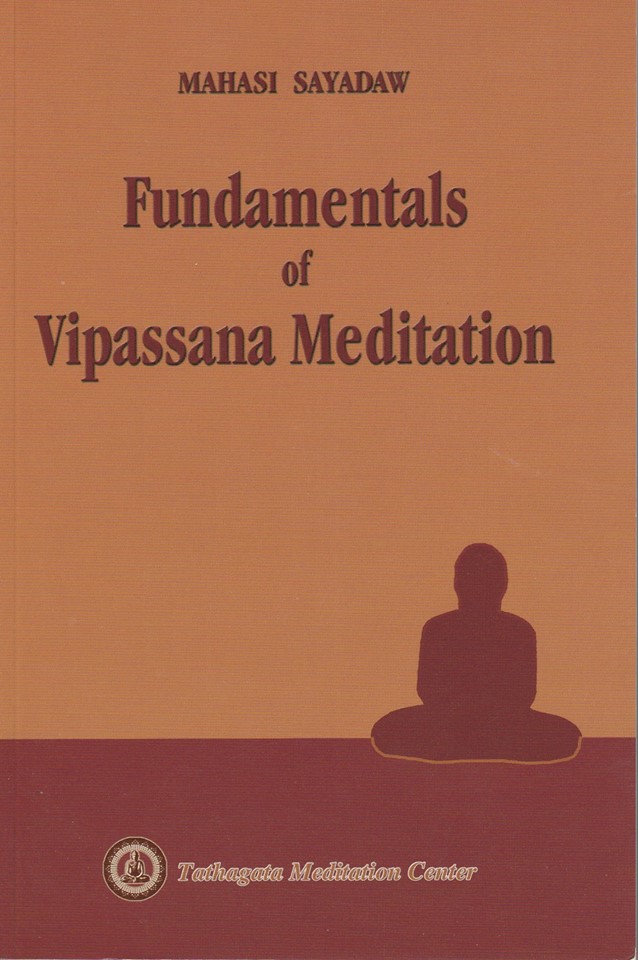
Primary Author : Mahasi Sayadaw Translator : Maung Tha Noe Editor: Sayadaw U Silananda Original Publisher : Dhammachakka Meditation Center, 1991 Republished with other sources : Tathagata Meditation Center
Other sources included the book “Instructions to Meditation Practice” by Mahasi Sayadaw “Benefits of Walking Meditation” by Sayadaw U Silananda “Guidance for Yogis at Interview” by Sayadaw U Pandita “An Interview with Mahasi Sayadaw” by Thamanaykyaw, translated by U Hla Myint
Received higher ordination as a monk at the Neikbeinda Monastery in Pyay / Prome.
Completed one part of the Tipitaka Examination.
Dhamma Duta missions in Japan, US, Jamaica, Canada, Taiwan …
Joined U Silananda at the Dhammanada Vihara (then in Daly City, California).
In 2007, he succeeded U Silananda as Chief Resident Monk of Dhammananda Vihara, Half Moon Bay, California.
Publications
He has published books in
Myanmar e.g. Book for Chanting/Recitation
English e.g. The Basic Teachings of Theravada of Buddhism (edited by Hla Min and Don Johnson)
Japanese e.g. Translation of selected works of U Silananda
Book for Dhamma Chanting
Chanting
The Basic Teachings Of Theravada Buddhism
Author: U Jotalankara (Dhammananda Vihara, Half Moon Bay, California, USA)
Editors: Hla Min and Don Johnson
First edition : June 2004
Foreword by Ven. Sayadaw U Silanandabhivamsa
Fifteen chapters
1. Program of worshiping
2. Explanation of words
3. Benefits and stories of taking refuges and precepts, and offering food, flowers, etc.
4. The discipline or duties of laypersons (Gihi-vinaya)
5. What is the teaching of the Buddhas?
6. Cultivating Good
7. Purifying One’s Mind
8. The For Divine Abodes (Brahama-viharas)
9. Vipassa-bhavana, Insight or Mindfulness Meditation
10. The Four Noble Truths & Four Noble Persons
11. The Teaching to the Kalamas
12. The Pali Alphabet in Roman Characters
13. Program of Chanting (Paritta — Eleven Protective Suttas — and other Suttas)
14. First two sermons of the Buddha & the Program of Chanting to Consecrate a Buddha Image & Ovada-patimokha
15. Program of Novice Ordination
This book has been used in the Summer Dhamma Camps at Dhammananda Vihara
He has written Dhamma books in Myanmar, English, and Japanese. Some books were compiled from his articles in the Dhammananda Newsletter published by the Theravada Buddhist Society of America (TBSA).
Book 2
Theravada Buddhist Novice Ordination and Monk Ordination
Author : U Jotalankara
Editor : James Rives, Ph.D.
First Edition : August, 2008
Two kinds of ordination
Pabbajja : to become a novice (samanera)
Upasambada : to become a monk (bhikkhu)
Novice Ordination
Three steps of novice ordination
shaving off the hair of the head
putting on robes
giving the Three Refuges
The procedures for the second and third steps of novice ordination
Paying homage to the Three Gems
Handing robes to the teacher
Asking for the robes from the teacher and putting them on
Requesting a novice ordination
Requesting the Ten Novice-precepts with the Three Refuges
Paying homage to the Buddha
Taking the Three Refuges
Taking the Ten Precepts of a Novice
Choosing a teacher to be the candidate’s preceptor
Reply of the preceptor
Reflecting on the use of the Four Requisites
Reflecting on the repulsiveness of the body
Ten conditions for expulsion from Novice-hood
Ten punishments
Monk Ordination
Five fulfilling conditions for becoming a monk
Perfections of a person Eleven categories of disqualified persons
Perfection of an assembly
Perfection of the Sima (“Thane”) Two kinds of Sima
Perfection of the Motion
Perfection of the Kammavaca
The procedure of monk ordination
1. Choosing the candidate’s preceptor
2. Stating the ownership of alms-bowl and robes
3. Giving temporary names
4. Ordering the candidate to go and stand outsie the Sangha
…
10. Reciting the Natti and Kammacvaca
…
15. The new monk’s special request
The procedure of monk ordination for two candidates
Succeeded U Silanandavhivamsa as Rector of ITBMU (International Theravada Buddhist Missionary University).
Gave courses and sermons. Many are available as MP3.
Taught Abhidhamma in Myanmar and beyond.
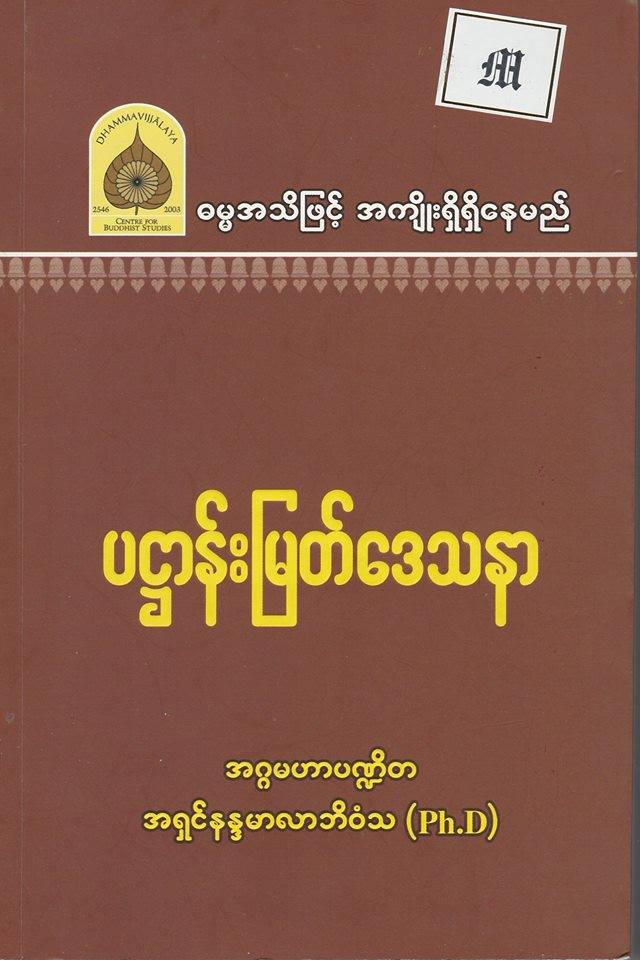
Fundamental Abhidhamma Part I was first taught in 1997 at Maryland, USA. The book was edited by Dr. Khin Maung U (First in Burma in the Matric exam of 1963). The second edition was published by the Center of Buddhist Studies (CBS), Sagaing Hills in 2005.
Fundamental Abhidhamma Part II was published by the Center of Buddhist Studies (CBS), Sagaing Hills in 2007.
Fundamental Abhidhamma Part I
By Dr. Nandamalabhivamsa
First edition : June 1997
Editor : Dr. Khin Maung U
Myanmar-Buddhist Meditation Society, Baltimore, Maryland, USA
Second, extended edition : January 2005
revised : November 2005
Center for Buddhist Studies (CBS), Sagaing Hills, Sagaing, Myanmar
Contents
The History of Abhidhamma
(1) Why is it called Abhidhamma? (2) Who is the author? … (8) The role of Abhidhammattha sangaha (9) The role of Vibhavani (10) Ledi Sayadaw (11) Paramatthadipani, the critic of Vibhavani
He passed away on 4 April 1989 in Rangoon, Myanmar.
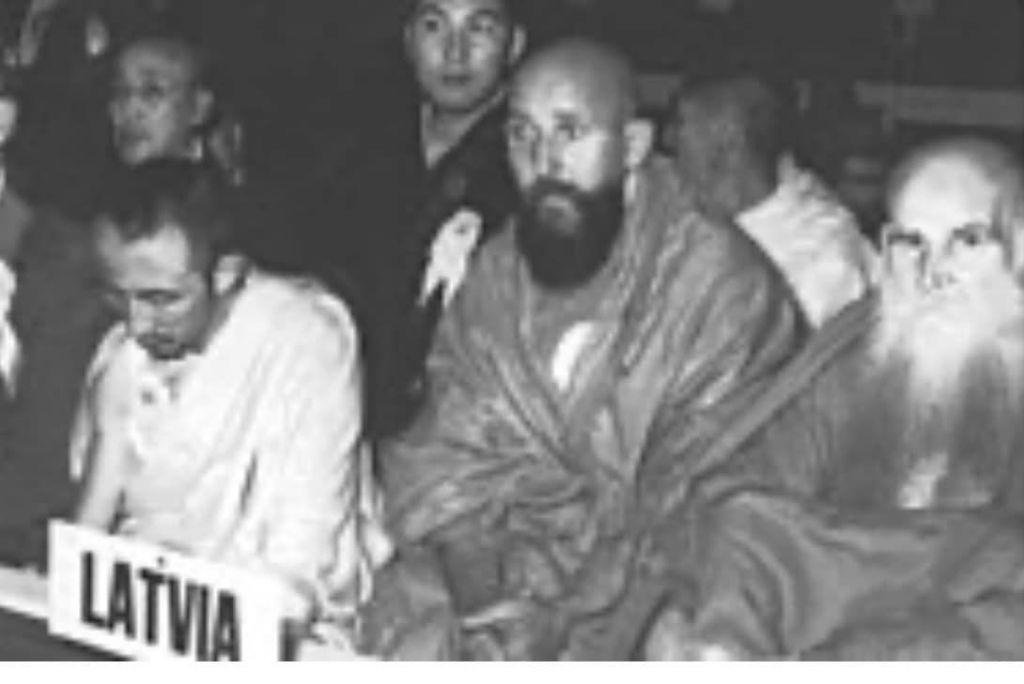
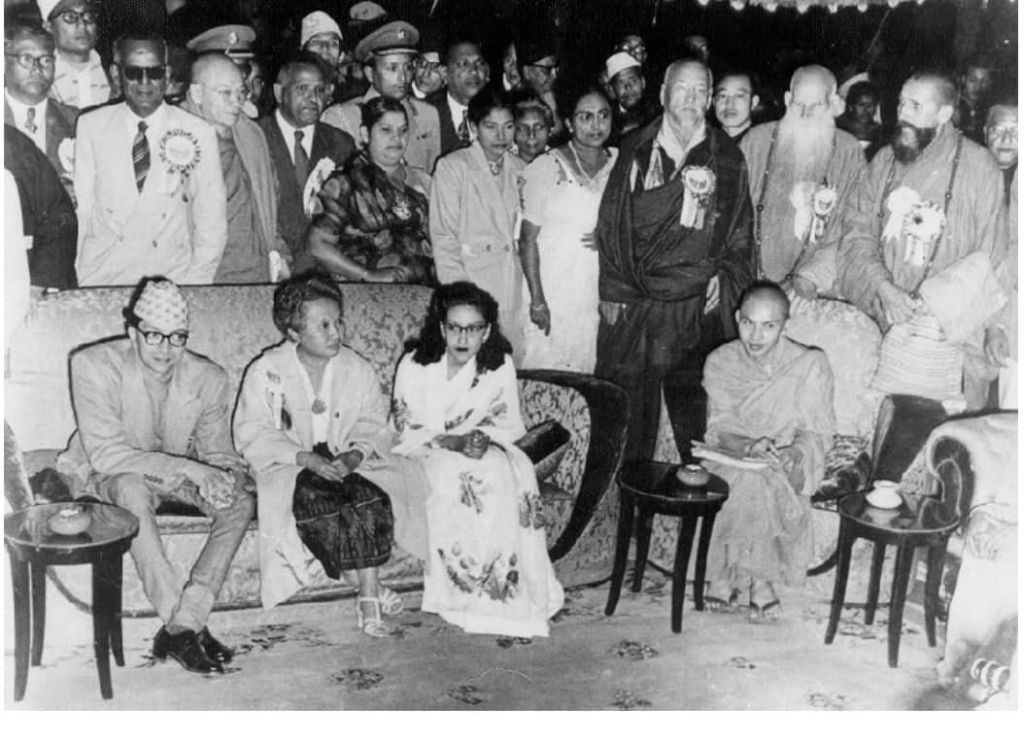
He and his mentor Karlis Tennisons (Buddhist Archbishop of Latvia and Sangharja for Estonia and Lithuania) lived for many years in a monastery on “A Le Pyit Sa Yan” အလယ် ပစ္စယံ of Shwe Dagon Pagoda.
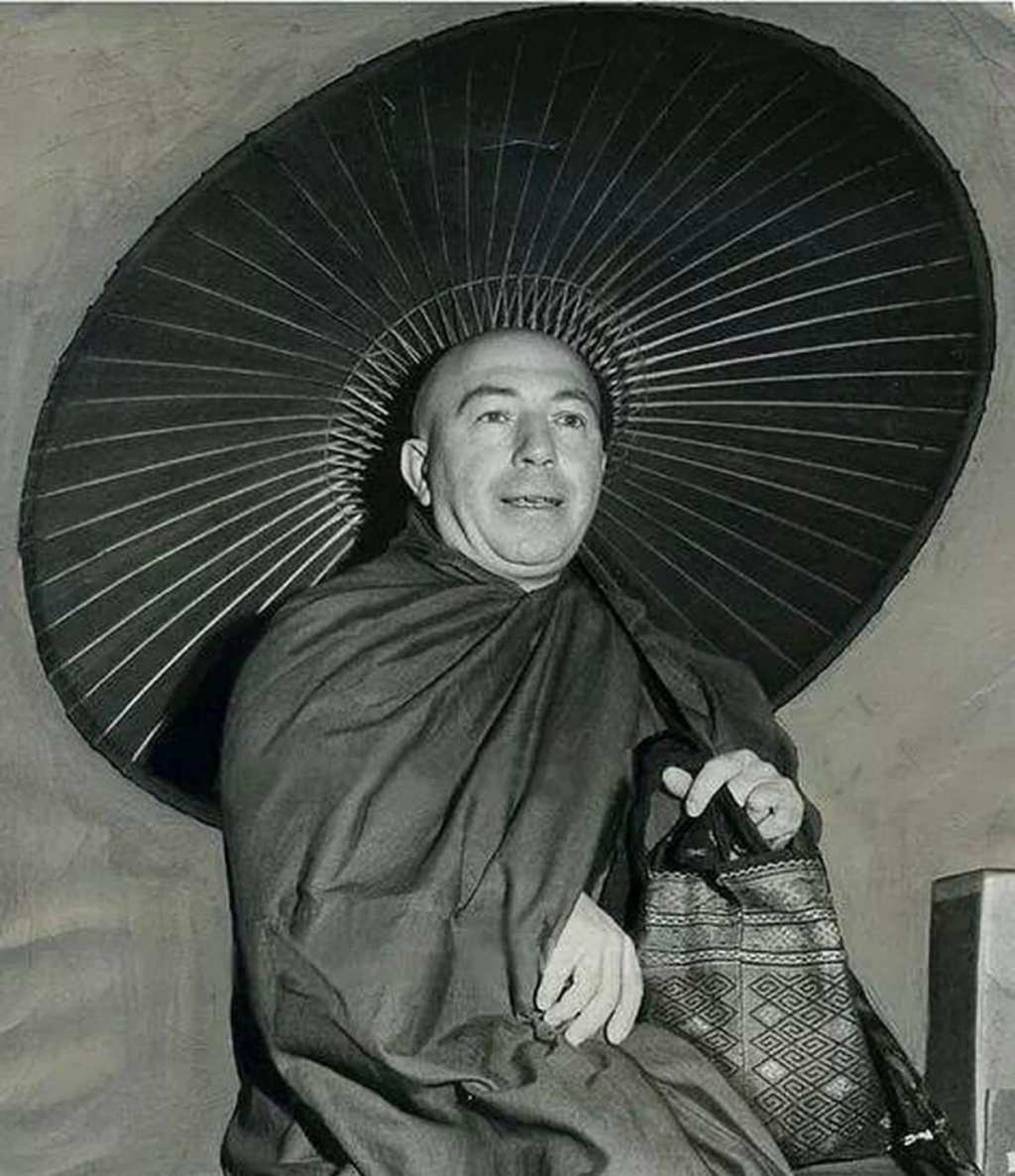
He went for alms round every day, and was fondly known as “Mote Seik Phone Gyi” (named after his beard).
After his mentor’s demise, he inherited his master’s titles. He shaved his beard and became ordained as a Theravada monk with the name “Ashin Ananda”.
He was a Poet Laureate. He wrote poems in English. He also translated Burmese poems (including Anandathuriya’s kabyar) into English.
It amazes us that books (and even a book chapter) can change a person’s life.
Salvatore Cioffi was working as a Chemist in the USA.
He was from a devout Catholic family, and his elder brother was a Priest.
He received a book present from his supervisor for Christmas.
One of the chapters was “Dhammapada“. After reading the chapter, Samvegha crept in. He quit his job and then went on pilgrimage to the places sacred to Buddhism.
In 1925, he was ordained in Burma as a Buddhist monk named “U Lokanatha“.
He published a booklet, “Why I became a Buddhist.” He wrote, “I became a Buddhist. My supervisor remained a Christian.”
My maternal grand mother offered a monastery for U Lokanatha in Bawdigone (Windermere, Rangoon).
U Lokanatha practiced Dhutanga.
He also preached and had Dhamma Dhuta missions to India and Ceylon.
Sayadaw gave dhamma talks in Mandalay and Maymyo. Dr. Soni was a principal supporter.
He paid respect to Myingyan Sun Lun Gu Kyaung Sayadaw. The event is described in “Sun Lun Sayadaw’s Biography“.
He corresponded with B. R. Ambedkar, the Indian Dalit (“untouchables”) leader.











 HlaMin