Highest marks in Chemistry for HSF Only exam in 1962
11th in Burma for Matric exam in 1963
Chemical Engineering (Pulp & Paper Specialty) from Dresden University, Germany
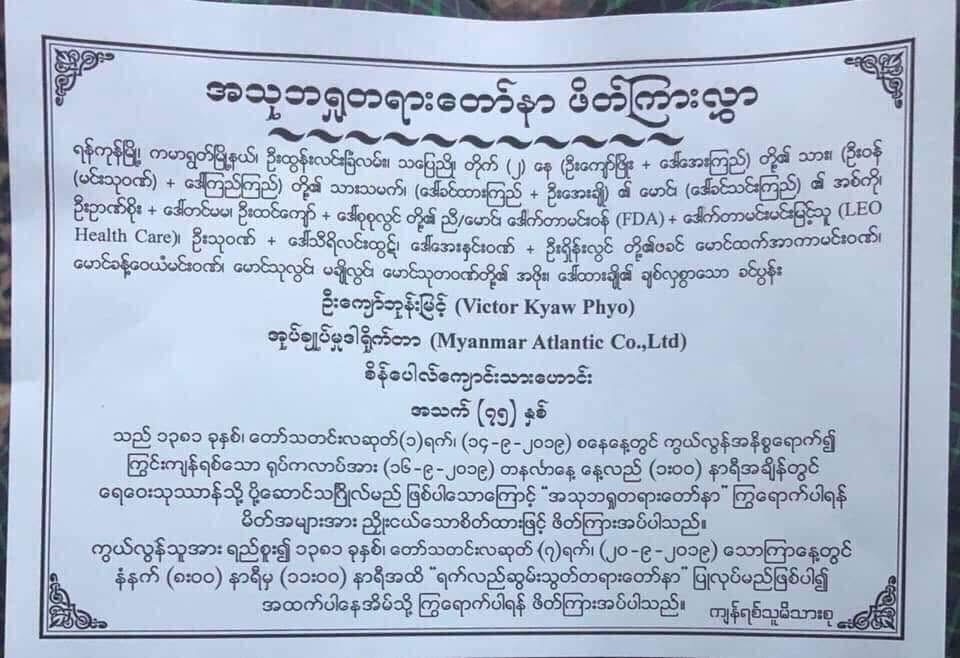
Passed away in Wales, UK
Mg Mg Kyi
Kyaw Phone Myint / Victor Kyaw Phyo
(Early) Organizer, Combined 1st BE Intake of 64 and 65
Spouse : Hta Cho (Wun)
Kyaw Wynn
Birthday
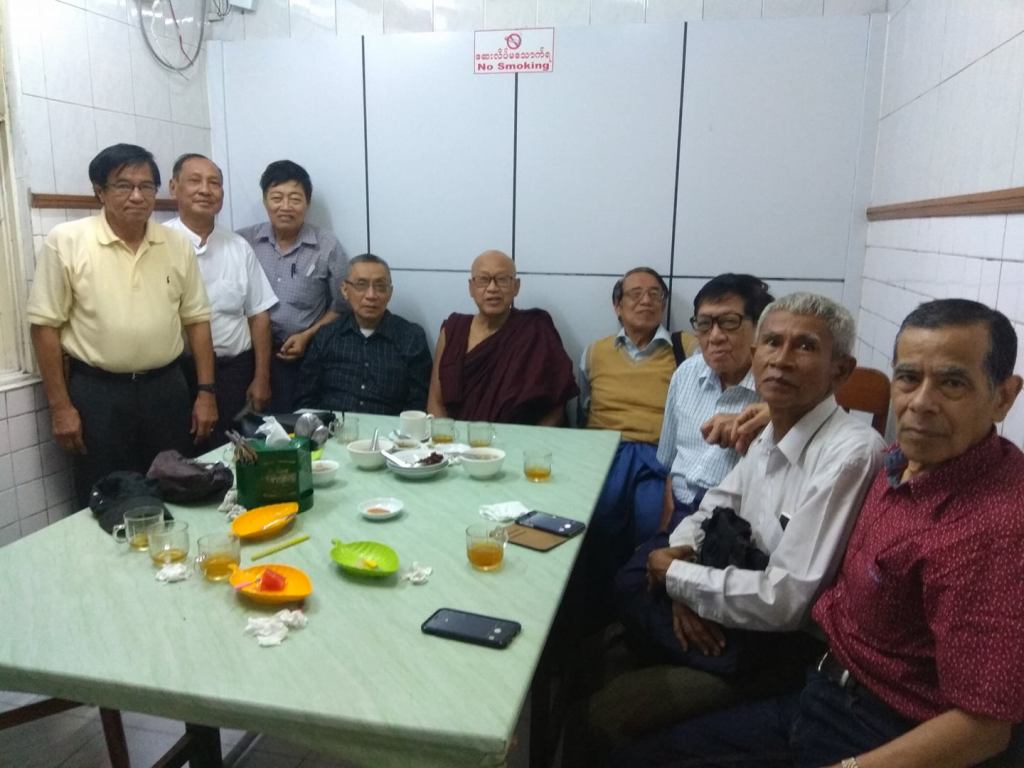
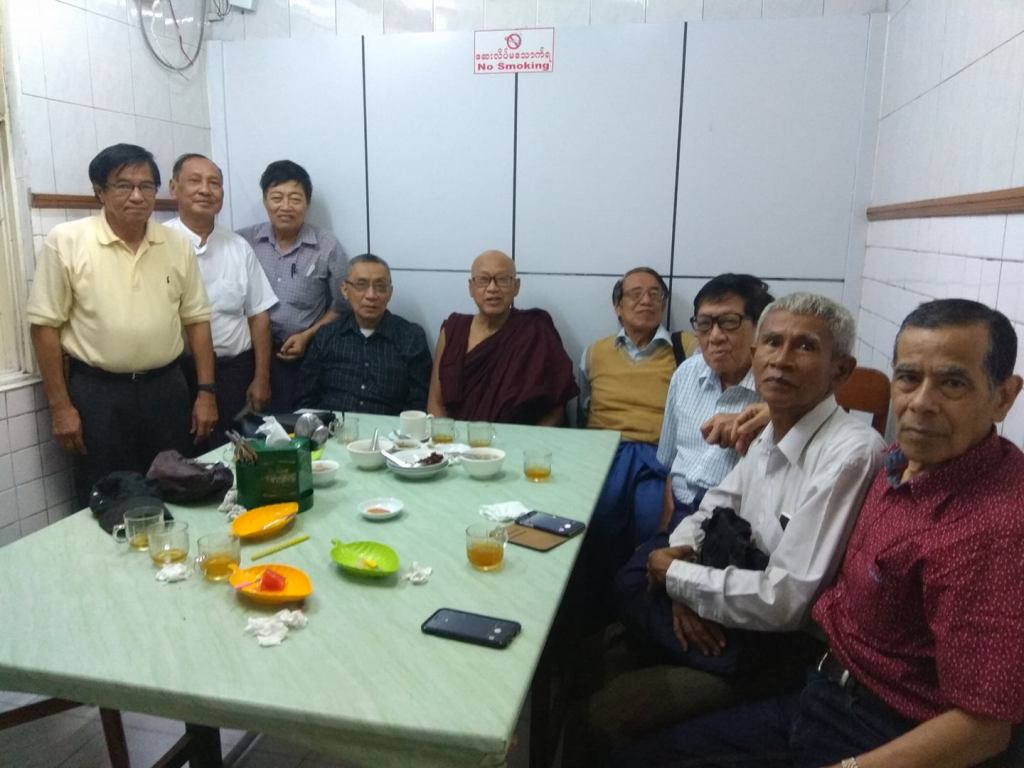
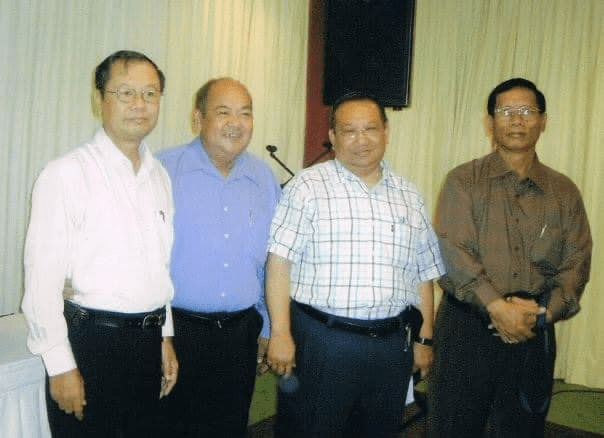
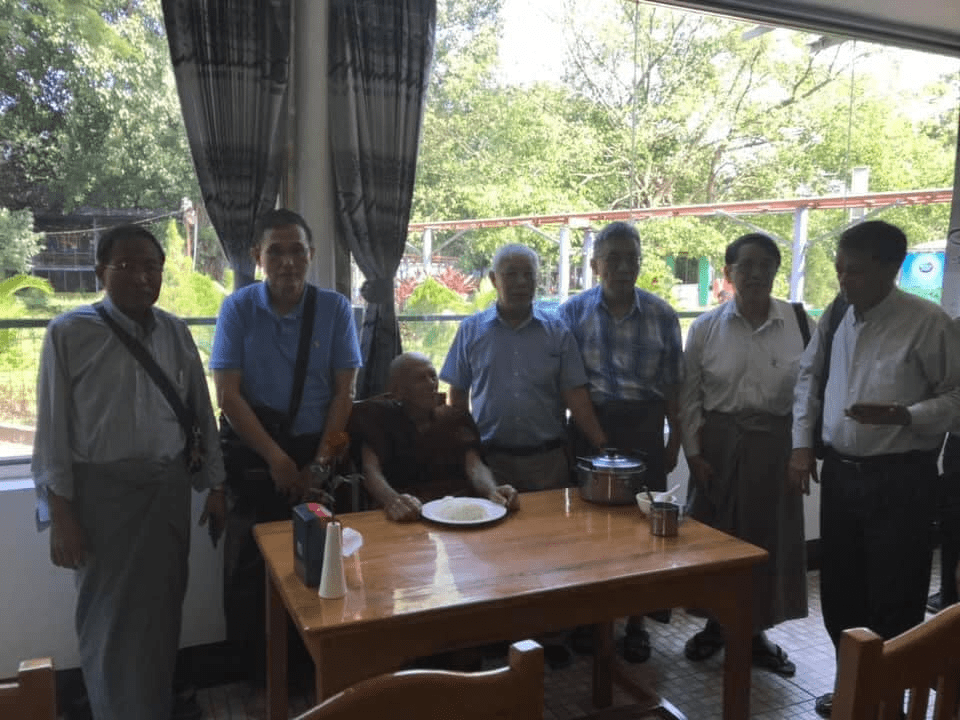
He offered birthday soon kyway to Uzin Okkantha (Victor, Aung Chaw) and treated his former classmates (some of whom have not seen each other for a long time). The attendees include :
Aye Ngwe (Edwin)
Kyaw Win (“Birthday Boy”)
Khin Maung Bo (Alan, EP69)
Hla Min (EC69)
Uzin Okkantha (Aung Chaw, Victor, C69)
Than Win (M69)
Aung Kyi (Arthur)
Tin Tun (M69)
Khin Maung Zaw (Frank Gale, IM1 70, UK)
SPHS Novice Crew at RUBC
Maung Maung Kyi (Bow, GBNF)
Hla Min (No. 2)
Kyaw Win (No. 3, EE)
Willie Soe Mg (Stroke, GBNF)
Myint Thein (Cox, SPHS 62, B.Com 66, GBNF)
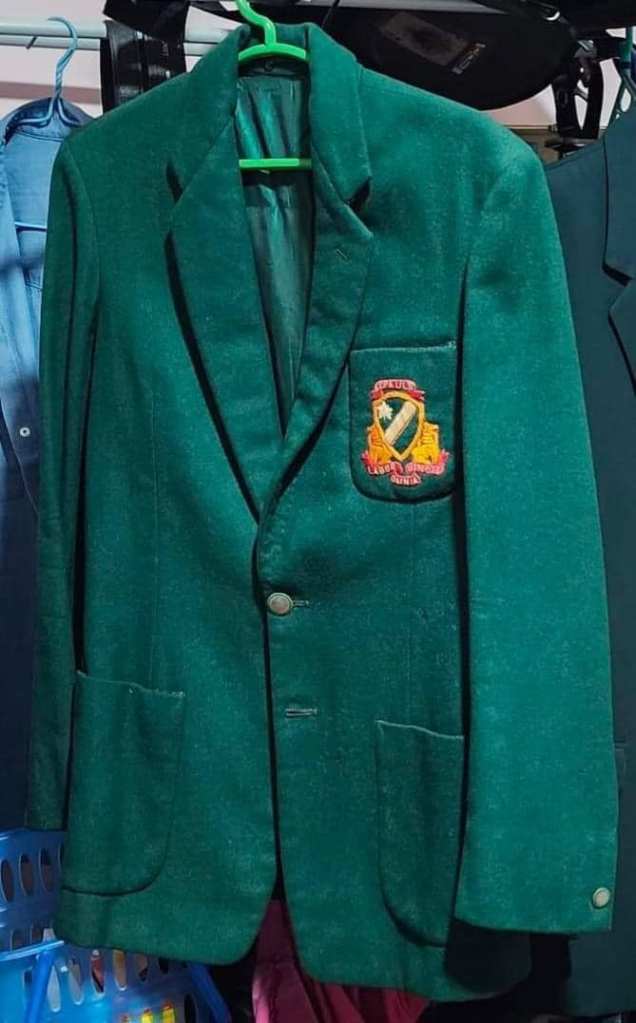
We were all awarded Full Green.
When the schools were closed following the first Anniversary of 7th July, Kyaw Win and Maung Maung Kyi applied for scholarships to study in Germany.
Maung Maung Kyi received Dip Ing in ChE. He worked at Sittaung Paper Mill and PPIC before moving to Wales, UK.
Kyaw Win had a higher calling. He and his friends protested in front of the Burmese Embassy. The higher authorities were alarmed at their movement and recalled back to Burma. Fortunately, he was able to complete his EE in Rangoon.
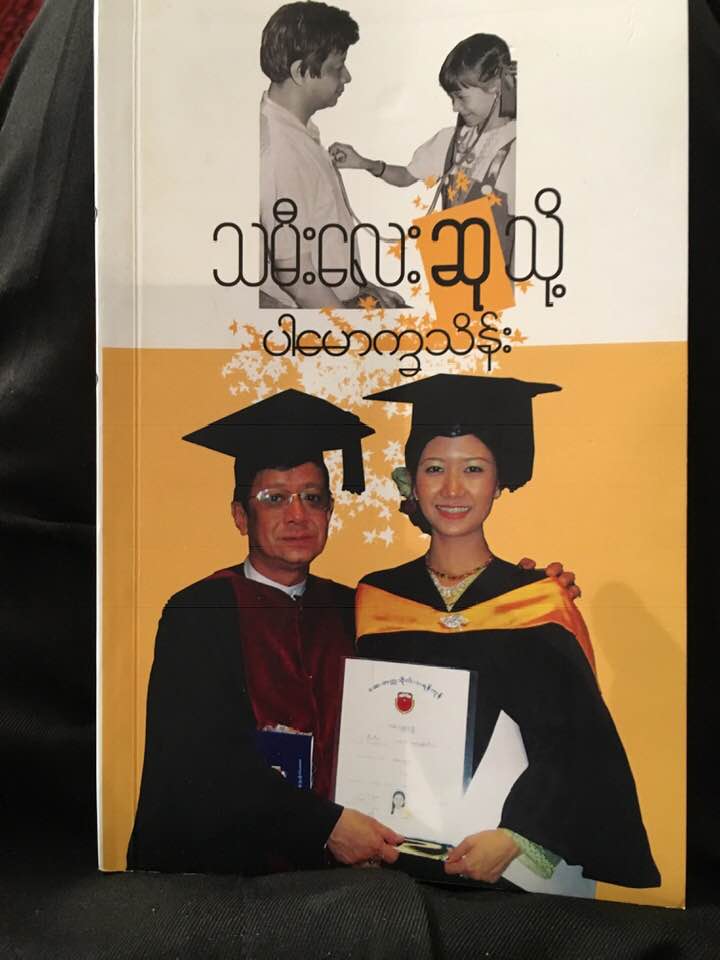
Dr. Thane Oke Kyaw Myint (SPHS60) receives books from his former students and from his god-children.
He received a book from Professor Dr. Nyunt Thein.
Dr. Nyunt Thein proposed to have some (if not all) of the examinations for MRCP to be held in Burma.
Dr. Thane Oke Kyaw Myint wrote :
Due to Nyunt Thein’s efforts, all parts of the exam are being conducted in Rangoon and Mandalay.
Dr. Thane Oke Kyaw Myint wrote :
I am so fortunate that books written by my former students are either given to me by the authors or bought for me by my niece Hnin Wit Yee or Min Thet Aung.
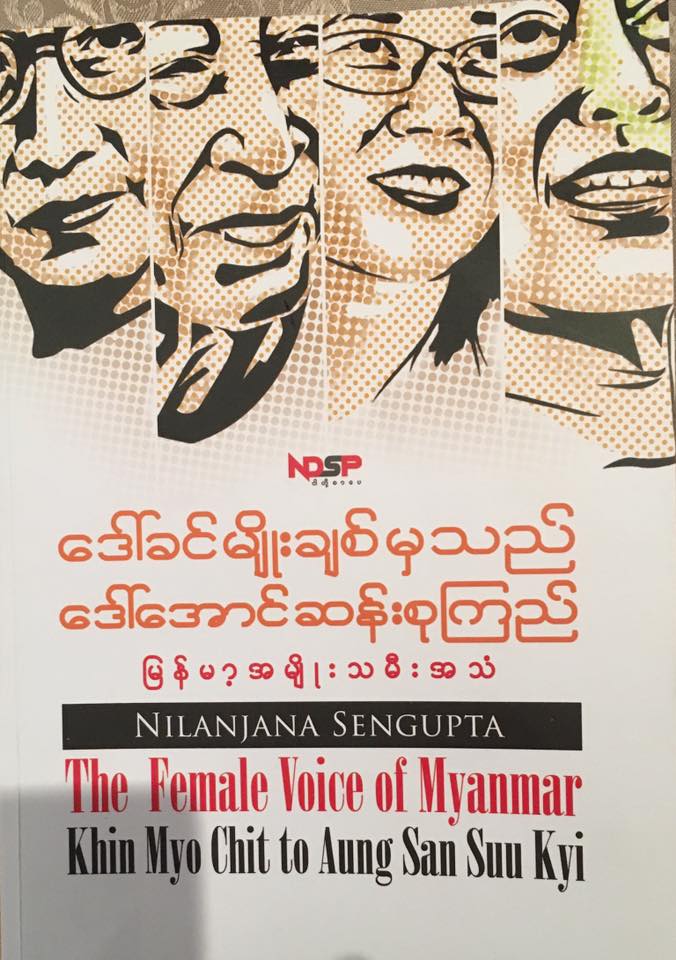
I got a signed copy of “The Female Voice of Myanmar” by Nilanjana Sengupta, translated into Burmese, by Myae Hmone Lwin. It was given to me by Ma Thida.
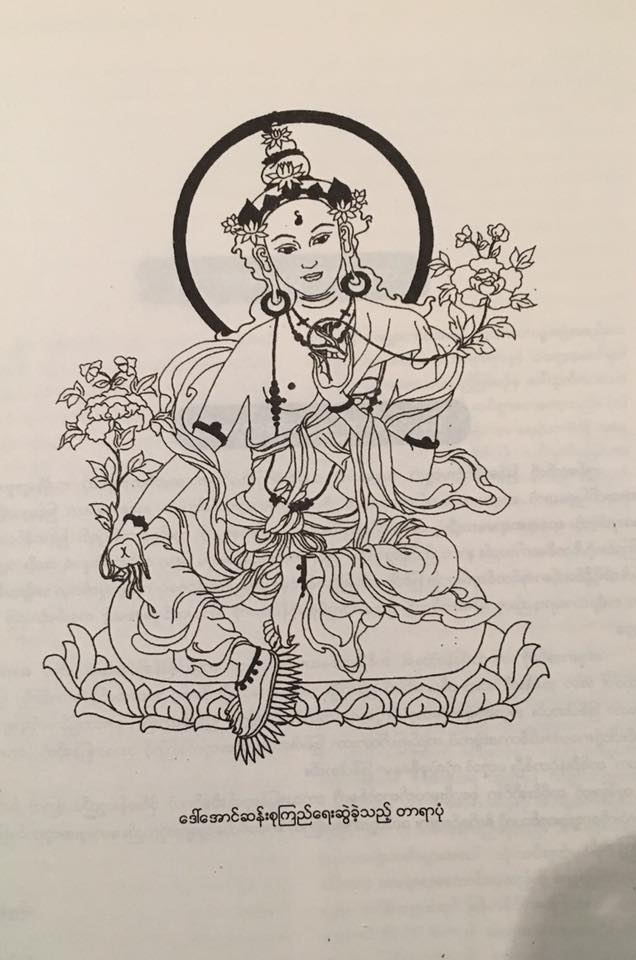
The book consist of articles about and by four eminent lady Burmese writers and activists: Ludu Daw Ah Mar, Daw Khin Myo Chit, Daw Aung San Su Kyi and my “daughter writer” Ma Thida (San Gyaung).
Please do not say that I am biased towards my daughter but I read the articles on Daw Ah Mar, Daw Khin Myo Chit and Daw Sung Dan Su Kyi once only but read and reread the articles by and on Ma Thida about three times or more.
Coming from a family whose members were at different times and at different lengths of incarceration by the military government, each article about Ma Thida in prison brought back sad memories of my own family. I had to pause even in the middle of each article as such memories flooded my mind.
From a very young age Ma Thida stand out among her contemporaries . A multifaceted person with deep attitudes and understanding of right and wrong, justice and injustice, tears welled up in my eyes reading what she went through in prison, and had to stop reading after going through some incidents described by her in the book.
I am happy and very proud that she can be what she is now, an activist, feminist, author and running PEN Myanmar and many more.
This book must be read in Burmese as in any other language, much would be lost in translation.
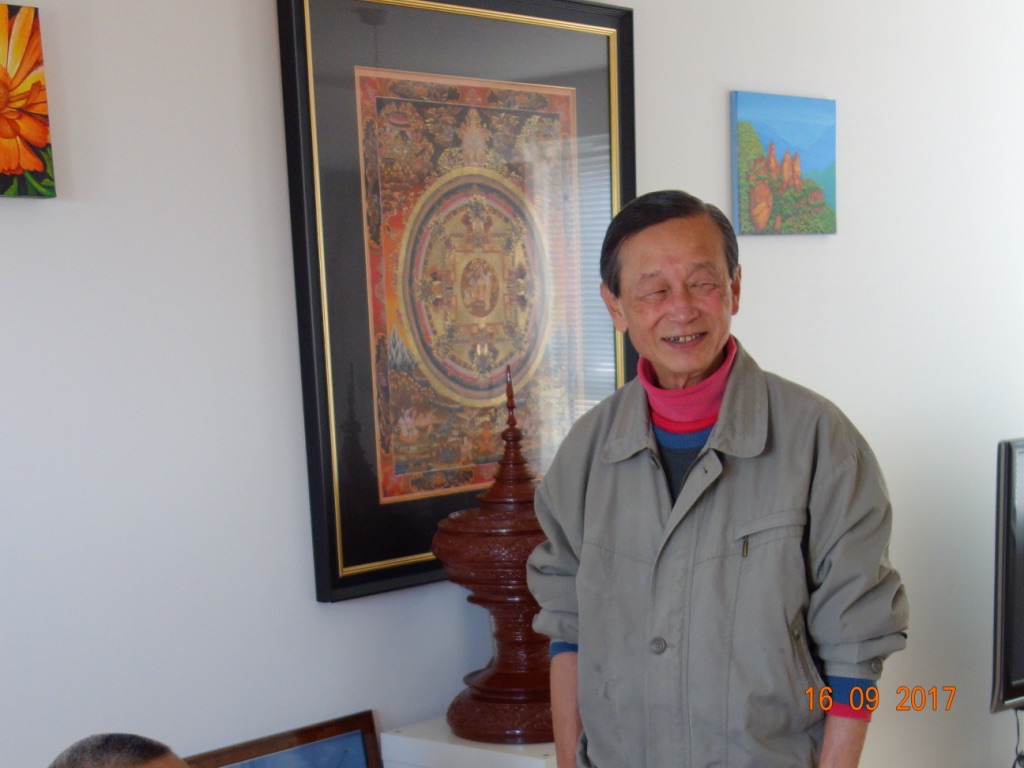
Kyaw Win (SPHS63) celebrated his birthday with a Soon Kyway & Lunch Gathering at ရွှေဘ ထမင်းဆိုင်
Kyaw Wynn’s birthday at “Shwe Ba” Hta Min Saing
GBNF
Four former SPHS63 classmates — Uzin Aung Chaw (Victor, Ashin Ukkamsa), Aung Kyi (Arthur), Khin Maung Bo (Alan) and Tin Tun — are now GBNF (Gone But Not Forgotten).
Reunion of SPHS63 in January 2018
Aye Ngwe (Edwin Ngwe) : He used to play soccer — after Saturday morning tests — with Puma shoe. He gave me a ride back home after the lunch gathering.
Khin Maung Bo (Alan Saw Maung, EP68, GBNF)
Hla Min
Ashin Ukkamsa (Aung Chaw, Victor Chaw, C69, GBNF) : He became a monk after retirement. He spent most of the time in Sagaing Hills. He later moved to the Irrawaddy Delta Region.
Than Win (M69)
Aung Kyi (Arthur Kyi, GBNF)
Tin Tun (M69, GBNF)
Khin Maung Zaw (Frank Gale, UK)
Kyaw Wynn rowed as No. (3) on our Novice Crew. Willie Soe Maung (Myint Soe, GBNF) was the Timing Stroke. Maung Maung Kyi (GBNF) was Bow. I rowed as No. (2). We were Runners-up for Senior Novices, and received Full Green. For his birthday, Kyaw Wynn offered Soon and Garawa Money to Ashin Ukkamsa.
Frank Gale (Dr. Khin Maung Zaw, UK) was visiting his elderly mother in Yangon. His mother passed away in her late 90s in 2020. He also lost his eldest sister, who was the main caregiver for the mother.
Alan, Than Win and Tin Tun attended most gatherings of RIT69ers. Uzin Aung Chaw attended selected 69er gatherings.
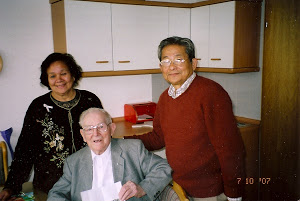
This is a belated report of my wife Gandasari’s (“Riri”) and my visits with Brother Charles Everard in Liss (Hampshire, England) and Brother Felix (Albert Gissler) in Illertissen (Germany). Technical and other problems got in the way, delaying this report.
Saturday, 7 July 2007
After attending Dora Than E’s funeral in Oxford, followed by a reception at St. Hugh’s College (Aung San Suu Kyi’s alma mater), our friends Ken & Marion Freeman of Pershore, drove us through the English countryside to Liss, Hampshire. It was a pleasant 2.5-hour drive on uncrowded roadways. (Some of you may recall Aunty Dora as the recording artiste of yesteryear whose professional name was Beelat-pyan Than.She later worked for the United Nations, beginning at its founding in 1948 at Lake Success, New York. Had she survived her final fall, she would have turned 100 on 16 February 2008.)
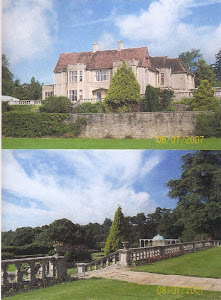
Clayton Court, the De La Salle Brothers retirement community at Liss, is a beautiful 22-acre estate with gently manicured lawns, gardens, and gorgeous views of the rolling hills. There are three large structures on the gated property. It is a place with spirit, where one’s soul is rejuvenated. The Fratres Scholarum Christianarum, (Christian Brothers), acquired this estate, once owned by a wealthy gentry, in 1974. The other FSC retirement home in England is located in Manchester.
We arrived at Clayton Court about 5:45 P.M. The place was abuzz with staff, volunteers, and neighbors who were preparing for a party for one of the brothers’ 70th birthday. The brothers were in the chapel doing devotions. Becky, a staffer, who was my contact, was most gracious. There was another staffer whose forearms were heavily tattooed. “Were you in the royal navy?” I asked. “Yes,” he said with a glint in his eyes. “I was a cook on the aircraft carrier Ark Royal,” he answered with pride. The two were most welcoming and amiable. From them, I took comfort that the brothers were living and eating well.
When prayers were over, Brother Director Joseph Hendron wheeled Brother Charles out of the chapel. I recognized the former right away even though I had not seen him since 1979 when my De La Salle, and later St. Paul’s classmate, Brother Patrick Minus, and I visited him at the Brothers’ Mother House in Rome. I do not know whether Brother Charles recognized me, but he broke out in a big smile when I greeted him in Burmese. At 89, dementia has diminished much of his memory and affected his speech. I helped him eat some of the goodies that were generously spread out on the table. He uttered a few words in Burmese: “taw bee, …yay ne ne thauk chin de,” (တော်ပြီ။ ရေနည်း နည်း သောက်ချင်တယ် enough.., want to drink a little water), etc. I spent the rest of the afternoon with Brother Charles and the other party goers until the celebrants faded away.
Brother Director Joseph is truly a personification of tremendous love and patience. He was most gracious. He made us feel very welcome. We were accommodated in comfortable guest rooms which commanded beautiful views of the estate.
Sunday, 8 July 2007
Riri and I took a leisurely stroll on the estate as the sun shone over the countryside. At breakfast, I sat on Brother Charles’ left while Brother Joseph occupied the end seat on the right. Both Brother Joseph and I helped Brother Charles with his breakfast. His appetite was good.
Breakfast over, I wheeled Brother Charles back to his room. The room was nicely decorated with Burmese and other memorabilia. There was a large framed photograph of a much younger Brother Charles of his Burma days. (I recall seeing him in 1959 at the Kalaw Railway Station as he hopped on to the steam locomotive. “I always ride in the gaung dwe (locomotive),” he harked, as the train pulled away towards Thazi. He was happy as a lark. (Riri and I were teachers at Kalaw’s Kingswood School that year).
Bidding Brother Charles adieu was difficult. I had known him when we were both young long years ago at a place so far away.
We took leave of Brother Joseph and the other Brothers later that morning. Ken and Marion drove us to Liphook from where we boarded the National Express coach for London’s Victoria Station. (Marion and I began our friendship as pen pals when we were both 16. I was then at Woodstock School in the Himalayan town Mussoorie, India, in 1950).
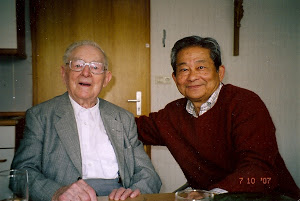
Brother Charles with U Kyaw WinClayton Court, Liss, Hampshire, England
Monday, 9 July 2007
After spending the night in London, we flew to Frankfurt, arriving there in the evening. We bedded down at Hotel Manhattan, conveniently located across the street from the Frankfurt bahnhoff (railway station).
Tuesday, 10 July 2007
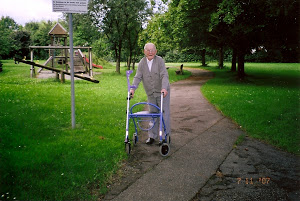
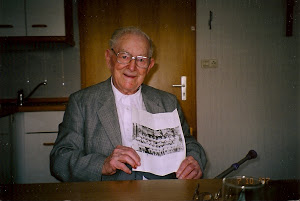
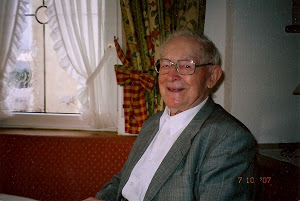
The train from Frankfurt took us to Ulm where we changed for Illertissen. It was raining when we got there in the afternoon. We started to walk towards Kolleg der Schulburder. A kind gentleman picked us up along the way and drove us to the Kolleg, sparing us from getting wetter. (He did not speak English. We did not speak German. But the language of the heart transcends all tongues). Brother Felix, who is known as Brother Albert at the retirement home, was brought out to a waiting room. He walked with the help of a stick, and a walker, alternately. He was as happy to see us as we were to see him. (I had last seen him, and Brother Peter, over thirty years ago, in Germany). His first words were: “You look like your father.” What a compliment!
Once he got warmed up after muttering a few words in German, the talk gushed out. He talked and talked, recalling his days in Burma; as a prisoner in Dehru Dun (India) and Insein Jail; De La Salle, St. Paul’s.Dinner that evening was at a restaurant. When Brother Felix noticed a paunchy man sitting at the next table, he remarked: “Baik pu gyi,” (ဗိုက်ပူကြီး paunchy fellow), a mischievous glint in his eyes.
Because guest accommodations at the Kolleg der Schulbruder were occupied by a visitor from Rome, we lodged at Hotel Vogt for the next two nights.
This was also Riri’s birthday. I snuck out of the hotel quietly and walked the streets of tiny Illertissen in search of a bakery. But it had shut down for the night. I was fortunate to get a cake from a restaurant just as it was closing. With the help of the hotel’s staff, I was able to surprise her.
Wednesday, 11 July 2007
In the morning, we were fetched and taken to Kolleg der Schulbruder where Brother Felix was waiting for us at the breakfast table. But we had just eaten at the hotel. So we nibbled a bit while he ate. After breakfast, he showed us the chapel, grounds, gymnasium, and gardens at the school. There are only lay teachers at the school. The numbers of those entering the FSC are getting thinner and thinner. A section of the campus is partitioned off as a retirement home for the brothers.
A sumptuous lunch prepared by the kitchen staff was served. When he saw the generous fare spread over the table, Brother Felix remarked, “Do they think we are starving?” That was typical of him, wit fully intact.
At 93, Brother Felix is the most senior retiree at the home. He has a comfortable room with an attached bath. “When I die, everything I own can be cleared out of this room in ten minutes,” he said.
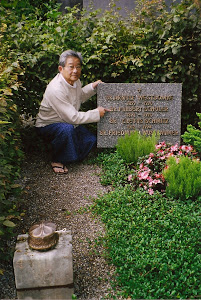
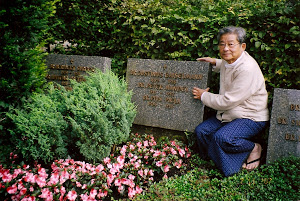
After a brief rest, another non-English speaking brother drove us around that charming Bavarian town. Sightseeing ended after visiting the graves of Brothers Fulbert and Peter in the well maintained cemetery. A section of the cemetery is reserved for brothers and priests. The graves were well tended, a profusion of flowers growing on them.
Afterwards, we were driven back to the hotel where a teary Brother Felix hugged and kissed us before he was driven back to the retirement home. “Pray for me,” he asked. “I pray for all the people of Burma,” were his parting words.
Bidding Brother Charles and Brother Felix at their respective retirement homes was very difficult. Brother Felix was only 18 when he left his family and country to go to Burma as a missionary with the (French) Christian Brothers Order of the Roman Catholic Church to serve a lifetime as a teacher. But it gave me joy that I could honor these two teachers in the sunset of their days. “Parting is such sweet sorrow…”
If there is one word that comes to mind which describes these two brothers retirement communities, it is COMPASSION, of which there was an abundance.
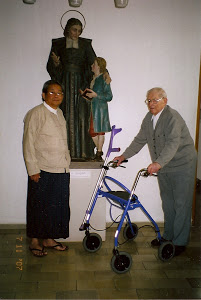
Brother Felix at Kolleg der Schulbruder_1, Illertissen, Germany, July 2007Brother Felix at Kolleg der Schulbruder_3, Illertissen, Germany, July 2007Brother Felix with U Kyaw Win_1, Illertissen, GermanyBrother Felix with U Kyaw Win_2, Illertissen, GermanyBrother Felix at Kolleg der Schulbruder_2, Illertissen, Germany, July 2007Brother Felix with Gandasari and U Kyaw Win, Illertissen, Germany, July 2007U Kyaw Win at Bro. Fulbert’s grave, Illertissen, Germany, July 2007U Kyaw Win at Bro. Peter’s grave, Illertissen, Germany, July 2007
I thank Margaretha Sudarsih (“Menuk”) for blogging this report for me.
The holy season of Christmas is upon us. May peace, joy, and good health of both body and mind be yours. UPDATE: Brother Charles passed away on 28 December 2007. May “flights of angels sing thee to thy rest.”
I am yours sincerely, a grateful product of the Christian Brothers schools,
U Kyaw Win 8566 Flagstaff Road Boulder, CO 80302-9531, USA
U Shwe Kyaw (BIT Volleyball Selected)Daw Khin Toe Myint
Graduated in 1963 with Mechanical Engineering
He and U Aye (M62) played together in Ramanya Hall volleyball team during 1959-60 season.
Represented BIT and RU in Volleyball (along with U Aye M62)
Joined the Air Force and became a Pilot.
He was Air Force Captain (Officiating Major) when he perished in a plane crash.
Survived by Sayama Daw Khin Toe Myint (Zoology) and two children. Sayama is a dhamma friend. Her son U Thet Win Kyaw played the Drums at SPZP-2000.
U Shwe Zan Aung (SPHS63)
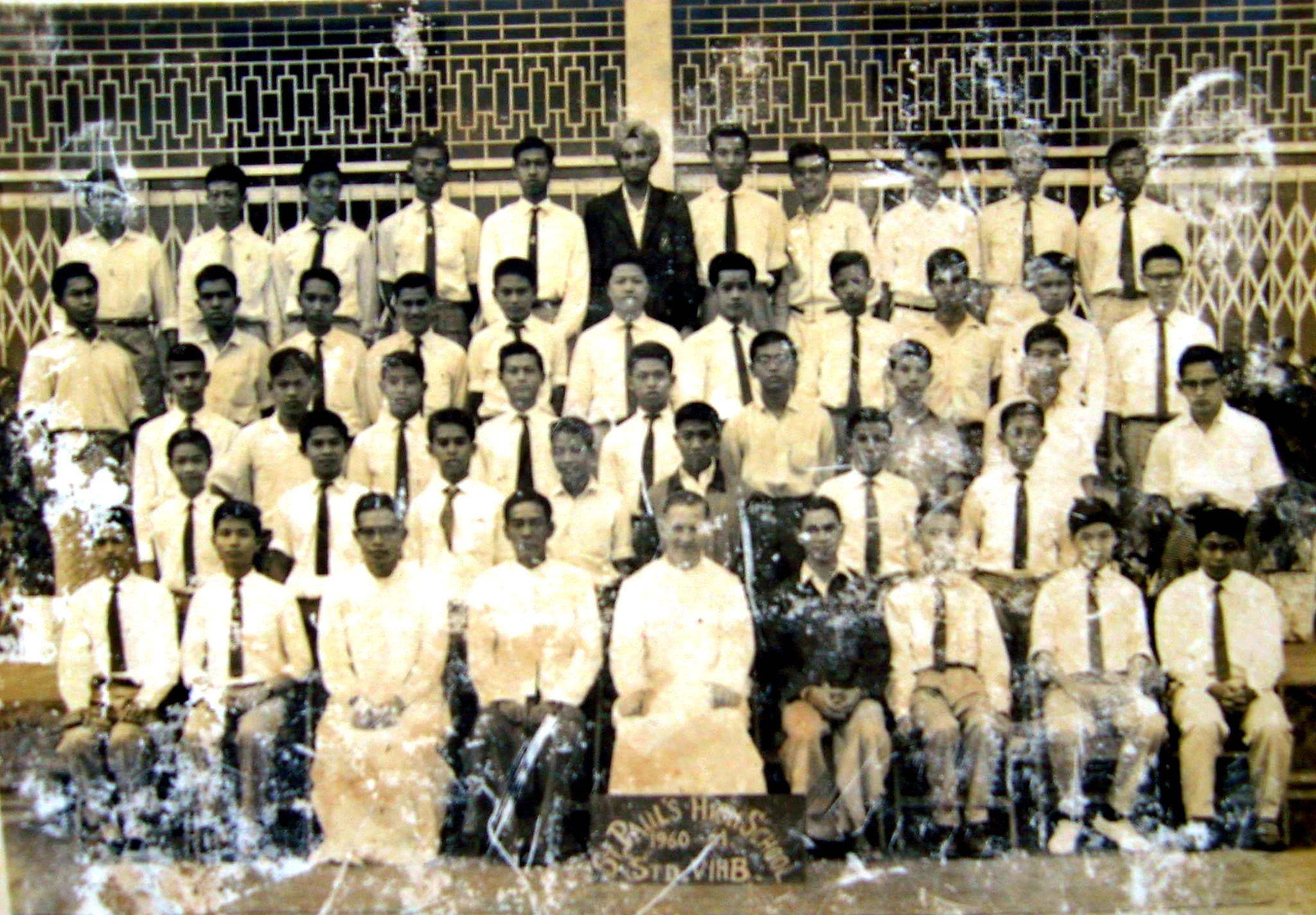
Std VIII B in SPHS
Matriculated from SPHS in 1963
Joined the Army and went to the front several times
His grandfather was afraid of losing another grandson prematurely. He requested SZA to leave the army and promised to provide financial support in exchange for peace of mind. His grandfather supported SZA’s family for a long time.
Finally joined a ship as a radio operator
Perished at sea when the ship sunk
Dr. Shwe Tun Kyaw
He and his spouse took early retirement from their medical practice in UK.
They volunteered as Assistant Teachers in several bi-lingual (Burmese and English) Goenka Center retreats.
He is a classmate of my younger sister. I met him at the house of Audrey Wong (C84), a volunteer for the Northern California Goenka Center.
Helped Civil Engg grads from Myanmar get internship and/or job in Japan
In 2017, Saya and Daw Mya Nwe (Winsome, C73) donated K100 Lakhs to the YTU Modernization Project.
Donation
He had a Stroke.
Praying for a speedy recovery.
Dr. Myo Khin wrote :
Dear U Hla Min, Thank you very much for your kind and favorable phrases for my donation to the RIT library. This is the token of my feeling to my home university. Up till now I have helped around 50 grads from RIT and other TUs in Myanmar with respectable engineering jobs in Japan. Moreover this is totally free of any charges or obligations. Only one request I made is “please try hard and prove yourself” and this will lead to the next recruitment for your juniors back in Myanmar.
Updates
After treatment & rehab, he recovered from the Stroke reported in the post.
In the lower classes, he was in Section (C). I was in Section (D).
Stood 13th in the whole of Burma in the Matric exam of 1963.
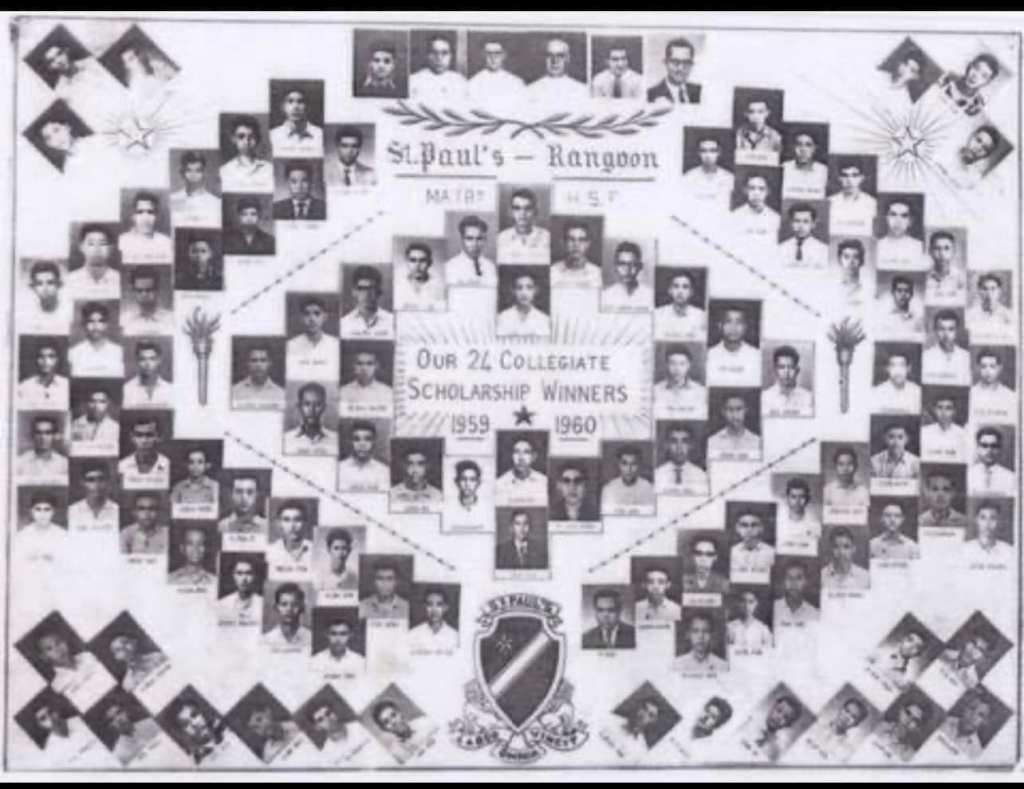
Won Collegiate Scholarship. Only 40 of the 100 scholarship awards were given to students from private schools.
SPHS had five in the Top Five, seven in the Top Ten, and ten in the top Twenty. Khin Maung U (1st), Min Oo (2nd), Myo San (Freddie, 3rd), Nyunt Wai (Victor, 4th), Thein Wai (5th), Hla Min (7th), Aung Kyaw Zaw (Johnny, 9th), Maung Maung Kyi (11th), Aung Thu Yein (Brownie, 13th), Khin Maung Zaw (Frank, 17th).
Has a soft heart.
Before the Matric exam, he read several subjects to Nyunt Wai (Victor), who was sick & could not study. Brownie could take credit for Victor’s success. Victor stood 4th in Burma & became medical professor in IM & Malaysia.
Dr. Nyunt Wai wrote :
Being my best friend since standard IV, I could write volumes about him. For now only two points: (1) my friend was called “ANyo”(Brownie) because he had much darker complexion compared with his elder brother (very fair complexion); this contrast repeated in the case of his two sons; (2) the brown brothers passed away years ahead of their fairer counterparts.
University Days
We attended the last ever I.Sc.(A) at Leik Khone in 1963. We took the Science Option.
After a long closure citing Security Concerns following the July 7th Anniversary, a new Education System was established in November 1964.
Admitted to the first ever 2nd BE at the Gyogone Campus.
Chose Electrical Engineering as Major & EC (Electrical Communications) as Option.
EE69
Played Soccer and Tennis
ATY 3
Learned to smoke — trying to fend off mosquitoes in the RIT rest rooms.
Learned social drinking from his classmates (e.g “Robert” Win Boh) after the last paper of the RIT final exam.
After Graduation
One of 13 EC Graduates
Had a successful career at MOC/Schlumberger, & several foreign assignments.
Became a heavy smoker & drinker. Felt lonely after the loss of spouse & eldest son.
Had minor & not-so-minor health problems.
Quit drinking & smoking for some time, but he still felt the urge.
Last Meeting (in March 2012)
I visited Yangon to take part in preparations for SPZP-2012 (scheduled for December).
Zaw Lai came to see me. We decided to surprise Brownie. He trusted people. He did not lock his house. He closed the gate & boarded Zaw Lai’s car.
Zaw Lai coaxed him to take a couple of drinks.
That dinner at Zaw Lai’s apartment would be remembered as Brownie’s farewell.
Brownie did not show up at the 69er breakfast gathering at Royal Rose. The gathering was cut short when we learned that Brownie was in ICU and that the 69er HCF organizers would go to see him.
Kyaw Zin took Win Lwin, Khin Maung Bo & me to the ICU. Brownie’s son, who is a medical doctor, said that Brownie was not ready for another operation. We left with samvegha that he could very well be No 61 (on Aung Min’s GBNF list). Win Lwin told me to meditate and also “do something for yourself”.
I spent several days at the Kaba Aye Sun Lun Gu Kyaung as a monk. Sayadaw U Wara (ChE70) was my preceptor.
During that period, Brownie remained unconsciousness and he finally succumbed.
My 69er friends notified Brownie’s demise to my siblings, but requested not to notify me at the monastery. They did not want to disrupt my meditation practice.
May Brownie be able to share my merits.
Ah Hmya, ah hmya, ah hmya.
Updates
Samvegha
Three Scholarship winners from SPHS63 — Brownie, Freddie & Maung Maung Kyi — are GBNF
Five EC69ers — Kyaw Soe, Brownie, Chit Tin, Oo Kyaw Hla & Sai Aik Yee — are GBNF
128 69ers (over 40% of the Class) are GBNF. The GBNF list is maintained by Aung Min (M69) & team
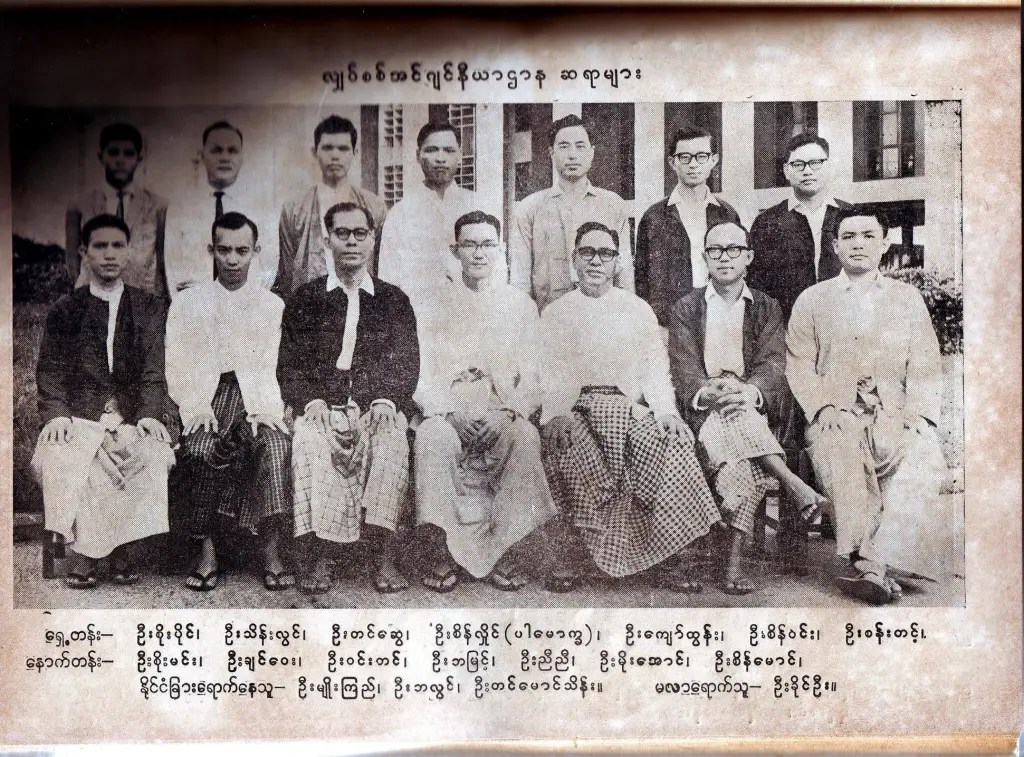
Several RIT EE Sayas — U Kyaw Tun, U Sein Hlaing, U Tin Swe, U Sein Win, U Thein Lwin, Dr. San Tint, U Soe Min, U Chin Way & U Nyi Nyi — are GBNF. For SPZP-2010, I wrote “A Sad & Short Clip : EE Sayas”. Two sayas — U Thein Lwin & U Nyi Nyi — have passed away since the article was published.
My Classmate for VIII(A), IX(A), X(A) and I.Sc.(A)
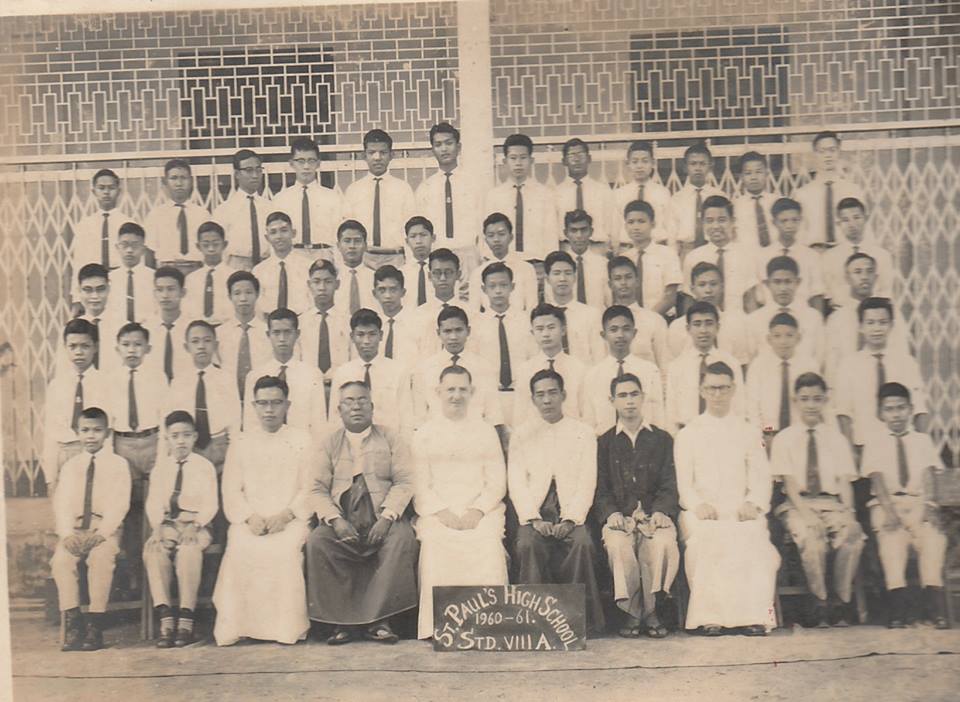
SPHS Std. VIII A
My Crew mate at RUBC
Best Man at my Wedding
Guinea Pigs
Our elders entered Rangoon University after passing the combined HSF & Matric examination
Had to take first ever HSF Only exam in 1962. All subjects except English were taken in Burmese.
Had to take the Matric Only exam in 1963
Kamma probably decided that we would not be in the RU Campus on the fateful 7th July, 1962.
HSF in 1962
Scored the highest marks in Chemistry in the first ever HSF Only exam in 1962
Matric in 1963
Gained distinctions in Chemistry & Maths, and barely missed in Physics.
Was a natural in Chemistry. Badly wanted to have distinction in Physics. Had to take some time during the Physics test to go to the rest room due to a minor illness.
Nevertheless, he stood 11th in the whole of Burma and won the Collegiate Scholarship of 75 Kyats a month.
Matriculation 1963
I.Sc. (A) / RUBC
Rowed as Bow in our SPHS Novice Crew. Willie Soe Maung (Myint Soe, first batch BDS, GBNF) was Stroke. Kyaw Wynn was No. (3). I was No. (2). Myint Thein (SPHS62, GBNF) was Cox.
We were Senior Novice Runner-up
Awarded Full Green
School Closure
Studied at Leik Khone College for a few months before the Revolutionary Council & Government shut down most Universities and Colleges except Engineering and Medicine.
The government wanted to quash the protests of the 7th July Anniversary.
Kamma probably decided that we should lose some more precious years of our lives and graduate 2.5 years later than those who were a year senior to us in High School.
Study in GDR
No one knew when the Universities would reopen.
Taking no chances, he & Kyaw Wynn accepted admission to study at Dresden University, GDR.
Studied Chemical Engineering with specialization in Pulp & Paper Technology.
Return to Burma
Was a Best Man at our Wedding in June, 1973.
Joined PPIC and worked on “Pulp and Paper” related projects.
Met Daw Khin May Than (ChE72), raised a family and later moved to Wales, UK.
Wales
Both sons became Medical doctors.
Rimon, the elder son, became a Squadron Leader in the Royal Air Force (RAF). He led Rescue Teams.
Rimon perished in an avalanche. RAF notified Maung Maung Kyi & Khin May Than who were on the way to visit Myanmar. They received the sad news a short time after landing in Yangon. They had to hurry back to UK for their son’s last journey.
After that, he rarely spoke and smiled. Khin May Than painted and took walks twice a day to ease the aches and pains. They decided to move to Ogmore-by-the-sea.
Gave their old house to their second son, a medical doctor who had spent time in Japan and had come back to see the parents.
Trip to England and Wales
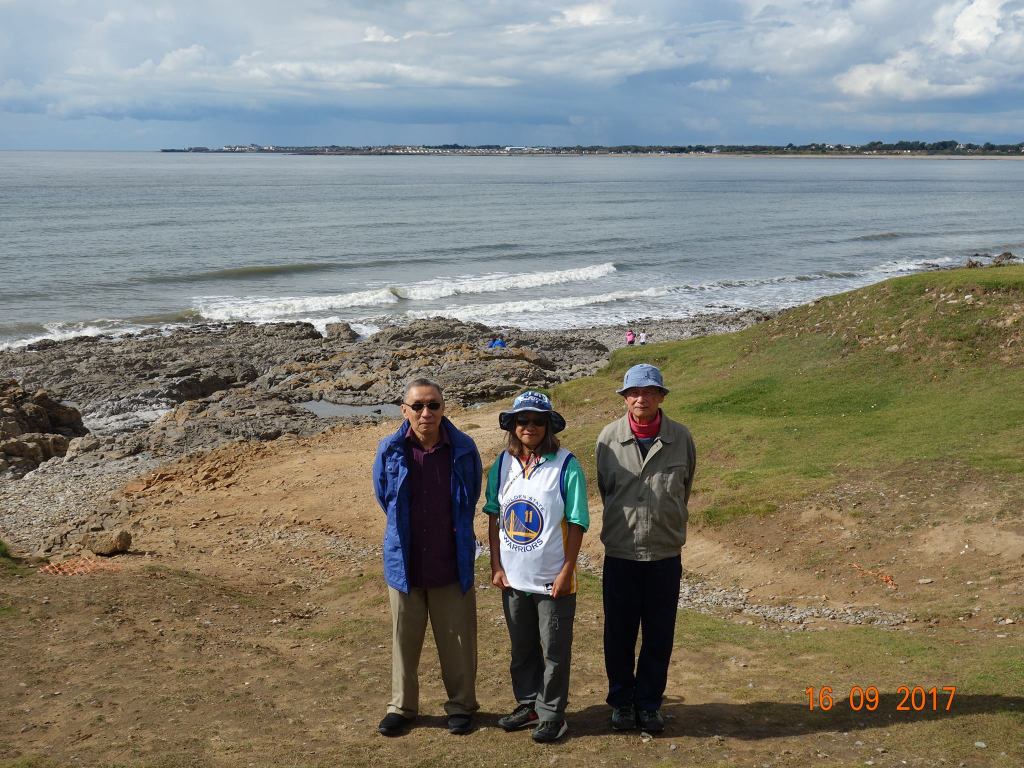
In September 2017, we visited the UK. My previous visit was in 1972.
My cousin nephew Dr. Khin Tun (Peter, GBNF) and his spouse Daw Win Mar hosted us with sumptuous dinner almost every day. Both loved cooking. Also drove us to Southern Wales to visit Maung Maung Kyi and Khin May Than at Ogmore-by-the-sea
The short but memorable reunion brought back smiles to Maung Maung Kyi.
Ogmore 1Ogmore 2
Updates
SPHS63
Three of the Collegiate Scholarship winners from SPHS63 are GBNF. Myo San (Freddie, 3rd in Burma), Maung Maung Kyi (11th) & Aung Thu Yein (Brownie, 13th).
RUBC Crew
Three crew mates are GBNF. Myint Soe (Willie Soe Maung, Stroke), Myint Thein (Cox) & Maung Maung Kyi (Bow).
Dr. Peter Tun
Passed away on April 13, 2020. He succumbed to Covid. See posts about him & Peter Tun Award.
Brother Anthony (Class teacher) : taught Mathematics
Saya U Sein (Burmese teacher, GBNF) : Father of Saya Dr. Soe Win (retired Rector of YUFL); Also taught Burmese in Matric.
Brother Felix (Brother Director, GBNF) : After nationalization, moved to Germany and passed away there. Thonegwa Kyaw Win visited him.
Saya U Nyunt Maung (Arts subjects teacher) : Taught Maths in Sacred Heart
SayaBeatson(Science subjects teacher) : Became a monk
Brother Xavier (English teacher) : Also taught English in 9th standard. After nationalization, moved to UK and presumably left the Order.
Dr. Khin Maung U
OPA DinnerKhin Maung U
First in Burma in the Matric exam in 1963; Won Collegiate Scholarship
Had perfect scores of 100 in Maths & Chemistry and a score of 99 in Physics. Grapevine says that one point was deducted from the initial score.
Multiple Luyechun at IM(1)
Due to changes in the Edu System, he had to do M.Sc. (Med Sc) locally. Top students from earlier years studied in UK as State Scholars.
His persistence paid off. Got Fellowships from UK and MD from Australia
Retired from Food & Drug Administration in the USA
Translator/interpreter for dhamma courses & meditation retreats.
Wore thick glasses since his younger days.
Classmate in Stds VIII(A), IX(A) and X(A). We were in different sections in the lower classes.
Dr. Min Oo (Kenneth)
Stood second in Burma in the Matric exam in 1963. Won Collegiate Scholarsip.
Some saw him reading a German book before entering the hall to take the Matric exam.
Scored distinctions in English, Maths, Physics and Chemistry.
Chose to study Maths at RASU.
Saya U Aung Sein (Maths) saw Min Oo get out of the Tutorial classes after a few minutes and yet had perfect score. He decided to give challenging questions for a Tutorial. Min Oo took longer time than the easier Tutorials, but most of the other students could not get a passing grade.
A Tuition Saya (now GBNF) challenged his students. “Ask your teachers to solve the problem. I will give you free tuition if you can provide the correct answer.” One student asked Min Oo, who was enjoying a card game. Min Oo scribbled the answer during the card game. The Tuition Saya was disappointed. He did not keep his promise to give the student free tuition.
Attended Tekkatho Luyechun Camps twice.
Min Oo (Seated Right)
In the Summer of 1965, he was chosen as Luyechun among second year RASU students.
In the Slummer of 1968, he was chosen as a Saya for the Tekkatho Luyechun camp.
As a multiple Tekkatho Luyechun from IM(1), Dr. Khin Maung U was present at both camps. He remembers Min Oo with a cigar trying to look like a Sayagyi.
Min Oo received two doctorates in Maths from Germany. He taught at McMasters University in Canada. He voluntarily retired in 2015.
He was one of the young students in the class, but also among the brightest.
Classmate in Stds VIII(A), IX(A) & X(A). We were in different sections in the lower classes.
He often visited his daughter in the San Francisco Bay Area.
Dr. Myo San (Freddie, GBNF)
Khin Mg Zaw, Myo San, Khin Mg U
Stood third in Burma in the Matric of 1963. Won Collegiate Scholarship.
He had studied phonetics. He had read lots of English books.
He scored distinctions in English, Maths, Physics and Chemistry.
He was older than us. That might have given him a slight advantage in the early years.
He gave me a quiz. “How do you pronounce GHOTI?” I gave an answer which he corrected as “FISH”. He had read George Bernard Shaw, who posed the quiz as an example of eccentricity in English. GH is phonetically equivalent to F as in ROUGH. O is phonetically equivalent to I as in WOMAN. TI is phonetically equivalent to SH as in ATTENTION. Thus, GHOTI is phonetically equivalent to FISH.
He became a surgeon, but the stress caused him to take early retirement.
Sadly, he passed away.
Classmate in Stds VIII(A), IX(A) & X(A), We were in different sections in the lower classes.
Collegiate Scholarship Holders
In 1963, students from private schools had to be in the Top Forty to be eligible for Collegiate Scholarship.
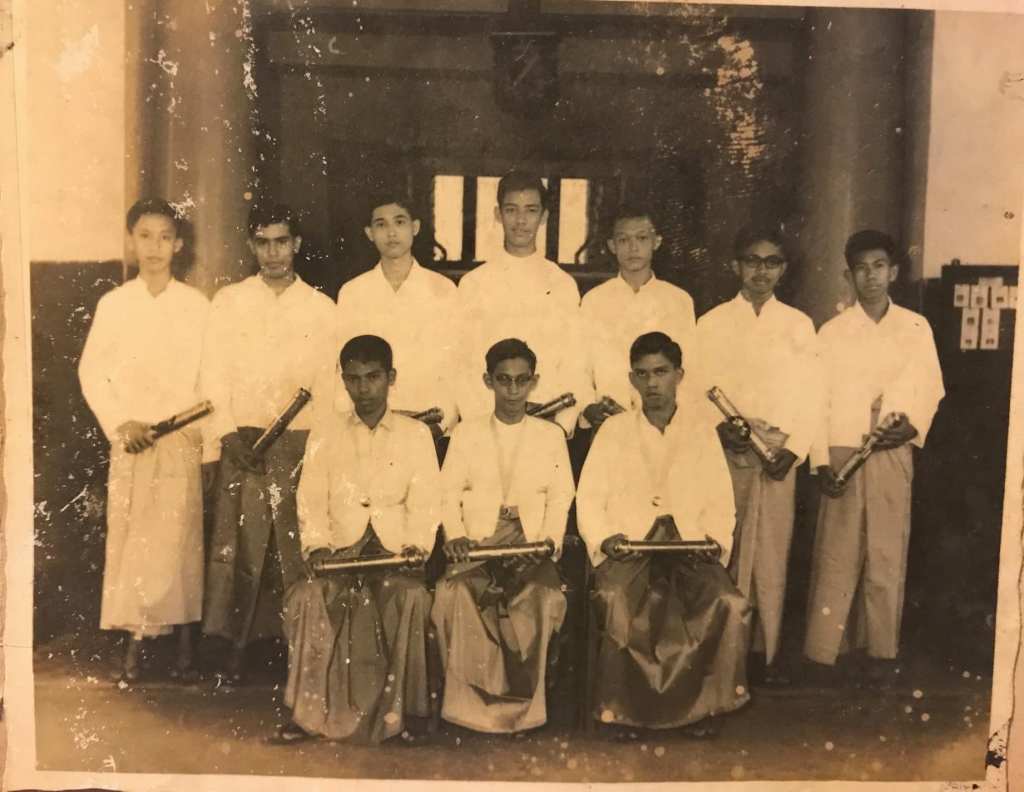
SPHS had ten students in the Top Twenty. Min Oo studied Maths. Hla Min, Maung Maung Kyi & Aung Thu Yein studied Engineering. Khin Maung U, Myo San, Nyunt Wai, Thein Wai, Aung Kyaw Zaw & Khin Maung Zaw studied Medicine. Myo San, Maung Maung Kyi and Aung Thu Yein are GBNF
First : Dr. Khin Maung U (Medical Researcher, FDA, USA)
2nd : Dr. Min Oo (Maths Professor, McMasters University, Canada)
3rd : Dr. Myo San (Surgeon, GBNF)
4th : Dr. Nyunt Wai (Physiology Professor in IM & Malaysia)
5th: Dr. Thein Wai (Moved to USA)
7th: U Hla Min (Lifelong Learner; Software Engineer, Silicon Valley)
9th: Dr. Aung Kyaw Zaw (Specialist, Base Military Hospital)
11th : U Maung Maung Kyi (Dip. Ing in Pulp & Paper, Wales, UK, GBNF)
13th : U Aung Thu Yein (EC, Schlumberger, GBNF)
17th: Dr. Khin Maung Zaw (Medical Doctor, UK)
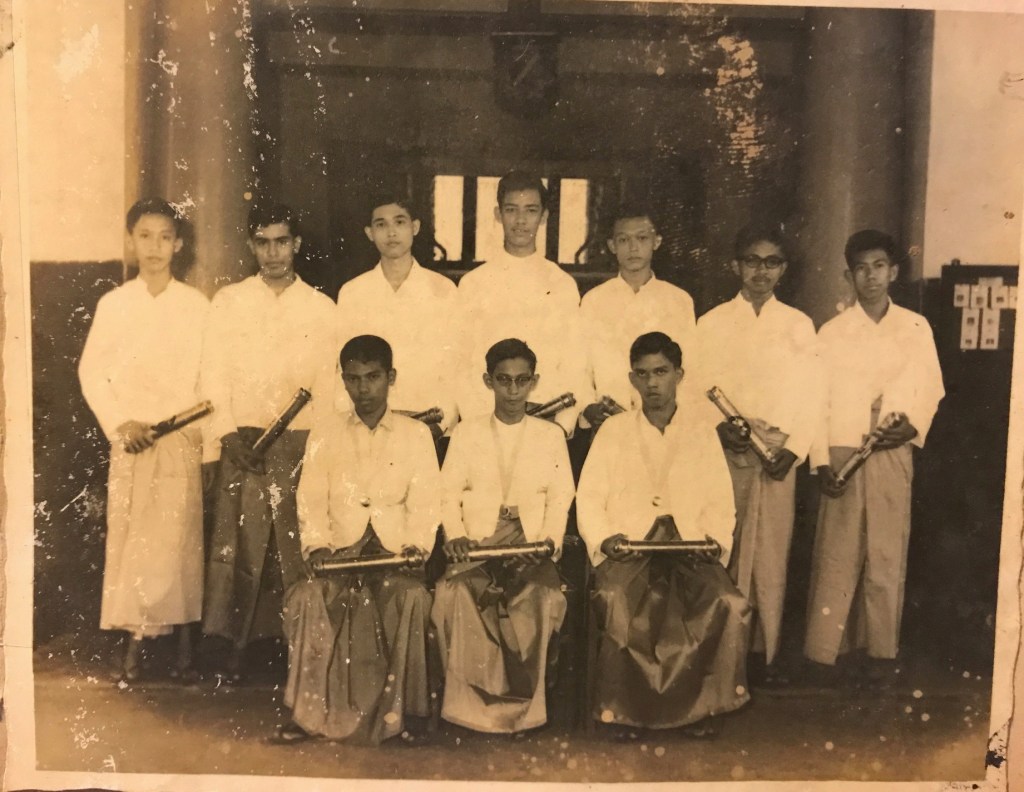
SPHS63
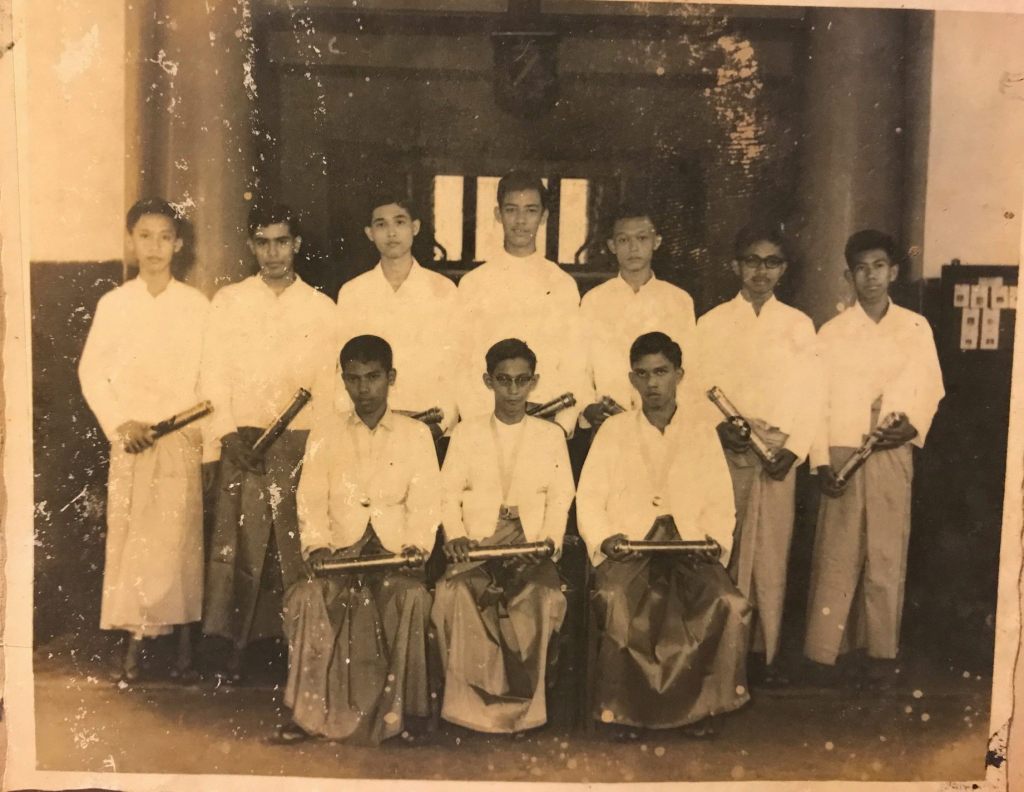
In the group photo
Seated (L to R) : Min Oo, Khin Maung U, Myo San (GBNF)
Paulians — Myo Nyunt (Harry), Atom Hla & team — offered soon to Sayadaw
Sayadaw BeatsonPaulians offering Soon
La Min
Nyunt Wai (Victor)
Sayadaw Beatson
Nyan Taw (Dicky)
Hla Min
Than Win
Aung Kyi (Arthur)
Sein Nyunt (Swe Set)
Classmate in Stds IV(D), V(D) & VI(D)
Shared names & status of former classmates. Several are GBNF. Hla Myint (Snow Makeup), Maung Maung Thaung, Sonny Yone Sein, Sydney Khant, Tin Tun are some who have passed away
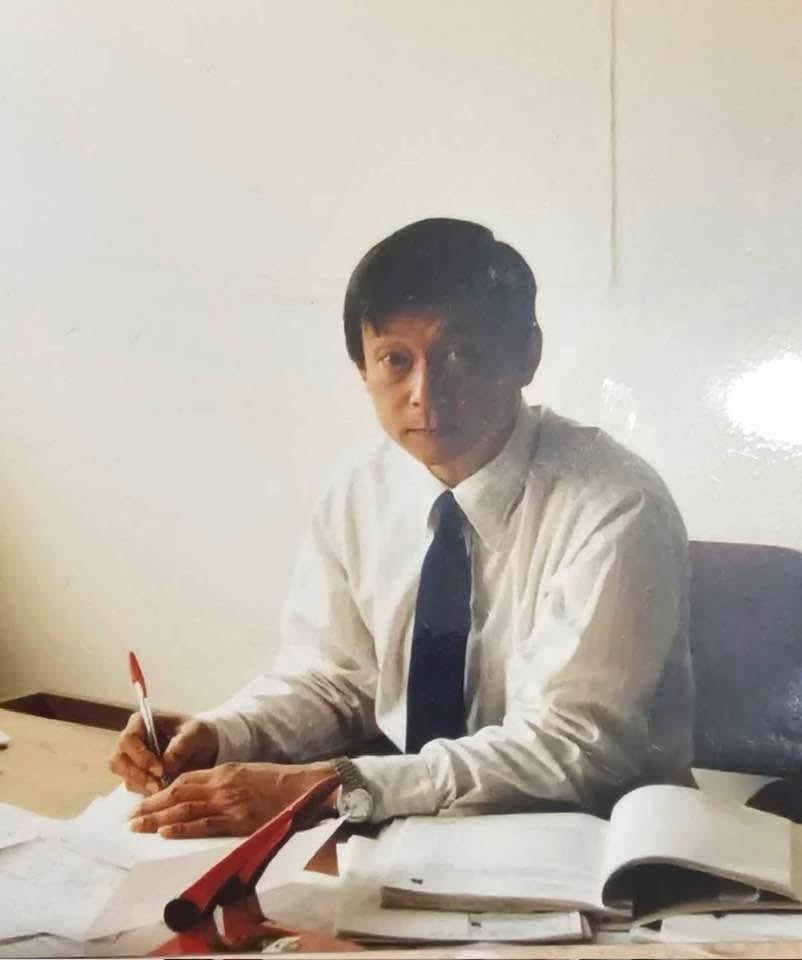












 HlaMin