Category: Paulian

  • Visits with Bros. Charles and Felix, July 2007

    By Thongwa Kyaw Win

    Updated : Feb 2026

    Yo Salleans, Paulians, and all other BOBs:

    This is a belated report of my wife Gandasari’s (“Riri”) and my visits with Brother Charles Everard in Liss (Hampshire, England) and Brother Felix (Albert Gissler) in Illertissen (Germany). Technical and other problems got in the way, delaying this report.

    Saturday, 7 July 2007

    After attending Dora Than E’s funeral in Oxford, followed by a reception at St. Hugh’s College (Aung San Suu Kyi’s alma mater), our friends Ken & Marion Freeman of Pershore, drove us through the English countryside to Liss, Hampshire. It was a pleasant 2.5-hour drive on uncrowded roadways. (Some of you may recall Aunty Dora as the recording artiste of yesteryear whose professional name was Beelat-pyan Than. She later worked for the United Nations, beginning at its founding in 1948 at Lake Success, New York. Had she survived her final fall, she would have turned 100 on 16 February 2008.)

    Clayton Court, the De La Salle Brothers retirement community at Liss, is a beautiful 22-acre estate with gently manicured lawns, gardens, and gorgeous views of the rolling hills. There are three large structures on the gated property. It is a place with spirit, where one’s soul is rejuvenated. The Fratres Scholarum Christianarum, (Christian Brothers), acquired this estate, once owned by a wealthy gentry, in 1974. The other FSC retirement home in England is located in Manchester.

    We arrived at Clayton Court about 5:45 P.M. The place was abuzz with staff, volunteers, and neighbors who were preparing for a party for one of the brothers’ 70th birthday. The brothers were in the chapel doing devotions. Becky, a staffer, who was my contact, was most gracious. There was another staffer whose forearms were heavily tattooed. “Were you in the royal navy?” I asked. “Yes,” he said with a glint in his eyes. “I was a cook on the aircraft carrier Ark Royal,” he answered with pride. The two were most welcoming and amiable. From them, I took comfort that the brothers were living and eating well.

    When prayers were over, Brother Director Joseph Hendron wheeled Brother Charles out of the chapel. I recognized the former right away even though I had not seen him since 1979 when my De La Salle, and later St. Paul’s classmate, Brother Patrick Minus, and I visited him at the Brothers’ Mother House in Rome. I do not know whether Brother Charles recognized me, but he broke out in a big smile when I greeted him in Burmese. At 89, dementia has diminished much of his memory and affected his speech. I helped him eat some of the goodies that were generously spread out on the table. He uttered a few words in Burmese: “taw bee, …yay ne ne thauk chin de,” (တော်ပြီ။ ရေနည်း နည်း သောက်ချင်တယ် enough.., want to drink a little water), etc. I spent the rest of the afternoon with Brother Charles and the other party goers until the celebrants faded away.

    Brother Director Joseph is truly a personification of tremendous love and patience. He was most gracious. He made us feel very welcome. We were accommodated in comfortable guest rooms which commanded beautiful views of the estate.

    Sunday, 8 July 2007

    Riri and I took a leisurely stroll on the estate as the sun shone over the countryside. At breakfast, I sat on Brother Charles’ left while Brother Joseph occupied the end seat on the right. Both Brother Joseph and I helped Brother Charles with his breakfast. His appetite was good.

    Breakfast over, I wheeled Brother Charles back to his room. The room was nicely decorated with Burmese and other memorabilia. There was a large framed photograph of a much younger Brother Charles of his Burma days. (I recall seeing him in 1959 at the Kalaw Railway Station as he hopped on to the steam locomotive. “I always ride in the gaung dwe (locomotive),” he harked, as the train pulled away towards Thazi. He was happy as a lark. (Riri and I were teachers at Kalaw’s Kingswood School that year).

    Bidding Brother Charles adieu was difficult. I had known him when we were both young long years ago at a place so far away.

    We took leave of Brother Joseph and the other Brothers later that morning. Ken and Marion drove us to Liphook from where we boarded the National Express coach for London’s Victoria Station. (Marion and I began our friendship as pen pals when we were both 16. I was then at Woodstock School in the Himalayan town Mussoorie, India, in 1950).


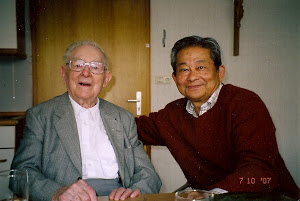
    Brother Charles with U Kyaw Win
    Clayton Court, Liss, Hampshire, England

    Monday, 9 July 2007

    After spending the night in London, we flew to Frankfurt, arriving there in the evening. We bedded down at Hotel Manhattan, conveniently located across the street from the Frankfurt bahnhoff (railway station).

    Tuesday, 10 July 2007

    The train from Frankfurt took us to Ulm where we changed for Illertissen. It was raining when we got there in the afternoon. We started to walk towards Kolleg der Schulburder. A kind gentleman picked us up along the way and drove us to the Kolleg, sparing us from getting wetter. (He did not speak English. We did not speak German. But the language of the heart transcends all tongues).
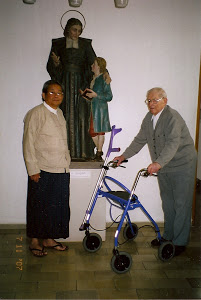
    Brother Felix, who is known as Brother Albert at the retirement home, was brought out to a waiting room. He walked with the help of a stick, and a walker, alternately. He was as happy to see us as we were to see him. (I had last seen him, and Brother Peter, over thirty years ago, in Germany). His first words were: “You look like your father.” What a compliment!

    Once he got warmed up after muttering a few words in German, the talk gushed out. He talked and talked, recalling his days in Burma; as a prisoner in Dehru Dun (India) and Insein Jail; De La Salle, St. Paul’s.Dinner that evening was at a restaurant. When Brother Felix noticed a paunchy man sitting at the next table, he remarked: “Baik pu gyi,” (ဗိုက်ပူကြီး paunchy fellow), a mischievous glint in his eyes.

    Because guest accommodations at the Kolleg der Schulbruder were occupied by a visitor from Rome, we lodged at Hotel Vogt for the next two nights.

    This was also Riri’s birthday. I snuck out of the hotel quietly and walked the streets of tiny Illertissen in search of a bakery. But it had shut down for the night. I was fortunate to get a cake from a restaurant just as it was closing. With the help of the hotel’s staff, I was able to surprise her.

    Wednesday, 11 July 2007

    In the morning, we were fetched and taken to Kolleg der Schulbruder where Brother Felix was waiting for us at the breakfast table. But we had just eaten at the hotel. So we nibbled a bit while he ate. After breakfast, he showed us the chapel, grounds, gymnasium, and gardens at the school. There are only lay teachers at the school. The numbers of those entering the FSC are getting thinner and thinner. A section of the campus is partitioned off as a retirement home for the brothers.

    A sumptuous lunch prepared by the kitchen staff was served. When he saw the generous fare spread over the table, Brother Felix remarked, “Do they think we are starving?” That was typical of him, wit fully intact.

    At 93, Brother Felix is the most senior retiree at the home. He has a comfortable room with an attached bath. “When I die, everything I own can be cleared out of this room in ten minutes,” he said.

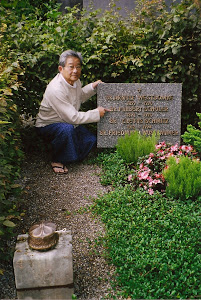
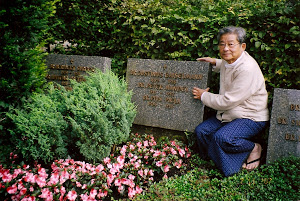
    After a brief rest, another non-English speaking brother drove us around that charming Bavarian town. Sightseeing ended after visiting the graves of Brothers Fulbert and Peter in the well maintained cemetery. A section of the cemetery is reserved for brothers and priests. The graves were well tended, a profusion of flowers growing on them.

    Afterwards, we were driven back to the hotel where a teary Brother Felix hugged and kissed us before he was driven back to the retirement home. “Pray for me,” he asked. “I pray for all the people of Burma,” were his parting words.

    Bidding Brother Charles and Brother Felix at their respective retirement homes was very difficult. Brother Felix was only 18 when he left his family and country to go to Burma as a missionary with the (French) Christian Brothers Order of the Roman Catholic Church to serve a lifetime as a teacher. But it gave me joy that I could honor these two teachers in the sunset of their days. “Parting is such sweet sorrow…”

    If there is one word that comes to mind which describes these two brothers retirement communities, it is COMPASSION, of which there was an abundance.
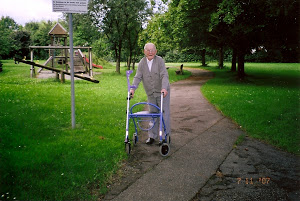
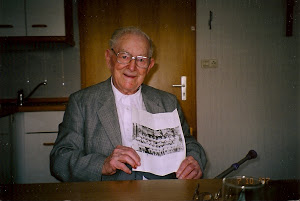
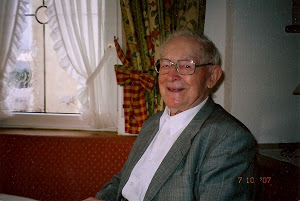
    Brother Felix at Kolleg der Schulbruder_1, Illertissen, Germany, July 2007
    Brother Felix at Kolleg der Schulbruder_3, Illertissen, Germany, July 2007
    Brother Felix with U Kyaw Win_1, Illertissen, Germany
    Brother Felix with U Kyaw Win_2, Illertissen, Germany
    Brother Felix at Kolleg der Schulbruder_2, Illertissen, Germany, July 2007
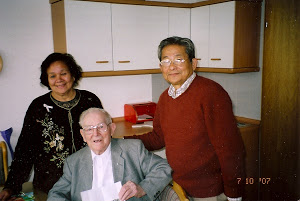
    Brother Felix with Gandasari and U Kyaw Win, Illertissen, Germany, July 2007
    U Kyaw Win at Bro. Fulbert’s grave, Illertissen, Germany, July 2007
    U Kyaw Win at Bro. Peter’s grave, Illertissen, Germany, July 2007


    I thank Margaretha Sudarsih (“Menuk”) for blogging this report for me.

    The holy season of Christmas is upon us. May peace, joy, and good health of both body and mind be yours. UPDATE: Brother Charles passed away on 28 December 2007. May “flights of angels sing thee to thy rest.”

    I am yours sincerely, a grateful product of the Christian Brothers schools,

    U Kyaw Win
    8566 Flagstaff Road
    Boulder, CO 80302-9531, USA
  • Kamma

    Kamma

    by Khin Maung U

    Updated : June 2025

    Dr. Khin Maung U

    First published in Ashin Kelatha Journal in 1999.

    by Dr. Khin Maung U

    Kamma is a Pali word meaning action or doing. In its general sense kamma means all good and bad intentional actions whether mental, verbal or physical (thoughts, words and deeds). In the Buddhist teachings, all physical (kãrya kamma), verbal (vacî kamma) and mental (mano kamma) actions are known as the three kammas. All beings perform these three kammas at all waking hours. All their work, great or small, is performed by means of these three kammas. These three kammas become inert when a person is asleep. In the case of a dead person, the three kammas cease to function as far as that body is concerned.

    In its ultimate sense, kamma means all moral and immoral volition. The Buddha says:
    “O Bhikkhus, I declare that volition (cetanã) is kamma. Having volition, one acts by body, speech and thought” (Aînguttara Nikãya).

    When any action of thought, word or body takes place, volition determines or causes its concomitants to perform their respective functions simultaneously. For this reason, volition is predominant in all actions. Involuntary, unintentional or unconscious actions, though technically deeds, do not constitute kamma, because volition, the most important factor in determining kamma, is absent. Thus, the real nature of action (kamma) of man is mental.

    According to Abhidhammã, 29 types of consciousness (Citta) consisting of (i) 12 types of immoral consciousness (akusala citta) and (ii) 8 types of moral consciousness (kusala citta) from among the 54 types of mundane consciousness (kãmãvacara citta) pertaining to the sentient realm, (iii) 5 types of moral consciousness (kusala citta) pertaining to the realms of form (rüpãvacara citta or jhãnas), and (iv) 4 types of moral consciousness (kusala citta) pertaining to the formless realms (arüpãvacara citta or jhãnas), are called kamma because they have the power to produce their due effects quite automatically, independent of any external agency.

    The eight types of supramundane consciousness (lokuttarã citta) are not regarded as kamma because they tend to eradicate the roots of kamma; in them, the predominant factor is wisdom (paññã) while in the mundane, it is volition (cetanã).

    Inherent in kamma is the potential of producing its due effect.

    Every volitional action is inevitably accompanied by its due effect just as every object is accompanied by its shadow. Kamma is action and vipãka, fruit or result, is its effect. If kamma is likened to a seed, then the fruit, arising from the tree, is vipãka, effect or result. As kamma may be good or bad, so may vipãka be good or bad. As kamma is mental, so vipãka, too, is mental; it is experienced as happiness or misery, according to the nature of the kamma seed. The concomitant material conditions may be advantageous (ãnisamsa) such as prosperity, health and longevity, or disadvantageous (ãdinava) such as poverty, ugliness, disease, short life-span, etc.

    As surely as water seeks its own level, so does kamma, given opportunity, produce its inevitable result not as reward or punishment, but as an innate sequence. From a Buddhist standpoint, happiness and misery are not rewards and punishments assigned by a supernatural, omniscient power to one that has done good or evil. The sequence of action and effect is a natural law of kamma.

    There are inequalities and many different destinies of human beings in the world. For example, one perishes in infancy and another lives to the age of eighty or more, one is sick and infirm and another healthy and strong, one is a millionaire and another a pauper, one is handsome and another ugly, one is brought up in luxury and another in misery, one is a genius and another a half-wit.

    What is the cause of these inequalities? The Buddha’s reply is:
    “All living beings have actions (kamma) as their own, their inheritance, their congenital cause, their kinsman, their refuge. It is kamma that differentiates beings into low and high states” (Majjhima Nikãya).

    According to Buddhism, the disparities that exist in the world are not due to blind chance. They are due, to some extent, to heredity and environment, and, to a greater extent, to kamma which includes not only the present kamma, but also the proximate or remote past kamma. While Buddhism teaches that kamma is the chief cause of inequalities in the world, it does not teach fatalism or the doctrine of pre-destination.

    In the Aînguttara Nikãya, the Buddha states: “If anyone says that one must reap according to his deeds, in that case there is no religious life nor is an opportunity afforded for the entire extinction of sorrow. But if anyone says that which one reaps accords with one’s deeds, in that case there is a religious life and an opportunity afforded for the entire extinction of sorrow.”

    Thus, Buddhism does not hold the view that everything is due to past kamma. Kamma is not fate. Kamma is not irrevocable destiny imposed upon us by some unknown power to which we must helplessly submit ourselves. The past influences the present but does not entirely control it, for kamma of the past as well as the present are in effect in the present. The past and present influence the future. One’s action (kamma) of a later day may modify the effects of one’s action (kamma) of a former day.

    One may at any moment change for the better or for the worse. In Buddhism, therefore, man has a certain amount of free will, and there is almost every possibility to mould one’s kamma. If this were not so, what possibility would there ever be of a man’s getting free from all kamma forever. It would be perpetually self-continuing energy that could never come to an end.

    What is the cause of kamma? Ignorance (avijjã), not knowing things as they truly are, is the chief cause of kamma. Dependent on ignorance arise kammic activities. Associated with ignorance is its ally, craving (tanhã), the other root cause of kamma. Evil actions are conditioned by these two causes. All good deeds of a worldling, though associated with the three wholesome roots of generosity (alobha), goodwill (adosa) and knowledge (amoha), are nevertheless regarded as kamma because the two roots of ignorance (avijjã) and craving (tanhã) are dormant in him.

    Who is the doer of kamma? Who experiences the effects? Volition (cetanã) is itself the doer. Feeling (vedanã) is itself the reaper of the fruits of action. Apart from these pure mental states there is none to sow and none to reap.

    Venerable Buddhaghosa writes in Visuddhimagga:
    “No doer is there who does the deed,
    Nor is there one who feels the fruit,
    Constituent parts alone roll on,
    This indeed is right discernment.”

    Where is kamma? Kamma is not stored anywhere within or without the body. It is not stored somewhere in this fleeting consciousness or in any other part of the mind or the body. But dependent on mind and matter kamma rests, manifesting itself at the opportune moment. Thus, kamma is an individual force, and is transmitted from one existence to another.

    Buddhism teaches that there is no permanent soul, no eternal, immortal soul that directs one’s action. So, if there is no soul, what is it that is reborn? The answer is kammic energy: the actions we have done. These actions do not disappear unless or until they have produced their effects. So each being has body and mind as a result of actions they did in the past or in the present, and thus this kammic action goes on and on.

    Kamma may be classified in many ways.
    Kamma is classified into four kinds according to the time at which results are produced:
    1. kamma that produces results in the same life-time (Ditthadhammavedaniya kamma);
    2. kamma that produces results in the next life (Upapajjavedaniya kamma);
    3. kamma that produces results in any one (or more) of successive births and is indefintely effective (Aparãpariyavedaniya kamma);
    (These first three types require auxiliary causes such as circumstances, surroundings, etc., to produce an effect.)
    4. and, kamma that does not produce any result (Ahosi kamma).

    The timing of the results of kamma depends upon which thought-moment is associated with the thought-processes (cittavîthi) of volition (cetanã). According to Abhidhammã one thought-process is completed at the expiration of seventeen thought-moments, consisting of seven initial thought-moments followed by seven javana states (at which point an action is judged whether it be moral or immoral, and kamma is performed) and subsequently by votthapana (determining consciousness) and two Tadãlambana (registering consciousness).

    Of the seven javana thought-moments, the effect of the first javana thought-moment is the weakest in potentiality, and is manifested in this life (Ditthadhammavedaniya kamma). If it does not operate in this life, it becomes ineffective (Ahosi kamma).

    The next weakest is the seventh javana thought-moment; its effect is reaped in the subsequent birth (Upapajjavedaniya kamma). This, too, becomes ineffective (Ahosi kamma) if it does not operate in the next rebirth.

    The effect of the five intermediate javana thought-moments (Aparãpariyavedaniya kamma) may take place at any time in the course of one’s wanderings in life continua (Samsãrã) until the final emancipation. No person – not even the Buddha and Arahants – is exempt from this kamma.

    Kamma is also classified into four kinds according to its particular function (kicca):
    1. Janaka (Reproductive) kamma which conditions the next rebirth;
    2. Upatthambhaka (Supportive) kamma which assists or maintains the results of already-existing kamma;
    3. Upapilaka (Counteractive) kamma which suppresses or modifies the result of the reproductive kamma; and
    4. Upaghãtaka (Destructive) kamma which destroys the force of existing kamma and substitutes its own resultants.

    Again, it is the last (seventh) javana thought-process – Janaka (Reproductive) kamma – that determines the state of a person in his/her subsequent birth. As a rule, the last javana thought-process depends on the general conduct of a person. In exceptional cases, perhaps due to favorable or unfavorable circumstances, at the moment of death a good person may experience a bad last javana thought and a bad person a good one. The subsequent birth will be determined by this last javana thought-process, irrespective of the general conduct. This does not mean that the effects of the past actions are obliterated. They will, in turn, produce their inevitable results at the appropriate moment.

    o assist and maintain or to weaken and obstruct the fruition of this reproductive (Janaka) kamma, another past kamma may intervene, being supportive (Upatthambhaka kamma) or counteractive (Upapilaka kamma), respectively.

    The reproductive (Janaka) kamma can be totally annulled by Upaghãtaka (Destructive) kamma which is a more powerful opposing past kamma, that, seeking an opportunity, may quite unexpectedly operate; it is more powerful than the above two in that it not only obstructs but also destroys the whole force of existing kamma.

    There is another classification of kamma according to the priority of effect:
    1. Garuka (Weighty or serious) kamma which produces its effects for certain in the present life or in the next (On the moral side, these weighty actions are the jhanas, while on the immoral side, they are heinous crimes (ãnantariya kamma) namely, matricide, parricide, the murder of an Arahant, the wounding of the Buddha, and the creation of a schism in the Sangha);
    2. Ãsanna (death proximate) kamma which is the action that one does or recollects – mentally or physically – immediately before the moment of death and it determines the conditions of the next birth;
    3. Ãcinna (habitual) kamma which is action that one performs and recollects constantly, and in the absence of death-proximate kamma, produces and determines the next birth; and
    4. Katattã kamma which is the last in priority of results and is the unexpended kamma of a particular being that has followed him/her through the continua of kappas (Samsãrã), and it conditions the next birth if there is none of the above kammas to operate.

    Kamma is further classified according to the place in which the results are produced:
    (1) Immoral (akusala) kamma that produces its effects in the plane of misery: Immoral (akusala) kamma is rooted in greed (Lobha), anger (Dosa) and delusion (Moha). There are ten immoral (akusala) actions (kamma):
    • killing (pãnãtipãtã),
    • stealing (adinnãdãnã),
    • sexual misconduct (kãmesu micchãcãrã)
    {these three are committed by deed},
    • lying (musãvãdã),
    • slandering (pisunãvãcã),
    • harsh language (pharusãvãcã),
    • frivolous talk (samphappalãpa) {these four are committed by word},
    • covetousness (abhijjhã),
    • ill will (vyãpãda), and
    • false view (micchãditthi)
    {these three are committed by mind}.
    (2) Moral (kusala) kamma which produces its effects in the plane of the world of desires: There are ten moral (kusala) actions (kamma):
    • alms-giving (dãna),
    • observance of five or eight precepts (sîla),
    • practicing meditation (bhãvanã),
    • reverence (apacãyana),
    • service (veyyãvacca),
    • sharing of merit (pattidãna),
    • rejoicing in others’ good actions (pattãnumodanã),
    • hearing the doctrine (dhammasavana),
    • expounding the doctrine (dhammadesanã),
    • and, forming correct views (ditthijukamma).
    (3) Moral (kusala) kamma that produces its effects in the realms of form (Rupa): It is of five types, which are purely mental actions (meditation) leading to the five states of rüpa jhãna.
    (4) Moral (kusala) kamma which produces its effect in the formless realms: These are four types of purely mental actions (meditation) leading to four types of moral consciousness (arüpa jhãna).

    Kammasakatã Sammã-ditthi: Right understanding of the truth about the fact that in the case of beings only the two things – namely, good and bad actions done by them – are their own possessions that always accompany them throughout their life continua, wherever they may wander in Samsãrã.

    1. Sabbe sattã kammasakã: Only the volitional good or bad actions done by all sentient beings are their own possessions that always accompany them wherever they may wander in Samsãrã.

    2. Sabbe sattã Kamma dãyãdã: All beings are the heirs of their own kamma (good or bad actions).
    The kamma performed by beings are always theirs in their future existences. Only Kamma is inherited by beings. The effects of one’s kamma always accompany one in many existences yielding good or bad results at the opportune moments. One can never get rid of that kamma, but one has to enjoy or suffer its results under appropriate circumstances.

    3. Sabbe sattã Kamma yoni: All beings are the descendants of their own kamma.
    With regard to the present good and evil results, one’s own kamma performed in the present existence with wisdom and knowledge or otherwise as well as one’s own wholesome kamma such as alms-giving, morality, etc., and unwholesome kamma such as killing beings, etc., performed in past existences are the primary causes (parents) of good and evil results.

    4. Sabbe sattã Kamma bandhü: Kamma alone is the real relative that all beings can rely on through their life continua in Samsãrã.
    Parents, brothers, relatives, etc, whom we love and rely upon, can be loved and relied upon for only a short period, i.e., before our death. One’s own physical, verbal and mental kamma are one’s constant companions who accompany one in future existences, wholesome kamma giving happiness and prosperity. Thus, one’s wholesome kamma alone is one’s real relative who should be esteemed and relied upon.

    5. Sabbe sattã Kamma patisaranã: Kamma alone is the real refuge of all beings.
    Here, refuge means reliance upon or taking shelter for protection against troubles and dangers. Unwholesome kamma will lead one to be reborn to the lower world where one has to suffer grievously. Performing wholesome kamma will lead one to be reborn as a man or deva, and save him from the lower worlds in the future existences.

    In Buddhism, there are four kinds of taking refuge for the future:
    (i) taking refuge in the Buddha,
    (ii) taking refuge in the Dhamma,
    (iii) taking refuge in the Sangha, and
    (iv) taking refuge in one’s own wholesome kamma.

    This is explained by the following example. All worldlings who indulge in sensual pleasures resemble sick persons who, to be cured, would take refuge in the chief physician (the Buddha), in good medicines (the Dhamma), in the assistant physicians (the Sangha) and in following the physician’s directions (physical, verbal and mental wholesome kamma).

    The three refuges, Buddha, Dhamma and Sangha, exist only during the Buddhasãsana. They do not exist outside the Buddhasãsana.

    The refuge of wholesome kamma exists both within and outside the Buddhasãsana. We can never be free from kamma that is operating all the time in this universe as well as in other innumerable universes. For this reason, kamma is our refuge throughout our life-continua in Samsãrã.

    6. Yam kammam karissanti kilayãnam vã pãpakam vã tassa kammassa dãyãdã bhavissanti: Whatever good or bad actions are done by beings bodily, verbally or mentally, they become the heirs of their kamma.

  • Nyunt Wai (Victor)

    Nyunt Wai (Victor)

    by Hla Min

    Updated : June 2025

    • Classmates in Standards VIII A, IX A and X A at St. Paul’s HS.
    VIII A
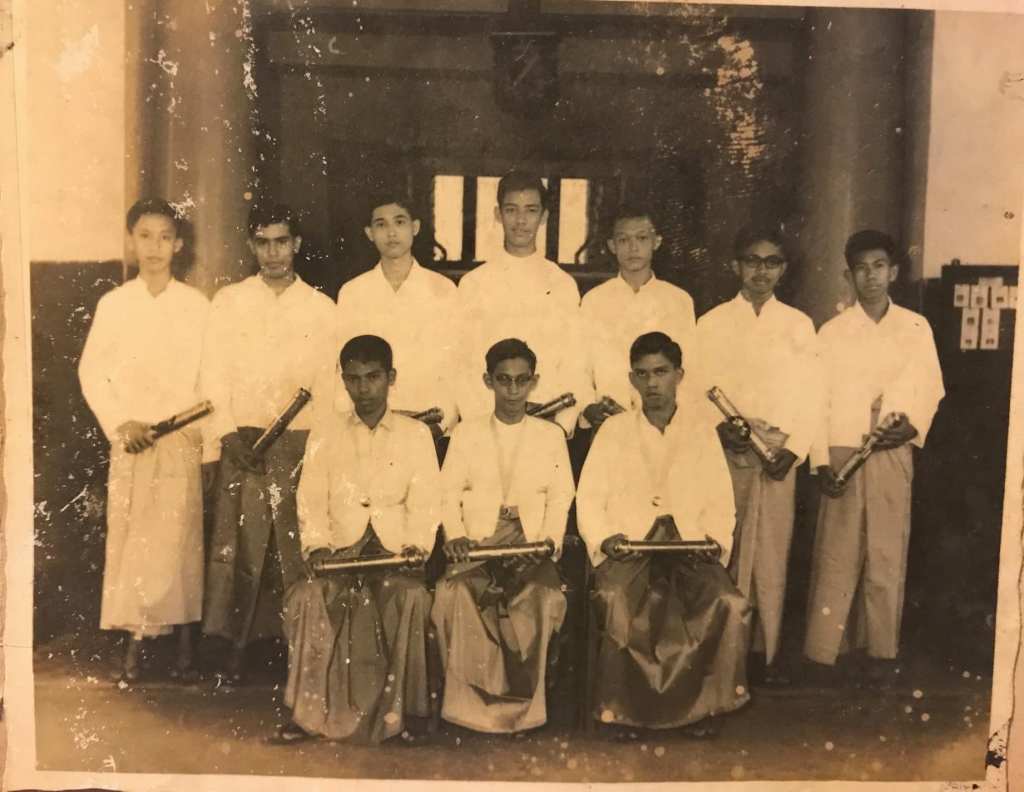
    • Stood 4th in Burma in Matric of 1963 and won Collegiate Scholarship.
    SPHS63
    • Graduated from Institute of Medicine (2). Wrote articles and drew paintings & cartoons for IM(2) magazine.
    • Doctorate from UK
    • Taught Physiology at IM(1), IM(2) and a Malaysian University.
    • Has compiled a list of Professors of Physiology.
    • Attended the Soon Kyway for Sayadaw Beatson (Physics teacher & Scout Master at SPHS).
    V Nyunt Wai 1
    • Artist and painter. He illustrated a book by Ashin Ananda (Reverend F Lustig, Laureate Poet).
    • Writes blogs, poems (including Kauk Kyaung Kabyar ကောက်ကြောင်းကဗျာ and Sagar Pariyae စကားပရိယာယ်).
    V Nyunt Wai 3
    • Dr. Nyunt Wai wrote :
      I’m no painter or a poet. Just occasional excursions to these fields. And I’m not a visiting Professor. Had to apply for this job in Malaysia just like any other expatriate from India or Bangladesh. So I’m no 3 “P”s. This reminds me of “No 3 P policy” of the now extinct Yahoo group Alumni-Myanmar-medical-institutes founded by Saya Johnny Thane Oke Kyaw-Myint, which served well as a lively forum for us until the advent of Facebook.

      Dr. Thane Oke Kyaw Myint wrote :
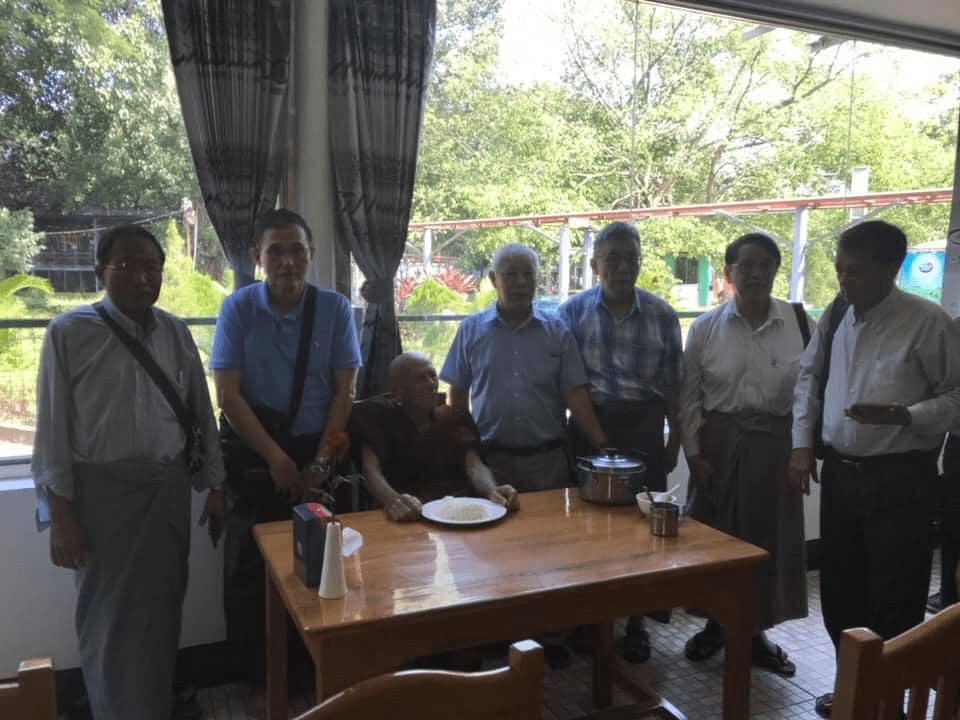
      Yes AMIM was a tight small group of us. Those who became friends then remain now as close friends. On FB, there is short attention as well as being bombarded by posts that we have no interest in.
    V Nyunt Wai 1

    Posts

    • Matriculates
    • Sagar Pariyae
    • St. Paul’s High School