Helped Civil Engg grads from Myanmar get internship and/or job in Japan
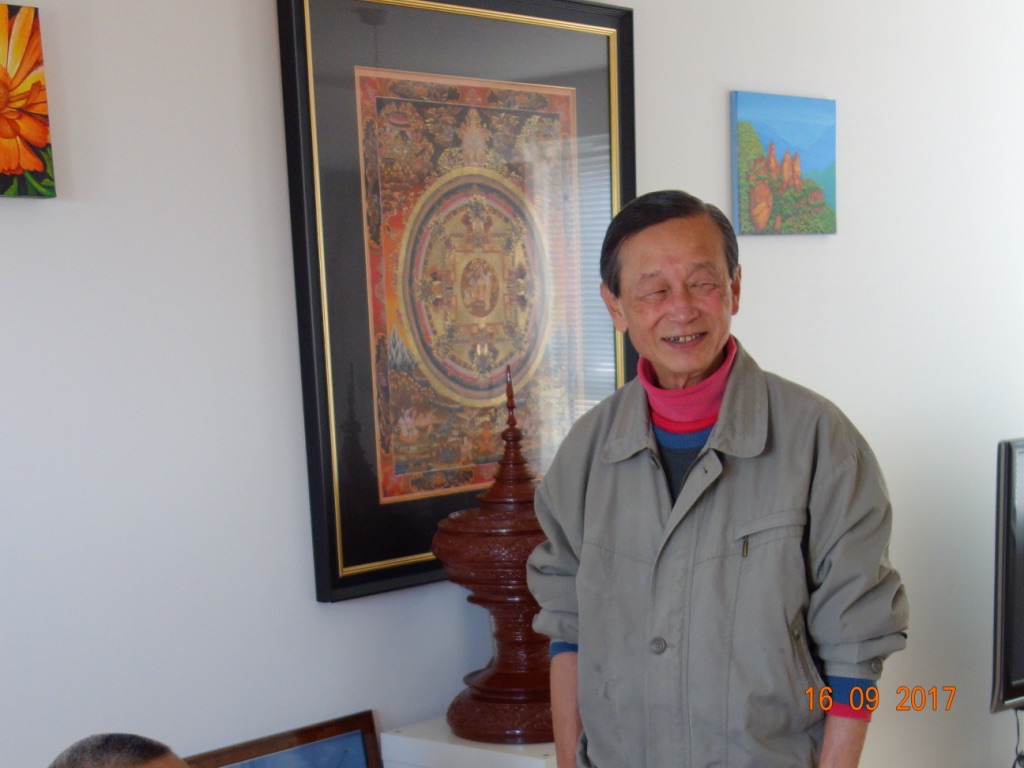
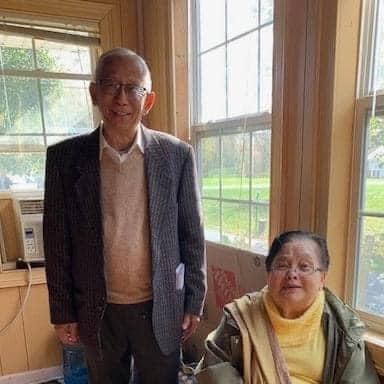
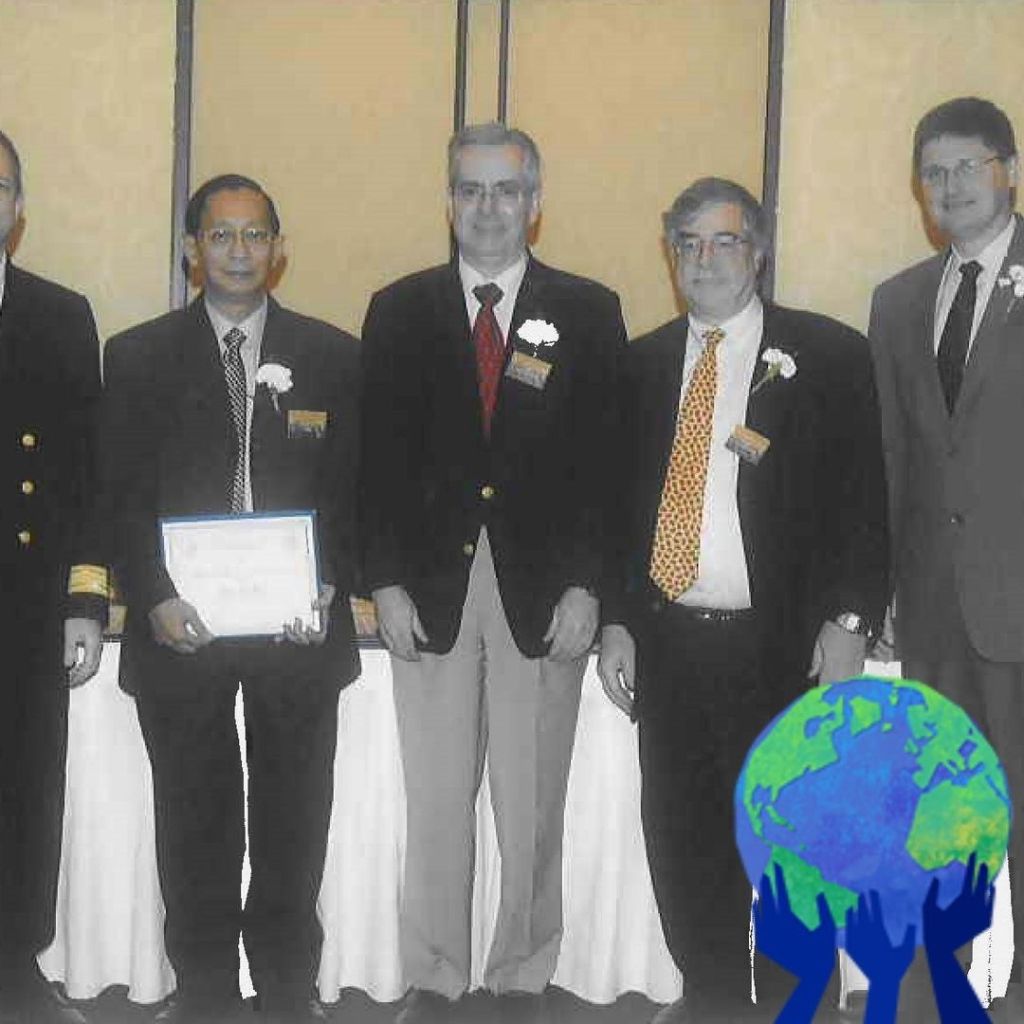
In 2017, Saya and Daw Mya Nwe (Winsome, C73) donated K100 Lakhs to the YTU Modernization Project.
Donation
He had a Stroke.
Praying for a speedy recovery.
Dr. Myo Khin wrote :
Dear U Hla Min, Thank you very much for your kind and favorable phrases for my donation to the RIT library. This is the token of my feeling to my home university. Up till now I have helped around 50 grads from RIT and other TUs in Myanmar with respectable engineering jobs in Japan. Moreover this is totally free of any charges or obligations. Only one request I made is “please try hard and prove yourself” and this will lead to the next recruitment for your juniors back in Myanmar.
Updates
After treatment & rehab, he recovered from the Stroke reported in the post.
In the lower classes, he was in Section (C). I was in Section (D).
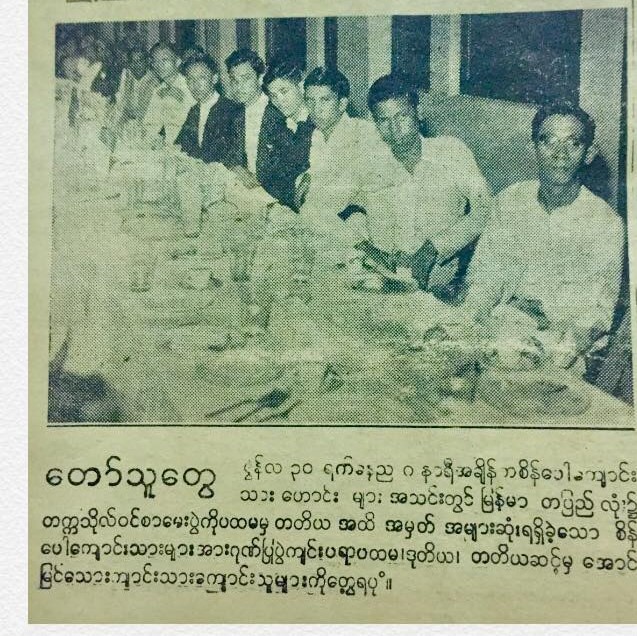
Stood 13th in the whole of Burma in the Matric exam of 1963.
Won Collegiate Scholarship. Only 40 of the 100 scholarship awards were given to students from private schools.
SPHS had five in the Top Five, seven in the Top Ten, and ten in the top Twenty. Khin Maung U (1st), Min Oo (2nd), Myo San (Freddie, 3rd), Nyunt Wai (Victor, 4th), Thein Wai (5th), Hla Min (7th), Aung Kyaw Zaw (Johnny, 9th), Maung Maung Kyi (11th), Aung Thu Yein (Brownie, 13th), Khin Maung Zaw (Frank, 17th).
Has a soft heart.
Before the Matric exam, he read several subjects to Nyunt Wai (Victor), who was sick & could not study. Brownie could take credit for Victor’s success. Victor stood 4th in Burma & became medical professor in IM & Malaysia.
Dr. Nyunt Wai wrote :
Being my best friend since standard IV, I could write volumes about him. For now only two points: (1) my friend was called “ANyo”(Brownie) because he had much darker complexion compared with his elder brother (very fair complexion); this contrast repeated in the case of his two sons; (2) the brown brothers passed away years ahead of their fairer counterparts.
University Days
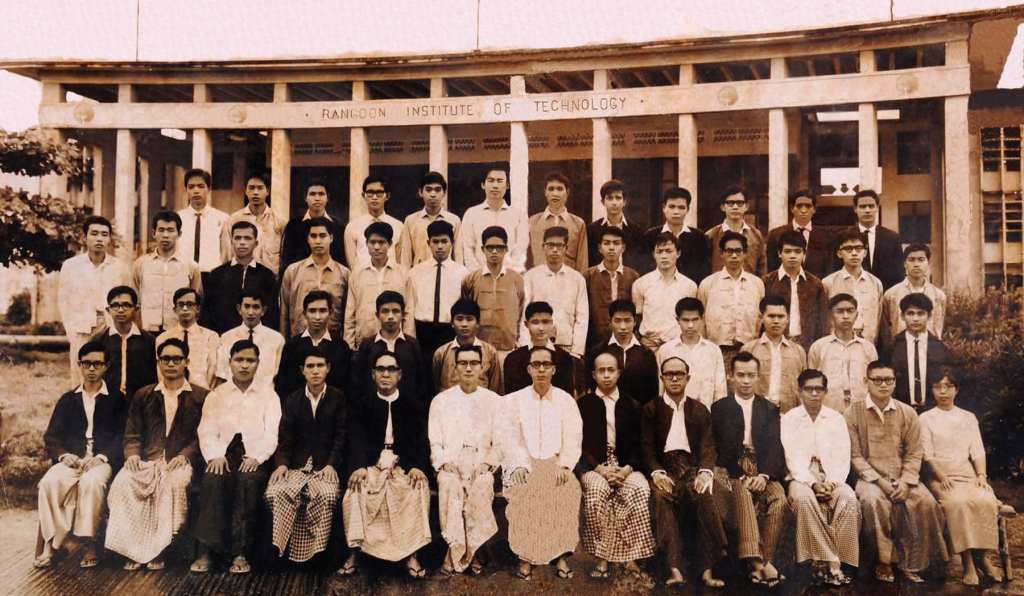
We attended the last ever I.Sc.(A) at Leik Khone in 1963. We took the Science Option.
After a long closure citing Security Concerns following the July 7th Anniversary, a new Education System was established in November 1964.
Admitted to the first ever 2nd BE at the Gyogone Campus.
Chose Electrical Engineering as Major & EC (Electrical Communications) as Option.
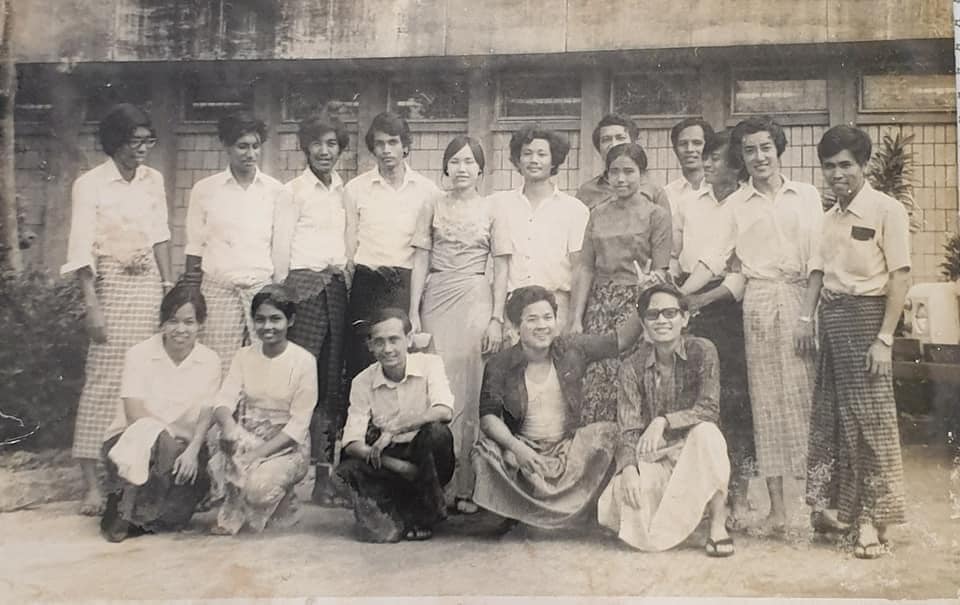
EE69
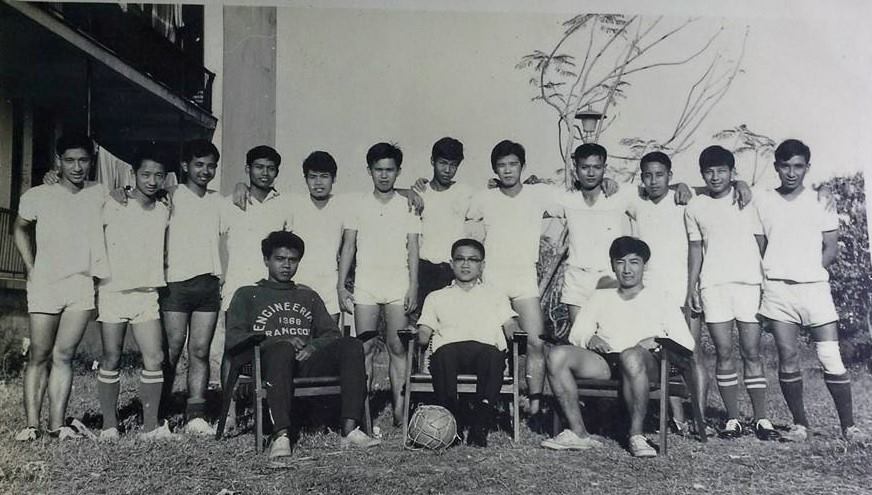
Played Soccer and Tennis
ATY 3
Learned to smoke — trying to fend off mosquitoes in the RIT rest rooms.
Learned social drinking from his classmates (e.g “Robert” Win Boh) after the last paper of the RIT final exam.
After Graduation
One of 13 EC Graduates
Had a successful career at MOC/Schlumberger, & several foreign assignments.
Became a heavy smoker & drinker. Felt lonely after the loss of spouse & eldest son.
Had minor & not-so-minor health problems.
Quit drinking & smoking for some time, but he still felt the urge.
Last Meeting (in March 2012)
I visited Yangon to take part in preparations for SPZP-2012 (scheduled for December).
Zaw Lai came to see me. We decided to surprise Brownie. He trusted people. He did not lock his house. He closed the gate & boarded Zaw Lai’s car.
Zaw Lai coaxed him to take a couple of drinks.
That dinner at Zaw Lai’s apartment would be remembered as Brownie’s farewell.
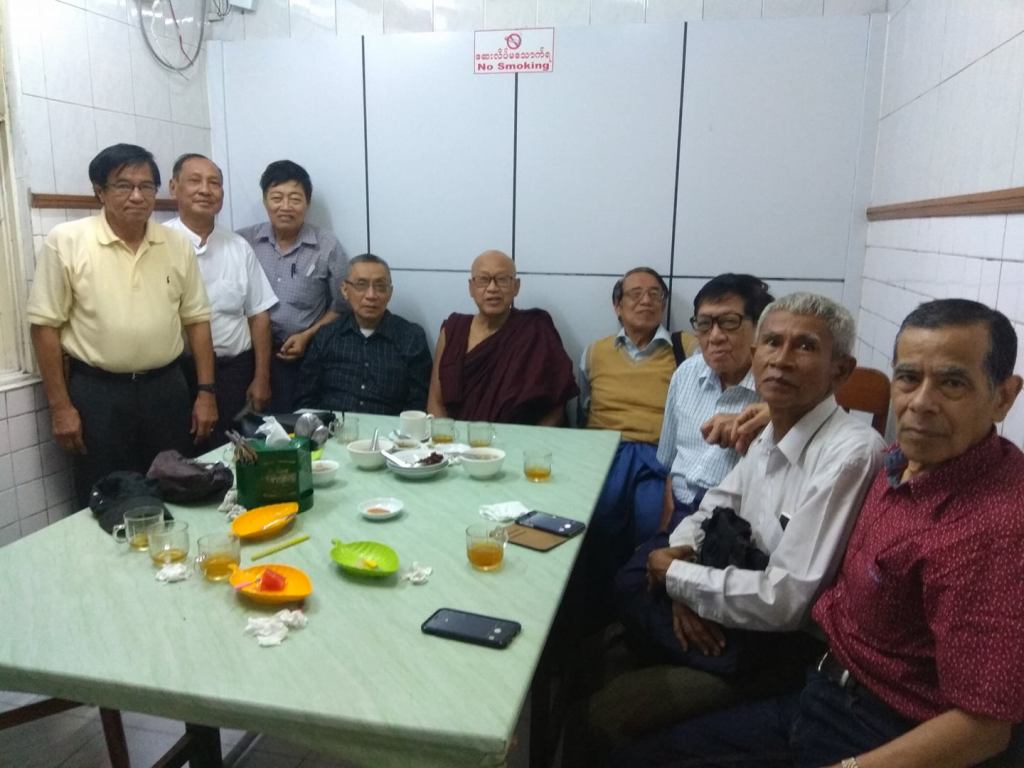
Brownie did not show up at the 69er breakfast gathering at Royal Rose. The gathering was cut short when we learned that Brownie was in ICU and that the 69er HCF organizers would go to see him.
Kyaw Zin took Win Lwin, Khin Maung Bo & me to the ICU. Brownie’s son, who is a medical doctor, said that Brownie was not ready for another operation. We left with samvegha that he could very well be No 61 (on Aung Min’s GBNF list). Win Lwin told me to meditate and also “do something for yourself”.
I spent several days at the Kaba Aye Sun Lun Gu Kyaung as a monk. Sayadaw U Wara (ChE70) was my preceptor.
During that period, Brownie remained unconsciousness and he finally succumbed.
My 69er friends notified Brownie’s demise to my siblings, but requested not to notify me at the monastery. They did not want to disrupt my meditation practice.
May Brownie be able to share my merits.
Ah Hmya, ah hmya, ah hmya.
Updates
Samvegha
Three Scholarship winners from SPHS63 — Brownie, Freddie & Maung Maung Kyi — are GBNF
Five EC69ers — Kyaw Soe, Brownie, Chit Tin, Oo Kyaw Hla & Sai Aik Yee — are GBNF
128 69ers (over 40% of the Class) are GBNF. The GBNF list is maintained by Aung Min (M69) & team
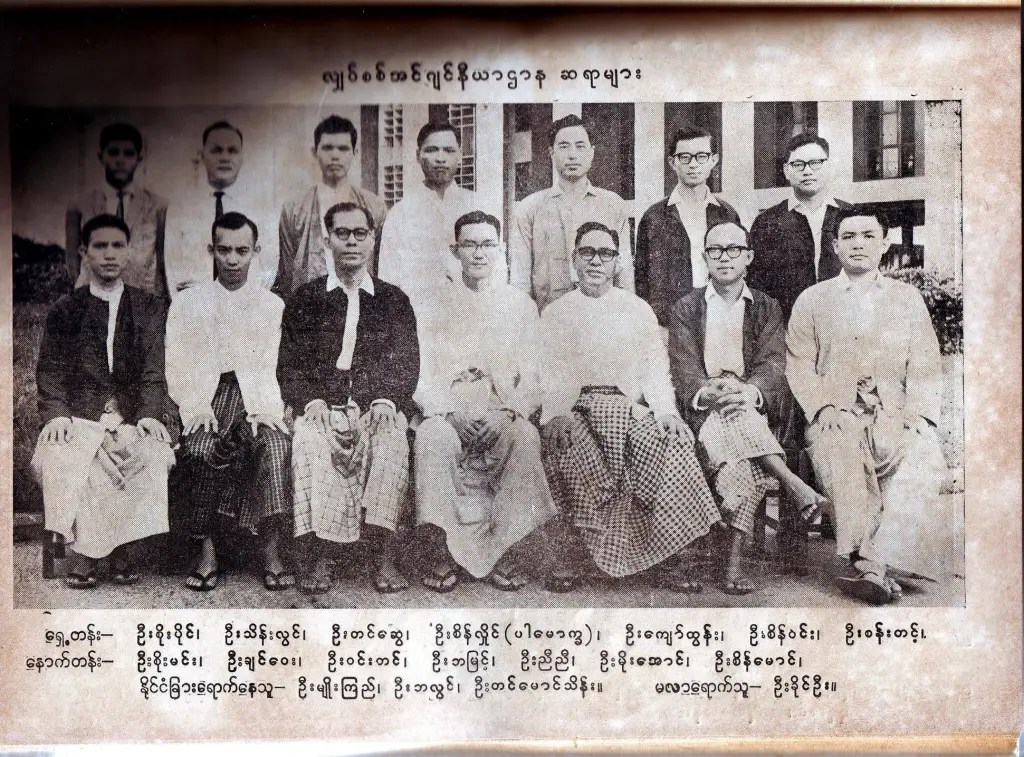
Several RIT EE Sayas — U Kyaw Tun, U Sein Hlaing, U Tin Swe, U Sein Win, U Thein Lwin, Dr. San Tint, U Soe Min, U Chin Way & U Nyi Nyi — are GBNF. For SPZP-2010, I wrote “A Sad & Short Clip : EE Sayas”. Two sayas — U Thein Lwin & U Nyi Nyi — have passed away since the article was published.
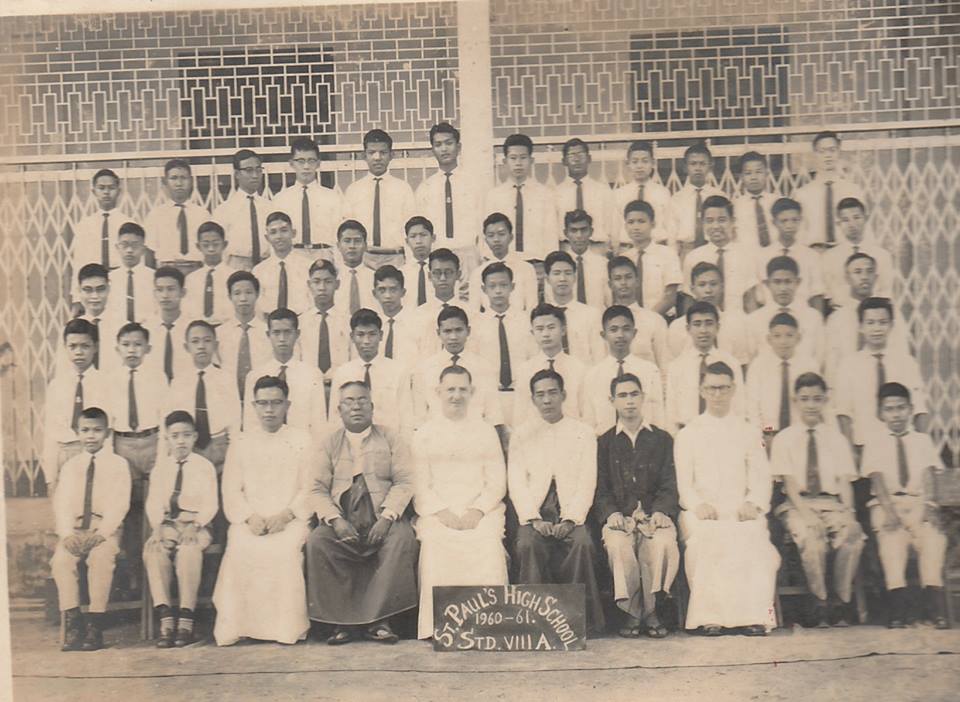
My Classmate for VIII(A), IX(A), X(A) and I.Sc.(A)
SPHS Std. VIII A
My Crew mate at RUBC
Best Man at my Wedding
Guinea Pigs
Our elders entered Rangoon University after passing the combined HSF & Matric examination
Had to take first ever HSF Only exam in 1962. All subjects except English were taken in Burmese.
Had to take the Matric Only exam in 1963
Kamma probably decided that we would not be in the RU Campus on the fateful 7th July, 1962.
HSF in 1962
Scored the highest marks in Chemistry in the first ever HSF Only exam in 1962
Matric in 1963
Gained distinctions in Chemistry & Maths, and barely missed in Physics.
Was a natural in Chemistry. Badly wanted to have distinction in Physics. Had to take some time during the Physics test to go to the rest room due to a minor illness.
Nevertheless, he stood 11th in the whole of Burma and won the Collegiate Scholarship of 75 Kyats a month.
Matriculation 1963
I.Sc. (A) / RUBC
Rowed as Bow in our SPHS Novice Crew. Willie Soe Maung (Myint Soe, first batch BDS, GBNF) was Stroke. Kyaw Wynn was No. (3). I was No. (2). Myint Thein (SPHS62, GBNF) was Cox.
We were Senior Novice Runner-up
Awarded Full Green
School Closure
Studied at Leik Khone College for a few months before the Revolutionary Council & Government shut down most Universities and Colleges except Engineering and Medicine.
The government wanted to quash the protests of the 7th July Anniversary.
Kamma probably decided that we should lose some more precious years of our lives and graduate 2.5 years later than those who were a year senior to us in High School.
Study in GDR
No one knew when the Universities would reopen.
Taking no chances, he & Kyaw Wynn accepted admission to study at Dresden University, GDR.
Studied Chemical Engineering with specialization in Pulp & Paper Technology.
Return to Burma
Was a Best Man at our Wedding in June, 1973.
Joined PPIC and worked on “Pulp and Paper” related projects.
Met Daw Khin May Than (ChE72), raised a family and later moved to Wales, UK.
Wales
Both sons became Medical doctors.
Rimon, the elder son, became a Squadron Leader in the Royal Air Force (RAF). He led Rescue Teams.
Rimon perished in an avalanche. RAF notified Maung Maung Kyi & Khin May Than who were on the way to visit Myanmar. They received the sad news a short time after landing in Yangon. They had to hurry back to UK for their son’s last journey.
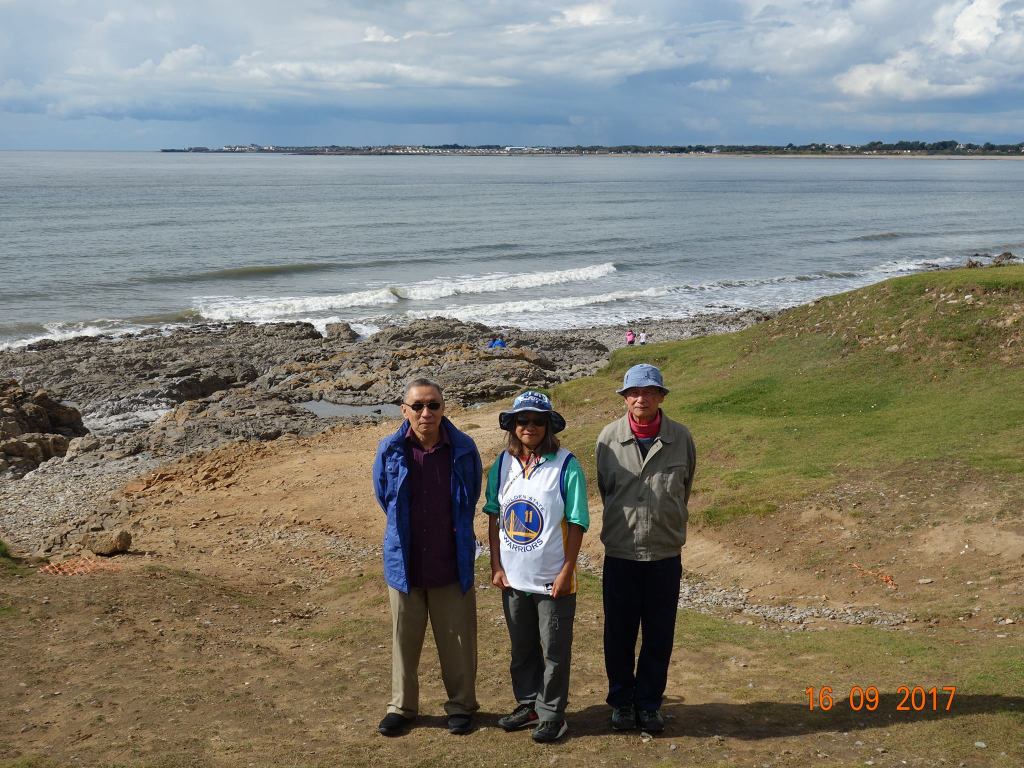
After that, he rarely spoke and smiled. Khin May Than painted and took walks twice a day to ease the aches and pains. They decided to move to Ogmore-by-the-sea.
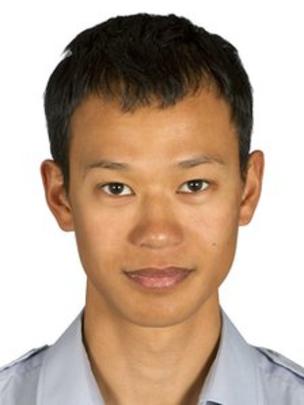
Gave their old house to their second son, a medical doctor who had spent time in Japan and had come back to see the parents.
Trip to England and Wales
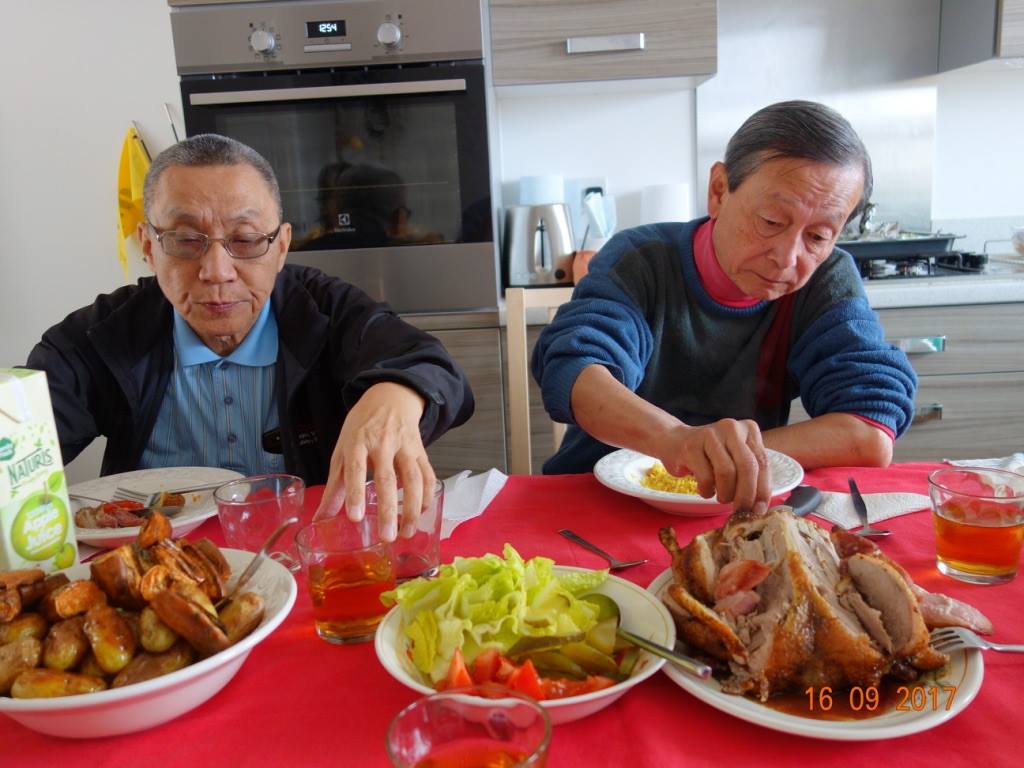
In September 2017, we visited the UK. My previous visit was in 1972.
My cousin nephew Dr. Khin Tun (Peter, GBNF) and his spouse Daw Win Mar hosted us with sumptuous dinner almost every day. Both loved cooking. Also drove us to Southern Wales to visit Maung Maung Kyi and Khin May Than at Ogmore-by-the-sea
The short but memorable reunion brought back smiles to Maung Maung Kyi.
Ogmore 1Ogmore 2
Updates
SPHS63
Three of the Collegiate Scholarship winners from SPHS63 are GBNF. Myo San (Freddie, 3rd in Burma), Maung Maung Kyi (11th) & Aung Thu Yein (Brownie, 13th).
RUBC Crew
Three crew mates are GBNF. Myint Soe (Willie Soe Maung, Stroke), Myint Thein (Cox) & Maung Maung Kyi (Bow).
Dr. Peter Tun
Passed away on April 13, 2020. He succumbed to Covid. See posts about him & Peter Tun Award.
Brother Anthony (Class teacher) : taught Mathematics
Saya U Sein (Burmese teacher, GBNF) : Father of Saya Dr. Soe Win (retired Rector of YUFL); Also taught Burmese in Matric.
Brother Felix (Brother Director, GBNF) : After nationalization, moved to Germany and passed away there. Thonegwa Kyaw Win visited him.
Saya U Nyunt Maung (Arts subjects teacher) : Taught Maths in Sacred Heart
SayaBeatson(Science subjects teacher) : Became a monk
Brother Xavier (English teacher) : Also taught English in 9th standard. After nationalization, moved to UK and presumably left the Order.
Dr. Khin Maung U
OPA DinnerKhin Maung U
First in Burma in the Matric exam in 1963; Won Collegiate Scholarship
Had perfect scores of 100 in Maths & Chemistry and a score of 99 in Physics. Grapevine says that one point was deducted from the initial score.
Multiple Luyechun at IM(1)
Due to changes in the Edu System, he had to do M.Sc. (Med Sc) locally. Top students from earlier years studied in UK as State Scholars.
His persistence paid off. Got Fellowships from UK and MD from Australia
Retired from Food & Drug Administration in the USA
Translator/interpreter for dhamma courses & meditation retreats.
Wore thick glasses since his younger days.
Classmate in Stds VIII(A), IX(A) and X(A). We were in different sections in the lower classes.
Dr. Min Oo (Kenneth)
Stood second in Burma in the Matric exam in 1963. Won Collegiate Scholarsip.
Some saw him reading a German book before entering the hall to take the Matric exam.
Scored distinctions in English, Maths, Physics and Chemistry.
Chose to study Maths at RASU.
Saya U Aung Sein (Maths) saw Min Oo get out of the Tutorial classes after a few minutes and yet had perfect score. He decided to give challenging questions for a Tutorial. Min Oo took longer time than the easier Tutorials, but most of the other students could not get a passing grade.
A Tuition Saya (now GBNF) challenged his students. “Ask your teachers to solve the problem. I will give you free tuition if you can provide the correct answer.” One student asked Min Oo, who was enjoying a card game. Min Oo scribbled the answer during the card game. The Tuition Saya was disappointed. He did not keep his promise to give the student free tuition.
Attended Tekkatho Luyechun Camps twice.
Min Oo (Seated Right)
In the Summer of 1965, he was chosen as Luyechun among second year RASU students.
In the Slummer of 1968, he was chosen as a Saya for the Tekkatho Luyechun camp.
As a multiple Tekkatho Luyechun from IM(1), Dr. Khin Maung U was present at both camps. He remembers Min Oo with a cigar trying to look like a Sayagyi.
Min Oo received two doctorates in Maths from Germany. He taught at McMasters University in Canada. He voluntarily retired in 2015.
He was one of the young students in the class, but also among the brightest.
Classmate in Stds VIII(A), IX(A) & X(A). We were in different sections in the lower classes.
He often visited his daughter in the San Francisco Bay Area.
Dr. Myo San (Freddie, GBNF)
Khin Mg Zaw, Myo San, Khin Mg U
Stood third in Burma in the Matric of 1963. Won Collegiate Scholarship.
He had studied phonetics. He had read lots of English books.
He scored distinctions in English, Maths, Physics and Chemistry.
He was older than us. That might have given him a slight advantage in the early years.
He gave me a quiz. “How do you pronounce GHOTI?” I gave an answer which he corrected as “FISH”. He had read George Bernard Shaw, who posed the quiz as an example of eccentricity in English. GH is phonetically equivalent to F as in ROUGH. O is phonetically equivalent to I as in WOMAN. TI is phonetically equivalent to SH as in ATTENTION. Thus, GHOTI is phonetically equivalent to FISH.
He became a surgeon, but the stress caused him to take early retirement.
Sadly, he passed away.
Classmate in Stds VIII(A), IX(A) & X(A), We were in different sections in the lower classes.
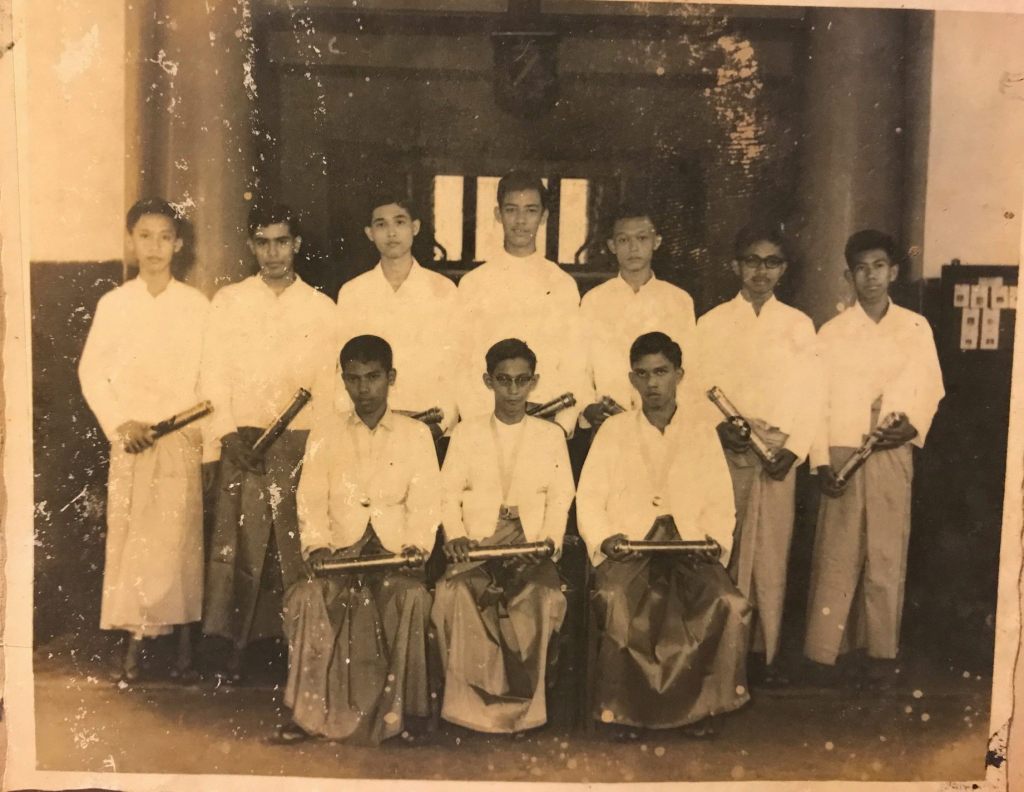
Collegiate Scholarship Holders
In 1963, students from private schools had to be in the Top Forty to be eligible for Collegiate Scholarship.
SPHS had ten students in the Top Twenty. Min Oo studied Maths. Hla Min, Maung Maung Kyi & Aung Thu Yein studied Engineering. Khin Maung U, Myo San, Nyunt Wai, Thein Wai, Aung Kyaw Zaw & Khin Maung Zaw studied Medicine. Myo San, Maung Maung Kyi and Aung Thu Yein are GBNF
First : Dr. Khin Maung U (Medical Researcher, FDA, USA)
2nd : Dr. Min Oo (Maths Professor, McMasters University, Canada)
3rd : Dr. Myo San (Surgeon, GBNF)
4th : Dr. Nyunt Wai (Physiology Professor in IM & Malaysia)
5th: Dr. Thein Wai (Moved to USA)
7th: U Hla Min (Lifelong Learner; Software Engineer, Silicon Valley)
9th: Dr. Aung Kyaw Zaw (Specialist, Base Military Hospital)
11th : U Maung Maung Kyi (Dip. Ing in Pulp & Paper, Wales, UK, GBNF)
13th : U Aung Thu Yein (EC, Schlumberger, GBNF)
17th: Dr. Khin Maung Zaw (Medical Doctor, UK)
SPHS63
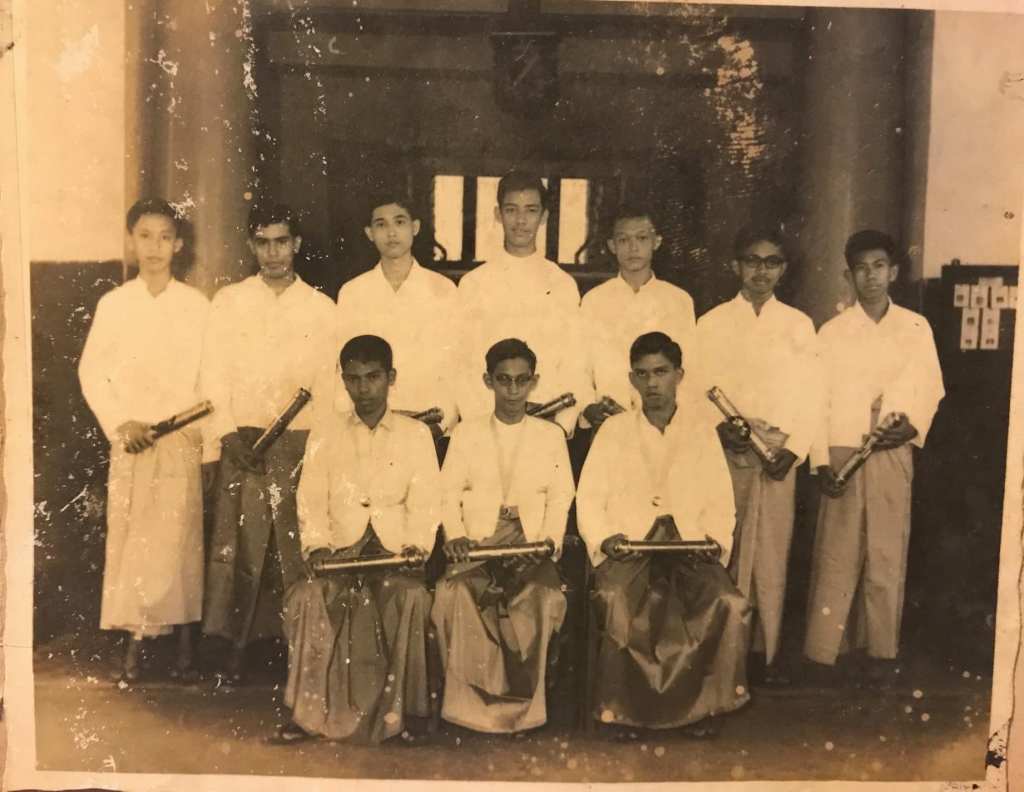
In the group photo
Seated (L to R) : Min Oo, Khin Maung U, Myo San (GBNF)
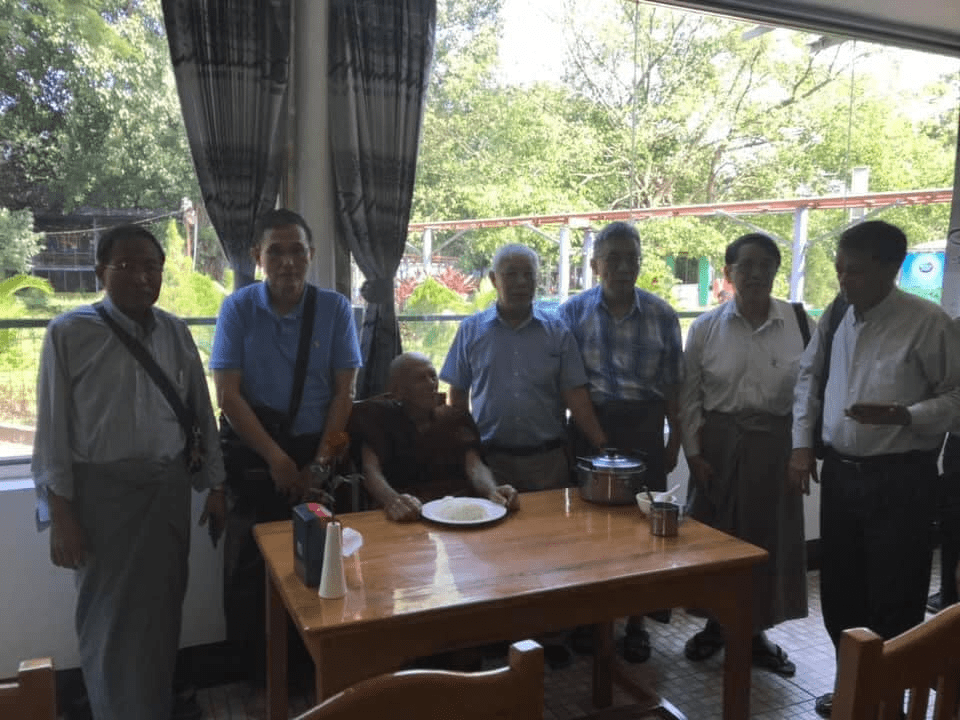
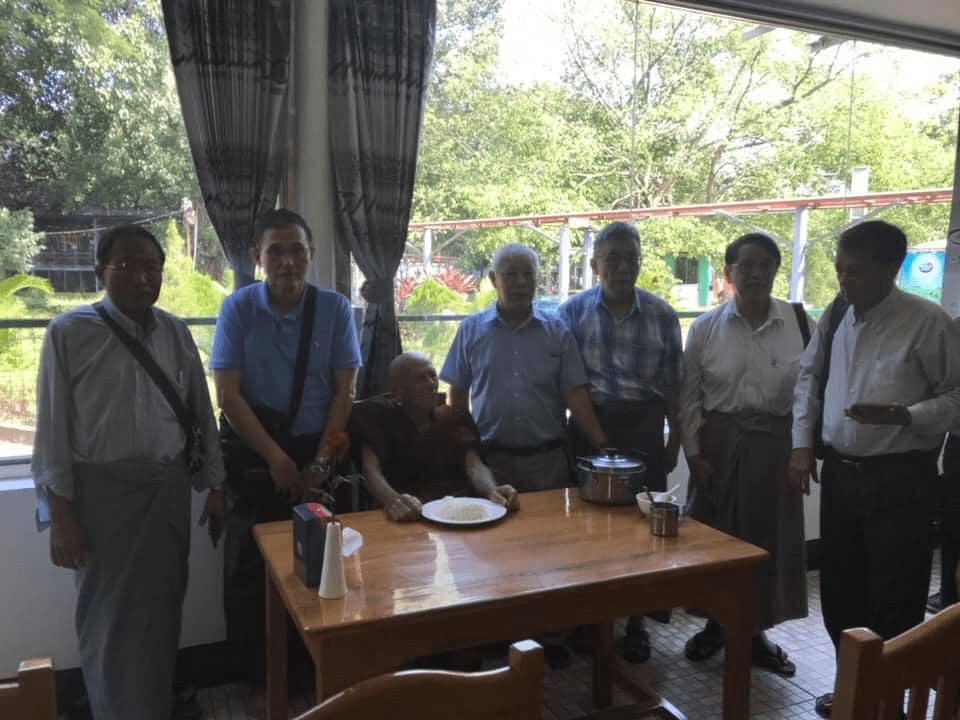
Paulians — Myo Nyunt (Harry), Atom Hla & team — offered soon to Sayadaw
Sayadaw BeatsonPaulians offering Soon
La Min
Nyunt Wai (Victor)
Sayadaw Beatson
Nyan Taw (Dicky)
Hla Min
Than Win
Aung Kyi (Arthur)
Sein Nyunt (Swe Set)
Classmate in Stds IV(D), V(D) & VI(D)
Shared names & status of former classmates. Several are GBNF. Hla Myint (Snow Makeup), Maung Maung Thaung, Sonny Yone Sein, Sydney Khant, Tin Tun are some who have passed away
SPHS classmate in Std VIIIA, IXA and XA. He was among the youngest, but also the brightest.
We were in different sections in the lower classes.
VIII AMin Oo (Seated left)
Matric Exam in 1963
SPHS had five students in the Top Five, seven in the Top Ten, and ten in the Top Twenty.
All received Collegiate Scholarships with a monthly stipend of 75 Kyats (net 60 Kyats after the school fees).
Min Oo stood 2nd in Burma. He chose to study Maths.
Language expert
Grapevine says that he was reading a German book before entering the hall to take the Matric exam
Scored distinctions in English, Maths, Physics & Chemistry
Mathematics Genius
A Tuition Saya challenged his students. “Ask your teachers to solve the problem. I will give you free tuition if you can provide the correct answer.” One student asked Min Oo, who was playing cards. Min Oo scribbled the answer during the card game. The Tuition Saya was unhappy; he broke his promise to give the student free tuition.
U Aung Sein (Retired Associate Professor of Maths) saw Min Oo get out of the Tutorial classes after a few minutes and yet had perfect score. Saya decided to give challenging questions for a Tutorial. Min Oo took longer time than the easier Tutorials, but most of the other students could not get a passing grade.
Luyechun Student & Staff
Selected Tekkatho Luyechun in the summer of 1965. We attended Inlay Khaung Daing Camp.
Inlay Luyechun (Min Oo — Seated Right)
He joined RASU Maths Dept. He was chosen as Staff for the Tekkatho Luyechun camp.
As a multiple Luyechun from IM(1), Ko Khin Maung U was present at two camps with Min Oo. Ko KMU remembers Min Oo with a cigar trying to look like a Saya.
Career
Two doctorates in Maths from Germany
Professor Emeritus, McMasters University in Canada; Voluntarily retired in 2015.
Was Visiting Professor in selected US Universities.
Micro-reunion
After retirement, he visited Silicon Valley frequently to see his daughter.
A few years back, we had a lunch gathering in the SF Bay Area.
Dr. Nyan Taw (SPHS63) wrote :
Yes – Min Oo is the brightest. Proud to be his class mate. SPHS VIA group photo Min Oo also Khin Mg U sitting.
Aging & declining health had a toll on him and his spouse
Had diabetes for a long time without control / treatment.
His kidney began to fail around October 2010. Doctors recommended preparation for dialysis, which is minor operation on his vein / arteries on his hand, but he wanted to try alternative medicine.
UCC alumni set up a health care fund to help him, but he was either “Arr Nar De အားနာတယ်” or frail to do dialysis.
He lost memory and could not recognize his former colleagues.
His wife had limited mobility on her left hand. People in Yangon wanted her to go for therapy but it was not easy for them to visit therapists on their own.
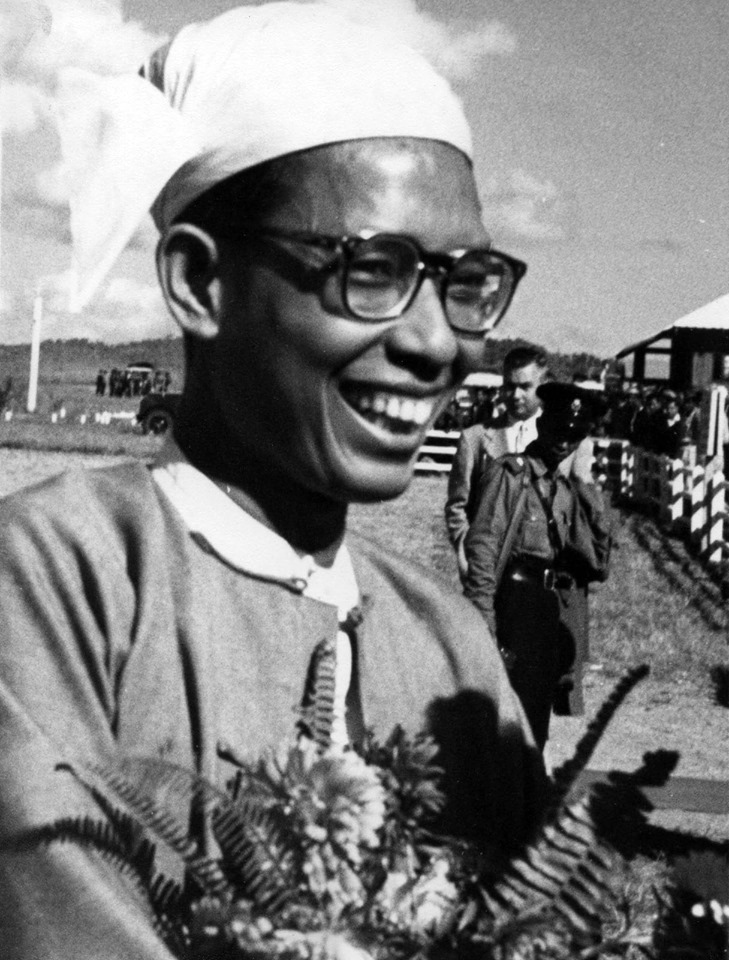
U Kyaw Nyein (AFPFL)
U Kyaw Nyein
Minister, Home Affairs
Leader of Swe-Nyein Faction
Stable AFPFL (တည်မြဲ ဖဆပလ)
U Kyaw Nyein (BSPP)
Minister, Education
U Kyaw Nyein (USIS)
Invited us to use the USIS library
Third son of Myoma Sayagyi U Ba Lwin
U Kyaw Nyein (Franklin)
Younger brother of U Wah Kyu (Maurice’s father) & Saya U Win Kyaing
Kamma is a Pali word meaning action or doing. In its general sense kamma means all good and bad intentional actions whether mental, verbal or physical (thoughts, words and deeds). In the Buddhist teachings, all physical (kãrya kamma), verbal (vacî kamma) and mental (mano kamma) actions are known as the three kammas. All beings perform these three kammas at all waking hours. All their work, great or small, is performed by means of these three kammas. These three kammas become inert when a person is asleep. In the case of a dead person, the three kammas cease to function as far as that body is concerned.
In its ultimate sense, kamma means all moral and immoral volition. The Buddha says: “O Bhikkhus, I declare that volition (cetanã) is kamma. Having volition, one acts by body, speech and thought” (Aînguttara Nikãya).
When any action of thought, word or body takes place, volition determines or causes its concomitants to perform their respective functions simultaneously. For this reason, volition is predominant in all actions. Involuntary, unintentional or unconscious actions, though technically deeds, do not constitute kamma, because volition, the most important factor in determining kamma, is absent. Thus, the real nature of action (kamma) of man is mental.
According to Abhidhammã, 29 types of consciousness (Citta) consisting of (i) 12 types of immoral consciousness (akusala citta) and (ii) 8 types of moral consciousness (kusala citta) from among the 54 types of mundane consciousness (kãmãvacara citta) pertaining to the sentient realm, (iii) 5 types of moral consciousness (kusala citta) pertaining to the realms of form (rüpãvacara citta or jhãnas), and (iv) 4 types of moral consciousness (kusala citta) pertaining to the formless realms (arüpãvacara citta or jhãnas), are called kamma because they have the power to produce their due effects quite automatically, independent of any external agency.
The eight types of supramundane consciousness (lokuttarã citta) are not regarded as kamma because they tend to eradicate the roots of kamma; in them, the predominant factor is wisdom (paññã) while in the mundane, it is volition (cetanã).
Inherent in kamma is the potential of producing its due effect.
Every volitional action is inevitably accompanied by its due effect just as every object is accompanied by its shadow. Kamma is action and vipãka, fruit or result, is its effect. If kamma is likened to a seed, then the fruit, arising from the tree, is vipãka, effect or result. As kamma may be good or bad, so may vipãka be good or bad. As kamma is mental, so vipãka, too, is mental; it is experienced as happiness or misery, according to the nature of the kamma seed. The concomitant material conditions may be advantageous (ãnisamsa) such as prosperity, health and longevity, or disadvantageous (ãdinava) such as poverty, ugliness, disease, short life-span, etc.
As surely as water seeks its own level, so does kamma, given opportunity, produce its inevitable result not as reward or punishment, but as an innate sequence. From a Buddhist standpoint, happiness and misery are not rewards and punishments assigned by a supernatural, omniscient power to one that has done good or evil. The sequence of action and effect is a natural law of kamma.
There are inequalities and many different destinies of human beings in the world. For example, one perishes in infancy and another lives to the age of eighty or more, one is sick and infirm and another healthy and strong, one is a millionaire and another a pauper, one is handsome and another ugly, one is brought up in luxury and another in misery, one is a genius and another a half-wit.
What is the cause of these inequalities? The Buddha’s reply is: “All living beings have actions (kamma) as their own, their inheritance, their congenital cause, their kinsman, their refuge. It is kamma that differentiates beings into low and high states” (Majjhima Nikãya).
According to Buddhism, the disparities that exist in the world are not due to blind chance. They are due, to some extent, to heredity and environment, and, to a greater extent, to kamma which includes not only the present kamma, but also the proximate or remote past kamma. While Buddhism teaches that kamma is the chief cause of inequalities in the world, it does not teach fatalism or the doctrine of pre-destination.
In the Aînguttara Nikãya, the Buddha states: “If anyone says that one must reap according to his deeds, in that case there is no religious life nor is an opportunity afforded for the entire extinction of sorrow. But if anyone says that which one reaps accords with one’s deeds, in that case there is a religious life and an opportunity afforded for the entire extinction of sorrow.”
Thus, Buddhism does not hold the view that everything is due to past kamma. Kamma is not fate. Kamma is not irrevocable destiny imposed upon us by some unknown power to which we must helplessly submit ourselves. The past influences the present but does not entirely control it, for kamma of the past as well as the present are in effect in the present. The past and present influence the future. One’s action (kamma) of a later day may modify the effects of one’s action (kamma) of a former day.
One may at any moment change for the better or for the worse. In Buddhism, therefore, man has a certain amount of free will, and there is almost every possibility to mould one’s kamma. If this were not so, what possibility would there ever be of a man’s getting free from all kamma forever. It would be perpetually self-continuing energy that could never come to an end.
What is the cause of kamma? Ignorance (avijjã), not knowing things as they truly are, is the chief cause of kamma. Dependent on ignorance arise kammic activities. Associated with ignorance is its ally, craving (tanhã), the other root cause of kamma. Evil actions are conditioned by these two causes. All good deeds of a worldling, though associated with the three wholesome roots of generosity (alobha), goodwill (adosa) and knowledge (amoha), are nevertheless regarded as kamma because the two roots of ignorance (avijjã) and craving (tanhã) are dormant in him.
Who is the doer of kamma? Who experiences the effects? Volition (cetanã) is itself the doer. Feeling (vedanã) is itself the reaper of the fruits of action. Apart from these pure mental states there is none to sow and none to reap.
Venerable Buddhaghosa writes in Visuddhimagga: “No doer is there who does the deed, Nor is there one who feels the fruit, Constituent parts alone roll on, This indeed is right discernment.”
Where is kamma? Kamma is not stored anywhere within or without the body. It is not stored somewhere in this fleeting consciousness or in any other part of the mind or the body. But dependent on mind and matter kamma rests, manifesting itself at the opportune moment. Thus, kamma is an individual force, and is transmitted from one existence to another.
Buddhism teaches that there is no permanent soul, no eternal, immortal soul that directs one’s action. So, if there is no soul, what is it that is reborn? The answer is kammic energy: the actions we have done. These actions do not disappear unless or until they have produced their effects. So each being has body and mind as a result of actions they did in the past or in the present, and thus this kammic action goes on and on.
Kamma may be classified in many ways. Kamma is classified into four kinds according to the time at which results are produced: 1. kamma that produces results in the same life-time (Ditthadhammavedaniya kamma); 2. kamma that produces results in the next life (Upapajjavedaniya kamma); 3. kamma that produces results in any one (or more) of successive births and is indefintely effective (Aparãpariyavedaniya kamma); (These first three types require auxiliary causes such as circumstances, surroundings, etc., to produce an effect.) 4. and, kamma that does not produce any result (Ahosi kamma).
The timing of the results of kamma depends upon which thought-moment is associated with the thought-processes (cittavîthi) of volition (cetanã). According to Abhidhammã one thought-process is completed at the expiration of seventeen thought-moments, consisting of seven initial thought-moments followed by seven javana states (at which point an action is judged whether it be moral or immoral, and kamma is performed) and subsequently by votthapana (determining consciousness) and two Tadãlambana (registering consciousness).
Of the seven javana thought-moments, the effect of the first javana thought-moment is the weakest in potentiality, and is manifested in this life (Ditthadhammavedaniya kamma). If it does not operate in this life, it becomes ineffective (Ahosi kamma).
The next weakest is the seventh javana thought-moment; its effect is reaped in the subsequent birth (Upapajjavedaniya kamma). This, too, becomes ineffective (Ahosi kamma) if it does not operate in the next rebirth.
The effect of the five intermediate javana thought-moments (Aparãpariyavedaniya kamma) may take place at any time in the course of one’s wanderings in life continua (Samsãrã) until the final emancipation. No person – not even the Buddha and Arahants – is exempt from this kamma.
Kamma is also classified into four kinds according to its particular function (kicca): 1. Janaka (Reproductive) kamma which conditions the next rebirth; 2. Upatthambhaka (Supportive) kamma which assists or maintains the results of already-existing kamma; 3. Upapilaka (Counteractive) kamma which suppresses or modifies the result of the reproductive kamma; and 4. Upaghãtaka (Destructive) kamma which destroys the force of existing kamma and substitutes its own resultants.
Again, it is the last (seventh) javana thought-process – Janaka (Reproductive) kamma – that determines the state of a person in his/her subsequent birth. As a rule, the last javana thought-process depends on the general conduct of a person. In exceptional cases, perhaps due to favorable or unfavorable circumstances, at the moment of death a good person may experience a bad last javana thought and a bad person a good one. The subsequent birth will be determined by this last javana thought-process, irrespective of the general conduct. This does not mean that the effects of the past actions are obliterated. They will, in turn, produce their inevitable results at the appropriate moment.
o assist and maintain or to weaken and obstruct the fruition of this reproductive (Janaka) kamma, another past kamma may intervene, being supportive (Upatthambhaka kamma) or counteractive (Upapilaka kamma), respectively.
The reproductive (Janaka) kamma can be totally annulled by Upaghãtaka (Destructive) kamma which is a more powerful opposing past kamma, that, seeking an opportunity, may quite unexpectedly operate; it is more powerful than the above two in that it not only obstructs but also destroys the whole force of existing kamma.
There is another classification of kamma according to the priority of effect: 1. Garuka (Weighty or serious) kamma which produces its effects for certain in the present life or in the next (On the moral side, these weighty actions are the jhanas, while on the immoral side, they are heinous crimes (ãnantariya kamma) namely, matricide, parricide, the murder of an Arahant, the wounding of the Buddha, and the creation of a schism in the Sangha); 2. Ãsanna (death proximate) kamma which is the action that one does or recollects – mentally or physically – immediately before the moment of death and it determines the conditions of the next birth; 3. Ãcinna (habitual) kamma which is action that one performs and recollects constantly, and in the absence of death-proximate kamma, produces and determines the next birth; and 4. Katattã kamma which is the last in priority of results and is the unexpended kamma of a particular being that has followed him/her through the continua of kappas (Samsãrã), and it conditions the next birth if there is none of the above kammas to operate.
Kamma is further classified according to the place in which the results are produced: (1) Immoral (akusala) kamma that produces its effects in the plane of misery: Immoral (akusala) kamma is rooted in greed (Lobha), anger (Dosa) and delusion (Moha). There are ten immoral (akusala) actions (kamma): • killing (pãnãtipãtã), • stealing (adinnãdãnã), • sexual misconduct (kãmesu micchãcãrã) {these three are committed by deed}, • lying (musãvãdã), • slandering (pisunãvãcã), • harsh language (pharusãvãcã), • frivolous talk (samphappalãpa) {these four are committed by word}, • covetousness (abhijjhã), • ill will (vyãpãda), and • false view (micchãditthi) {these three are committed by mind}. (2) Moral (kusala) kamma which produces its effects in the plane of the world of desires: There are ten moral (kusala) actions (kamma): • alms-giving (dãna), • observance of five or eight precepts (sîla), • practicing meditation (bhãvanã), • reverence (apacãyana), • service (veyyãvacca), • sharing of merit (pattidãna), • rejoicing in others’ good actions (pattãnumodanã), • hearing the doctrine (dhammasavana), • expounding the doctrine (dhammadesanã), • and, forming correct views (ditthijukamma). (3) Moral (kusala) kamma that produces its effects in the realms of form (Rupa): It is of five types, which are purely mental actions (meditation) leading to the five states of rüpa jhãna. (4) Moral (kusala) kamma which produces its effect in the formless realms: These are four types of purely mental actions (meditation) leading to four types of moral consciousness (arüpa jhãna).
Kammasakatã Sammã-ditthi: Right understanding of the truth about the fact that in the case of beings only the two things – namely, good and bad actions done by them – are their own possessions that always accompany them throughout their life continua, wherever they may wander in Samsãrã.
1. Sabbe sattã kammasakã: Only the volitional good or bad actions done by all sentient beings are their own possessions that always accompany them wherever they may wander in Samsãrã.
2. Sabbe sattã Kamma dãyãdã: All beings are the heirs of their own kamma (good or bad actions). The kamma performed by beings are always theirs in their future existences. Only Kamma is inherited by beings. The effects of one’s kamma always accompany one in many existences yielding good or bad results at the opportune moments. One can never get rid of that kamma, but one has to enjoy or suffer its results under appropriate circumstances.
3. Sabbe sattã Kamma yoni: All beings are the descendants of their own kamma. With regard to the present good and evil results, one’s own kamma performed in the present existence with wisdom and knowledge or otherwise as well as one’s own wholesome kamma such as alms-giving, morality, etc., and unwholesome kamma such as killing beings, etc., performed in past existences are the primary causes (parents) of good and evil results.
4. Sabbe sattã Kamma bandhü: Kamma alone is the real relative that all beings can rely on through their life continua in Samsãrã. Parents, brothers, relatives, etc, whom we love and rely upon, can be loved and relied upon for only a short period, i.e., before our death. One’s own physical, verbal and mental kamma are one’s constant companions who accompany one in future existences, wholesome kamma giving happiness and prosperity. Thus, one’s wholesome kamma alone is one’s real relative who should be esteemed and relied upon.
5. Sabbe sattã Kamma patisaranã: Kamma alone is the real refuge of all beings. Here, refuge means reliance upon or taking shelter for protection against troubles and dangers. Unwholesome kamma will lead one to be reborn to the lower world where one has to suffer grievously. Performing wholesome kamma will lead one to be reborn as a man or deva, and save him from the lower worlds in the future existences.
In Buddhism, there are four kinds of taking refuge for the future: (i) taking refuge in the Buddha, (ii) taking refuge in the Dhamma, (iii) taking refuge in the Sangha, and (iv) taking refuge in one’s own wholesome kamma.
This is explained by the following example. All worldlings who indulge in sensual pleasures resemble sick persons who, to be cured, would take refuge in the chief physician (the Buddha), in good medicines (the Dhamma), in the assistant physicians (the Sangha) and in following the physician’s directions (physical, verbal and mental wholesome kamma).
The three refuges, Buddha, Dhamma and Sangha, exist only during the Buddhasãsana. They do not exist outside the Buddhasãsana.
The refuge of wholesome kamma exists both within and outside the Buddhasãsana. We can never be free from kamma that is operating all the time in this universe as well as in other innumerable universes. For this reason, kamma is our refuge throughout our life-continua in Samsãrã.
6. Yam kammam karissanti kilayãnam vã pãpakam vã tassa kammassa dãyãdã bhavissanti: Whatever good or bad actions are done by beings bodily, verbally or mentally, they become the heirs of their kamma.
Dr. Nyunt Wai wrote : I’m no painter or a poet. Just occasional excursions to these fields. And I’m not a visiting Professor. Had to apply for this job in Malaysia just like any other expatriate from India or Bangladesh. So I’m no 3 “P”s. This reminds me of “No 3 P policy” of the now extinct Yahoo group Alumni-Myanmar-medical-institutes founded by Saya Johnny Thane Oke Kyaw-Myint, which served well as a lively forum for us until the advent of Facebook.
Dr. Thane Oke Kyaw Myint wrote : Yes AMIM was a tight small group of us. Those who became friends then remain now as close friends. On FB, there is short attention as well as being bombarded by posts that we have no interest in.













 HlaMin