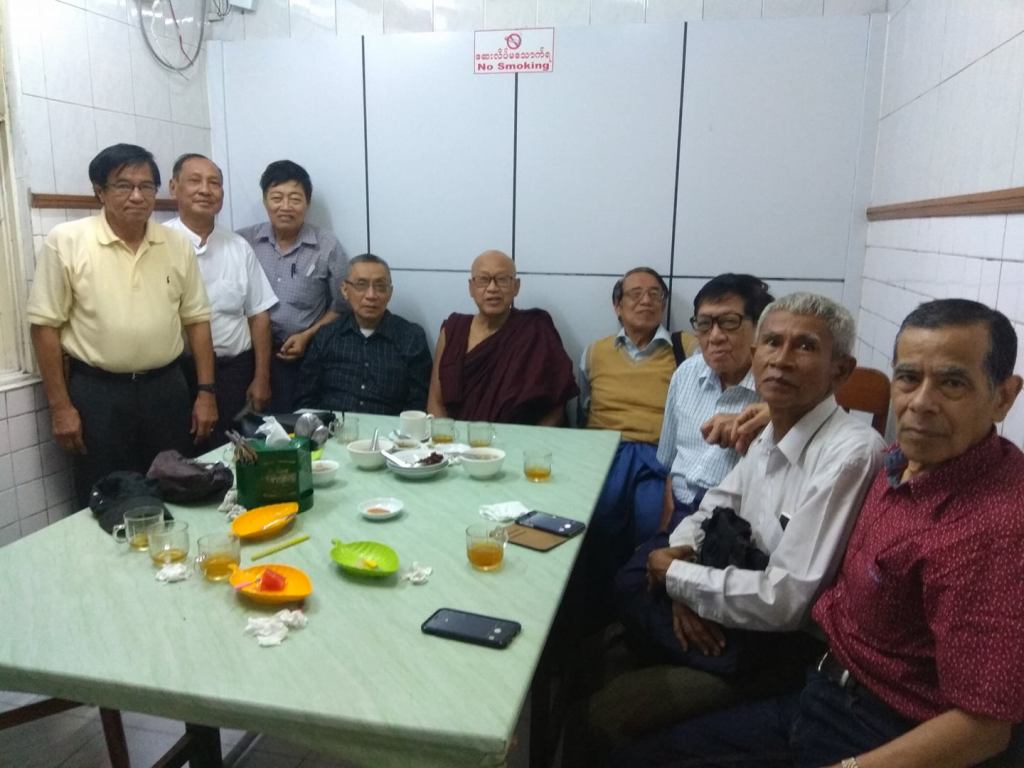
Author: Hla Min (Lifelong Learner)

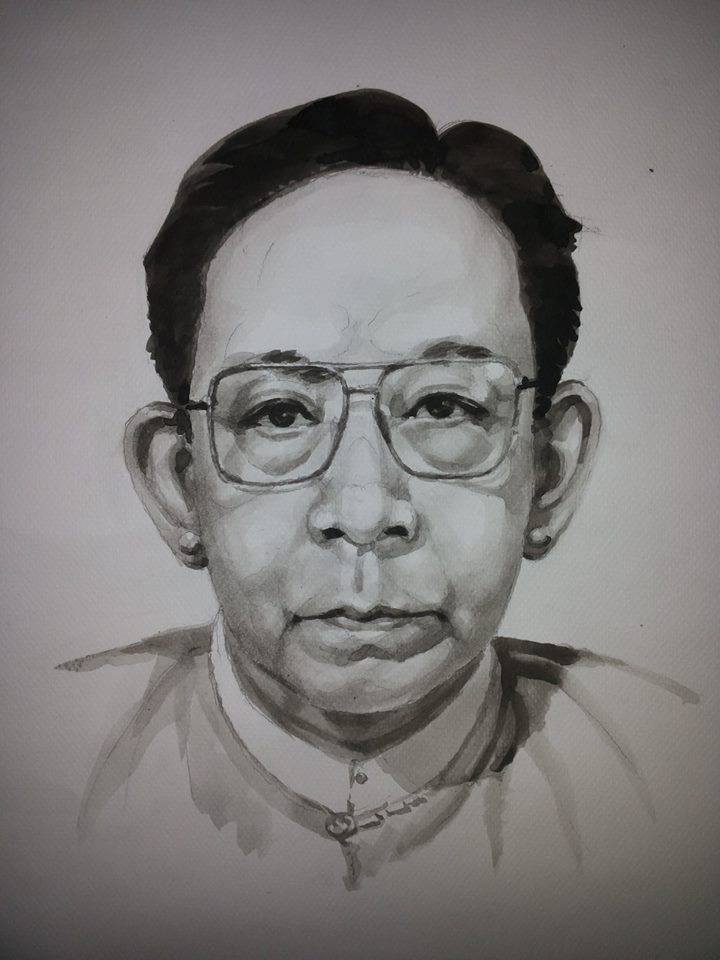
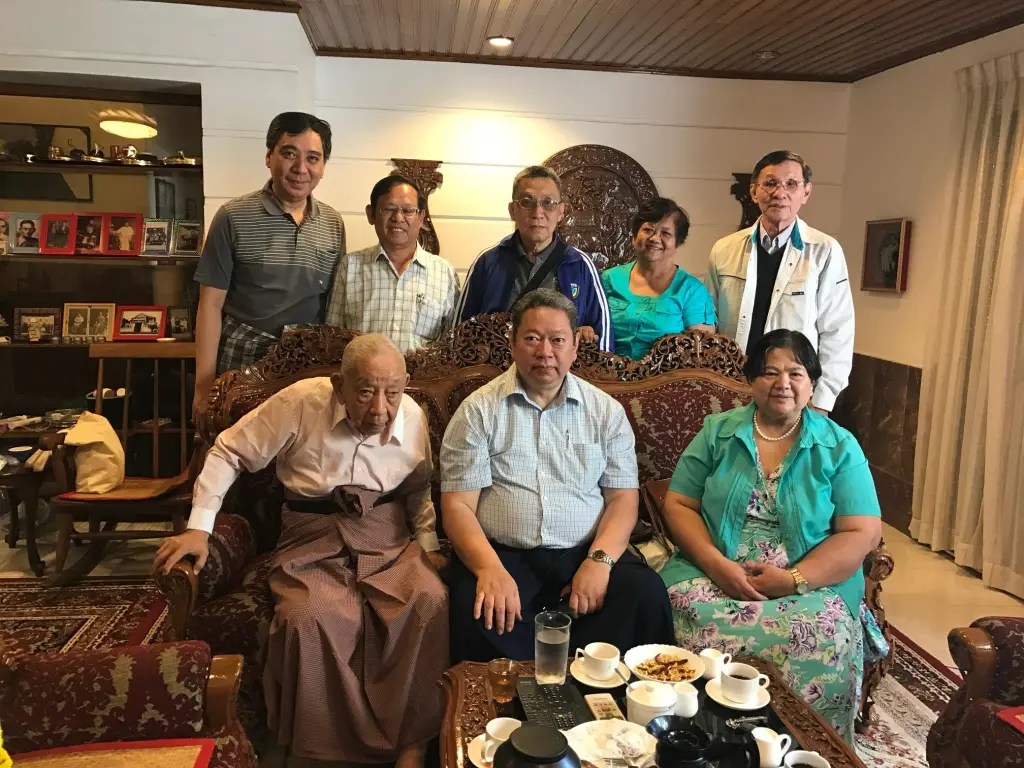
  • Dr. Aung Gyi

    Dr. Aung Gyi

    by Hla Min

    Updated : June 2025

    Dr. Aung Gyi

    (1) Suggestions

    Ko Hla Min,

    I read through your updates  shown in hlamin.com and my suggestions are given below.

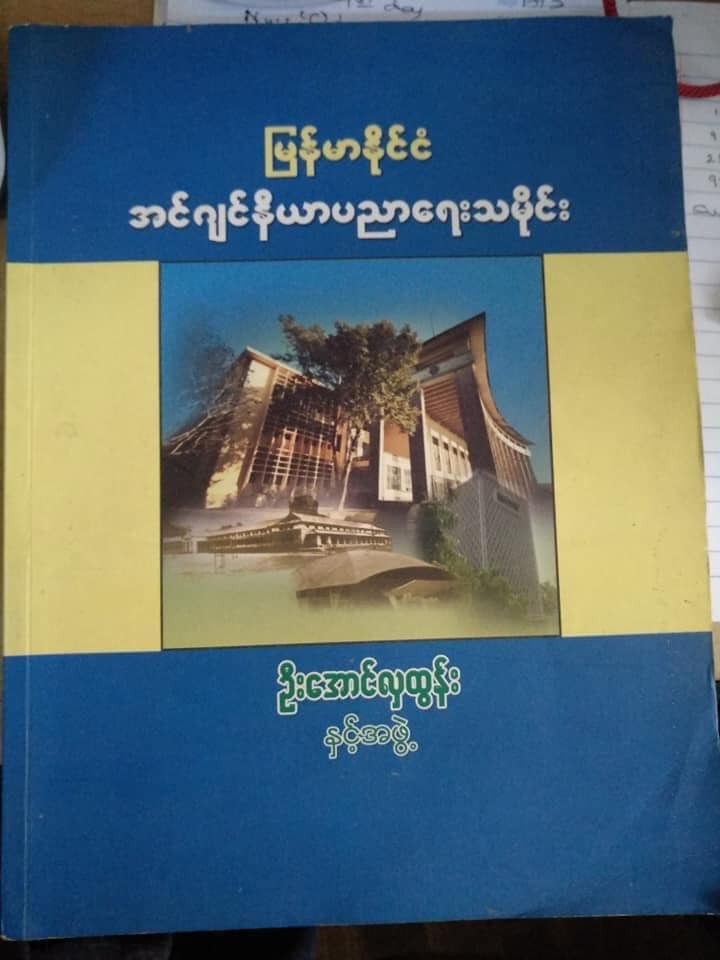
    I feel that your book should reflect the love of RIT students for their alma mater, the respect and gratitude shown by RIT students towards their respective teachers, the attachment, bond and friendship among RIT students; and the love for their motherland by RIT students. In short, it should reflect what we call “RIT spirit”. You can base the preparation of the book, beginning from the establishment of Faculty of Engineering, Rangoon University, on your updates and other relevant sources. The word RIT  includes all different names of Engineering Institutions in Myanmar, past and present.

    Having said all of the above, the following headings come to my mind for your proposed book:

    1. SPZPs/Reunions  involving all  disciplines  which had taken place in Myanmar and abroad.
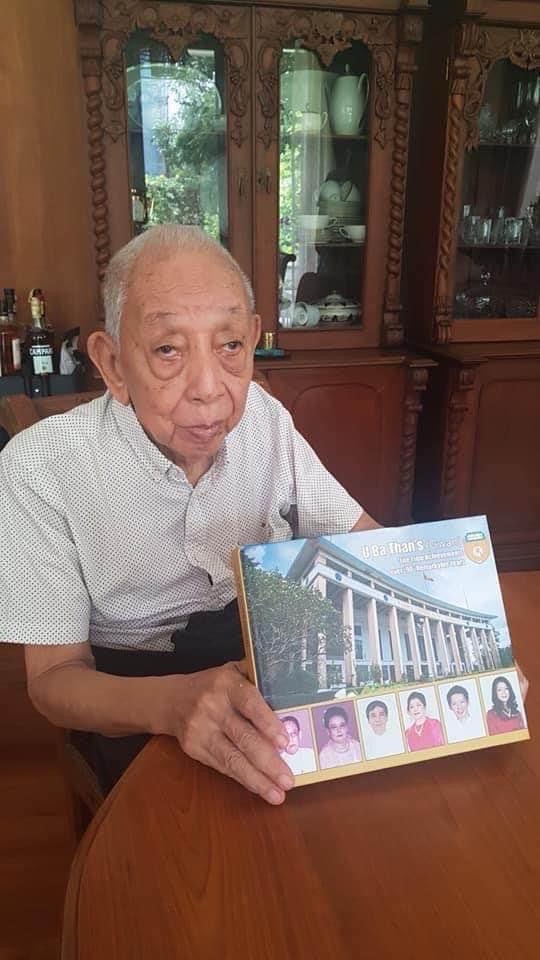
    2. Establishment of alumni associations abroad and in Myanmar to help RIT and motherland.
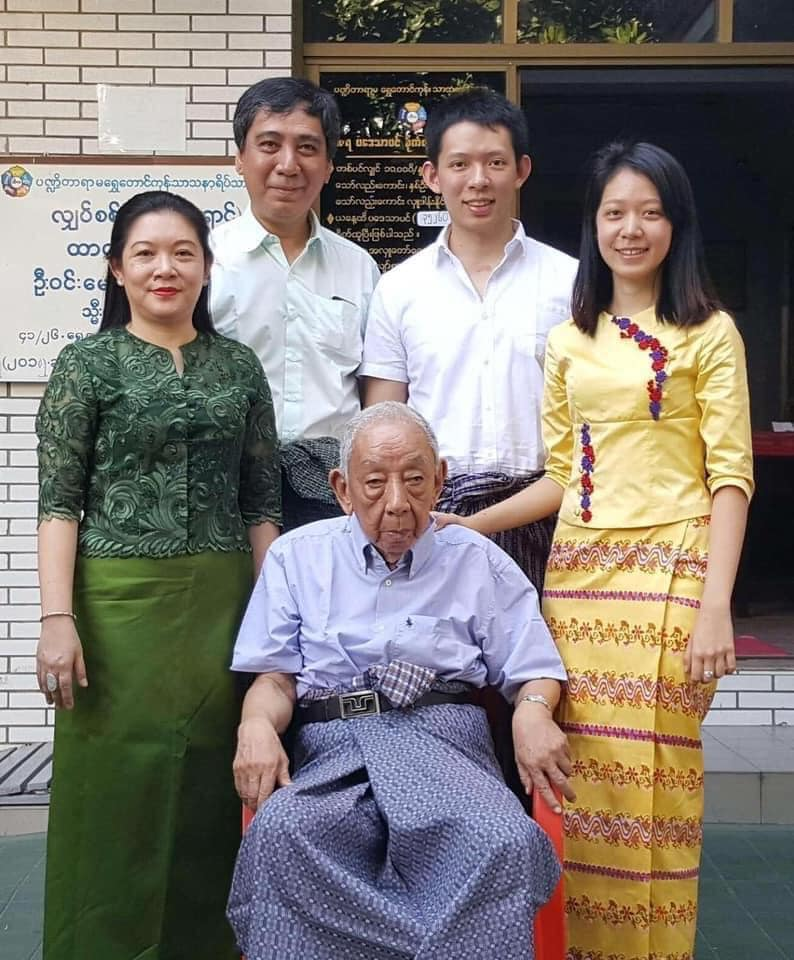
    3. Establishment of Swe Daw Yeik Foundation.
    4. Establishment of healthcare fund for RIT teachers in Myanmar.
    5. Fund drive and contributions to upgrade the RIT/YTU library.
    6. Various activities/ mini-reunions / get-togethers  among groups of RIT students/teachers which reflect the life and also bond among RIT students/teachers, established in the past ,during RIT days.
    7. Other interesting episodes related to RIT.

    The above gives you a few thoughts I have for your book. I would like to recommend that you  also get suggestions from others for your book.

    Good luck and best wishes.
    Aung Gyi

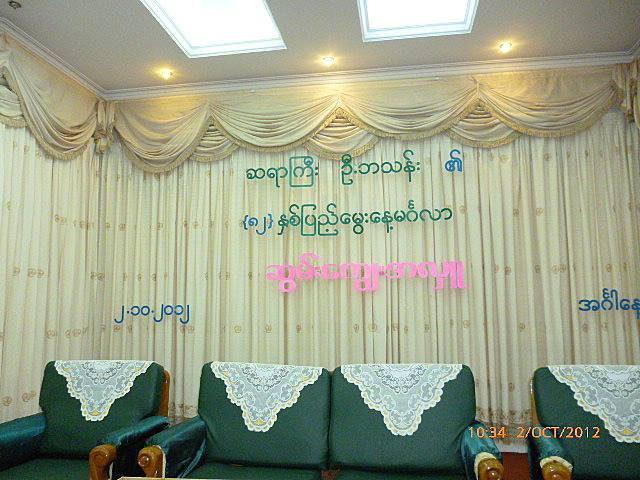
    (2) Keynote from SPZP-2000

    Mr. Chairman, my Sayas, my former colleagues, friends, RIT graduates, Ladies and Gentlemen,

    Before I begin to say anything, I would like to request you to take the word “RIT” as to stand not only for Rangoon Institute of Technology but also BOC College of Engineering and Faculty of Engineering, Rangoon University. I am using RIT only, just for convenience sake.

    Having said that, it is with a chestful of emotions that I am standing before you, trying to say a few words appropriate and befitting to this important and joyful occasion. My overwhelming emotion is, needless to say, happiness – happiness which results from seeing my Sayas, my friends, my former colleagues, and RIT graduates alive and well, after so many years. My happiness is also mingled with a certain amount of pride: pride arising from the knowledge that we have fond memories and a sense of belonging and attachment to the good old institution as well as to one another.

    We are fortunate that we could all gather here to exchange our life experiences, both good and bad, and to reminisce about our past when we were at RIT. While we are doing that, we all must have noticed that all of us have changed quite a bit since we last saw one another, at least physically, some more so than other. We all now have a few gray and also less hair, we have a few wrinkles on our face; maybe we also lost a few teeth and cannot see or hear as well as we did before. Some of us also lost the memory a bit and become forgetful about lots of things such as forgetting names for example. This, as we all know, is life and nature of things. Everything changes and nothing is permanent. Bur fortunately we still have our values. Our values such as respect and gratitude for the elders and teachers, caring of our respective children and family members, helping our friends, and attachment, and gratitude to the institution which nurtured us to meet the challenges of life, are still with us. They have not changed. This Saya Pu Zaw Pwe and reunion is a testimony to those values.

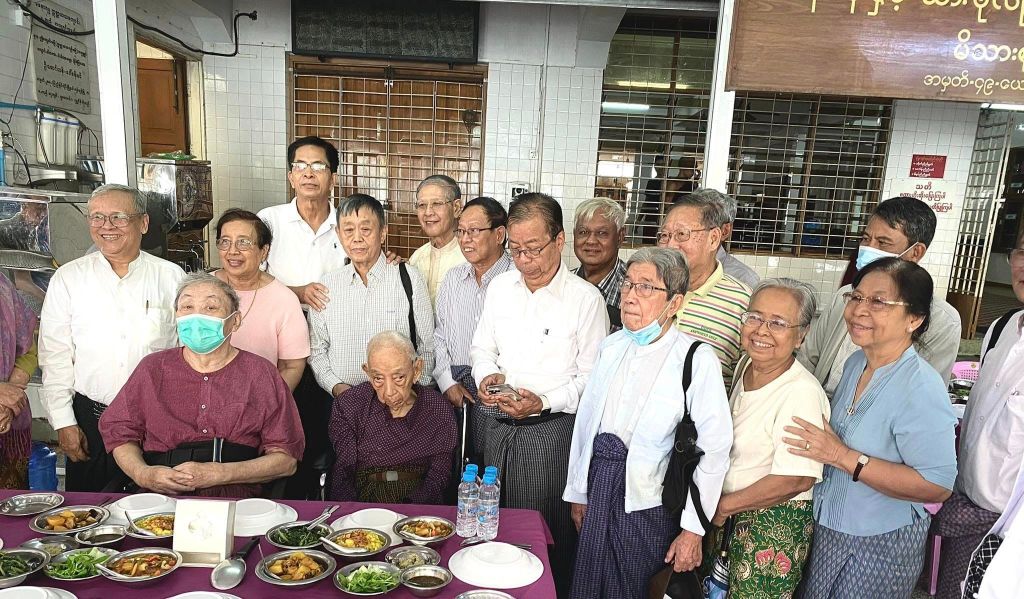
    I must now pause and thank and congratulate the Organizing Committee for their untiring and selfless efforts to make this event possible and successful. This Saya Pu Zaw Pwe and RIT Alumni reunion is, as far as I know, once-in-a-life-time event. As far as I am concerned it is already a resounding success with the cooperation and great enthusiasm that I have seen. I hope this will be the beginning and not the last of our get-togethers. When my wife and I paid visits to Myanmar in 1996, 1997 and 1999 we had mini get-togethers with RIT Alumni. When I was here a few years ago we also got together with a few RIT Alumni. I understood that Saya U Aung Khin also had one mini get-together here some years ago. But these get-togethers were not on a grand scale as the one that we are having here now. However the spirit of camaraderie and friendliness among RIT Alumni mini get-togethers, was the same as the one that we find here now. If you look around you, you will find that all of us came here from different parts of the world, indicating the great attachment and respect that we all have for our old institution and also for one another.
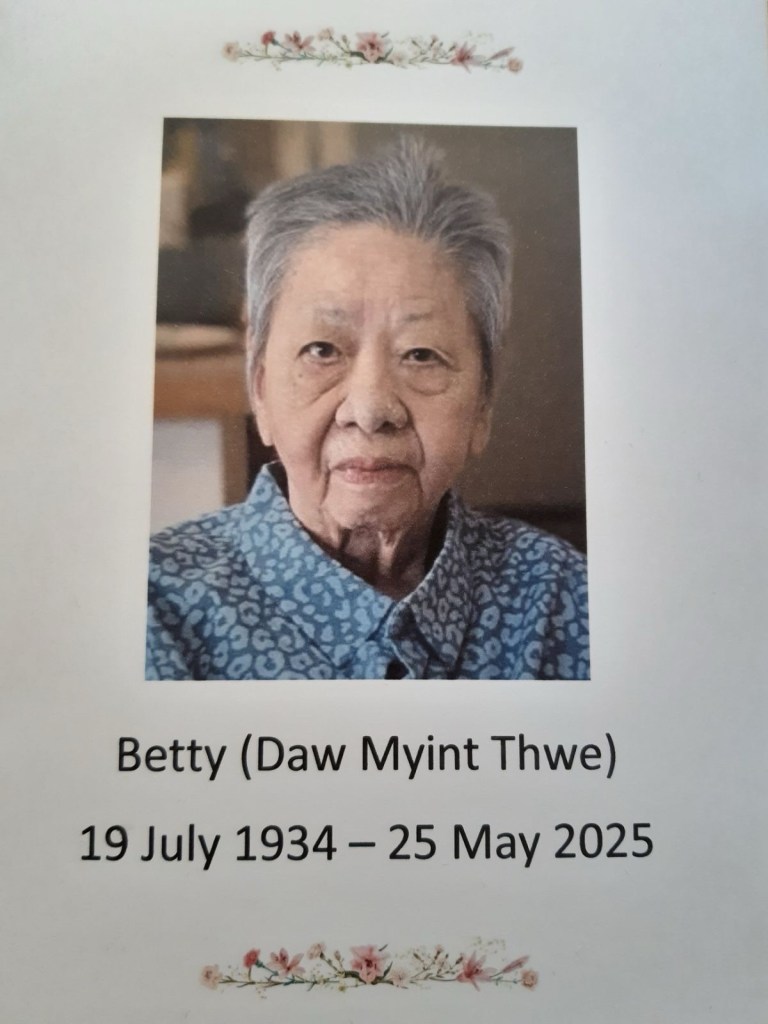
    While I was preparing for this speech, fond memories of the years that I spent as a student, as a teacher and later as Rector at RIT came flashing through my mind. Without going into details, I remember that all my teachers, including Saya Num Kock and Saya U Ba Toke who are here with us, were good inspiring teachers with kind hearts. When I became a teacher and later the Rector at RIT, I noticed that my colleagues were good and dedicated people who tried their best to teach what they had learnt from good Universities and Institutions abroad.

    They made conscious efforts to raise the level of education at RIT so much that the students were fully occupied with classes, studies, projects, and homework. I have to mention here that my Sayas and my former colleagues were, and still are honest, compassionate, gentle and kind people. Within this context I would now like to take this opportunity to offer my humble apologies to my Sayas and colleagues for the wrong things that I may have done or said which might have hurt them in any way in the past.

    As for the students, I remember that they were good, intelligent, and energetic students in general. Since I was also involved in extracurricular activities of the students, I had more interaction and gained more understanding of their needs and feelings. Like most of the other teachers I tried my best to be helpful to them not only in their studies but also in any other problems that they needed my help. Because of the compassion that I had shown for them they became more communicative, and listened to what I had to say most of the time. Like a breath of fresh air, the first batch of female engineering students were among us, I believe in 1958. So far as I remember they did as well as or some even better than the male students in their studies. I remember that as a teacher I felt very good and satisfied whenever some students did well in their studies or did well in their careers after they left school. These are fond memories that I still have with me about the students at RIT.

    As you probably know, I left RIT and Myanmar in 1977 to join UNESCO. I then migrated to Canada to join International Development Research Centre (IRDC) in 1981. For your information, IRDC is a Canadian Agency which funds research projects for development in the developing countries. I retired from IRDC in 1997. Looking back to the past, I must say that I spent the best years of my life at RIT, challenging and troubling at times, but on the whole happy and satisfied with the job that I was doing.
    Now please let me take a few minutes of your time to share with you my thoughts, which I believe are some important elements of life. You might not agree with me to what I am going to say. At least, in that case, you might take them as food for your thoughts. If I sound like lecturing to you now, you must remember that the habit of a former teacher dies hard.
    When I was young and immature. I had great admiration for people with high I.Q. (Intelligence Quotient). I also tended to think in those days that I was quite intelligent. After going through life experiences with ups and downs I became to realize that high Emotional Quotient (E.Q.) or emotional mastery is more important in life than high I.Q., to cope with adversities, disappointments, failures and sometimes even tragedies. No one that I know of, escapes the negative impacts of life in one form or another. If you have emotional mastery you can deal with and overcome these negative impacts and still get ahead in life and be relatively happy. One thing that can help us is to have optimism, hope and courage in life and to minimize the negative thoughts and creeping pessimism. It will be wrong to classify anything in life in opposites either in black or white. One can neither be fully optimistic nor fully pessimistic all the time. There is a gray area which is neither black nor white, and so long as the dominant part of this gray area is optimism, things will turn alright in the end. I read in one of the books long time ago that the Chinese word for “crisis” denotes both risk and chance (opportunity). A pessimistic person would tend to look at the crisis as the big risk and will despair and do nothing, whereas an optimistic person will look at it as a challenge and opportunity and will do something with courage and determination and overcome the crisis. He or she might fail in doing something. But without failures one will not know success. In short, although we will not be able to master the circumstances, and situations in life, we sure can try to master our thoughts and emotions to meet the challenges of life. Here are the spiritual sides of us or our respective religions might be helpful.

    Now that I am getting old and getting inflicted with aches and pains here and there, especially when I get up in the morning, I begin to realize that the important part of my life is to keep myself in good health. There are lots of books and doctors telling us how to keep ourselves in good health. The simple gist of the whole message is to have some form of physical exercise or activity to keep our weights down; and to eat nutritious food and avoid or cut down fatty, sweet, salty and high cholesterol food which are harmful to our health. As you know, it is easier said than done. What I know is we do need to make conscious efforts to keep ourselves in good health by taking physical exercises and by eating nutritious and non-fattening food. One thing is for sure, if we are not in food health we will not be able to enjoy our success or good things in life, and we will be, relatively speaking, unhappy.

    When I was young, my grandmother used to tell me to get ahead in life I would need luck, brain, and industriousness. She was right of course. But one important element in life that she missed telling me was to develop and have good social relationships will all the people that I would come across in life, including family members. No one can live and get ahead in life alone. Each one of us at some stages of our respective lives needed and got help from someone to move on with our lives. From my personal experience, I noted that one must be non-egoistic, not too aggressive, be polite, be helpful, and tries to understand and respect other person’s points of view, needs and feeling, to develop good social relationships. Here I would like to add that each of us can judge who is good, who is bad, who is untrustworthy, etc. and avoid bad people and associate with good people to the extent that each of us can.

    Each one of us had twenty four hours a day and the one who can budget and manage his/her time day by day, week by week, month by month, year by year according to his priorities and short term and long term goals will get ahead in life better. One should use the time and even manipulate it and not waste it to achieve one’s short term and long term goals. One must also be patient if the short term and long term goals are not achieved in budgeted time. So long as the time is used and not wasted, one will reach his/her goads in due course.

    I hope everyone present here will agree with me the importance of financial management at the personal or family level as well as at the business level. At the business level there are of course financial plans and budgets for the present as well as for the future. One should likewise have financial plans and budgets at personal/family level for the present and future, to spend, save and invest within one’s available means. As you know money is neutral. If you are wise, money will treat you well; and if you are foolish it will not stay with you for long. Like time, one’s hard-earned money should be used and not wasted.

    The last thing that I would like to point out to you is the danger of complacency. If you own a business and if you are complacent after a certain level of success, your business will suffer, simply because you fail to keep up with the changes in the market conditions and because of the intense competition one faces nowadays. Likewise at the personal level we should be wary of complacency. We should try not to be complacent by improving ourselves and keeping ourselves busy mentally and physically. Life thrives on activity and activity is the proof of our existence. No one is perfect and there is always something that each of us can improve upon. If we do that, at least we will not be bored, and may achieve some fulfillment in life.

    With these remarks I now conclude my speech. May you all be successful and happy in life. May you have a pleasant stay in SF.

    (3) Memories

    After attending the 2nd year engineering class from June 1952 to September 1952, I went straight to MIT on a state scholarship to continue my studies. Saya U Min Wun and I went together to MIT and joined the academic session, starting from September 1952. We met Dr Freddie Ba Hli at MIT, who was already studying for his Ph.D in electronics or electrical engineering. He was one of the nicest and helpful persons that I have ever met in my life. He gave us briefings and guidance so that we were able to assimilate into the American education system and American way of life without any difficulty He also helped us with our home works when we had some difficulties in the beginning. I am forever grateful to him for his kind help. I am sure U Min Wun feels the same. Saya U Khin Aung Kyi, Saya U Sein Hlaing, U Percy Lao, U Win Htein, U Kyaw Min, Robin Aw, U Kyaw Thein, U Aung Kywe, U Aung Myint and U Sein Hla came to MIT for further studies at a later date. U Percy Lao later became Rangoon City Engineer (water and sanitation), U Win Htein who is an architect became a Rangoon City Building Engineer, and the late U Kyaw Min became a free lance architect [and also taught part-time at the Architecture department for some time]. All these three professionals taught some time at RIT. I do not know what happened to Robin Aw. The late U Kyaw Thein was an engineer at the Construction Corporation and later became a lecturer at the Civil Engineering Department at RIT. U Aung Kywe was a Director (water and sanitation) at the Construction Corporation. U Aung Myint became the Chief Architect at the Construction Corporation. U Sein Hla was an engineer at the Construction Corporation and later became the Registrar at RIT under Rector U Yone Moe. Later more batches of Burmese students came to MIT when I was no longer there. I am describing all these things to point out the fact that the standard of engineering education in Burma at that time was quite good. None of us had to go through the entrance examination to get into MIT. They trusted our grades and our education standard. Maybe the visiting Professor Horwood from MIT was quite impressed with the Faculty of Engineering and put a good word for us to the MIT admission authorities.

    I will not go into details of the activities of all the various students’ associations, societies and clubs, as there were so many of them. But I would like to mention briefly about the hostel life, that I had experienced at that time. Every hostel had what we called a social and reading club . There was an adequate room reserved for this club at the ground floor of the hostel. In general, newspapers, popular magazines, a chess board, a carom board and a table tennis were provided so that the hostel students could read, play chess, play carom board, and play table tennis and socialize to get to know each other well. Even without the social and reading club, all the hostel students ended up knowing each other well sooner or later, as they met each other almost everyday at the hostel and at the dining hall. The hostel students were in general well behaved. I hardly saw the Warden or Hall Tutors at Ava Hall and Prome Hall, as there were very few student problems which needed attention of the Warden or Hall Tutors.

    Based upon my experience, I feel that these extra-curricular activities and hostel life gave the opportunities to the students to broaden the knowledge of the different parts of Myanmar; and they also created a better understanding of the different culture, food, habit, dresses, dialects etc of the country. Most of the students developed life-long friendships through these activities which contributed to well-beings of these students throughout their lives. Sport activities also taught the students about hard work, cooperation, team work, competition, winning and losing. The extra-curricular activities also triggered, developed and enhanced the hidden talents of some of the students. These activities therefore formed part of the University education of the students, in addition to the education that they received from the classrooms. Another benefit of these activities was the bonding and a better understanding, which developed between the students and the teachers who were involved in these activities.

    After getting my Bachelor degree in Cvil Engineering in 1955 and my Master degree in Civil Engineering in 1956 from MIT, I worked for Engineering Companies for a year, which involved both design and fieldwork in engineering construction projects. I then came back to Rangoon in 1957 to join the Civil Engineering Department as an Assistant Lecturer. I was promoted to become a Lecturer in 1958 and became also more or less Head of the Civil Engineering Department. The policy in place at the University of Rangoon under the Ministry of Education at that time stated that a teacher/ any person could become a lecturer / professor only if he/ she had a post graduate degree. Sayagyi U Ba Hli was the Professor of Civil Engineering and Dean of the Faculty at the same time. U Aung Khin was Head of the Mechanical Engineering Department, U Sein Hlaing was Head of the Electrical Engineering Department, U Khin Aung Kyi was Head of the Chemical Engineering Department, U Soon Sein was Head of the Mining Engineering Department, U Thit was Head of the Metallurgy Department, and U Maung Maung Than was Head of the Textile Engineering Department. I think Mr Johnson was Head of the Architecture Department. I do not remember who was the Workshop Superintendent at that time. We were quite happy as we had new facilities near the Prome road in addition to the B.O.C College of Engineering building. These new facilities comprised of a tall administrative building (with offices, conference/meeting rooms, library), classrooms, lecture theaters, laboratories , offices for the teaching staff and a small assembly place under the copper dome roof in the corner of the campus. The dome roof looked like a turtle back, and pretty soon this new campus became known as “turtle dome /leik khone” campus. After our arrival from USA, UK etc, the foreign teachers under contract were let go, as we gradually replaced them, except for a few teachers from UK or USA. I could recall Prof. Neale? in Electrical Engineering Department, Mr Redpath and Mr Skelton in Mechanical Engineering Department and Mr Johnson and Mr Nagler in Architecture Department.

    As a young teacher I was surprised and pleased to see a few pioneering female engineering students (not more than ten) at the Leik Khone campus. They and their parents overcame the social uneasiness and they decided to study engineering/architecture to become lady engineers /architects. I do not know exactly when they first joined the 1st year engineering class; but It was one of the important turning points in the history of engineering education.

    As young teachers, most of us were struggling to learn how to teach effectively at the beginning. I noticed that we were teaching about 15 to 20 hours per week which included lectures, laboratory and drawing classes. The contact hours of learning for the students remained the same as the time when I was an engineering student i.e. about 30 hours per week. The passing grade for the students also remained the same. i.e. 40% for each subject and 50% average for all the subjects combined. The medium of teaching was still in English. The laboratory and workshop facilities were quite good and adequate for the student population that we had. But the library looked quite small when I compared it with the library that they had in MIT, although it had a few good engineering books and journals. I felt that it needed a lot of investment to become a top notch engineering library.

    It was with enthusiasm and hope that most of us were busy trying to build up our respective departments and trying to improve the engineering education in general. While we were busy, Professor and Dean U Ba Hli retired some time around 1961, and in place of U Ba Hli we had a succession of temporary Deans, Professor of Chemistry U Po Tha, Professor of Geology Dr Tha Hla, and Professor of Physics Dr Maung Maung Kha for about 6 months. The Faculty of Engineering also had to move to a new campus in Gyogone in 1961. Before our relocation to Gyogone, the Faculty of Engineering was one of the Faculties of the University of Rangoon. The academic and administrative related policy decisions were made by the Senate and Administrative Council of the University of Rangoon respectively so as to maintain and improve the standard of education of all its Faculties, including the Faculty of Engineering.

    As you all know, Gyogone campus was built with the aid of Russia; and I understood that the Government of Burma paid back the cost in rice. I do not know whether it was true or not. In any case it was and still is an impressive looking campus. The buildings accommodated classrooms, laboratories and workshop, big assembly hall with a movie projector, library, offices for the administrative and teaching staff,and student hostels. There were also houses for all the staff, dining and kitchen facilities, small medical clinic, and open space for sport activities. All the buildings, houses etc occupied and still occupy a large area in a compound.

  • RIT Alumni Newsletter

    by Hla Min

    Updated : June 2025

    I founded the Newsletter in May 1999.

    We published a commemorative issue of the Newsletter for RIT Alumni Reunion & Saya Pu Zaw Pwe in October 2000.

    Newsletter for SPZP-2000

    • Front cover has my poem “SAYA PU ZAW PWE”
    • Back cover has a list of the SPZP-2000 Organizers
    • 16 pages
  • Three Parents

    Three Parents

    by Hla Min

    Updated : June 2025

    Ivan Lee (M69)

    Ivan
    • Youngest in the family
    • His father passed away when he was a few years old.
    • His mother raised the family, and also lived long to have great grand children.
    • He e-mailed us when his mother turned 100. It showed the birthday card sent to his mother from the 43rd US President George W. Bush.
    • He e-mailed again when his mother turned 101. It showed the birthday card sent to his mother from the 44th US President Barack Obama.
    • His mother passed away at the tender age of 102. She was alert until the final days. It could be because she played two hours of Mah Jong daily.
    • On a bright note, he has two loving daughters and six grandchildren.

    Timothy Hla’s Post on June 21, 2020

    Dr. PR Mohan & Dr. Daw Hnin Yee

    Tribute to his parents Dr. PR Mohan and Dr. Daw Hnin Yee

    Today is a special day for me and my family. First and foremost, we celebrate my Mom’s birthday. Even though we cannot be with her physically in Seattle, she enjoys the company and excellent care by my sister Mona T. Han and is showered by love from all family members and her friends and former students in the Institute of Medicine 1, University of Rangoon. In addition to raising four children, taking care of her husband and running a busy household, she was a career woman who was able to balance a successful career (she became the Professor and Head of the Department of Medicine) and a busy life with grace and charm.

    Second, today is father’s day. I am enjoying my family (wife Jeanne Wadsworth-Hla, and grown children Hilary May, Jon Matthew and Audrey Hla who will be here to have dinner. Very grateful for them to be here to celebrate my fatherhood. It is one of the happiest aspects of my life and I am most grateful. I also remember and honor the memory of my Dad (PR Mohan) who passed away over 15 years ago. He was an orphan who grew up in poverty with 9 siblings in Burma, overcame lots of obstacles to get an MBBS degree in 1939, worked as a military doctor during the WW2 with the allied forces for which received many medals and citations, used his pension from the army to get trained as a Cardiologist in London (Royal Brompton Hospital and National Heart Institute) with the famous Cardiologist Paul Wood, returned to Burma to give back to his native land despite various lucrative job offers in the UK, and served honorably by establishing the first Cardiac Department at the Rangoon General Hospital, established the first coronary care unit and brought cutting edge cardiology care to Burma. He also trained a cadre of younger physicians. I even came across an article he wrote about congenital heart diseases in the local medical journal in 1955 in PubMed. Many of his colleagues and students remember him as a no-nonsense Physician with a rough exterior but with a kind heart. My fondest memories of him were his love and dedication to his family and friends. He also introduced me to his love of various music genres of the world, and appreciation of fine food and libations.

    Me

    My beloved parents
    My father
    Grandkids
    • I am fortunate to have parents who lived beyond 80.
    • I am not fortunate enough to have them around to see my Hmees, who are excellent in their studies and in their hobbies.
    • They would have smiled to hear my grand daughter say, “Are you at home? Who’s your doctor? What happened?” after I returned from the colonoscopy screening. She added, “I’ll take care of you. I love you.” She must have inherited the loving kindness of her great grand parents.
    • They would be delighted to see her awards including “Super Reader” and a top student of her class.
    • They would be impressed to see my grand son dribbling a standard basketball for 30+ seconds, scoring goals in a competitive tournament and learn that he is also a top student of his class.
  • Nyunt Wai (Victor)

    Nyunt Wai (Victor)

    by Hla Min

    Updated : June 2025

    • Classmates in Standards VIII A, IX A and X A at St. Paul’s HS.
    VIII A
    • Stood 4th in Burma in Matric of 1963 and won Collegiate Scholarship.
    SPHS63
    • Graduated from Institute of Medicine (2). Wrote articles and drew paintings & cartoons for IM(2) magazine.
    • Doctorate from UK
    • Taught Physiology at IM(1), IM(2) and a Malaysian University.
    • Has compiled a list of Professors of Physiology.
    • Attended the Soon Kyway for Sayadaw Beatson (Physics teacher & Scout Master at SPHS).
    V Nyunt Wai 1
    • Artist and painter. He illustrated a book by Ashin Ananda (Reverend F Lustig, Laureate Poet).
    • Writes blogs, poems (including Kauk Kyaung Kabyar ကောက်ကြောင်းကဗျာ and Sagar Pariyae စကားပရိယာယ်).
    V Nyunt Wai 3
    • Dr. Nyunt Wai wrote :
      I’m no painter or a poet. Just occasional excursions to these fields. And I’m not a visiting Professor. Had to apply for this job in Malaysia just like any other expatriate from India or Bangladesh. So I’m no 3 “P”s. This reminds me of “No 3 P policy” of the now extinct Yahoo group Alumni-Myanmar-medical-institutes founded by Saya Johnny Thane Oke Kyaw-Myint, which served well as a lively forum for us until the advent of Facebook.

      Dr. Thane Oke Kyaw Myint wrote :
      Yes AMIM was a tight small group of us. Those who became friends then remain now as close friends. On FB, there is short attention as well as being bombarded by posts that we have no interest in.
    V Nyunt Wai 1

    Posts

    • Matriculates
    • Sagar Pariyae
    • St. Paul’s High School
  • Myo San

    by Hla Min

    Updated : June 2025

    • Aka as Freddie Ba San
    • Classmates in Standards VIII A, IX A and X A at St. Paul’s HS
    This image has an empty alt attribute; its file name is viiia.jpg
    Myo San (3rd row, 5th from left)
    • Stood third in Burma in the Matric of 1963 and won Collegiate Scholarship.
    This image has an empty alt attribute; its file name is sphs-63-c.jpg
    Myo San (Seated right)
    • Mastered phonetics and read lots of English books.
    • One would not be surprised that he scored distinctions in English, Maths, Physics and Chemistry.
    • A little bit older than me and that might have given him an advantage.
    • Gave me a quiz. “How do you pronounce GHOTI?” I gave an answer which he corrected as “FISH”. He had read George Bernard Shaw, who posed the quiz as a lesson on the eccentricity of English.

    GH is phonetically equivalent to F as in ROUGH.
    O is phonetically equivalent to I as in WOMAN.
    TI is phonetically equivalent to SH as in ATTENTION.
    Thus, GHOTI is phonetically equivalent to FISH.

    • Became a surgeon
    • Stress caused him to take early retirement.
    • He had mini-reunion with SPHS63 classmates. In the photo, the three (seated) — Freddie, Alan and Tin Tun — are now GBNF.
    Myo San (Seated Left)
    • He has two younger sisters : Elsie and Ivy.
    Siblings

    Posts

    • GBNF
    • Old Paulians
    • Scholarship
    • St. Paul’s High School
  • Dhamma Books

    Dhamma Books

    by Hla Min

    Updated : June 2025

    Sunlun Sayadaw U Vinaya

    • Chief Resident Monk of KabaAye Sunlun Gu Kyaung ကမ္ဘာအေးစွန်းလွန်းဂူကျောင်း
    The Yogi & Vipassana

    In the Buddha’s Words

    • Mr. Li Chan (Buddhist Chaplain) taught at the Summer Dhamma Camp at Dhammananda Vihara, Half Moon Bay, California, USA.
    • He gave me the book as a dhamma gift.
    In the Buddha’s Words

    Milinda Panha

    • Ashin Nemeinda (Taungyi Thein Daung Taik) taught courses during his visits to California
    • One course covered the book about King Milinda (မိလိန္ဒ မင်း) & Ashin Nagasena (အရှင်နာဂသိန်)
    Milinda

    Dhamma Dana by U Ba Than & Family

    U Ba Than
    • U Ba Than is Retired Professor of Mechanical Engineering at RIT.
    • He offered Birthday Soon Kyway and gave dhamma gifts.
    Things that every Buddhist should know
  • Commerce

    Commerce

    by Hla Min

    Updated : June 2025

    Video Broadcast on October 14, 2020

    Introduction

    • Started as Option of Economics Department in the Faculty of Social Science
    • Became a separate department
    • Later : department in the Institute of Economics

    Sayas

    • Saw William Paw : Professor and Head of Department;
      Chair, Rangoon University Sports Council; Succeeded Sithu U Tin as President of RUBC; During my tenure as Treasurer of RUBC, I had to see him frequently.
    • Dr. Khin Maung Kyi : Attended RU as a monk. Known for his debates and writings. Taught at Commerce Department and later headed the Research Department. Performed Research in Malaysia & Singapore. During my visit to Singapore, I had to see Saya and gave him the package presented by Saya U Myo Min (UCC)
    • Dr. Khin Maung Kyawe (Jimmy) : Became DG of BERB.
      First met him when my uncle Saya U Than Lwin (Eric) took me to the Social Science Library. Uncle Eric taught Economics and also served as Librarian. He would give rides to the sayas including Saya Jimmy.
    • U Maw Than : Auditor General. Used APL in his studies.
    • Dr. Mya Than taught and/or did research at the Institute of Economics, Singapore and Thailand. Before going for further studies, he taught at PBRS (Private Boundary Road School). Spouse : Daw Kyi May Kaung
    • Daw Yi Yi Myint and Daw Hla Myint : Attended UCC courses prior to their studies in the USA
    • U Mya Thein (GBNF) : Transferred to UCC as Business Application Programmer/Analyst. Retired as Manager of Business Applications at UCC.
      Also taught at ITBMU.
    • U Thein Oo : Transferred to UCC as Business Application Programmer/Analyst. Taught at UCC, DCS and ICST. Co-founder, MCI. Founder, Ace
    • U Khin Nyo : RUBC; Became Registrar, Mawlamyine College / University

    Alumni

    • U Myo Min : First in I.Com in 1960; First in B.Com (Accounting) in 1962;
      Chartered Accountant (UK);
      Systems Analyst (IBM UK);
      Per request from his mother and Dr. Chit Swe, he came back to Burma to help co-found UCC. In April 1971, he joined UCC as Manager of Business Applications. Taught classes at UCC and the Institute of Economics. Moved to Singapore and then to USA.
      Passed Thingyo examination.
    • Dr. Yi Yi Chit Maung : First in B.Com (Management) in 1962;
      Studied in Canada; Retired in USA
    • U Kyi Soe : Secretary, CGA (Commerce Graduate Association); Rowed for Eco;
      Attended UCC; Worked for MOC
    • Uzin Kondannadhaja (“George” Chan Min) was the de facto leader for the Institute of Economic Rowing teams (including Htin Kyaw and Soe Thin). Worked for EPC and found soul mate (Engineer).
      Attended courses at UCC.
      Moved to the USA. After retirement, he decided to become a monk. For the transition, he asked me to be a temporary monk with him for a week. He resides at Dhammananda Vihara in Half Moon Bay, California. Per request from his brother Dr. Patheda Tin, he spent one vassa at the Chan Myei Yeiktha in Springfield, Illinois.
    • U Kun Pe, U Kyi Khin and U Ohn Myint : Classmates of Uzin Chan Min; Accountant / Auditor; Volunteer for social and religious organizations in SF Bay Area
    • U Than Maung Maung : Worked for UCC and TSC; Moved to the US

    General

    • Per request of Ko Kyi Soe, I taught Mathematics of Finance & related topics at a course conducted by CGA
    • I succeeded U Myo Min as Business Application Manager at UCC
    • Chambers of Commerce :
      Burmese, Chinese, Indian
    • e-Commerce
    • B2B : Business to Business
    • eBMS : e-Business Management System
    • @hmin3664
    YouTube Channel for my Videos
  • Siblings

    Siblings

    by Hla Min

    Updated : June 2025

    Video Broadcast on January 28, 2021

    No. of Siblings

    • 69 Siblings (Per “Guinness Book of World Records)
    • 15 Teoh Siblings (Named alphabetically from Albert to Oscar)
    • 9 Siblings (My Cousins)
    • My 7 Siblings
    • Other 7 Siblings (U Tin Tut to Daw Tin Saw Mu)

    Seven Siblings

    ICS U Tin Tut

    This image has an empty alt attribute; its file name is u-tin-tut-5.jpg
    U Tin Tut
    • First Burmese to become ICS by invitation.
    • Served as Foreign Minister, Brigadier of a Reserve Army, Journalist and Publisher.
    • Perished when a bomb (placed under his car) exploded. There were investigations, but no conclusive results were reported.
    • Dr. Thane Oke Kyaw Myint posted photos and articles about his Ba Gyi (e.g. The Empty Tomb).
    • “Ba Gyi Aung Nyar Dei” (a famous short story by Minthuwun (Saya U Wun) has implicit references to U Tin Tut.

    U Kyaw Myint

    This image has an empty alt attribute; its file name is u-kyaw-myint-barrister.jpg
    Brief Bio of U Kyaw Myint
    • Barrister, Judge of Supreme Court, Head of Tribunal that tried Galon U Saw, Dean of the Faculty of Law, Politician, Head of private Law firm that defended several people accused by the BSPP government).
    • Stood first in Burma from Central with distinctions in all subjects. Sadly, he was expelled from the University of Rangoon for attending his mother’s funeral and earned the ire of the Principal and his father. His saga is recounted in a series of posts by his son Dr. Thane Oke Kyaw Myint.
    • Dhamma friend of my beloved parents. They built Dat Paung Zon Aung Min Gaung pagoda and supported “Mon” Sayadaw U Thilawanta.

    U Myint Thein

    • Chief Justice of the Union of Burma
    • On March 2, 1962, a Coup D’etat took place. Arrested along the Prime Minister, Cabinet Ministers, several Sawbwas and high ranking officials. During his detention, he was allowed only one day off to attend the funeral of his spouse Daw Phwa Hnin (an early Burmese female to be called to the Bar in the UK).
    • Ambassador (e.g. to China).
    • Outstanding author and translator.
    • Pen name : “MMT” (for Maung Myint Thein). His works were heavily censored.

    Dr. Htin Aung

    Dr. Htin Aung
    • Principal of Rangoon College & as first native Rector of Rangoon University
    • Prolific writer covering history, folklore and several topics
    • “Burmese Drama” and “Thirty Burmese Tales” were prescribed texts.

    Daw Khin Mya Mu

    • Lecturer in Burmese
    • Thamadu Myo Wun (family court judge)
    • Expert in Kyauk Sar (stone inscriptions)
    • Spouse : Burmese Professor U E Maung
    • Her handwritten manuscripts were not published due to lack of fonts, and were ultimately lost

    Daw Khin Saw Mu

    Daw Khin Saw Mu
    • Early student of Sayagyi U Pe Maung Tin (Pali scholar, who successfully proposed the establishment of a separate Burmese Department).
    • Khit San Poet
    • Spouse : ICS U Ba Tint
    • Children : Daw Khin Saw Tint (RIT English, bilingual writer); U Nay Oke (St. Paul’s, TED-x InyaLake speaker, Tuition saya, Chair of the Myanmar Board for organizing the 5th ILF (Irrawaddy Literary Festival).

    Daw Tin Saw Mu

    • Lecturer in English at Rangoon University

    Posts

    • ICS
    • The Empty Tomb
    • Unsolved Mystery
    • Daw Khin Saw Tint’s books & articles
    • Dr. Thane Oke Kyaw Myint’s book & articles
    • TED & TEDx Talks
    • @hmin3664
    YouTube channel for my videos
  • 1972

    1972

    by Hla Min

    Updated : June 2025

    Video Broadcast

    Some RIT Graduates

    M72
    • Victor Aung Myin (M) : Scholar Athlete
    Cross Country Event Winners
    • Wynn Htain Oo (M) : Fund raiser and Organizer
    • Nyan Win Shwe (M) : Chair of SPZP-2007
    • Myint Pe (M) : Lu Shwin Daw, Cartoonist, MES
    • Win Myint (M) : Poet
    • Ko Ko Kyi (EC) : Luyechun, Saya
    • Aung Myaing (ChE) : Poet, Saya
    • Ma Gyn Yu (ChE) : Fund raiser
    • Kyaw Myint (T) : President of MARB, Indigenous Medicine
    • Thein Aung (Met) : Mr. RIT, Co-emcee of SPZP-2000

    Munich Olympics

    • Gymnastics : Olga Kolbert (USSR) got Perfect Tens
    • Swimming : Mark Sptiz (USA) won Seven Gold Medals with Seven World Records —
      100 m (Freestyle), 100 m (Butterfly), 200 m (Freestyle), 200 m (Butterfly), 4 x 100 m Freestyle Relay, 4 x 200 m Freestyle Relay, 4 x 100m Medley Relay
    • Soccer : Burma won a match in the first round, but lost to the power houses
    • Dark Moment :
      11 Israeli athletes were taken hostage and killed by “Black September”

    UCC

    • Several posts were filled after approval from PSC
    • UCC Courses in Computer Systems & Applications
    • State scholars for Academic Studies in UK
    • UCC Engineers sent to ICL ETC, Letchworth, UK
    • UCC was helped by unpaid and minimum-wage Volunteers
    • @hmin3664
    YouTube channel for my videos
  • Memory is fallible

    Memory is fallible

    by Hla Min

    Updated : June 2025

    အထင်မှား / အမှတ်မှား

    Short Story by Minthuwun

    Minthuwun

    “ဘကြီးအောင် ညာတယ်” ဝတ္ထု (မြန်မာ နှင့် အင်္ဂလိပ်ဘာသာပြန်) ကို ငယ်စဉ်က ဖတ်ခဲ့ရပါသည်။

    ဆရာ မင်းသုဝဏ် ၏ ကဗျာ / ဝတ္ထု တို့ ကို သူငယ်ချင်း စာပေပညာ ရှင်များ က အင်္ဂလိပ် ဘာသာ ဖြင့် ပြန်ဆိုဂုဏ်ပြုကြပါသည်။

    Dr. Htin Aung is

    NOT Bagyi Aung

    ယနေ့ တိုင် ဘကြီးအောင် ကို ပါမောက္ခချုပ်ဒေါက်တာထင် အောင် ဟု အထင်မှား အမှတ်မှားသူများ ရှိနေပါသည်။

    Prof. U E Maung is

    NOT Bagyi Aung

    blogger တဦးက စိတ်ကူးဖြင့် ဘကြီးအောင် ကို မြန်မာစာပါမောက္ခ ဦးဧမောင် ဟု ရေးသားခဲ့ပါသည်။ ထို blog ကို like/ share လုပ်သော စာ ဖတ်သူများ မနည်းပါ။ Internet တွင် misinformation, disinformation, hoax, unchecked facts များ တွေ့မြင်နေရပါသည်။

    U Nay Oke (St. Paul)’s named the Four Main Characters

    ဦးနေအုပ် (စိန်ပေါလ်) က TEDx talk တွင် ခေတ်စမ်းစာပေ ကဗျာ ဆရာ နှစ်ဦး ၏ မေတ္တာ အကြောင်း ကို ကဗျာများနှင့်အတူ ရှင်းလင်းပြခဲ့ပါသည်။

    U Nay Oke’s Talk about Two Poets

    အဓိကဇာတ်ဆောင် များမှာ

    • ဆရာ မင်းသုဝဏ် Minthuwun
    • ဒေါ်ခင်စောမူ (ဦးနေအုပ်၏မိခင်) Daw Khin Saw Mu (U Nay Oke’s Mother)
    • ICS ဦးတင်ထွဋ် (ဦးနေအုပ်၏ဘကြီး) ICS U Tin Tut (U Nay Oke’s Bagyi)
    • ICSဦးဘတင့် (ဦးနေအုပ်၏ဖခင်) ICS U Ba Tint (U Nay Oke’s Father)

    ICS U Tin Tut

    is Bagyi Aung

    ကာယကံရှင်များ ကွယ်လွန်ကြပြီးဖြစ်သဖြင့် “ဘကြီးအောင်” အဖြစ်မှန်ကို ဦးနေအုပ်က စေတနာဖြင့် တင်ပြခဲ့ပါသည်။

    To err is human

    To minimize or eliminate misinformation is desirable

    Thanks to all those who pointed out inadvertent errors and inconsistencies in my posts / writings