Author: Hla Min (Lifelong Learner)

  • Senior

    • The term Senior varies with countries.

    Senior in the US

    • Most Senior Centers require members to be 50 years or older.
      They want young, active seniors. Some volunteers are in their 80s and 90s.
    • AARP (Association for American Retired Professionals) admits “retirees” who are 50+ years old.
      This leaves room for marketing to people who are still active.
    • Some restaurants and shops provide discount to 60+ years and older.
    • The “official” age recognized by Federal and State Agencies is 65+.

    Senior in Myanmar

    • According to U Tin Htut (Harry, Mon Yu), a Sar Yay Saya has to be 80 years or older to be a recipient of the “Thet Kyee Pu Zaw Pwe“.
    • MES sets 75 years as a threshold for the “Paying Homage Ceremonies” for Engineers and Architects. They may or may not be sayas.
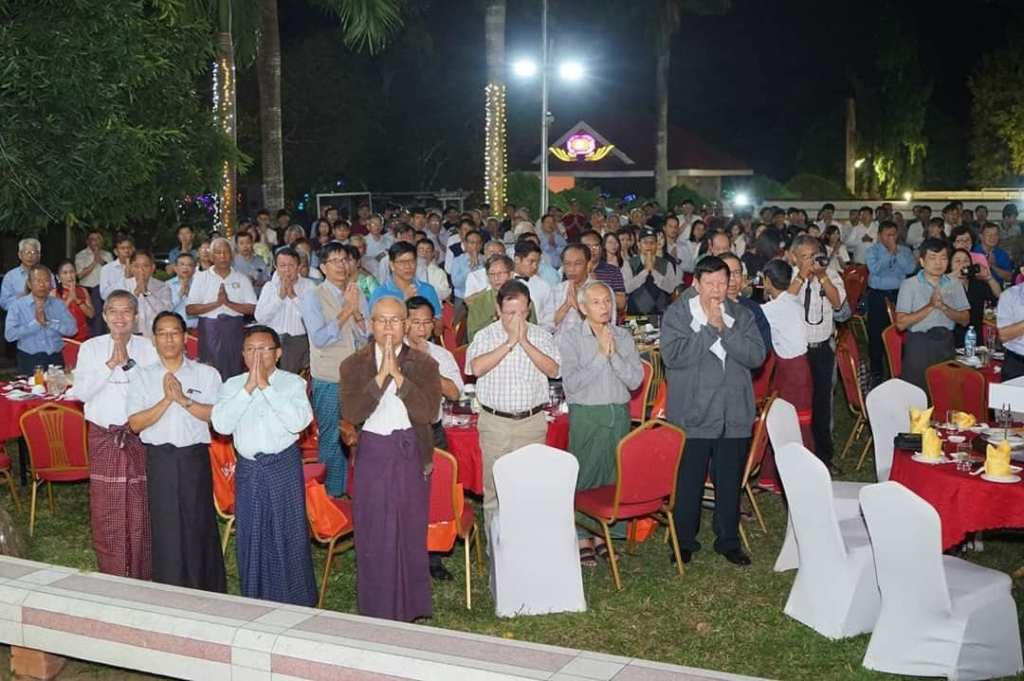
    • At the All Mechanical Gathering in 2019, engineers who are 80 or more years old were invited on the stage.
      The attendees paid respect standing.

    Seniors and SPZPs

    • Some seniors are reluctant to attend Saya Pu Zaw Pwes (SPZP).
      They could not easily find their classmates among the huge crowd.
      Some are uncomfortable to pay respect to the younger sayas on the stage.
    • A partial solution was provided at some SPZPs.
    • The sayas and sayamas were divided into three (or more batches).
    • The advantage is that Seniors can choose to pay respect to their mentors, and relax when the younger sayas are on stage.
    • A drawback is that it takes long to get the sayas and sayamas get on and off the stage.

    Joke about Seniors

    “Uncle, you call you wife Honey. What is her name?”
    “I forgot her name 30 years ago.”

  • Dictionary

    အဘိဓာန် Dictionary (တချို့)

    မြန်မာ အဘိဓာန် Burmese Dictionary

    • မင်းသုဝဏ် Minthuwun
    • မြန်မာစာ အဖွဲ့ Burmese Language Commission

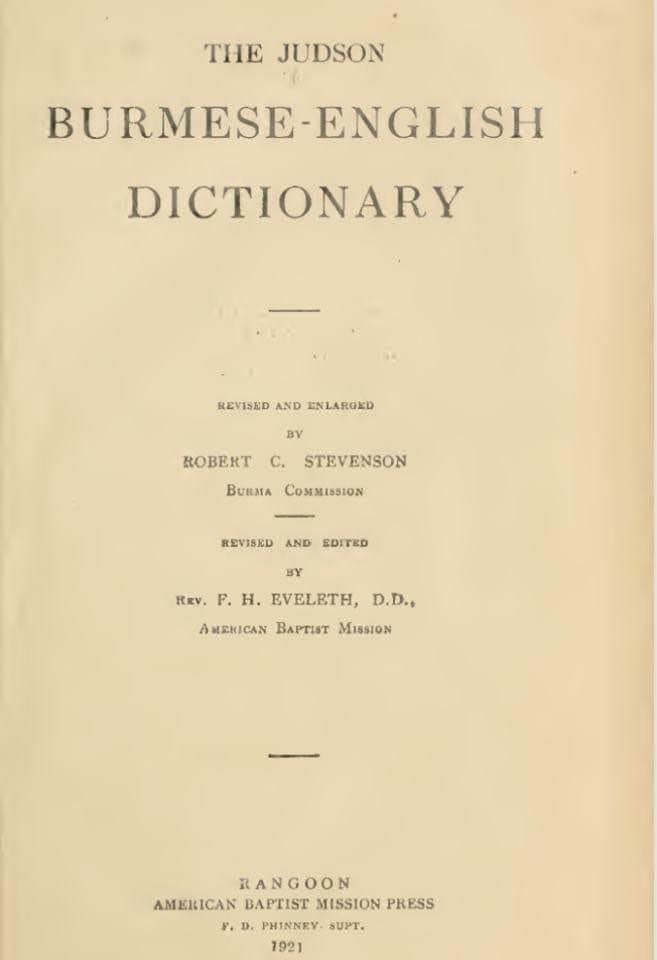
    မြန်မာ အင်္ဂလိပ် အဘိဓာန် Burmese – English Dictionary

    • ယုဒသန် Judson

    အင်္ဂလိပ် မြန်မာ အဘိဓာန် English – Burmese Dictionary

    • ဦးထွန်းငြိမ်း Tun Nyein
    • Dr. ဘဟန် Ba Han
    • တက်တိုး Tet Toe

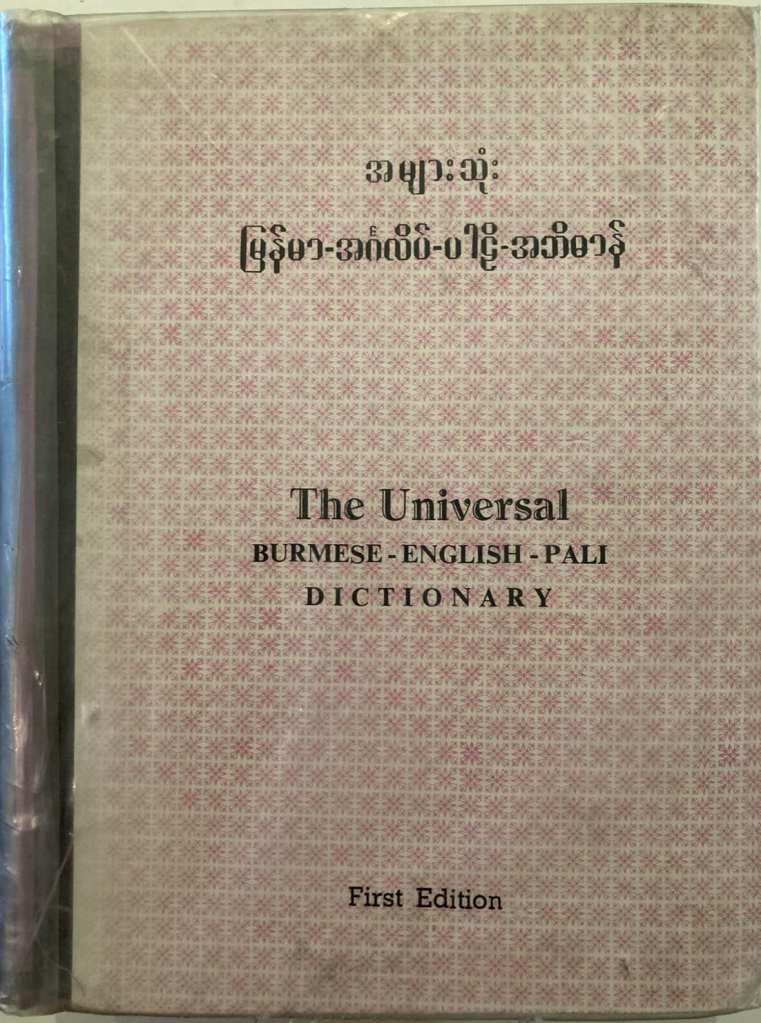
    ပါဠိ မြန်မာ အင်္ဂလိပ် အဘိဓာန် Pali – Burmese – English Dictionary

    • ဦးဟုတ်စိန် Hoke Sein
    • ဦးမြတ်ကျော် နဲ့ ဦးစံလွင် Myat Kyaw, San Lwin

    ဂျပန် မြန်မာ အဘိဓာန် Japanese – Burmese Dictionary

    • ချစ်မန်းနွယ်၊ မင်းသုဝဏ် နဲ့ အဖွဲ့ Chit Man Nwe, Minthuwun & team
    • ဦးအေးချို Aye Cho
  • Programming Language

    In Computer Science and applications, a Programming Language is a language used to program (e.g. instruct) computers.

    Machine Language

    In the early days, computer engineers and selected programmers have to program in Machine Language (with strings of Zeroes and Ones). They are due partly to the choice of Binary Number System as the basis of designing Arithmetic and Logic Unit inside the computer.

    On the ICL 1902S computer, we often have to use the 24 keys to enter short pieces of Machine Code. That is history.

    Assembly Language

    To bridge the human users and the computers, the next step was to use Assembly Languages such as

    • Simple/Symbolic Assembly Language
    • Macro Assembly Language.

    A Macro Processor translates Macros (a well-defined group of Assembly Language instructions).

    An Assembler translates a program in Assembly Language into Machine Language instructions.

    History of Programming Languages

    The development of the first 11 (or so) programming languages can be found in the first HOPL (History of Programming Languages) Conference.

    Currently, there are thousands of programming languages (some for academic purposes) and a limited number used for production.

    Evolution of Programming Style

    Over the years, the style of programming evolved. The list is not exclusive.

    • Procedural programming
      e.g. telling the computer system what to do, emphasis on the “verbs”
    • Non-procedural programming
      e.g. telling the computer system what one wants
    • Object Oriented programming
      e.g. emphasis on the “nouns”
    • Functional programming
      e.g. based on “functions”
    • Logic programming
      e.g. based on “Horn logic” and similar logic systems
    • Top down step wise development
    • Bottom up & Middle out techniques
    • Artificial Intelligence (AI) programming

    Theoretical model

    With each paradigm, there are several programming languages with known advantages and limitations.

    There is a theoretical model called “Turing Machine”, which is primitive but has the computational power of modern computers.

    The machine was proposed by Alan M. Turing (who has an ACM award named after him that is considered the “Nobel Prize in Computing“).

    Alan Perlis, a pioneer Computer Scientist and Programming Language Designer, defined a “Turing Tar Pit, where everything is possible [to compute], but nothing is easy.”

  • Prize / Award

    Nobel Prize

    Alfred Nobel was a Swedish scientist.

    Per Alfred Nobel’s will, the prizes are awarded for

    • Physics
    • Chemistry
    • Physiology or Medicine
    • Literature
    • Peace

    In 1968, a Prize for Economics was added by the Swedish Central Bank. It is informally known as “Nobel Prize in Economics”.

    There are web sites and books about the Prizes and their recipients in general, and some controversies about the Nobel Prize selection.

    The ACM Turing Award is considered as “Nobel Prize in Computing”.

    The Field Medal is considered as “Nobel Prize in Mathematics.”

    ACM Turing Award

    • The ACM Turing Award is considered as “Nobel Prize in Computing”.
    • The award is given in honor of Alan M Turing, a Computer Pioneer.
    • The award is presented by the Association of Computing Machinery (ACM).
    • The prize money is currently US $ 1 Million.

    Field’s Medal

    The Field Medals is considered as the Nobel Prize in Mathematics.

    Awards in UK

    • Victoria Cross
    • George Cross
    • MBE (Member of the British Empire)
    • OBE (Officer of the British Empire)

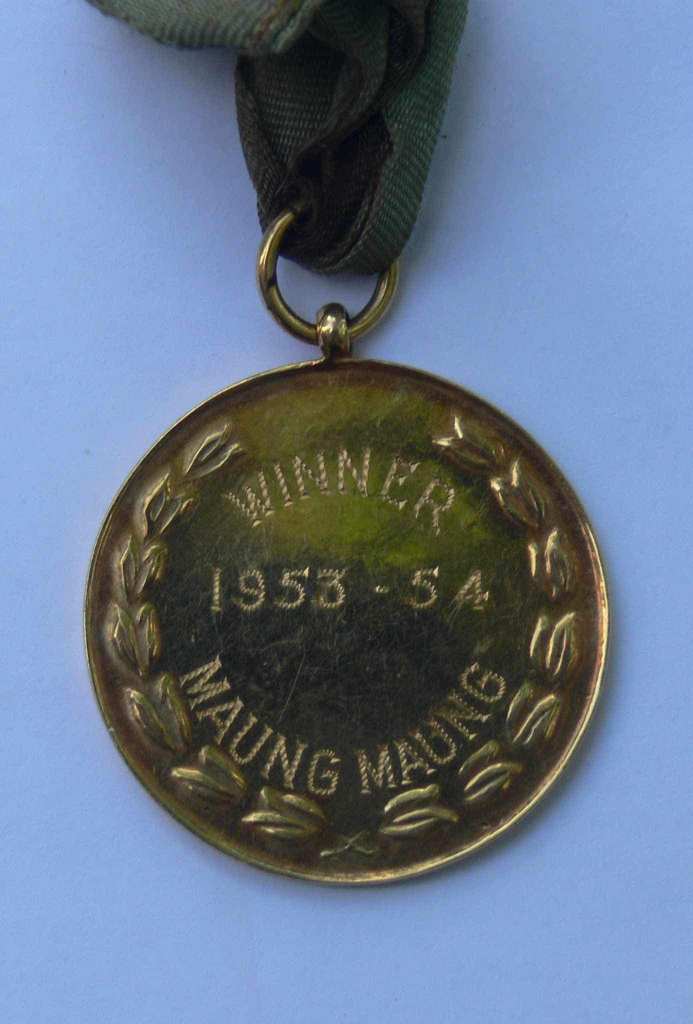
    Rangoon University Medals

    • Top student in Intermediate of Science
    • Highest marks in Mathematics in Intermediate of Science
    • Top student in Intermediate of Arts
    • Top student in Intermediate of Commerce
    • Top student in in Bachelor of Science
    • Top student in Bachelor of Arts
    • Top student in Bachelor of Commerce
      various options : Accounting, Management
    • Top student in in B.Sc. (Engg)
      various disciplines: Civil, Mechanical, Electrical …
    • Top student in MBBS
    • Top student in Law
    • Top student in Honors
      various disciplines : Mathematics, Physics, Chemistry …
    • Top student in Masters
      various disciplines : Mathematics, Physics, Chemistry …
  • Pay Scale

    Terms

    • SS — Starting Salary
    • AI — Annual Increment
    • MS — Maximum Salary (aka Bar Sone)
    • CLA — Cost of Living Allowance

    Tutor (for non-Science Departments)

    • Pay scale : 200 – 10 – 300
    • With CLA, starting pay is 200 + 97 = 297 kyats
    • Lecturing Tutor gets an additional 100 kyats
    • Ad hoc Tutor gets 100 kyats

    Demonstrator (for Science Departments)

    • Same pay scale as Tutor

    Assistant Lecturer (AL)

    • Pay scale : 350 – 25 – 700
    • With CLA, starting pay is 350 + 89 = 439 kyats
    • Is a Gazetted Officer

    Lecturer

    • Old pay scale : 800 – 50 – 1200
    • No CLA, but has access to staff shop
    • Can spend 10% of salary at the staff shop

    Professor

    • Pay scale : 1300
    • No CLA, but has access to “staff shop”
    • May be eligible for a house in the Campus

    Rector

    • Pay scale : 1500

    Gazetted Officer

    • Assistant Lecturers and above are Gazetted Officers.
    • Details (promotions, transfers, vacation) are recorded in the Gazette.

    Changes

    CLA was abolished.

    New positions and scales were introduced.

    • A hybrid system (Professor, Associate Professor and Lecturer) was adopted instead of the more common system (Professor, Associate Professor and Assistant Professor)
    • Engineering Instructor: 450 – 25 – 700 [“new” position]
    • Assistant Lecturer: 450 – 25 – 700 [“new” scale]
    • Lecturer: 800 – 40 – 1000 [“new” scale]
    • Associate Professor: 1000 – 50 – 1200 [“new” position]

    Miscellaneous

    Gazetted officer : 450 scale & above

    The pay raises could not keep up with the rising cost of living.

    Promotions take considerably longer.

    • In the early days, engineering graduates joined the Faculty of Engineering as Assistant Lecturers.
      In the later days, engineering graduates have to serve as Instructors before they become Assistant Lecturers.
    • In the early days, a Lecturer can get promoted to Professorship. In the later days, a Lecturer gets promoted to Associate Professor.

    The Public Services Commission (PSC) took charge of the appointments of government employees.

    Observation

    In the old days, a University is a collection of Colleges. Most departments have a Professor, who also served as Head of the Department. Some departments were headed by Lecturers and even Assistant Lecturers.

    There are now some Universities in Myanmar that do not have multiple Colleges. Some departments have several Professors.

    There are some private Universities.

  • Paritta

    • Paritta is usually rendered as “Protective Verse”.

    Early Texts

    • Hanthawaddy and Thudhammawaddy published early Paritta texts edited by Pali experts (e.g. Saya Phyay, U Pan Maung).

    Versions

    • The Ministry of Religious Affairs published the standard version of 11 Pairtta Suttas, and the comprehensive version of 30+ Suttas (including the 11 Paritta Suttas).
    • The Suttas were approved/re-affirmed at the Sixth Buddhist Council.

    Pali and Translation

    • Paritta texts with Pali and English translation were compiled and /or edited by Sayadaw U Silananda and Sao Htun Hmat Win.
      
    • Paritta texts with Pali and Burmese/Myanmar translation were compiled/edited by Sayadaw U Ayethaka, Dhammacariya U Soe Win, and Dhammacariya U Kyaw Lin.

    Comprehensive Treatment

    • Comprehensive treatment of Paritta had been done by Thabyekan Sayadaw, and Sayadaw U Jotilankara.

    Mon Version

    • Used to own a copy of a Pariita (Burmese and Mon version) given by the Dat Paung Zone Aung Min Gaung Sayadaw U Thilawunta.
    • Based on the Mon manuscripts. One difference is in the “last” Sutta.
      The Mon version has two major sections:
      one for chanting in the morning and
      one for chanting in the evening/night.

    Schedule for Recitation

    • Customary for the Burmese Buddhist monks to recite all the 11 Suttas daily.
    • A recommendation for the lay people is to break up the 11 Suttas into seven groups, and chant a group per day.
    • The 11 Suttas will then be covered every week.

    Audio

    • The Paritta verses by the various Sayadaws
      Mingun Tipitaka Sayadaw,
      Taung Tan Thatanapyu Sayadaw,
      U Silananda,
      Kyar Ni Kan Sayadaw,
      Aung San Tat Oo Sayadaw,
      Las Vegas Sayadaw U Zeya)
      are available as CDs.
    • Some (if not all) can be found at dhamma web sites such as dhammadownload.com and nibanna.com.
      
    • YouTube has a collection of Paritta recited by Myanmar, Sri Lankan, and Thai monks.

    Forms of Pali

    • Pali is rendered in Romanized form (for international use) and in native versions (Myanmar, Sinhali, Thai, …).
    • Example:
      Lay people and most monks in Myanmar will say “Git sar mi”.
      Lay people and most (if not all) monks from Sri Lanka and Thai will say “gacchami”.
    This image has an empty alt attribute; its file name is paritta-pali.jpg
  • U Han Sein & U Aung Gyi Shwe

    U Han Sein

    • Swimming, Diving, Water Polo, Basketball
    • Prisoner of Conscience
    • Volunteer Photographer for 69er gatherings

    U Aung Gyi Shwe

    • Secretary, RIT Track & Field
    • T&F, Weight lifting, Soccer
  • Pound

    • Pound may refer to a weight or to a currency.

    Currency

    There are several currencies named “Pound“.

    The most notable is known as the “Sterling Pound“. The British manufactured the “Silver Penny” made out of pure silver. 240 Silver Pennies presumably weighed one pound. Hence, the name “Sterling Pound”.
    1 Pound = 20 shillings = 240 pennies

    At one time, the Pound was tied to the “Gold Reserve“.
    In our younger days, 1 Pound was equivalent to about 13 Kyats.

    Denominations

    • Pound
    • Shilling
    • Penny
    • Farthing
    • Half-crown
    • Crown
    • Guinea

    Metric

    Later, the British went metric.

    1 Pound = 100 Pence

  • Trailblazers

    Sayagyis

    • U Pe Maung Tin
      First native Principal of Rangoon College
      Proposed to have a separate Burmese Department
      First Professor of Burmese Department, Rangoon University
    • Dr. Htin Aung
      Principal of Rangoon College
      First native Rector, Rangoon University
      Retired as Vice Chancellor, Rangoon University
      Distinguished author, historian and folk lorist
    • U Ba Hli
      Principal of Government Technical Institute (GTI)
      First native Dean of Engineering, Rangoon University
      Proponent of “Twinning” with prestigious universities in USA
    • Dr. Mya Tu
      Founder/Director, Burma Medical Research Institute (BMRI)
      Co-authored “Who’s who in health and medicine in Myanmar
    • Dr. Chit Swe
      Founder/Director of Universities’ Computer Center (UCC)
      Pioneer of Computer Systems, Applications and Education in Burma

    Khit San Sar Pay Founders

    • Theikpan Maung Wa (ICS U Sein Tin)
    • Zawgyi (U Thein Han)
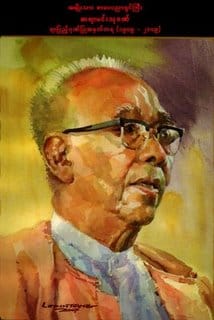
    • Minthuwun (U Wun)

    There were the early students of Sayagyi U Pe Maung Tin (Pali and Burmese Scholar) at the then newly established “Burmese Department” at the Rangoon University.

    This image has an empty alt attribute; its file name is minthuwun.jpg
    Minthuwun

    UCC Founders

    • Dr. Chit Swe (GBNF)
    • U Soe Paing
    • U Myo Min
    • U Ko Ko Lay (GBNF)

    Details can be found in my article “Paying Back to UCC” and several posts on Saya Chit, Saya Paing, Saya Myo and Saya Lay.

    Early Burmese Scholars in the UK

    • Dr. Hla Myint (Economics)
    • Dr. Tha Hla (Geology)
    • Dr. Maung Maung Kha (Meteorological Physics)
    • Dr. Po Aye (Meteorology)

    Early recipients of the Twinning Project

    • Dr. Aung Gyi (Civil, RIT Rector)
    • U Min Wun (Civil, Professor)
    • U Maung Maung Than (Textile, RIT Rector)

    Early Founders of Banks in Burma

    • U Rae Kyaw Thu
      Founded the first bank in Rakkhine
    • U Po Sa
      First Burmese to found a bank in Burma

    Early Sayadaws in the UK

    • U Thithila
    • Dr. Rewata Dhamma

    Early Sayadaws in the USA

    • U Silanandabhivamsa (Northern California)
    • Penang Sayadaw (Southern California)
    • U Kelasa (East Coast)
  • Practicing Metta

    Metta is a Pali word, which is rendered as “Loving Kindness” or “Unbounded Love“.

    There are two methods to practice Loving Kindness Meditation :

    • one described in the Metta Sutta and
    • the other known as 528-ways to send Metta.

    CD

    I received the CD as Dhamma Dana from U Myint Thein (C74, Soon Hoe), Cynthia Hoe (MBBS) and family.

    The CD contains songs about practicing Metta. The vocalists include

    • Hlwan Moe
    • Soe Sandar Tun
    • Hema Nay Win
    • Kaiser
    • U Thein Hla Maung
    • Hla Myint Win
    • May Ywet Wah
    • Ni Ni Win Shwe