
by Hla Min
Updated : June 2025
Stamps
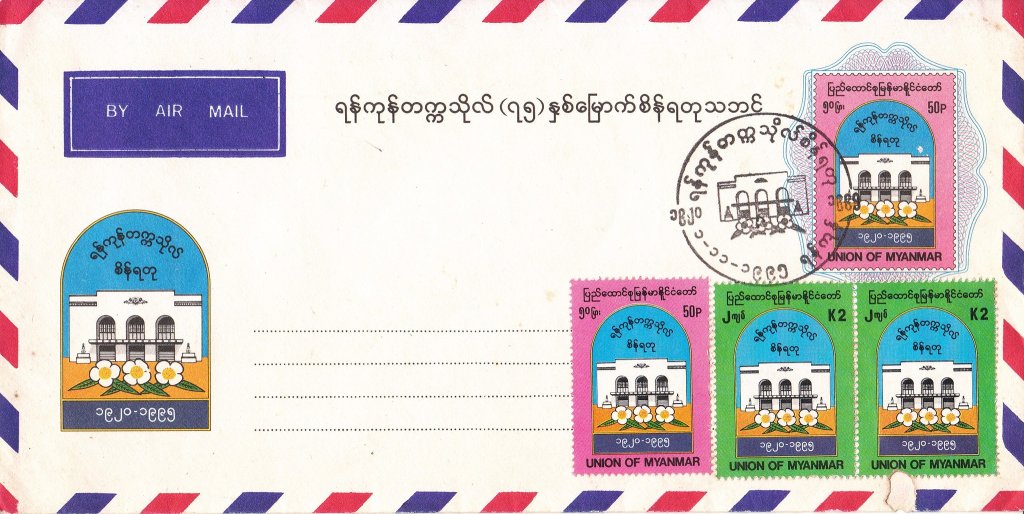
- For Postal Service
- For Legal Documents
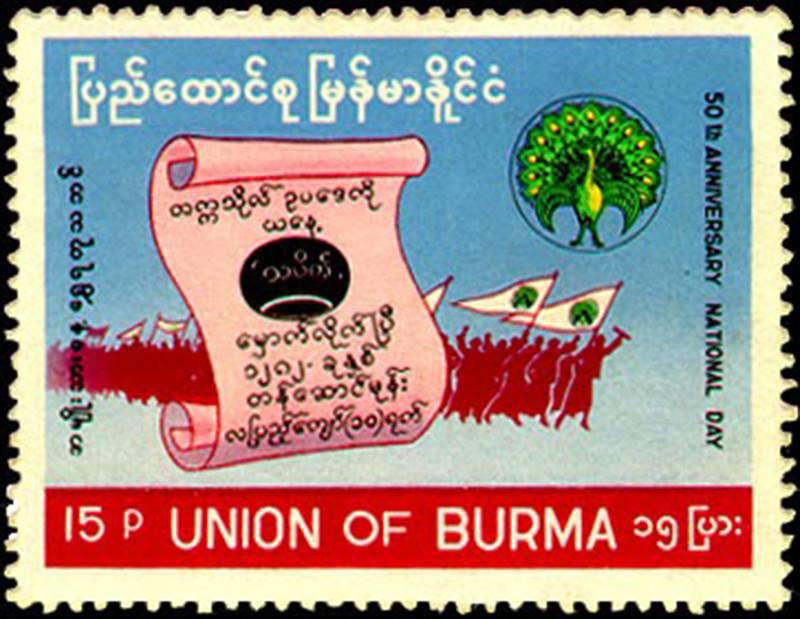
- For commemorating Events
Sample Stamps


Notes

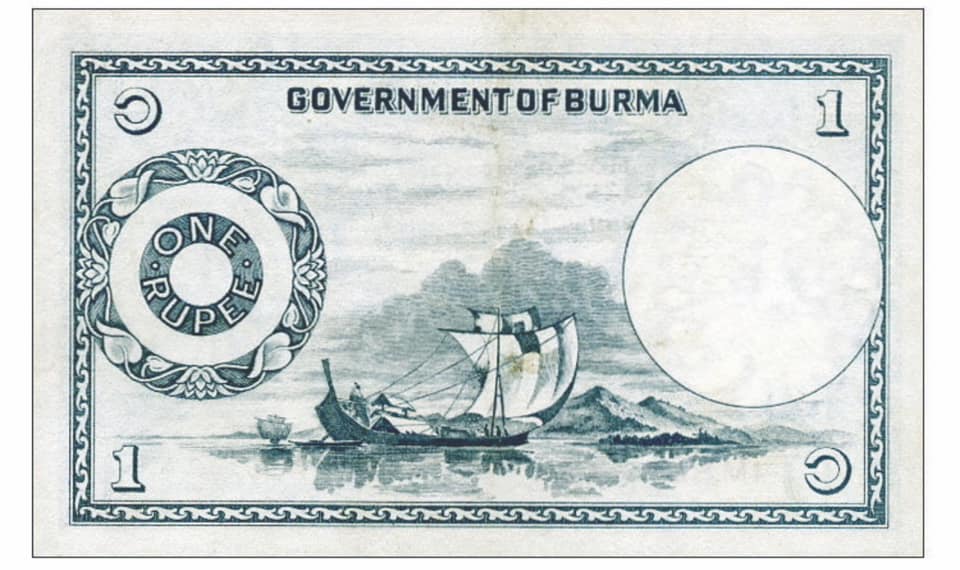

- After Independence, Burma transitioned from the use of Rupee to Kyat.
- Before inflation, small value notes — K1, K5 & K10 — were used in daily transactions (e.g shopping).
- After hyper-inflation, large value notes — K5000, K10000 — are needed in daily transactions.
- A hospital bill or even a restaurant bill may show several Lakhs .
Fees
- During our student days and even in our early working days, we had to sign and affix a fifteen-pya stamp to a receipt.
- Some legal documents need stamps of Two Kyats (or more).
School Feed
- School fees was 15 Kyats or less per month.
- At RIT, we had to pay 30 Kyats every two months. Since I received Collegiate Scholarship of 75 Kyats per month, I had 60 Kyats pocket money every month.
- That changed slightly, when we we asked to buy “Thuda Padetha Magazine” for 5 Kyats.Still, it was good enough.
Cost of Lunch
- We would collectively order food. Without voracious eaters, each person would pay about one kyat.
- Lime juice costs 15 – 20 pyas.
- Butheegyaw 5 – 10 pyas.
- Banana one for 15 pyas; two for 25 pyas.
A Decade Ago
- My elder sister took me on a pilgrimage trip to Upper Burma.
- There were different kinds of fees : bridge tolls, fees to enter a town.
- The price depends upon the type of car. In one instance, the fee was K400. We gave a K500 note and got back a “tha-gya-lone” (သကြားလုံး candy supposedly worth K100).
Decline of Purchasing Power
- I received 15 to 50 kyats for my writings — poem, article, translation
- How things have changed.
- Sad to note the declining worth of money and disappearance of Bogyoke Aung San’s picture (during the Adhamma Era) and signatures of Maung Kaung & San Lin to guarantee the notes.
Exchange rates
- When we were young, 1 US$ was exchanged at 5 – 6 kyats. We bought books (text books & magazines) at the rate of 6 Kyats.
- In the late 80s, one $ was exchanged at 50+ kyats.
- The exchange rate ballooned to several thousand kyats.
 HlaMin
Leave a comment