by Hla Min
Updated : June 2025
Prelude
- Collection of Pali verses (that refer to Buddha’s teachings).
- Translated by several Pal Scholars.
- Some Dhammapada books also cover short stories related to the verses.
Narada Thera
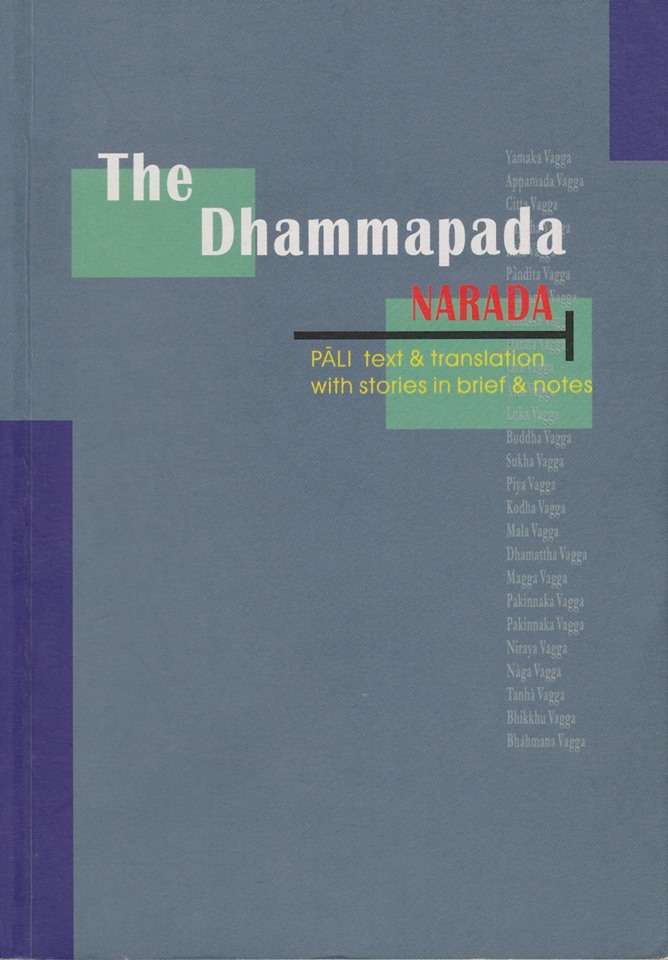
- The Dhammapada
- Subtitle: Pali text & translation with stories & notes
- Author : Narada Thera
- Preface
Chapters
- The Twin Verses
- Heedfulness
- Mind
- Flowers
- Fools
- The Wise
- The Worthy
- Thousands
- Evil
- The Rod or Punishment
- Old Age
- The Self
- The World
- The Buddha
- Happiness
- Affection
- Anger
- Impurities or Taints
- The Just or Righteous
- The Way or the Path
- Miscellaneous
- Woeful State
- The Elephant
- Craving
- The Bhikkhu or the Mendicant
- The Brahmana
Venerable Buddharakhitta
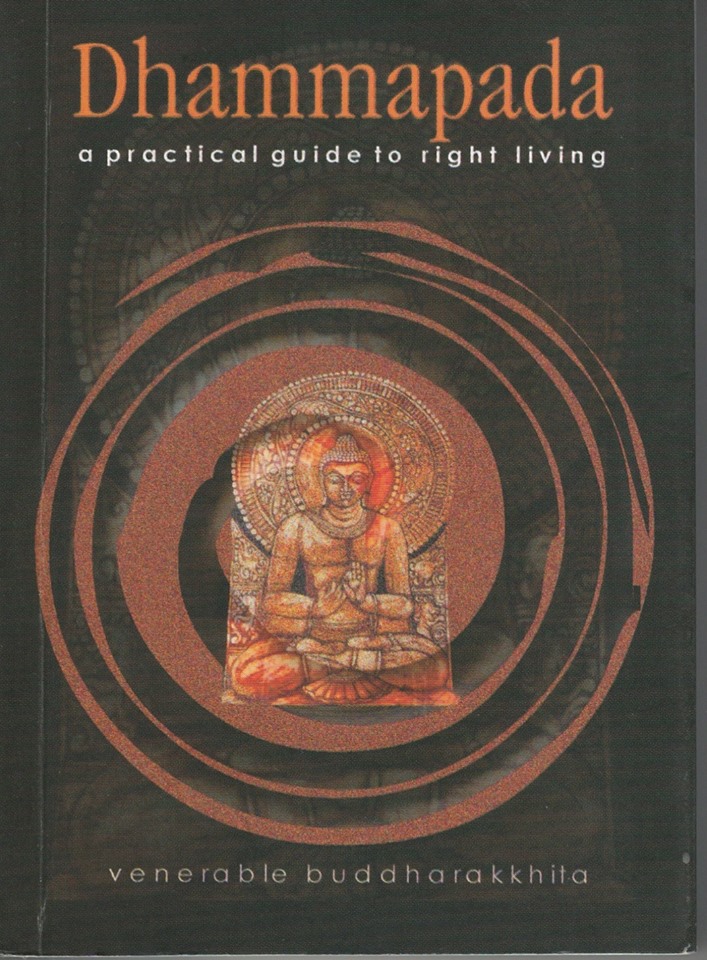
The following verses are from the book by Venerable Buddharakkhita.
Verse 182
Hard it is to be born a man;
hard is the life of mortals.
Hard is it to gain the opportunity
of hearing the Sublime Truth,
and hard to encounter
is the arising of the Buddhas.
Verse 183
To avoid all evil,
to cultivate good,
and to cleanse one’s mind —
this is the teaching of the Buddhas.
Verse 184
Enduring patience
is the highest austerity.
“Nibbana is supreme,” says the Buddhas.
He is not a true monk
who harms another,
nor a true renunciate
who oppresses others.
Myanmar & English
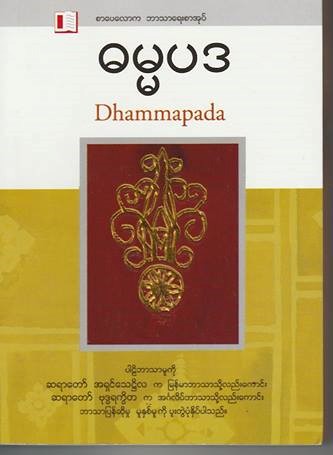
- U Thittila’s Translation (in Burmese)
- Venerable Buddharakkhita’s Translation (in English)
Frequently Quoted Verse
- The following Dhammapada verse is frequently quoted by Sayadaws and writers.
“Not to do any evil, to cultivate good, to purify one’s mind, – this is the Teaching of the Buddhas.”
- It seems simple (at the basic level), but it also has a deeper meaning (at the metaphysical level).
- The explanations may refer to Abhidhamma to expound what “kusala” (wholesome deeds) and “akusula” (unwholesome deeds) are.
- References may also be made to the three “Seikhas” : sila (morality), sammadhi (concentration), and panna (wisdom).
- Bhavana practices such as samatha (tranquility meditation) and vipassana (insight meditation) are needed to calm and purify the mind.
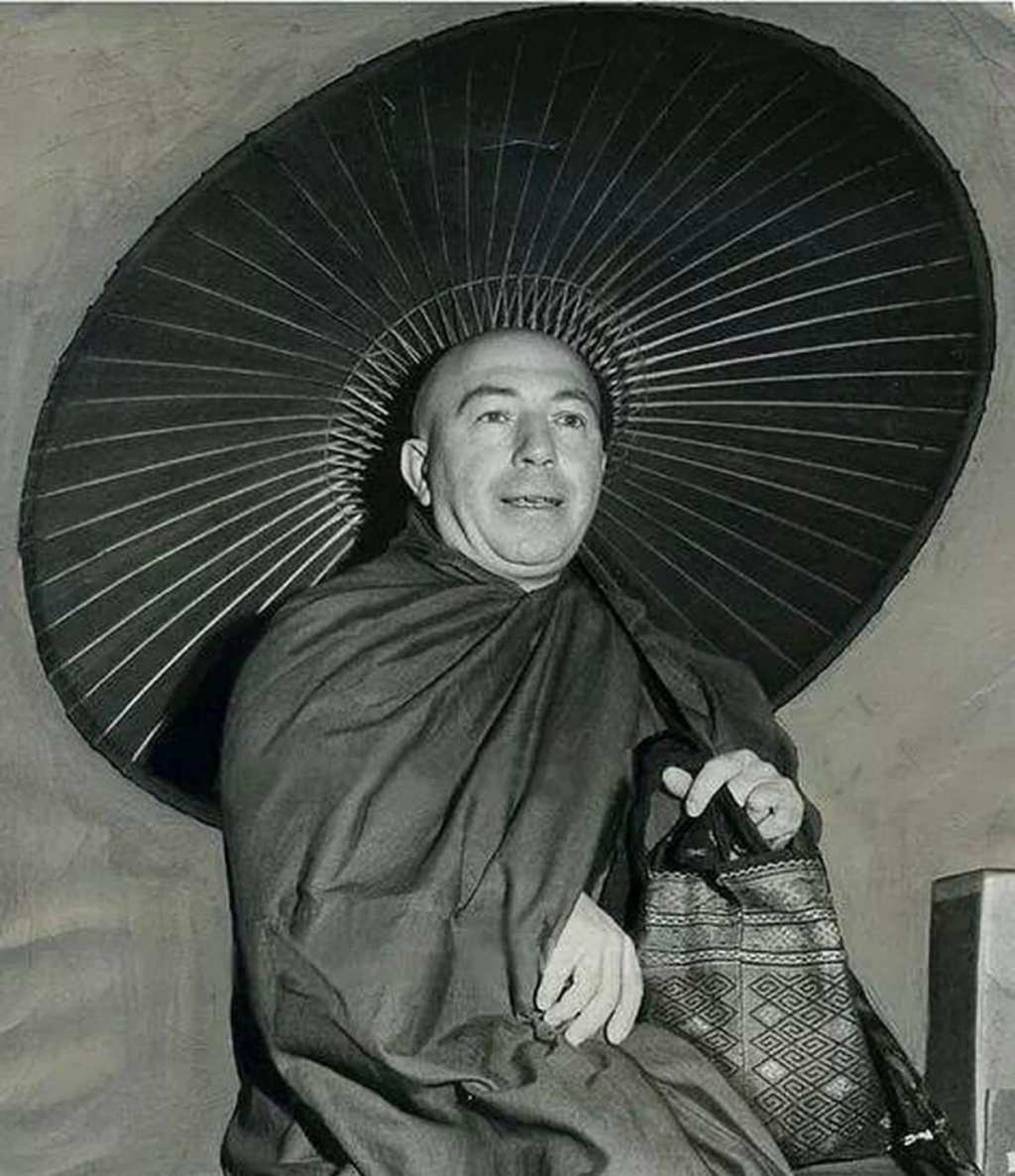
U Lokanatha – Italian Buddhist Monk (1897-1966)
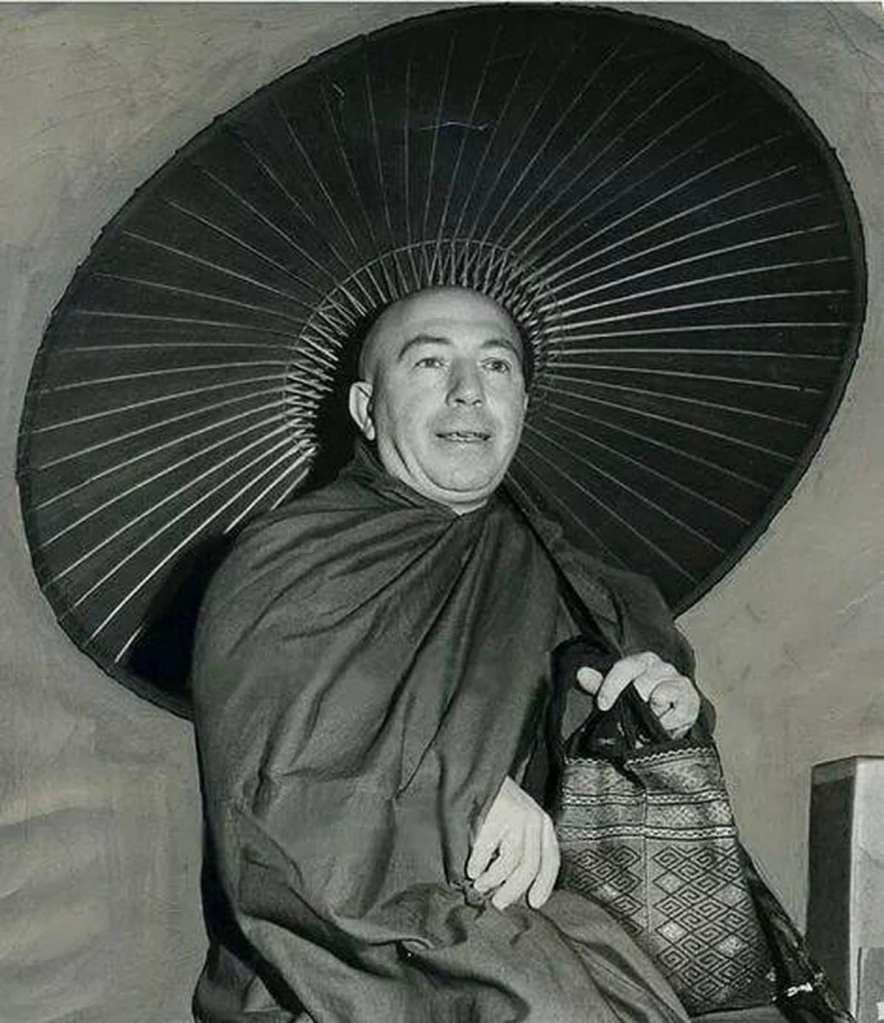
- Chemical Analyst in the US
- Received a book from his supervisor as Christmas present. The book had a chapter on Dhammapada.
After reading the verses, a deep impulse (which resonated with his scientific inquiring mind) led him to pursue Buddhism & become a Buddhist monk. - He was from a devout Catholic family. His elder brother was a Priest.
- Sayadaw spent considerable time at the Bawdigone monastery (donated by my paternal grandmother) on Windermere Road, Rangoon, Burma.
- He practiced Dhutanga.
- He also preached. Sunlun U Vinaya was interpreter for some of the talks.
- Dhamma Dhuta missions to India and Ceylon
- His booklet, “Why I became a Buddhist”, had considerable influence on the leader of the “Untouchables” in India.
- His dhamma duta work can be found in the articles in Wikipedia and some Buddhist web sites.
 HlaMin
Leave a comment