Census

by Hla Min

Updated : May 2035

Burma

  • The Colonial Administration compiled Population Census data at night. In Burmese, the data is called “Than Kaung Sar Yin” (list taken at midnight).
  • In the 1970s, UCC computer and machines were used to process the Population Census Data in Burma.

USA

  • In the USA, the Population Census data is compiled every ten years as mandated by law, but the census data takers do not visit houses at midnight.
  • The data is collected not only from US citizens, but from anyone who happened to be in the US (e.g. working, studying) at the time.
  • The data is to used mainly for planning (e.g. restructuring of voting areas) and not for storing personal details.
  • The most recent Census data was taken in April 2020.
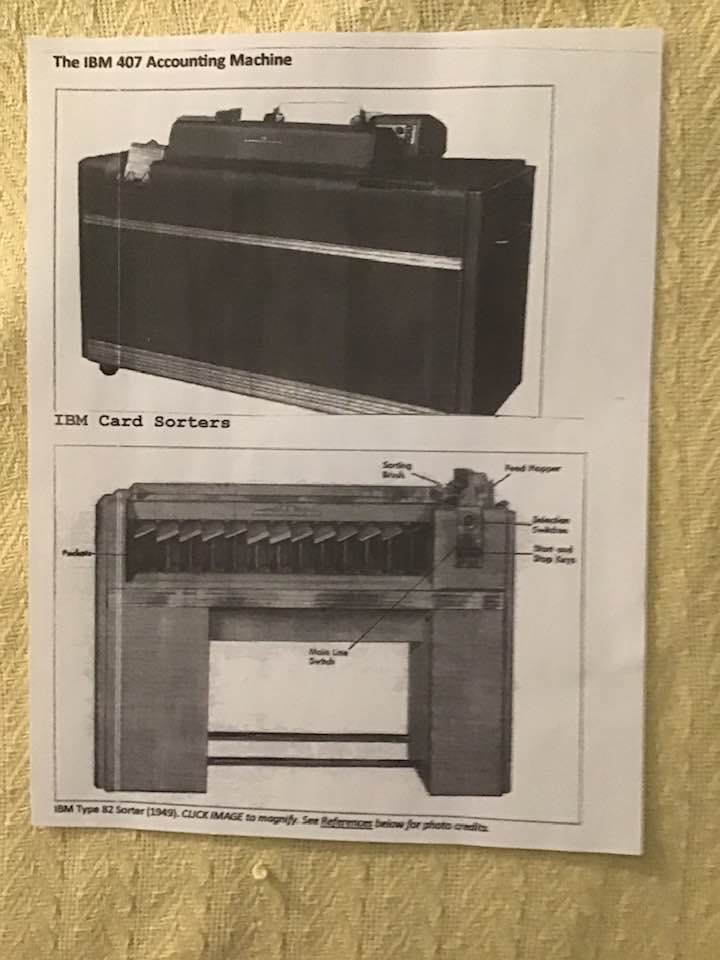
  • Herman Hollerith invented the electronic tabulator and punched card equipment for collecting and processing the 1890 US Census data. Hollerith founded a company, which later became International Business Machines (IBM).
IBM 1
IBM 2
IBM 3

Comments

One response to “Census”

  1. Derek Avatar
    Derek

    Actually, most of the detailed work on censuses was conducted in the run-up to Census Day (or rather Night), so that when enumerators completed their task from dusk to midnight, they only needed to check their lists and add in or delete any changes they found. Even this was difficult enough with the lack of electricity, torches and lamps of any kind. At Section Y(ii) of https://networkmyanmar.org/arakania you will find the complete Decennial Census Reports for 1872 (1871 in the rest of India), 1881, 1891, 1901, 19011, 1921, 1931 and what little has been found of the 1941 Census Report which sadly disappeared during the Japanese occupation and might still be lurking in an archive in Tokyo or even Myanmar. This collection was made from a variety of sources, including Google Books, Indian Digital State Archives and the British Library in London. It is invaluable (and can of course be downloaded using free web-copiers like HTTrack).

    Annual “Censuses” were started in 1829 in Arakan. Revenue Officers assessed the capitation tax for families while accompanying local officials and headmen made a rough headcount. The annual returns became surprisingly accurate. The results of the Decennial Census in 1872 were close to the annual headcount for 1872. Thus the 1872 Decennial Census records the population of Arakan as 484,363 while noting (paragraph 14) that the annual count was 475,241.

    At https://networkmyanmar.org/ESW/Files/Census-1881-Extracts.pdf you will find an astonishing array of local misunderstandings about the purpose of the Census in 1881, which gradually disappeared in later years. Many assumed that the Census was an excuse for taxation, or was part of a recruitment drive (to repel a Russian invasion!) or even to secure 400 sacrificial heads, for it was well known that the British used heads to divine the future. The list of non-official enumerators included ear-borers, toddy-palm climbers, tattooists, silk-worm breeders and pagoda slaves. Enumerators were all without exception local people who were given manageable blocks of houses to record, which helped to ensure the accuracy of the count.

    The Burmese Decennial Censuses, part of the Indian Census, sought to reflect as closely as possible Censuses in the UK which started in 1801 and have continued at 10-yearly intervals to this day. The last UK Census was in 2021. The next will be in 2031. The same happened in the 19th and 20th Centuries throughout the British Empire. The idea was to secure a snap-shot of the total population of the British Empire, if at all possible on a particular day using the same questionnaire!

    The detail of UK Censuses is revealed only after 100 years. The 1921 Census shows that my grandfather, Archibald James Zibia Tonkin, was living in Hammersmith under the assumed name of Archibald James Zibia Morris with his wife Priscilla and two children, although his first wife Mary Jane, my grandmother, had secured a court order declaring him deceased after he disappeared from the marital home around 1895. She remarried a Police Sergeant Halliday in Gloucester. I still have his police whistle! Now Grandpa Archie was clearly something of a bounder, because he joined the British Army in 1882 at the age of 17 and eventually found himself in India as batman to Lord Roberts of Kandahar. Lord Roberts, as we all know, put down dacoitry in Burma after the Third Anglo -Burmese War in 1886. I sometimes wonder what Archie got up to when he was in Burma.

    Like

Leave a comment