Burmese Language
- Myanmar Sagar — Spoken Burmese
Predates the written language - Myanmar Sar — Written language
First appeared as the fourth and final language of the Mya Zedi Kyauksar (stone inscription).
An early Indo-Tibetan script was used to write Burmese.
Burmese Department
- The Department of Oriental Studies at Rangoon University gave degree courses in Pali.
- Saya U Pe Maung Tin requested to have a Burmese Department as a sub-department of Oriental Studies.
- Burmese later became a separate Department.
Early Alumni
Saya U Pe Maung Tin was proud of his students — Theikpan Maung Wa, Zawgyi and Minthuwun — for founding the “Khit San Sar Pay”. He would express Mudita (Altruistic Joy) for their talents and achievements.

- U Sein Tin, ICS — Theikpan Maung Wa
Victim of a botched robbery. We had to study his “Wut Htu Saung Par”. - U Thein Han — Zawgyi; Laureate Poet; Literary Award winner. Taught at Burmese Department. Retired as Chief Librarian, Rangoon University Central Library.
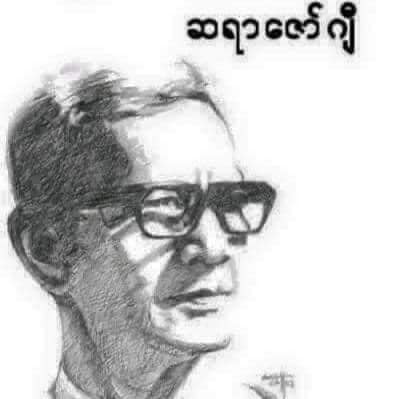
- U Wun — Minthuwun; Head of the Translation Department of Rangoon University; Compiler of “Myanamr Abhidan”; For a short period, served as Burmese Professor at RU; Visiting Professor at Osaka University for four years

- Daw Khin Saw Mu — Khit San Kabyar
Spouse : ICS U Ba Tint ; Children : Daw Khin Saw Tint, U Nay Oke

- U Tin Aye — Shan Pyay; Pinlon Agreement signer; Succeeded U Wun as Head of Translation Department

Sayas and Sayamas
Burmese Sayas (at University)
- U E Maung (pronounced as Aye Maung)
served as its first Professor. His compilation “Garland of Kabyars (Poems)” was a prescribed text for my elder siblings. Spouse : Daw Khin Mya Mu was an expert in reading and transcribing Kyauk Sar (Inscription)
- U Chan Mya — Mya Ketu
- U Toe Aung — Kutha
- U Hla Maung — Abhiddhama
later served as a Member of the Burmese Language Commission / Myanmar Sar Ah Phwe - U Sunn Tun (Mandalay) — “Shay Tho” series
- U Kyaw Yin — Kathika U Kyaw Yin
later served as Rector of MASU - U Po Kyaw Myint
- Daw Than Swe
- Daw Po — Taught in our I.Sc.(A) class; Staff Sayama at Inle Luyechun Camp in the Summer of 1965; later became Professor
- Maung Khin Min Danuphu — Professor
RIT Burmese
- U Tein Kyi — Head of RIT Burmese Department; later moved to Regional College
- U Soe Myint — succeeded U Tein Kyi as Head
- U Saw Tun — Saw Lu; later became Head of Burmese Department at NIU
- U Kyaw Hlaing — later taught Burmese at Hawaii University and Center of Burmese Studies in Northern Illinios
St. Paul’s High School
- U Pe Tin — Middle School
- U Nge — Middle School
- U Nyunt Maung — High School
- U Sein — High School
His son Dr. Soe Win (SPHS58) stood First in Burma and is Retired Rector of YUFL
U Thet Lwin (Maung Ngwe Hlinne) was also a student of Saya Sein
Prescribed Texts
They include
- Myanmar Thadda (Burmese Grammar) by Saya U Pe Maung Tin
which we studied in Middle School - Kabyar Pan Kone (Garland of Flowers) compiled by Saya U E Maung
which was prescribed for High School before our days - U Pon Nya Wutthu Paung Kyote compiled and annotated by Saya U Wun
which we studied in High School - Poems by U Kyin U
- Selections from Zat Taw Gyi Hse Bwe (e.g. Mahosadha)
- Pyazat (e.g. Deva Gomban)
Burmese Language Commission
- Also known as Myanma Sar Ah Phwe
- Bohmu Ba Thaung, Head of Burmese Department at DSA, was an early member of the Commission
- U San Lwin (DSA First Batch) served as Chair of the Commission
- In the 1980s, several History Commission members were assigned to the Myanma Sar Ah Phwe
- The Commission published books, e.g. on Spelling and Proverbs
Decline of Formal Burmese
- The Commission revised the Burmese spelling twice. Some revisions were ill-advised.
- Authors and publishers were fined ten pyas for each violation of the spelling rules.
- Many classic texts were ruined when every occurrence of TA had to be replaced with TIT to please the whims of the higher authorities. The rhyme and rhythm of the beloved texts were lost.
- The rise of the Internet was sadly accompanied by the decline of Burmese usage and the adoption of slangs and abbreviations in messages, blogs and even articles.
 HlaMin
Leave a comment