Tag: Vipassana

  • Talk — Vipassana

    Talk — Vipassana

    by Hla Min

    Updated : Aug 2025

    Video Broadcast

    U Hla Min

    Disciples of Mingun Narada Sayadaw

    • Mahasi Sayadaw
    • Taung Pu Lu Sayadaw

    Disciples of Mahasi Sayadaw

    • Panditarama Sayadaw
    • Saddamaramsi Sayadaw
    • Chan Myei Sayadaw U Janakabhivamsa
    • Dhammananda Sayadaw U Silanandabhivamsa
    • Kheippa Bein Nyaw (Vietnamese)

    Dhamma Lineage of Ledi Sayadaw

    • Saya Thet
    • U Ba Khin
    • S N Goenka

    Fundamentals of Vipassana Meditation

    • Primary Author : Mahasi Sayadaw
    • Translator : Maung Tha Noe
    • Editor : Sayadaw U Silananda
    • Original Publisher : Dhammachakka Meditation Center, 1991
    • Republished with other articles : Tathagata Meditation Center

    Other articles included the book

    (1) “Instructions to Meditation Practice” by Mahasi Sayadaw
    (2) “Benefits of Walking Meditation” by Sayadaw U Silananda
    (3) “Guidance for Yogis at Interview” by Sayadaw U Pandita
    (4) “An Interview with Mahasi Sayadaw” by Thamanaykyaw, translated by U Hla Myint
  • Meditation

    Meditation

    by Hla Min

    Updated : May 2025

    Types of Meditation

    The Scriptures describe 40 kinds of Meditation.

    The methods generally fall into

    • Samatha (Concentration Meditation)
    • Vipassana (Insight Meditation)

    Samatha

    In Samatha, one chooses a “Meditation Object”. In the early days, some practitioners chose a white or colored disk (Kasina) as a Meditation Object. By fixing one’s eyes and thoughts on the Meditation Object, one can develop Concentration.

    Some practitioners chose “Ana Pana” (Out-breath and In-breath). For example, one can note the direction, direction and hardness/softness of the breath.

    One may attain one level of more Jhana (Absorption).

    Vipassana

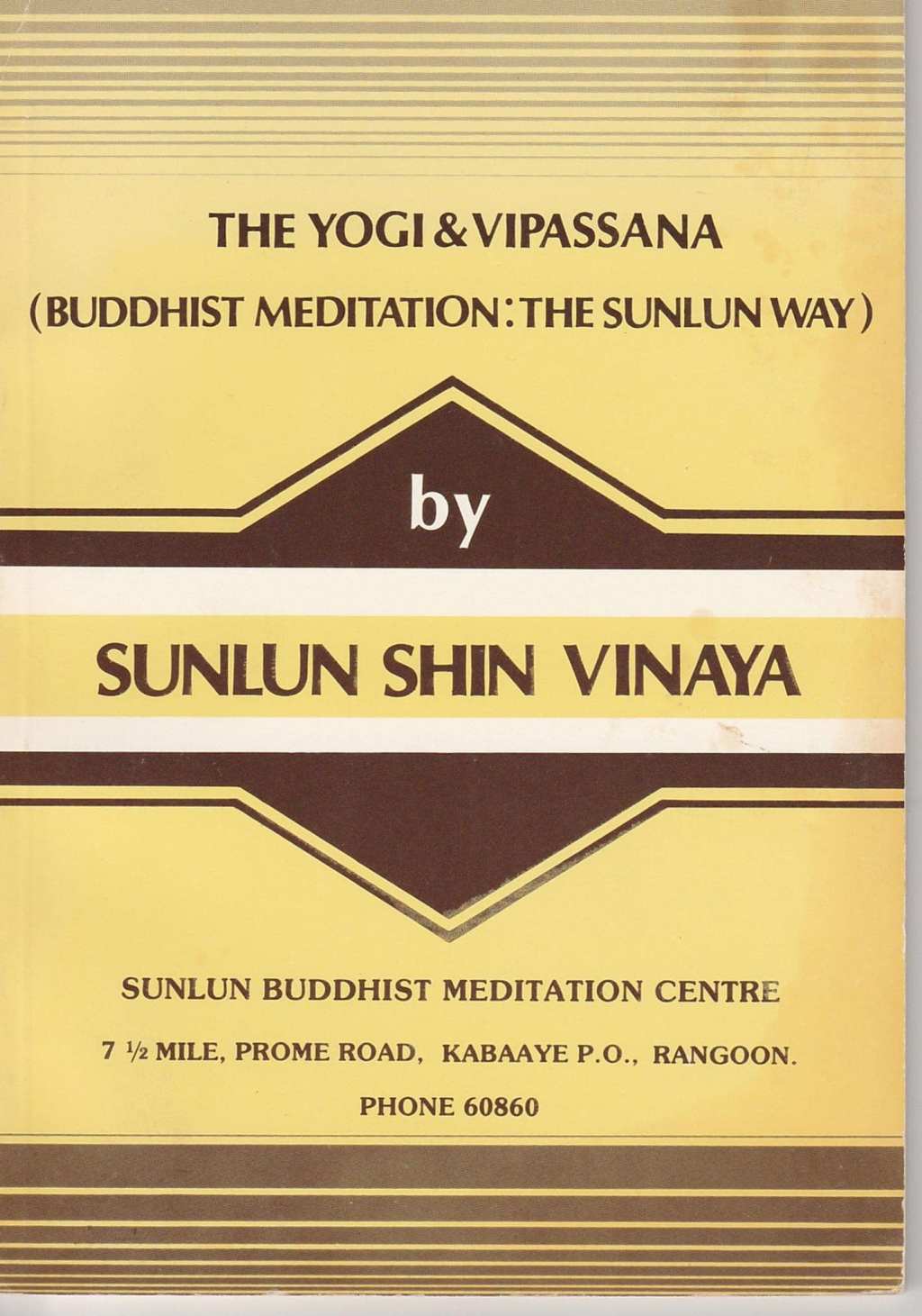
    Vipassana book

    Vipassana means

    • various ways of seeing
    • seeing things as they truly are.

    A practitioner may choose a Primary Object for the meditation session. Depending on the tradition of the Mediation Master, the Primary Object can be a nostril, nge dait (part of the head), abdomen, or the body (e.g. touching the mat or floor).

    Then, one practices one of the “Four Foundations of Mindfulness” by being aware of the Kaya (Physicality), Vedana (Feelings), Citta (Mind) and Dhamma (General artifacts for meditation).

    One may practice Meditation using one of four postures.

    One may be able to experience

    • Nama and Rupa
    • Anicca, Dukkha, Anatta
    • Stages of development ultimately leading to Liberation.

    In the West, some people try Meditation

    • to experience relaxation and tranquility
    • as an alternative medical treatment (allowed by some Health Insurance).