Virus is a Pathogen Other Pathogens : Bacteria, Fungi, Worm … Studied in Microbiology
RNA (Type of nucleic acid with a single strand) Studied in Genetics
Virus may be Symbiotic or Parasitic Not all viruses are harmful
Need a host cell to multiply
Methods of transmission via animals and insects (some) human-to-human bodily contact air borne (time and distance may vary)
May cause damage to cells and organs
May mutate e.g. new flu shots every year
Coronavirus
Shaped like a Corona (“Crown” of Sun)
Human Coronavirus found around 1955
Different kinds of impact : from mild to severe (deadly)
Common cold (mildest)
Flu (may cause aches and pains)
SARS : Severe Acute Respiratory Syndrome (mortality rate around 9%)
MERS : Middle East Respiratory Syndrome (mortality rate around 35%)
HIV (Weaken immune system)
COVID-19
Health Organizations agreed to not to use names attributing “place of origin”
COVID-19 stands for COrona VIrus Disease (found in) 2019
The disease is caused by the virus named SARS-Cov-2
The death rate (currently around 2 to 3%) is less than that of SARS and MERS, but the infection rate is higher (partly because the patients may not show symptoms of the disease and unknowingly act as “carriers”)
New strains were found in December 2020
Miscellaneous
The initial “outbreak” was not reported factually to the world.
Some organizations and groups generated myths (e.g. It’s just another brand of Flu) and unreliable treatment (e.g. take disinfectants).
The misinformation and disinformation may have caused undesirable deaths.
The deadly impact was downplayed e.g. reports say NO human-to-human transmission A few said that the disease would go away naturally soon!
Some countries were not prepared e.g. lack of PPE for doctors and nurses in UK (which was then focusing on Brexit rather than the pandemic)
Dr. Peter Tun (MRCP, Former Associate Dean of Oxford University) was an early victim. He reported about lack of PPE in his ward, but was ignored due to the “lax” HHE guidelines at the time. He succumbed to COVID-19 on April 13, 2020. Ultimately, his death caused a “review” for better “policies” to benefit other doctors and nurses. He would become the first to receive FRCP posthumously form the Royal College of Physicians,
It took a long time to figure out the symptoms.
The first round of vaccinations for COVID-19 has been completed in UK, USA and Canada.
Tests are being conducted to see if the vaccines are effective for the newer strains.
Based on the priority (e.g. Tiers) and logistics, many will have to wait for their turn.
The Burmese version of the Book was published by YMBA (Young Men’s Buddhist Association) in 1951.
YMBA requested Mahagandayone Sayadaw Ashin Janakabhivamsa မဟာဂန္ဓာရုံဆရာတော်အရှင်ဇနကာဘိဝံသto write a brief “History of Buddhism” and Artist Saya U Ba Kyi to provide illustrations.
Saya U Ba Kyi observed eight precepts for 45 days before undertaking the project.
In 1953, Saya U Ba Kyi gained international reputation.
In 1954, YMBA later published an addendum (English translation of Sayadaw’s text in Burmese) for readers who are not conversant in Burmese.
TBSA
Dhammananda Sayadaw U Silanandabhivamsa ဦးသီလာနန္ဒာဘိဝံသ sought permission from YMBA to reprint the book with descriptions in both Burmese/Myanmar and English.
In 1994, the book was printed and published in the US and was distributed by TBSA (Theravada Buddhist Society of America).
Several books were left. Some were handed as prizes for the successful participants of the “Summer Dhamma Class / Camp”.
Missed Opportunity
An Arts professor from Stanford University expressed desire to use “The Illustrated History of Buddhism” as a text for his course provided the book can be “ordered” from the University Book Shop.
Since the book was meant for dhamma dana, the book had no ISBN (International Standard Book Number) that is used by book shops.
Miscellaneous
There have been some requests to reprint the book.
There are probably newer reprints of the book and/or PDF version of Saya U Ba Kyi’s drawings.
U Ba Kyi
Saya translated a verse of the song “Hna yauk hte nay gin de” while invigilating an examination at the Institute of Education.
Saya Dr. Maung Maung Kha used to accompany Saya U Ba Kyi’s vocals with his violin at the functions (mostly at Rangoon University Ah Nu Pyinnya Ah Thin).
Darling Only two we will live dear On the high crest Of the Mount Everest And the Sahara Desert Driest without water To the North Pole May be freezing cold Where the sun will never never grow With all my heart and soul Only two darling We will go
Thailand hosted the inaugural event at Bangkok in 1959
Burmese athletes include Tin Maung Ni & team (Swimming), Tun Mra, Kyaw Mra, Soe Mra and Tun Naung (Track and Field), Tun Aung & Victor Pe Win (Tennis), Boxing, Weightlifting …
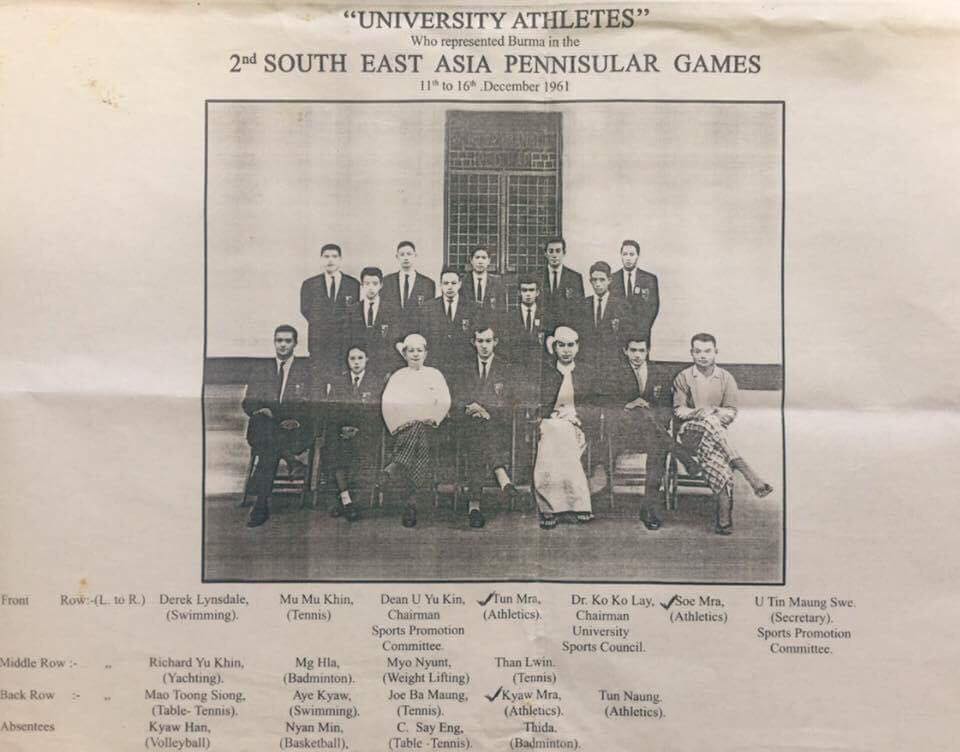
2nd SEAP Games
Burma hosted the event at Rangoon in December 1961.
Aung San Stadium was the main venue for Track & Field and Soccer. Volleyball, Basketball and Gymnastics were competed indoors.
Swimming, Diving and Water Polo contests were held at the National Swimming Pool on U Wisara Road.
Dean U Yu Khin was Chairman of the Sports Promotion Committee.
U Tin Maung Swe was Secretary of the Sports Promotion Committee.
Dr. Ko Ko Lay was Chairman of the University Sports Council.
University Students who represented Burma in the Games
Tun Mra, Kyaw Mra, Soe Mra and Tun Naung (Athletics)
Maung Hla and Thida (Badminton)
Nyan Min (Basketball)
Derek Lynsdale and Aye Kyaw (Swimming)
Mao Toon Siong and C. Say Eng (Table Tennis)
Joe Ba Maung, Than Lwin and Mu Mu Khin (Tennis)
Kyaw Han (Volleyball)
Myo Nyunt (Weightlifting)
Richard Yu Khin (Yachting)
Athletics
In Track and Field, Burma placed first in the medal standings. Tun Mra won a Gold in the 4×100 m relay with Soe Aung (Burma Champion) as anchor. Kyaw Mra won Silver in the Hurdles. Soe Mra won Gold in the Pole Vault. Tun Mra, Kyaw Mra and Soe Mra are the sons of U Shwe Mra. Kyaw Mra would later serve as National Coach.
Swimming
In Swimming, Burma placed first in the medal standings. Tin Maung Ni won 200m, 400m, 800m, 1500m, 4x100m freestyle relay, and 4×100 medley relay. His team mates won the other events. Aye Kyaw (cousin of Dr. Hla Yee Yee) and Derek Lynsdale represented Burma in swimming.
Tennis
Joe Ba Maung was the National Singles Champion in Tennis. He and Than Lwin were the National Doubles Champion. Than Lwin would succeed Joe Ba Maung as the Singles Champion. Mu Mu Khin (Daphne Tha Dok) was the Ladies Champion, She later married Than Lwin.
Table Tennis
Mao Toon Siong was Burma Champion for Singles and Doubles in Table Tennis. He later served as National Coach.
Volleyball
Kyaw Han won the Gold as a member of the Burma Selected Team
Yachting
Richard Yu Khin won Gold in Yachting.
Miscellaneous
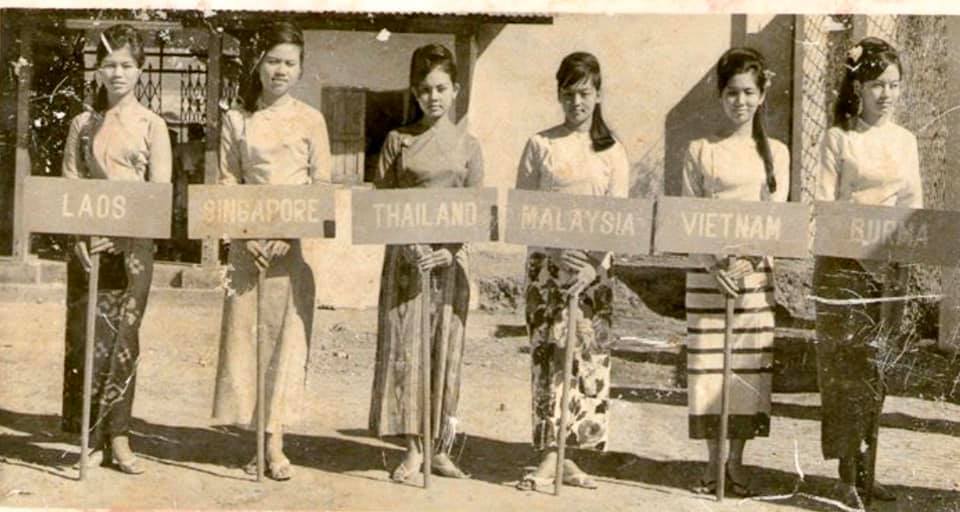
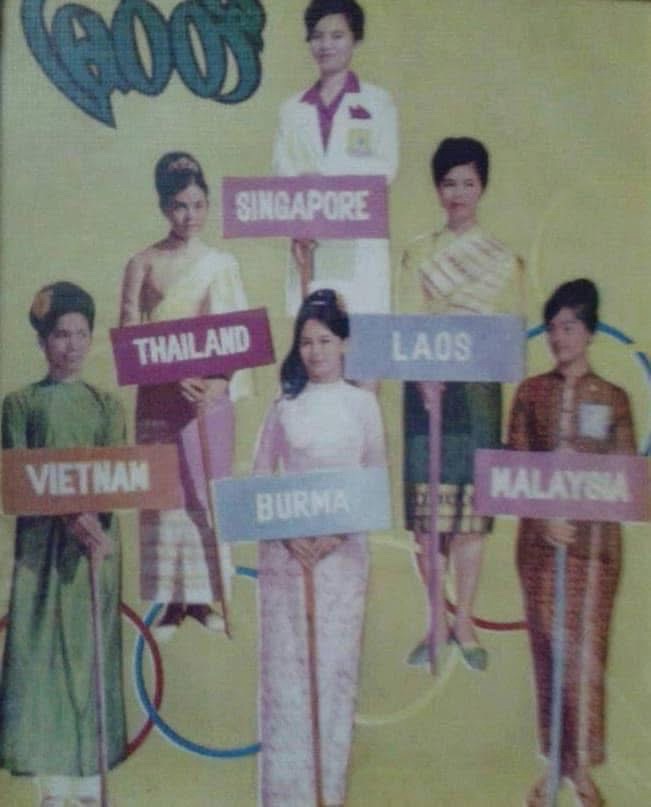
The member nations include Burma, Cambodia, Laos, Malaysia, Singapore, Thailand and Vietnam.
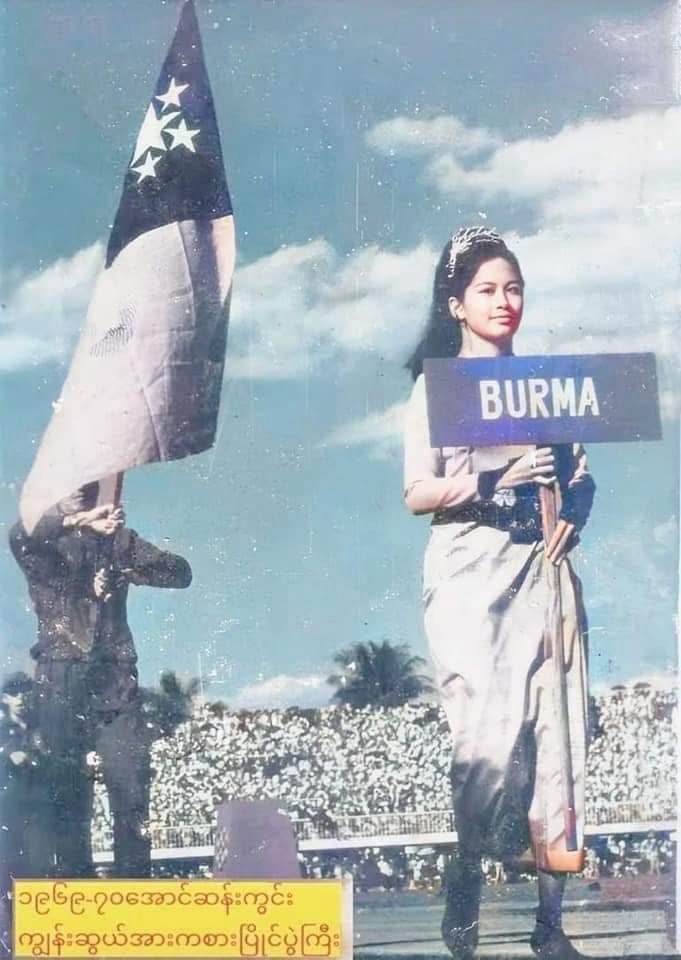
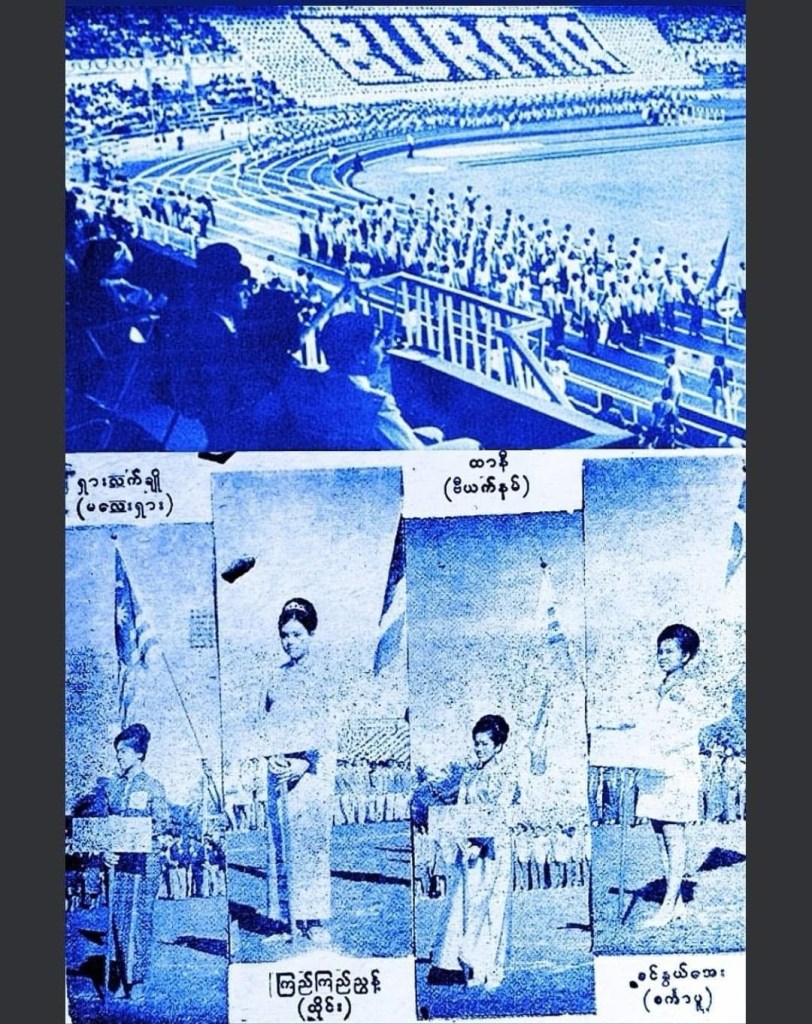
Burma hosted the 2nd Games (in 1961) and the 5th Games (in 1969)
In the later period, SEAP Games gave way to SEA Games



 HlaMin