I matriculated in 1949 and entered the University of Rangoon and stayed in Ava Hall and took the Intermediate of Science (ISc) courses. The courses were: English, Burmese, Physics, Chemistry, and Mathematics (Pure and Applied Maths). We needed to take these courses for two years in order to go to the engineering studies. I remember having a great time in the first year as we did not have to take the examination at the end of the first year for some unknown reason. But we had to take the examination at the end of the second year for all the subject matters that were taught to us for the whole two years. It was a tough examination at the end of the second year as we had to study a lot. We had physics and chemistry examination papers, two mathematics papers, English and Burmese papers, physics lab practical exam and chemistry lab practical exam within a period of 15 to 20 days in the hot month of March. Only about 60% of the students passed through the first time. The passing grade for each subject was 40%. Fortunately the University authorities in those days were understanding and kind enough to give the failed students what they called compartmental examination again in May/June for the failed subjects. Given a second chance like that, a lot of students passed the examination this time around. The Faculty of Engineering admitted the students, including the students who passed the ISc exam. under the compartmental system, with a passing grade of at least 40% for each of ISc subjects and the average passing grade for all the subjects combined of 50%.
I was quite fortunate to have good teachers in my ISc days. I remember that Saya U Than Tin gave good lectures in physics. Saya U Thein Nyunt was good as well in teaching us chemistry. Needless to say the experiments that I had to do in physics and chemistry labs were interesting as they were all new to me.The maths teachers I remember were Professor U Aung Hla, Sayagyi U Kar, Sayagyi U Ba Toke, two Indian lecturers with the same last name Chowdhury. I forgot their first names. One Chowdhury was bald headed and the other had a lot of hair.They were teaching, I think, under contract with the Rangoon University. These very good teachers, I had to say, gave me a good foundation in mathematics. The English teachers were very good too. They were Saya U Kan Gyi and Sayama E. Kan Gyi. The only Burmese teacher I remember was Saya U Hla Maung who could make a boring topic into an interesting lecture. I owe a lot of gratitude to these wonderful teachers.
I joined the first year engineering class in 1951-1952 academic year, having satisfied the entrance requirements of the Faculty of Engineering mentioned above. The academic year , I think was from June to February with about one month break in October. So far as I know there was a “new course engineering” at the Faculty of engineering right after the World War ll. I do not know what the entrance requirement for this new course was.
I stayed in Prome Hall like most of the other engineering students in those days, as it was situated close to the B.O.C. College of Engineering building where we had classrooms, laboratories, and workshop for our engineering courses. A few engineering students however stayed in Tagaung Hall which was in the same Prome road campus of the Rangoon University as Prome Hall. Both of these hostels were timber buildings and they could easily get burnt down; but I was happy to see that they are still standing there when I visited Yangon in 2010. These two Halls gave accommodations to all engineering students, even to some students from Rangoon at that time, as there were vacancies and as the total engineering student population was not that big. If my guess is correct, I think there were about 350 to 400 students for 4 years of all engineering disciplines, out of which there were about 75 1st year engineering students. The system in place at that time was in such a way that the students had to take common courses in the first 2 years and branched out into different disciplines of choice, starting from 3rd year.
I remember that as first year engineering students, we still had to take mathematics classes from 7:00 am to 9:00 am at the main campus where we had taken the Intermediate of Science courses. I remember getting up early in the morning in Prome Hall ,and taking a walk along the road, what we called as “Padaukpin lane” or “Thaton lane”, and through Thaton Hall and Ava Hall , for the mathematics classes at the main campus. All of us then rushed back to B.O.C. College of Engineering from the main campus after 9:00 am to take theengineering classes, which included lectures, practical laboratory work, workshop practice, and drawing classes, starting from 10:00 am. We normally finished our classes around 4:00 pm. The total contact hours of learning for engineering students were about 30 hours per week. If my memory is correct, it was difficult to get an engineering degree in 6 years after matriculation. Somewhere along the way some of us failed for one reason or the other, and had to repeat a class.The passing grade for each subject, which included workshop training at the Engineering Faculty was 40% and the average passing grade for all the subjects combined was 50%. When I passed my 1st year engineering in April/May 1952 I noticed that about 15% of my classmates were left behind to repeat the 1st year engineering.
I do not remember all of my teachers at that time. I can only recall that Saya Num Kock was in charge of 1st year engineering drawing, Saya Jaidka taught us ” building materials and construction”, Saya Ketrepal gave lectures and practical laboratory training in “heat engines”, Sayagyi U Kyaw Tun / Saya C. Ping Lee taught us “electrotechnology” in the classroom and in the laboratory. In addition to the lectures, laboratory work and drawing, all of us had to take workshop training in carpentry, blacksmith, welding, and in machine shop. The medium of teaching was English. We were also encouraged to take some practical training with some engineering organization during the summer vacation. I am not quite sure , but I think Ko Chit was an assistant at the blacksmith shop, and U Ba Sein was an assistant in the electrical lab. I think Mr P. Davis was the workshop superintendent. The classrooms , laboratory facilities, the workshop facilities that I had attended were good and adequate. The library I visited some time was full of good engineering books, magazines and journals. I could imagine that with its qualified teaching staff and good teaching facilities, the Faculty of Engineering was producing the qualified engineers needed by the country at that time.
I do not know what was the total number of teachers we had at the Faculty of Engineering at that time. I could guess that the student/teaching staff ratio was about 20:1 from the number of teachers and from the number of students I had seen. I noticed that there were few Burmese nationals teaching staff at the Faculty, and most of the teachers were from India and UK. It seems that, right after the World War II, there was shortage of qualified teaching staff from Burma at higher education/University level as a whole. Sayagyi Professor U Ba Hli was Dean of the Faculty of Engineering, and I believe he received his post graduate degree from a British University. He was quite far-sighted and tried to broaden and improve the engineering education by having some kind of twinning arrangements with not only a British University but also with Massachusetts Institute of Technology, USA (M.I.T). I remember as a student that there was a visiting Professor called Professor Horwood from M.I.T at the Faculty; and I think he gave us lectures on sanitary engineering. Sayagyi U Ba Hli must have planned to increase the number of engineering disciplines that were given at the Faculty from civil, mechanical and electrical engineering to other disciplines as well, such as Mining, Chemical, Metallurgy, Textile engineering and Architecture. I understood this plan came into fruition in 1954/1955. He must have also planned to send the Burmese nationals to UK, USA and as qualified teaching staff at the Faculty at a later date. I therefore take this opportunity to put on record that a big credit is due to the late Sayagyi U Ba Hli for his contribution to the improvement of engineering education in Myanmar.
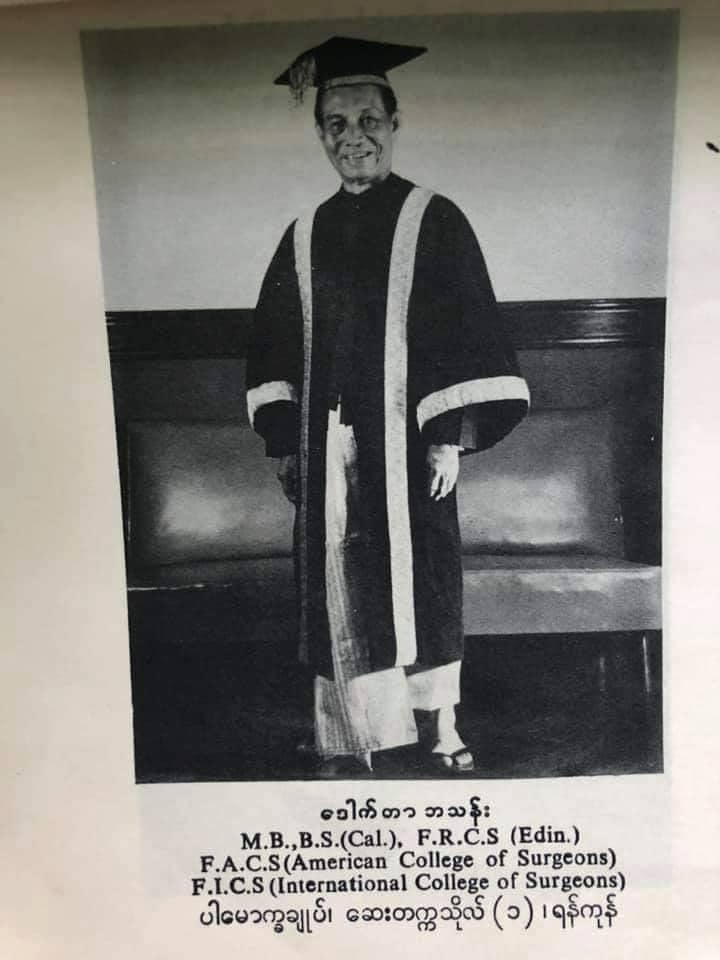
Selected by Matthew Hunter to take the entrance exam to study M.B.,B.S. at Calcutta University;
F.R.C.S — Royal College (Edin)
F.A.C.S — American College
F.I.C.S — International College
Police Surgeon
MS, RGH (during the Japanese Occupation)
Rector, IM (1)
Shan Lay (ရှမ်းလေး Soccer)
Zwe A Nyeint ဇွဲအငြိမ့်
Children : Kyaw Than (Georgie), Khin May Than (Kitty), Khin May Aye (Amy)
See book by Dr. Myint Swe
See article by Dr. Mg Mg Nyo
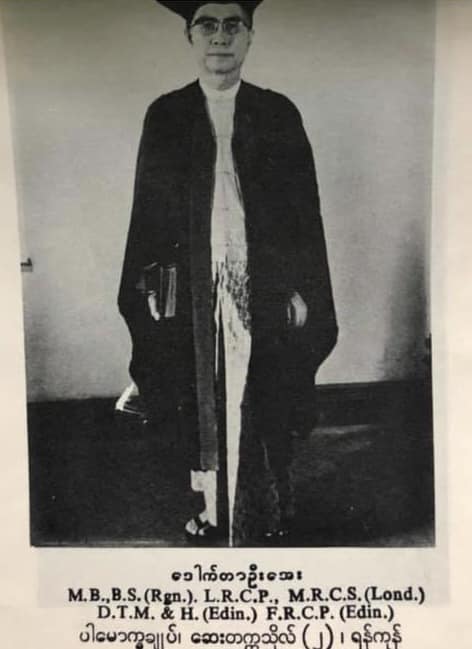
Dr. U E
Dr. U E
M.B.,B.S.(Rgn.)
L.R.C.P., M.R.C.S (Lond.)
D.T.M.&H. (Edin.)
F.R.C.P (Edin.)
Rector, IM(2)
Children : Bertie, Shirley, Babsy
GBNF
See article by Dr. Mg Mg Nyo
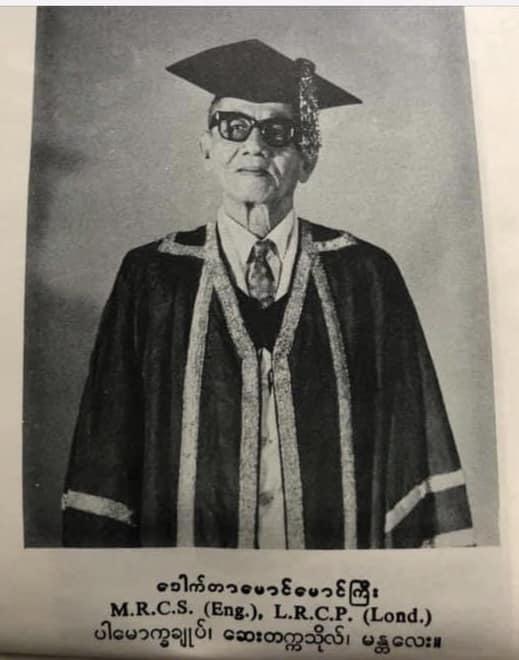
Dr. Maung Maung Gyi
Dr. Maung Maung Gyi
M.R.C.S. (Eng.)
L.R.C.P. (Lond.)
Rector, Mandalay IM
GBNF
See article by Dr. Mg Mg Nyo
Dr. Ko Gyi
Ophthalmologist
Medical Superintendent of EENT Hospital
Children : Tin Oo, Glory, Aung Khin, Thein Wai
GBNF
See article by Dr. Mg Mg Nyo
Col. Min Sein
Dean, Medical College
Spouse : Dr. Daw Yin May
Children : Dr. Thein Htut, Tin Tin Aye
GBNF
Dr. Daw Yin May
First recipient of Fellowship in three Disciplines
MS, Dufferin Hospital
Spouse : Col. Min Sein
Children : Dr. Thein Htut, Tin Tin Aye
GBNF
Dr. Maung Gale
Dean of the Rangoon Medical College from 1959 – 1962
Translated Grey’s Anatomy to Burmese and handed over the manuscripts to Dr Norma Saw.
GBNF
See article by Dr. Mg Mg Nyo
Dr. Khin Maung Win
Pathologist
DG of ME
Head of Medical Board to examine those chosen for States Scholarship
GBNF
See article by Dr. Mg Mg Nyo
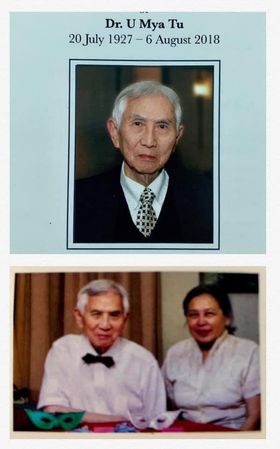
Dr. Mya Tu
Dr. Mya Tu
Founder-Director of Burma Medical Research Institute (BMRI) which later became DMR.
Compiled the Magnum Opus (“Who’s who in Medicine in Burma?”) with his spouse Khin Thet Hta.
Passed away in Australia
See post by Dr. TOKM
Dr. Tin U
Initiated the study of Pediatrics in Burma as a separate discipline.
Medical Superintendent of Rangoon Children’s Hospital.
See post by Dr. TOKM
Dr. P. R. Mohan
Dr. Mohan
Served in the Burma Army Medical Corps from 1939 – 1945 as a medical officer in Burma theater, and discharged as a Major at the completion of World War II.
Passed away in USA in 2005. He was 88 yrs old.
Dr. Mohan & Dr. Daw Hnin Yi
Dr. Mohan and Dr. Daw Hnin Yi (Rosie) are remembered by several former students and colleagues.
See posts by Dr. TOKM, Timmy & Mona
Dr. Nay Win
MS, Psychiatric Hospital
Spouse : Dr. Daw Khin Si
GBNF
Dr. Nay WinDaw Khin Si
Dr. Pe Nyun
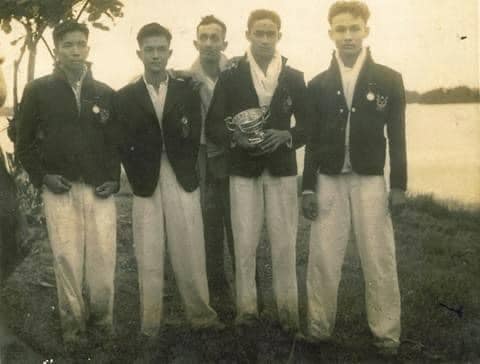
Pe Nyun & Pe Thein at 1948 Independence Day Regatta
Past Captain & Gold, RUBC
Pediatric Surgeon
Led team to operate conjoined twins (Ma Nan Soe & Ma Nan San)
Wrote Memoirs for family members & relatives
Passed away in Canada
Brother : Dr. Pe Thein
Dr. Pe Thein
RUBC Gold
Professor
Retired Minister of Health & Education
Passed away
Brother : Dr. Pe Nyun
Spouse : Dr. Kyu Kyu Swe
Dr. Htut Saing (Harry Saing)
Dr. Harry Saing
Second Lead to operate conjoined twins (Ma Nan Soe & Ma Nan San)
All-round athlete : Burma Selected in Cricket, Hockey & Rowing
Past Captain & Gold, RUBC
1958 ARAE Champion for Coxless Pairs
1960 ARAE Champion for Coxed Fours
Worked at RCH and Hong Kong
Passed away in Hong Kong
Siblings : Sheila, Victor, Shirley
See posts & my article in RUBC 90th Anniversary Magazine
Dr. Thein Toe
Headed Nutrition Research at BMRI / DMR
Spouse : Khin Thitsar
Passed away in UK
Dr. Thein Toe and Dr. Htut Saing (Harry)
Dr. Kyaw Win
Army Doctor / Bogyoke
Ambassador to UK and US
Spouse : Kyi Kyi Chit Maung
Sons : Htut Kyaw Win, Aung Kyaw Win
See post by Dr. TOKM
Dr. Daw Khin Than Nu
Pioneer of Neonatal Care in Burma
Regularly attended IM(1) Saya Pu Zaw Pwes
Left to visit her son Win Htut in the USA
When she passed away, Win Htut gave a soon kwyay in her memory at Mettananda Vihara.
Dr. TheinHtut
RUBC Gold
Moved to Australia
Spouse : Wendy Sein
Dr. Nyunt Win (Eddie Tha Win)
Neurologist
Moved to Australia
Spouse : Marie Yu Khin
GBNF
Dr. Daw Kyin Yee
Worked in Myanmar before following her spouse Saya U Kyaw Myint (M/Auto64) to Beijing where he was working for UN.
Relocated to USA and volunteered for meditation retreats.
GBNF
Dr. Aung Khin Sint
Medical doctor with a passion for “Public Health”
Won the National Literary Award for his book on the “Awareness and Prevention of Diseases”
Deputy Director with the Ministry of Health
Led protests in the 8-8-88 movement
Vilified for his criticism of the “unconstitutional” proposals and for running as an MP for the NLD in the 1990 elections
GBNF
SPHS59
Dr. Khin Maung Gyi (Kevin)
The Gardener
(A tribute to all teachers)
Let me introduce to our teacher Who is also a guardian and preacher Guiding and nurturing from a youthful age To raise us up with a healthy image.
As soon as the morning bell tolls He started his routine – heart and soul Never does he skips a single day Sickness and malady are kept at bay.
He may be tired, his voice may whimper His zest and zeal, nothing gets dimmer Never to be seen in fits or rage Happy and contented on not so high a wage.
His loving kindness is like a mountain Goodwill from him flows like a fountain He looks after us as one of his own His empathy towards us is very well known.
Hearing the success of his ‘daughters and sons’ He beams as though ‘a war was won’ He is now overjoyed and highly thrilled His life seems to be thus fulfilled.
SPHS60
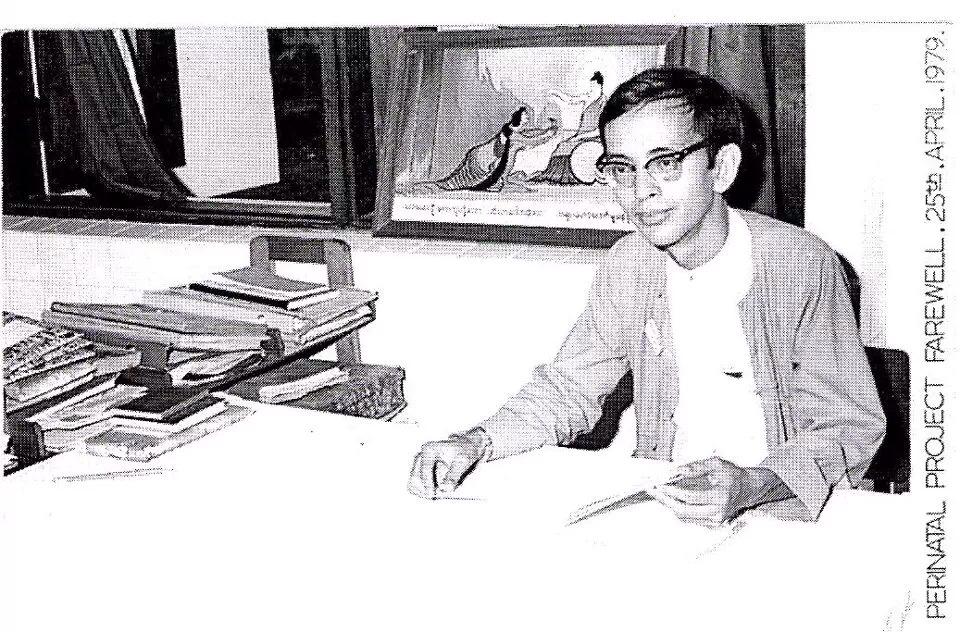
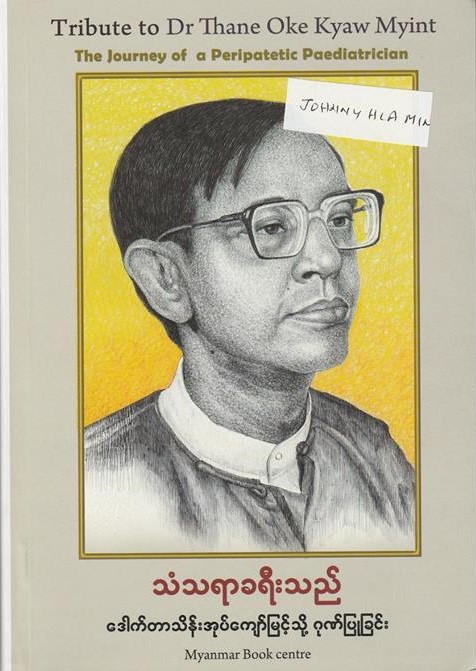
Dr. Thane Oke Kyaw Myint
TOKM 1TOKM 2
Top Paulian in his class, and stood 6th in the Matric exam.
Founded the group “Alumni of the Institute of Medicine in Myanmar (Overseas)”
Wrote about his mentors (Aba U Hla Myint, Dr. Tin U) and other trail blazers.
His former students published a book for his 70th birthday.
Dr. Min Lwin
Orthopedic Surgeon
Dr. Than Toe
Sports Medicine
Rehabilitation
Admin, RUBC
GBNF
Dr. Saw Naing (Henry)
Professor
GBNF
SPHS61
Dr. Kyaw Win (Robin Ban)
Stood 2nd in Burma
Moved to Australia
SPHS63
Dr. Khin Maung U
SPHS
Stood 1st in Burma. First student to have almost perfect score in Maths, Chemistry and Physics with 299 marks out of the possible 300. Grapevine says that Chief Examiner of Physics reluctantly took back a mark.
Retired from FDA
Sharing KMU Medical Reports
Scholarship Winners
Dr. Myo San (Freddie)
Stood 3rd in Burma
Early retirement as Surgeon
GBNF
Dr. Nyunt Wai (Victor)
Stood 4th in Burma
Retired as Professor of Physiology
Taught at IM & Malaysia
Published “50 Kauk Kyaung Kabyars”
Dr. Thein Wai
Stood 5th in Burma
Moved to USA after graduation
Dr. Aung Kyaw Zaw (Johnny Mg Mg)
Stood 9th in Burma
Army Doctor / Cardiologist
Dr. Khin Maung Zaw (Frank Gale)
Stood 17th in Burma
Retired Medical Doctor / Examiner / Registrar (in UK)
SPHS64
Maurice & Aung Win
Dr. Aung Win Chiong
Had second highest “raw” score behind Dr. Cherry Hlaing & Dr. Lyn Aung Thet.
Had perfect ILA score & was admitted to IM(2) as Roll Number One.
Now retired
Dr. Min Lwin (Maurice)
Admitted to IM(2) as Roll Number Two
Surgeon (with Practice in UK and Myanmar)
SPHS65
Paulian Doctors
Dr. Yi Thway (Edwin)
Fifth highest marks
Admitted to IM(1) as Roll Number (1)
Passed away in UK
Spouse : Kyi Kyi Hla (BDS)
Dr. Paing Soe (Freddie)
Had same marks as Dr. Yi Thway.
Admitted to IM(1) as Roll Number (2)
Medical Research
Thanks to TOKM (Dr. Thane Oke Kyaw Myint) and VNW (Dr. Victor Nyunt Wai) for their input and feedback.
Dr. Mya Tu
Founded Burma Medical Research Institute (BMRI). BMRI later became Directorate of Medical Research (DMR). DMR had branches in Upper and Lower Burma.
Served as Director General.
Was a physiologist.
He and his spouse compiled a directory of medical professionals in Burma.
Passed away at the age of 91 in Australia.
Dr. Thein Htut & Dr. Thane Oke Kyaw Myint gave eulogies at Saya’s service.
Dr. Aung Than Ba Tu
Fondly known as ATBT
Succeeded Dr. Mya Tu.
Requested UCC to give lectures on computing at BMRI. I was a Guest Lecturer.
In his 90s, he is still active, giving talks and participating in the editorial team of a certain journal.
Dr. Khin Maung Tin
MS of the Rangoon University Sanatorium.
Succeeded Dr. ATBT.
Specialized in liver diseases
Passed away the earliest (heard it was a heart attack)
Survived by Dr Daw Htay Kyi, a TB specialist.
Dr. May May Yi
Met Sayama at the Inlay Luyechun camp in the summer of 1965.
Physiologist
Professor of Physiology at the Institute of Medicine.
Became DG at BMRI.
GBNF
Dr. Than Shwe
Microbiologist
After retirement, he moved to USA.
He stays active by guiding high school students for their SAT tests.
Dr. Paing Soe
Matriculated from St. Paul’s High School in 1965.
Selected Luyechun.
DG of DMR.
Retired as Deputy Minister of Health.
Researchers
Dr. Thein Toe (GBNF)
Dr. Cho Nwe Oo
Dr. Khin Kyi Nyunt (GBNF)
Dr. Htay Htay (GBNF)
Dr. Khin Maung U
Dr. Kyaw Min (Retired as Acting DG)
Group photo : Young researchers (BMRI- DMR)
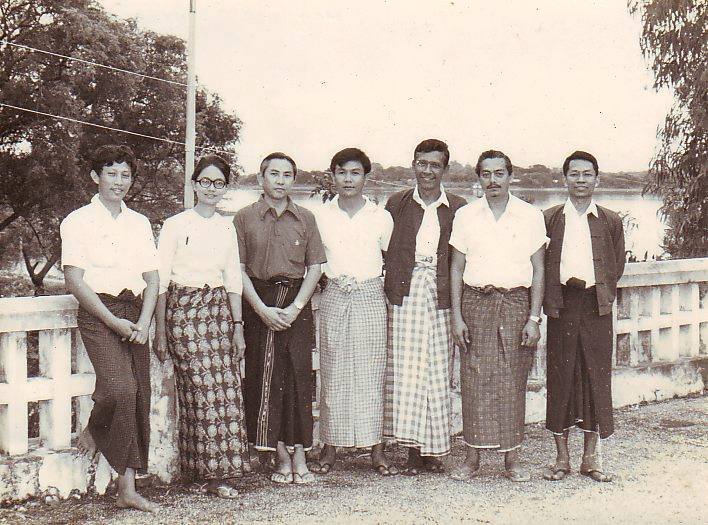
Medical Researchers
L to R: U Aung Myint, Dr Htay Htay, Saya (Prof Mya Tu), Dr Myo Thein, U Ba Aye (statistician), Dr Pe Thaung Myint (sports medicine), Dr Htin Kyaw (physiologist).