by Hla Min
Updated : Aug 2025
- Shwe YaDu Lann (Poem and Translation)
Tekkatho Moe War (Saya U Moe Aung) wrote a poem for the RIT Shwe YaDu (Golden Jubilee).
I translated the poem into English. - Encyclopedia of Asian American Folklore and Folklife (Article)
Nine of my articles were published in Volume One of the Encyclopedia. 23 Asian American Groups were featured in the three-volume Encyclopedia. - The (Hidden) Power of Kabyar (Poem and Translation)
Tekkatho Moe War (Saya U Moe Aung) wrote a poem for “Kabyar Nay” (Poem Day). I translated the poem into English. - To the Shwe Duo (Poem and Translation)
Tekkatho Moe War (Saya U Moe Aung) wrote a poem in memory of Saya U Tin Shwe (EP66) and Saya U Hla Shwe (T69), who passed away within a few months of each other. I translated the poem into English. - To ease Nostalgia / “Lwann Pyay Aung (Poem and Translation)
Saya U Nyunt Htay (Met73) composed an excellent poem for SPZP-2012. I translated the poem into English. - Names (Article)
I have presented several speeches on Names at “Toastmasters International”. I have also written articles on naming conventions, common names, pen names and meaning of names.
Shwe YaDu Lann
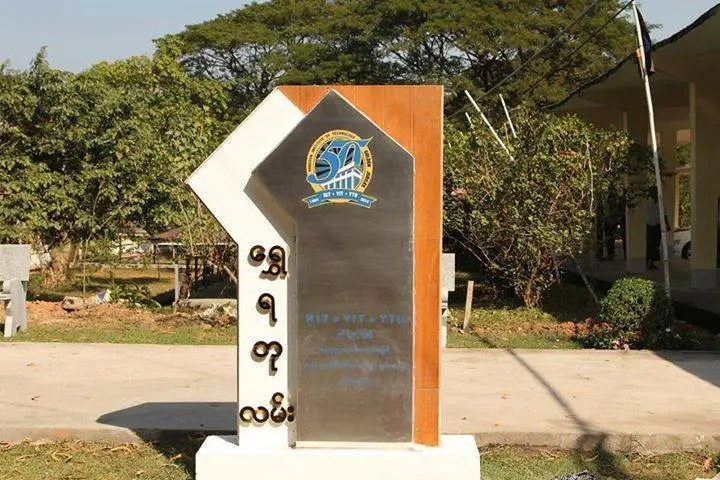
Translation by U Hla Min
Shwe YaDu Lann
Let it be rough [but it’s tough]. Flowers are blossoming again.
Fear not the summer
Care not the rain [drops]
or the thick fogs & darkness
or if winter’s not true to its form
Shwe YaDu Lann
Let it be rough. No gentle stream flowing
Fear not high winds
Care not dense clouds
Topsy turvy [come what may]
Can paddle upstream
With strong mind & conviction
Place where heroes [Thu Ye Kaungs] are produced.
Swel Daw Myaing Dann
Shwe YaDu Lann
is a start [of a journey]
To raise the Banner loftily
to the skies, to the Zenith
displaying our thitsar (vow of truth and integrity)
HLA MIN (Editor, Newsletter Updates, USA)
Encyclopedia of Asian American Folklore and Folklife
- Nine of my articles appear in the Encyclopedia of Asian American Folklore and Folklife (AAFF).
- The three-volume book was published by ABC-CLIO in 2011. At the beginning, the book was sold for $275.
- I received a book (for completing eight articles according to the agreement) and $10 (for the additional article).
- Burmese Americans are covered in Pages 127 to 178 of Volume One.
- The Editors decided to merge two of my articles with other authors.
- Unfortunately, an error introduced by my co-author. On page 150, he mentioned July 22 (instead of July 19) as Martyrs’ Day. The merged article unfortunately was not sent to me for review. The Editors promise to correct the error in subsequent editions.
- Folk tales (as told by Saya Dr. Htin Aung and Ludu U Hla) are part of the Folklore.
- To read my articles on-line, you should go to “Google Books” and then search “Hla Min“.

The (Hidden) Power of Kabyar
Translation by U Hla Min
Kabyar is animate
But [it’s life is] not just a [fleeting] morn
Kabyar is a weapon
But not for destroying the world
Kabyar is key
For liberation and independence
But not devoid of principles [and morals]
Kabyar has power
Hidden but efficient & effective
Like sharp-pointed spear-head
Can thrust into [the heart of] a power-maniac
Cause trembling, shivering, throbbing & anguished pain
Poem in Burmese by Tekkatho Moe War (Saya U Moe Aung)
To the Shwe Duo
Translation
by U Hla Min
in memory of “Shwe Duo” : Saya U Tin Shwe (EP66) and Saya U Hla Shwe (T69)
“TO THE SHWE DUO”
by Tekkatho Moe War
SHWE duo
Blossom in unison
Disappear together
Free from complaint
Even with thin breath
Showed mark [of courage and wisdom]
Never wavered …
Pressed by burden
At the awaited turn [of journey’s end]
Body — inheritance [from previous lives]
Succumbs [to failing health]
Yet, “Wei-nyin” is fresh, alive and hovering.
To ease Nostalgia
Poem by U Nyunt Htay

Saya U Nyunt Htay (Met73) is a distinguished poet. He is Chief Editor and/or Publisher of Myanmar Mudita. He composed an excellent poem for SPZP-2012.
Translation by U Hla Min
One cannot forget the history and sweet memories of one’s alma mater, and one feels that most alumni — near and far — still yearn for the good old days.
In front of A Hall, B Hall [C, D, E, F, Halls] friends would tease and prank, yet do no harm. They do not care to find weaknesses in others, and will remain loyal friends. In front of Uttra (North or G) Hall — usually in the evenings — aspiring Ah Nu Pyinnya Shins serenade with love songs aided by guitars, harmonicas and violins.
Hear the bells in Building One, Two [Three] ringing once more. Many rush to the classrooms [some spend time on the corridors to enjoy the belles go by]. At night, some “count the numbers” (perhaps playing cards, or actually studying and doing home work).
RIT students do not feel outnumbered by RASU [with Burma selected] or Eco at any kind of sports [soccer, volleyball, basketball, swimming, water polo …]. RIT has staunch loud-voiced fans [like “Ajala” Moe Hein].
Assembly Hall hosted not just presentations and debates. It also is the home of Geeta See Sar [Musical Evening Extravaganza] with outstanding musicians, composers, vocalists and dancers. Swel Daw Yeik Troupe and Ah Nyeint, Pyazat, … melt our hearts.
Cartoon Box [former telephone kiosk] nurtured many cartoonists to share their humor, satire and ideas with the readers searching for Sacca (Truth).
Aw Bar Lann (precious memories to the graduates attending the graduation ceremony) is known not also for applause but also for the tongue-in-cheek comments and unruly claps and shouts to the unwary treading the Lann.
“Nwe Aye”, “Aung Theik Pan”, “Kan Thar Ya”, “U Chit” …
Memories from those who spend six years or more.
As the examinations near, most try their best [by borrowing books and notes from their friends, by attending crash sessions] to pass the hurdle. On the desks are notes [not neat and tidy] scattered all over. Times and systems change, but most RITians are able to decide the essentials (“Ah Hnit”) from the inessentials (“Ah Kar”).
Swel Daw Yeik
One can never forget the history and [priceless] memories.
Names
Overview
- Before the advent of MRI and Ultra Sound, some people prepare a set of 14 names for the forthcoming : 7 names for a boy (one for each day of the week) and 7 names for a girl (ditto).
- Some prefer to have a formal naming ceremony a specified number of days after the birth of a child.
- Names may have meaning and/or a historical background.
- For example, “Pyke Tin” means “left on a net”. The mother of Saya Dr. Pyke Tin presumably had problems (e.g. miscarriage), so she performed a “Yadana” to catch Saya with a net.
- I have a cousin aunt named “Pyke Mi” meaning “caught on a net”.
- Ko Ko, Nyi Nyi, Maung Maung, Maung Gyi, Maung Lay, Ma Gyi, Ma Nge are some names based on the order of birth.
- There may be name changes. For example, Bogyoke Aung San was named “Htain Lin”, but he changed him name to “Aung San” to rhyme with “Aung Than” (his elder brother).
- A new name is given in some social (e.g. Coronation of a King or Queen) and religious (e.g. Higher Ordination) events.
Burma/Myanmar has a sizable number of race and ethnicity.
The following are some prefixes of my sayas, sayamas and friends.
- Sao (e.g. Saya Sao Kan Gyi, descendant of Keng Tung Sawbwa)
- Sai (e.g. Sai Kyaw Aye, broadcaster for the BBS Shan Language Program)
- Saw (e.g. Saw Edison, Karen, RIT Volleyball)
- Sa (e.g. Sa Maung Maung, Joint Treasurer, EE69er HCF)
- Duwa (e.g. Duwa Zau Lai, Myitkyina)
- Nan (e.g. Nan Khin Nwe, young and energetic fund raiser)
- Nang (e.g. Nang Khaming, RIT Track and Field)
- Naw (e.g. Naw Mu Mu Aye, Professor, Textile)
- Salai (e.g. Saya Salai Tun Than, Professor, Yezin)
In most countries, the Father’s lineage is used for the Family Name. Long ago, in some Matriarchal society, the Mother’s lineage is used for the Family Name.
- John Fitzgerald Kennedy (or John F. Kennedy) is the US President who proposed the Space Program to send Men to the Moon and bring them back safely to earth. His first name (or personal name) is John. His last name (or family name) is Kennedy. The middle name is Fitzgerald. The middle initial is F. Fitz means “son of”.
- President Harry Truman has no middle name. His middle initial is S.
- I have no middle name. So at one company, I was registered as Hla X Min (where X is a filler).
- My name has only six letters, but it has been misspelled and mispronounced in six (or more) ways.
Prefix
A name may have a prefix.
Prefixes for
- a male Burmese name include Maung, Ko, U, and Pho.
- a female Burmese name include Ma, Daw, and Phwa.
- a Burmese monk name include Ashin, Sayadaw, Venerable and U.
- Shan names include Sao, Sai, and Nan.
- Mon names include Mehm, Min, Nai, and Mi.
- Karen (Kayin) names include Saw, Sa, Pado, and Naw.
- Kachin names include Duwa.
- Chin names include Salai.
Old Burmese passports were issued with the prefix included. This created confusion when matching names from other documents (e.g. birth certificate).
Dr. U Win was called “Hey, U (pronounced as You)” by his friends, who did not realize that “U” (pronounced as Oo) is a prefix for a Burmese name.
Suffix
A name may have a suffix.
Suffixes include
- Sr. (Senior for the father)
- Jr. (Junior for one of the sons)
- Generation number, e.g. Bill Gates is named William Gates IV
- Esq. (Esquire, used earlier in Britain)
- Degree, e.g. Freddie Ba Hli, Sc.D.
- Fellowship or Membership
Monk names
Some monks names may have “abhivamsa” or “alankara” as suffixes.
Sayadaw U Silananda the prestigious monk examination (conducted in Mandalay) before the age of 27. So, he is often referred to as U Silanandabhivamsa.
There are several distinguished Sayadaws named Ashin Janakabhivamsa.
U Neimeinda and U Siri (Thiri) passed the “Lankara” religious examinations as novices. They may suffix their names with “alankara”.
Prefix for Monk Names
- Bhikkhu
- Ashin
- Baddhanta
- Sayadaw
- Upazin or Uzin
- U
- Thera
- Maha Thera
- Venerable (in English)
- Tipitaka Dara (one who completed “Vinaya”, “Sutta”, and “Abhidhamma” exams)
- Dwee Pitaka Dara (one who completed “Vinaya” and “Sutta” examinations)
Suffix for Monk Names
Monk names may be suffixed with one or more of the following:
- Lankara (one who had passed that dhamma exam as a novice)
- [A]bhivamsa (one who had passed the “Set kyar thi ha Dhammacariya” exam before the age of 26)
- Wun tha ka (one who stood first in the special examination)
- Pa hta ma gyaw (one who stood first in the Pa hta ma pyan exam)
- Thi ro ma ni (one who finished 9 “kyans” in a single year)
- Pali Paragu (one who completed the exam in Pali)
 HlaMin