Blog

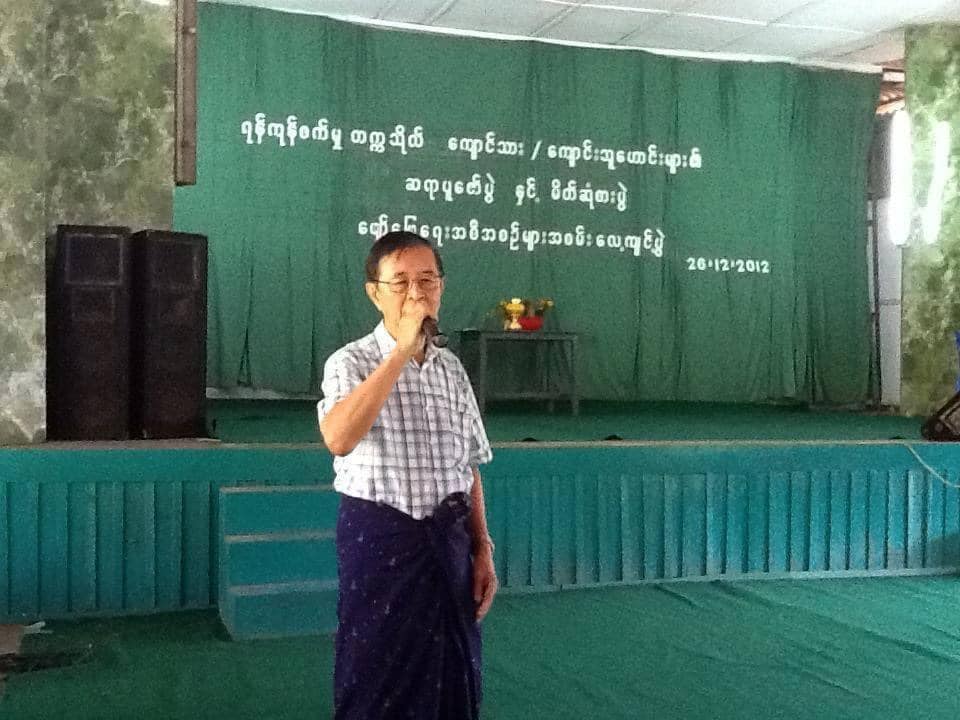
  • Dr. Aung Gyi’s Speech at SPZP-2000

    Dr. Aung Gyi’s Speech at SPZP-2000

    by Hla Min

    Updated : June 2025
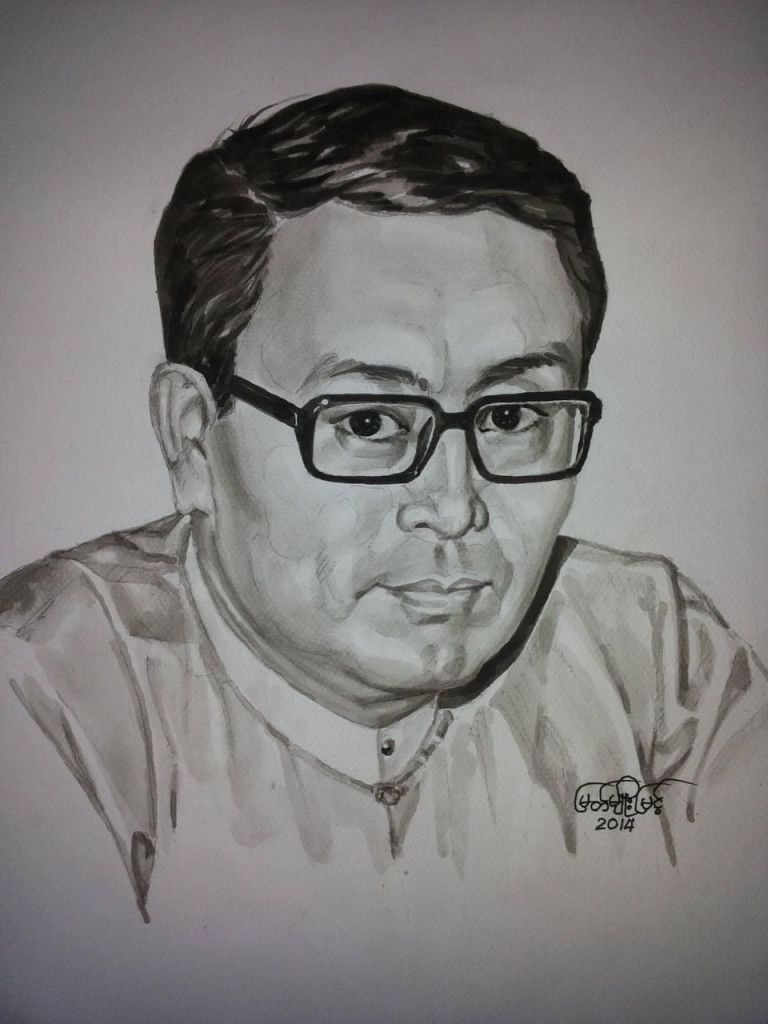
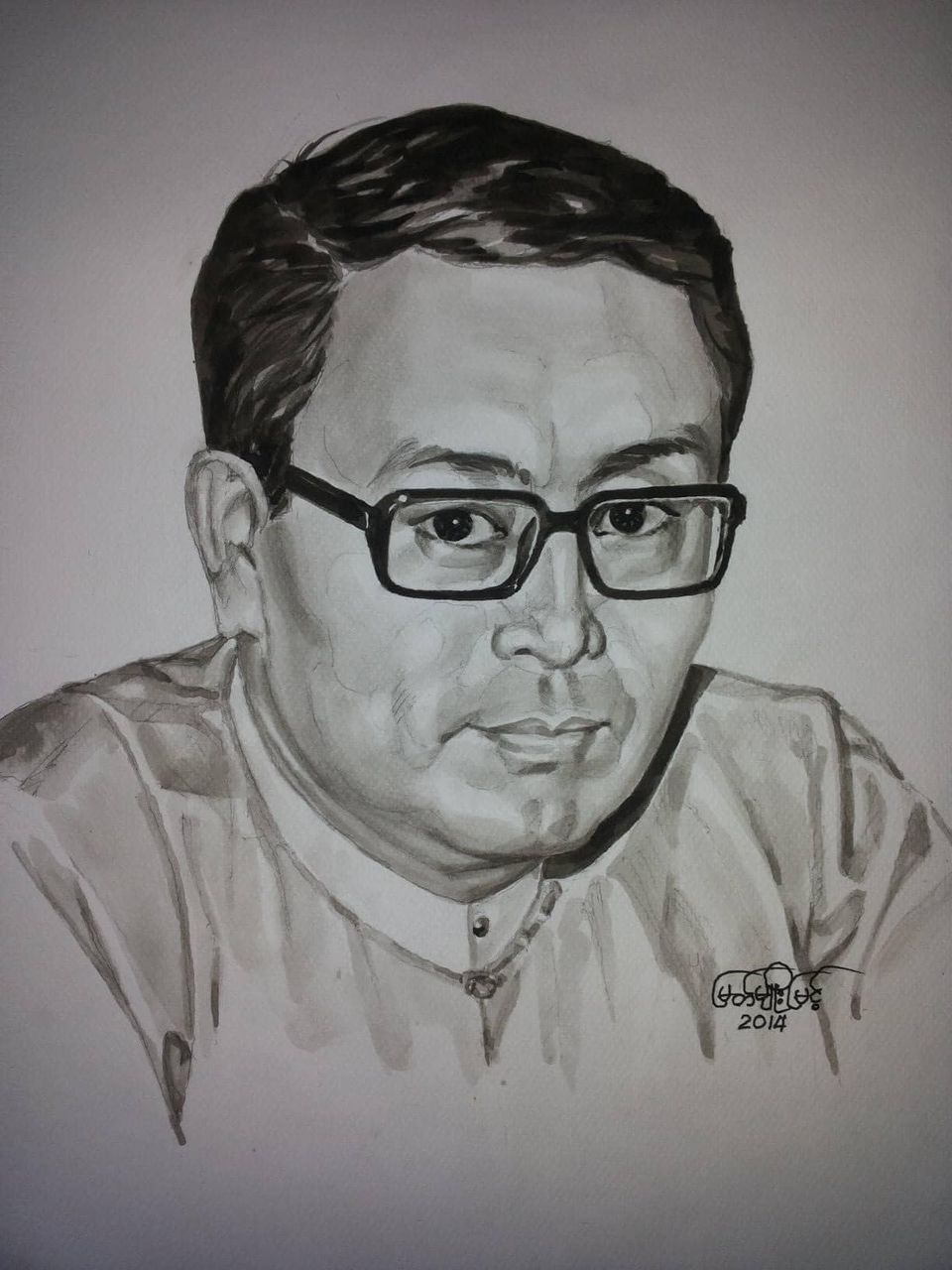
    Dr. Aung Gyi

    Keynote from SPZP-2000

    Mr. Chairman, my Sayas, my former colleagues, friends, RIT graduates, Ladies and Gentlemen,

    Before I begin to say anything, I would like to request you to take the word “RIT” as to stand not only for Rangoon Institute of Technology but also BOC College of Engineering and Faculty of Engineering, Rangoon University. I am using RIT only, just for convenience sake.

    Having said that, it is with a chestful of emotions that I am standing before you, trying to say a few words appropriate and befitting to this important and joyful occasion. My overwhelming emotion is, needless to say, happiness – happiness which results from seeing my Sayas, my friends, my former colleagues, and RIT graduates alive and well, after so many years. My happiness is also mingled with a certain amount of pride: pride arising from the knowledge that we have fond memories and a sense of belonging and attachment to the good old institution as well as to one another.

    We are fortunate that we could all gather here to exchange our life experiences, both good and bad, and to reminisce about our past when we were at RIT. While we are doing that, we all must have noticed that all of us have changed quite a bit since we last saw one another, at least physically, some more so than other. We all now have a few gray and also less hair, we have a few wrinkles on our face; maybe we also lost a few teeth and cannot see or hear as well as we did before. Some of us also lost the memory a bit and become forgetful about lots of things such as forgetting names for example. This, as we all know, is life and nature of things. Everything changes and nothing is permanent. Bur fortunately we still have our values. Our values such as respect and gratitude for the elders and teachers, caring of our respective children and family members, helping our friends, and attachment, and gratitude to the institution which nurtured us to meet the challenges of life, are still with us. They have not changed. This Saya Pu Zaw Pwe and reunion is a testimony to those values.

    I must now pause and thank and congratulate the Organizing Committee for their untiring and selfless efforts to make this event possible and successful. This Saya Pu Zaw Pwe and RIT Alumni reunion is, as far as I know, once-in-a-life-time event. As far as I am concerned it is already a resounding success with the cooperation and great enthusiasm that I have seen. I hope this will be the beginning and not the last of our get-togethers. When my wife and I paid visits to Myanmar in 1996, 1997 and 1999 we had mini get-togethers with RIT Alumni. When I was here a few years ago we also got together with a few RIT Alumni. I understood that Saya U Aung Khin also had one mini get-together here some years ago. But these get-togethers were not on a grand scale as the one that we are having here now. However the spirit of camaraderie and friendliness among RIT Alumni mini get-togethers, was the same as the one that we find here now. If you look around you, you will find that all of us came here from different parts of the world, indicating the great attachment and respect that we all have for our old institution and also for one another.

    While I was preparing for this speech, fond memories of the years that I spent as a student, as a teacher and later as Rector at RIT came flashing through my mind. Without going into details, I remember that all my teachers, including Saya Num Kock and Saya U Ba Toke who are here with us, were good inspiring teachers with kind hearts. When I became a teacher and later the Rector at RIT, I noticed that my colleagues were good and dedicated people who tried their best to teach what they had learnt from good Universities and Institutions abroad.

    They made conscious efforts to raise the level of education at RIT so much that the students were fully occupied with classes, studies, projects, and homework. I have to mention here that my Sayas and my former colleagues were, and still are honest, compassionate, gentle and kind people. Within this context I would now like to take this opportunity to offer my humble apologies to my Sayas and colleagues for the wrong things that I may have done or said which might have hurt them in any way in the past.

    As for the students, I remember that they were good, intelligent, and energetic students in general. Since I was also involved in extracurricular activities of the students, I had more interaction and gained more understanding of their needs and feelings. Like most of the other teachers I tried my best to be helpful to them not only in their studies but also in any other problems that they needed my help. Because of the compassion that I had shown for them they became more communicative, and listened to what I had to say most of the time. Like a breath of fresh air, the first batch of female engineering students were among us, I believe in 1958. So far as I remember they did as well as or some even better than the male students in their studies. I remember that as a teacher I felt very good and satisfied whenever some students did well in their studies or did well in their careers after they left school. These are fond memories that I still have with me about the students at RIT.

    As you probably know, I left RIT and Myanmar in 1977 to join UNESCO. I then migrated to Canada to join International Development Research Centre (IRDC) in 1981. For your information, IRDC is a Canadian Agency which funds research projects for development in the developing countries. I retired from IRDC in 1997. Looking back to the past, I must say that I spent the best years of my life at RIT, challenging and troubling at times, but on the whole happy and satisfied with the job that I was doing.

    Now please let me take a few minutes of your time to share with you my thoughts, which I believe are some important elements of life. You might not agree with me to what I am going to say. At least, in that case, you might take them as food for your thoughts. If I sound like lecturing to you now, you must remember that the habit of a former teacher dies hard.
    When I was young and immature. I had great admiration for people with high I.Q. (Intelligence Quotient). I also tended to think in those days that I was quite intelligent. After going through life experiences with ups and downs I became to realize that high Emotional Quotient (E.Q.) or emotional mastery is more important in life than high I.Q., to cope with adversities, disappointments, failures and sometimes even tragedies. No one that I know of, escapes the negative impacts of life in one form or another. If you have emotional mastery you can deal with and overcome these negative impacts and still get ahead in life and be relatively happy. One thing that can help us is to have optimism, hope and courage in life and to minimize the negative thoughts and creeping pessimism. It will be wrong to classify anything in life in opposites either in black or white. One can neither be fully optimistic nor fully pessimistic all the time. There is a gray area which is neither black nor white, and so long as the dominant part of this gray area is optimism, things will turn alright in the end. I read in one of the books long time ago that the Chinese word for “crisis” denotes both risk and chance (opportunity). A pessimistic person would tend to look at the crisis as the big risk and will despair and do nothing, whereas an optimistic person will look at it as a challenge and opportunity and will do something with courage and determination and overcome the crisis. He or she might fail in doing something. But without failures one will not know success. In short, although we will not be able to master the circumstances, and situations in life, we sure can try to master our thoughts and emotions to meet the challenges of life. Here are the spiritual sides of us or our respective religions might be helpful.

    Now that I am getting old and getting inflicted with aches and pains here and there, especially when I get up in the morning, I begin to realize that the important part of my life is to keep myself in good health. There are lots of books and doctors telling us how to keep ourselves in good health. The simple gist of the whole message is to have some form of physical exercise or activity to keep our weights down; and to eat nutritious food and avoid or cut down fatty, sweet, salty and high cholesterol food which are harmful to our health. As you know, it is easier said than done. What I know is we do need to make conscious efforts to keep ourselves in good health by taking physical exercises and by eating nutritious and non-fattening food. One thing is for sure, if we are not in food health we will not be able to enjoy our success or good things in life, and we will be, relatively speaking, unhappy.

    When I was young, my grandmother used to tell me to get ahead in life I would need luck, brain, and industriousness. She was right of course. But one important element in life that she missed telling me was to develop and have good social relationships will all the people that I would come across in life, including family members. No one can live and get ahead in life alone. Each one of us at some stages of our respective lives needed and got help from someone to move on with our lives. From my personal experience, I noted that one must be non-egoistic, not too aggressive, be polite, be helpful, and tries to understand and respect other person’s points of view, needs and feeling, to develop good social relationships. Here I would like to add that each of us can judge who is good, who is bad, who is untrustworthy, etc. and avoid bad people and associate with good people to the extent that each of us can.

    Each one of us had twenty four hours a day and the one who can budget and manage his/her time day by day, week by week, month by month, year by year according to his priorities and short term and long term goals will get ahead in life better. One should use the time and even manipulate it and not waste it to achieve one’s short term and long term goals. One must also be patient if the short term and long term goals are not achieved in budgeted time. So long as the time is used and not wasted, one will reach his/her goads in due course.

    I hope everyone present here will agree with me the importance of financial management at the personal or family level as well as at the business level. At the business level there are of course financial plans and budgets for the present as well as for the future. One should likewise have financial plans and budgets at personal/family level for the present and future, to spend, save and invest within one’s available means. As you know money is neutral. If you are wise, money will treat you well; and if you are foolish it will not stay with you for long. Like time, one’s hard-earned money should be used and not wasted.

    The last thing that I would like to point out to you is the danger of complacency. If you own a business and if you are complacent after a certain level of success, your business will suffer, simply because you fail to keep up with the changes in the market conditions and because of the intense competition one faces nowadays. Likewise at the personal level we should be wary of complacency. We should try not to be complacent by improving ourselves and keeping ourselves busy mentally and physically. Life thrives on activity and activity is the proof of our existence. No one is perfect and there is always something that each of us can improve upon. If we do that, at least we will not be bored, and may achieve some fulfillment in life.

    With these remarks I now conclude my speech. May you all be successful and happy in life. May you have a pleasant stay in SF.

    ______________________________________________________________________________

    Memories
    __________________________________________________

    After attending the 2nd year engineering class from June 1952 to September 1952, I went straight to MIT on a state scholarship to continue my studies . Saya U Min Wun and I went together to MIT and joined the academic session, starting from September 1952. We met Dr Freddie Ba Hli at MIT, who was already studying for his Ph.D in electronics or electrical engineering. He was one of the nicest and helpful persons that I have ever met in my life. He gave us briefings and guidance so that we were able to assimilate into the American education system and American way of life without any difficulty He also helped us with our home works when we had some difficulties in the beginning. I am forever grateful to him for his kind help. I am sure U Min Wun feels the same. Saya U Khin Aung Kyi, Saya U Sein Hlaing, U Percy Lao, U Win Htein, U Kyaw Min, Robin Aw, U Kyaw Thein, U Aung Kywe, U Aung Myint and U Sein Hla came to MIT for further studies at a later date. U Percy Lao later became Rangoon City Engineer (water and sanitation), U Win Htein who is an architect became a Rangoon City Building Engineer, and the late U Kyaw Min became a free lance architect [and also taught part-time at the Architecture department for some time]. All these three professionals taught some time at RIT. I do not know what happened to Robin Aw. The late U Kyaw Thein was an engineer at the Construction Corporation and later became a lecturer at the Civil Engineering Department at RIT. U Aung Kywe was a Director (water and sanitation) at the Construction Corporation. U Aung Myint became the Chief Architect at the Construction Corporation. U Sein Hla was an engineer at the Construction Corporation and later became the Registrar at RIT under Rector U Yone Moe. Later more batches of Burmese students came to MIT when I was no longer there. I am describing all these things to point out the fact that the standard of engineering education in Burma at that time was quite good. None of us had to go through the entrance examination to get into MIT. They trusted our grades and our education standard. Maybe the visiting Professor Horwood from MIT was quite impressed with the Faculty of Engineering and put a good word for us to the MIT admission authorities.

    I will not go into details of the activities of all the various students’ associations, societies and clubs, as there were so many of them. But I would like to mention briefly about the hostel life, that I had experienced at that time. Every hostel had what we called a social and reading club . There was an adequate room reserved for this club at the ground floor of the hostel. In general, newspapers, popular magazines, a chess board, a carom board and a table tennis were provided so that the hostel students could read, play chess, play carom board, and play table tennis and socialize to get to know each other well. Even without the social and reading club, all the hostel students ended up knowing each other well sooner or later, as they met each other almost everyday at the hostel and at the dining hall. The hostel students were in general well behaved. I hardly saw the Warden or Hall Tutors at Ava Hall and Prome Hall, as there were very few student problems which needed attention of the Warden or Hall Tutors.

    Based upon my experience, I feel that these extra-curricular activities and hostel life gave the opportunities to the students to broaden the knowledge of the different parts of Myanmar; and they also created a better understanding of the different culture, food, habit, dresses, dialects etc of the country. Most of the students developed life-long friendships through these activities which contributed to well-beings of these students throughout their lives. Sport activities also taught the students about hard work, cooperation, team work, competition, winning and losing. The extra-curricular activities also triggered, developed and enhanced the hidden talents of some of the students. These activities therefore formed part of the University education of the students, in addition to the education that they received from the classrooms. Another benefit of these activities was the bonding and a better understanding, which developed between the students and the teachers who were involved in these activities.

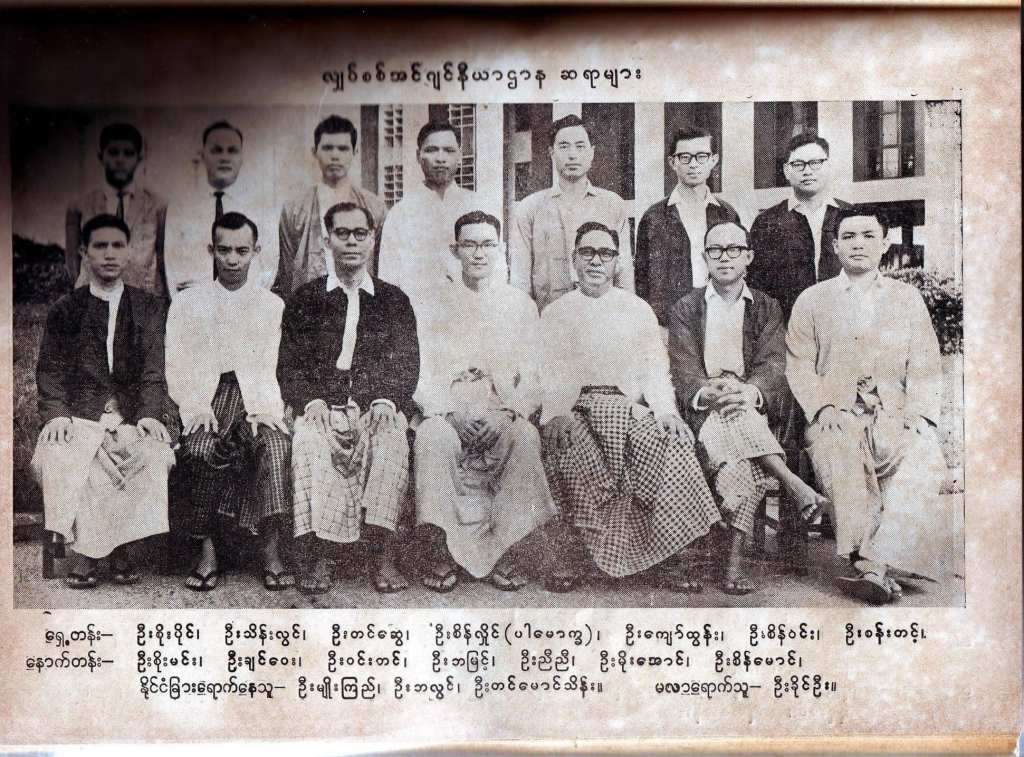
    After getting my Bachelor degree in Cvil Engineering in 1955 and my Master degree in Civil Engineering in 1956 from MIT, I worked for Engineering Companies for a year, which involved both design and fieldwork in engineering construction projects. I then came back to Rangoon in 1957 to join the Civil Engineering Department as an Assistant Lecturer. I was promoted to become a Lecturer in 1958 and became also more or less Head of the Civil Engineering Department. The policy in place at the University of Rangoon under the Ministry of Education at that time stated that a teacher/ any person could become a lecturer / professor only if he/ she had a post graduate degree. Sayagyi U Ba Hli was the Professor of Civil Engineering and Dean of the Faculty at the same time. U Aung Khin was Head of the Mechanical Engineering Department, U Sein Hlaing was Head of the Electrical Engineering Department, U Khin Aung Kyi was Head of the Chemical Engineering Department, U Soon Sein was Head of the Mining Engineering Department, U Thit was Head of the Metallurgy Department, and U Maung Maung Than was Head of the Textile Engineering Department. I think Mr Johnson was Head of the Architecture Department. I do not remember who was the Workshop Superintendent at that time. We were quite happy as we had new facilities near the Prome road in addition to the B.O.C College of Engineering building. These new facilities comprised of a tall administrative building (with offices, conference/meeting rooms, library), classrooms, lecture theaters, laboratories , offices for the teaching staff and a small assembly place under the copper dome roof in the corner of the campus. The dome roof looked like a turtle back, and pretty soon this new campus became known as “turtle dome /leik khone” campus. After our arrival from USA, UK etc, the foreign teachers under contract were let go, as we gradually replaced them, except for a few teachers from UK or USA. I could recall Prof. Neale? in Electrical Engineering Department, Mr Redpath and Mr Skelton in Mechanical Engineering Department and Mr Johnson and Mr Nagler in Architecture Department.

    As a young teacher I was surprised and pleased to see a few pioneering female engineering students (not more than ten) at the Leik Khone campus. They and their parents overcame the social uneasiness and they decided to study engineering/architecture to become lady engineers /architects. I do not know exactly when they first joined the 1st year engineering class; but It was one of the important turning points in the history of engineering education.

    As young teachers, most of us were struggling to learn how to teach effectively at the beginning. I noticed that we were teaching about 15 to 20 hours per week which included lectures, laboratory and drawing classes. The contact hours of learning for the students remained the same as the time when I was an engineering student i.e. about 30 hours per week. The passing grade for the students also remained the same. i.e. 40% for each subject and 50% average for all the subjects combined. The medium of teaching was still in English. The laboratory and workshop facilities were quite good and adequate for the student population that we had. But the library looked quite small when I compared it with the library that they had in MIT, although it had a few good engineering books and journals. I felt that it needed a lot of investment to become a top notch engineering library.

    It was with enthusiasm and hope that most of us were busy trying to build up our respective departments and trying to improve the engineering education in general. While we were busy, Professor and Dean U Ba Hli retired some time around 1961, and in place of U Ba Hli we had a succession of temporary Deans, Professor of Chemistry U Po Tha, Professor of Geology Dr Tha Hla, and Professor of Physics Dr Maung Maung Kha for about 6 months. The Faculty of Engineering also had to move to a new campus in Gyogone in 1961. Before our relocation to Gyogone, the Faculty of Engineering was one of the Faculties of the University of Rangoon. The academic and administrative related policy decisions were made by the Senate and Administrative Council of the University of Rangoon respectively so as to maintain and improve the standard of education of all its Faculties, including the Faculty of Engineering.

    As you all know, Gyogone campus was built with the aid of Russia; and I understood that the Government of Burma paid back the cost in rice. I do not know whether it was true or not. In any case it was and still is an impressive looking campus. The buildings accommodated classrooms, laboratories and workshop, big assembly hall with a movie projector, library, offices for the administrative and teaching staff,and student hostels. There were also houses for all the staff, dining and kitchen facilities, small medical clinic, and open space for sport activities. All the buildings, houses etc occupied and still occupy a large area in a compound.

  • Dr. Aung Gyi’s Contributions

    Dr. Aung Gyi’s Contributions

    by Hla Min

    Updated : June 2025

    Dr. Aung Gyi

    Saya’s Suggestions

    Ko Hla Min,

    I read through your updates  shown in hlamin.com and my suggestions are given below.

    I feel that your book should reflect the love of RIT students for their alma mater, the respect and gratitude shown by RIT students towards their respective teachers, the attachment, bond and friendship among RIT students; and the love for their motherland by RIT students. In short, it should reflect what we call “RIT spirit”. You can base the preparation of the book, beginning from the establishment of Faculty of Engineering, Rangoon University, on your updates and other relevant sources. The word RIT  includes all different names of Engineering Institutions in Myanmar, past and present.

    Having said all of the above, the following headings come to my mind for your proposed book:

    1. SPZPs/Reunions  involving all  disciplines  which had taken place in Myanmar and abroad.
    2. Establishment of alumni associations abroad and in Myanmar to help RIT and motherland.
    3. Establishment of Swe Daw Yeik Foundation.
    4. Establishment of healthcare fund for RIT teachers in Myanmar.
    5. Fund drive and contributions to upgrade the RIT/YTU library.
    6. Various activities/ mini-reunions / get-togethers  among groups of RIT students/teachers which reflect the life and also bond among RIT students/teachers, established in the past ,during RIT days.
    7. Other interesting episodes related to RIT.

    The above gives you a few thoughts I have for your book. I would like to recommend that you  also get suggestions from others for your book.

    Good luck and best wishes.
    Aung Gyi

    Dr. Aung Gyi

    Memories

    After attending the 2nd year engineering class from June 1952 to September 1952, I went straight to MIT on a state scholarship to continue my studies . Saya U Min Wun and I went together to MIT and joined the academic session, starting from September 1952. We met Dr Freddie Ba Hli at MIT, who was already studying for his Ph.D in electronics or electrical engineering. He was one of the nicest and helpful persons that I have ever met in my life. He gave us briefings and guidance so that we were able to assimilate into the American education system and American way of life without any difficulty He also helped us with our home works when we had some difficulties in the beginning. I am forever grateful to him for his kind help. I am sure U Min Wun feels the same. Saya U Khin Aung Kyi, Saya U Sein Hlaing, U Percy Lao, U Win Htein, U Kyaw Min, Robin Aw, U Kyaw Thein, U Aung Kywe, U Aung Myint and U Sein Hla came to MIT for further studies at a later date. U Percy Lao later became Rangoon City Engineer (water and sanitation), U Win Htein who is an architect became a Rangoon City Building Engineer, and the late U Kyaw Min became a free lance architect [and also taught part-time at the Architecture department for some time]. All these three professionals taught some time at RIT. I do not know what happened to Robin Aw. The late U Kyaw Thein was an engineer at the Construction Corporation and later became a lecturer at the Civil Engineering Department at RIT. U Aung Kywe was a Director (water and sanitation) at the Construction Corporation. U Aung Myint became the Chief Architect at the Construction Corporation. U Sein Hla was an engineer at the Construction Corporation and later became the Registrar at RIT under Rector U Yone Moe. Later more batches of Burmese students came to MIT when I was no longer there. I am describing all these things to point out the fact that the standard of engineering education in Burma at that time was quite good. None of us had to go through the entrance examination to get into MIT. They trusted our grades and our education standard. Maybe the visiting Professor Horwood from MIT was quite impressed with the Faculty of Engineering and put a good word for us to the MIT admission authorities.

    I will not go into details of the activities of all the various students’ associations, societies and clubs, as there were so many of them. But I would like to mention briefly about the hostel life, that I had experienced at that time. Every hostel had what we called a social and reading club . There was an adequate room reserved for this club at the ground floor of the hostel. In general, newspapers, popular magazines, a chess board, a carom board and a table tennis were provided so that the hostel students could read, play chess, play carom board, and play table tennis and socialize to get to know each other well. Even without the social and reading club, all the hostel students ended up knowing each other well sooner or later, as they met each other almost everyday at the hostel and at the dining hall. The hostel students were in general well behaved. I hardly saw the Warden or Hall Tutors at Ava Hall and Prome Hall, as there were very few student problems which needed attention of the Warden or Hall Tutors.

    Based upon my experience, I feel that these extra-curricular activities and hostel life gave the opportunities to the students to broaden the knowledge of the different parts of Myanmar; and they also created a better understanding of the different culture, food, habit, dresses, dialects etc of the country. Most of the students developed life-long friendships through these activities which contributed to well-beings of these students throughout their lives. Sport activities also taught the students about hard work, cooperation, team work, competition, winning and losing. The extra-curricular activities also triggered, developed and enhanced the hidden talents of some of the students. These activities therefore formed part of the University education of the students, in addition to the education that they received from the classrooms. Another benefit of these activities was the bonding and a better understanding, which developed between the students and the teachers who were involved in these activities.

    After getting my Bachelor degree in Cvil Engineering in 1955 and my Master degree in Civil Engineering in 1956 from MIT, I worked for Engineering Companies for a year, which involved both design and fieldwork in engineering construction projects. I then came back to Rangoon in 1957 to join the Civil Engineering Department as an Assistant Lecturer. I was promoted to become a Lecturer in 1958 and became also more or less Head of the Civil Engineering Department. The policy in place at the University of Rangoon under the Ministry of Education at that time stated that a teacher/ any person could become a lecturer / professor only if he/ she had a post graduate degree. Sayagyi U Ba Hli was the Professor of Civil Engineering and Dean of the Faculty at the same time. U Aung Khin was Head of the Mechanical Engineering Department, U Sein Hlaing was Head of the Electrical Engineering Department, U Khin Aung Kyi was Head of the Chemical Engineering Department, U Soon Sein was Head of the Mining Engineering Department, U Thit was Head of the Metallurgy Department, and U Maung Maung Than was Head of the Textile Engineering Department. I think Mr Johnson was Head of the Architecture Department. I do not remember who was the Workshop Superintendent at that time. We were quite happy as we had new facilities near the Prome road in addition to the B.O.C College of Engineering building. These new facilities comprised of a tall administrative building (with offices, conference/meeting rooms, library), classrooms, lecture theaters, laboratories , offices for the teaching staff and a small assembly place under the copper dome roof in the corner of the campus. The dome roof looked like a turtle back, and pretty soon this new campus became known as “turtle dome /leik khone” campus. After our arrival from USA, UK etc, the foreign teachers under contract were let go, as we gradually replaced them, except for a few teachers from UK or USA. I could recall Prof. Neale? in Electrical Engineering Department, Mr Redpath and Mr Skelton in Mechanical Engineering Department and Mr Johnson and Mr Nagler in Architecture Department.

    As a young teacher I was surprised and pleased to see a few pioneering female engineering students (not more than ten) at the Leik Khone campus. They and their parents overcame the social uneasiness and they decided to study engineering/architecture to become lady engineers /architects. I do not know exactly when they first joined the 1st year engineering class; but It was one of the important turning points in the history of engineering education.

    As young teachers, most of us were struggling to learn how to teach effectively at the beginning. I noticed that we were teaching about 15 to 20 hours per week which included lectures, laboratory and drawing classes. The contact hours of learning for the students remained the same as the time when I was an engineering student i.e. about 30 hours per week. The passing grade for the students also remained the same. i.e. 40% for each subject and 50% average for all the subjects combined. The medium of teaching was still in English. The laboratory and workshop facilities were quite good and adequate for the student population that we had. But the library looked quite small when I compared it with the library that they had in MIT, although it had a few good engineering books and journals. I felt that it needed a lot of investment to become a top notch engineering library.

    It was with enthusiasm and hope that most of us were busy trying to build up our respective departments and trying to improve the engineering education in general. While we were busy, Professor and Dean U Ba Hli retired some time around 1961, and in place of U Ba Hli we had a succession of temporary Deans, Professor of Chemistry U Po Tha, Professor of Geology Dr Tha Hla, and Professor of Physics Dr Maung Maung Kha for about 6 months. The Faculty of Engineering also had to move to a new campus in Gyogone in 1961. Before our relocation to Gyogone, the Faculty of Engineering was one of the Faculties of the University of Rangoon. The academic and administrative related policy decisions were made by the Senate and Administrative Council of the University of Rangoon respectively so as to maintain and improve the standard of education of all its Faculties, including the Faculty of Engineering.

    As you all know, Gyogone campus was built with the aid of Russia; and I understood that the Government of Burma paid back the cost in rice. I do not know whether it was true or not. In any case it was and still is an impressive looking campus. The buildings accommodated classrooms, laboratories and workshop, big assembly hall with a movie projector, library, offices for the administrative and teaching staff,and student hostels. There were also houses for all the staff, dining and kitchen facilities, small medical clinic, and open space for sport activities. All the buildings, houses etc occupied and still occupy a large area in a compound.

  • G (Names)

    • Gallant : Gallant Leong (Han Thein)
    • Gay : Gay Khin Maung Aye (Kyi Kyi Aye)

    George

    • George Ba Thaung (Maung Maung Win)
    • George Khin Maung (Khin Maung U)
    • George Hlaing Mya
    • George D. Smithers (George Htoon Pay)
    • George Nwe
    • George Tun (Win Maung)
    • Georgie : Georgie Ba Than (Kyaw Than)

    • German
    • Ghosh
    • Ginger
    • Ginny

    Glen

    • Glen Ba Thein (Zaw Mon)
    • Glen Tun Ngwe (Aung Ngwe Tun)

    • Gloria : Gloria Heng Shoon
    • Glory : Glory Maung (Khin Than Nu)
    • Gregory : Pope Gregory, Gregory Peck
    • Guinness : Alec Guinness, Guinness Beer, Guinness Book of World Records)
    • Gunn : Ben Gunn
    • Gunther
    • Guru
  • My name

    My name

    Hla Min (Lifelong Learner)

    Introduction

    I introduce myself to non-Burmese as follows:

    • My name is HLA MIN (လှမင်း)
    • Hla (လှ) means “handsome” and Min (မင်း) means “king”.

    Misspelled & Mispronounced

    My name has two words and six letters.

    It is interesting to note that my name has been misspelled and mispronounced in several ways.

    They include

    • HAL
      It is an American name. It is also the name of a rouge computer in science fiction. The letters precede those of IBM (International Business Machines) by a position.
    • HALAL
      It means “clean food” for Muslims.
    • LA
      It is a musical tone.
    • LAH
      It is Singlish (Singaporean English)
    • MINH
      It is a common name for Vietnamese.
    • MING
      It is a Chinese name (e.g. Ming Dynasty)

    Speeches on names

    I gave a series of speeches:

    • Meaning of names
    • Naming conventions
    • Names of people
    • Names of places
    • Names of companies

    At Toastmasters meetings, I asked the attendees if they know the meaning of their names. Several tried to Google their names.

    Remembering names

    One way to remember names is to register them with an association.

    Examples:

    • Stein means a rock. Einstein means “one rock”.
    • Peter means “the rock”. Variations include Bedr, Pedro and Peta.
    • Deep means “light” and “wisdom”. Deepavali (or Diwali) is the Festival of Lights.
      Deepak is an Indian name.
    • San is a prefix for male saints.
      San Francisco and San Jose are the Spanish names for St. Francis and St. Joseph.
    • Santa is a prefix for female saints. Examples include Santa Anna, Santa Barbara and Santa Clara.
    • Santa Cruz (Holy Cross) and Corpus Christi (Body of Christ) are names of cities in California and Texas.
    Hla Min
  • Moe (Names)

    Moe (Names)

    Moe Aung
    • Moe Aung (EE63) — Saya; RIT EE; Chaired SPZP-2002 & SPZP-2010; Pen name: “Tekkatho Moe War”; Laureate Poet, author, editor & publisher; See Posts
    • Moe Hein (“Ajala”, ChE69) — Represented RIT in Swimming & Water Polo; He made me “Tone Kyaw” when my name sake passed away
    • Moe Min — Zat Minthar; Vocalist
    • Moe Moe (Venus) — Sayama at MARB
    • Moe Myint (M76) — ex-TSC; Singapore Pon Chan Chan Group; Myanmar Karuna Ah Thinn
    • Moe Nyunt — “Lay Lone”; IV(D) Classmate at SPHS; Son of IP Mya Maung
    • Moe Thee Zun — Former student activist
    • Moe Wai — Magazine

    Names with Moe in middle or end

    • Aung Moe — RIT alumnus in Australia
    • Hla Moe — Health Secretary
    • Hlwan Moe — Vocalist
    • Soe Moe
    • Tin Moe (Ba Gyan) — Poet
    • Tin Moe We (Sweety) — UCC; UN Retiree; Hosted UCC gatherings at her apartment
  • San Lin (Names)

    San Lin (Names)

    by Hla Min

    Updated : June 2025

    San Lin

    • Signed Currency Notes of the Union Bank of Burma

    San Lin, Dr. (C62)

    Dr. San Lin (Center)
    • Taught part time at RIT Civil
    • Worked for EPC
    • Worked for UN projects in Thailand
    • Spouse : Dr. Thynn Thynn founded Sae Taw Win 2 Dhamma Center

    San Lin (C69)

    • Passed away on April 5, 2018
    • 69er GBNF #82
    San Lin (C69)

    San Lin (EC73)

    San Lin (EC73, Left)
    • aka Robert
    • Studied M.Sc (CS) at UCC
    • Worked for TI in Singapore
    • Moved to Texas, USA
    • Spouse : Daw Hla Myint (Marina, EC73)

    San Lin (M87)

    Maung Lu Pay (Right)
    • Founding member of NorCal RITAA
    • Author : Maung Lu Pay မောင်လူပေ
  • A (Names)

    A (Names)

    by Hla Min

    Updated : June 2025

    Aung

    • Aung
    • Aung Aung
    • Aung Aung Cho
    • Aung Aung Thein
    • Aung Ba
    • Aung Ban
    • Aung Bu
    • Aung Chan
    • Aung Chaw
    • Aung Chein
    • Aung Din
    • Aung Gyi — See Post
    • Aung Hla
    • Aung Jed
    • Aung Khin — See Post
    • Aung Khin Myint
    • Aung Kyaw
    • Aung Kyaw Min
    • Aung Kyaw Myint — See Post
    • Aung Kyaw Nyein
    • Aung Kyaw Nyunt
    • Aung Kyaw Win
    • Aung Kyee Myint
    • Aung Kyi
    • Aung Lin
    • Aung Lwin
    • Aung Min — See Post
    • Aung Min Gaung
    • Aung Moung — See Post
    • Aung Myaing
    • Aung Myin
    • Aung Myint
    • Aung Myint Maung
    • Aung Nyunt
    • Aung Pe
    • Aung Pe Nyunt
    • Aung San — See Post
    • Aung San Oo
    • Aung San Suu Kyi
    • Aung Sein
    • Aung Shein
    • Aung Shwe
    • Aung Sint
    • Aung Soe
    • Aung Swe
    • Aung Than
    • Aung Thin
    • Aung Tin
    • Aung Tin Oo
    • Aung Way
    • Aung Win
    • Aung Zaw — See Post
    • Aung Zaw Maung
    • Aung Zaw Myint
    • Aung Zay
    • Aung Zeya
    • Aung Zeyar Myint

    Aye

    • Aye
    • Aye Aung
    • Aye Aye
    • Aye Aye Khin
    • Aye Aye Kyaw Zin
    • Aye Aye Sein
    • Aye Aye Thein
    • Aye Aye Thin
    • Aye Chan May
    • Aye Kyaw
    • Aye Lwin
    • Aye Maung
    • Aye Maung Han
    • Aye Maung Than
    • Aye May
    • Aye Min
    • Aung Min — See Post
    • Aye Nu
    • Aye Nyein
    • Aye Nyein Oo
    • Aye Nyunt Kyi
    • Aye Pe
    • Aye San
    • Aye Saung
    • Aye Sein
    • Aye Than
    • Aye Thaung
    • Aye Thaw
    • Aye Thein
    • Aye Thida
    • Aye Win
    • Aye Win Hlaing
    • Aye Zaw
    • Aye Zaw Win
  • Aung Kyaw Myint (Names)

    Aung Kyaw Myint (Names)

    Aung Kyaw Myint (Eddie Shein, SPHS63, M70)

    • He transferred from Institute of Medicine to Rangoon Institute of Technology
    • Mechanical Engineer
    • Hobbies include astrology and palmistry.

    Aung Kyaw Myint, H.E

    • He escaped death when only one of the bombs set up at the Mausoleum by the North Korean agents went off.
    • Six members of the South Korean delegation and the Kyemon reporter died.

    Aung Kyaw Myint

    • Attended computer classes at UCC
    • Worked on computer projects (e.g. Forest Reserve Inventory).
  • B (Names)

    B (Names)

    by Hla Min

    Updated : June 2025

    Ba

    • Ba (Educator) — Honorary Doctorate from Rangoon University
    • Ba Aye — Former DIG; Sports Company; Children : Khin Swe Aye, Khin Nu Aye, Khin Maung Aye, Tin Maung Aye
    • Ba Cho, Deedok — Arzani, Journalist, Minister; Grand children: Khin Hla Cho, Khin Myint Cho
    • Ba Din
    • Ba Dwe — Younger brother of one’s father
    • Ba Gyi — Elder brother of one’s father
    • Ba Gyi Aung Nyar De — Short story by MInthuwun
    • Ba Han, Dr. –Law Professor; Lexicographer
    • Ba Han, Dr. (SPHS66) — Psychiatrist; Brothers: Win Htein, Myo Myint, Myint Thein
    • Ba Hein
    • Ba Hla Oung
    • Ba Hli — First native Dean of Engineering; Proposed the Twinning Program with prestigious universities in the USA
    • Ba Htay — Chair, Elections; Spouse; Sayama Daw Mya Tin
    • Ba Htay — Physics Tuition
    • Ba Htwe — Daughter : Thandar Htwe (UCC)
    • Ba Htwe — Cartoon
    • Ba Khin — Vipassana; First in Burma from SPHS
    • Ba Khine, Mahn — Arzani; Daughter: Sayama Daw Myint Myint Khine (Mathematics)
    • Ba Lwin, Myoma — Saya; Ambassador
    • Ba Maung — Sons : Joe, Robert
    • Ba Maung — Son : Uzin Phillip (GBNF)
    • Ba Maw, Dr. — Adipati
    • Ba Maw, Dr. — BBC
    • Ba Min — Saya; UC Berkeley alumnus; Mathematics; Astronomy
    • Ba Myaing — Saya; SPHS
    • Ba Myint — Pro-Rector, YTU
    • Ba Myint — Pyinnya Mingyi
    • Ba Nyein — Advisor, BSPP Government
    • Ba Nyein, Kyar — Boxing; Checkers
    • Ba Nyunt — Saya; History Professor
    • Ba Nyunt (EE58) — Saya; RIT; MOGE
    • Ba Oo — Sons : Eddie (Tin Aung Moe), Reggie (Tekkatho Aye Maung)
    • Ba Oo — “Tiger” Scrabble
    • Ba Pe, Dr. — Medical Doctor
    • Ba Pu, Dr. — Medical Doctor; Son : Peter
    • Ba Sein, Thakin — AFPFL
    • Ba Shin — Bohmugyi; Burma History Commission
    • Ba Shwe — Colonel
    • Ba Soe — Gyobinkauk; Brother : Hla Soe
    • Ba Swe, Kyargyi (Dawei Ba Swe) — Served as Interim Prime Minister when U Nu took sabbatical; Led the Stable AFPFL faction
    • Ba Swe, Yangon — Writer,;Sharpshooter; Credited as o shooter of Galon U Saw
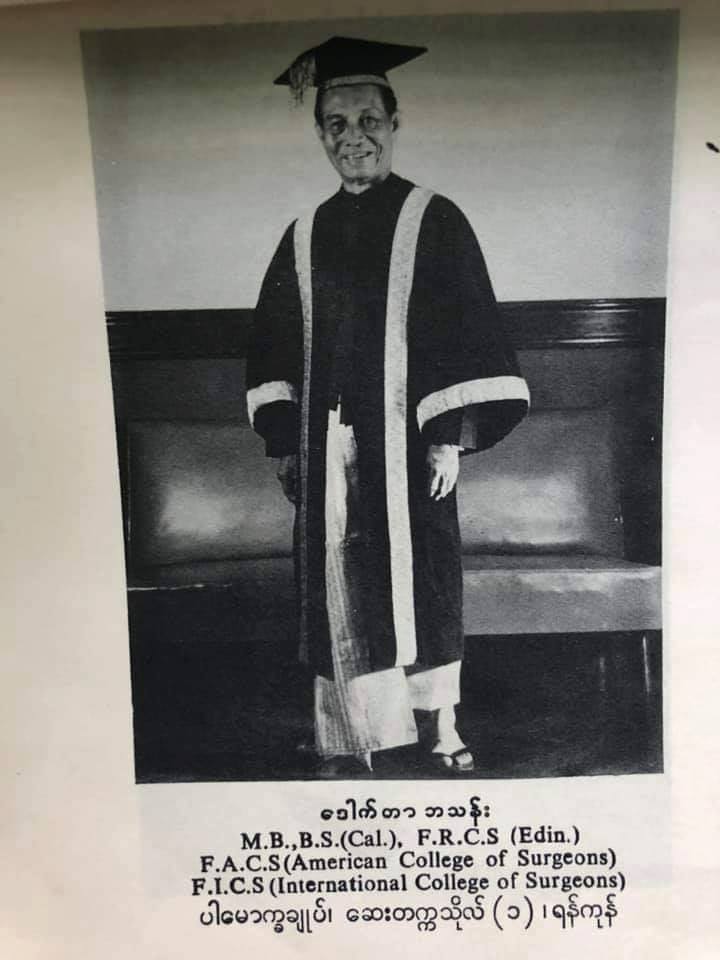
    • Ba Than — Saya; Alumnus of Imperial College, University of London; Retired as Professor and Head of Mechanical Engineering; Proud supporter of HMEE project; Donated rare photos to HMEE project and MES; Donated back all the Garawa money that he received from the SPZPs and mini-PZPs; Offers soon kway on or around his birthday (October 2nd) and invites his former colleagues and students; Per request from his grandson, he wrote his Memoirs; U Tin Htoon (younger brother) compiled a Photo Album / Book for his 90th birthday in October 2020
    Dr, Ba Than
    • Ba Than, Dr. — Police Surgeon; Rector of Institute of Medicine; Excellent soccer player and Harpist; Founder of “Zwe Ah Nyeint”; Stayed behind when the British evacuated Burma; Ran a hospital during the Japanese occupation with assistants including Dr. Maung Maung (father of U Maung Maung Kyi (SPHS63)) and Dr. Myint Swe; Children : Georgie, Kitty, Amy
    • Ba Than, Saung — Icon in Burmese music.; eight obituaries (one by each spouse).
    • Ba Than, Dhammika — Retired army officer and author
    • Ba Than — Founding member of the Kone The Gyi Myar Ah Thin (aka Burmese Chamber of Commerce); Son : U Chit Po Po (M69)
    • Ba Than — Son : Cyril (Than Hla)
    • Ba Than — Son : Kyaw Zwa Than (Jaws)
    • Ba Than — Physical Education, Palmistry
    • Ba Than Aye (Myo Myint Lay, GBNF) — UCC, Army
    • Ba Than Chain — UCC
    • Ba Than Haq — Saya; Pro-Rector, RASU
    • Ba Thaung — Burma Trade; Son : U Thaung Win
    • Ba Thaung — Son : George (Maung Maung Win)
    • Ba Thaung, Thakin — Author, Co-founder of Dobama Asi Ah Yone
    • Ba Thaw — Writer, Pa Lait Ah Yay Shi Ta Oo)
    • Ba Thaw, Bohmu — Maung Thaw Ka, Chief Editor, Forward Magazine
    • Ba Thein — Children: Peter, Than Than Nwe
    • Ba Thein — Son: Glen (Dr. Zaw Mon)
    • Ba Thein (Atlanta) — Pen name of Dr. Myint Thein (M73)
    • Ba Thet — Dawei
    • Ba Thin — Sons: Edmund, Tin Latt
    • Ba Thwin
    • Ba Tin — Daughter : San San Tin (Cynthia)
    • Ba Tint, ICS — Spouse: Khin Saw Mu; Children: Khin Saw Tint, Nay Oke Tint
    • Ba Toke — Saya; Mathematics Professor; Rector of MASU; Burma Olympics Team Leader
    • Ba Tu — Daughter : Pearl (Pale)
    • Ba U, Dr.– President of the Union of Burma; Wrote “My Burma”
    • Ba Wai — Table Tennis
    • Ba Win — Arzani; Brothers: Aung Than, Bogyoke Aung San; Son: Dr. Sein Win

    Names with Ba in middle and end

    • Aung Ba
    • Kyaw Ba
    • Shwe Ba

    Ben

    • Benedict — Brother; SPHS
    • Benjamin Kyle — Myint Soe
    • Benny Tan (M70) — Tan Yu Beng; Golden Sponsor

    Bo

    • Bo Aung Kyaw
    • Bo Aye
    • Bo Zaw Win
    • Bo Bo (C69, GBNF) — Saw Yan Naing
    • Bo Bo — Father : Hla Maung
    • Bo Bo Han (Tony Hundley) — Vocalist; Siblings : Mary, John
    • Bo Bo Kyaw Nyein — Father: Kyaw Nyein
    • Bo Dwe — Father: Hla Maung
    • Bo Gyi (A59, Uzin) — Co-founded Architects Incorporated with Tin Htoon (A60) and Aung Kyee Myint (A60); Their office became a gathering place for artists such as Paw Oo Thet, Director Win Pe, U Khin Maung Yin (A60); The three amigos later joined PWD; Designed the Mausoleum for Bogyoke Kadaw Daw Khin Kyi, and the higher authorities neglected him after that; Gave up playing the piano, modeling buildings, and drinking to become a permanent monk.
    • Bo Gyi — Justice, Vice-Chancellor of RU; Children : Sein Hla, Dr. Daw Khin Kyi, Tint Swe
    • Bo Gyi, Sandaya — Pianist; composer
    • Bo Gyi — Brothers: Robert Guy, Bo Lay
    • Bo Gyi — Father: Hla Maung
    • Bo Kyi (SPHS) — Drummer; Brother : Bo Ni
    • Bo Lay, Dr. — Deputy Minister; Translated several Veda texts into Burmese
    • Bo Lay — Father: Hla Maung
    • Bo Lay — Brothers: Robert Guy, Bo Gyi
    • Bo Myint — Writer
    • Bo Ni (SPHS) — Drummer; Brother: Bo Kyi
    • Bo Ni — Kyaw Min
    • Bo Phyu
    • Bo Sein
    • Bo Thein
    • Bo Tin Wa

    Names with Bo in middle or end

    • Aung Myin Bo
    • Khin Aung Bo
    • Kyar Bo
    • Tin Bo
    • Win Bo / Win Boh

    Bob to Byron

    • Bob
    • Bobby — Aung Myint; UCC
    • Bobby — Myint Sein; BARB
    • Bobby — Myo Tun
    • Bobby Tin — Khin Maung Wint
    • Bonnie Kun Lone –Musician
    • Bonzo Kun Lone — Musician
    • Brian Than Aung
    • Bu — Myint Maung
    • Byron Law Yone, Dr.
  • Chit (Names)

    Chit (Names)

    • Chit, Dr. — Secretary of BSPP
    • Chit — Blacksmith; RIT Workshop
    • Chit — Tea shop in RU Main Campus
    • Chit, Daw
    • Chit Aung (Charlie, M69)
    • Chit Chit, Daw
    • Chit Hlaing — Commissioner of Excise.
    • Chit Hlaing — Co-author of “Myanmar Socialist Lanzin”
    • Chit Hlaing — Navy Commander
    • Chit Kaung
    • Chit Khin — Movie director.
    • Chit Khin— Youngest child of Dr. Chit Swe and Daw Khin Khin Latt
    • Chit Khine — Secretary, Rangoon Turf Club
    • Chit Khine — Saya; Physics
    • Chit Ko Ko — Bohmu; Secretary of the Revolutionary Council & associated government.
    • Chit Ko Ko
    • Chit Lwin
    • Chit Maung — Movie actor and director.
    • Chit Maung, Journal Kyaw — Journalist and publisher; Spouse : Journal Kyaw Ma Ma Lay
    • Chit Maung — Entrepreneur; Businesses include Amyotha Yoke Shin, Carlton Cinema, Khit Ah Kyaik Nylon, U Chit Maung & Sons.
    • Chit Myaing — Colonel; Last of the 17 member Revolutionary Council to pass away; Ambassador to Yugoslavia and the UK; Moved to the USA; Supported Sayadaw U Kelasa; Brothers : Chit Hlaing, Chit Pyaing; Daughter : Amy Chit Myaing (Lei Lei Myaing, T70) retired from IMF.
    • Chit Nyi Nyi
    • Chit Oo Nyo — Author and lecture
    • Chit Pe (M69, GBNF) — Succumbed to Covid
    • Chit Po Po (M69) — RIT Rowing; Harp
    • Chit Sabai — Vocalist
    • Chit San Win — Author
    • Chit Sein
    • Chit Shwe
    • Chit Soe — Swimmer, Diplomat
    • Chit Swe, Dr. — Founder Director of UCC; Rector, RASU; Supervised students in Burma, Bangkok and Sydney
    Dr. Chit Swe in Sydney with his former students
    • Chit Swe, Sandaya — Composer and pianist
    • Chit Swe — Lecturer in Political Science (during BSPP era)
    • Chit Than — Thaing Saya
    • Chit Thaung — Minister in the Care Taker Government
    • Chit Thein — Author of High School Chemistry
    • Chit Tin (EC69, GBNF) — Worked for MOC/MOGE and in Singapore.
    • Chit Tin — Spouse of my cousin aunt.; He was never sick; The other is U Kwee Si (Ah Yoe Ku Saya, father of Ko Sein and Ko Shein); Both passed away the very day they sort of “fell sick”.

    Names with Chit in middle or end

    • Ba Chit
    • Myo Chit
    • Pe Chit
    • Sein Chit