Blog

  • Dream

    Dream

    by Hla Min

    Updated : June 2025

    Jules Verne

    He dreamed of traveling

    • to the Moon and back
    • in a hot air balloon
    • in a submarine 20000 leagues under the sea
    • to the center of the earth
    • around the world in 80 days (a remarkable feat for his time)

    He inspired people to transform most of his wishes into reality.

    • He sent three men from a Cape in Florida to orbit the moon, and returned them safely to earth.
    • A century later — around Christmas of 1968 — Apollo 8 with Frank Borman, James Lovell and Bill Anders made Verne’s dream a reality. The space ship was launched from Cape Canaveral (later renamed Cape Kennedy), which is within striking distance of the spot chosen by Vernes.
    • In July 1969, Apollo 11 with Neil Armstrong, Michael Collins and Buzz Aldrin landed in Tranquility Bay on the Moon.
    • When President John F. Kennedy proclaimed, “Before this decade is out, we will send men to the moon and then bring them back safely to earth”, there was no substantial plan to support his dream.
    • Wernher von Braun, a German rocket scientist, and his team were given a “level of trust” to work on the NASA project.
    • It would need baby steps : Mercury, Gemini & Apollo projects to have one, two and three astronauts to man the space ships.
    • It was not clear how to implement the important phase. e.g. How can a direct hit to the moon cause a safe return to earth? Folklore said that an engineer scribbled on his lunch bag a “spider” landing on the moon and returning. His dream resulted in the design of the Lunar Module. The rest is history.
    • The take away is that “If you can dream, others can fulfill [your dream].”

    My Early Dream

    • My dream — more than two decades ago — was to get the sayas and alumni get reconnected electronically (virtually) and physically (face-to-face).
    • In 1999, we founded the “RIT Alumni International Newsletter” and ex-rit.org website.
    • With the help of countless sponsors and volunteers, the First RIT Grand Reuion and Saya Pu Zaw Pwe (SPZP) was held in San Francisco, California, USA in October 2000.
    SPZP-2000 Organizers
    • Seven SPZPs have been held
      USA in 2000, Singapore in 2002, 2007 and 2010, Yangon in 2004, 2012, 2016.
    • SPZP-2020 was cancelled due to the pandemic.

    My Recent Dream

    • It was to compile and publish a story of our beloved land, our ancestors, mentors prime movers; those who helped build the “Rice Bowl of Asia”; those who dragged it to LDC (Least Developing Country) status; unsung heroes who tried to overcome the “Adhamma Era” and rebuild the nation into former glory.
    • I have written numerous articles / posts.
    • 2500+ posts can now be read from my web site — hlamin.com
    • I have broadcast 220+ educational videos.
    • We request Volunteers (paid or unpaid), Subject Matter Experts, Editors, Proofreaders, Presentation Gurus, Sponsors, Contributors & Supporters to help implement my Dream.
    • @hmin3664
    YouTube Channel for my videos

    U Khin Maung Zaw (KMZ, EC76) wrote :

    Dreaming and creating inspiration for others to be able to fulfill your dreams are two different animals, if you will, by themselves. I, like many others, have dreams but we do not have your dedication, perseverance and drive to inspire others,

    As I have said many times here, my hats off to you, I am very proud to be considered your friend, and informal pupil. And to your significant other (Ma Sein Yie) to take care of you/look after you and your sons while you would be deep into these projects. Please convey my regards to your family members

  • Recollections of a Student Architect

    by Thet Win

    Updated : June 2025

    It was the first day of the first class at Architecture Department. Saya U Shwe was teaching Basic Drawing to a class of twenty odd students. We did nothing that day except drew lines free hand. Straight lines, curved lines, lines at an angle, lines with unique character, lines with attitude, lines, lines, and just lines . . . . all day. For those who selected Architecture as their first choice among majors available at RIT, that was fun. For the rest, it was a nightmare and set the tone for what to expect in the next few years as a Student Architect.

    In the following days we migrated to drawing plan, elevation, and section of any chosen object. Any object you can see well enough in your minds’ eyes to draw it correctly. One of my classmates, Ko Kyaw Myint, whose family ran a popular café, chose to draw section of a Chinese pao (Pauk-Si) with interesting fillings inside. The class had a good laugh. He is now a successful businessman in Rangoon.

    Our batch was a unique one. We were the first batch of the new system at that time (1979). After matriculation, two years of Regional College and a diploma in a technical field, we still had to sit for an entrance exam to get into RIT. Never mind what different technology path you went through during the second year of Regional College, here we were at the famed Institute of Technology in Rangoon.

    The process by which raw space is turned into a comfortable living or working environment is a fascinating and difficult one, not entirely dissimilar to the process of becoming an architect. There were moments of great joy punctuated by ones of exhaustion and despair when you can’t seem to get the right configuration for the plan you are working on or can’t quite grasp the combination of mass and void to shape the space you want. But at the end of each day, there was progress, and at the end of many weeks, there was something beautiful and meaningful on the drawing sheets or as a model where form matches function.
    Our teachers were there to guide us through this process and help us understand what 20th Century Architecture is (Saya U Myo Myint Sein), how form follows function (Saya U Hla Myint), what Urban Design really is (Saya Dr. Kyaw), why less is more (Saya Dr. Lwin Aung), and what it means to be an Architect in Burmese society (Saya U Win Htein).

    Classes were not only held in our design studios, Nway-Aye (Warm-Cold), a favorite café on campus, was also used as our satellite class-room from time to time as students and teachers discussed various matters and debated architectural issues endlessly.

    Soccer was also a part of our culture though teams selected from much larger talent pool consistently beat up Architecture team. On one occasion, Ma Hlaing Maw Oo (Maw Oo Hoke) promised to dance at the Fresher Welcome dinner if we can score a goal against the team we were playing. The other team cooperated happily so that we get to see her perform.
    Saya Dr. Koung Nyunt opened up our eyes with his weekly lectures and slide-shows on Landscape Architecture. The department library had limited resources, up-to-date books and technical magazines. We all benefited a lot from Dr. Koung Nyunt’s recent return from Japan to not only share his experience, but his collection of slides and books.

    A lot of our Sayas’ homes became our gathering places. These on campus gatherings at Saya Dr. Lwin Aung, Saya U Hla Myint, and Saya Dr. Koung Nyunt’s houses were filled with laughter…. and we learned something from each event. Bonds between student architects and architect-teachers were formed which last for decades. Some went on to form partnerships in architecture practice.

    We also had close ties with other departments. Dr. Win Tin (EE) had an electronics club whose members were our close friends: Ko Kyin Shein (EE 81?), the late Ko Myo Aung (EE83), Ko Thu Ta (EE82), and Ko Ye Gaung (EE82, currently in San Jose). Dr. Win Tin’s group provided electronics and acoustic wizardry to campus wide events where our Association of Student Architects usually took care of the transformation of ordinary campus settings into one of festive environment.

    During this time some former architecture students had especially close ties to the school and had positive influence on the students’ design philosophy and style. Two Architects stood out among the trend setters at that time: Ko Khun Tha Myint and Ko San Oo, who later joined the faculty. Both are now doing extremely well in Myanmar. Ko Khun Tha as a businessman, and Ko San Oo as the founder of Design 2000. Ko Khun Tha headed up Architects Cooperative (I am sketchy on the exact name of the organization) with Saya U Kyaw Thein who taught fifth year Design Studios and Acoustics.

    Architects’ Co-op prospered for many years until the mid-eighties. A lot of former Co-op architects have went on to become quite successful in various parts of the country: Ko Myint Han (81), Ko Sai Yee (82), and Ko Kyaw Than Oo (82) in Mandalay for instance.

    After a few years in the private industry, I left Burma for a job in Australia as an architect. I fell in love with CAD while working on the design-build team for an award-winning college complex. I later came to the Grad School of Architecture at UCLA in Los Angeles. That’s where I became a programmer in CAD, and then later in Internet technologies and databases (around 1995). I am now so removed from architecture that the only design I do at work is E-Commerce applications and infrastructure design as I run the E-Commerce and Travel group at Walt Disney Internet Group. But my heart is still in Architecture and Design. I caught up with some of the classmates in Rangoon last year.

    Association of Myanmar Architects (AMA) has been in place since 1996, headed up by Saya U Hla Than, Sayama Daw Min Thet Mon, Ko Myo Tun (Bobby), Ko Myint Han, Ko Nay Zin Latt (80) and Ko Nyunt Win Lay (82) among many others. AMA publishes a newsletter regularly, and organizes lectures, tours, and competitions. In the spirit of competition I believe our new blood of student architects are better prepared to take on the world. Recent news of gaining recognition at international level is quite encouraging for the young Burmese architects. Back in November 1999, they were looking to raise funds and find enough talent to form a new private School of Design. I am not sure if AMA has made progress on that front. I hope that we can somehow manage to help this going.

    I’d like to second Mr. Ivan Lee’s suggestion. As we juggle our busy professional and personal schedules spending time on the congested freeways/subways, I’d like to urge you to think of how we can work together to take advantage of this tremendous talent and experience pool we have here.

    I’d like to think that this reunion is just the beginning of more fruitful endeavors to come and that we’d be able to put together something solid and plan for the future at the reunion.

    Editor’s Note:

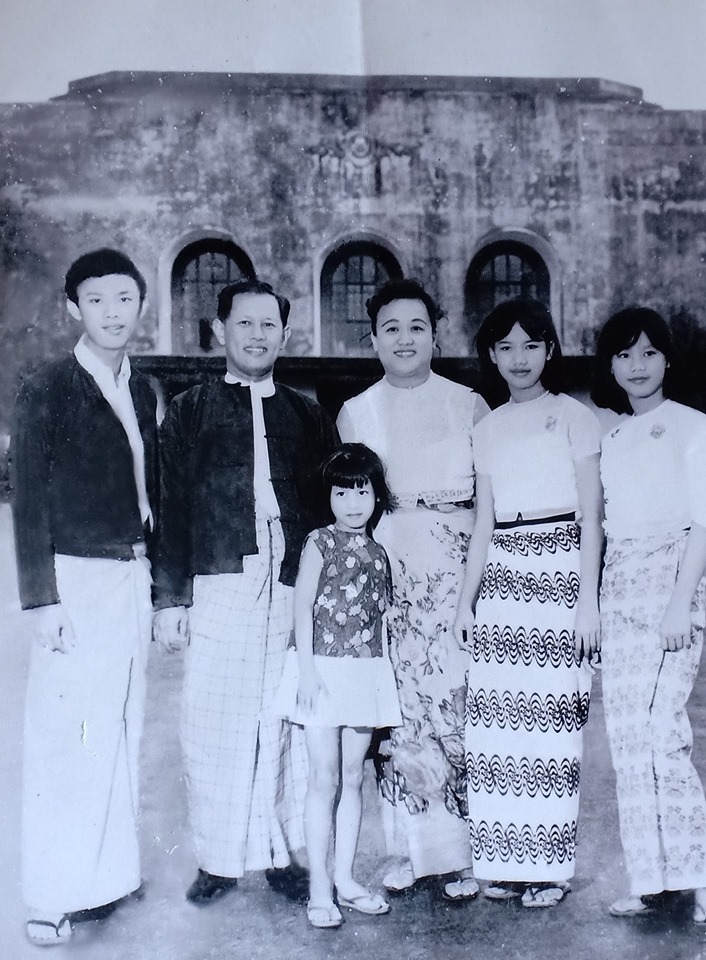
    Many years ago, a teenager boldly challenged me to a game of Junior Mastermind. His father had multiple talents: a bilingual writer, translator, poet with famous pen names such as Mya Zin, Po Yaza, and Epsilon, an MPA from Harvard, Technical Advisor to National Planning, an accomplished Bridge player, a maestro in Vipassana meditation, and the Auctioneer in the “Myanmar Gems Emporium”.
    His mother was a teacher well liked by her students. That teenager, now married to a famous Myanmar movie actor, is the web master of a prime e-commerce site. The couple will be in town for the Reunion. Despite a busy schedule, Ko Thet Win kept his promise [given several months back] to write a special article for our web site.
    Ko Thet Win is a Double Architect : first, an Architect for buildings, now, an Architect for Computers.
    His spouse completed the Los Angeles Marathon. She and her daughter would sing and dance at events.

  • Class of 72

    by Hla Min

    Updated : June 2025

    M72

    • Wynn Htain Oo : Mg Mar Ga See Posts
    WHO
    • Kenneth Ba Aye : Ka Let Tet
    WHO & Hne Pei Myar
    • Myint Pe : Cartoon Box, Lushwindaw See Posts
    Myint Pe, Cartoonists & Cartoon Lovers
    • Han Sein : Saya, Former Dy. Minister
    Han Sein (M72)
    • Win Myint : Kabyaung
    Win Myint
    • Nyan Win Shwe (William) : Chair of SPZP-2007
    Nyan Win Shwe & Singapore Oldies
    • Victor Aung Myin : Scholar Athlete
    Victor
    • Tha Tun (GBNF)
    Tha Tun
    • Khin Maung Myint (John Tint, GBNF) : Soccer
    John
    • Maung Sein Win (Padeegone) : Author, Poet
    • Khin Maung Toe (GBNF) : Musician
    • Kyaw Min Aung : Goalkeeper for RIT B Team
    • Maung Maung : Co-founder, RIT Chess Association

    Electrical

    • Ko Ko Kyi : Saya
    Ko Ko Kyi (Right)
    • Kyaw Myint : Good Morning

    Textile

    • Kyaw Myint : Veda, Indigenous Medicine
    Veda KM (Standing Right)
    • Sandi Hlaing : Veda’s Big Sis

    Chemical

    • Aung Myaing : Saya, Poetic Art Series See Posts
    Aung Myaing
    • Gyn Yu
    Seated : Gyn Yu, Trixie; Standing : Aung Myaing, Tun Shwe
    • Tun Shwe
    • Trixie Tan
    • Tiny Kyi
    • Myo Myint Pe (GBNF) : Organizer
    Myo Myint Pe
    • Aye Aye Kyaw (GBNF) : Sayama
    Aye Aye Kyaw

    A72

    MK Hla Win

    • Honorary member of M72 group
    • Entrepreneur & Philanthropist
    • Donated Noodes (Mar Mar Khauk Swe) for various gatherings
    • In 2018, he donated K10 lakhs for the second time for YTU Library Modernization
  • Supplementary Materials for HMEE-2012

    Supplementary Materials for HMEE-2012

    by Ohn Khine & Hla Min

    Updated : June 2025

    Ohn Khine
    Hla Min
    CD for HMEE

    Constraints

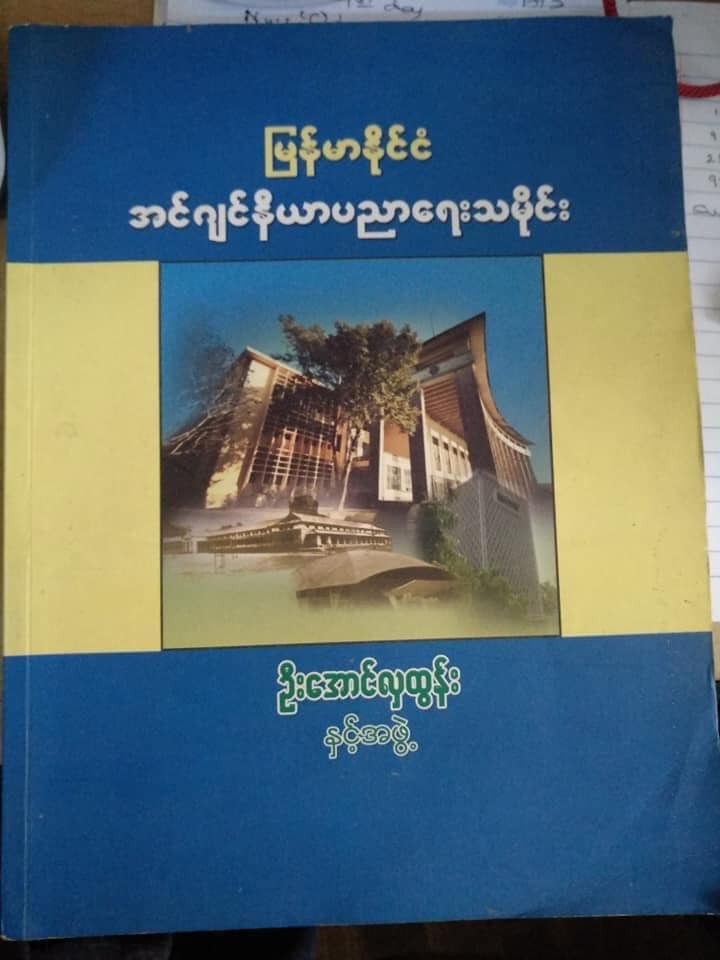
    Due to time & resource constraints, only a fraction of the materials could be described in the book “History of University Engineering Education in Burma/Myanmar”

    CD Supplement

    U Ohn Khine (M70) and I compiled references, articles in English and photos that were not covered in the book into a CD.

    We attempted to cover as much historical data and articles as possible.

    Materials for non-Burmese readers

    • Part 1 of the HMEE book was translated by U Ohn Khine (M 70). Saya Des Rodgers corrected the contextual and usage errors.
    • Part 2 is not a complete translation of the Burmese text. To avoid duplication of some materials (e.g. lengthy tables), we have chosen to present a summary & overview.

    Archives

    • Archives from the RIT web sites: http://www.ex-rit.org and http://www.rit-alumni.info.
      Thanks to U Khin Maung Zaw and U Wunna Ko Ko for designing and maintaining the web sites.
    • Archives from the SPZPs: SPZP-2000 (San Francisco), SPZP-2002, SPZP-2007 and SPZP-2010 (Singapore), and SPZP-2004 (Yangon)

    Photo Albums

    • From ex-RIT web sites, RIT Alumni Facebook Pages, Sayagyi U Ba Than, Saya U Soe Paing and U Myo Myint (EC67)

    History of the Engineering Departments

    • By Dr. Aung Gyi (Rector), U Min Wun (C), U Aung Khin (M), U Soe Khaw (Min), U Thit (Met), U Myo Myint Sein (A)

    Selected Posts

    • Excerpts from “RIT Alumni International Newsletter Updates” from 1999 – 2012 by U Hla Min (EC 69)

    Interviews

    • Saya U Tin U, Saya U Ba Than and Saya U Khin Aung Kyi gave interviews for HMEE-2012 project.

    Proofreaders

    • Saya U Soe Paing, U Ohn Khine and I proof read HMEE-2012 and provided corrections (e.g. RIT Luyechun list did not contain 1965), but they was not enough time to do all the corrections.

    HMEE projects

    • Saya U Aung Hla Tun is the leader for HMEE-2012 and HMEE-2018 Projects.
    • HMEE-2018 will cover revisions and extensions to HMEE-2012.
    • Due to the pandemic and Saya’s demise, HMEE-2018 is in limbo.
  • Volunteer

    Volunteer

    by Hla Min

    Updated : June 2025

    Video Broadcast on October 11, 2020

    Introduction

    • Provide service / expertise usually free (with volition)
    • May receive indirect compensation (e.g experience, appreciation)
    • The Battle of Alamo in Texas : fought by Davy Crockett and the Volunteers from Tennessee
    • Peace Corps
    • UNV (United Nations Volunteers) extended to Online Volunteers
    • Volunteers for Medical Research
    • Volunteers for UCC Project
    • Volunteers for fighting the pandemic
      Front line medical workers
      Donors for the prevention and treatment
      Food (Rice …)
    • Volunteers for Associations, Foundations …

    My Volunteer work

    Hla Min
    • Helping SPHS Librarian (in Fourth Standard)
    • RIT English Newsletter
    • RUBC (Treasurer, Vice Captain, Contributing Editor for 90th Anniversary Issue, Memories of RUBC series of articles)
    • RIT EE Association (Class rep, Joint Secretary, Secretary, Hlyat Sit Sar Saung)
    • UCC (Lecture Guides, Training Materials, Memories of UCC series of articles)
    • RU (Golden Jubilee in 1970, Gangaw Myay Tekkatho Yar Pyay, series of articles)
    • Contributor and/or Editor
    • Burmese Language Project (National Foreign Language Center)
    • Encyclopedia of Asian American Folklore and Folklife
    • RIT Alumni International Newsletter
    • BAPS Newsletter
    • Dhammananda Newsletter
    • Materials for TBSA Summer Dhamma Camp

    Editor

    • Dhamma talks by Sayadaw U Silananda
    • Three books by Sayadaw U Jotalankara
    • Two books by Saya U Aung Zaw (Computer)

    Contributor

    • Swel Daw Yeik Sar Saung for 2002, 2007 and 2010
    • Swel Daw Yeik Magazine for 2014 (Shwe YaDu)

    Computing

    • Docent, Computer History Museum
    • Volunteer, SF Bay Area ACM Chapter

    Admin / contributor

    Lectures

    • BARB / MARB
    • UCSY
    • Dawei Nga Gyan Pyan Kyaung

    Translator / Interpreter

    • TMC
    • Several sayadaws
    • Several articles
    • Several Kabyars

    ____


    Overview of my Post “Volunteer (1999 – present)

    Who would appreciate the spouse and family supporting my 26 years as volunteer messenger, editor and organizer for RIT Alumni (e.g. web site, newsletter, Facebook groups, SPZPs)?

    Thanks for the support and understanding. I have posted the following:

    • Countdown to the Reunion : 64 posts
    • Post Reunion : 36 posts
    • RIT Alumni International Newsletter and Updates (1989 – present)
    • Micro Reunion and/or PZP
    • Mini Reunion and/or PZP
    • Reunion and/or PZP
    • Grand Reunion and/or PZP
    • News, articles and photos by Sayas and Alumni
    • Class of 69
    • Health Care Funds
    • Photo Albums (for trips down memory lane

    1999 to present

    • 1999
      Started “RIT Alumni International Newsletter”
    • 2000
      First RIT Grand Reunion and SPZP in San Francisco, USA
      Commemorative web pages (thanks to KMZ / U Khin Maung Zaw)
      64 Countdown to the Reunion posts
      36 Post-Reunion posts
      Commemorative Issue of the Newsletter by U Hla Min and team
      with my “SAYA PUZAW PWE” poem on the Front Page
    • 2002
      Second RIT Grand Reunion and SPZP in Singapore
      Commemorative Issue of “Swel Daw Yeik Sar Saung” by Saya U Moe Aung and team
      Reprinted my “SAYA PUZAW PWE” poem as Back Cover
    • 2004
      Third RIT Grand Reunion and SPZP in Yangon
      Mild earthquake did not rattle the attendees
    • 2007
      Fourth RIT Grand Reunion and SPZP in Singapore
      Commemorative Issue of “Swel Daw Yeik Sar Saung” by Saya U Moe Aung and team
      Contributed a poem titled “SWE DAW YEIK
    • 2010
      Fifth RIT Grand Reunion and SPZP in Singapore
      Commemorative Issue of “Swel Daw Yeik Sar Saung” by Saya U Moe Aung and team
      Contributed an article : Sad and short clip — EE sayas
    • 2012
      Sixth RIT Grand Reunion and SPZP in Yangon
      True “Home Coming” in the Gyogone Campus
      Special publication : History of University Engineering Education in Burma/Myanmar by Saya U Aung Hla Tun and team
      (Ko Ohn Khine and I prepared the supplemental CD for the book)
      Special publication: Selected RIT Cartoons
      Commemorative Issue of “Swel Daw Yeik Magazine” by U Saw Lin and team
      Reprints: Limited number of vintage RIT Annual Magazines
    • 2013
      Swel Daw Yeik Foundation
      Contributions for various projects
      Health care for the sayas and sayamas
      “Saya Geha” as long term project
    • 2014
      Shwe YaDu 50th Anniversary of the opening of RIT in 1964
      Planted 50 Swel Daw Bins
      Paved Shwe YaDu lane and set up Swel Daw Yeik benches
      Translated Saya U Moe Aung’s Shwe YaDu Lann poem
      Commemorative Issue of “Swel Daw Yeik Magazine” by Saya U Moe Aung and team
      (Contributed an article : “Recollections of a 69er”)
    • 2015
      RIT Alumni Reunion in Los Angeles
      Several follow-up gatherings in San Francisco Bay Area
    • 2016
      RIT/YIT/YTU Alumni Association (Known as RITAA)
      Seventh RIT Grand Reunion and SPZP in Yangon
      10000+ attendees
      Free food and fun (all day and all night long)
      Platinum Jubilee for the Class of 69
      Hosted by some 69ers for their friends (in their sunset)
      Attended SPZP-2016 and Platinum Jubilee of the Class of 69
      Soonkway at Half Moon Bay Monastery (organized by U Maurice Chee) Received Alumni Appreciation Award from alumni worldwide
      Annual Dinner by Northern California RIT Alumni Association
      Received plaque signed by Saya U Myat Htoo (Chair, BOD), U Kaung Kaung Oo (Gordon, President), and U Thaung Nyunt (Secretary)
    • 2017
      Attended Post-SPZP2016 Gatherings
      Continue sending updates [almost daily]
    • 2018
      Wrote “Trivia” posts
      (later dropped “Trivia” in the titles)
      lifelonglearning140.wordpress.com (Archive / Raw Posts)
      hlamin.com (Paid Personal Web Site)
      Attended Acariya Pu Zaw Pwe of ICST/UCSY
    • 2019
      Completed two decades as Editor of RIT Alumni International Newsletter and Updates
      Visit to Singapore and Myanmar
      Moderator, RU Centennial FB Group
      Panelist at the 5th Irrawaddy Literary Festival in Mandalay
      Attended Golden Jubilee of Graduation at Gyogone Campus, and the Reunion Dinner / Entertainment organized by U Aung Min and team
      Attended Arcariya Pu Zaw of ICST/UCSY
    • 2020
      Invited as Guest for the PSA (Professional Speakers’ Association) 2020 Tour to Upper Myanmar
      (Mostly) Stay-at-home due to Pandemic
      Translated Kabyars for “Poetic Art Series
      Videos broadcast daily (starting August 18, 2020)
      Countdown to RU Centennial
      On a sad note, the SPZP was cancelled due to the pandemic.
      Saya U Ba Than could not invite his former students and colleagues to the Annual Birthday Soon Kway.
      However, Saya was wished by his siblings and relatives via Zoom meetings.
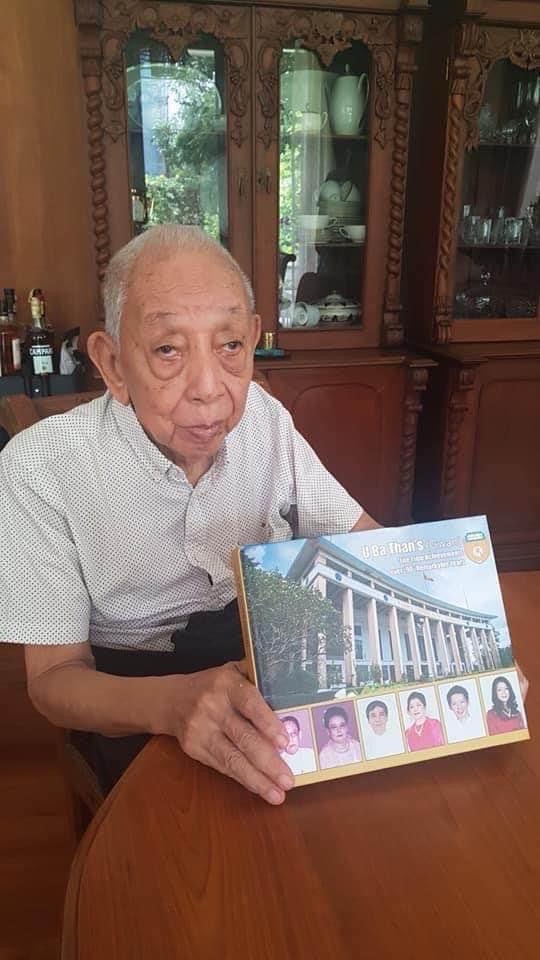
      His brother U Tin Htoon (A60) compiled a Photo Album / Book (with the help of Henry Kao / Htaik San) for the Life and Achievements of Saya.
      The Book was not delivered by the regular Post Office Services.
      Saya U Tin Htut offered to send the Book via DHL.
      He also pledged to donate a copy of the Book to YTU Library.
    • 2021

    Continue posting two Videos daily

    • 2022 – present

    Update posts


    Swel Daw

    Ideas from Tekkatho Moe War, Maung Sein Win (Padeegone), Maung Nyunt Htay (Ah Htet Min Hla)

    You were the victim of a superstitious power monger
    willing to crush “Pretenders to the Throne”
    animate and inanimate.

    Without a just and fair trial,
    you were condemned to death.

    When one Swel Daw Bin was axed
    Two magically reappeared

    When two Swel Daw Bins were hacked
    Four appeared to baffle the tormentors

    With each atrocious act
    Swel Daw Bins rebounded and redoubled

    The ADHAMMA authorities persisted
    and ruthlessly rooted all Swel Daw Bins
    from the Land of the Bearers/Defenders of DHAMMA

    Why? Why? Why?

    Swel Daws do not have destructive power
    or desire to exploit
    They do not have LOBA, DOSA, and MOHA
    They simply display pristine, beauty and elegance
    They embody the principles of trust, integrity,
    and unity of mentors and mentees
    students, teachers, and Loke Tha’s
    They provide shade, calm and tranquillity
    to those seeking rest & peace of mind

    With the dawning of the Pwint Linn Era
    Fifty majestic Swel Daw Bins bloom gallantly
    along side the famed Shwe YaDu Lann
    with pleasing Shwe YaDu Benches

    There have been tears of sorrow
    when Swel Daws were banished from the Land

    Now there are tears of joy
    with many artifacts bearing your name

    Swel Daw Yeik Ah Nyeint
    Swel Daw Yeik Sar Saung
    Swel Daw Yeik Magazine
    Swel Daw Yeik Foundation
    Swel Daw Yeik Sayas’ Geha Mon


    What’s in a name?

    BIT (Burma Institute of Technology) was opened at the Gyogone Campus in 1961.

    The degree offered was B.Sc. (Engg).

    Saya Dr. Aung Soe (C61), Saya U Maung Maung Win (M61) and Saya Dr. San Tint (EE61) were fledgling sayas at BIT.

    Saya Dr. Tin Win (M62), U Aye (62) and Bohmu Myint Thein Lwin (EE62) were some students who attended the Final Year classes at BIT.

    BIT was renamed as RIT (Rangoon Institute of Technology). The official name change took place in 1964. The degree was renamed as B.E.

    We are not sure if “BIT Rangoon” was considered as an alternative to RIT. IIT (Indian Institute of Technology) has several campuses. The five oldest IIT campuses and their establishment dates are:
    (a) IIT Kharagpur IITKGP 1951
    (b) IIT Bombay IITB 1958
    (c) IIT Kanpur IITK 1959
    (d) IIT Madras IITM 1959
    (e) IIT Delhi IITD 1963 [founded in 1961]

    AIT (Asian Institute of Technology) was supposedly started as a school for SEATO (South East Asian Treaty Organization).

    Several states (Massachusetts, Illinois, California, …) in USA are known for their Institutes of Technology. Sayagyi Dr. Freddie Ba Hli received his Sc.D. in EE from MIT. He was an informal adviser to Sayagyi Dr. Aung Gyi and Sayagyi U Min Wun, who were among the first three engineering undergraduates to be chosen under the “TWINNING PROGRAM” initiated by Sayagyi U Ba Hli, first native Dean of the Faculty of Engineering, Rangoon University.

    RIT was renamed as YIT (Yangon Institute of Technology) and then YTU (Yangon Technological University).

    During the “Adhamma Era”, classes were relocated to far away places, and “Swel Daw Bins” were decimated. The A to G Halls were “transformed” into make-shift quarters. Wall clocks stopped. Bushes sprang up. A video of that time brought tears and anger, and the notion that “we might not live to see our alma mater in its former glory for decades to come”.

    With the dawn of the some-what “Pwint Linn Era”, our alma mater rose from the ashes. Per request from H.E. U Aye Myint (EP 72), the alumni — young and old, near and far — provided physical, monetary, and spiritual support to help the alma mater in every way possible.

    The first true “Home Coming” took place in December 2012. There were tears of joy. 3000 copies of the commemorative Swel Daw Yeik Magazine (not just Sar Saung) were sold out in a couple of days. Limited reprints of the 23 RIT Annual Magazines were also sold out. Autographed copies of “Selected RIT Cartoons” were also sold out. Some copies of “History of University Engineering Education in Burma/Myanmar” may still be available.

    There were six Annual Magazines published by RUESU (Rangoon University Engineering Student Union). Saya U Moe Aung learned and refined his publication skills as an editor/publisher of the magazine. The student unions and all professional organizations were banned following the coup d’eat in March 1962. Censorship increased with subsequent regimes.

    We now have an official alumni association.

    The Seventh RIT Grand Reunion and SPZP held in 2016 was grander. Free food and entertainment were provided the whole day.

    Thanks to the sayas and alums for keeping the RIT Spirit (Swel Daw Yeik Spirit) alive and well.


    Memories of SPZP-2000

    SPZP-2000 Organizers include

    • Saya Allen Htay (C58, GBNF)
      wrote “Brother, can you afford US 500$?”
    • Ko Benny Tan (M70), Golden Sponsor & co-chair of Working Committee, designed memorabilia : SPZP-2000 Banner, Mug, T-shirt, Calculator/clock
    • Ko Maurice Chee (M75), co-chair of Working Committee, Financial Controller, Publisher of commemorative issue of “RIT Alumni Newsletter”
    • Committee members from Northern California & Southern California took care of the planning and execution of the main event and supplementary picnic
    • Ko Khin Maung Zaw (EC76), designed and implemented htto://www.ex-rit.org; instrumental in getting the sayas and alumni world-wide get reconnected
    • I wrote 64 “Countdown to the Reunion” and 36 “Post-Reunion” articles for the ex-rit web site and RIT Alumni International Newsletter.
    • A commemorative issue of RIT Alumni International Newsletter was published with Yours Truly as Chief Editor, Ko Henry Lim and Saya U Thein Aung as Associate Editors.
    • Saya U Nyo Win (M65), Saya U Myat Htoo (C68), Saya U Thein Aung (Met 72) … made sure that the event was “not out of control”
    • Hired professionals (Photographers and Videographers) to record the event
    • [Later] The VHS tape was converted to DVD

    Feel free to see the DVDs, the commemorative issue of “RIT Alumni International”, 64 “Count down to the Reunion”, 36 “Post Reunion”, Photo albums …

  • Sayas and Alumni

    Sayas and Alumni

    by Hla Min

    Updated : June 2025

    U Moe Aung, U Kyaw Sein, U Ohn Maung

    U Kyaw Sein, U Moe Aung, U Ohn Maung
    • U Moe Aung (EE63) †lost mobility for a while, but has recovered. He is active writing articles & poems, and giving lectures at Electrical Inspectorate.
    • U Kyaw Sein (M65, GBNF) ††was active with RIT-related Facebook pages. He passed away in Singapore.
    • ††U Ohn Maung (ChE68, GBNF) has a medical condition (e.g. memory loss). He passed away in Singapore.
    • Swel Daw Yeik Foundation provided annual Garawa money to Sayas U Kyaw Sein & U Ohn Maung for health care.

    U Khin Maung Tun (T78, SDYF)

    U Khin Maung Tun (Right)
    • He is President of Swel Daw Yeik Foundation
    • Donated K2000+ Lakhs to SDYF and RIT-related activities
    • Hosted lunch meetings for SDYF
    • During his visit to the 2015 RIT Alumni Reunion in Los Angeles, he gave me an MP3 player loaded with dhamma talks

    U Myo Myint (Bagyee, M73)

    • He is retired Dy GM of Burma Railways.
    • Drew cover designs for the RIT Annual Magazines and the commemorative Swel Daw Yeik Magazines.
    • Drew Pon Tus of many sayas and sayamas, and selected friends.
    • Donated proceeds of the paintings from his Gallery at the SPZP to Swel Daw Yeik Foundation and RIT Alumni Association.

    U Myint Swe (EP74)

    • He worked in Singapore and USA.
    • Founding member of NorCal RITAA.
    • Served as Secretary & Vice President

    U Aung Myint Oo (EC84) & U Tin Maung Win (C86)

    • U Aung Myint Oo is a founding member and Past President of NorCal RITAA.
    • U Tin Maung Win is a founding member and President of NorCal RITAA. He and his spouse sponsored scholarship for an eligible YTU student

    U Tin Maung Aye Htoo

    • He and fellow alumni in Nay Pyi Taw raised fund for Alumni Association in general and the YTU Library Project in particular
    • Handed over the donations to Nan Khin Nwe

    U Thant Zin (M82), U Ohn Khine (M70) & U Zaw Winn (Min71)

    • U Thant Zin is the son of Saya U Sein Shan (GBNF). Volunteer for SPZP, RITAA, HMEE and All-Mechanical. He passed away in a car accident.
    • U Ohn Khine is the founder / moderator of the Google group for “Combined 1st BE Intake of 64 and 65”. During my visits, he provided rides to attend SPZP & HMEE meetings and to selected gatherings. Translated Section One of the HMEE-2012 Book, and summarized Section Two of the book. He and I compiled the CD Supplement for the HMEE-2012 Book.
    • U Zaw Winn (Zinyaw gyi, Min71) is an organizer for the “Combined 1st BE Intake of 64 and 65”.
    • Photo was taken at the special Reunion and Acariya Pu Zaw Pwe hosted by U Thaung Sein (Steeve Kay, EC70)

    U Tin Myint (M75, GBNF)

    He is seen handing over his donation to Nan Khin Nwe.

    Daw Than Yi (EP70)

    • Pen name : Maubin Ma Shwe Than)
    • She is an author and publisher
    • Editor of “Hlyat Sit Sar Saung” published by RIT EE Association along
    • Blogged about her days at RIT and EPC
    • She and Dr. San Oo (EP67) reprinted a science fiction by Journal Kyaw Tint Swe (Dr. San Oo’s father). They published a book by William (eldest Myee).

    U Myo Aye (M92) & U Tin Latt (M85)

    U Myo Oo, U Wynn Htain Oo, U Tin Latt
    • U Tin Latt headed the Executive Committee of RITAA for the initial period
    • The torch was passed to U Myo Aye after the First Annual General Meeting and Election
    • U Wynn Htain Oo is Patron and Fund raiser of RITAA

    U Hla Kyi (M62)

    Visit 1
    Visit /
    • He is a class mate of Saya Dr. Tin Win
    • His daughter’s spouse is the son of Saya U Hlwan Moe (GBNF) and Sayama Daw Khin Swe Aye (Emily).
    • Photo (taken during his visit to Southern California) was provided by Saya U Tin Htut (M60).

    U Thaung Lwin (EC66)

    U Thaung Lwin
    • He is the younger brother of Saya U Tin U, Saya U Ba Than (GBNF), Dr. Myo Tint (GBNF), U Tin Htoon (A60) & Saya U Myo Min (UCC)
    • Past Captain and Gold of RUBC like U Tin U, Dr. Myo Tint & U Tin Htoon. U Ba Than & U Myo Min are RUBC Full Green.
    • Classmates : Aung Min, Soe Lwin, Khin Maung Oo (Robert Gale)
    • Worked for IBM Burma and Chartered Semiconductors in Singapore

    69ers

    RIT days
    Breakfast Gathering
    • 69ers have monthly breakfast gathering (usually at Taw Win Hnin Si)
    • Also have ad hoc meetings (e.g. Annual Dinner at M3)
    • Pay homage to Saya U Ba Than on or around October 2nd
    • U Tin Shein (“Phone Gyi”, Chinlon) and U Pe Han Tun are Khamee Khamet
    • One photo shows Tin Aung Win (Oscar), Tin Maung Aye, Aye Thein, David Myint Thein, Aye Lwin
    • U Tun Tin handed over the donation of his friends (some in Australia) to Daw Khin Kyi Foundation
    • Celebrated the 30th Anniversary of Graduation in 1999, 40th Anniversary of Graduation in 2009, 50th Anniversary of Admission to RIT in 2014, and the True Golden Jubilee (50th Anniversary of Graduation) on December 14, 2019
    • 88 members including Shastri are GBNF
    Khamee Khamets
    Tun Tin
    BFF
    T69 in 2009

    U Than Tun (A65, GBNF)

    • He is the elder brother of U San Maung (A71) and a nephew of Sayadaw U Silananda.
    • He read the biography of Saya U Tha Tun (pioneer Burmese architect) and co-authored the article with Saya Dr. Koung Nyunt (A67, GBNF).
    • He visited Saya U Myat Htoo (C68) in Northern California.
    • U Myat Htoo took him on a lightning trip to Southern California to meet U Tin Htoon (A60) & back to Dhammananda Vihara, Half Moon Bay, Northern California.

    U Thar Htay, Benny, U Thant Zin, U Hla Win & U Myint Toe

    Steeve’s gathering

    Steeve Kay (EC70) requested Benny Tan (M70) to host — on his behalf — a special Reunion & Acariya Pu Zaw Pwe in December 2016.

    U Khin Maung Lay (Mutu) served as Master of Ceremonies.

    I recounted Steeve’s philanthropy in general and to his alma mater and alumni in general. With the help of U Win Htay, we compiled a booklet including the commemorative issue of “RIT Alumni International Newsletter” for SPZP-2000, and selected news and articles about the “Combined 1st BE Intake of 64 and 65”.

    Benny spoke on behalf of the alumni.

    Saya U Win Mra (RIT English) spoke on behalf of the sayas.

    On behalf of Steeve, the committee members (such as Rosie Mai Khin Nyunt) offered Garawa money of K2 Lakhs to the sayagyis and sayamagyis, and K1 Lakh to the sayas and sayamas.

    The attendees include

    • U Thar Htay (M70) : major donor to the Aariya Pu Zaw Pwes held by the group
    • Benny Tan (M70) : multiple Golden Sponsor of SPZPs and the class PZPs along with Steeve
    • U Hla Min (EC69) : Guest speaker at the PZP
    • U Hla Win (M73) and U Thant Zin (M82) : volunteers with the Steeve and Helen Kay Health Care Fund
    • U Myint Toe (M71)

    U Thein Kyaing (T72)

    U Thein Kyaing
    • He (George, T72) is a classmate of Daw Khin Htar Yee (Lily).
    • He and his spouse Daw Tin Tin Hlaing (MBBS) gave away their daughter Eileen (MD)

    U Tin Oo (M87) & U Kyaw Hlaing (M86)

    Tin Oo
    Tin Oo
    • U Tin Oo (Richard, M87) donated to SPZPs, SDYF and RITAA. His company sponsored gift bags for SPZP-2012 and SPZP-2016. He also sponsored Technical and Management Talks. During my visit, he hosted a lunch gathering for me, and he gave me a ride on another occasion to attend a family gathering.
    • U Kyaw Hlaing (M86) served as Treasurer for SDYF. His group helped the eligible and needy students (who did not receive “full” stipend from NorCal RITAA).

    Tazaungdaing

    T 1
    T 2
    T 3
    T 4
    • Daw Myint Myint Than (C71, GBNF) and Daw Tin Aye (C73)!published photos of some Tazaungdaing events.
    • One event took place in the Gyogone Campus.
    • One event took place at the Shwe Dagon Pagoda.

    Belles in the ’70s

    • Min Thet Mon (Pamela Myo Min)
    • Phyu Phyu Latt (Christine)
    • Than Than Yi (GBNF)
    • Tin Tin Myint (Emma Myint)
    • Aye Aye Than (Pauk Pauk)
    • Aye Aye Tun
    • Jessie Htwe
    • Nilar Mya Aung
    • Mai Khin Nyunt (Rosie)
    • Sandi Hlaing

    Still Belles

    At Panda
    • Rosie
    • Emma
    • Christine
    • Mar Mar Yee

    Sayas & Alumni in Singapore

    S 1
    • Saya U Thein Lwin (EE, GBNF) was President of RIT Badminton. He is an alumni of Lehigh University. He retired after teaching at RIT and Singapore Polytechnic. He is the elder brother of U Myo Myint (ChE from US), U Kyi Lwin (George, C67), U Tint Lwin (Daniel, M69) and U Thet Lwin (Henry, EE72).
    • Sayama Daw May Than Nwe (Joyce, GBNF) stood first in the Physics Honors class in 1962. Her classmates include Dr. Sein Tun, Sayama Daw Emile Ba Aye and Sayama Daw Khin Than Nwe.
    • Saya and Sayama passed away within a few months of each other. Their daughter is a Professor and a former swimming champion.
    • Saya U Kyaw Sein (M65, GBNF) was active in RIT-related Facebook pages.
    • Saya U Tu Myint (Winston) supervised the “Hovercraft” project for the M73 students.
    • U Nyan Win Shwe (William, M72) chaired SPZP-2007.
    • U Myint Thin (Peter, M71, GBNF) was a Luyechun. He rowed for RIT.
    • U Tin Aung Win (M73) is one of the members to greet Saya U Ba Than and send off
    Singapore
    • U Win Naing (Dicky Tan, M69, GBNF) passed away in Singapore.
    • U Thein Swe (EP69, GBNF) was then working in Singapore.
    • U Myint Thein (Kabar, M69, GBNF) was then visiting Singapore.
    • U Tin Swe (ChE66) & Daw Yi Yi Khaing (Vilma, ChE69)

    Seniors at MES

    • MES holds “Thet Kyee Pu Zaw Pwe” for engineers and architects who are 75+ years old.
    • Sayadaw Dr. Lwin Aung (A59, retired Pro-Rector)
    • Sayadaw U Bo Gyi (A59, talented pianist, architect for Daw Khin Kyi Mausoleum)
    Thet Kyee PZZp

    Senior Metallurgists

    Sr. Met

    Aung Khin & Myo Nyunt

    AK & MN
    • U Aung Khin (A69) & Daw Tin Tin Hla (A70) retired from Botwana and moved to Seattle to be near their daughters and grandchildren.
    • U Myo Nyunt (C69) & spouse visited their second son (working in Seattle) almost every year. They also made side trips.

    Aung Myint

    • U Aung Myint (Min71) is the younger brother of A1 Than Htut and A1 Thein Htut (twin brothers who won prizes at the Myawadday Photo Contest, and later became movie directors).
    • He became known as Thamankyar Ko Myint.
    • He is a good guitarist and vocalist.

    Some attendees at SPZP-2000

    SPZP-2000
    • Sai Tun Aye : Canada
    • Dr. Myo Khin : Japan
    • U Tin Myint (John) and Lyo : California
    • Maung Toung (Tom) and Ma Khin Myint (Kim) : Connecticut
    • U Tint Lwin (Daniel) : Singapore

    U Soe Myint Lwin (EP68, GBNF)

    Soe Myint Lwin
    Obituary of Soe Myint Lwin
    • He served as and Executive Committee Member of RIT EE Association.
    • He played soccer for the Universities, EPC & Burma.
    • After retirement, he was active with the Myanmar Soccer Federation.
    • He received an award for his social work and leadership.

    Tin Aung Win (Oscar)

    Tin Aung Win

    Aung Min

    Aung Min
    • U Aung Min (M69) is Chair of 69er Health Care Fund.
    • He is a Pho Pho.

    Than Htaik & Aung Win

    TH & AW
    • U Than Htike (M70)
    • U Aung Win (Owen, M71)

    Sann Naing’s Soon Kyway at HMB

    • U San Naing (M83) owns Burma Kitchen.
    • He and his siblings celebrated their mother’s birthday with a Soon Kyway at Dhammanda Vihara, Hlaf Moon Bay.

    Soe Aung & Zaw Win

    • U Soe Aung (M/Auto70) served as Secretary of RIT Ah Nu Pyinnya Ah Thin. He is seen at a Conference.
    • U Zaw Win (Zin Yaw, Min71) and U Soe Aung are organizers of the “Combined 1st BE Intake of 64 amd 65”. They love writing and giving lectures.
    Soe Aung 1
    Soe Aung 2
    Soe Aung 3
    Zaw Win

    Shwe Zin Ma

    • She is a musician, a Zat sayama and Minthamee
    SZM

    Soon Kyway for Kabar

    Stan Liou (M67, UTC)

    • He was a member of the RIT Table Tennis Team that won the Inter-Institute Trophy along with Maung Maung (“Sin Gyi”) and Win Myint.
      Saya Mao Toon Siong (M62, Burma Champion, National Coach) managed the team.
    • He joined UTC
    • Founding member & Past BOD Chair of NorCal RITAA
  • Sein Shan

    Sein Shan

    by Hla Min

    Updated : June 2025

    U Sein Shan
    • Alumnus of UIUC
    • During our RIT days, he was Lecturer and Head of the RIT Mathematics Department.
    • Passed away in October 2006.
    • Son : U Thant Zin (M82, GBNF) volunteer of several RIT-related organizations and activities
    Condolences 1
    Condolences 2
    Condolences 3
    Condolences 4

    Feedback

    • Dr. Yan Naing Lwin wrote :
      Ko Sein Shan was at University of Illinois, U-C in 1959-60. His room mate was Ko Hla Tun (Peter, now in San Jose). He received his MS in Theoretical & Applied Mechanics (TAM) & returned to Burma.
    • Yan Gyi Aung wrote : –
      Saya U Sein Shan was my most familiar Maths Saya since BIT period 1961-62. At that time engineering students were only about over 100. Female students were only two, one each at Textile and Chemical Department. He was the President of Point 22-Rifle Club of BIT & I was the Secretary. We usually went to South Okkalapa Shooting Range and practiced. While he was suffering from heart disease at his home in about 1999 in Mayangone, I frequently went to his house and encouraged him. Also when taking treatment at RGH hospital, at Cardiac Hall No 19/20, I went to him carrying boiled rice and some eatables as breakfast.
      Very remarkable and historic event he did was while Major Subjects (Lines, such as Civil, Chemical, etc) performed paying respect ceremonies to the respective department Sayas, Maths Department had no such ceremony. Maths Department always had no ceremony at that time.
      So Saya invited all the engineering students in the Daily Newspaper that he would celebrate a friendship dinner to serve all engineering students with Danbauk rice at the Nawarat Hotel in 2000, I think.
      Very peculiar Saya was!
  • SPZP

    SPZP

    by Hla Min

    Updated : June 2025

    Video Broadcast

    • Saya Pu Zaw Pwe (SPZP) is a noble tradition
    • There have been seven RIT Grand Reunion and Saya Pu Zaw Pwes.

    SAYA PUZAW PWE

    Background

    Invitation
    SPZP-2000 Organizers
    SPZP-2000 Video
    • In April 1999, I started the “RIT Alumni International Newsletter”.
    • At the request of Saya U Soe Paing, U Khin Maung Zaw (KMZ, EC76) designed and implemented the first RIT web site : http://www.ex-rit.org. I served as the Content Provider and Editor.
    • Saya Allen Htay and several alumni — Benny Tan (m70), Maurice Chee (M75) … — decided to support our noble task.
    • At one of the meetings at Ko Benny’s house, the San Francisco Bay Area Alumni Group decided to establish “RIT Alumni International” with Saya Allen as President and Ko Maurice as Treasurer.
    • At another meeting, Saya U Aung Khin (who was visiting the San Francisco Bay Area from Canada) gave the Go-ahead for planning the First RIT Grand Reunion and Saya Pu Zaw Pwe.
    • Since the sayas and alumni profess different religions, we chose the term “Saya Pu Zaw Pwe” over “Saya Ga Daw Pwe” (which has a religious connotation).
    • The primary objective of the Saya Pu Zaw Pwe is to repay the metta and cetana of our mentors.
    • It allows several core sponsors and organizers to safely participate in SPZP-2000.

    SPZP-2000

    • The First RIT Grand Reunion and SPZP (SPZP-2000) was held in San Francisco in October 2000.
    • It was a two-day event.
    • The main event was held at the Embassy Suites Hotel. There was a nominal fee to attend the Reunion Dinner and SPZP.
    • The follow-up event was an optional Brunch Gathering (where the sayas and alumni can bring their families and friends).
    • There were official and volunteer videographers and photographers.
    • A three-hour VHS tape was offered for a nominal fee to interested sayas and alumni. A few years back, the VHS tape was converted into a two-set DVD.

    Organizers and Sponsors

    • The core volunteers were willing to hold the event at all costs.
    • “U Nyo Win Act” said that the core volunteers will have to chip in if there are not enough paid attendees.
    • Saya Allen Htay wrote an article, “Brother, can you afford US$500 and more?” for my Newsletter and the web site.
    • A young alumni Sarina Tan (Htay Htay Than) relayed the news to U Thaung Sein (Steeve Kay, EC70). Steeve is a close friend of Sarina’s father. Steeve has also provided help while Sarina was pursuing her graduate studies.
    • Steeve contacted Ko Benny and also sent checks for SPZP-2000.
    • Ko Benny used Steeve’s seed money to design and order commemorative T-shirts, mugs and calendar clocks. Some mementos were offered to the attending sayas and the core volunteers. The rest were put on sale for “Fund Raising”.
    • Ko Benny later visited Yangon to organize a mini-SPZP for the sayas and sayamas who could not attend SPZP-2000.
    • Thanks in part to Saya Allen’s article, five Golden Sponsors and Donors — large and small — U Nyo Win’s Act was not enacted.

    RIT Spirit

    We thank the Golden Sponsors

    • U Thaung Sein (Steeve Kay, EC70, GBNF)
    • Tan Yu Beng (Benny Tan, M70)
    • U Tin Myint (David Ko, M67, GBNF)
    • U Khin Maung Oo (Ivan Lee, M69)
    • U Maung Maung Than (M79)

    and donors — large and small, young and old, near and far .

    SPZP-2000 proved that the RIT Spirit was alive and well all over the world. SPZP-2000 defied the belief that RIT was a dying breed.

    My poem “SAYA PUZAW PWE”

    S eems like it was only yesterday
    A t our alma mater in a land far away
    Y ou taught us to work, play, laugh, even cry
    A nd coaxed us, forced us to aim for the sky

    P roblems in real life, lab, computation, survey
    U nderstand concepts, design, display, …
    Z eal, zest, ardor, grit, passion to make it “our day”
    A rchitects, engineers, we’ve come here to say
    W e honor your metta, your cetana — we fully can’t repay

    P resently we meet, alum from five decades we greet
    W ith memories true, fond, sweet
    E cstatic yet sad that the GBNF could not join this memorable fete

    • My poem was published in the commemorative issue of RIT Alumni International Newsletter and on the web site http://www.ex-rit.org
    • The poem was reprinted on the back cover of the commemorative issue of Swel Daw Yeik Sar Saung for SPZP-2002 hosted by the Singapore alumni and chaired by Saya U Moe Aung (Tekkatho Moe War).
    • The poem has been reprinted in several RIT-related magazines.

    Seven world wide SPZPs

    They include

    • SPZP-2000 (California, USA)
    • SPZP-2002 (Singapore)
    • SPZP-2004 (Yangon)
    • SPZP-2007 (Singapore)
    • SPZP-2010 (Singapore)
    • SPZP-2012 (Yangon) : first true Home Coming
    • SPZP-2016 (Yangon) : hosted by RITAA; free food and entertainment

    USA SPZP

    The First RIT Grand Reunion and Saya Pu Zaw Pwe was held in the USA in October 2000.

    See “Commemorative Issue of RIT Alumni International Newsletter for SPZP-2000”.

    Singapore SPZP

    Singapore sayas and alumni hosted

    • SPZP-2002 in December 2002
    • SPZP-2007 in April 2007
    • SPZP-2010 in December 2010

    See “Commemorative Issues of Swel Daw Yeik Sar Saung for SPZP-2002. SPZP-2007 and SPZP-2010”.

    Yangon SPZP

    Yangon hosted SPZP-2004, SPZP-2012 and SPZP-2016.

    Notes :

    • Yangon could not host SPZP-2006 due to the political climate and so requested Singapore to host SPZP-2007.
    • SPZP-2020 was canceled due to the pandemic.
    This image has an empty alt attribute; its file name is SPZP-2012.jpg

    SPZP-2012 : True Home Coming

    It brought tears of joy. Many have given up the hope of seeing their beloved alma mater rise again from the trampling of the Adhamma Regime. HE U Aye Myint (EP72) paved the way to have the True Home Coming (Reunion & SPZP) at the Gyogone Campus.

    SPZP-2016 : Free all-day event at Gyogone Campus

    It was the first SPZP to be held all day at the Gyogone Campus.

    Thanks to sponsors and donors of SPZP-2016, free food (breakfast, lunch and dinner) was offered to all attendees.

    Thanks

    • Kudos to the sayas and colleagues for keeping the RIT spirit alive and well.
    • Thanks to my wonderful family for letting me spend 26 years as a volunteer Editor of “RIT Alumni International Newsletter”.
    • @hmin3664
    YouTube channel for my videos
  • Dr. Aung Gyi’s Speech (2000)

    Dr. Aung Gyi’s Speech (2000)

    by Dr. Aung Gyi

    Updated : June 2025

    SPZP-2000

    Mr. Chairman, my Sayas, my former colleagues, friends, RIT graduates, Ladies and Gentlemen,

    Before I begin to say anything, I would like to request you to take the word “RIT” as to stand not only for Rangoon Institute of Technology but also BOC College of Engineering and Faculty of Engineering, Rangoon University. I am using RIT only, just for convenience sake.

    Having said that, it is with a chestful of emotions that I am standing before you, trying to say a few words appropriate and befitting to this important and joyful occasion. My overwhelming emotion is, needless to say, happiness – happiness which results from seeing my Sayas, my friends, my former colleagues, and RIT graduates alive and well, after so many years. My happiness is also mingled with a certain amount of pride: pride arising from the knowledge that we have fond memories and a sense of belonging and attachment to the good old institution as well as to one another.

    We are fortunate that we could all gather here to exchange our life experiences, both good and bad, and to reminisce about our past when we were at RIT. While we are doing that, we all must have noticed that all of us have changed quite a bit since we last saw one another, at least physically, some more so than other. We all now have a few gray and also less hair, we have a few wrinkles on our face; maybe we also lost a few teeth and cannot see or hear as well as we did before. Some of us also lost the memory a bit and become forgetful about lots of things such as forgetting names for example. This, as we all know, is life and nature of things. Everything changes and nothing is permanent. Bur fortunately we still have our values. Our values such as respect and gratitude for the elders and teachers, caring of our respective children and family members, helping our friends, and attachment, and gratitude to the institution which nurtured us to meet the challenges of life, are still with us. They have not changed. This Saya Pu Zaw Pwe and reunion is a testimony to those values.

    I must now pause and thank and congratulate the Organizing Committee for their untiring and selfless efforts to make this event possible and successful. This Saya Pu Zaw Pwe and RIT Alumni reunion is, as far as I know, once-in-a-life-time event. As far as I am concerned it is already a resounding success with the cooperation and great enthusiasm that I have seen. I hope this will be the beginning and not the last of our get-togethers. When my wife and I paid visits to Myanmar in 1996, 1997 and 1999 we had mini get-togethers with RIT Alumni. When I was here a few years ago we also got together with a few RIT Alumni. I understood that Saya U Aung Khin also had one mini get-together here some years ago. But these get-togethers were not on a grand scale as the one that we are having here now. However the spirit of camaraderie and friendliness among RIT Alumni mini get-togethers, was the same as the one that we find here now. If you look around you, you will find that all of us came here from different parts of the world, indicating the great attachment and respect that we all have for our old institution and also for one another.

    While I was preparing for this speech, fond memories of the years that I spent as a student, as a teacher and later as Rector at RIT came flashing through my mind. Without going into details, I remember that all my teachers, including Saya Num Kock and Saya U Ba Toke who are here with us, were good inspiring teachers with kind hearts. When I became a teacher and later the Rector at RIT, I noticed that my colleagues were good and dedicated people who tried their best to teach what they had learnt from good Universities and Institutions abroad.

    They made conscious efforts to raise the level of education at RIT so much that the students were fully occupied with classes, studies, projects, and homework. I have to mention here that my Sayas and my former colleagues were, and still are honest, compassionate, gentle and kind people. Within this context I would now like to take this opportunity to offer my humble apologies to my Sayas and colleagues for the wrong things that I may have done or said which might have hurt them in any way in the past.

    As for the students, I remember that they were good, intelligent, and energetic students in general. Since I was also involved in extracurricular activities of the students, I had more interaction and gained more understanding of their needs and feelings. Like most of the other teachers I tried my best to be helpful to them not only in their studies but also in any other problems that they needed my help. Because of the compassion that I had shown for them they became more communicative, and listened to what I had to say most of the time. Like a breath of fresh air, the first batch of female engineering students were among us, I believe in 1958. So far as I remember they did as well as or some even better than the male students in their studies. I remember that as a teacher I felt very good and satisfied whenever some students did well in their studies or did well in their careers after they left school. These are fond memories that I still have with me about the students at RIT.

    As you probably know, I left RIT and Myanmar in 1977 to join UNESCO. I then migrated to Canada to join International Development Research Centre (IRDC) in 1981. For your information, IRDC is a Canadian Agency which funds research projects for development in the developing countries. I retired from IRDC in 1997. Looking back to the past, I must say that I spent the best years of my life at RIT, challenging and troubling at times, but on the whole happy and satisfied with the job that I was doing.

    Now please let me take a few minutes of your time to share with you my thoughts, which I believe are some important elements of life. You might not agree with me to what I am going to say. At least, in that case, you might take them as food for your thoughts. If I sound like lecturing to you now, you must remember that the habit of a former teacher dies hard.
    When I was young and immature. I had great admiration for people with high I.Q. (Intelligence Quotient). I also tended to think in those days that I was quite intelligent. After going through life experiences with ups and downs I became to realize that high Emotional Quotient (E.Q.) or emotional mastery is more important in life than high I.Q., to cope with adversities, disappointments, failures and sometimes even tragedies. No one that I know of, escapes the negative impacts of life in one form or another. If you have emotional mastery you can deal with and overcome these negative impacts and still get ahead in life and be relatively happy. One thing that can help us is to have optimism, hope and courage in life and to minimize the negative thoughts and creeping pessimism. It will be wrong to classify anything in life in opposites either in black or white. One can neither be fully optimistic nor fully pessimistic all the time. There is a gray area which is neither black nor white, and so long as the dominant part of this gray area is optimism, things will turn alright in the end. I read in one of the books long time ago that the Chinese word for “crisis” denotes both risk and chance (opportunity). A pessimistic person would tend to look at the crisis as the big risk and will despair and do nothing, whereas an optimistic person will look at it as a challenge and opportunity and will do something with courage and determination and overcome the crisis. He or she might fail in doing something. But without failures one will not know success. In short, although we will not be able to master the circumstances, and situations in life, we sure can try to master our thoughts and emotions to meet the challenges of life. Here are the spiritual sides of us or our respective religions might be helpful.

    Now that I am getting old and getting inflicted with aches and pains here and there, especially when I get up in the morning, I begin to realize that the important part of my life is to keep myself in good health. There are lots of books and doctors telling us how to keep ourselves in good health. The simple gist of the whole message is to have some form of physical exercise or activity to keep our weights down; and to eat nutritious food and avoid or cut down fatty, sweet, salty and high cholesterol food which are harmful to our health. As you know, it is easier said than done. What I know is we do need to make conscious efforts to keep ourselves in good health by taking physical exercises and by eating nutritious and non-fattening food. One thing is for sure, if we are not in food health we will not be able to enjoy our success or good things in life, and we will be, relatively speaking, unhappy.

    When I was young, my grandmother used to tell me to get ahead in life I would need luck, brain, and industriousness. She was right of course. But one important element in life that she missed telling me was to develop and have good social relationships will all the people that I would come across in life, including family members. No one can live and get ahead in life alone. Each one of us at some stages of our respective lives needed and got help from someone to move on with our lives. From my personal experience, I noted that one must be non-egoistic, not too aggressive, be polite, be helpful, and tries to understand and respect other person’s points of view, needs and feeling, to develop good social relationships. Here I would like to add that each of us can judge who is good, who is bad, who is untrustworthy, etc. and avoid bad people and associate with good people to the extent that each of us can.

    Each one of us had twenty four hours a day and the one who can budget and manage his/her time day by day, week by week, month by month, year by year according to his priorities and short term and long term goals will get ahead in life better. One should use the time and even manipulate it and not waste it to achieve one’s short term and long term goals. One must also be patient if the short term and long term goals are not achieved in budgeted time. So long as the time is used and not wasted, one will reach his/her goads in due course.

    I hope everyone present here will agree with me the importance of financial management at the personal or family level as well as at the business level. At the business level there are of course financial plans and budgets for the present as well as for the future. One should likewise have financial plans and budgets at personal/family level for the present and future, to spend, save and invest within one’s available means. As you know money is neutral. If you are wise, money will treat you well; and if you are foolish it will not stay with you for long. Like time, one’s hard-earned money should be used and not wasted.

    The last thing that I would like to point out to you is the danger of complacency. If you own a business and if you are complacent after a certain level of success, your business will suffer, simply because you fail to keep up with the changes in the market conditions and because of the intense competition one faces nowadays. Likewise at the personal level we should be wary of complacency. We should try not to be complacent by improving ourselves and keeping ourselves busy mentally and physically. Life thrives on activity and activity is the proof of our existence. No one is perfect and there is always something that each of us can improve upon. If we do that, at least we will not be bored, and may achieve some fulfillment in life.

    With these remarks I now conclude my speech. May you all be successful and happy in life. May you have a pleasant stay in SF.

    ______________________________________________________________________________

  • Memories of UCC (38 – 42)

    by Hla Min

    Updated : June 2025

    U Hla Min

    Memories of UCC (38)

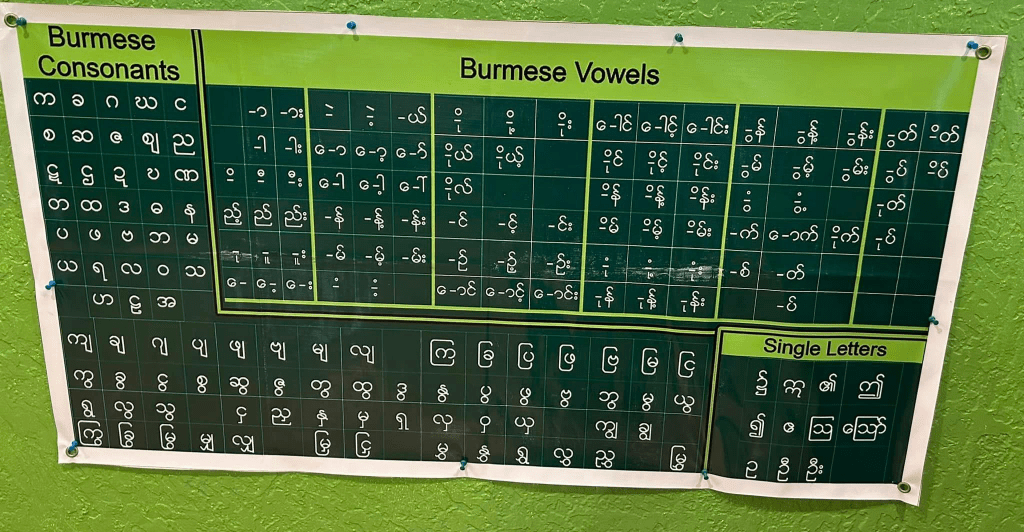
    Burmese typing, spelling, and word processing

    During our lifetime, we have witnessed many examples of “Technical Obsolescence” and “Disruptive Technologies”.

    Typewriters

    English Typewriter

    Remington produced typewriters for English. There are other typewriter manufacturers, but Remington typewriters were widely used in Burma.

    Sholes designed the QWERTY keyboard. The two most common letters in the English alphabet are “e” (for vowel) and “t” (for consonant). The frequency distribution of the characters in a given language is used to break “simple substitution” codes in that language. Several people complained that the QWERTY keyboard is not ergonomic, because it requires one to use the left hand (the weaker hand for most people) and to move the finger up to type “e” and “t”. Some, however, believe that Sholes deliberately placed “e” and “t” so that they minimize the chance of keys being stuck (when one hits keys in rapid succession).

    The alternate Keyboard designs (Dvorak …) did not have much support. The key issue is the retraining cost of typists.

    Burmese Typewriter

    Olympia was commissioned to produce Burmese typewriters. The characters in the Burmese alphabet are non-linear. A word often has ascenders and descenders.

    The Burmese typewriter have red and black keys.

    Red keys are used to type vowels; the carriage is prevented from going forward.

    Black keys are used to type consonants.

    Backspacing for half a step is necessary on the standard edition to type “tha gyee”. Manual dexterity is needed to type some “pa sint” characters. the office edition has extra keys.

    Note :

    In my younger days, we had an old Remington typewriter for typing English documents. My parents gave me a brand new portable Olympic typewriter for typing Burmese documents. I could do touch typing.

    Evolution of Typewriters and Word Processors

    IBM produced Selectric typewriters. Golf ball-like character sets had to be installed and/or replaced. Hence, a variety of characters (including APL, a language developed by Kenneth Iverson and uses Mathematical Symbols).

    Iverson is the thesis supervisor of Brooks, Architect for S/360 & OS/360. He described APL in a book, and explained the use with examples. IBM implemented APL/360 on the System S/360.

    Wang Computers provided word processors for various languages. Ko Htay Aung worked at Wang for a while on the Burmese language project. He migrated to Australia.

    Burma Research Society (BRS) used transliteration for its publications. For example, “k-o-l” combination represents “ko”. The scheme was used on Macintosh.

    Note :

    I joined BRS as a student member. I received BRS journals. Sad to say, BRS was “shut down” in the BSPP era. John O’Kell (student of Saya Dr. Hla Pelater Professor at the School of Asian and Oriental Studies) and team used the “BRS Transliteration Style” to implement a Burmese Word Processor on the Macintosh.

    Input Techniques

    There are various ways to handle characters of non-English languages.

    Chinese characters were input on the early systems using (a) large tablets (b) three corner method (c) Romaji, …

    UCC Projects

    UCC had projects to do Burmese word processing.

    Saya U Myo Min supervised a project for Ma San Yu Hlaing for collation (needed for sorting).

    Saya TAG and his team (Ko Htay Aung, Ko Soe Myint, …) worked on Cromenco System Three for printing and processing. An EPROM (Erasable Programmable Read Only Memory) was burned/programmed to support the Burmese Character Set.

    U Soe Win and team worked on Calcomp graph plotter to draw Burmese characters on the plotter.

    Skill Sets

    The evolution of Word Processing Systems has seen the proliferation of typeface/font families, keyboard layouts, and Unicode support.

    We miss the days when we had type perfectly or reasonably well on typewriters using messy carbons.

    Also, planning to cyclostyle double-sided printing (odd numbered pages first, then repeat with even-numbered pages) was a skill.

    Changes to Burmese Spelling

    Burmese Language Commission bowed to higher authorities to revise the spelling at least two times.

    TIT တစ် versus TA

    The then Number One sent a condolence message for Chou En Lai. The message had “TIT” instead of the more commonly used “TA”.

    In English, “TIT” corresponds to one and “TA” corresponds to the indefinite article “a” (before a consonant) and “an” (before a vowel).

    The higher authorities “deemed” that “TIT” must be used all the time, and not “TA”. Fines were “imposed” on authors and publishers spelling the “established” way. (e.g. “ta”) instead of the “preferred” way (e.g. “tit”) despite the scholars pointing out the old inscriptions at “Bo ta htaung ဗိုလ်တထောင်” not “Bo tit htaung”) pagoda.

    CTK (Children’s Treasury of Knowledge) project was “delayed” to “correct” the spellings.

    Censorship

    It was not easy to write in those days without facing censorship.

    I was requested to contribute a poem or article for the Special Issue of SarSoDaw Nay (Day honoring Poets and Writers). The editor showed me a block (type set of my work), but sadly my work did not appear in the Special Issue. The editor said that some one above ruled that my work quoted “Dhammata” poem (by Ananda Thuriya [A man of infinite valor]). It was a taboo.

    It was a crime to write about the setting sun or to use ambiguous terms and references.

    MMT (Maung Myint Thein) was the pen name of U Myint Thein (Former Chief Justice of the Union of Burma). His poem was censored, because it had a bird beside a river gazing afar. The higher authorities thought that there was a hidden meaning.

    Memories of UCC (39)

    UCC Gatherings

    Over the years, I attended several mini-gatherings and gatherings hosted by UCC sayas and alumni. They took place in Yangon, Singapore, Australia, and the US.

    Gatherings in Yangon Saya Paing and Sayagadaw regular hosts gatherings (usually dinner meeting) at their house in Yangon. Sayagadaw was my classmate at RIT. She is a Textile engineer, but she also drew the design for their house. She also attended CPC course. Ko Thein Oo, Ma Tin May Lwin and several others help organize the gatherings. Ko Thein Oo, Ko Htin Kyaw, Aung Aung (who worked for Microsoft in the US) and several others provide transportation to or from Saya Paing’s house.

    Recently, KMD bosses (Ko Thaung Tin & Ma Tin Tin Aye) hosted a surprise gathering at MICT Park for UCC sayas, sayamas and alumni. I missed that event.

    There was fun, laughter, songs and dances at UCC’s 40th Anniversary Gathering held a few years back. Dr. Tin Maung (GBNF) was represented by Sayagadaw and daughter. Daw Ngwe Tin, Aye Aye Myint and sisters, … reminded us of the good old days at UCC.

    On January 14, 2018, I attended the 5th UCSY Acariya Pu Zaw Pwe as “Generation Zero” representative and the “Most Senior” (not by age). Several attendees started their studies and/or careers at UCC. Glad to know Mu Mu Myint is a senior (Shay Hmee Nauk Hmee) Professor at UCSY. Sad to know that she had a senior moment. When I visited UCSY on January 18, 2018 at the invitation of Bo Htay, she told me that she did not have time at the Acariya Pu Zaw Pwe and felt sorry not to have taken a picture with me. She was surprised when I showed the picture of her, another sayama and me.

    Gatherings in the US

    Dr. Rafiul, Ko Khin Zaw, Ko Aung Myint Oo & Ma Thida Khin, Ko Sein Myint & Cindy hosted UCC gatherings (especially to welcome sayas and alumni visiting US).

    Ivan (M69) hosts joint UCC & RIT Gatherings at his house in New Jersey, USA. He timed the gatherings to coincide with the visits by Saya Dr. Aung Gyi and Saya U Soe Paing to the East Coast of USA.

    Gatherings in Singapore

    In Singapore, Ko Tin Aung Win, Ko Zaw Tun, Ma Pale … organized buffet gathering. Ko Aung Aung & Ma Kyin Mya are regulars at the gatherings.

    Some (e.g. Myint Myint Thein [Susan]) have moved back to Yangon.

    Ko Win Latt hosted me while he was working in Singapore. He now lives in Bangkok.

    Gatherings in Australia

    In Australia, Ko Aung Zaw, Ko Sein Myint Maung & Ma Khin Aye Mu Ko Htay Aung & Ma Tin Tin Hlaing organized the gatherings.

    I met Ma Thanda Htwe and “Pha Yaung Daing” (one of the Trio of Candles at UCC).

    Ko Sein Tin (who used to bring lunch not only for him but also for his UCC buddies) created a short music video during my visit to Sydney, Australia in 2006.

    Final Remarks

    I belong to several circles. In addition to the UCC Gathering and mini-PZP (Pu Zaw Pwe for Saya Chit and Saya Ba Hli), I attended the RIT Alumni Annual Dinner and the Old Paulians Lunch Gathering in Olympic Park (used for the 2000 Summer Olympic Games) during my visit to Sydney, Australia in 2006.

    Memories of UCC (40)

    Museum

    Saya U Soe Paing e-mailed me some photos of the historic ICL computer system and mentioned that Ko Thein Oo is willing to contribute to the ICL Museum project.

    BCM and CHM

    At an ACM (Association of Computing Machinery) meeting in Silicon Valley, I met Gwen Bell (then spouse of Gordon Bell, VAX architect), who founded BCM (Boston Computer Museum).

    Gordon brought back artifacts that he had collected while co-authoring the book “Computer Structures” with Alan Newell (known for his contributions to Multi-disciplinary research) during his sabbatical at CMU (Carnegie Mellon University). Gwen developed an exhibit at the DEC office in Boston, Massachusetts. It became known as BCM.

    Gwen introduced me to Karen, then Vice President of CHM (Computer History Museum). I volunteered to be a Docent.

    When Microsoft bought the division of DEC (where Gordon & his team worked), Gwen had to think fast. Only a limited number of artifacts were accepted for display at the Science Museum. The rest of the artifacts were air-freighted to Moffett Field in Mountain View, California with the hope that the “Computer Museum” will be revived. For several years, the artifacts were displayed at the makeshift Museum in Moffett Field. A group of enthusiasts bought a building on Shoreline Boulevard, Mountain View that was owned by SGI (Silicon Graphics Incorporated, which under-estimated the challenge of reasonably priced GPUs [Graphical Processing Units]) and offered it to be a permanent home for CHM.

    In the early days, only ten per cent or so of the artifacts could be displayed at a given time for public viewing. The display items had to be moved back from the Visible Storage to the storage house.

    As a Docent, I had to show the visitors and explain [if requested] about the artifacts displayed in Visible Storage. In those days, only ten percent (or so) could be displayed for a period before rolling them out.

    Thanks in part to the “Melinda and Bill Gates Foundation”, CHM could now exhibit 20 sections (from pre-computer era to the Internet age).

    In addition, there are special exhibits (e.g. autonomous vehicles, computer chess, Charles Babbage’s Difference Engine, …)

    Retired engineers from IBM, DEC … worked on the “Restoration of Computers” Project.

    They restored three old computers using the original specifications and genuine parts (as much as possible). They are on display in working order.

    Final Remarks

    Having “ICL Museum” will be a significant step towards recording and preserving the History of IT (Information Technology).

    Memories of UCC (41)

    History

    I am glad to learn that several people felt young and remembered the Good Old Days at UCC.

    Some read all my posts and even commented on some of them.

    I love history (History of Computing, History of University Engineering Education in Burma/Myanmar, …).

    Professor Harry D. Huskey used us as beta testers of his draft on the History of Computing. I became hooked and later volunteered as Docent at the Computer History Museum in Mountain View, California, USA.

    I was a member of the team that compiled and published “History of Myanmar Engineering Education” in December, 2012 just before the celebration of SPZP-2012. Ko Ohn Khine (M70) and I compiled a CD for the book supplement.

    Why should we study History? Dr. Than Tun said, “So that one would not be stupid or dumb.” There’s an old adage, “History repeats itself”.

    A historian presents facts. He should not give his opinion. The historian from Smithsonian said, “There is no single correct history. There are often multiple competing histories.”

    Meeting Sayas and Librarians

    I first met Dr. Than Tun at the Recreation Center of Rangoon University. I was in High School, but my uncle Eric Than Lwin (Lecturer in Economics & Librarian for Social Science Library) took me to the Main Campus many times. Daw Myint Myint Khin was an Assistant Librarian. She later transferred to RIT as Librarian. U Thaw Kaung, another Assistant Librarian, became Chief Librarian of the Rangoon University Central Library (RUCL).

    The early librarians of RUCL include BBS U Khin Zaw (“K”, father of Ko Wint Khin Zaw) and U Thein Han (Saya Zaw Gyi, co-founder of “Khit Sann Sar Pay”).

    Sayagyi U Ba Than, Saya U Soe Paing, and Saya U Thaw Kaung supported the HMEE Project.

    Thanks

    I am grateful to my spouse, who said “You should pay back to your alma mater and your country.”

    Saya U Tin Maung Nyunt (M60) said that I should record my oral stories and put them to print for posterity. Sayamagyi Dr. Mie Mie Thet Thwin (Rector of UCSY) asked me if I could help for a commemorative issue of the 30th Anniversary of ICST/UCSY.

    My beloved parents said, “Anything that’s worth doing is worth doing well”.

    I hope that the readers can help “fill in the blanks” with details and correct errors and inconsistencies in my posts. Collectively, we can turn the posts into a reasonably good document worthy of printing (or at least publish as an eBook). The readers can suggest topics that I should add or elaborate.

    Memories of UCC (42)

    Epilog

    Computer Science & Technology is continually evolving.

    There are two (or more) early definitions of Computer Science. (1) It is the study of phenomena surrounding Computing. (2) It is the study of Algorithms and Data Structures.

    The first definition has the same flavor as a definition of Physics. It says, “Physics is the study of natural phenomena.” It is general.

    The second definition sounds restrictive, but it covers a lot of topics and application.

    There is a book called “Program = Algorithms + Data Structures”.  Professor Donald Knuth (Stanford University) thought that he could finish his 7-volume book “The Art Of Computer Programming” in a couple of years. It was an underestimate of the growth of Computers, Computer Science and Applications. It took over two decades to complete and revise the first three volumes and part of the fourth volume. One reason was that his book contributed to the growth of the Design and Analysis of Algorithms.

    I Am Imperfectly Perfect

    I have covered some topics in the early days of Computing in general and UCC in particular.

    I missed out several people in my original posts. I have added names of the staff and students in my revised posts, but it would not be exhaustive.

    I did not cover in-depth the PDP-11 configuration and use, the introduction of PCs (e.g. Cromemco System Thee, IBM PCs, Osborne Portable Computer), and robots (e.g. Hero).

    It would take a long time and I would not be able to fill in all the blanks.

    Jules Verne is attributed for the saying, “If one can dream, others can fulfill”.

    I have a personal experience. In 1999, I started “RIT International Newsletter” and dreamed that Sayas and alumni will get reconnected electronically and physically. With the help of five Golden Sponsors, donors, volunteers, supporters and well-wishers, the First RIT Grand Reunion and SPZP (Saya Pu Zaw Pwe) was held in San Francisco in October 2000. The world-wide SPZPs were subsequently held in Singapore in 2002, 2007 and 2010, and in Yangon in 2004, 2012 and 2016. I havepaid back to RIT . I am now paying back to UCC.

    Thanks to my family members for supporting me in the endeavors to pay back to the institutions and my mentors that helped me develop to where I am today.

    I am confident that sayas and alumni of UCC, ICST & UCSY will enhance my posts into a reference document that historians will envy.