TTC : Teachers’ Training College Practicing School
YM : Yegyaw Methodist
Early Matriculates
U Kyaw Myint (Center) headed the Tribunal to try Galon U SawU Ba Khin U Ba ThanU Khin Aung Kyi
U Kyaw Myint (Bar-at-law, GBNF) stood First in Burma with distinction in all subjects. He matriculated from Government High School. He served as Dean of Law, Supreme Court Justice, and Head of Tribunal that tried Galon U Saw. For details, see posts by his son Dr. Thane Oke Kyaw Myint
U Ba Khin (SPHS) stood First in Burma. He was the first native Auditor General. He also headed three other Departments. His Vipassana Mentor was Saya Thet (Ledi Sayadaw Lineage). His Vipassana Mentee was S N Goenka.
U Ba Than (Dio, GBNF) won Collegiate Scholarship in the Matriculation of 1947. He won Gold Medal for scoring highest marks in the Intermediate College examinations in 1948 and 1949. He retired as Professor of Mechanical Engineering.
U Khin Aung Kyi (Central, GBNF) stood 7th in Burma and won Collegiate Scholarship in the Matriculation of 1949. He retired as Rector of Rangoon Institute of Technology.
1951
George Chapman (SPHS) : First in Burma
1952
Dr. Nyunt Tin (SPHS, GBNF) :First in Burma /FRCP
Maung Nyi (SPHS) : Second
Dr. Myo Tint (TTC, GBNF) : Third / Retired MS of ThingangyunHospital
Dr. Myo Tint
1953
Dr. Hla Shwe (Boon Chiong, YM) : First in Burma / Physics / Moved to USA
U Ohn Khin (YM) : Second
1954
Koon Yin Chu (Phillip Chu, SPHS) : First / Architect / Moved to USA
Dr. Tin Myo Than (TTC) : Second / Psychiatrist / Moved to USA
1955
Lily Hwang (MEHS) : Firstin Burma
1956
Ye Myint (SPM) : First in Burma
Thaung Tin (SPM) : Second
Khin Maung Than (SPM) : Joint Third
Dr. Than Myint (Harry Wang, SPHS) : Joint Third / PhysicsHonors / moved to USA
1957
Dr. Htin Kyaw (Hein Kyu, SH) : First in Burma / PhysicsHonors
Dr. Nellie Liu (MEHS) : Second
Dr. Htin Aung (Hein Pu, SH, GBNF) : Sixth / PhysicsHonors / Moved to Japan
1958
Dr. Soe Win (SPHS) : First in Burma / ChemistryHonors / Retired Rector of YUFL
Robert Sein (SPHS) : Second / Physics Honors
Myint Myint Tin (Pearl Ba Tin, MEHS) : Third
Dr. Soe Win
1959
Dr. Hla Ngwe Tin (Frankie Ohn, SPHS) : First in Burma/ Physics Honors / Founded company in US
Dr. Shewan Lee (SPHS) : Second / Chemistry / California Institute of Technology
Dr. Thane Oke Kyaw Myint (SPHS) : Sixth / Retired from UN
1961
Lina Ong (MEHS) : First in Burma
Dr. Robin Ban (Kyaw Win, SPHS) : Second
1962
In the previous years, the combined High School Final and Matriculation examination was held.
Separate Matriculation examination started in 1962.
1963
Due to changes in the Education system, the following students had to take the first ever High School Final ONLY examination in 1962 and then take the Matriculation ONLY examination in 1963.
Dr. Khin Maung U (SPHS) : Firstin Burma / MD / Retired from FDA
Dr. Min Oo (SPHS) : Second / Retired Mathematics Professor from Canada
Dr. Myo San (Freddie Ba San, GBNF) : Third
Dr. Nyunt Wai (Victor Nyunt) : Fourth / Retired after teaching in Malaysia
Dr. Thein Wai (SPHS) : Fifth /Moved to USA
Kenny Wong (MEHS) : Sixth/ Mechanical / Moved to USA
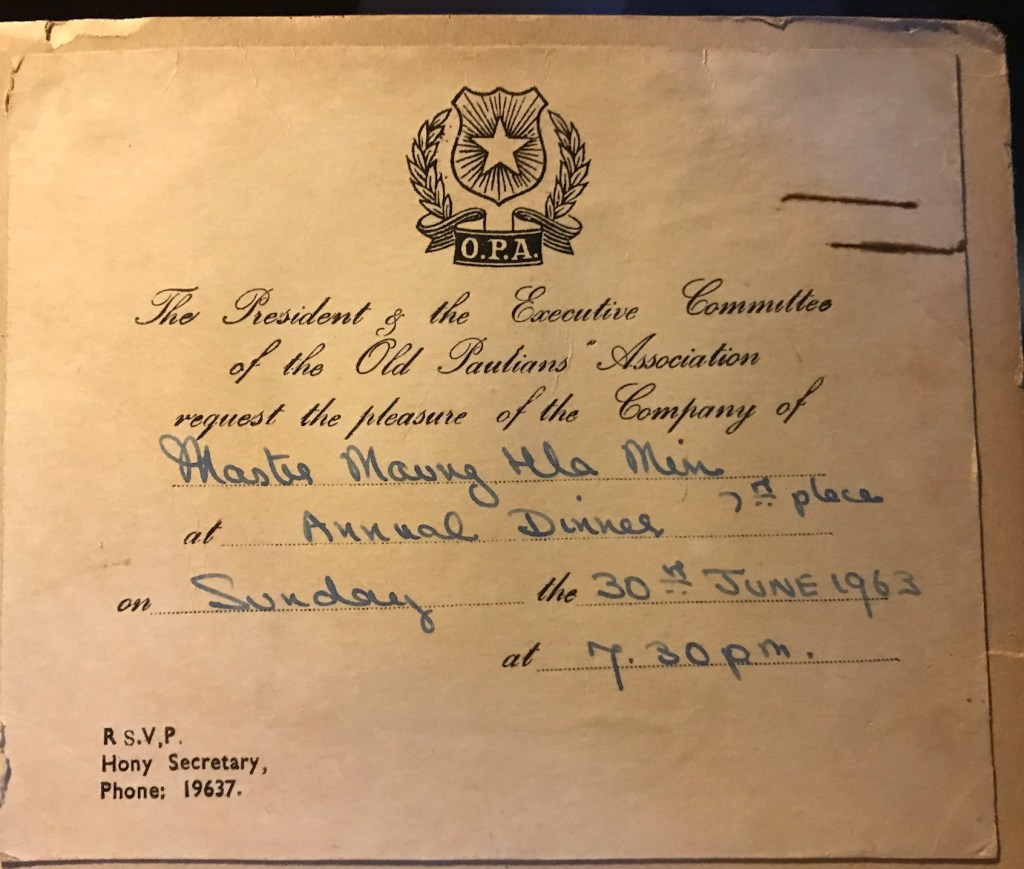
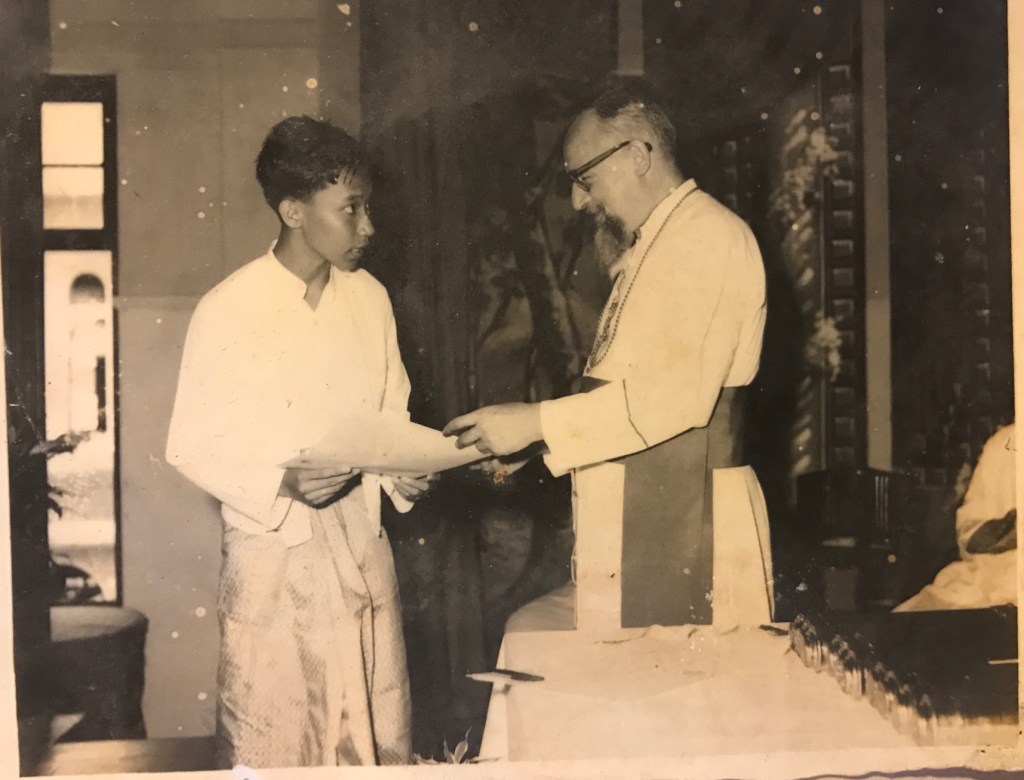
Hla Min (SPHS) : Seventh / Computer Science
Dr. Winnie Aung (Branch Convent) : Eighth
Dr. Johnny Maung Maung (Aung Kyaw Zaw, SPHS) : Ninth
Maung Maung Kyi (SPHS, GBNF) : Eleventh / Chemical / Moved to Wales, UK
Dr. Frank Gale (Khin Maung Zaw, SPHS) : Seventeenth / Moved to UK
1964
Dr. Cherry Hlaing (St. John’s Convent) : Joint First in Burmawith Raw Marks / Admitted as Roll Number One to IM(1)using ILA
Dr. Lyn Aung Thet (MEHS) : Joint First / Lost tie breaker with ILA / Moved to USA
Dr. Aung Win Chiong (SPHS) : Third (in raw marks) / Admitted as Roll Number One to IM(2) using ILA /Moved to USA
Indian Lady : Fourth
Dr. Min Lwin (Maurice Hla Kyi, SPHS) : Fifth (in raw marks) / Admitted as Roll Number Two to IM(2) using ILA / Practice in UK and Myanmar
1965
Bernard Khaw(SPHS) : First in Burma / Four distinctions including a high score (80+ marks) in English / Due to the rule changes, he could not apply for the professional courses. / Left to study and work in USA
Maung Aye (SPHS) : Second in Burma Younger of the two twins / Both completed their doctorates in the USA
Winston Sein Maung (SPHS, GBNF) : Third in Burma (in raw marks) / Admitted as Roll Number (22) to IM(1) using ILA
Cherry Than Tin @ May Kyi Nyein : Fourth (in raw marks) / Admitted as Roll Number One to IM(2) using ILA
Yi Thway(Edwin Ba Hein, SPHS, GBNF) : Joint Fifth(in raw marks) / Admitted as Roll Number One to IM(1) using ILA / Moved to UK
Paing Soe (Freddie San Shwe, SPHS) : Joint Fifth(in raw marks) / Admitted as Roll Number Two to IM(1) using ILA / Retired as Deputy Minister of Health
44 students from SPHS were admitted to the Medical College / Institute.
Some Photos from 1963
Hla Min (SPHS63)Scholarship Holders from SPHS in 1963
Thanks for the feedback / information
Thit Yine mentioned that Boon Chiong (Dr. Hla Shwe, Yegyaw Methodist) stood First in Burma in the Matriculation of 1953.
Sayama Daw Tin Tin Maw (MEHS57) told me that her elder sister Lily Hwang (MEHS55) stood First in Burma in the Matriculation of 1955.
Several Peterites provided the names of the Top Three in the Matriculation of 1956. They stood First, Second and Joint Third in Burma.
Sayama Daw May Saw Lwin (MEHS57) mentioned that Dr. Htin Kyaw (Sacred Heart57) stood first and that his elder twin brother Dr. Htin Aung (Sacred Heart57, GBNF) stood sixth in the Matriculation of 1957. Nellie Liu (MEHS57) stood Second.
Saya Dr. Soe Win (SPHS58) mentioned that Daw Myint Myint Tin (Pearl Ba Tin, MEHS58) stood Third in the Matriculation of 1958.
Dr. Tin Wa (SPHS57) added the names of the four top students led by his younger brother Dr. Frankie Ohn (Hla Tin Ngwe) in the Matriculation of 1959.
Dr. Thane Oke Kyaw Myint (SPHS60) mentioned several top students in the Matriculation of 1960.
Dr. Swe Khin Tun (spouse of Dr. Nyi Thet Lwin) mentioned that her father Dr. Khin Tun (St. John’s Diocesan) stood 12th in the Matriculation of 1963.
Dr. Aung Win and Dr. Min Lwin (both SPHS64) mentioned the use of raw marks and ILA in the Matriculation of 1964.
Bernard Khaw (SPHS65) and several of his classmates mentioned the top students in the Matriculation of 1965. There are differences in ordering : one using Raw Marks and the other using ILA. e.g. Winston Sein Maung (GBNF) stood Third in Burma using Raw Marks, but he was admitted as Roll Number 22 to IM(1) using ILA.
Dr. Richard Yu Khin (MEHS61, GbNF) provided the following information 1954 – Second in Burma – Dr. Tin Myo Than (TTC) – Florida Freedom Fighters. 1955 – First – Lily Hwang (MEHS) – Doctor in Arizona 1957 – 2nd – Nellie Liu (MEHS) – Doctor in USA – younger sister of Ko Thein Lwin (Singapore Polytechnic) 1960 – First – Austin Kyan (MEHS) – Doctor in Singapore 1960 – Second – Dr. Nyan Win (MEHS) – Doctor in USA– better known as Sanjai Lun Pe at MEHS. 1961 – First – Lina Ong (MEHS) – Doctor in Hong Kong 1961 – Second – Dr. Robin Ban – sat next to Eddie & Dr. Thein Htut at Eddie’s 77th Birthday Party in Brisbane, Australia 1963 – 6th Kenny Wong (MEHS) – came with Dr. Jenny Lim, Dr. Primrose Chaudhuri & Lt. Commander Dr. Ivan Teoh (USN) to visit me at my office at University of Texas in 1971.
Family of First in Burma
Four Generations and Five Members (headed by U Hoke Sein) stood First in Burma (which is literally unbeatable).
U Hoke Sein (Compiler of Pali-English-Burmese Dictionary) Son : U Saw Hlaing Grand daughter : Dr. Cherry Hlaing Two Great Grand Children
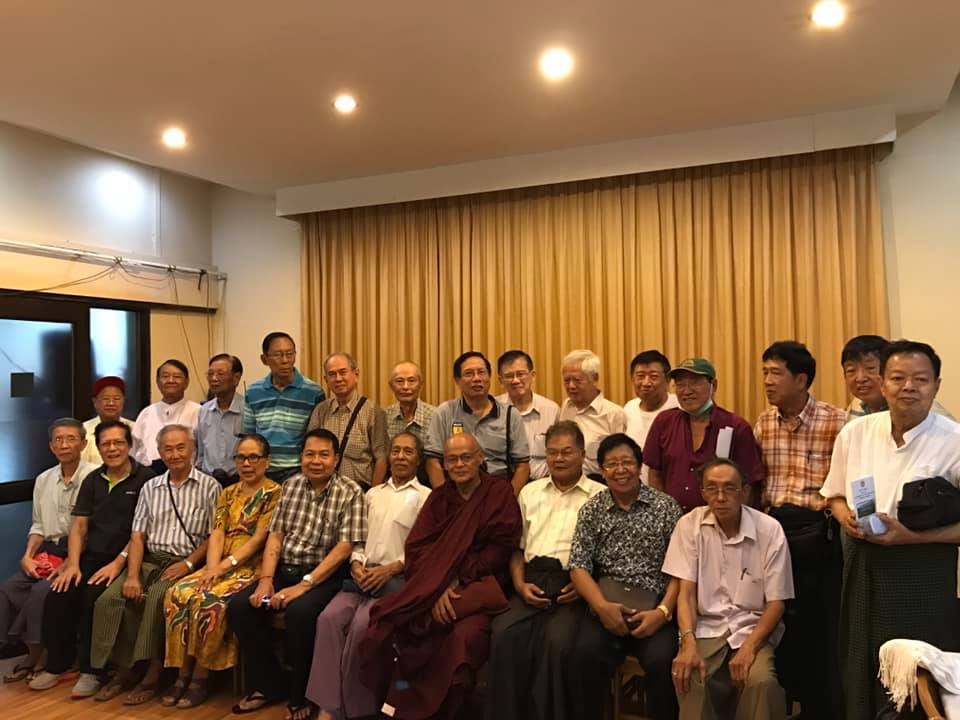
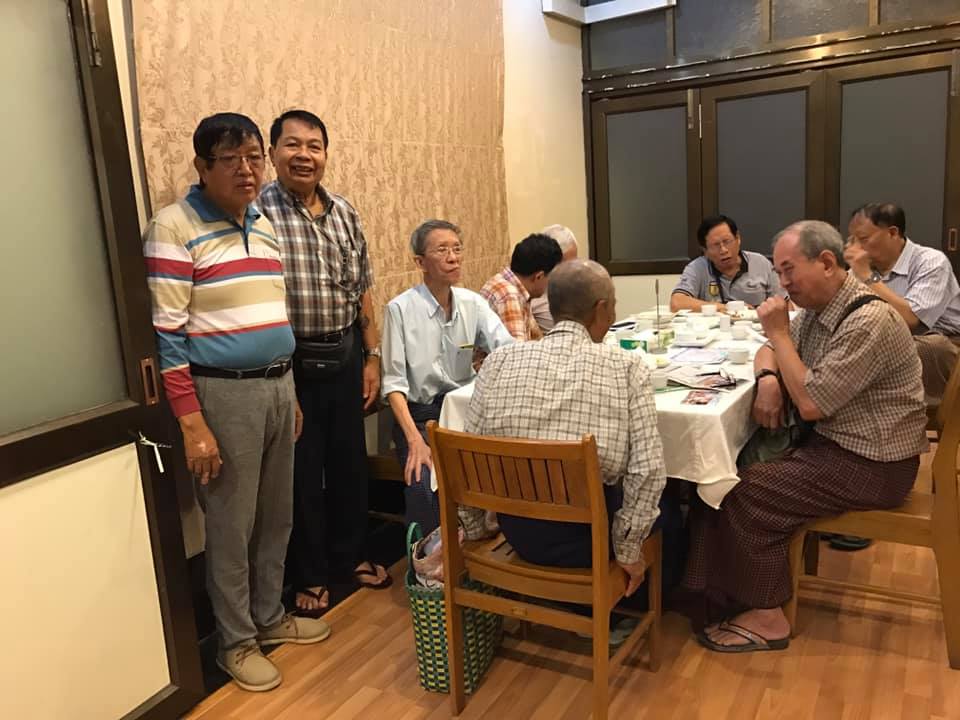
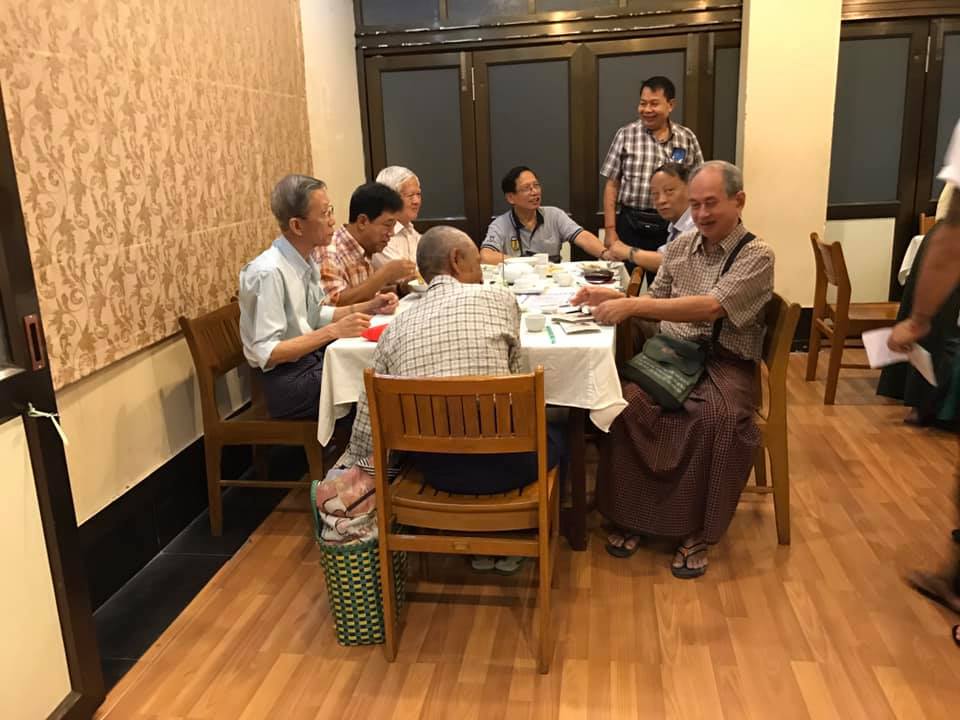
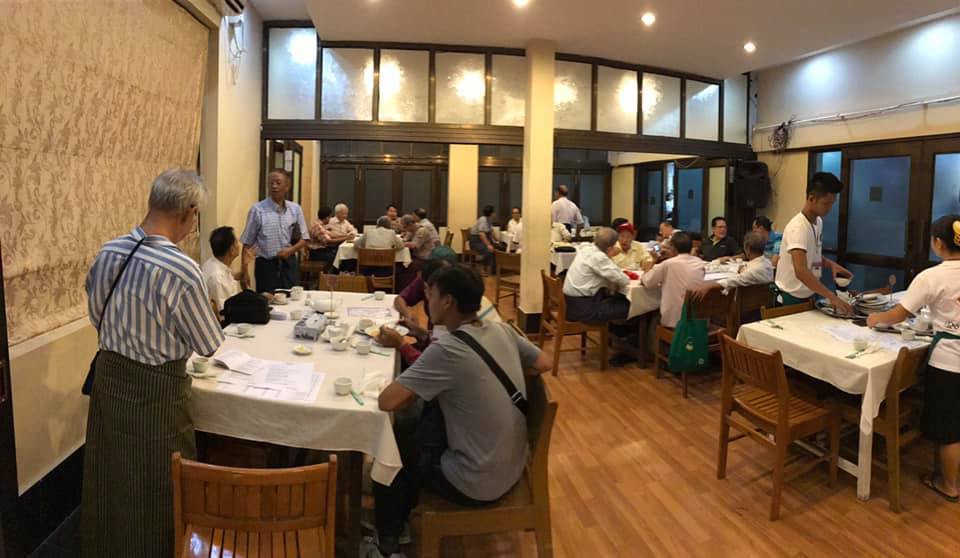
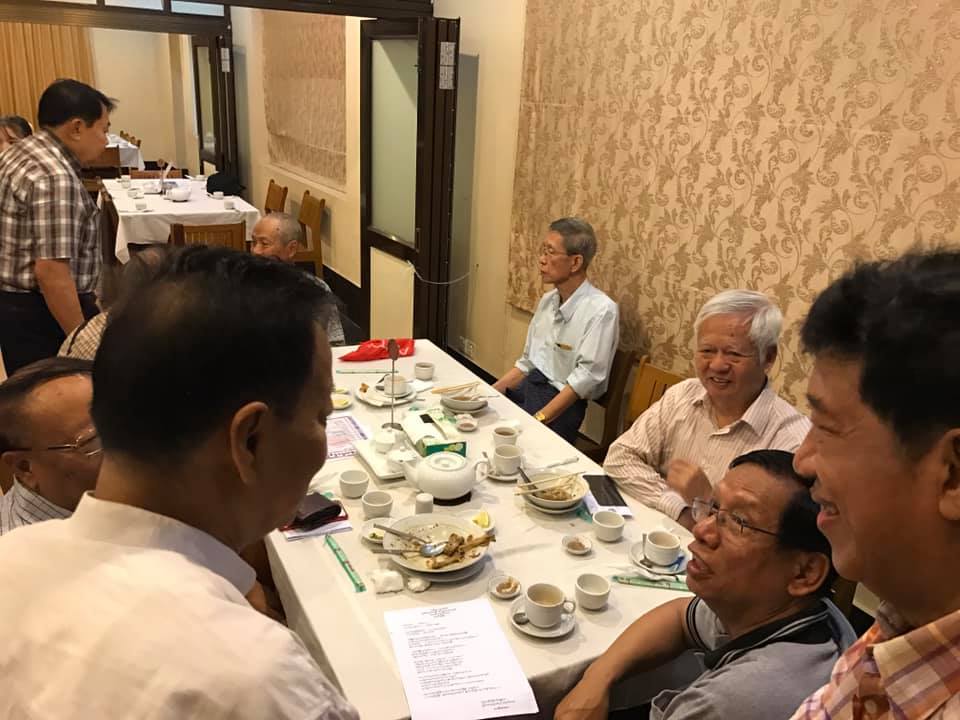
Before the pandemic, 69ers used to have Monthly Breakfast Gatherings usually at Taw Win Hnin Si (Royal Rose Restaurant).
Some 69ers offered to host the Gathering to celebrate their Anniversaries, Birthdays …
U Aung Min (M69, Chair of 69er HCF) is a Core Organizer of the 69er activities including the Annual Dinner Gatherings and the Golden Jubilee Celebrations
Over 40% of the class are GBNF (Gone But Not Forgotten).
He stood First in Burma in the Matriculation of 1963. He scored 100 marks each in Mathematics and Chemistry and 99 marks (in Physics after the examiner reluctantly took back 1 mark from the perfect score). He also had a Distinction in English (as he did in HSF). There was only a couple of students who had Distinction in Burmese.
Together, we were the “guinea pigs” of the Education System and Policies. Our seniors took two Government examinations before entering the university.
We took
the last ever 7th Standard Government examination in 1960
the first ever High School Final ONLY examination in March 1962 (under heavy security due to the Coup D’etat)
the High School Final ONLY examination AGAIN in August 1962 (since the March examination for Rangoon Division was declared NULL and VOID)
the first ever Matriculation ONLY examination in 1963
The silver lining was that TEN matriculates from SPHS were in the Top Twenty and were awarded Collegiate Scholarship of 75 Kyats per month.
First : Khin Maung U
Second : Min Oo
Third : Myo San (Freddie Ba San, GBNF)
Fourth : Nyunt Wai
Fifth : Thein Wai
7th : Hla Min
9th : Aung Kyaw Zaw
11th : Maung Maung Kyi (GBNF)
13th : Aung Thu Yein (Brownie Way, GBNF)
17th : Khin Maung Zaw
Impact of Change in Education System / Policies
Before our time, medical graduates were selected to study for their membership and fellowship in the Royal Colleges in the UK.
Even though Dr. Khin Maung U finished in the top of his class and was a Multiple Luyechun from the Institute of Medicine (1), due to Change of Policies, he had to be contented studying for his Masters in Burma.
He had to wait long before he had a chance to study in the UK, Australia and USA.
Medical Research
Dr. Khin Maung U with Appreciation Award from FDA
Worked at John Hopkins and other universities in the USA before settling as a senior researcher for Food and Drug Administration (FDA).
After retirement, he is compiling and posting Medical Research Updates (appropriate for lay people).
Volunteer
Volunteered as Translator and Editor for the Dhamma Talks given in Maryland, USA and vicinity.
He and his spouse Dr. Nyunt Nyunt Wai (Amy) are Patrons of a monastery in Maryland.
Proud Grandfather
Some time back, he became a proud grand father when his younger daughter presented him a wonderful gift.
Laughter is the best medicine Feature in Reader’s Digest
It takes less effort and nerves to smile than to frown.
A Cartoon (or Comics) a day keeps the blues away.
Cartoons (and Comics) have no age boundaries.
EarlyCartoonists
Aung Shein
Ba Gyan
Ba Htwe
Heng Soon
Kyaw San (“Ka Sa”)
Pe Thein
Shwe Ta Lay
Than Kywe
…
They published Cartoons in Burmese and English newspapers, magazines, books, …
The “Cartoon Festival” was held in U Ba Gyan Street (around Tazaung Daing).
In the mid 1950s, there was a rift between the two factions of AFPFL. Some cartoonists took sides and a “price war” started. The cartoons, which sold for 60 pyas were then given away at bargain prices (any where between 10 and 50 pyas).
There were two Gates during our RIT days. The RIT Main Gate was named “U Lu Paw” Gate (at the suggestion of Ko Win Thein (M67). The Side Gate used by those that came be Bus and Rail was known as “Sin Ye Thar” Gate.
Maung Kabar
Ko Myint Soe (C68, GBNF) and Ko Myint Thein (M69, GBNF) are fondly called Maung Kabar or Kabar.
About a decade ago, my spouse paid K10,000 for xeroxed copy of “old” cartoons published in the Rangoon Times. Some are political satire.
Engineer Cartoonists
There may have been engineer/cartoonists before Saya U Khin Maung Phone Ko (C64), Saya U Aung Myint (Pet69, GBNF), and U Myint Pe (M72).
U Khin Maung Phone Ko
U Khin MaungPhone Ko
Saya U Moe Aung (EE 63) mentioned that Saya U Khin Maung Phone Ko made his name in the media (e.g. Kye Mon Daily) with his “Vietnam” cartoons.
Signature “Phone Ko” emphasized the “Na Gyee” (Big Na).
Patron of the RIT Cartoon Box.
Moved to Singapore.
U Aung Myint
U Aung Myint(GBNF)
Saya U Aung Myint (Pet69) is known for “Kyant Ba Hone“. The character looks superficially like Nick Kelly, but the contents are different.
Served as President of the RIT Cartoonists Association.
Patron of the RIT Cartoon Box.
Called “Delta Tun Shein” for his likeness to Saya U Tun Shein (Mathematics).
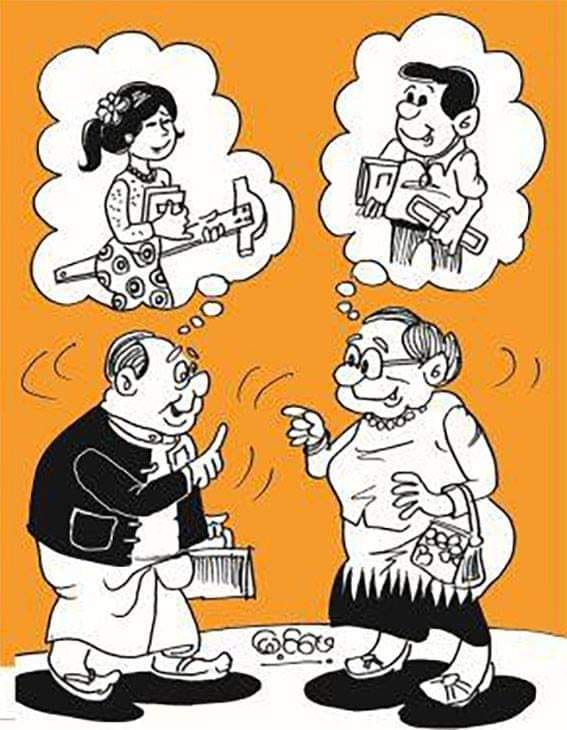
Two of his early cartoons were about “Kar Ku La Thin Char” (Calculus) and the now obsolete “Slide Rule“.
“Ah Ba, Kar Ku La Thin Char is fascinating. If you differentiate a Lada, you get a Sargalay. If you integrate a Sargalay, you get a Lada.”
“Ah Ba, Slide Rule is fascinating.” “Lu Galay, Show me how to add 2 and 3 with your slide rule. “Ah Ba, I cannot do it.” “Then, show me how to subtract 2 from 3 with your slide rule.” “Ah Ba, I cannot do it.” “Lu Galay, Throw away your useless slide rule.”
U Myint Pe
U Myint Pe
U Myint Pe (M72) has several hobbies.
One of the “Mike Khe” and “Pho So Chin”. Admin of U70 musical group.
Performed as Lu Shwin Daw Seik Kyee of the Swel Daw Yeik Ah Nyeint at the Rangoon University Golden Jubilee Celebrations in 1970.
Under the patronage of Saya U Khin Maung Phone Ko and Saya U Aung Myint, U Myint Pe implemented the RIT Cartoon Box using an old telephone kiosk for posting RIT-related cartoons (weekly).
U Myint Pe’s sample cartoon
RIT Cartoon Box
The tradition was maintained by three (or more) generations of Cartoon Boxers.
After 1988, the authorities ordered to close the Cartoon Box.
The organizers of “Cartoon Box” spanning several years finally had a Grand Union prior to SPZP-2012. Most met face to face for the first time. They compiled selected cartoons from the RIT publications (Set Hmu Thadin Zin, Annual Magazines, Sar Saungs) for a book to commemorate SPZP-2012 and to re-display the Cartoon Box. Many (manned the booth at SPZP-2012 and autographed the cartoon books.
The History of the Cartoon Box was published in the Swel Daw Yeik Magazine for SPZP-2012. U Myint Pe was a Contributing Editor.
Collection of RIT Cartoons was published in time for SPZP-2012. During my visit to Yangon in March 2012, U Saw Lin (C73, GBNF) gave me a xeroxed copy of “Selected RIT Cartoons”.
Pamphlet of RIT Cartoons distributed at Shwe YaDu in 2014 and SPZP-2016
Aw Pi Kye
Aw Pi Kyeh (Mann Bei) served as Secretary of the RIT Cartoonists Association. He later headed the Myanmar Cartoonists Association. I met him twice during his visit to US : first at the San Francisco Bay Area Literary Talks in Fremont, Northern California and later in Los Angeles, Southern California.
Aw Pi Kye’s Sample Cartoon
Miscellaneous
Joker was a contributor.
Joker’s Sample CartoonU Thiha Latt
Saya U Thiha Latt was one of the last “Cartoon Box” organizers. He also helped with the design/type setting of “History of University Engineering Education in Burma/Myanmar”, “Swel Daw Yeik Magazine”, and “RIT Cartoon Collection”.
U Myo Myint
U Myo Myint (Myat Myo Myint) is known for his Cover Designs, Pon Tus and Paintings. He also drew some cartoons for the RIT Magazine. One of them reminded me of three female friends who were known as “Half Size”, “Full Size” and “Double Size”. Sadly two : Sayama Daw Mya Mya Than (EP68) and Daw Nyunt Nyunt Zaw (T68) are GBNF. Another reminded of the several “Pho So Chin” and “Mike Khe” in the USA, Australia, Singapore and Myanmar. Yet another reminded me of some classmates who excel in extra curricular activities so much that they bade farewell to RIT before graduation.
There were dozens of RIT/YIT/YTU cartoonists. U Myint Pe published a partial list.
Maung Yit (Maung Maung Win, Moe Ma Ka) is one of the junior members of RIT Cartoon Box Contributors.
With contributions by U Myint Lwin (SPHS66), U Khin Maung Zaw (SPHS70), Dr. Thiha Win (SPHS70), Dr. Thane Oke Kyaw Myint (SPHS60), Dr. Khin Maung U (SPHS63), Dennis Mackey (St. Pat)
Group Photo of SPHS Sayas and Sayamas
We still have several names missing in the group photo. Please add comments if you know the names of the sayas and sayamas.
2nd row : Ms. Amelia Kyi (Miss Hong Kong) 5th from left; Ms. A Benjamin 4th from right
3rd row : Mrs. Fernandez far right
4th row : Saya Ah Mann 3rd from left; Saya Sein 4th from left; Mrs. Violet Boudville 7th from left;
5th row : Saya Timms 3rd from left; Saya U Aye 8th from left;
6th row : Saya Johnny Myo far right; Mr. Day 5th from right
High School Sayas
Sayas 1Sayas 2Sayas 3
The Brother Directors rotate among the De La Salle Schools (St. Paul’s in Rangoon, St. Peter’s in Mandalay, St. Albert’s in Maymyo, etc.)
Brother Hubert was the Director when I joined Std IV(D). He was also the Director when we were in Std. X(A).
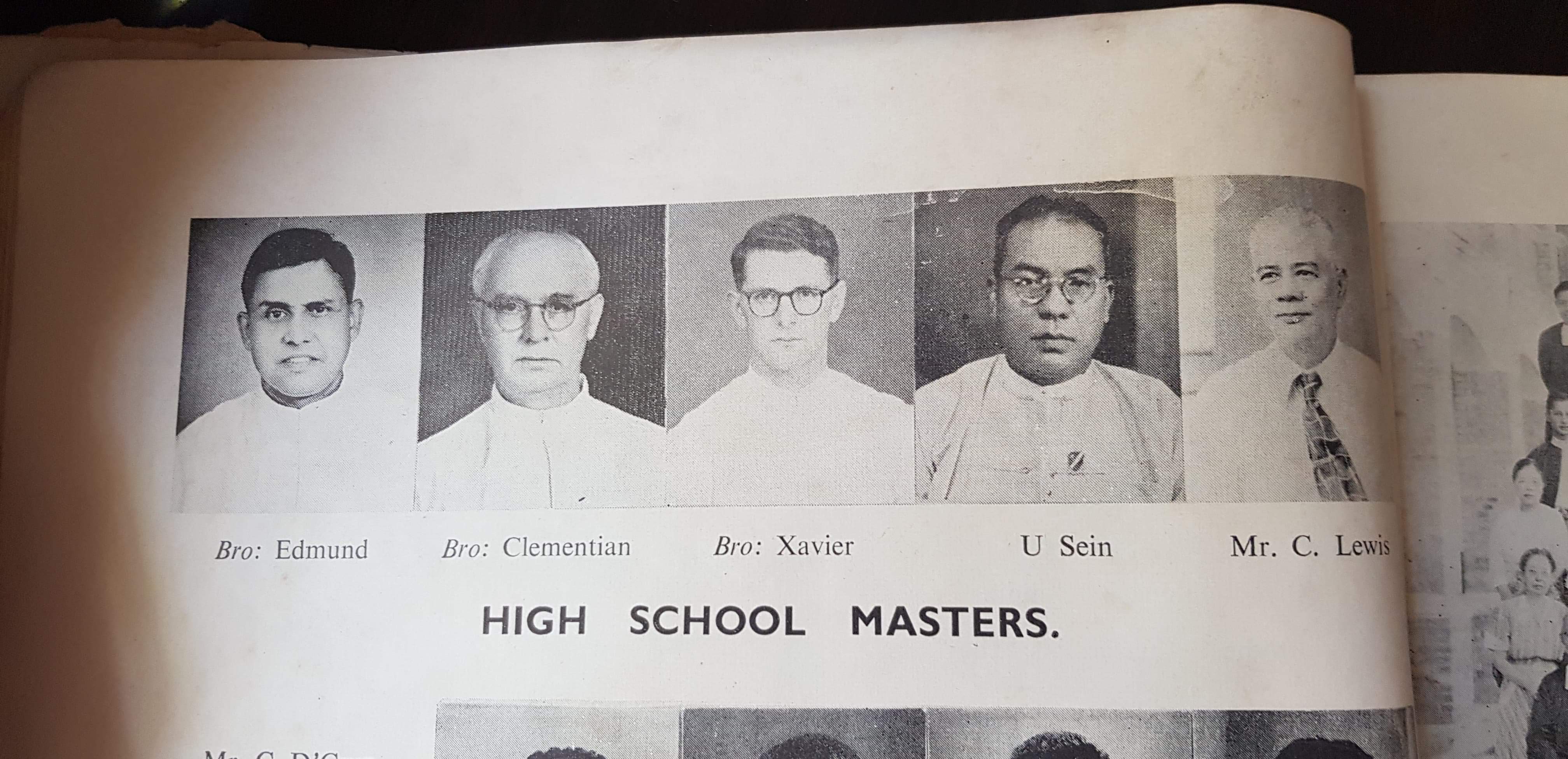
Other Brother Directors at St. Paul’s include Brother Edmund, Brother Felix and may be Brother Peter.
Brother Urban was Sub-Director for several years.
In our Matriculation class, Brother Austin was the Class Teacher. He also taught English and “Morals and Manners”. He also served as the School Librarian. He later moved to either St. Peter’s or St. Albert’s.
Saya C. Lewis was the relieving English teacher.
Saya U Sein (father of Dr. Soe Win) taught Burmese.
Saya U Nyunt Maung was the relieving Burmese teacher.
Brother Clementian (see the next picture) taught Mathematics. His funeral service probably had one of the longest queue of cars. Some had not left the SPHS compound, when the hearse had reached the Tamwe Cemetery. He was a former Brother Director, who continued teaching.
Saya U Kyaw Khin and Saya U Hla Min (RUBC Gold) were the relieving Mathematics teachers.
Saya Beatson taught Physics. Saya is now a monk.
Saya U Hla Myint was the relieving Physics teacher.
Saya DeCruz taught Chemistry. Saya moved to Australia.
Brother Joseph (later Father Joseph) would demonstrate in the lab. He would later move to St. Patrick’s.
The Elder Brother Edmund was Brother Director when we were in Std. V(D). He was killed by Wilfred Boudville, but the Brothers pardoned Wilfred.
I do not know what the younger Brother Edmund taught.
Brother Clementian taught us Mathematics in Std. X(A). He was a former Brother Director. He would not let the Brother Director and his assistants come near his class.
Brother Xavier taught us English in Std. VII(A) and Std. IX(A). He was also the Class teacher for Std. IX(A). He later moved to St. Albert’s in Maymyo.
Saya U Sein taught us Burmese in Std. IX(A) and Std. X(A).
Saya Lewis taught English for a different section. He was a relieving Saya for our class.
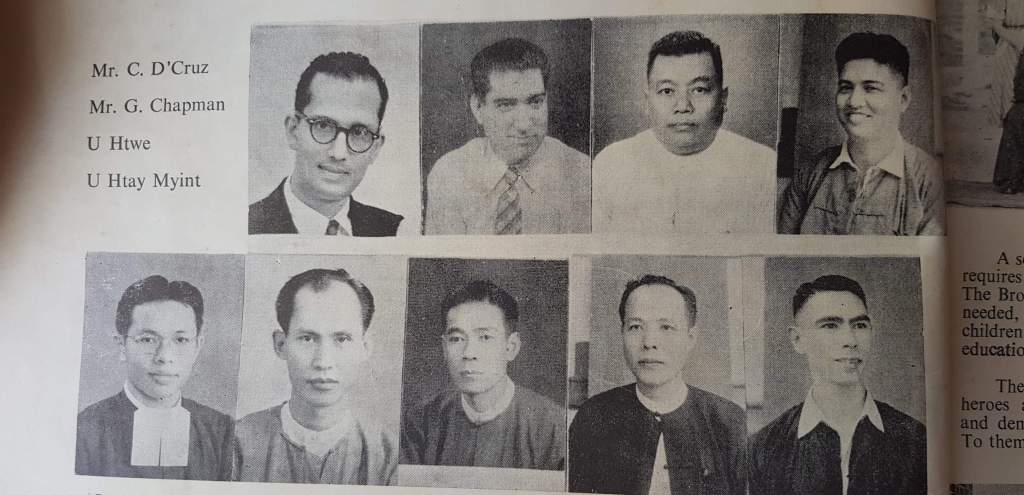
Saya Chapman taught English for a different section. He wrote several books for quick study.
Saya U Htwe and Saya U Htay Myint (Padetha Tuition) mainly taught Arts subjects. U Htay Myint wrote notes for History.
Brother Anthony was our Class teacher in Std. VIII(A).
Saya Johnny Myo (older brother of Peter Myo) taught Mathematics in other sections. He was a relieving teacher for our class.
Saya U Nyunt Maung taught Burmese in Std. VIII(A). He can teach several subjects.
Saya U Kyaw Sein (brother-in-law of Saya U Sein) was Class teacher of a different section in Std. VII.
Saya Beatson taught us Physics in High School. Several years back, Saya Beatson, Saya U San Thein and Brother Anthony were the only teachers left from our time. Saya Beatson is now a monk.
We were not taught by Brother Henry Peter and Saya U Tun Shein. According to Dennis Mackey (C73), Brother Henry Peter was one of his teachers at St. Patrick’s in Moulmein.
Saya Timms is the father of Lawrence Timms (IM, Old Croc).
Saya U Aye, Saya U San Thein and Saya U Kyaw Oo were Class Teachers for other sections of Std. VII.
[Dr. KMU] Saya U Aye is a very nice, soft spoken, confirmed bachelor who lives with his mother, and teaches History to our class of VII(A) (and perhaps Geography also to other classes).
Saya U Pe Tin was our Burmese teacher in Std. V(D) and our Class teacher in Std. VI(D).
Saya U Nge was our Class teacher in Std. VII(D).
The Standards mentioned are for our batch. They might not match the Standards mentioned in the photos (which are taken later). Some Sayas (e.g. U Pe Tin) were promoted to teach higher classes.
My Class Teachers
IV(D) : Ms. A Benjamin
V(D) : Mrs. Violet Boudville (Mother of Richard G Boudville)
VI(D) : Saya U Pe Tin
VII(D) : Saya U Nge
VIII(A) : Brother Anthony
IX(A) : Brother Xavier
X(A) : Brother Austin
Those who attended SPHS from KG or Std I will probably know more names of the teachers.
Brother Clementian
Brother Clementian was loved by his former students. When he passed away, the cortege left from SPHS (St. Paul’s High School) to the Tamwe Christian Cemetery. When the cars arrived at the Cemetery for the Burial Service, many cars were still leaving SPHS.
His younger brother had a couple of Doctorates, but his teaching was not valued as highly as that of Brother Clementian, who did not have a Doctorate.
Brother Clementian was a Brother Director. He retired from being a Brother Director, but he did not retire from his love of teaching.
It was customary for Brother Directors to go round and inspect the classes. Brother Clementian would not allow the Brother Director or the Assistant Director to come near his class.
Brother Clementian did not know or care if a student is a son of the Prime Minister, Minister or a high ranking official. He treats every student fairly.
He taught High School Mathematics. He had several texts and reference books. He would teach a topic and ask one or more students to go onto the blackboard to show what they have learned and to solve selected problems. He reminded students not to impose unnecessary “restrictions”. For example, if he asked a student to draw a triangle, it should be an arbitrary one (not restricted as an isosceles or equilateral) and it could/should be labeled differently from the one used in his example.
Sad to hear that some present day students do not get marks if they deviate from “rote learning”.
Every student would have two (or more) exercise books, so that he can collect and grade the homework. Every week, he would give a test of three questions to be answered in one hour. This training prepared many students to complete six questions in the Matriculation examination much earlier than the allotted three hours and score Distinctions.
He acknowledges that some students (e.g. Min Oo) are gifted and have learned beyond High School Mathematics.
Many remember his smile, and a few remember the strong finger that he used for poking at “badly behaving” students.
Dr. Thane Oke Kyaw Myint (SPHS60) wrote :
I have forgotten the name of the maths textbook. It was a govt prescribed one. There was another book to used in college. Brother Clementian finished was the first book but blithely went in with the book for Inter A during our matrix class. It made the questions in additional maths easier for us because of this.
There was only one person who could beat Brother. Often when a maths problem has been solved by himself, Myo Myint (your brother in law) would shout that he could work out the solution using less number of steps. And he was always correct. Do Si at the end of his working out each tine, he would turn to Myo Myint and asked “Can you do better?” which Myo Myint often could.
Dr. Nyan Taw (SPHS63) wrote :
Brother Clementian taught us mathematics in high school. Seem we were the last lucky group (A&B) he taught before he retired. Min Oo was in A whereas I was in B class. The best maths teacher ever !!!
U Than Win (SPHS63, RIT69er) wrote :
Whenever I find “Sequence Geometry “in the old stock of books I always remember our great Maths teacher. We love and revered but sometime we feel somewhat frightened whenever we lack preparation. The most remembered word in this geometry book is QED (which is to be proved) because he always stare at us and stressed the word whenever the problem is solved.
Gone, gone But still in our heart.
Std VIII (A)
Sayas
Brother Felix (Brother Director)
Brother Anthony (Class Teacher)
Brother Xavier
Saya Sein
Saya Nyunt Maung
Saya Beatson
Some chose to become Engineers
Hla Min
Khin Maung Bo (Alan)
Aung Thu Yein (Brownie, GBNF)
Uzin Aung Chaw (Victor)
Than Win
Tin Tun
Than Htay
Caesar Yang
Maung Maung Kyi
Kyaw Wynn
Some chose to become …
Medical doctors (Khin Maung U, Myo San, Nyunt Wai, Thein Wai, Win Kywe, Orlando Thein, …)
Ph.D’s (Min Oo, …)
Army officers (Aung Khin, Han Tun, …)
Priests (Edwin David, Bernard Taylor, …)
Dr. Thane Oke Kyaw Myint
Dr. Thane Oke Kyaw Myint (SPHS60) stood Sixth in the Matriculation of 1960. He missed the top five spots by a mark each. The Brothers were disappointed although 20+ SPHS students received Collegiate Scholarship.
He worked at the Rangoon Children’s Hospital an taught Pediatrics. He was forced to resign for his involvement in 8-8-88 protest.
He worked for
UNICEF Myanmar for two years
China for two years
Bangladesh for six years
Oskistan for three and a half years
Three and a half years in the Pacific based in Fiji
After retirement, he moved to Canberra, Australia.
He considers me as a member of his family. Our parents were Dhamma friends. He took care of the health of my then-young sons.
He was organizer of the “Alumni of the Medical Institutes in Myanmar”.
He added insightful comments to my Trivia posts. Some are about his father and six siblings. Some are about names of notable Burmese professionals.
I re-posted a few of his blogs : one about U Tin Tut and another about his bright classmates and students.
Poem honoring Dr. Thane Oke Kyaw Myint
Dr. Nyunt Wai
SPHS 63VIIIA (SPHS)PauliansPoem
Dr. Nyunt Wai (Victor Nyunt, SPHS63) stood 4th in the whole of Burma in the Matriculation of 1963.
He served as Professor of Physiology.
He has compiled a list of Professors of Physiology.
He worked in Malaysia.
After his second retirement, he is spending time on his hobbies : writing and painting.
He writes articles and poems.
He plans to publish a book by the end of 2019.
He illustrated one of the books by Ashin Ananda (Laureate Poet).
He suggested a list of names to be covered.
He also added entries to my posts about names.
Dr. Nyunt Wai wrote :
Thank you Ko Hla Min. But I’m no painter or a poet. Just occasional excursions to these fields. And I’m not a visiting Professor. Had to apply for this job in Malaysia just like any other expatriate from India or Bangladesh. So I’m no 3 “P”s. This reminds me of “No 3 P policy” of the now extinct Yahoo group Alumni-Myanmar-medical-institutes founded by Saya Johnny Thane Oke Kyaw-Myint, which served well as a lively forum for us until the advent of Facebook.
Dr. Thane Oke Kyaw Myint wrote :
Yes AMIM was a tight small group of us. Those who became friends then remain now as close friends. On FB, there is short attention as well as being bombarded by posts that we have no interest in.
Dr. Khin Maung U
Work Experience
The following is Dr. Khin Maung U’s work experience (in reverse chronological order) :
(1) Clinical Reviewer and Senior Medical Officer at U.S. Food and Drug Administration (2) Assistant Professor and Physician at Johns Hopkins University (3) Associate Professor, Physician at Hahnemann University Hospital (4) Head, Clinical Research Division at Department of Medical Research, Ministry of Health (5) Clinical demonstrator at Institute of Medicine 1, Yangon (Rangoon), Myanmar (Burma) (6) Demonstrator, Dept. of Pharmacology at Institute of Medicine 1, Yangon (Rangoon), Myanmar (Burma)
Scholar
Dr. Khin Maung U (SPHS63) stood first in the Matriculation in 1963. He received 100 marks each in Mathematics and Chemistry and 99 points (after one point deduction in the review) in Physics. He scored Distinction in English in HSF (High School Final), Matriculation and I.Sc.(A).
He was selected Lu Ye Chun for several years at the Institute of Medicine (1).
He performed research at BMRI (DMR) in Rangoon and at FDA in the US.
Due to changes in the policy for sending State Scholars, he had to do his M.Sc. (Medical Science).
Later, he completed several Fellowships and an MD from UNSW (University of New South Wales).
Family
His spouse Dr. Nyunt Nyunt Wai (Amy Hla Maung) did her DCH (Diploma in Child Health).
Their daughter Nilar is a medical doctor in the USA.
His younger brothers (Khin Maung Than, Khin Maung Win …) are Paulians.
Knowledge Sharing
He has his own blog on Medical Research Reports (about 80+ reports). He has presented selected medical research papers for the lay person.
Earlier, he also wrote and translated articles on Dhamma and acted as an interpreter at the Dhamma Talks and Meditation Retreats.
Dr. Khin Maung U is seen Second from left in 4th row
Dr. Nyan Taw
Dr. Nyan Taw (Dicky, SPHS63) matriculated from SPHS. He studied at RASU and Australia. He worked at RASU and Pearl & Fishery Corporation before going abroad.
He invited us at his son’s wedding in Southern California, and his daughter’s wedding in Yangon. Thanks.
Young and crazy team from Pearl Island four decades ago
Dr. Nyan Taw (Dicky, SPHS63), Soe Nyunt, …
Std. VIII B
Football
He played football with Myo Nyunt (Harry Kyaw), Phillip Ba Maung (GBNF) and other friends from SPHS and MEHS.
High School Football
Old Paulians
He attends dinner gatherings hosted by Old Paulians.
Old Paulians
Dr. Soe Win
Dr. Soe Win (SPHS58) is the son of Saya Sein and the nephew of Saya Kyaw Sein.
He stood first in the Matriculation in 1958. Robert Sein (SPHS58) was second in Burma.
Saya studied Chemistry Honors. He received his doctorate from the University of London.
Saya retired as Rector from YUFL (Yangon University of Foreign Languages).
In 2018, Saya Dr. Soe Win and Sayama Daw May Saw Lwin celebrated their 48th Wedding Anniversary. Congratulations.
Additional pictures have been posted by their sons.
Garawa
It is a time honored tradition to pay respect to one’s parents, mentors and elders. Garawa can be performed at any time.
Thadingyut is one occasion where most Burmese pay respect to their elders. In our younger days, some come to our parent’s house with BOC candles, bananas, or token items of gratitude.
Several former students (mostly retired Professors) paid respect to Saya Dr. Soe Win and Sayama Daw May Saw Lwin.
Dr. Soe Win wrote :
It’s absolutely amazing how you put together your Trivia (now up to 1537) with accuracy, correct timing and up-to-date. It’s not enough to say you are a walking encyclopedia. I enjoy and benefited by your Trivias as do many others. Thank you.
Dr. Soe Win 1
Dr. Soe Win 2
Dr. Soe Win 3
U Myint Sein
U Myint Sein attended Private Primary Boundary Road School (PPBRS) before moving to St. Paul’s High School (SPHS). He matriculated in 1964 and studied B.Com at the Institute of Economics (IE). He is a cousin brother of U Nyunt Tin (M70, RIT Table Tennis).
He served as Principal of BARB (Burma Astro Research Bureau). He taught Medical Astrology at the School of Indigenous Medicine (Taing Yin Saya Pyinnya) in Mandalay. He later founded “Idea Astrology”.
He is GBNF.
Paulians displaying SPHS Coats
Ko Myint Swe
Ko Win Thein
Ko Myint Toe
Ko Tin Maung Maung Than (Edward Than Maung)
Ko Maung Maung Myint
Ko Kyaw Sein Hla
Two Paulians from SPHS 64
Dr. Min Lwin and Dr. Aung Win Chiong
In the Matriculation of 1964, Dr. Cherry Hlaing and Dr. Lyn Aung Thet had the highest marks. They are considered Joint First in the examination.
The controversial ILA system was used to admit students to the Universities and Institutes. Dr. Cherry Hlaing who had an ILA score of 50 was admitted as the Top student to IM(1). She was also selected Tekkatho Luyechun for Inlay Khaung Daing Camp in the summer of 1965.
Dr. Lyn Aung Thet had four distinctions, but his Burmese scores were not high enough to get the perfect ILA score of 50. He was an multi-athlete and led IM(1) in Swimming and Water Polo. He was elected Luyechun in a subsequent year.
Dr. Aung Win (Lam Peng Chiong, SPHS64) was a few marks behind Dr. Cherry Hlaing and Dr. Lyn Aung Thet. So, many consider him to be Third in Matriculation (based on marks). But, he also had an ILA of 50 and was admitted to IM(2) as Roll Number One (top student).
An Indian student was Fourth.
Dr. Min Lwin (Maurice Hla Kyi, SPHS64) was Fifth. He was admitted to IM(2) as Roll Number Two.
Where are they now?
They were my class mates at SPHS (Saint Paul’s High School).
I have not heard from them (most for a very long time).
Hope they are alive and well.
Alfred Lunn Maung He was a close friend of Edmund Ba Thin in our middle school days.
AnthonyLourdes He was one of the three classmates who had plans to become Catholic Priests.
Aung Kyee Myint He was selected Tekkatho Luyechun from Yezin (Agricultural Institute) for the Inlay Khaung Daung Camp in 1965.
A S Soni He and Dave S Saluja were the two well known Sikhs in our class.
Bernard Taylor He did missionary work in the Philippines before moving back to Upper Burma. I once received a short message on the Internet, but have not heard from him since.
Edmund Ba Thin He is the elder brother of Tin Latt who rowed for Ye Gyaung Lu Nge. He is a close friend of Alfred Lunn Maung.
Edward Chow He took Matriculation as an external candidate along with San Maung (Robert Kyi).
Edward Hla Shwe (1) His father owned a Photo Studio and was one of the contractors for taking Group Photos of the classes. An unmounted Class Photo sold for one kyat. The mounted version sold for One Kyat and Fifty pyas. Several years ago, I met him at his “Myet Hman (glasses)” shop on Sule Pagoda Road. The shop later relocated.
Edward Hla Shwe (2) He was one of the classmates who were allowed to leave early on Fridays.
Han Kan Paw He was from Chin Hills.
Hla Myint He was one of tallest guys in our class. His family manufactured Snow White Makeup.
Herbert KCL Some would try to remember KCL as Potassium Chloride. It stands for Khai Chin Liang.
Khin Maung Khine I am not sure why he received the nickname “Nga Ye Min Tha”.
Khin Maung Kywe He excelled in Track and Field, and Soccer.
Khin Maung Lin (Saw Lin) He was named Saw Lin because he was born in Nattalin. He became a medical doctor. His younger brother was named Saw Pun because he was born in PaPun. Both renamed “Saw” to “Khin”.
Jonathan Swamy He was close with Patrick Das and Sammy Bi.
Malcolm Maung Maung He became known as Zi Wa Mya Zaw (Distinguished Tuition Saya for Biology). His parents and siblings operated Recording Studios.
Maung Maung Thaung He gave his address as 51, Pho Myay Lann.
Michael Oo He is the elder brother of Bo Bo Oo (Oscar, M71).
Michael Su He is close with Michael Oo.
Moe Nyunt He was called “Lay Lone”. He attended the I.Sc.(A) held at SPHS.
Orlando Thein He was a member of the Marching Band along with Win Maung. He became a medical doctor.
Patrick Das He was an organizer for games at Lunch Break.
Patrick Ni His younger sister is the spouse of Ko Maung Maung Gyi (SPHS64, UCC).
Sammy Bi He was close with Patrick Das and Jonathan Swamy.
San Maung (Robert Kyi) He took Matriculation as an external candidate along with Edward Chow.
Sydney Khant He is the son of Pantanaw U Khant and nephew of United Nations Secretary General U Thant.
Than Htay He is a cousin of Win Maung. He studied Engineering.
Than Win (Henry Wong) There were two Than Win. The other Than Win studied Engineering,
Tin Ni During our Std IV (D), he was the Champion for Track & Field in the Midget class.
Tommy Aung There were two Tommy Aung. He majored in Physics. The other Tommy Aung (aka Tun Tun Aung) studied Medicine.
Tommy Chit Maung (Naing Win) He is the son of Widura Thakin Chit Maung.
William Mya Many years ago, he was a Tuition Saya.
Win Maung He is a cousin of Than Htay. He was a member of the Marching Band. He studied Medicine.
Mini-gatherings
Frank Gale’s visit to Yangon
Dr. Khin Maung Zaw (Frank Gale, SHPS63) lives in the UK. He came to Yangon at least once a year to visit his 90+ year young mother and his eldest sister (who takes care of the mother). Recently, his mother fell down and was hurt. Worse still, his eldest sister Daw Khin Myo Han was shocked and succumbed to a massive heart attack.
During Frank’s visit, he would also see his Paulian friends :
Dr. Myo San (Freddie Ba San, GBNF)
Khin Maung Bo (Allan Saw Maung)
Tin Tun
Kyaw Wynn
Than Win
Kyaw Win’s Birthday Soon Kwyay
During my visit to Yangon, Kyaw Wynn hosted a lunch gathering at “Shwe Ba” Saing to celebrate his birthday. He offered “Nawakama” to Uzin Aung Chaw (Victor Chaw, “Okkantha”), who resides in Sagaing Hills.
Aung Kyi (Arthur Kyi), Aye Ngwe (Edwin Ngwe), and some (whom we have lost contact) showed up. Arthur Kyi used to drive a big motor cycle. Edwin Ngwe was a regular football player on most Saturdays after taking the one-hour Mathematics test given by Brother Clementian.
Paing Brothers
(1) Dr. Myo Paing (SPHS54) is a medical doctor. His early assignment was Malaria Campaign. He is a Champion golfer.
(2) Saya U Soe Paing (SPHS56) won a Collegiate Scholarship in the Matriculation examination of 1956. Saya studied BS and MS in EE (Electrical Engineering) at Stanford University in the USA. Upon his return, he joined the EE Department at RIT as Assistant Lecturer. He transferred to UCC as Systems Manager. Sayagyi Dr. Chit Swe founded UCC with the help of Saya U Soe Paing, Saya U Myo Min and Saya U Ko Ko Lay (GBNF). Saya received an M.Sc. in Computer Science from the University of Southampton in the UK. Saya worked for UN projects in several countries. He wrote “Computer Ah Sa UCC Ga” and his experiences as a States Scholar and UN Advisor. After retirement, Saya spent time playing golf and practicing vipassana meditation. Saya suffered back pain and had a minor surgery in Singapore. Saya had to stop playing golf.
During his UCC days, Saya served as a Golf Correspondent. I helped Saya type about the competition at RGC (Rangoon Golf Club) and BGC (Burma Golf Club) and submit to the English newspapers.
(3) U Win Paing (SPHS64) won several Golf Championships with his younger brother U Kyaw Paing. After finishing the finals for ChE (Chemical Engineering) examination in 1970, he entered monkhood with his friend U Aung Min. He has been a Taik Oke and finally the Chief Resident Monk of KabaAye Sunlun Gu Kyaung Sayadaw. He is known as Sayadaw U Wara.
(4) U Kyaw Paing (SPHS67) represented Burma in the Putra Cup. He is a lawyer and an entrepreneur.
U Khin Maung Zaw (EC76) wrote :
For number of years, I was the carrier-cum-postman to bring Saya U Soe Paing’s typed golf news to the WPD, Working Peoples’ Daily at Theingbyu Street! Just one of the chores I had in those days.
I remember jokingly asked Sayadaw U Wara how he felt seeing the (18th??) hole over the fence from the Sunlun Kyaung’s “Thein”. The new golf course was built for VIPs inside Kabaaye, and that particular hole was seen from the “Thein” less than 40-50 yards, of course over the fence.
GBNF
Dr. Myo San (Freddie Ba San)
Dr. Freddie Sein
Dr. Maung Maung Aye
Rev. Edwin David
U Aung Khin
U Min Thaw (Gilbert Thaw)
U Shwe Zan Aung
Uzin Patrick Ba Maung
U Aung Kyaw Myint (Eddie Shein)
Aung Kyaw Myint (Eddie Shein) is alumni of SPHS and RIT. His daughter Thiri Soe is now FRACGP.
Sad News
Frank Gale (Khin Maung Zaw, SPHS63) wrote :
Dear Friends,
My mother had a fall a few days ago but luckily no broken bones. However she is still in considerable pain and from being ambulant and able for a 96 year old she has been bed bound at home with a carer and closely attended day and night by my very close, knowledgeable and reliable friend Sayargyi Professor Dr. U Aung Myint.
Despite all this, my eldest sister (Daw Khin Myo Han), who was 79 found the situation too stressful and had a fatal massive heat attack this morning at around 6am GMT.
Sayagyi U Aung Myint arrived for his regular day time visit and tried but to no avail.
Dr. Myo San (Freddie Ba San)
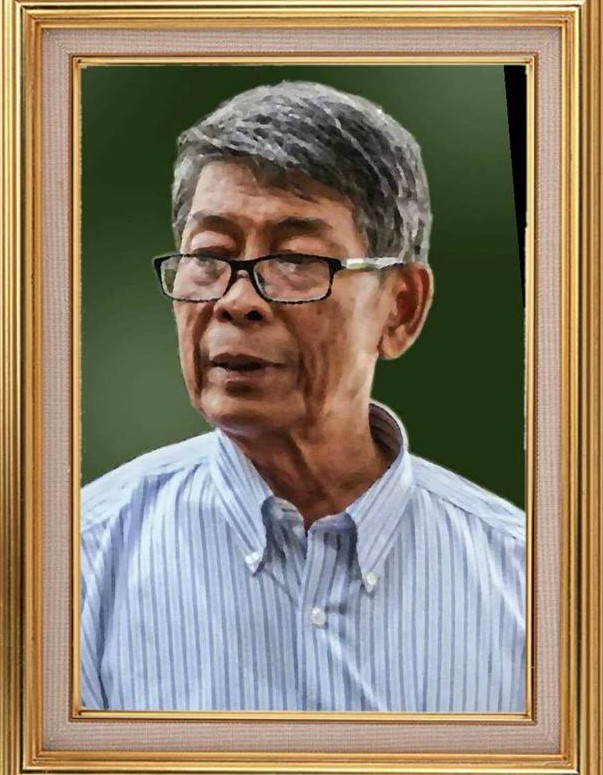
Dr. Myo San (Freddie Ba San, SPHS 63, GBNF) stood third in the whole of Burma in the Matriculation of 1963.
He had mastered phonetics. He also had read lots of English books. One would not be surprised that he scored distinctions in English, Mathematics, Physics and Chemistry.
He was a little bit older than us, and that might have given him a slight advantage in the early years.
He gave me a quiz. “How do you pronounce GHOTI?” I gave an answer which he corrected as “FISH”. He had read George Bernard Shaw, who posed the quiz as a lesson on the eccentricities of English.
GH is phonetically equivalent to F as in ROUGH.
O is phonetically equivalent to I as in WOMAN.
TI is phonetically equivalent to SH as in ATTENTION.
Thus, GHOTI is phonetically equivalent to FISH.
He became a surgeon, but the stress caused him to take early retirement.
Sadly, he passed away.
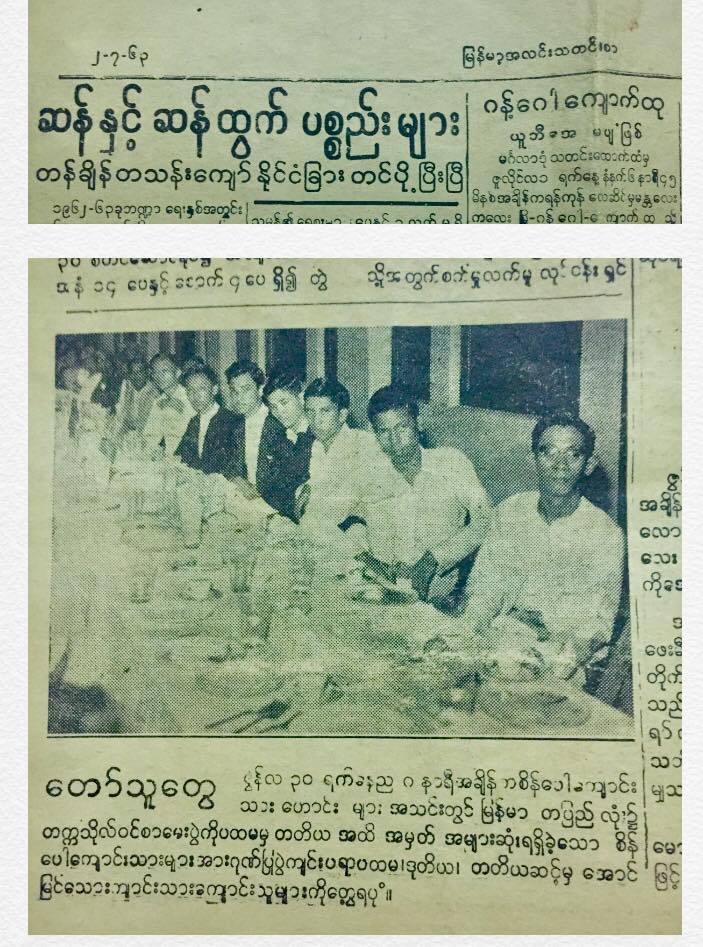
Young Myo San (Freddie) could be seen fifth from the left in the third row in the picture of Std VIII(A) of SPHS. Uzin Aung Chaw (Victor) is next to him. He can also be seen third from right in the photo from Myanmar Ah Lin Newspaper.
I went to the University Central Library (UCL) on Tuesday and managed to get scanned photos from the Eng Student Annual Magazines for the academic years 51-52, 52-53, 56-57 and 60-61. Photos include photos of Sayas and students of that year. From these when can know about the Sayas at that year. We can also identify the students at that year.
Saya U Sein Hlaing (Professor of Electrical Engineering) was a final year student in 1951-52 and became an A/L (Assistant Lecturer) starting 1952-53.
Saya U Tin Swe (Lecturer, EE Department) was a student in 1951-52 and 52-53. He was a member of the Eng Student Union and the victorious Prome Hall football team.
Ex-Burma Selected Footballer U Chan Tha (Chief Engineer, Roads, Rangoon Municipal) was the Captain of the football team.
U Khin Si, husband of RIT Finance Officer Daw Yin Yin Htway and part time lecturer Textile, and his brother U Tin Si were also members of that victorious team. The brothers were also outstanding tennis players and excelled at the Doubles event. Their partnership won RU as well as national championships.
The 1956-57 magazine contains photos when the new Leik Khone Engineering Buildings were inaugurated in 1956 Nov by HE U Ba Swe, Prime Minister at that time.
In the 1952-53 magazine I found out that Mr. Robert Hole (ex-EE, Highways, PWD,PWC,CC; uncle of Percy Maung Maung and uncle Bobby to me) was the English editor. I called Uncle Bobby and requested him to write something about his engineering student days, his teachers and fellow students. He agreed and asked for about three weeks time.
I need to go back and to the UCL to get more info from the RIT handbook 1966-67 and photos from the Hlyat Sit Sar Saung.
Saya U Ba Than (Professor of Mechanical Engineering) has donated some of his Engineering College photos to the MES library and I need to go there to check up on the photos.
Best wishes SP (Saya U Soe Paing)
U Soe Paing
HMEE Project
HMEE-2012 Team
Notes
HMEE BookCD Supplement
An academic usually spans two years. To save space and time, I had loosely used the end year instead of the start year and end year. Using that notation, Saya U Sein Hlaing is from the Class of 52; Saya U Tin Swe and U Chan Tha are from the Class of 53; U Aw Taik Maw is from the Class of 54.
In the early days, there were no Instructors (but only Assistant Lecturers) for the Faculty of Engineering. They are Gazetted officers.
Some of our sayas (Saya Dr. Aung Gyi, Saya U Min Wun, Saya U Maung Maung Than, Saya U Khin Aung Kyi, Saya U Aung Khin, Saya U Thit, Saya U Thein Lwin, Saya U Soe Paing) applied for “States Scholar” before graduation.
Some (Saya Allen Htay, Saya Dr San Hla Aung, Saya U Htin Paw, Saya Dr. Ba Lwin, Saya U San Tun, Saya U Tin Hlaing) joined the faculty and were selected to do post-graduate studies.
Grapevine says that the Halls would aggressively seek outstanding athletes (footballers,…)
U Chan Tha is also Past Captain and Gold of RUBC Gold. He attended RUBC Regattas (including the 90th Anniversary of the Founding of RUBC). I was a contributing editor for the commemorative issue.
Ko Percy Maung Maung and his younger brother Ko Hugh Maung Maung are old crocs. Ko Percy is a class mate of Saya U Soe Paing at SPHS (St. Paul’s High School) and Stanford University.
Ma Gilmore Hole, daughter of Mr. Robert Hole, was a sayama at UCC, DCS and ICST. Due to declining health (and some loss of memory), Mr. Robert Hole could not fulfill his promise to write about RUESU and the olden days.
Saya Dr. Yan Naing Lwin (Emeritus Professor of Physics at Western Illinois University) e-mailed me a copy of the “Burmese state scholars in ’54”. The list was published in one of my early updates. The list includes Saya U Sein Hlaing, Saya U Tin Swe, …
Ko Benny Tan (M 70) used to have two copies of the “RIT Handbook”. One was loaned indefinitely by an alumni. I published the list of permanent and part-time sayas and sayamas from that handbook in one of early “RIT Alumni International Newsletter” updates.
Saya U Moe Aung (Tekkatho Moe War, EE) may have old copies of “Hlyat Sit Sar Saung”, RIT Annual Magazines, commemorative Swel Daw Yeik Sar Saungs for SPZP-2002, SPZP-2007 and SPZP-2010, commemorative Swel Daw Yeik Magazines for Shwe YaDu and SPZP-2016. Saya served as Chief Editor and/or Publisher for the above mentioned publications.
Saya Charlie Kaw (Tex, GBNF) is believed to have brought along with him the projects of his final year students when he migrated to the USA.
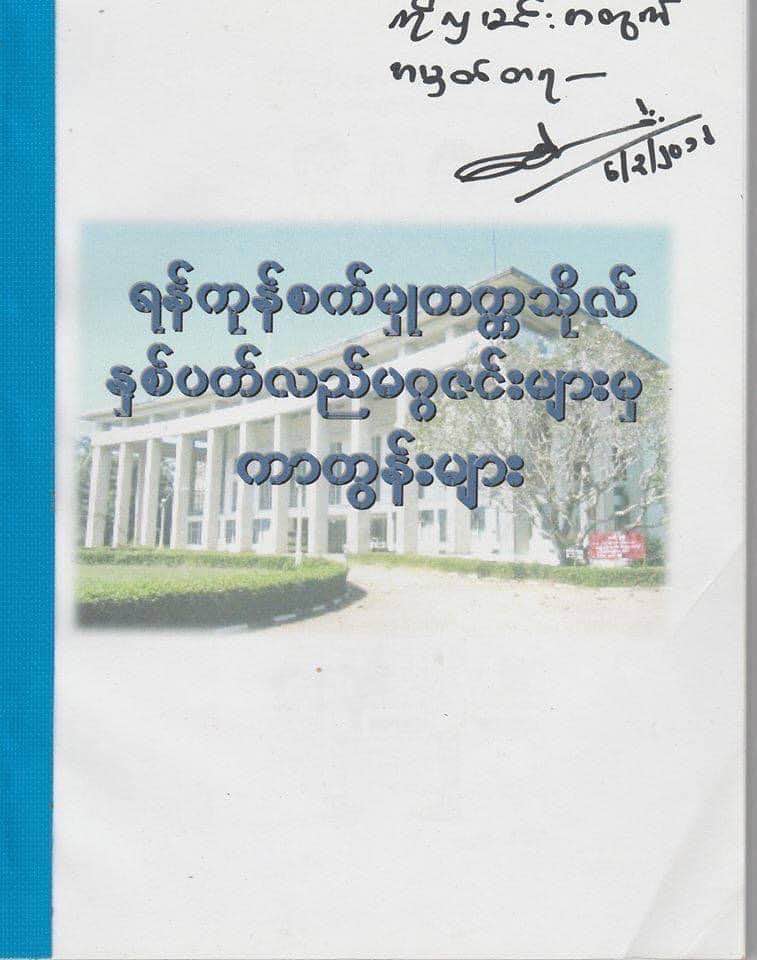
“History of University Engineering Education in Burma/Myanmar” was published in time for SPZP-2012. Due to resource constraints, there were inadvertent errors and missing names/captions for the photos. Ko Ohn Khine (M70) translated Section 1 and summarized Section 2 in English. The translations were provided in the companion CD compiled by Ko Ohn Khine and yours truly.
Saya U Aung Hla Tun (Met, National Literary Award winner) headed the team (see attached photo). Saya feels that the younger generation could/should “correct” the book and enhance it.
Seated : William Win Kywe, Alan Saw Maung (Khin Maung Bo), Brother Anthony, Saya U Sein, Brother Felix, Saya U Nyunt Maung, Saya Beatson, Brother Xavier, Thein Wai, Min Oo
Standing (1st row) : Stanley Shwe Gyi (Thein Lwin), Hla Min, Han Tun, Tommy Chit Maung (Naing Win), Tommy Aung (Tun Tun Aung), Herbert KCL, ???, Brownie Way (Aung Thu Yein), Tommy Aung, Bernard Taylor, Gallant Leong (Han Thein)
Standing (2nd row) : Michael Lim, Sean Young, Edward Chow, ???, Freddie Ba San (Myo San), Victor Chaw (Aung Chaw), Maung Maung Kyi, Henry Wong (Than Win), Nay Lin, Eddie Nyunt, Robert Kyi (San Maung), Than Win
Standing (3rd row) : Arthur Kyi (Aung Kyi), George Khin Maung (Khin Maung U), Victor Nyunt (Nyunt Wai), Sebastian Law Kee, Win Maung, Than Htay, Edwin David, Orlando Thein, Jerry Hin Hwa (Htin Paw), Edwin Ngwe (Aye Ngwe), Peter Pe (Aung Kyaw)
Standing (4th row) : Bo Ni, Kyaw Win, Robert Myint Win, Caesar Yang (Yin Sein), Aung Khin, Aung Kyee Myint, Chu Pu Thein, Anthony Lourdes, Willie Soe Maung, Tin Tun, Richard Pe, ???
Notes
Some became doctors : Khin Maung U (1st in Burma), Myo San (3rd, GBNF), Nyunt Wai (4th), Thein Wai (5th), Win Kywe, Orlando Thein
Some became engineers and/or computer scientists : Hla Min (7th), Maung Maung Kyi (11th), Aung Thu Yein (13tn, GBNF), Aung Chaw Khin Maung Bo, Kyaw Win, Than Win, Tin Tun (GBNF)
Some became priests or monks : Bernard Taylor : served as Missionary in Philippines Edwin David (GBNF) : served as Priest of St. Mary’s Cathedral Church Aung Chaw (Ashin Ukkamsa) : spent vassa in Sagaing Hills and Thone Gwa
Some were members of the SPHS Marching Band : Bernard Taylor, Bo Ni , Jerry Hin Hwa, Orlando Thein
Some were Soccer Selected : Eddie Nyunt, Jerry Hin Hwa
Some left before Matriculation : Edward Chow, Robert Kyi
A few have same names : Than Win, Tommy Aung
Khin Maung U (1st in Burma) retired from FDA in USA. He shares medical knowledge in his Reports (over 1000).
Min Oo (2nd) retired as Professor of Mathematics, McMasters’ University, Canada. He received his doctorate from Germany.
Myo San (3rd, GBNF) took early retirement as a Surgeon.
Nyunt Wai (4th) was Professor of Physiology at IM(1) and IM(2). He later taught at a Malaysian University.
Thein Wai (5th) moved to USA after graduating from IM(2). Aung Khin, his older brother, had kidney transplants, but passed away.
Hla Min (7th) is a Life Long Learner.
Maung Maung Kyi (11th, GBNF) studied Chemical Engineering (with specialization in Pulp and Paper) at Dresden University. He worked for Sittang Paper Mill and PPIC before moving to Wales, UK.
Aung Thu Yein (13th, GBNF) is an Electrical Engineering (specializing in Communications and Electronics). He worked for MOC and Schlumberger.
Before the advent of digital cameras and smart phones, it was not simple and cheap to take photos (let alone process them).
In my younger days, I had a Box Camera, and later Yashica Mat. Unlike my uncle and a cousin brother who are experts in developing films (in a dark room), I had to pay 25 to 50 pyas per print at a Studio (e.g. Ahuja). Later, there emerged professional photographers (e.g. Maung Maung Nhyat and his brothers) and freelance photographers (e.g. Dat Pone San Aung, Dhatu Kyaw Lynn, Maung Maung Soe).
Only those who won contracts had permission to take official photos at the Convocations. It was not compulsory to take and pay for the photos. Some, who did not order the photos, found their photos being displayed as examples of “Do not walk like this” and similar fun messages.
In the posts, there are individual photos and group photos (e.g. fresher welcome, farewell, graduation, newspaper clippings). Some have captions and dates. It is sad to note that some photos remind of people that are GBNF (Gone But Not Forgotten).
In the early days, Color photos had to be sent abroad for processing. Our wedding photos were taken with the color film given to me by my elder brother. They were then sent to a friend who was studying abroad. The color photos faded over time.
With the advances in technology, even small children can take reasonably good photos. The photos can be edited (e.g. crop, color-adjusted).
Some unscrupulous people have “doctored” photos and presented them as “evidence” of news. One unethical researcher “duplicated” data to “get favorable results”.
Dr. Thwe Oo (UK)
Shared her memories of growing up (until she matriculated) in the Main Campus.
Described the harrowing experience of the “U Thant Ah Yay Ah Khin” (especially the fear for her father’s safety).
Her father Saya U Khin Maung Nyunt (History, Assistant Registrar under Rector Saya Dr. Maung Maung Kha and Registrar Sayama Daw Sein Sein) was Warden of Sagaing Hall at the time. Per Sayagyi’s request, he and his Hall Tutors tried to persuade the throng of student protesters — some holding sharp objects — marching on to the Convocation Hall, but to no avail. They had to go along with the crowd and try to minimize the crowd inflicting damage on the Campus property.
She fondly remembers her father play tennis with his close friend Joe Ba Maung (Burma Tennis Champion in Singles, Doubles and Mixed Doubles).
She also had good rapport with the Swimming Instructors and friends at the University Swimming Pool.
Her mother is Sayama Daw Mya Mya Nu (Zoology, fondly known as Mya Lay of the “Lay Sisters”). Her aunts are Tin Lay, May Lay and Than Lay.
Dr. Nyan Taw (SPHS63)
Matriculated in 1963 from St. Paul’s High School.
RUBC Gold
Joined the Zoology Department
Did his graduate studies in Marine Biology in Tasmania, Australia.
Worked for PPFC (People’s Pearl and Fisheries Corporation)
Worked overseas on UN and Government projects.
He is happy to see posts about the simple but heroic act in 1941 (before he was born). His mother Daw Marie Hla Taw helped Bogyoke Aung San escape the net of the Police Commissioner who had placed Five Rupee / Kyat reward on Bogyoke. An actress has been selected to portray his mother in the movie about Bogyoke.
Htein Win
Took photos of the Ah Yay Ah Khin (mostly from a saya’s house in the Main Campus).
Gave the photos to some friends and to an organization overseas (for storage).
With the Pwint Linn era, he was able to get back the archived photos from overseas.
Managed to get articles from some of the participants in the Ah Yay Ah Khin.
Ko Khin Maung Zaw bought a book from Myanmar and then mailed it to me.
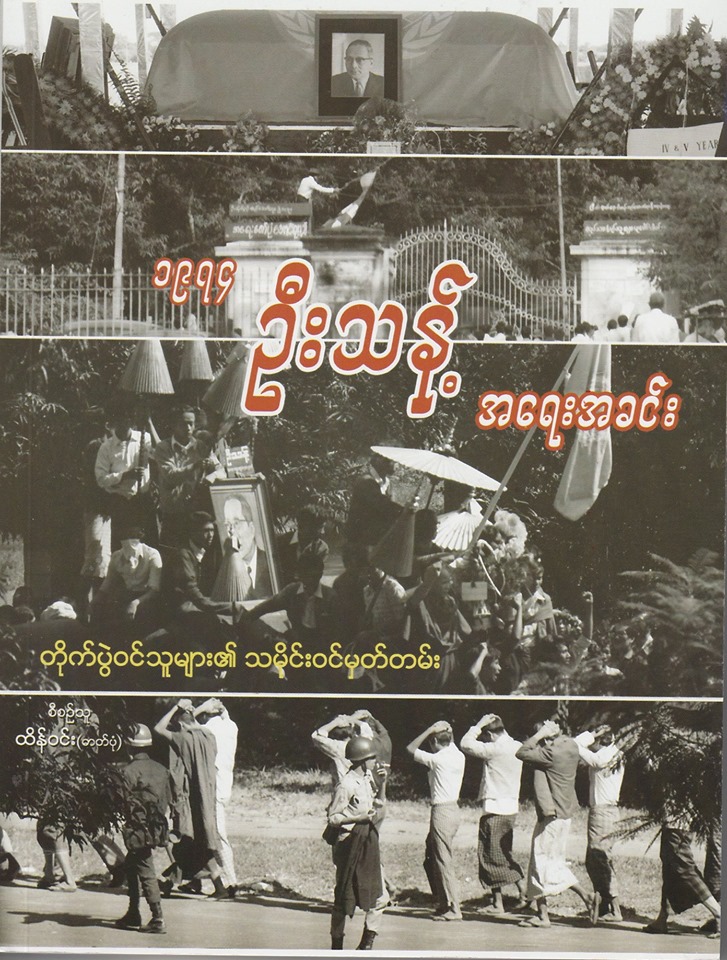
In November 2019. I was invited to attend the 5th Irrawaddy Literary Festival in Mandalay. I met Ko Htein Win who had a book stall at the Festival. He gave me an autographed copy of the book about 8-8-88.
Institute of Computer Science and Technology (ICST)
University of Computer Studies in Yangon (UCSY)
ICST (Institute of Computer Science and Technology) was founded in 1988. It was later renamed as UCSY (University of Computer Studies in Yangon). The 30th Anniversary was celebrated in Yangon on March 20, 2018.
Saya U Soe Paing was my mentor at RIT and UCC. Saya U Soe Paing, Saya U Myo Min and Saya U Ko Ko Lay (GBNF) helped Saya Dr. Chit Swe (GBNF) found UCC (Universities’ Computer Center). The details can be found in Saya Paing’s article “Computer Ah Sa UCC Ga).
We used to call our four Sayagyis as Saya Chit, Saya Paing, Saya Myo and Saya Lay.
UCC Project was conceived in the mid-60s when Saya Chit headed the Mathematics Department at the Institute of Economics. The initial scope was to get a grant for a digital computer for IE, but the scope was expanded to cover selected Universities and Institutes.
The UCC Department was launched in 1970 with Saya Chit as Founder/Director and the three sayas as Managers of Computer Systems, Computer Operations and Computer Applications departments.
I posted 40+ blogs on “Memories of UCC” during a trip to Myanmar and also wrote a “summary” for use by UCSY.
Computer courses (academic, training, orientation …) were given at UCC under the leadership of Saya Chit (who served a dual role as UCC Director and Mathematics Professor) and the help of visiting Professors (mostly Computer Scientists) from US, UK, Europe …
Saya Chit was succeeded by Saya Dr. Tin Maung (GBNF), who continued and elaborated on Saya Chit’s Vision and Mission.
Saya Chit later retired as Rector of RASU, taught for some time in Bangkok, and migrated to Australia. Saya Chit continued to supervise Burmese/Myanmar doing graduate studies in Oz.
In 2006, we paid respect to Saya Chit and Saya Dr. Freddie Ba Hli (former DG of UBARI, former Natjonal Advisor, UCC Board Member, GBNF) at Saya Zaw’s house with Mohinga and delicacies prepared by Ma Kyawt. Saya gave me his hat. Hope that hat can transfer Saya’s brain and work ethics to yours truly.
Saya Chit was a room mate of Saya U Ba Than during their study days in UK.
DCS (Department of Computer Science) was established with Saya Lay as Professor, U TAG (EC69) as AP, and yours truly as Lecturer.
ICST was founded in 1988 with Saya DTM as Rector, Saya Lay as Professor, U TAG and yours truly as AP, and several others as Lecturers.




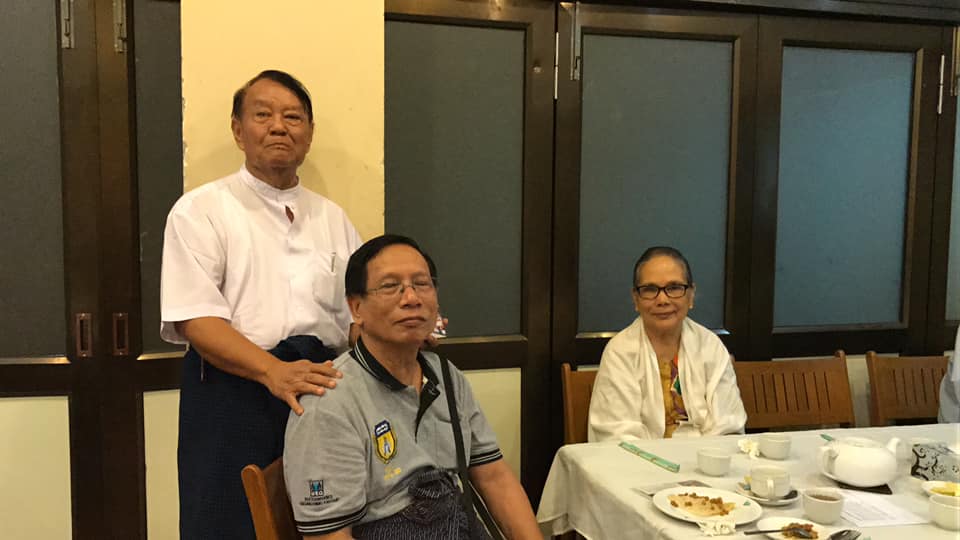
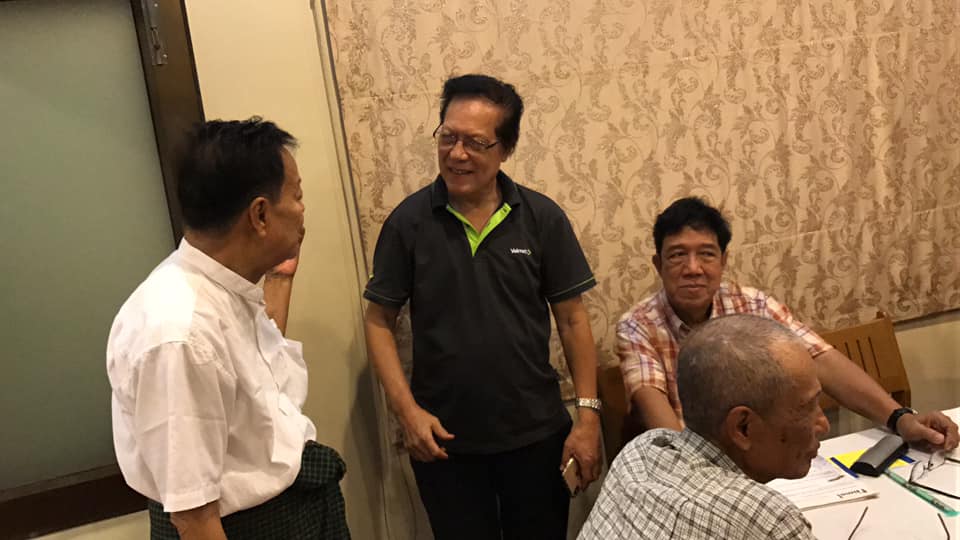
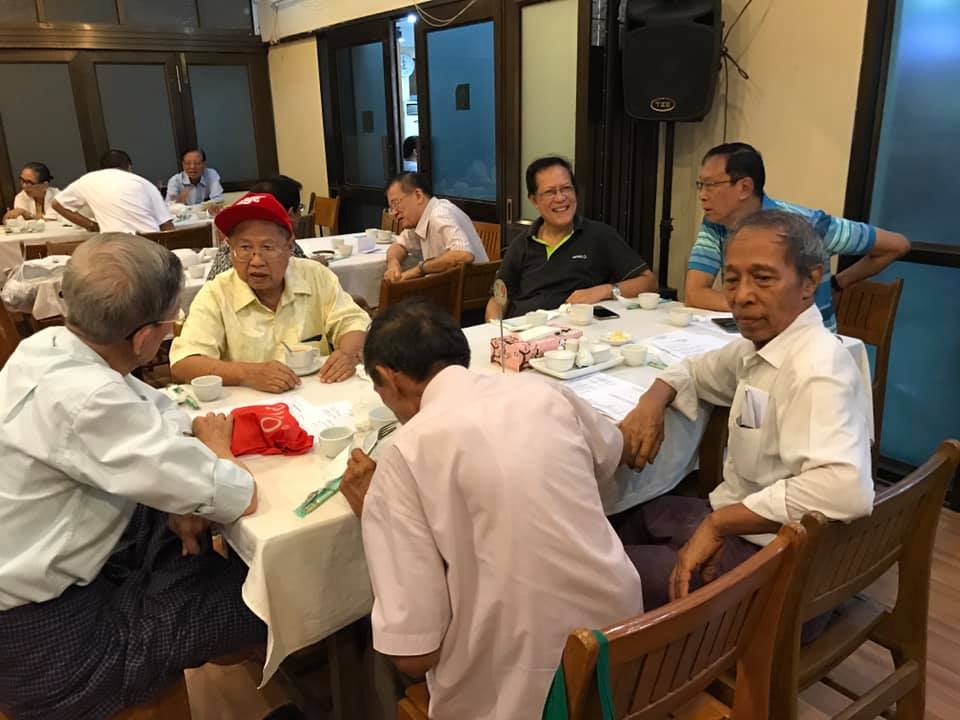
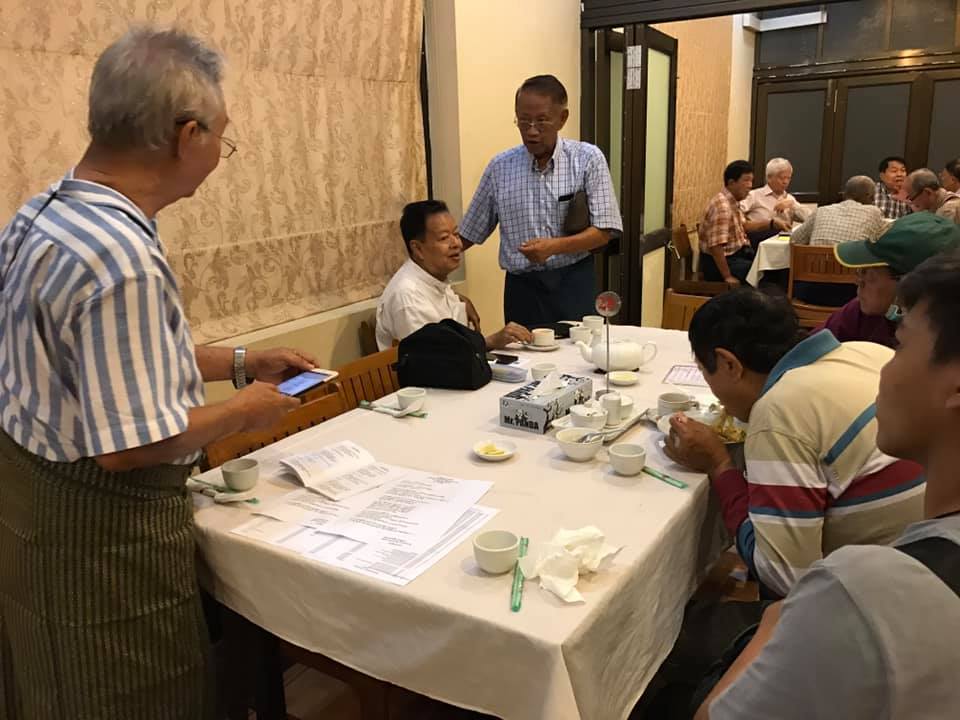














 HlaMin