Blog

  • 1962

    Broadcast on December 8, 2020

    First ever HSF Only

    • All subjects except English are taken in Burmese
      Thin Char (Mathematics)
      Yupa Beda (Physics)
      Dhatu Beda (Chemistry)
    • First ever HSF only exam in March, 1962
    • Coup d’etat took place on March 2, 1962
    • The exams continued with Security forces patrolling the streets (in Rangoon)
    • Rangoon Division results were annulled (citing leakage of exam questions)
    • Make up HSF exam in August, 1962
      Chu Pu Thein scored highest in Yupa Beda.
      Maung Maung Kyi scored highest in Dhatu Beda.
      Khin Maung U has English distinctions in HSF, Matriculation and I.Sc.(A) in addition to other distinctions.

    17 man Revolutionary Council

    • General Ne Win
    • Brigadier Aung Gyi (Army)
    • Commodore Than Pe (Navy)
    • Brigadier T Clift (Air)
    • 12 Colonels (from War Office and Commands)
    • According to Kyemon U Thaung, six or so did not know the decisions
    • BSPP
      Open to “Cadre” members
    • Burmese Way to Socialism
      Transformed the Rice Bowl of Asia into “Black Market” and decline
      Cause for indiscriminate nationalization, demonetization, harsh censorship …
    • For a while, the government used the term “Tar Wun Khan” instead of “Wun Gyi” for Minister.

    State Funerals

    • Commodore Than Pe (Revolutionary Council Member, Minister of Health and Education)
      Passed away after an inspection tour
      Successors :
      Colonel Hla Han : Minister of Health and Education
      Commodore Thaung Tin : Vice Chief of Staff (Navy)
    • Ko Tin Maung Thant (Son of UNSG U Thant)
      Fell from a moving bus
      The cortege was “longer” that that of Commodore Than Pe

    Dark moments

    • 7th July 1962
      17 victims were announced in the media
      Ko Aung Khin was hit by a stray bullet while returning from RUBC to his home in Windermere Road
    • 8th July 1962
      Demolition of the RUSU Building
      Finger pointing between the Top Two about who gave the order (Unresolved since both have passed away)
      First of the many disruptions (closing of classes and schools)

    BIT

    • The Faculty of Engineering moved to the Gyogone Campus in 1961.
      It was renamed BIT.
    • Some from the First batch of BIT graduates in 1962 can be found in the post “Class of 1962”
    • Bohmugyi Myint Thein Lwin (M62) and U Aye (M62) provided group photo, names and info.
    This image has an empty alt attribute; its file name is m62-group-photo.jpg
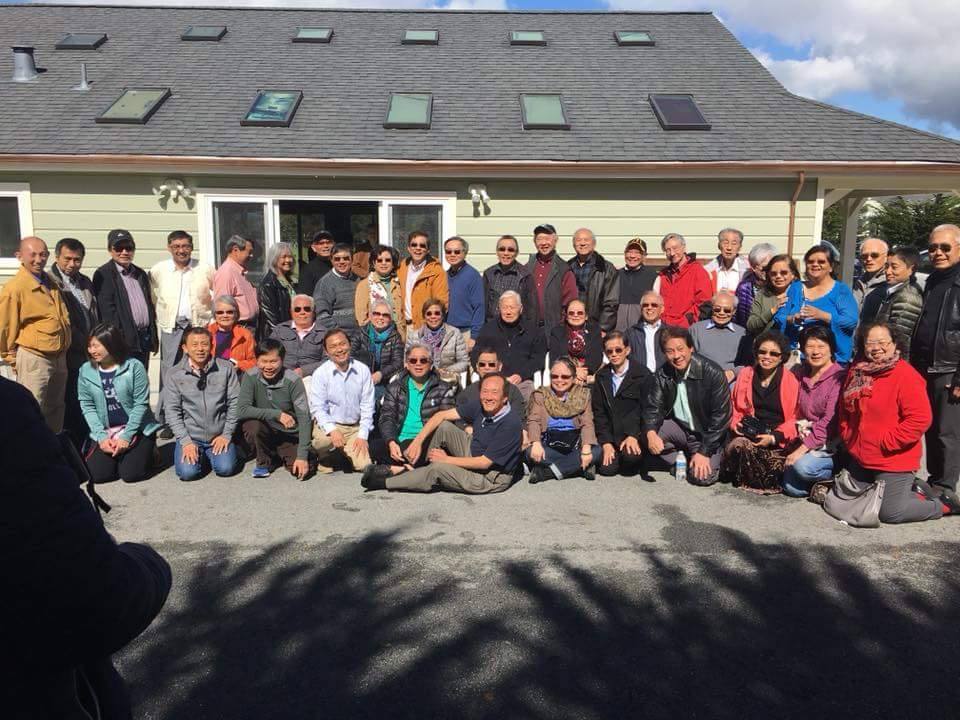
  • Paulian Classmates

    Dinner Gathering

    • Myo Nyunt (Harry Kyaw, SPHS 63) is one of the organizers.
      He used to be active in OPA.
      He is the de factor leader of the younger group (SPHS 65, last batch of SPHS).
    This image has an empty alt attribute; its file name is Old-Paulians.jpg

    Where are they now?

    • They were my class mates at SPHS.
    • I have not heard from them (most for a very long time).
    • Hope they are alive and well.

    Alfred Lunn Maung
    He was a close friend of Edmund Ba Thin in our middle school days.

    Anthony Lourdes
    He was one of the three classmates who had plans to become Catholic Priests.

    Aung Kyee Myint
    He was selected Tekkatho Luyechun from Yezin (Agricultural Institute) for the Inlay Khaung Daung Camp in 1965.

    A S Soni
    He and Dave S Saluja were the two well known Sikhs in our class.

    Bernard Taylor
    He did missionary work in the Philippines before moving back to Upper Burma. I once received a short message on the Internet, but have not heard from him since.

    Edmund Ba Thin
    He is the elder brother of Tin Latt who rowed for Ye Gyaung Lu Nge. He is a close friend of Alfred Lunn Maung.

    Edward Chow
    He took Matriculation as an external candidate along with San Maung (Robert Kyi).

    Edward Hla Shwe (1)
    His father owned a Photo Studio and was one of the contractors for taking Group Photos of the classes. An unmounted Class Photo sold for one kyat. The mounted version sold for One Kyat and Fifty pyas.
    Several years ago, I met him at his “Myet Hman (glasses)” shop on Sule Pagoda Road. The shop later relocated.

    Edward Hla Shwe (2)
    He was one of the classmates who were allowed to leave early on Fridays.

    Han Kan Paw
    He was from Chin Hills.

    Hla Myint
    He was one of tallest guys in our class. His family manufactured Snow White Makeup.

    Herbert KCL
    Some would try to remember KCL as Potassium Chloride. It stands for Khai Chin Liang.

    Khin Maung Khine
    I am not sure why he received the nickname “Nga Ye Min Tha”.

    Khin Maung Kywe 
    He excelled in Track and Field, and Soccer.

    Khin Maung Lin (Saw Lin)
    He was named Saw Lin because he was born in Nattalin. He became a medical doctor.
    His younger brother was named Saw Pun because he was born in PaPun. Both renamed “Saw” to “Khin”.

    Jonathan Swamy 
    He was close with Patrick Das and Sammy Bi.

    Malcolm Maung Maung
    He became known as Zi Wa Mya Zaw (Distinguished Tuition Saya for Biology). His parents and siblings operated Recording Studios.

    Maung Maung Thaung
    He gave his address as 51, Pho Myay Lann.

    Michael Oo
    He is the elder brother of Bo Bo Oo (Oscar, M71).

    Michael Su
    He is close with Michael Oo.

    Moe Nyunt
    He was called “Lay Lone”. He attended the I.Sc.(A) held at SPHS.

    Orlando Thein
    He was a member of the Marching Band along with Win Maung. He became a medical doctor.

    Patrick Das
    He was an organizer for games at Lunch Break.

    Patrick Ni
    His younger sister is the spouse of Ko Maung Maung Gyi (SPHS64, UCC, GBNF).

    Sammy Bi 
    He was close with Patrick Das and Jonathan Swamy.

    San Maung (Robert Kyi)
    He took Matriculation as an external candidate along with Edward Chow.

    Sydney Khant
    He is the son of Pantanaw U Khant and nephew of United Nations Secretary General U Thant.

    Than Htay
    He is a cousin of Win Maung. He studied Engineering.

    Than Win (Henry Wong)
    There were two Than Win. The other Than Win studied Engineering,

    Tin Ni
    During our Std IV (D), he was the Champion for Track & Field in the Midget class.

    Tommy Aung
    There were two Tommy Aung. He majored in Physics. The other Tommy Aung (aka Tun Tun Aung) studied Medicine.

    Tommy Chit Maung (Naing Win)
    He is the son of Widura Thakin Chit Maung.

    William Mya
    Many years ago, he was a Tuition Saya.

    Win Maung 
    He is a cousin of Than Htay. He was a member of the Marching Band. He studied Medicine.


  • Thingyan

    Thingyan

    by Hla Min

    Updated : May 2024

    Change

    • Thingyan means “Change”.
    • Cula Thingyan (Small Change) occurs monthly (move to a new Zodiac sign)
    • Maha Thingyan (Big Change) occurs yearly (Sun, in the geocentric model, enters Meiktha around April 13.

    New Year

    • The early Romans and Persians celebrate the New Year around March 21 – 23 (Spring Equinox in the Northern Hemisphere).
    • The Precession of the Equinoxes cause the difference of about 23 days (for Western Zodiac System versus Eastern Zodiac System).
    • Some Indian races like Tamil and Hindu Bengalis celebrate the New Year on or around April 14 when the Sun entered Meiktha.

    Burmese New Year

    • The Burmese celebrate Thingyan Period : Ah Kyo, Ah Kya, one (or two) Ah Kyat, Ah Tet, followed by Hnit San Ta Yet (Burmese/Myanmar New Year).
    • Children start throwing water on Ah Kyo. Most people throw water for three (or four) days of “Thingyan Proper”.
    • In the early days, Rangoon allowed manduts (pandals), floats (ah hla pya cars), competitions (than gyat, songs, dances), and limited use of fire hydrants.
    • Mandalay was noted for the musical evening extravaganza. Myoma Troupe and others made their name. “Mann Taung Yeik Kho” (aka “Mya Nandar”) became a de facto dance song for Thingyan celebrations world wide. The movie “Thingyan Moe” and its songs are still being played around Thingyan.
    • In one Thingyan, three leaders U Nu, Nasser (Egypt) and Nehru (India) who co-founded the Non-Aligned Movement / Bloc participated.
    • The Rakhine (Arakan) Thingyan allows young men and women to line up on the sides of a “hlay” (boat filled with water) and gently throw water.
    • Some young Burmese help elderly women to wash their hair.
    • Some monasteries host “Su Paung Thingyan Donlaba Pwe” around Thingyan.
    • On New Year’s day, some will “free fish” back to the lakes.

    UCC Thingyan

    Thingyan (Burmese New Year) was celebrated by UCC staff and students with “Su Paung Yahan Khan”.

    Yahan Khan

    The Yahan Khan was performed at a selected monastery such as

    • Kaba Aye Sunlun Gu Kyaung
    • Mo Hnyin Taw Ya
    • Chan Myay Yeiktha
    UCC Yahan Khan

    One photo shows

    • Sayagyi Dr. Chit Swe
    • U Win Maung
    • U Hla Min
    • U Tun Aung Gyaw
    • U Soe Myint (GBNF)
    • U Khin Maung Aye
    • Daw Khin Khin Latt †††

      U Tun Aung Gyaw (USA), U Khin Maung Aye (Singapore) and U Win Maung (Australia) are now Ph.Ds.
    • Another photo shows the UCC Donlabas with a resident monk from Kaba Aye Sunlun Gu Kyaung.
    • There were two U Soe Myint at UCC.
    • U Soe Myint (M72) retired as Pro-Rector of ICST and is GBNF.
    • U Soe Myint (KSM) retired from UN.
    • Saya U Ko Ko Lay (GBNF) served as Operations Manager and Scientific Applications Manager at UCC. He later served as Professor and Head of Department at the Department of Computer Science (DCS) and the Institute of Computer Science and Technology (ICST).
    • Some UCC Belles worked or taught at UCC, DCS and ICST. Some worked for Computer Departments at other organizations (including UN and overseas).
    • Daw Nge Ma Ma Than (GBNF) was a Prisoner of Conscience.

    UCC Dobat

    • UCC also had a Dobat Waing organized by U Win Hlaing.
    UCC Dobat

    Not so good things can occur in Thingyan

    • rowdy and/or drunk revelers
    • drunken drivers
    • use of unclean water and high pressure pumps
    • throwing water on pregnant women and yogis
    • having to go to a cemetery (not to enter “New Year” for those who pass away in Thingyan).

    2018 Thingyan in the Bay Area

    This image has an empty alt attribute; its file name is sein-myints-daughter-and-grand-child.jpg
    Sein Myint’s daughter and grand child

    Ko Yu Ket (Edward Saw, EC85) gave us a ride to the Thingyan Festival at Dhammananda Vihara (Half Moon Bay Monastery).

    The compound was jam packed. Many cars had to park along Highway 1 (outside the compound).

    Thanks to the EC and BOD of TBSA (Theravada Buddhist Society of America), volunteers, food donors.

    Among the attendees were

    • Saya U Maung Maung (George, ChE66)
    • U Thaung Nyunt (M87)
    • U Walter Tan (M70)
    • U Ko Ko Zin (M84)
    • U Sein Myint (EP69)’s daughter and grand daughter
  • RU 3

    RU Pre-Centennial and Tazaungdine

    • For a moment, many “forgot” the requests for “Social Distancing” and visited the brightly lit main RU campus and cherish fond memories of their youth.
      There were medical staff to check the temperature of the attendees, to remind the use of masks and even ambulance cars.
    • A few cautious people waited till the next morning to visit the RU Landmarks and take photos.
    • Some listened to dhamma talks (e.g Tha Myin Nya Phala / Merits of being a monk) on the Full Moon Day of Tazaungmon (also known as Thazaungdine).
    • It is the end of the period for offering Kathein Robes.
    • A few oldies reminisced the Cartoon Exhibits, Zat, Ah Nyeint and variety of performances.
    • Law Department was part of RU when it opened on December 1920. The alumni celebrated the Centennial around March 2020 (before the “stay at home” requests due to the pandemic).
    • Many celebrations are online / virtual or downsized.

    Discussions

    • Are the celebrations for oldies and not so young to share their memories — good and bad, joyful and sad?
    • Some wanted to perform Dana and share merits with the fallen students (including those hit by “stray” bullets).
    • Some readers asked if the FB group will still be open and active after the Centennial Celebrations.
    • Pros and cons of rebuilding the Students Union
    • Whether Another Grand Celebration will take place when the pandemic is over
  • The Ngapali Beach

    The Ngapali Beach (Poem by Hla Min)

    The intriguing splendor of the East
    Where the soft wind melts your heart
    Where lavish nature gives you a feast
    And a truly cool refreshing bath

    Mountainous tides roll in like thunder
    Then lie helpless on the shore
    Fishing boats rush out all set to plunder
    The ocean’s unending store

    To sit under a shady palm
    To drink a cup of juicy milk
    To see the raging waters turn
    Into undulating silk

    A variety of multi-colored shells
    Lay on the fine grain sand
    No place on earth can match the spell
    Of this enchanted strand

    The luring dragons bid you “Welcome”
    To this real paradise
    There’s lots of fun, excitement, beauty
    What’s more there left to advertise?

    • My poem “The Ngapali Beach” was published in the Forward Magazine on March 2, 1970.
    • Bohmu Ba Thaw (Maung Thaw Kha) was Chief Editor of the Forward Magazine.
      Jokingly asked me if I would be interested to join his staff.
    • U Sein Hla was Assistant Editor of the Forward Magazine.
    • I received fifteen kyats for my poem.
    • The illustrator received fifty kyats.

    Ngapali

    • Some early European visitors called it “Naples of the East”.
    • I visited Ngapali three times.
    • Some people visit Ngapali almost annually.

    First Visit

    My first visit was during my student days. My cousin and friends stayed at the Bungalow owned by U Tha Gyaw Wai (Teddy Gyaw) and managed by my uncle. At a nearby bungalow was a movie crew by Amyotha Yoke Shin with U San Maung (Gerald, RUBC Gold and Coach). Ko Gerald asked me if I would be interested to join them on the way back via Taung Goke.

    We were hosted by the cinema owner at Taung Goke. He offered the movie audience a free show if they could translate the Burmese titles into English. One submission was “Fly away bitter bird” (Pyan Lay dei Nget Khar).

    Second Visit

    My second visit was with my beloved spouse and two young sons. We stayed at the Bungalow owned by Amyotha Yoke Shin and managed by U Mya Maung (GBNF, younger brother of U Sein Tin and elder brother of Saya U Tin Htut).

    Third Visit

    My third visit was as a Guest Lecturer for the Ngapali Luyechun Camp. I spent some time chatting with other Guest Lecturers including Saya U Kyaw Myint (Director of Higher Education, former Professor of Physics at Mandalay).

    Miscellaneous

    • Hantha Aye Nylon — the parents of Daw Than Than Yee (T71, GBNF) and U Sann Aung (M74) — also owned a Bungalow.
    • The Hotel and Tourist Corporation built the first hotel in Ngapali.
    • I know a few people (U Aung Win) who have taken [almost] yearly trips to Ngapali.
  • Aung San Stadium

    • Burma Athletics Association (BAA) has an outdoor stadium for Athletics and Soccer.
    • Later, it had indoor stadium(s).
    • The stadium was renamed Aung San Stadium to honor Bogyoke.
    • We had to march with the Marching Band from St. Paul’s High School (SPHS) to the Aung San stadium to perform Drill as part of the “Education Day” Celebrations.
    • Dennis Stevens (brother of my classmate George Stevens) played the Big Drum.
    • Twin brothers Bo Kyi and Bo Kyi were the drummers.
    • Jerry Hin Hwa, Orlando Thein, Win Maung and Bernard Taylor played selected musical instruments.
    • The First Division Football matches are played at Aung San Stadium. The teams include Rangoon University, Burma Railways, Customs, Army, Navy and several others. The bottom teams in the League get relegated to Second Division the following year.

    • My uncle U Win Tin (GBNF) took me to watch soccer matches.
      We watched selected matches (e.g. Dunlop Trophy) and some International matches (e.g. 2nd SEAP Games).
    • The Northern and Southern Stands cost about fifty pyas, but they provided limited scope and vision. But, they have roofs.
    • Grand Stand costs about five kyats.
      It would be a rare treat to watch from the Grand Stand (especially near the center line).
    • The Open Stand opposite the Grand Stand is a good compromise for about K1.50.
      We had to carry umbrella or wear raincoat for matches during the Rainy Season.
    • The Inter State and Division (ISD) Soccer tournament was established in 1952. Shan States with Suk Bahadhur won the inaugural tournament ISD Champions. Mandalay (with Ba Pu), Tennessarim (with Ko Ko Gyi), Irrawaddy (with Hla Htay) became Contenders and/or Champions. Many players were recruited by the First Division teams and some became Burma Selected.

  • Maurice Chee’s retirement in March, 2018

    In March 2018, U Maurice Chee (M75) offered soon kwyay at Dhammananda Vihara to celebrate his retirement.

    Attendees include

    • Saya U San Tun
    • Saya U Tin Htut and Daw Irene
    • Saya Mao Toon Siong
    • Saya U Myo Min (UCC)
    • BOD and EC of NorCal RITAA (Gordon Kaung, U Myo Aung, U Ko Ko Zin, U Nyunt Than, U Kyaw Myint, U Tin Maung Win, U Aung Myint Oo, U Walter Tan, U Myint Swe, U San Lin)
    • Founding members of RIT Alumni International (Saya U Nyo Win, Saya U “George” Maung Maung, Saya U Myat Htoo, U Hla Min, U Benny Tan, Saya U Thein Aung, U Khin Maung Zaw)
    • Several alumni (U Bobby, U Khin Maung Win, U Aung Thein, U Thein Aung, U Victor Wong, U Soe Thu, Daw Thandar, Daw Lillian Kaung, Daw San San, U Aye Tun, U Mya Thwin, Daw Khin Mya Yee, Daw San San Nyunt, U Richard Khoo, U Thein Zaw, Daw Khin Khin Kyu)
    • Friends (Daw Mu Mu Kin)
    • Families

    KMZ (U Khin Maung Zaw) flew in from Seattle. He charged his phone and left it in Seattle. Maurice was not sure if it was deliberate

    Saya U Tin Htut and Daw Irene flew in from Los Angeles. Daw Irene was Maurice’s teacher at MEHS.

  • Exam Systems

    Intermediate College

    • During a period, students at the University of Rangoon [and Mandalay] attended Intermediate (A) classes for a year, but they did not have to take the examination.
    • They then attended Intermediate (B) classes for a year. They then take the examination for both courses.

    Compart System

    • There used to be two examinations for a class.
      The students have two chances to pass.
    • The first examination was usually held in March.
      Those who pass all subjects are eligible to apply for stipends and grants.
    • Those who pass at least three subjects have to take the remaining subjects in the second examination, which was usually held in June.

    Saya U Ba Toke

    • Saya was born in December, 1920.
    • He attended Mandalay University.
    • He joined the Students’ Strike Camp, and missed the first examination held in March.
    • The strike ended, and Saya took all the subjects in the second examination and passed.
    • He wanted to attend the Faculty of Engineering in Rangoon, but he needed a stipend. He could not get the stipend because he did not take the first examination.
    • Saya’s teachers persuaded him to take Mathematics Honors in Mandalay.

    Dr. Tint Lwin

    • He took the Pure Science option for I.Sc.
    • He attended engineering classes for a while, but he changed his mind to study Medicine.
      He took the classes needed to study medicine (e.g. Biology) and the supplementary exams.
      Finally, he was admitted to the MBBS classes.
    • During his university days, he was Goalkeeper for the University First Eleven. He team mates include Collegian Nay Win, Tun Kyi and Kenneth Shein.
    • After retirement, he moved to the USA.
  • BOC College Graduate

    By Mr. Aw Taik Moh (C54)

    I graduated from the University of Rangoon with a Bachelor’s degree in Civil Engineering in March 1954. The few years I spent at the University of Rangoon, particularly at Engineering, were one of the happiest and most rewarding times of my life.

    The BOC College of Engineering was actually the School of Engineering in the late 1940’s and early 1950’s. It was funded by BOC (British Oil Company). It was then understandably heavily mechanically and electrically oriented. In my first two years, about half of the faculty members were Britons and the Dean of the Engineering Faculty was Professor Davies. We had very excellent lecturers who were of diverse ethnic background – Indians, Chinese and Burmese – but they and us the students were all Burmese citizens. I spent four years at Civil Engineering (CE). We the civil engineering students were required to take some basic mechanical and electrical courses and workshops also, while the mechanical and electrical students were not required to take any civil engineering courses. Since these courses were mandated or compulsory for civil engineering students, I could not avoid them. I did pass those subjects but not very proud of it because they were not my major interests.

    Professor Davies and all the Britons left Rangoon around 1950. U Ba Hli took over the engineering faculty as Dean. To his credit, U Ba Hli ran the school very professionally. He recommended and managed to get many of his students and graduates to go abroad for graduate studies. These student-graduates of his came back to Myanmar with master’s degrees and doctorates from England and USA to teach under his deanship. U Ba Hli also initiated an education exchange program with the Massachusetts Institute of Technology (MIT, located in Cambridge, Massachusetts, USA) during the period beginning, I think, in 1951 and ending in 1954. The program brought 3 to 4 civil, mechanical and electrical professors from MIT to Rangoon University. The R.U. Engineering Faculty made a very impressive and quick progress in its worldwide reputation and was duly recognized and accredited internationally. I am proud to say that we Burmese students, including myself, did exceedingly well at the foreign universities in England and the U.S. This shows that, given the opportunity and the tools, we the Burmese students were as good, if not better than, as any other in the world. I went to MIT for graduate studies, came back to Myanmar with a Master’s degree in 1957 and served the Myanmar government in the National Housing and Town and Country Development Board for a number of years. Many of my fellow students from R.U. Engineering went to and graduated from MIT, Harvard, Cornell, Michigan, UCLA, Columbia and other big-name American universities.

    In my first year at RU Engineering I stayed at Prome Hall for a semester. The Prome Hall Football (soccer) Team was the best, the champion team of all the university teams all the time, winning the university championship trophy for years in a row. You know, we the engineering students were very close; we were like a family. We never thought of ourselves as Burmese, Indians or Chinese. We loved each other, helped each other, and took care of each other like brothers (there were no female students in engineering during my time). In fact, all engineering students were very united as one family. Our classes at that time had only 12 to 14 students each. Even the professors treated us like they were our older brothers, but of course we addressed them as Sayas with deep respect. As far as I can recall, no one from my class or any other class failed in any subjects or to graduate from RU. I learned a lot from RU Engineering and enjoyed every courses, including the Surveying Class in a summer. I must confess that although we appreciated the Geology course at the Geology Department, which was located like miles away from the Engineering school, this was the least liked by my entire class of students and we all scored a “C” or “C-” at best. The geology professor didn’t like us either because we were usually late arriving for his class lectures. But we couldn’t help being late, considering the distance we had to walk or bike from Engineering to the Geology Department. I hope for the present engineering students, some arrangement could be made for a geology professor to walk or bike from his department to Engineering, instead of having so many students getting late to his class. Although I wouldn’t consider myself as a top-notch or extremely bright student, somehow even with a “C” for geology, to my and my fellow students’ great astonishment I was placed second in my final year exams.

    I fondly remember the little Indian restaurant by Prome Hall where I and my many friends used to have lunch, paratas and keema paratas. I also enjoyed boating at the Inya Lake when we occasionally skipped classes.

  • Pens

    U Yu Ket (Edward Saw, EC85, Treasurer of NorCal RITAA) ordered two sets of pens for distribution to alumni (member, donor, volunteer, supporter …).

    Sadhu, sadhu, sadhu.

    The ones shown here has “NorCal RIT Alumni” logo.

    Pens with NorCal RITAA Logo
    Pens with NorCal RITAA Logo

    The ones to be given to the alumni in Yangon has “RIT-YIT-YTU Alumni” logo.

    Feedback

    • U Yu Ket served as Auditor.
      He is currently Treasurer.