Blog

  • Association

    Broadcast on October 13, 2020

    Informal (usually for local activities)

    Formal

    Registration
    Bye Law
    Vision and Mission
    (some) Robert’s “Rule of Order”
    Executive Committee
    Board (Directors, Advisors)
    Membership
    Activities

    *****

    Sample

    ACM (Association for Computing Machinery)
    Special Interest Groups
    Local Chapters
    Publications
    Access to books and videos
    Turing Award (considered to be Nobel Prize in Computing)

    IEEE (Institute of Electrical and Electronic Engineers)
    IEEE Computer Society

    BMA (Burma Medical Association)

    MES, MEC, ARITA, Swel Daw Yeik Foundation

    Social and Reading Club
    Several members became acclaimed authors and speakers

    YMCA initiated
    Basketball
    Public Speaking
    Communication and Leadership

    YMBA
    Illustrated History of Buddhism

    Rotary Club, Kiwani Club …

    Sports Clubs
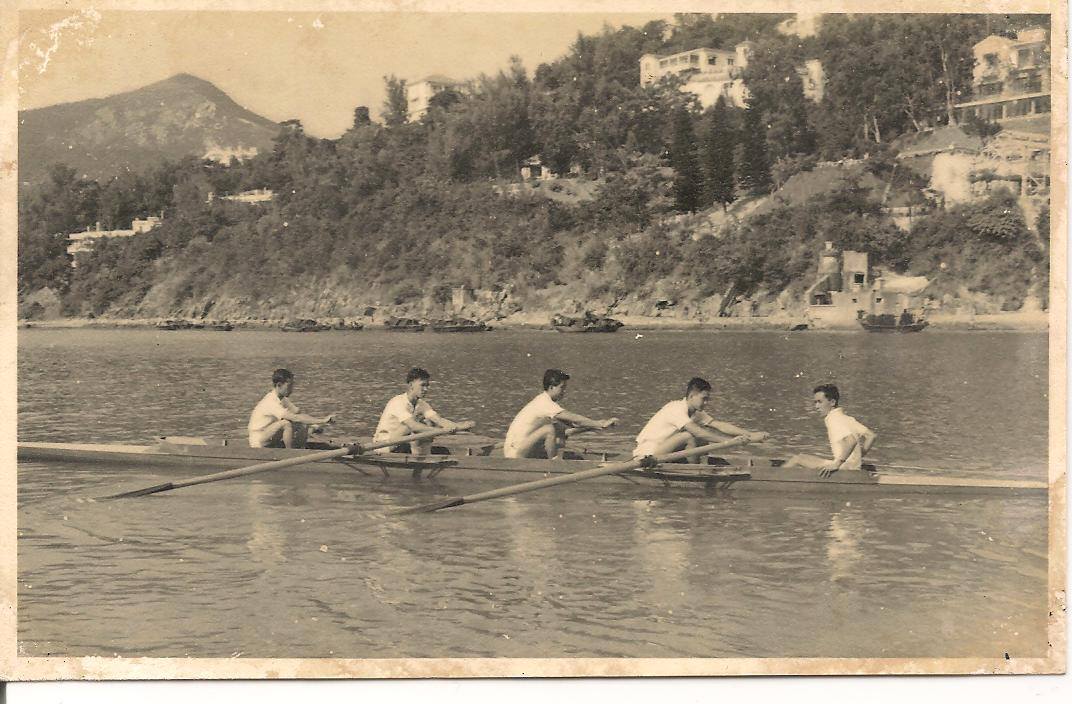
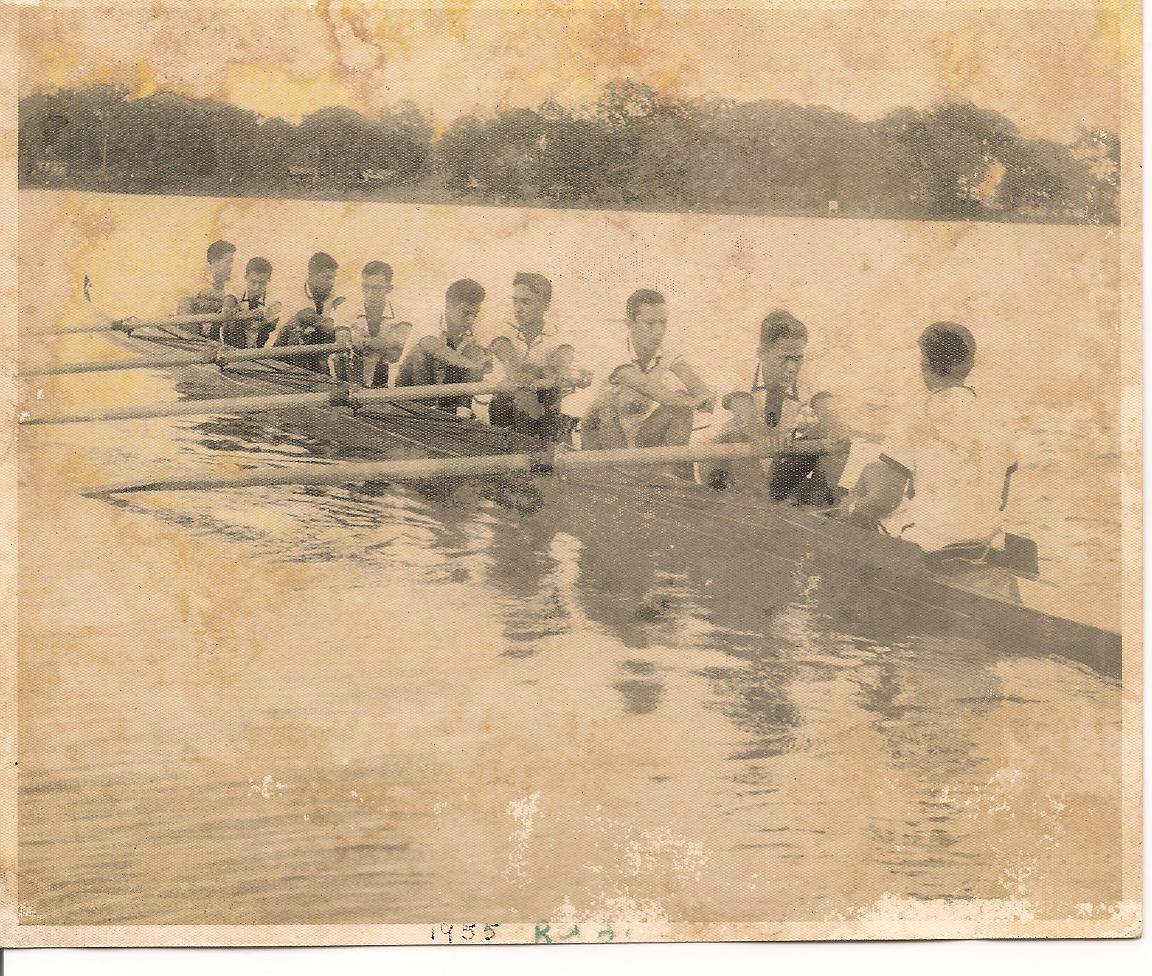
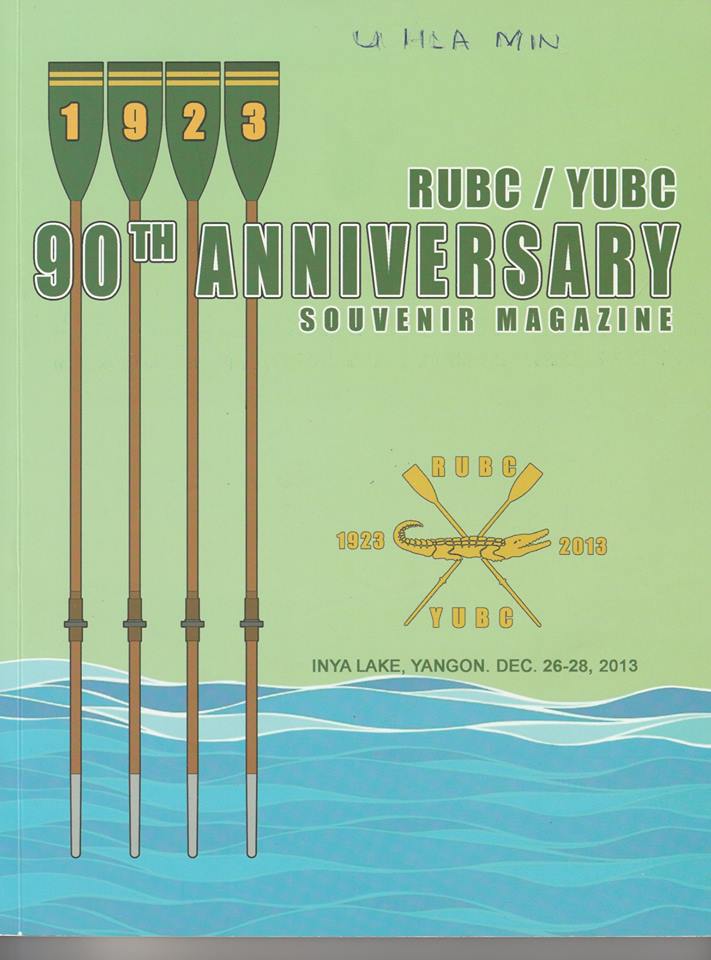
    RUBC
    Swimming Clubs

  • Archaeology

    Video Broadcast on November 15, 2020

    France / Egypt

    • Rosetta Stone / Egyptology
    • King Tut / Exhibition / “Curse”

    UK / India

    • Stonehenge
    • British archeologists / Sites sacred to Buddhists

    Myanmar

    • UNESCO Heritage Sites
    • Old Pyu Cities
    • Bagan

    Experts

    • Taw Sein Kho (First native archeologist)
    • U Aung Thaw (Retired Director General, Author)
    • U Lu Pe Win (Saya, Author)
    • Daw Khin Mya Mu (Kyauk Sar)

    China

    • Tombs of Emperors

    Related Disciplines

    • Anthropology
    • Geography
    • History
    • Inscription
    • Languages
    • Sociology
  • Anthropology

    Video Broadcast on December 24, 2020

    Dr. Htin Aung
    • Physical / Biological Anthropology
    • Cultural Anthropology
    • Social Anthropology
    • Linguistic Anthropology
    • Archaeology
      May be considered as a Discipline in some countries (e.g. UK)

  • Architecture

    Video Broadcast on December 29, 2020

    Discipline

    • Design Principles
      Safe and Reliable
      Useful
      Aesthetics
    • Career
      Academic degrees
      Licensed practitioner (for an aspect)
    • Study and related areas
      History of Architecture
      Design
      Building and materials
      Interior Decoration and System (e.g. HVAC)
      Urban planning
      Landscaping
      Tools : CADD and BIM

      Civil Engineering
      Project Management
      Communication
    • Early Sayas
      U Tha Tun
      U Khin Maung Thint (Jimmy)
      U Kyaw Min (Pithuka, MIT)
    • 1958 Graduates (First Batch)
      U Myo Myint Sein (Professor)
      U Myint Thein (Chief Architect, PWD)
    • 1959 Graduates (Second Batch)
      U Bo Gyi (Daw Khin Kyi Mausoleum, Pianist, Modeler, Uzin)
      Dr. Lwin Aung (Pro-Rector, Uzin)
    • 1960 Graduates (Third Batch)
      Koon Yin Chu (First in Class, Also First in Burma in Matriculation of 1954)
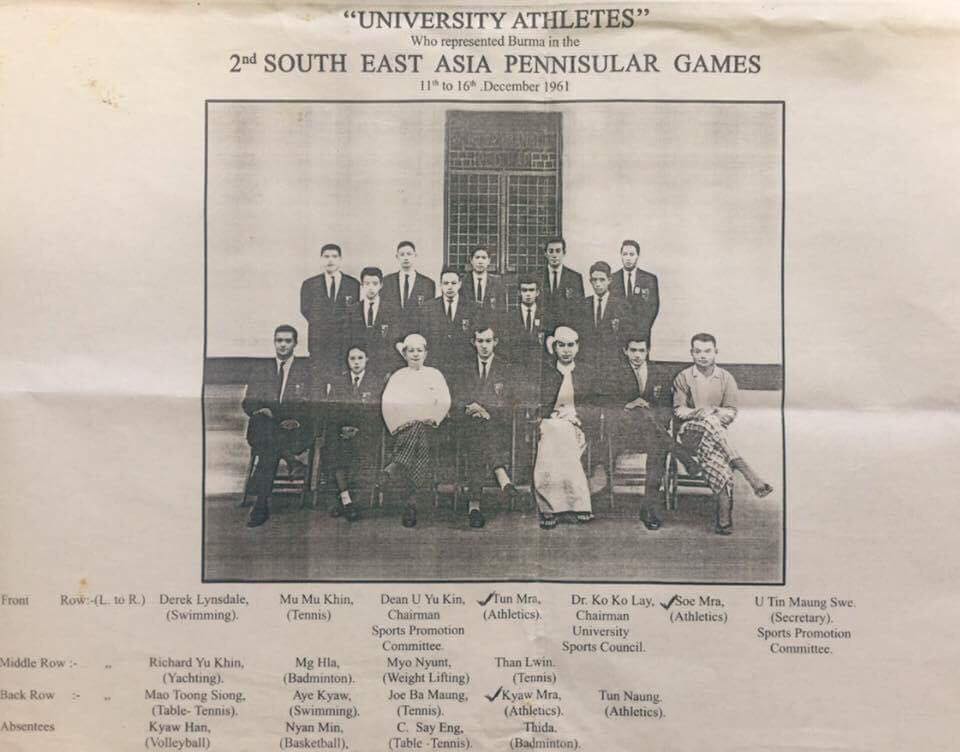
      U Tin Htoon (Thiri Pyitsaya Hotel in Bagan, RUBC Captain and Gold, ARAE Champion in 1958 and 1960, Silver Medalist for Yachting in SEAP Games, Helped with several Publications and Photo Albums)
      U Aung Kyee Myint (Chief Architect, PWD)
      U Kin Maung Yin (GBNF, Modern Art, Movie Director)
    • Myanmar Pithuka
      Saya Saing (father of Sayadaw U Silananda, grand father of U Than Tun and U San Maung)
    • Related Posts
      Architecture Department by U Myo Myint Sein
      U Tha Tun by Dr. Koung Nyunt (A67, GBNF) and U Than Tun (A65)
      Architecture Student by U Thet Win (A80)
      Architecture Students won International Contest by Daw Min Thet Mon (A70)
      Senior Architects
      Thet Kyee Pu Paw Pwe by AMA

    Memories by U Tin Htoon (A60)

    Architecture was introduced for the very first time in 1954 at BOC, University of Rangoon. U Myo Myint Sein belongs to this first batch. One of his classmates, Ko Myint Thein retired as Chief Architect of Public Works Department in Yangon. We were the “third batch” and were fortunate to study at the brand new “Faculty of Engineering” campus, commonly known as “Leik-khone” at Pyay [Prome] Road. There were nine of us in the first year, (1956). One of them was Shajahan, an Indian lady who became the first female to join the male dominated Engineering campus. However, she was unfortunate to be the victim of the “2F” system of our days. She left for India and later graduated as an Architect from there.

    In our second year, three guys from the second batch joined us. One from the first batch joined us in the final year. Two of the old-timers became the victims of the “2F” system.

    One very unique and interesting aspect of being an architecture student is doing design work. We were trained to solve design problems within a stipulated time and because of that we use to spend most of our time in our studio class. Eventually, the studio became our second home. We practically eat and sleep there and we spent our break times in the studio as well.

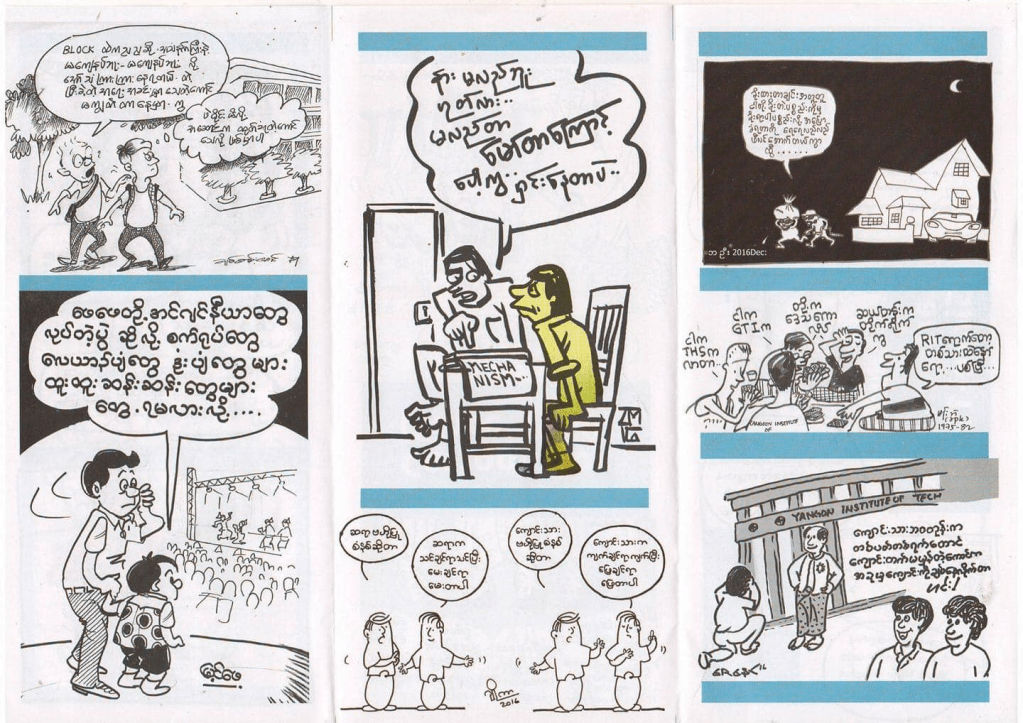
    Only when attending related Engineering subjects, we join together with other Engineering students. Otherwise, we normally confined ourselves within the Department of Architecture block and among our own group. Thus, the reason that most of the Engineering students came to know us because we were like “caged animals” in the zoo; being watched by people from outside and in our case by our friends as they walked along the corridors. Although the majority of us were day students, we were better off than those staying in the hostels as we didn’t have to pay extra to live in the studios. It was fun spending our time in the studios and as we were able to come up with fantastic ideas and designs and draw them as and whenever desired and complete the project within the stipulated time. For us, we didn’t had “days” and “nights”. The nights were more peaceful and productive for us. Only the studios in the architecture block were lit up at night. Sometimes, we even walk over to Hledan, Kamayut to have our break and supper.

    When architecture was introduced at BOC in 1954, there were one British and two Indian architects as full time staff assisted by their Myanmar counterparts. They were still teaching us during our first year. Roger Johnson, also a British architect became head of Department when we got to the second year. He was assisted by Nagler, an American architect and Saya U Kyaw Min (GBNF) and Saya U Win Htain in the later years. Sayagyi U Tha Tun (GBNF), Saya U Maung Maung, Saya U Aung Myint, Saya U Khin Mg Thint and Saya U San Tun Aung were part time staff. All the architectural subjects and the studio design work were taught by them except the freehand drawing class which was taught by an artist. We were fortunate that there were no changes in the staff and they all taught us till we graduated in 1960.

    Apart from the architectural staff, our years at the University will not be complete without mentioning some of our Engineering Faculty staff who taught us some of the related Engineering subjects.

    The first person I wish to mention is Sayagyi Num Kock. He taught us structure and we sometimes didn’t attend his class due to our studio design assignments. Since the class was meant only for architectural students, and since he knew where to find us, he used to come straight to our studio and requested us to come and attend his class. He was very good natured, humble, and led a simple life carrying a shan bag instead of a leather brief case. We always saw him with a smiling face and was very soft spoken.

    Another Saya I remembered well was Saya U Kyit In (later known as U Min Wun). He taught us survey and he was just back from the United States at that time. Whenever I had problem with the survey readings, he came over and nudged me out and checked the readings himself. He used to wear khaki long pants with a single buckle at the rear, which was the fashion of those days.

    Then I remember my Strength of Materials saya, Saya U Ba Than, who happens to be my brother. He was very strict and didn’t give any special favors even to his own brother. He was famous in setting questions for the exam as he never repeated the same ones that were given and worked out in the class.

    The list won’t be complete without mentioning Saya U Kyaw Tun(GBNF) who taught us Electro Technology. Since his classes were immediately after the lunch break, we had a hard time to overcome sleepiness and be attentive to his lectures.

    Last, but not least, I wish to mention about Saya Solomon and Saya Wein Choung. Their metal and wood work classes were always enjoyable and plenty of fun. We were in a totally different environment, not like those of lecture theaters or studio rooms. It was in these classes that we learnt the practical aspect of transforming design drawings into finished products.

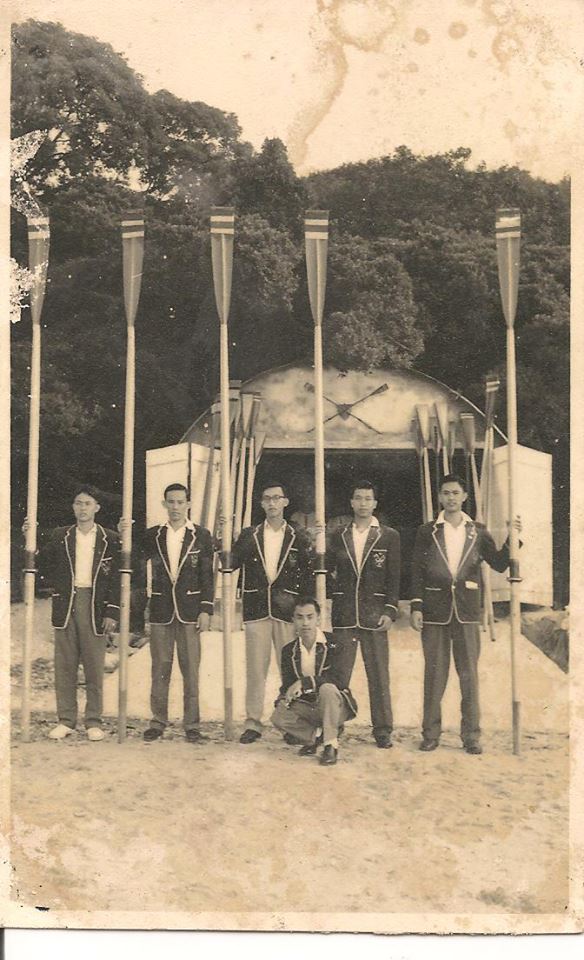
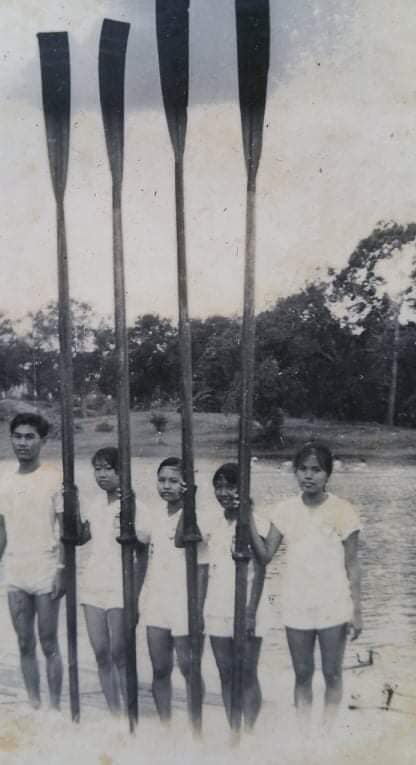
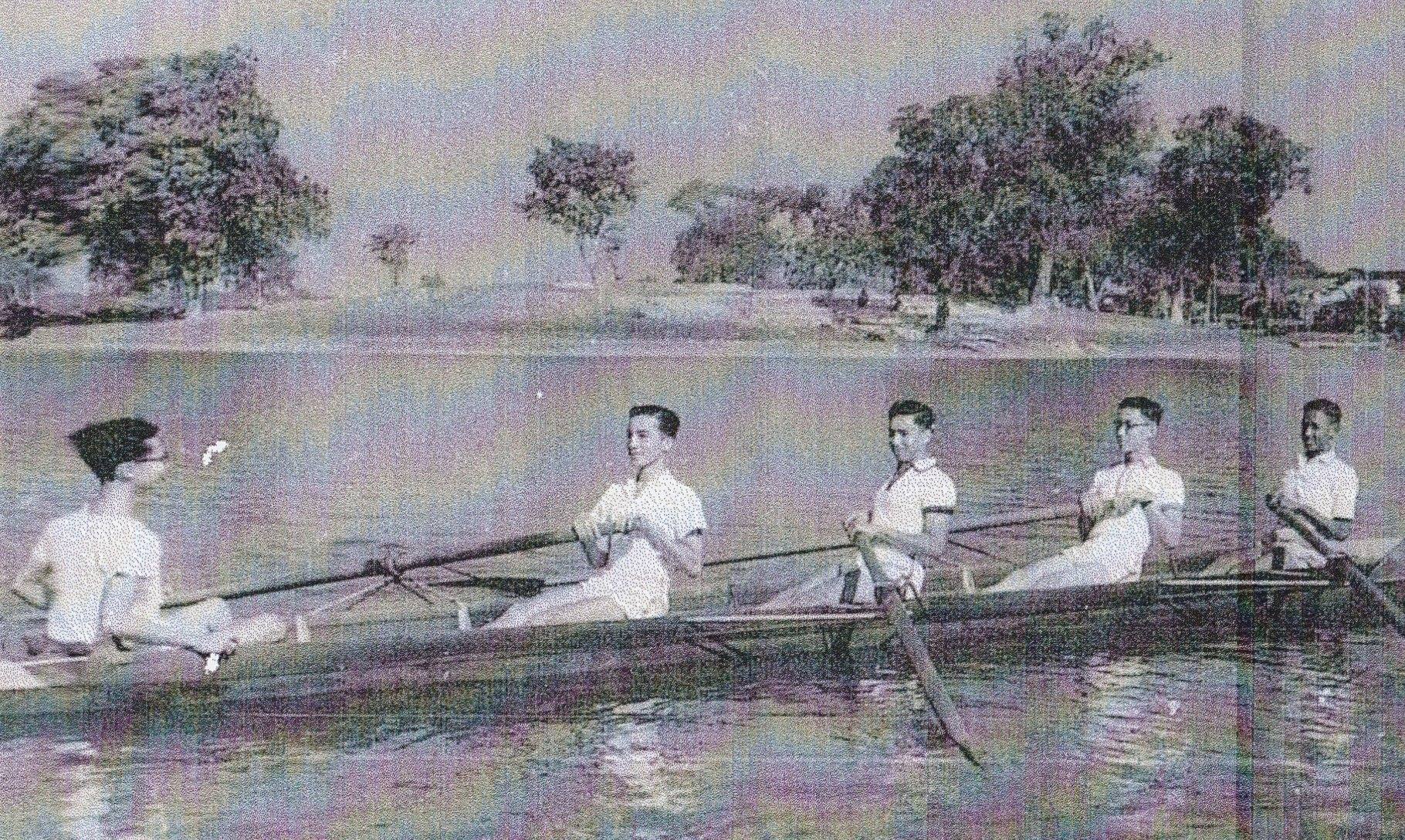
    My wonderful six years at the Rangoon University will not be complete without mentioning about my rowing activities. Since I came from a rowing family starting from my uncle Chan Cheng Hock who was Captain (1940-41) and the present oldest surviving Captain, I also became Captain (1959-60) after my two brothers U Tin U (ex-faculty member of BOC) and Dr. Myo Tint. I earned my “Gold” in 1956 by competing in the Inter-varsity regatta at Calcutta. I had the opportunity to represent RUBC seven times in regattas abroad and several times in Yangon.

    Although we started with nine students in the first year in 1956, ten of us graduated in 1960 due to the circumstances explained earlier. Philip Koon Ying Chu, who is now retired after being a very successful restaurant businessman in the Bay area, stood first. It was not the first time for him to have this academic achievement as he got first in the matriculation (in the whole of Burma) and was able to maintain the same position for the Intermediate of Science as well. Out of these ten graduates, six are now residing in the States. Among these six, Tan Teong Kiat (aka) Wai Lwin is the most successful professionally. He is doing consultancy work specializing in conceptual design. S. Hsiang Wu, Victor Pe Win and Jack Min continue to practice architecture in the private sector. Aung Kyee Myint became the Chief Architect of Public Works Department in Yangon and is now serving as an Advisor after his retirement. Khin Maung Yin excels in design and eventually became a well known artist in Myanmar. Later, he spent most of his time giving tuition to children. H. Hla Myint was unfortunate not to live long and passed away a few years ago.

    As for me, I had to be contented with being a Managing Partner of Architects Incorporated after graduating and running my own business. It was challenging, exciting and rewarding compared to being in the Government service. However, in 1962, we had to close down our business. I joined the Industrial Development Corporation (IDC) to open a new architectural division with my two partners Aung Kyee Myint and Bo Gyi in 1964. IDC, together with Housing Board and other Civil Engineering organizations were amalgamated to form Public Works Corporation. While working with Public Works, I had the opportunity to design Thiripyitsayar Hotel in Pagan (Bagan). Now, it is the only hotel complex left within the archaeological zone of Pagan and I am proud to be associated with it. I left Myanmar in 1980 and worked as Sr. Architect with one of the well known architectural firms in Singapore. I had a wonderful and memorable time for over ten years designing multi-story hotels, aerospace exhibition pavilions, commercial complexes, restoration projects and luxurious bungalows. In the beginning I had to work very hard to get acquainted with building codes, bye-laws and local regulations as we never had such standards and regulations to abide by at home. It was wonderful to discharge the duties of an architect properly as “Prime Consultant”. It was like a “Commander-in-Chief”, coordinating with other Engineering disciplines and the related fields like interior decorators and landscape architects, chairing site meetings etc.

    Now that I have settled down in Los Angeles and working for Design Division of L.A. County Dept. of Public works, I am devoting most of my time more in assisting those who are deeply involved in the propagation and perpetuation of Buddha Sasana.

    In conclusion, I wish to pay my tribute to all my Sayas and wish to thank them for educating and equipping us with proper tools in order to be able to face any type of situation in this world. And to my classmates, I salute all of you for your lifetime achievements and hope that this article will throw some light about our wonderful days at “Leik-khone”.

  • Acronyms

    Video Broadcast on November 26, 2020

    Meaning

    Acro (prefix) means High

    • Acrobat
    • Acrophobia

      Nym (root) means Name
    • Pseudonym
    • Synonym
    • Antonym
    • Homonym

    Examples


    In Military

    • SNAFU
      Situation Normal. All Fouled Up
    • FUBAR
      Fouled Up Beyond All Recognition

      In Computer Systems and Applications
    • FORTRAN
      Formula Translator
    • BASIC
      Beginners’ All-purpose Symbolic Instruction Code

      In Models
      There are variants
    • GROW
      Goal
      Review / Result
      Options
      What next? / Willpower
    • SMART
      Specific
      Measurable
      Achievable
      Realistic
      Time-bound
  • Astro-

    Video Broadcast on September 17, 2020

    Astronomy

    • Branches of Astronomy
    • Astrophysics
    • Astrobiology
    • Astrochemistry
    • Planetary science

    Measurement

    • Techniques and tools
    • Observation and mapping
    • Observatory
    • Naked eye
    • Telescopes
    • Galileo
    • Hubble

    Object of study

    • Milky Way
    • Galaxy
    • Solar system
    • Comet

    Astronomers

    • Astronomer Royal
    • Often also Astrologer (in early days)
    • Edmund Halley
      Comet
      Halley’s comet (return every 74 – 75 years)
      Mark Twain (birth and death)

    Sayas who taught Astronomy

    • U Ba Min
    • U Soe Min
    • U Sein Win
    • U Min Wun
    • U Aye Win Kyaw

    Miscellaneous

    • Zodiac systems
    • Constellations
    • Calendars
    • Stonehenge
    • Placement of selected pyramids
    • History of Astronomy
  • Apples

    Video Broadcast on September 2, 2020

    Adam and Eve

    • Forbidden fruit in the Garden of Eden
    • Some translators probably named it as Apple
      (since it is common)
    • Adam’s Apple
      Present in both men and women
      Significantly larger in men

    Sir Isaac Newton

    • Anecdote
      Apple falling on Newton’s head lead to the discovery of the “Law of Gravitation”
    • Fact
      Newton was in an orchard, but no apple fell on his head.
    • Newton saw an apple fall in front of him.
      He probably asked himself, “Apples fall to the ground. Why doesn’t the Moon fall to the Earth?”

    Beatles

    • Founded the company “Apple Corps” in UK to publish and distribute their music.
    • Used Granny Smith (an apple variety) as the Logo.
    • Sued “Apple Computer” for violation of Trademark.

    Steve Jobs

    • Founded the company “Apple Computer Inc.”
    • Supposedly came up with the name “Apple” after visiting an orchard.
    • Some believe “Apple” was chosen since it wanted to be listed at the head of the Yellow Pages.
      “Atari” was the first entry at that time.
    • Settled the law suit partly because the Judge thought that the two names are from different domains.
    • Several decades later, due to Convergence, Beatles’ music was offered on iTunes.
    • Apple later manufactured “Mac” (short for Macintosh).
    • It is a misspelling — intentional or unintentional — of McIntosh (a well known variety of apple).

  • U Maung Maung Gyi

    Maung Maung Gyi and UCC colleagues

    He matriculated from SPHS in 1964 along with CO U Hla Min (“Pauk Si”, GBNF) and U Aung Myint (GBNF).

    His old friends know him as “Henry Than Htay” and “Maung Maung Gyi”. Some know him as “Thein Tan”

    He is a Cousin-Yaukpha of Patrick Ni.

    He joined the Operations Division of Universities’ Computer Center as served as Shift Leader, Chief Operator and Manager.

    He passed away on May 12, 2019.

    Sad News

    Soon Kwyay

    U Nyunt Than (M86, UCC) is organizing a Soon Kyway in memory of U Maung Gyi as follows:

    Date : May 28, 2019 (Tuesday)

    Time : 10 AM to 1 PM

    Place : Mettananda Vihara
    35691 Palomares Rd.
    Castro Valley, CA 94552

    Phone : (510) 733 6665

  • Advisors

    Dr. F Ba Hli (GBNF)

    Dr. F. Ba Hli

    He received Sc.D. (Doctor of Science) from MIT (Massachusetts Institute of Technology). At MIT, he helped “fresh” scholars including Saya Dr. Aung Gyi and Saya U Min Wun acclimatize with the environment and studies.

    He served as DG (Director General) of UBARI (Union of Burma Applied Research Institute) and Advisor for the Ministry of National Planning. He was a supporter of UCC Project and served as a member of the Board of Directors and as an External Examiner for the Computer Science graduates.

    Daw Myint Thwe (Saya’s spouse) is the sister of Saya U Tin U (C), Saya U Ba Than (M, GBNF), Dr. Daw Win Hlaing, Dr. Myo Tint (GBNF), U Tin Htoon (A60), Saya U Myo Min (UCC), Thaung Lwin (EC66) and Daw Cho Cho Hlaing.

    Saya’s children Daw Tin Tin Hlaing and U Tha Hlaing (EC83) are UCC Alumni. U Htay Aung (EC80, spouse of Daw Tin Tin Hlaing and nephew of Saya U Sein Hlaing) and team “programmed” a PROM (Programmable Read Only Memory) to print Burmese characters on the Cromemco System Three micro-computer. He worked on Burmese Word Processing for Wang Computers. He migrated to Australia. For the past few years, U Htay Aung came back to Yangon to volunteer as an interpreter for the “10-day Mediation Retreat for Foreign Yogis” at the Mahasi Sasana Yeik Tha.

    During my visit to Sydney in 2006, Saya U Aung Zaw hosted a UCC reunion and mini-PZP (Pu Zaw Pwe) for Saya F Ba Hli and Saya Chit.

    U Sein Win (GBNF)

    U Sein Win

    Saya U Sein Win (GBNF) is the younger brother of Dr. Tin U (Medical Superintendent, Rangoon Children’s Hospital) and Dr. Saw Lwin.

    Saya served as Technical Advisor for UCC. Saya worked closely with U Win Htein (Purdue University, EE at PWD, GBNF) for the design and maintenance of the Electrical Systems (including Motor Alternator, Diesel Generator, Air conditioning) at UCC.

    Saya was a top student at the University of Michigan. His friends jokingly called him “Khone Swa Khone Swa” referring to his brisk walking style.

    Saya served as Lecturer in the Department of Electrical Engineering. When the EE Department was formally reorganized into EC (Electrical Communications, also known as EcE and Electronics Engineering) and EP (Electrical Power), Saya U Sein Win served as Professor of EP. Saya Dr. San Tint served as Professor of EC.

    Grapevine says that Saya is an absent minded Professor. Saya married late. One day, Saya drove Sayagadaw to Bogyoke Market. He taught (or discussed with) his students for quite some time and almost forgot to pick up Sayagadaw. There are variations on this anecdote regarding the place (e.g. Hledan Zay).

    Saya served as Line Judge at the RUBC (Rangoon University Boat Club) Regattas. Saya managed the RIT Swimming and Water Polo team.

    Saya stays fit by swimming regularly (even when he was visiting Singapore on a business trip).

    Saya has a vast knowledge. Saya Dr. San Hla Aung (C58) remembers Saya U Sein Win discussing about Civil Engineering and other subjects.

    U Win Htein (GBNF)

    U Win Htein matriculated from SPHS in 1956 with Saya U Soe Paing and Saya U Ko Ko Lay.

    They were selected as State Scholars to study in the USA. U Win Htein studied at Purdue University. Saya Paing and Saya Lay studied at Stanford University.

    Upon his return, he joined PWD.

    He was EE during our UCC days.

    For the UCC project, U Win Htein and his team maintained the Electrical Systems (including Motor Alternator, Diesel Generator, Air conditioning) at UCC.

    U Win Htein is the elder brother of U Myo Myint (EC67) and Daw Myint Myint Thein (Susan, FERD).

    Dr. San Tint (GBNF)

    Dr. San Tint

    Saya Dr. San Tint (GBNF) graduated in 1961 and joined the EE (Electrical Engineering) Department at RIT. He later served as Professor of EC (Electrical Communications AKA Electronics Engineering).

    Saya served as External Examiner at UCC.

    He played on the RIT Saya Soccer team with U Soe Paing (EE), Dr. Tin Win (M), Dr. Aung Soe (C), U Aung Soe (Maths), U Tin Maung Nyunt (M) and Des Rodgers (English).

    Saya suffered stroke and his right hand was paralyzed. He practiced writing with his left hand hoping that he will recover and continue teaching.

    Saya spent four decades teaching and passing the torch to the younger generation.

    His nephew U Hlaing Myint (UCC) was with Saya in Saya’s final days.

  • Toastmasters

    Hla Min (DTM)
    Hla Min (Triple Crown winner)

    I joined Toastmasters International over a decade to hone my Public Speaking and Leadership skills.

    I completed DTM (Distinguished Toastmaster). I also volunteered as Club Ambassador.

    I was a member of five Toastmasters Clubs (not concurrently). Although all clubs follow the general guidelines, they tweak the meeting agenda.

    My last club was founded by Silicon Valley Entrepreneurs. It is special in one aspect. It holds a mini “Pitch Practice” on the first meeting of every month and a full Pitch Practice on the middle month of every quarter. One has to state the problem, solution, the differentiators and finally ask for cooperation or funding (as appropriate). All in two minutes or less.

    There were no Toastmasters clubs in Myanmar. There have been TEDx talks for three years or so.

    In our younger days, there was a Rotary Club which had a public speaking component.

    In a previous year, three women set the record by placing First, Second and Third in the “World Championship of Public Speaking”. It has been a decade since there was a woman Champion. The runner-up was from China. The winner and third place winner were from the USA.

    In the past few years, the winners were from Asia and the Middle East.

    Listening and evaluation are important in communications.