The students include Khin Maung U, Min Oo, Bernard Taylor, Than Htay and Win Maung.
Std VI A
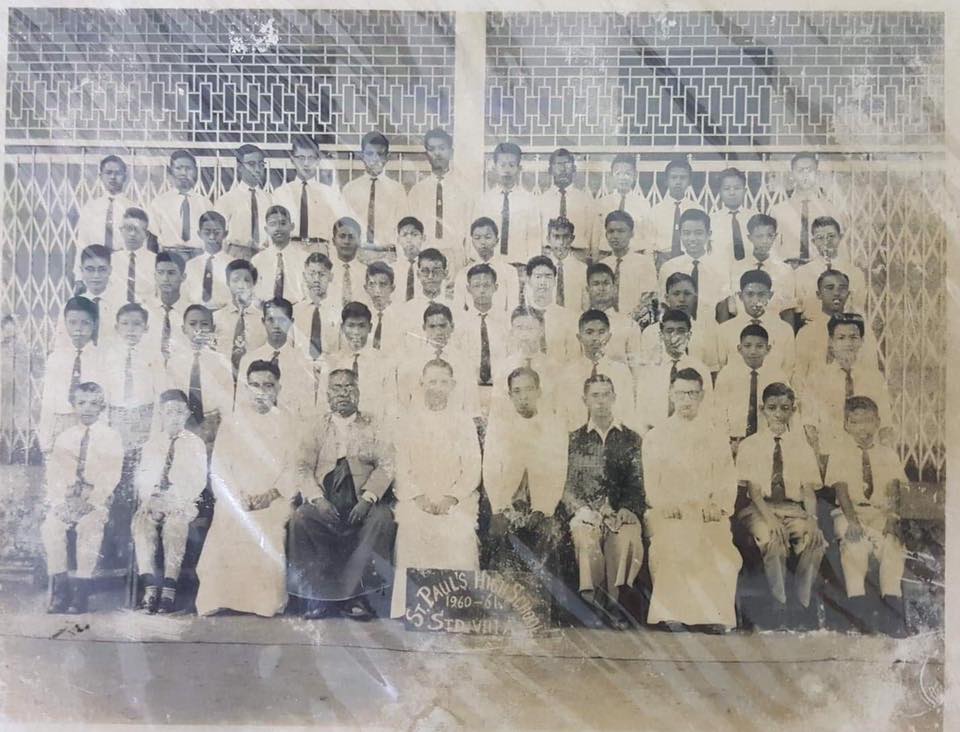
Std. VIII A
Std, VIII A
Std. VIII B
Std VIII B
Sayadaw U Wara (Win Paing, GBNF)
Sayadaw Beatson
Saya Beatson (currently Sayadaw) is the lone surviving saya of our times.
His former students include Kyaw Wynn, Nyunt Wai (Victor Nyunt), Khin Maung Zaw (Frank Gale), Myo Nyunt (Harry Kyaw), Nyan Taw (Dicky Taw), Kyaw Sein Hla and Than Win.
Sayadaw Victor Aung Chaw
Kyaw Wynn gave a birthday soon kwyay at Shwe Ba Hta Min Saing to Sayadaw U Okkantha (Victor Chaw, Aung Chaw).
Aye Ngwe (Edwin Ngwe), Kyaw Wynn, Khin Maung Bo (Allan Saw Maung), Hla Min, Than Win, Aung Kyi (Arthur Kyi), Tin Tun and Khin Maung Zaw (Frank Gale) are former classmates of Sayadaw.
Brother Austin (English) : Class Teacher : School Librarian After Nationalization, moved to Malaysia.
Saya U Sein (Burmese) Father of Saya Dr. Soe Win (SPHS58, Retired Rector of YUFL)
Brother Clementian (Mathematics) Was Brother Director in several De La Salle Schools When his cortege arrived at the Tamwe Christian Cemetery, several cars and buses were still leaving SPHS for the Final Journey
Saya Cecil D’Cruze (Chemistry) Moved to Australia and worked as Librarian
Saya Beatson (Physics) Became a Sayadaw Lone remaining saya from our time. Harry Kyaw, Atom Hla and Dicky Taw organized soon kyways for Sayadaw.
Sections
There were four sections.
Sections (A) and (B) had common sayas for some subjects (e.g. Mathematics)
Matriculation
SPHS had
Five students in the Top Five
Seven students in the Top Ten
Ten students in the Top Twenty
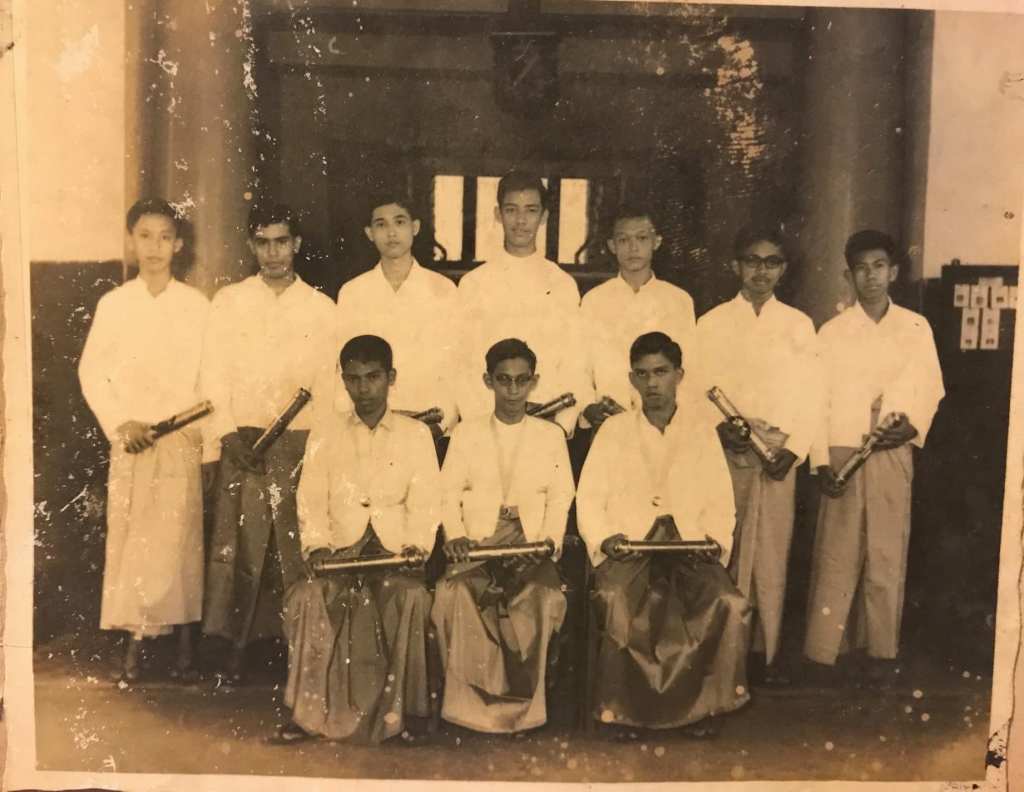
SPHS63
Seated (L to R) : Min Oo (2nd), Khin Maung U (1st), Myo San (3rd, GBNF)
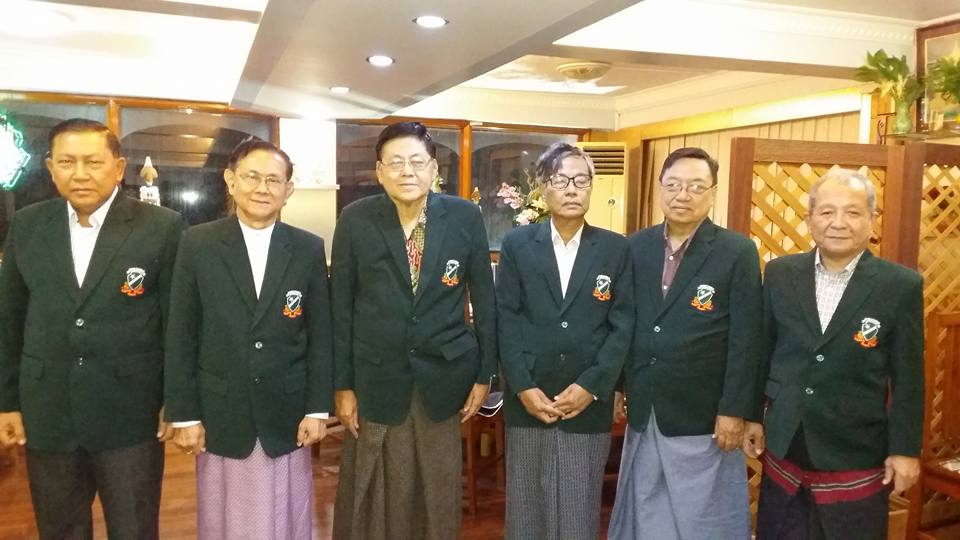
In 2018, Kyaw Win offered birthday soon kyway to Uzin Okkantha (Victor, Aung Chaw) and treated his former classmates (some of whom have not seen each other for a long time).
Aye Ngwe (Edwin)
Kyaw Win (“Birthday Boy”)
Khin Maung Bo (Alan, EP69)
Hla Min (EC69)
Uzin Okkantha (Aung Chaw, Victor, C69)
Than Win (M69)
Aung Kyi (Arthur)
Tin Tun (M69)
Khin Maung Zaw (Frank Gale, IM1 70, UK)
Novice Crew
Kyaw Win (EE) and Maung Maung Kyi (B, Dip Ing in ChE, Wales, UK) rowed on the bow side of our Novice crew. Willie Soe Mg (BDS, GBNF) and I rowed on the stroke side. Myint Thein (SPHS 62, B.Com 66) was our cox.
GBNF
Willie Soe Mg (Myint Soe, BDS)
Dr. Freddie Ba San (Myo San, Surgeon),
Dr. Aung Thwin (Alfred, OG)
Dr. Freddie Sein
Dr. Maung Maung Aye
Brownie Way (Aung Thu Yein, EC69)
Aung Khin (DSA)
Shwe Zan Aung (OTS, Sea farer)
Gilbert Thaw (Min Thaw, EP)
Uzin Phillip Ba Maung
Miscellaneous
Han Tun, Aung Khin, Myint Lwin Nyo, Thaung Lwin (Michael) … joined DSA
Shwe Zan Aung, Phillip Ba Maung … joined OTS
Htin Aung, Nyan Taw, Myo Khin, … received Doctorate
Myint Soe, Aung Thwin, … received MD
Hla Aung (Stanley) … became Master Mariner
Jerry Hin Hwa … became Editor
D S Saluja, K Lal, … became successful entrepreneurs
Sir Arthur Eggar founded Rangoon University Boat Club (RUBC) and served as the Life President.
Biography
In the 50’s, he wrote his biography for the Guardian Magazine in three installments.
Several old Crocs donated to reprint Sir Arthur Eggar’s biography in time for the 90th Anniversary of the Founding of RUBC.
The donors include
Saya U Tin Htut
U Tin Htoon
Dr. Thein Htut
Dr. Tin Wa
U Myo Myint
U Hla Min
U Thura Thant Zin
U Htaik San (Henry)
Daw Joe Phyu
The biography was printed along with the Commemorative Issue for the 90th Anniversary of the founding of RUBC. I served as Contributing Editor for the Commemorative Issue. I wrote three articles and Preludes for all the sections.
Trips to Burma
On the first trip, Sir Arthur came to Burma and served as a Lecturer in Mathematics at the University of Rangoon.
He returned to the UK. After becoming a lawyer and serving in the Middle East, Sir Arthur returned to Burma as a Law Advisor to the Burmese Government and as Professor of Law.
He founded Rangoon University Boat Club (RUBC) in 1923. He pledged a third of his salary (as Professor of Law at Rangoon University) for use by RUBC. He was elected as Life President of RUBC.
He donated a Pewter Trophy to be presented to the winner of the Senior Novices event.
Sir Arthur rowed at Cambridge University. He is credited for proposing the Egg-Bairn rowing style.
Autobiography
He wrote his biography for the monthly Guardian Magazine (in three installments).
In 2013, U Tin Htoon, U Myo Myint, U Htaik San and team compiled a Commemorative Issue to celebrate the 90th Anniversary of the founding of RUBC.
I was a Contributing Editor for the Issue. I wrote Preludes for each section. I also wrote three articles.
In addition, U Tin Htoon invited selected Old Members (mostly RUBC Gold and some Past Captains) to contribute to the re-printing and distribution of Sir Arthur’s autobiography. The intended audience include present and past members of RUBC, and also teachers, students and practitioners of Law.
Saya U Tin Htut, U Tin Htoon, Dr. Thein Htut, Dr. Tin Wa, Dr. Donald Chan, U Myo Myint, U Hla Min, U Thura Thant Zin, U Htaik San (Henry), and Daw Joe Phyu responded.
Bronze Bust
RUBC repaid the metta and cetana of Sir Arthur Eggar by displaying his Bronze Bust on the Club Promontory.
Sadly, during the Adhamma Era, the Bronze Bust of Sir Arthur Eggar disappeared from the Club Promontory.
Rowing Songs
There are at least two Rowing songs. The one printed at the back of the Agenda for the RUBC Regattas is as follows.
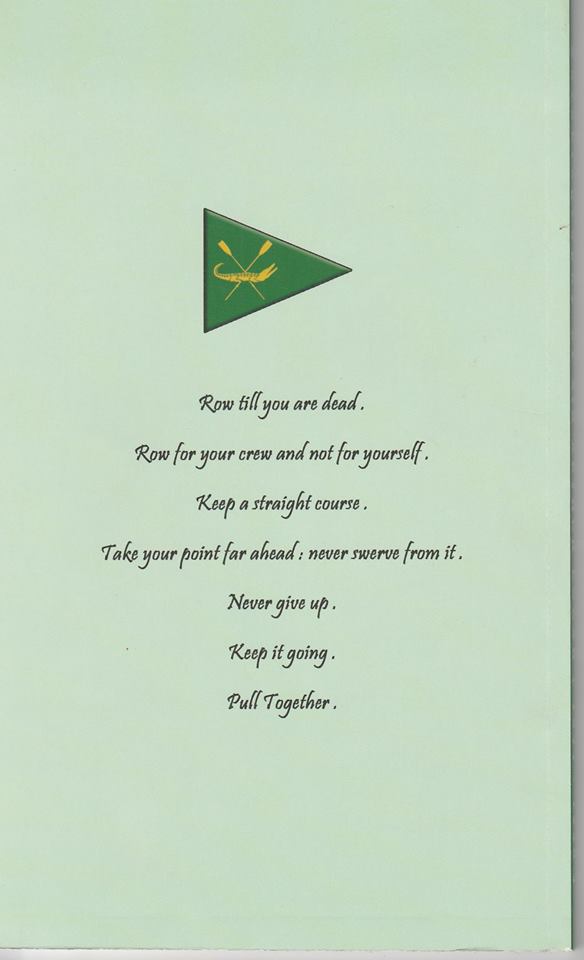
Pull long and steady bows Strange though it may seen The hardest stroke won’t send the boat The swiftest down the stream.
If you want to keep the boat afloat And brave life’s stormy weather You must not put your oar too deep But always “Pull together“.
The RUBC Team won the Willingdon Trophy for Coxed Fours at the 1960 ARAE (Amateur Rowing Association of the East) Regatta held at Colombo.
Photo (L to R) :
U Tin Htoon (Stroke), Past Captain, Compiler for 40th Anniversary Magazine, Chair for 90th Anniversary Magazine
Sunny Teng (3), Left before graduation to US and/or Canada
U Sein Htoon (Cox), Past Captain, Retired as President of Burma Rowing Federation
Victor Htun Shein (2), Joined BAF, Perished in an air crash
Dr. Harry Saing (Bow), Past Captain, Operated along side Dr. Pe Nyun on Ma Nan Soe and Ma Nan San, Retired as Professor / Pediatric Surgeon in Hong Kong, Passed away (and his ashes are scattered near the HK Yachting and Sailing Club).
Comments
Tin Htoon and Harry Saing won the Venables Bowl for Coxless Pairs at the 1958 ARAE Regatta in Calcutta. They were chosen as members of the Olympic Torch Relay Team for the Rangoon Leg.
Tin Htoon and Hla Khin won Silver for Yatching at SEAP Games.
Harry Saing is a Multiple Sports Athlete. He represented Burma in Rowing, Hockey and Cricket. He represented the Faculty of Medicine in Track & Field, and Soccer. — He is a Pediatric Surgeon.
Col. Hla Oung was Patron of the Burma Hiking and Mountaineering Association.
Universities, Institutes and Government Departments have their H&M Clubs.
U Shein (SLR) and Ko Henry Wan (SPHS59) are some of the evangelists / active members.
Ko Win Lwin (M69) served as Secretary of RIT H&M Club. He and Ko Cho Aye (M70, GBNF) joined the All Universities Expedition to Saramti (Mt. Victoria). The photos are provided by Ko Win Lwin.
Kyi Kyi Sein (Bei Oo, T70) and others also represented RIT in the Hiking contests.
Three third year BE students Ko Zaw Min, Ko Han Tha Myint and Ko Sein Win trekked 300+ miles. The story was quoted as a 600+ mile journey in the Burmese newspaper.
Ko Zaw Min (EP70) has written posts about his stay at RIT from 1964 to 1970. He covers education, extracurricular activities (soccer, boxing, rowing, UTC, hiking, track and field, debates, Pwes).
DEC (Digital Equipment Corporation) produced PDP and VAX.
Khin Maung Zaw wrote :
It’s kind of sad that DEC failed to keep up with their lead beyond PDP.
I don’t know why Ken Olsen was pushed out, my limited understanding was that he was not high on Unix (he had been attributed to calling Unix a ‘snake oil’), for some reason his attempts to push VAX/VMS didn’t take off as he might have liked. I’ve read it somewhere that he didn’t get much support within DEC on the VAX/VMS endeavor.
At the time, there was a talented group of DEC engineers in Seattle area (across the lake from Seattle, matter of fact we here called East Side – Bellevue/Redmond). If I recall correctly, the first Microsoft Data Center at Canyon Park, several miles north of Redmond, was ran by DEC folks in the late 80s, early 90s.
A brilliant OS architect, Dave Cutler, part of a triumvirate led DEC’s Star project, a virtual 32-bit extension on PDP 11/70. Star and its cousin Starlet became precursor to VAX/VMS among others. The triumvirate were working at the DECWEST facilities in Bellevue, next to the city of Redmond.
Around late 1980s, some events – of which I’m no clue whatsoever, Canyon Park Data Center staff as well as many of the DECWEST team became part of Microsoft.
As the saying goes, “The Rest Is History”. Dave Cutler and his team led the development of Windows NT, New Technology” and beyond. Some folks attributed Billg who manged to extract most of the DEC VAX team into MSFT.
[A titbit on VAX and NT] Mark Russinovich, received his PhD from Carnegie Mellon in 1994, wrote series of articles in the Windows magazine, comparing the deep down internals of vms and NT. He even discovered the names of the internal variables have the identical names between them.
He co-founded a company called “Winternals”, developed a set of Windows tools which quickly became a Swiss knifes for every Windows engineers. Needless to say, Microsoft bought his company, the tools became part of Windows. Mark became Technical Fellow, and now he is the CTO of Azure.
U Tha Hlaing (EC83) stood Joint First with U Thaung Tin (EC83, KMD).
He is the elder son of Saya Dr. Freddie Ba Hli (GBNF) and Daw Myint Thwe (sister of Saya U Ba Than).
He gave me the book during my visit to Sydney in 2006.
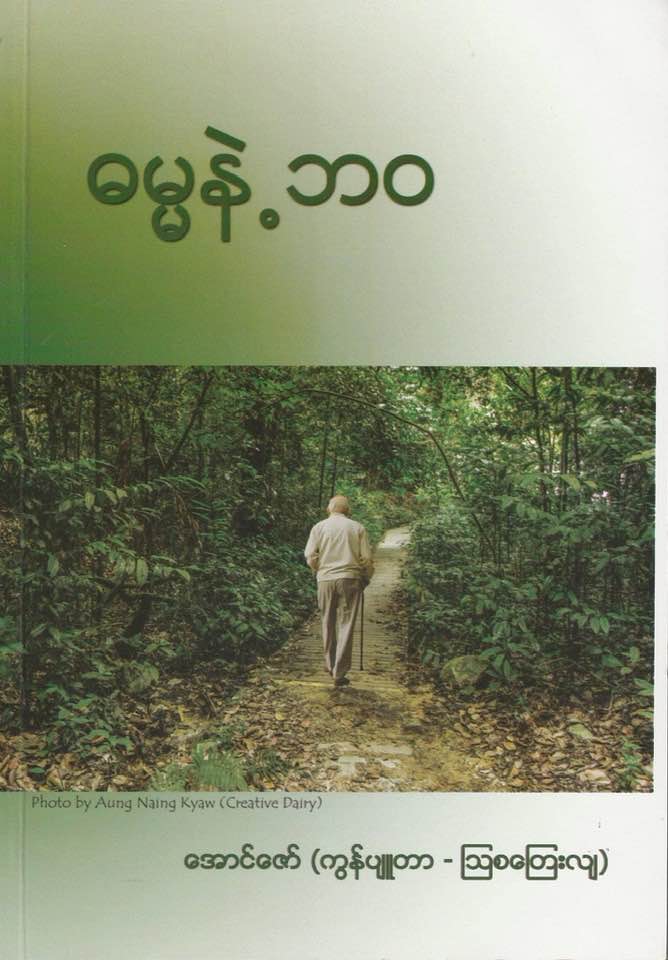
Book present by U Tha Hlaing
Pathan
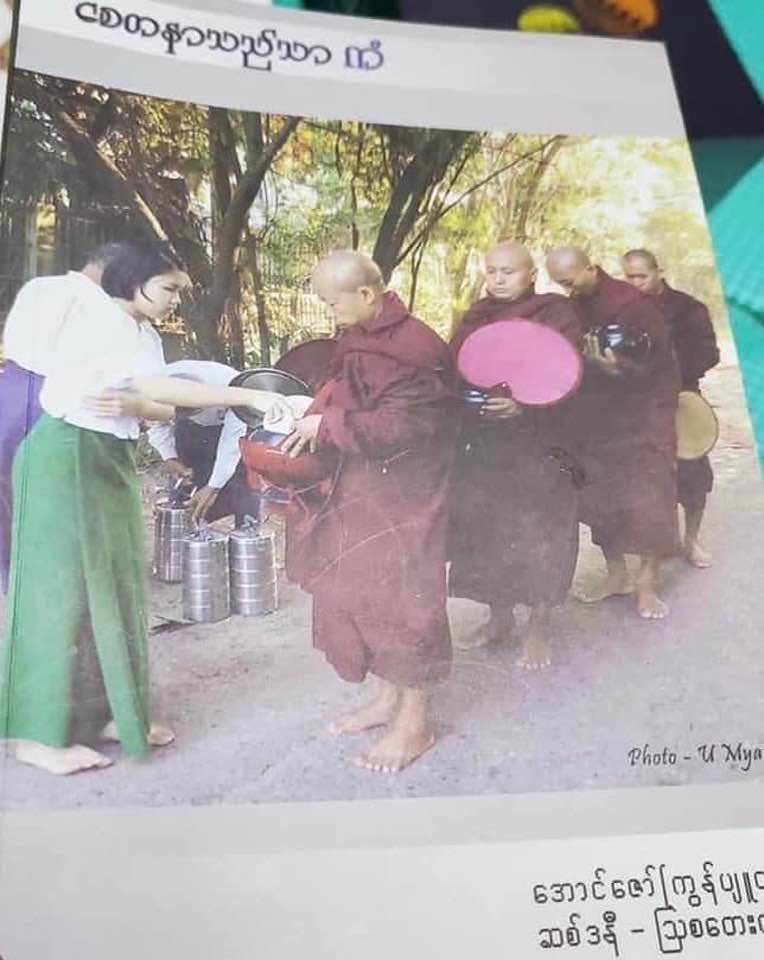
Dr. Nandamalabhivansa, retired Rector of IMBTU, is the author.
As Pro-Rector, Sayadaw brought special robes for the Final Journey of U Silanandabhivansa, inaugural Rector of IMBTU.
I was emcee for the Memorial Service.
Saya U Ye Sint (Physics) and I served as Editors of Dhammanda Newsletter, EC & BOD of TBSA, and Contributing Editors of the book in memory of U Silananda. He gave me the Pathan book as present.
Pathan book by Dr. Nandamalabhivamsa
Q&A on Dhamma
Ashin Kelasa published five volumes on the topic, and a few other books.
He gave me some books in person (during his visits to the SF Bay Area) or by mail.
He is the Chief Resident monk at A Lo Daw Pyie monastery at Apache Junction, Arizona.
In the early days, the faculty members of Social Science served as Visiting Lecturers at BIT/RIT
Saya was Lecturer of Economics and the Librarian of Social Science Library. Taught Economics to the engineering students at BIT.
U Maung Maung
Research Engineer with UBARI
Taught part-time to engineering students.
U Aye (M62, HIC/FAO/UN (Retired)) wrote :
U Than Lwin was our Economics lecturer during our Third year Engg. class (Old system) in 1960-61.
Part-time lecturers during 1961-62 include :
U Kyaw Hla, Manager, (M54), M.Engg (McGill), Manager, PEI 2, Ministry of Industry, our part-time lecturer for Theory of Machines.
U Kyaw Kyaw Thein, Architect, a graduate from Leeds, UK, from U Kyaw Kyaw Thein & Associates, Pansodan Street, was our par-time lecturer for Hydraulics.
Our Industrial Management lecturer was from the Institute of Economics.
Note : During 1961-62 academic year, our lecturer Mr. Johnny King (U Ko Ko Gyi) resigned to go abroad and our Russian Professor passed away.
Part time lecturer on Mechanized Construction
U Hla Shein (M60) Dy, Director, Mechanized Construction (Retired) Went to Manchester, UK, for further study/training
Editor’s Notes :
There were connections between BIT/RIT and UBARI. Some who went for further studies on UBARI scholarship [later] joined BIT/RIT as full-time or part-time sayas.
Saya U Tin Htut (M60) was the first engineering saya to teach “Industrial Management”. In the early days, the Departments of Economics and Commerce (from the Faculty of Social Science, and later Institute of Economics) taught “Industrial Management”. They include Saya U Thein Aung and Saya U Tin Nyunt
Electrical Inspectorate and EPC provided Visiting Lecturers to the Electrical Engineering Department.
Engineers from Irrigation and Municipal taught part-time in Civil Engineering.
Some artists (e.g. Bagyee Aung Soe) taught part time in Architecture.
There are other subjects (e.g. Sociology) that are taught by part-time sayas and visiting lecturers.







 HlaMin