It amazes us that books (and even a book chapter) can change a person’s life.
Salvatore Cioffi was working as a Chemist in the USA.
He was from a devout Catholic family, and his elder brother was a Priest.
He received a book present from his supervisor for Christmas.
One of the chapters was “Dhammapada“. After reading the chapter, Samvegha crept in. He quit his job and then went on pilgrimage to the places sacred to Buddhism.
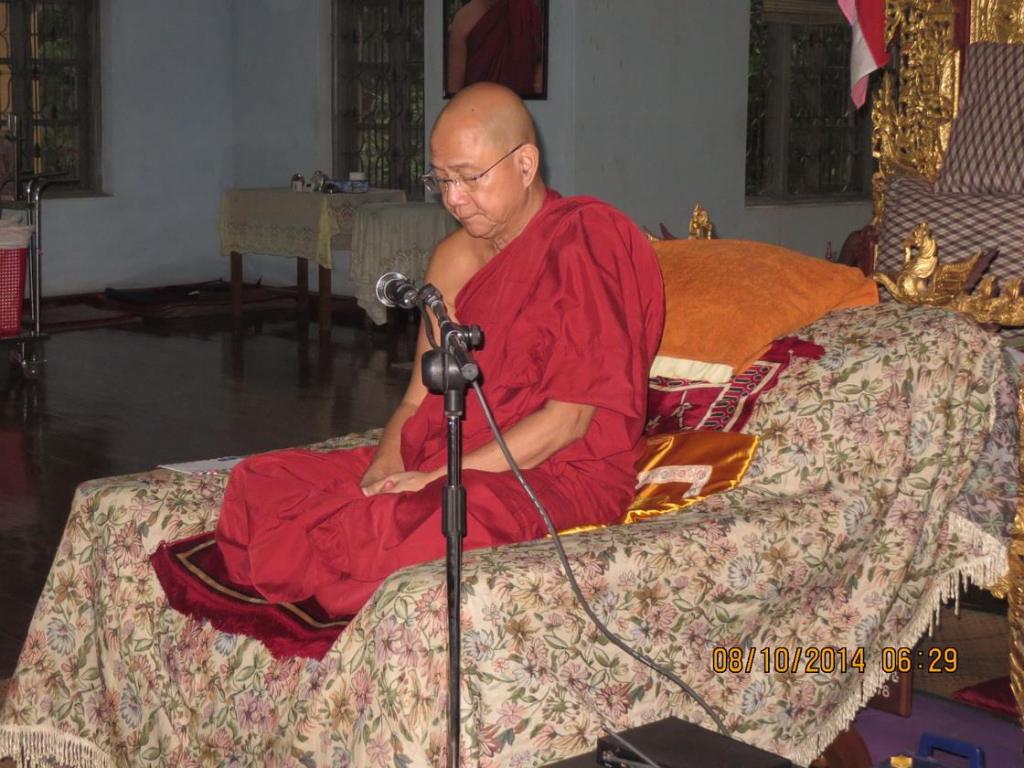
In 1925, he was ordained in Burma as a Buddhist monk named “U Lokanatha“.
He published a booklet, “Why I became a Buddhist.” He wrote, “I became a Buddhist. My supervisor remained a Christian.”
My maternal grand mother offered a monastery for U Lokanatha in Bawdigone (Windermere, Rangoon).
U Lokanatha practiced Dhutanga.
He also preached and had Dhamma Dhuta missions to India and Ceylon.
Sayadaw gave dhamma talks in Mandalay and Maymyo. Dr. Soni was a principal supporter.
He paid respect to Myingyan Sun Lun Gu Kyaung Sayadaw. The event is described in “Sun Lun Sayadaw’s Biography“.
He corresponded with B. R. Ambedkar, the Indian Dalit (“untouchables”) leader.
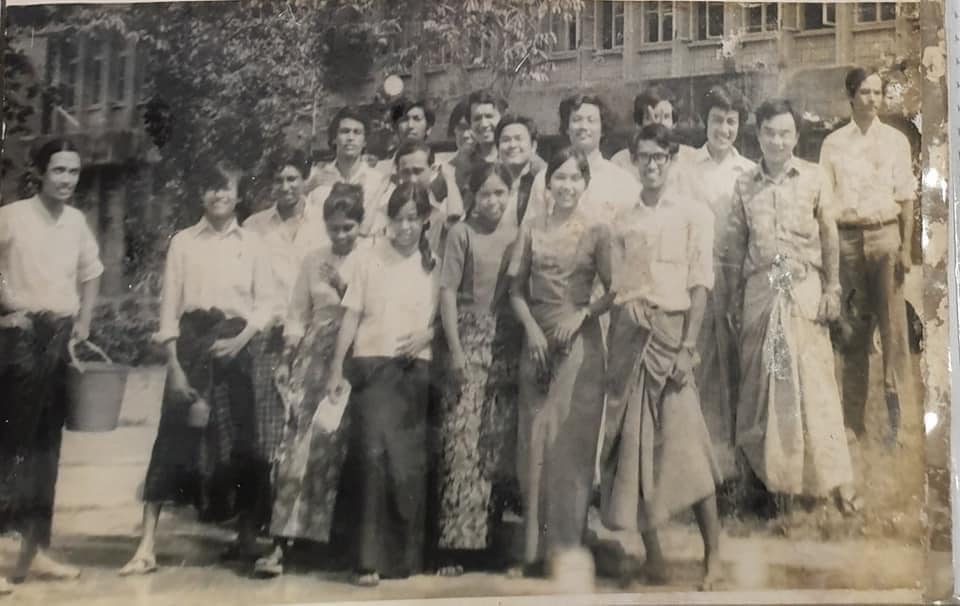
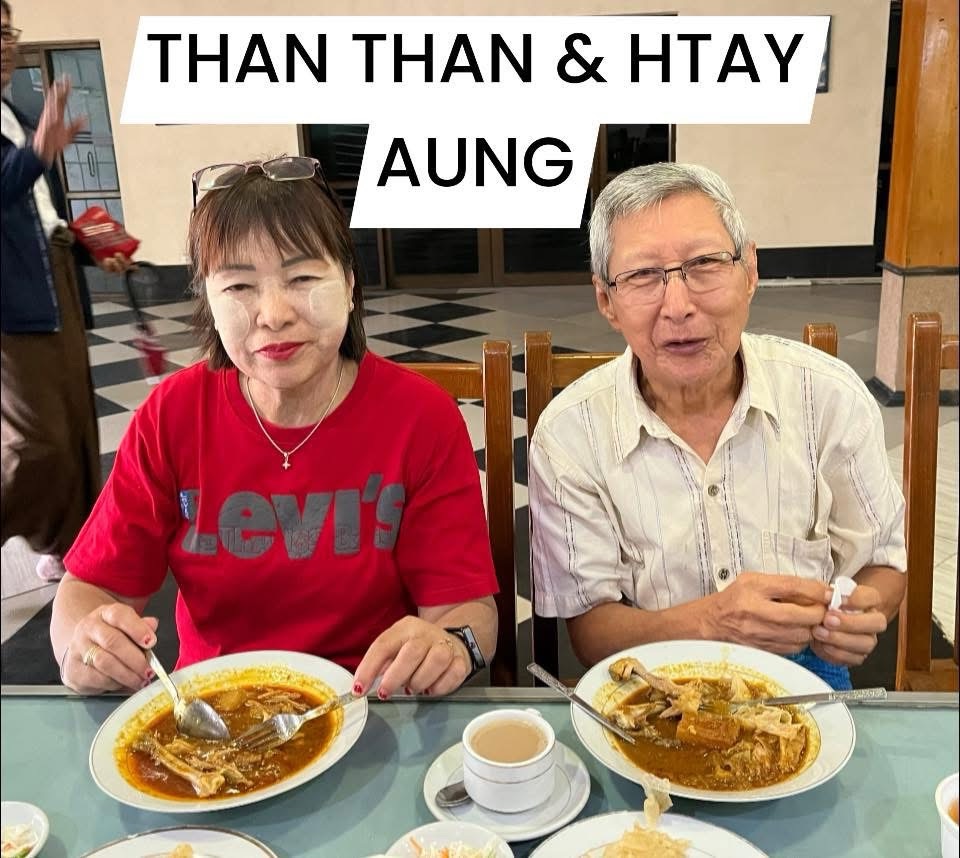
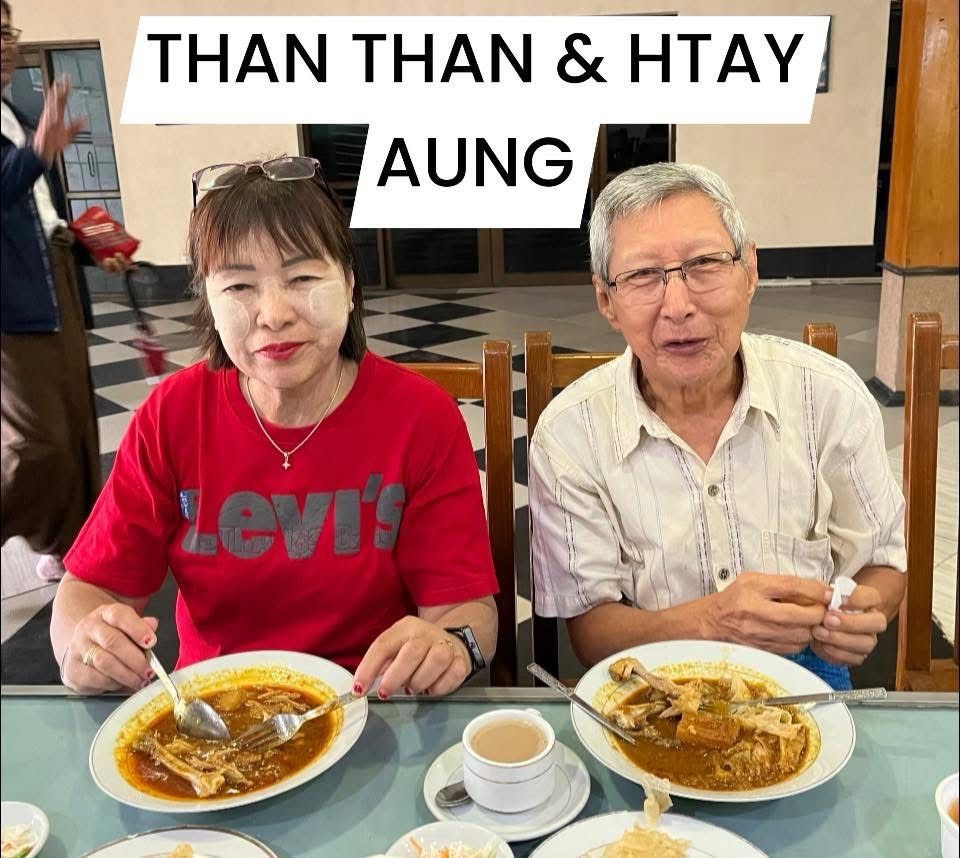
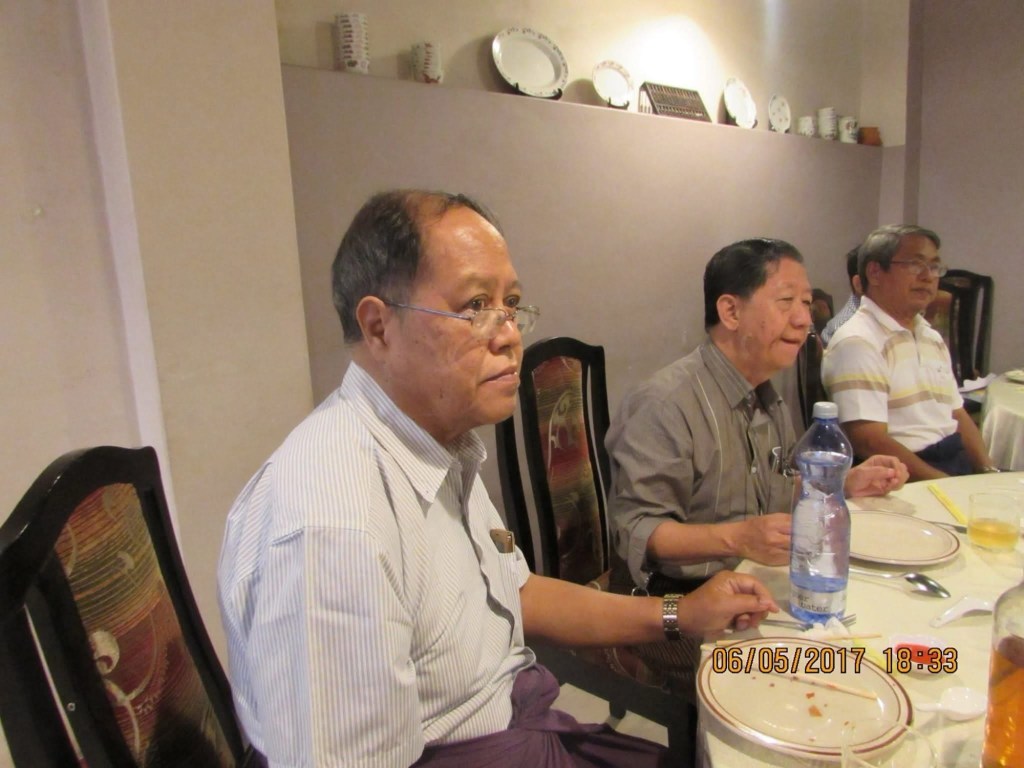
M72 batch is a closely knit group. They are known for their gentlemen acts as well as seemingly childish behavior. They tease each other often testing the limits of patience. To outsiders, they appear to be quarreling.
Ko Tha Tun (M72) is from the class of 71, but he feels at home as a senior with the M72 group. At one M72 gathering, a medical condition struck Ko Tha Tun, but he survived due to the CPR skills of Ko Wynn Htain Oo (M72). The members also took him quickly to a clinic without waiting fo the ambulance.
Casualties
Some casualties occur early in the morning. Most family members may be sleeping, sleepy or not alert to respond to emergency problems.
Ko Soe Myint (M72, retired Pro-Rector of ICST) had a busy day visiting the Sun Lun Gu Kyaung twice and also taking rounds to see his nephew and niece with medical problems. He passed away at 3 AM. Ko Wynn Htain Oo thought out aloud if CPR could have saved Ko Soe Myint.
Ko Soe Myint (3rd from Right)
Ko Soe Myint Lwin (EP68, Burma Soccer Selected) passed away around 3 AM.
Architecture was introduced for the very first time in 1954 at BOC, University of Rangoon.
First Batch
U Myo Myint Sein belongs to this first batch. One of his classmates, Ko Myint Thein retired as Chief Architect of Public Works Department in Yangon.
U Myo Myint Sein
Third Batch
We were the “third batch” and were fortunate to study at the brand new “Faculty of Engineering” campus, commonly known as “Leik-khone” at Pyay [Prome] Road. There were nine of us in the first year, (1956). One of them was Shajahan, an Indian lady who became the first female to join the male dominated Engineering campus. However, she was unfortunate to be the victim of the “2F” system of our days. She left for India and later graduated as an Architect from there.
Three Batches
In our second year, three guys from the second batch joined us. One from the first batch joined us in the final year. Two of the old-timers became the victims of the “2F” system.
One very unique and interesting aspect of being an architecture student is doing design work. We were trained to solve design problems within a stipulated time and because of that we use to spend most of our time in our studio class. Eventually, the studio became our second home. We practically eat and sleep there and we spent our break times in the studio as well.
Only when attending related Engineering subjects, we join together with other Engineering students. Otherwise, we normally confined ourselves within the Department of Architecture block and among our own group. Thus, the reason that most of the Engineering students came to know us because we were like “caged animals” in the zoo; being watched by people from outside and in our case by our friends as they walked along the corridors. Although the majority of us were day students, we were better off than those staying in the hostels as we didn’t have to pay extra to live in the studios. It was fun spending our time in the studios and as we were able to come up with fantastic ideas and designs and draw them as and whenever desired and complete the project within the stipulated time. For us, we didn’t had “days” and “nights”. The nights were more peaceful and productive for us. Only the studios in the architecture block were lit up at night. Sometimes, we even walk over to Hledan, Kamayut to have our break and supper.
A coach is a vehicle to “carry” someone to a destination.
The first use of coach described a teacher who “carried” a student over a tough examination.
Later use of coach was in Athletic Development (e.g. coaching an individual or a team in a sports).
Types
There are
Professional Coaches
Certified Coaches
Club Coaches
Differences with other professions
Therapy: A therapist focuses on the past Coaching: A coach focuses on the future
Consulting: A consultant helps to solve a problem (of a company or a client) Coaching: A coach provides suggestions and frameworks (that can be used by the client, who is accountable for solving the problem)
Mentoring: A mentor may advise, counsel and coach Coaching: A coach focuses on coaching (and may not advise or counsel).
Training: A trainer sets objectives for the trainee Coaching: A coach does not set objectives for the client/individual. The client/individual sets objectives for himself/herself.
Athletic Development: An athletic developer directs behavior of individuals and teams based on the developer’s experience and knowledge Coaching: A coach focuses on identifying opportunity for development based on individual strengths and capabilities
Toastmaster
On the path to DTM, one has to serve as Club Coach or Mentor.
He is 1. Accomplished 2. Perfectly Enlightened 3. Endowed with Knowledge and Conduct (or Practice) 4. Well-gone or well-spoken 5. the Knower of worlds 6. the Guide Unsurpassed of men to be tamed 7. the Teacher of gods and men 8. Enlightened 9. Blessed
Qualities of the Dhamma
1. Universal Law found through enlightenment and is preached precisely. It is Excellent in the beginning (Sila /Morality), Excellent in the middle (Samadhi / Concentration) and Excellent in the end (Panna / Wisdom)
2. Testable by practice and known by direct experience
3. Can bestow timeless and immediate results here and now
4. “Come and see” Welcomes all beings to put it to the test and experience it for themselves
5. Worthy to be followed as a part of one’s life
6. Can be perfectly realized only by the noble disciples who have matured and enlightened enough in supreme wisdom.
Qualities of the Sangha
The community of the disciples of the Buddha has practiced 1. the good (right) way 2. the straight way 3. the way to Nibbanna 4. the proper way
This community of the disciples of the Blessed One that has the Four Pairs of persons, the Eight Kinds of individuals 5. is worthy of gifts 6. is worthy of hospitality 7. is worthy of offerings 8. is worthy of reverential salutation 9. is an unsurpassed field of merit for the world
Quality of Life
Some metrics
Good health
Some people do not want to live long without a good Quality of Life
Good relationships at home and work
Air Pollution (with bad Quality) may be correlated to Lung Diseases
IQ is determined using standard IQ tests with objective & definite answers.
Emotional Quotient (EQ)
It determines one’s ability to perceive, control, and evaluate emotions.
EQ tests vary with approach and content.
Adversary Quotient (AQ)
Ability to deal with adversaries
Spiritual Quotient (SQ)
Depending on how one views religion, SQ may have different definitions.
Sayadaw U Pandita (GBNF) mentioned SQ in his dhamma talks. There are no formal tests yet to qualitatively and quantitatively measure one’s understanding and practice of Buddha’s teachings.
It is used by dishonest people to cheat unwary folks.
Nigerian Scam
It is one of the oldest scams.
Typically, one gets an e-mail supposedly from a friend asking for help (e.g. need money desperately to buy a return ticket home) and to follow instructions (e.g. transfer money) to get him out of the trouble. There is a promise to repay the debt.
Some get emotional & forget logic and the importance of verifying (double checking). They rush off to write a check.
Why Scam?
It does not need much effort to scam.
Even if a tiny fraction of the recipients fall into a scam, the scammers get rich.
Even if they are caught (possibly after a long time), the resources needed to get back the money (extradition, law suit) are too much and not cost-effective.
Variations
Someone claiming that he / she had inherited millions of dollars
A company claiming that you had won a big prize
Some scenario suggesting “It’s too good to be true”.
Scammers
Some are sloppy copy cats (with typos and errors in the message). If you are careful, you can easily confirm their scams.
Some simply change the settings (Edinburgh, Scotland instead of Nigeria). It’s not difficult to confirm such scams.
Some may use malware to take over computers and send scams from the hacked account.
Right actions to beat scams
Call your friend and his/her family to verify
Use nick names or sensitive information to check if the sender is a hacker