The corresponding letters from the Upper Case and Lower Case are known as Allographs. e.g. A and a
Many English words were derived from Latin which had 23 letters.
In Old English, the letters V and U are allographs.
The early Printing presses use the letter V (instead of U, e.g. VNIVERSITY as in the Inscription shown). Based on context, the V is pronounced as U.
The letter W is written in some old languages as UU or VV and is pronounced as “Double U”.
Some stone inscriptions from Rangoon University has FOVNDATION & VNIVERSITY. They stand for FOUNDATION & UNIVERSITY (since U and V are allographs).
Dark Days
There were many Dark Days in the History of Burma.
7th July 1962 saw indiscriminate shooting at the student protesters. The official tally was 17 dead. Ko Aung Khin was hit by a stray bullet as he was returning home in Windermere Road from RUBC.
8th July 1962 saw the revered RU Student Union Building demolished. The two highest ranking officials said that they did not give the orders. Some people reported hearing strange sounds and seeing strange images in or near the residence halls (e.g. Mandalay Hall). Some believe that there might be ghosts.
In 1963, there were pamphlets & Sar Saungs commemorating the anniversary of 7th July. The higher authorities gave ultimatum to the hostel students to leave. All classes except those from the Faculty of Medicine and the Faculty of Engineering were closed. The final examinations were held locally (e.g. at State High Schools). The schools were reopened in November 1964 under a new Education System.
In mid-1960s, Nationalization and Demonetization crippled the “Rice Bowl of Asia”.
The use of the ILA system and the 3 NRC rule created a Tier System among the Once Equal Disciplines. A sayagyi told his students, “If all of you go to medical and engineering, there will be not enough talent left to cover other important fields.”
There were some exceptions. Min Oo (in 1963) and Zaw Win (a few years later) stood Second in the whole of Burma in the Matric exam. They both chose to study Maths & received Doctorates from Germany. Dr. Min Oo retired from McMasters University in Canada. He earlier taught in Germany and in the USA as visiting professor. Dr. Zaw Win is GBNF.
“Burmese Way to Socialism (Despotism, Nepotism)” created Second & Third Class Citizens. Shortage of rice (unheard of in the “Rice Bowl of Asia”) caused unease. The problem was redirected to create a riot known as “Tayoke Bama Ah Yay Ah Khinn”.
“U Thant Ah Yay Ah Khin” in 1974 can be read in a book with rare photos. Htein Win Sar Pay has published books about the two Ah Yay Ah Khinn. Ko Khin Maung Zaw mailed me a copy of “U Thant Ah Yay Ah Khinn”. At the 5th Irrawaddy Literary Festival, Ko Htein Win gave me a copy of the 8-8-88 Ah Yay Ah Khinn.
U Thant Ah Yay Ah Khin
There were several more closure of the schools. Many students lost three precious years of their lives (1988, 1989 and 1990). There were no clases, exams and Convocation for three years. The 1st BE Intake of 1983 graduated in 1992. Those who failed the 6th BE in 1987 had to repeat in 1991.
Dr. Tin Aung
In August 1988, Dr. Tin Aung (Physics) and U Tun Aung Chain (History) were in the USA as members of the Burmese Education Delegation. Dr. Tin Aung was elected in abstentia as a Patron of the “Sayas and Sayamas from All Universities & Institutes”. Upon his return to Burma, he was forced to resign. Some time back, Dr. Tin Aung had to replace the pacemaker. His former students from Myanmar & Overseas donated for his health expenses.
He received M. Sc. (Computer Science) from Southampton University, UK
RASU, UCC, CSO, ABAC
Worked at RASU Maths Department. Sayagyi Dr. Chit Swe asked him if he wished to join UCC.
Became Systems Programmer at UCC and did Masters in Computer Science at Southampton University, UK
At UCC, he wrote lecture guides and user manuals with me under the guidance of Saya U Soe Paing (Manager of Systems Division & later also Operations Division).
Known for his humor and satire (e.g Thingyan Sar သင်္ကြန်စာ)
Also wrote Kabyars ကဗျာ and articles.
Taught at UCC and CSO before moving to Thailand.
Ko Myint Oo took him to Assumption University (formerly ABAC) where he was offered a job on the spot.
Sydney
Moved to Sydney, Australia
Continued teaching Computer Science and Applications
UCC gathering hosted by Saya Zaw
Hosted mini-gatherings
In 2006, I attended a gathering to pay respect to Sayagyi Dr. Chit Swe and Sayagyi Dr. Freddie Ba Hli.
Spouse
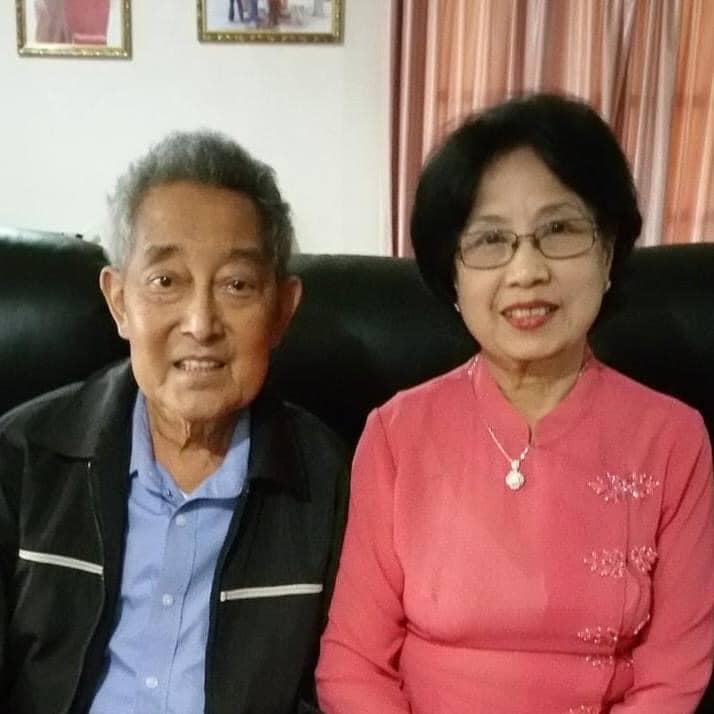
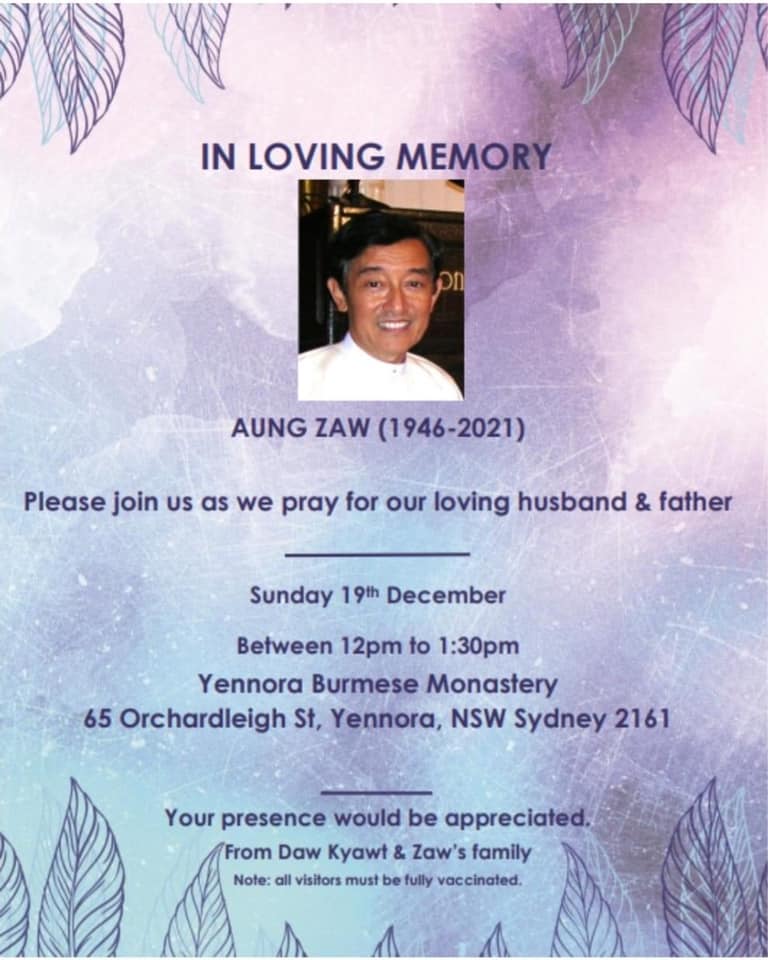
U Aung Zaw & Daw Kyawt
Daw Kyawt is a culinary expert
She donated her kidney to Saya AZ as a priceless gift.
Books
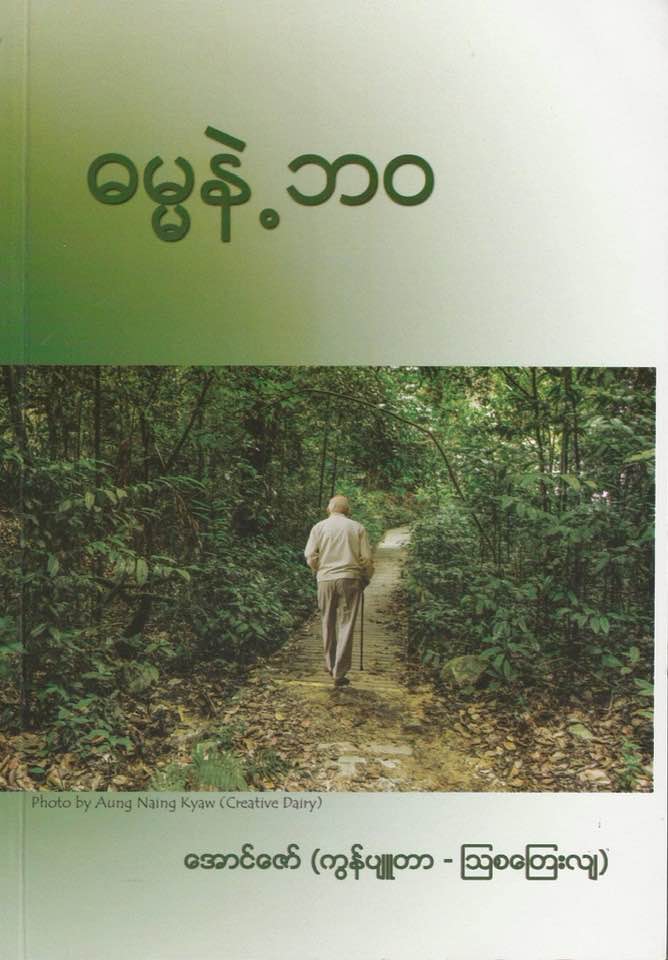
Dhamma & Bawa
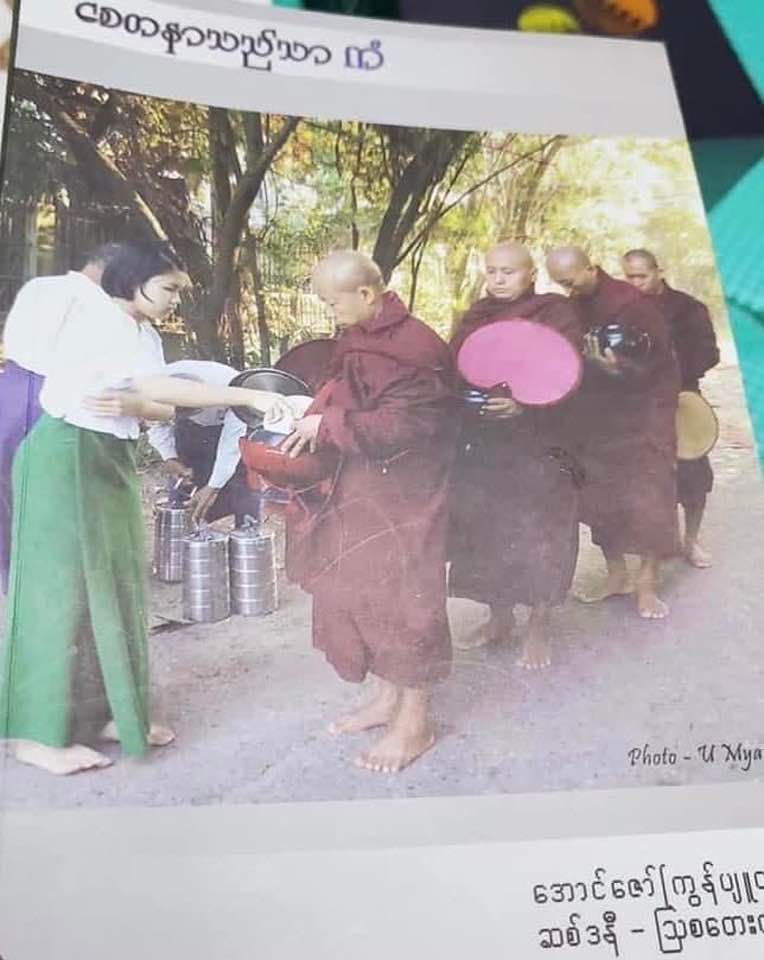
He wrote two books “Dhamma and Bawa” and “Cetana Thi Thar Kan”.
Cetana Thi Thar Kan
I am honored to be a reviewer / editor for both books and a contributor of a section for the second book.
He shared his memories about his sayas (Dr. Chit Swe, U Sein Min, U Tin Hlaing, Dr. Kyaw Thein, Dr. Khin Maung Swe, …).
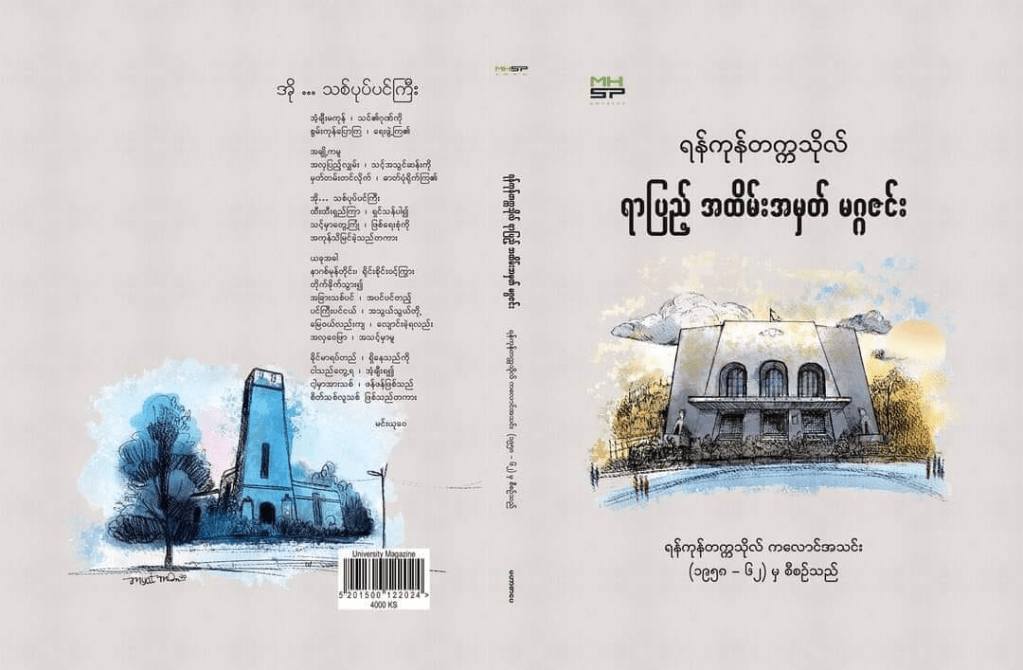
Former Executive Committee members of the 1958 – 1962 Tekkatho Kalaung Ah Thinn published (a) Collection of Kabyars mainly from the old University magazines (b) Magazine with hitherto unpublished articles, essays, short stories, kabyars, etc.
Several books have been published to commemorate the RU Centennial.
A book and magazine by Tekkatho Kalaung Ah Thinn
SMART Sarpay reprinted the book by Maung Aung Mon (Win Aung).
U Pe Maung Tin
U Pe Maung Tin
Sayagyi U Pe Maung Tin was the first native Principal of Rangoon College and the founder of the Burmese Department. Sayagyi will be honored by the Myanmar Sar Mi Thar Su in December 2109 with a bust.
The bust of Sayagyi U Pe Maung Tin was unveiled. Daw Tin Tin Myaing (Brenda, daughter of Sayagyi) attended the ceremony.
U Ba Toke
U Ba Toke
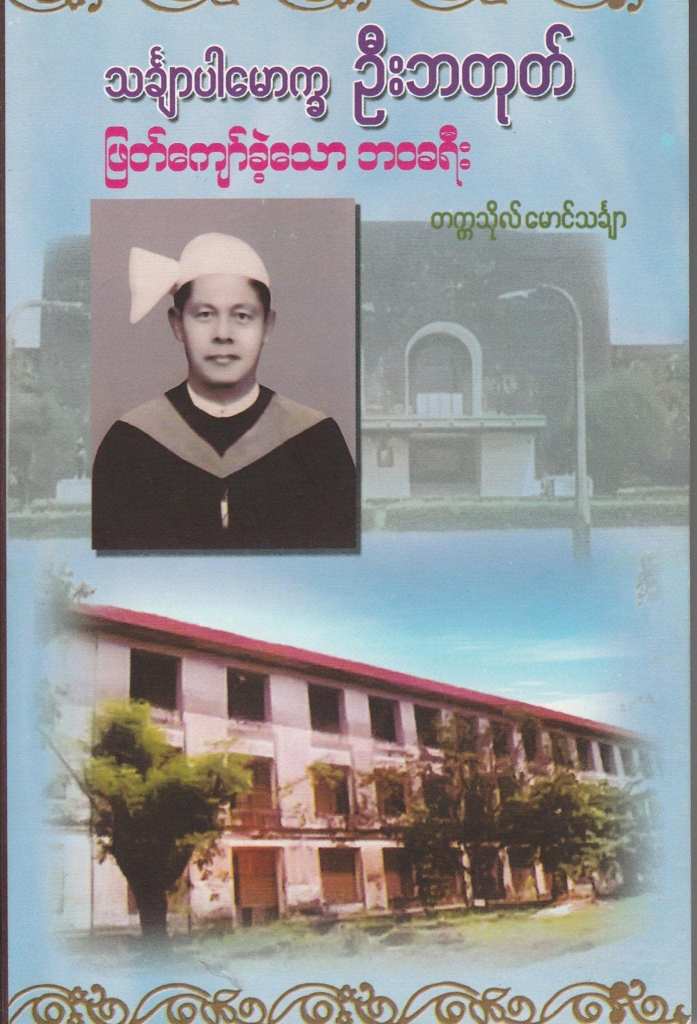
Sayagyi U Ba Toke (GBNF) who is a Phwa Bet Taw of the University of Rangoon was interviewed by a TV program. Sayagyi passed away on December 2, 2020 (the day after RU Centennial). It was several days short of Sayagyi’s centennial birthday on December 26.
Articles
Kyemon published an article about the Land marks of the University of Rangoon.
Myanmar Ah Lin published a series of articles for RU Centennial.
Jubilees
RU Golden Jubilee in 1970
RU Diamond Jubilee in 1995
Albums in RU Centennial FB Group
The following is a sampling:
Botany Dr. Daw Yi Yi (Mother of Okka)
Burmese (Myanmar Sar) “Khit San Kabyar” Saya U Wun (Minthuwun) See Aung Pyie (Farewell to Mya Thilar)
Chemistry Saya U Aung Khin Dr Soe Win & Daw May Saw Lwin U Nyunt Win Dr. Aung Myint Dr. Tin Win (Alan) Dr. Myint Tun (Henry Cho Tun) U Kyaw Tun U Maung Maung Gyi U Nwe Aung
Ma Chit Swe’s Autograph Mom of Hazel Kyaw Zaw (Kyi Kyi May) Friends of Ma Chit Swe
Graduation Photo taken at Bayin Ma Studio Photos taken inside Convocation Hall Photos taken outside Convocation Hall
Law U May Aung Sir Arthur Eggar (RUBC founder) Dr. Ba Han U Kyaw Myint Sayas and sayamas LLB first batch
Mathematics Sayagyi U Ba Toke Dr. Chit Swe Dr. Khin Maung Swe (Tekkatho Maung Thin Char)
Physics Sayagyi Dr Maung Maung Kha Dr. Tin Aung Dr. Soe Myint Win Dr. Aye Thein Kyaw Daw May Su Dr. Zin Aung Dr. Saw Wai Hla Dr. Win Naing Dr. Myo Thaik
Rectors and Registrars Dr. Htin Aung U Thet Lwin
UCC Alumni UCC Gathering
Some History
Second World War
The Second World War started in 1939 in Europe and spread to Asia.
The University of Rangoon suspended classes for three years : 1943 – 1945.
Per Sayagyi U Ba Toke : There were some make-shift classes at the ad-hoc University in Mogul (Shwe Bon Tha) Street. Sayagyi taught Mathematics there.
1946
Rangoon University was reopened in 1946.
Saya U Tin U (C), Saya U Sein Hlaing (Professor, EE), Dr. Pe Nyun (Pediatric Surgeon) and Dr. Pe Thein (Professor, Minister) attended Rangoon University in 1946.
1947
Pinlon Sar Choke (Panglon Agreement) was signed on February 12, 1947. Some ethnic races did not attend the Pinlon Conference.
Nine Arzanis — Bogyoke Aung San, Thakin Mya, Deedok U Ba Cho, Mahn Ba Khaing, Sao San Htun (Mong Pawn Sawbwa), U Ba Win, U Razak, ICS U Ohn Maung and Yebaw Ko Htwe — were mercilessly gunned down at the Secretariat on July 19, 1947. All except Sao San Htun (who was hospitalized with fatal wounds and died on July 20, 1947) perished that day. Three ministers including Bagan U Ba Gyan escaped.
1948 and 1949
Burma gain Independence on January 4, 1948 at 4:20 AM. Sao Shwe Thike / Thaik became the first President of the Union of Burma. U Nu became the first Prime Minister.
Two factions — White Flag led by Thakin Than Tun and Red Flag led by Thakin Soe — of the Burma Communist Party (BCP) went underground. There was several groups in the armed rebellion.
For a short period of time, the Burmese government was called “Yangon Ah So Ya“.
Thanks in part to the arms sent by neighboring India, and the volunteer RU students, the planned conquest of Rangoon was derailed. The tide was turned, and Burma was back on the road to normalcy,
The Union of Burma had a bi-caramel parliament.
1950s
Dr. Ba U served as the second President. In his book “My Burma”, he considers himself as the first President elected in accordance with the Constitution of the Union of Burma. The general public considers him as the Second President (who succeeded Sao Swe Thike).
Many States Scholars were sent to the prestigious universities in the USA and UK to pursue undergraduate and graduate studies. In 1954, there were 400 Burmese State Scholars (many from the “Twinning Program” proposed by Sayagyi U Ba Hli). Dr. Aung Gyi, U Min Wun and U Maung Maung Than were the early recipients of the “Twinning Program” to pursue undergraduate and graduate studies at prestigious universities (e.g. MIT, Cornell). Upon their return, they supplemented and later replaced the foreign sayas. Some worked for government departments and the Industry.
The split in the AFPFL (Anti-Facist People’s Freedom League) party into Clean AFPFL [Thant Shin] and Stable AFPFL [Ti Mye] caused the handover to the Caretaker Government in the late 50s. Some consider the event as the first Coup d’etat.
1960s
Mahn Win Maung, the third President, was detained on March 2, 1962 when a 17-member Revolutionary Council staged a Coup d’etat.
Sama Duwa Sinwa Naung (President-elect) did not become President.
Per Kyemon U Thaung, seven Council members were not aware of the major decisions.
Brigadier General T. Clift (Air Force) resigned. He was succeeded by Brigadier General Thaung Dan. Several senior officers were sent as Military Attaches.
Commodore Than Pe (Navy) passed away. He was Ta Wun Gan (Minister) for Health and Education. He is Past Captain and President of RUBC. RUBC has bronze statues of Sir Arthur Eggar (Founder, Life President) and Commodore Than Pe on the promontory. Commodore Thaung Tin (who had jump promotions) succeeded him as Chief of Navy. Colonel Hla Han succeeded him as Minister for Health and Education.
Colonel Chit Myaing was the last of the original Revolutionary Council members to pass away. He served as Ambassador to Yugoslavia and UK before moving to USA. He was a supporter of U Kelasa (one of the two sayadaws left behind by Mahasi Sayadaw during his visit to US in 1979).
Ko Tin Maung Thant (son of UNSG U Thant) passed away unexpectedly during his visit to Burma. The motorcade at his last journey was longer than that of Commodore Than Pe.
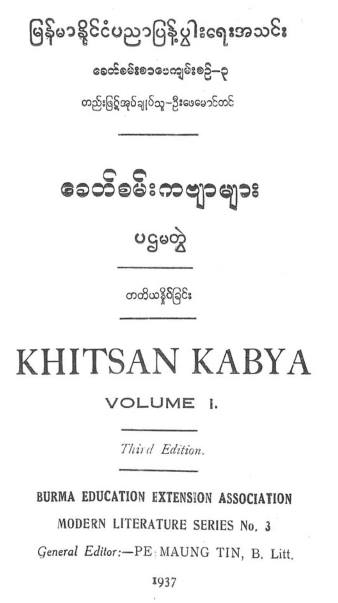
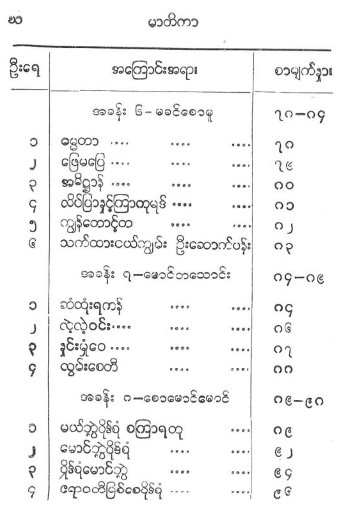
Khit San Kabyar
The first volume has poems by U E Maung (later Burmese Professor) and Daw Khin Saw Mu (mother of Daw Khin Saw Tint and U Nay Oke Tint).
Wanted her daughters — Hazel, Olive & May — to have experience like her at the Inya Hall.
Hazel & May spent a year at Inya Hall as room mates. Olive had to stay at the Hall for medical students.
Fund raiser
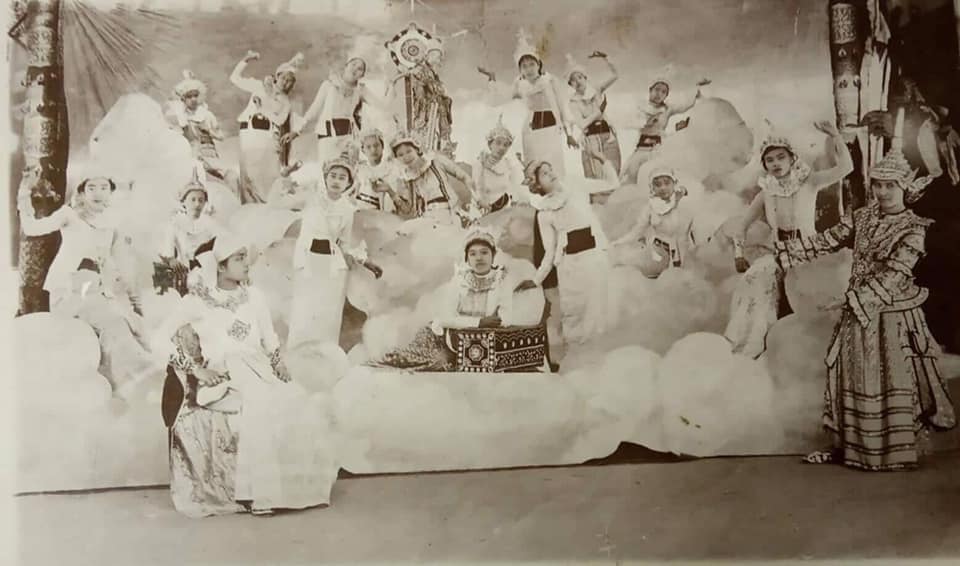
Danced three roles in the fund raiser for the Tekkatho Dhammayone. Her cousin Saya U Lu Pe Win (Pali and Kyauksar Scholar) directed the play. The rehearsal was assisted by U Nyi Pu (First male actor in a Burmese movie).
Play
Was honored at the Thet Kyee Pu Zaw Pwe (Paying homage to the elders) held at the Tekkatho Dhammayone.
Her account was published in the Golden Jubilee Sar Saung of Inya Hall.
A1 Film
Myanmar Ah Swe Film evolved into A1 Film.
A1 U Tin Nwe & his family are known as Producers, Directors & Actors.
U Nyi Pu founded Maha Weikzardo Film.
U Tin Pe (Maung Maung Soe) founded Maung Maung Soe Film.
A1 U Tin Maung acted alongside May Shin and other lead female actors before becoming a Director/Actor.
Daw Khin Myint’s son U Tin Yu & son-in-law U Mya Maung are Director & Producer.
Feedback
Thit Yine (alumnus of Yegyaw Methodist) wrote : Dr. Hla Shwe (Boon Chiong) stood First in the Matriculation examination of 1953 from Yegyaw Methodist, and that his class mate Ohn Khin stood Second. Yegyaw Methodist was well known before the Nationalization of schools.
Thit Yine and Ko Ko shared the names of sayas (e.g. U Aung Myint, U Khin Zaw, U Ko Lay) who taught in the late 50s and early 60s.
Po Shwe Kyu wrote : Credit to Saya Hla Min as being the most prolific writer in this group, and his archives and chronicles will be of greatest help to coming generations. Drs. Hla Shwe & Tin Maung returned to Burma around 1962-63. I don’t know Dr Hla Shwe but Dr. Tin Maung also resided at the Chummery during my short stay there. Chummery is a “Saya Lu Pyo Saung”.
Myo Thaik wrote : Sayama Daw Khin Aye passed away last year. His cousin uncle Dr. Myint Thein won a Gold Medal for scoring highest marks in Chemistry in the I.Sc. examination, and later became the first Myanmar to received Ph.D in Nuclear Chemistry in the USA. He is currently staying with his son in Texas. He also wrote about “A Che A Nay Kaung” and “Ma Khan Chin Seik” that led him and his uncle cousin Dr. Win Naing to pursue their dreams to have doctorates.
Myo Thaik wrote : Dr. Hla Shwe is Emeritus Professor, East Stroudsburg University, Pennsylvannia, and then moved to California.
First in Burma
I knew that several SPHS students stood First in Burma in the Matric exam. They include
U Ba Khin (Vipassana teacher, first native Auditor General)
George Chapman (SPHS51)
Dr. Nyunt Tin (SPHS52)
Koon Yin Chu (Phillip, SPHS54)
Dr. Soe Win (SPHS58)
Dr. Frankie Ohn (SPHS59
Dr. Khin Maung U (SPHS63)
Bernard Khaw (SPHS65)
I was aware that students from other schools also scored Top in the some years.
St. Peter’s High School, Mandalay
Methodist English High School (MEHS)
St. John’s Convent
Yegyaw Mthodist
Sacred Heart
Thanks to those who provided additional info and/or corrections
GBNF & Tone Kyaw
I have to be very careful in specifying persons as GBNF (Gone But Not Forgotten).
There are at least three Tone Kyaw (person believed to have died) including me.
When my name sake CO U Hla Min (Chief Operator at UCC, who appeared healthier than me) passed away in his mid-30s, two Training Departments (from Co-op and Trade) inquired UCC where they could send a “Lwan Thu Pann Kway” (wreath) for me. My former class mate Moe Hein (Ajala with an extremely loud voice) was surprised when he saw me at the Kyandaw Cemetery. He said, “I have taken a day off to come here. I wondered why your brother did not tell that you had passed away.” I became a Tone Kyaw.
U Han Sein (C69, Ah Pho Gyi) was sentenced to 20 years for his alleged involvement in 8-8-88. His classmates, who were organizing the 30th Reunion of Graduation, inadvertently listed him as GBNF. He became a Tone Kyaw. He was released after 16 years (with the Amnesty Proclamation), but sadly, his family had been broken. He recently celebrated his 10 years of regained freedom.
When Dr. Tin Hlaing (Marine Technology) passed away in Singapore, some RIT inadvertently sent condolences to Saya Dr. Tin Hlaing (M63), who became a Tone Kyaw.
Mya Kyun Nyo Nyo Kun Yeik Kho
The song was first recorded as a “Dat Pya” at Myanmar Ah Than (Burma Broadcasting Service). It was first sung by U Mya Thein and group. U Thet Lwin received 100 Kyats for his composition, and he treated his fellow Ah Nu Pyinnya Shins.
In a TV interview, Saya played the song.
The song has been sung in many events including the SPZPs (Saya Pu Zaw Pwe) of RIT Alumni.
The Singapore “Pon Chan Chan Group” led by Don Min U Yu Swan recorded the song.
The song was also sung at the Ceremony on December 1, 2019 to kick off the RU Centennial.
The various versions can be listened from the Facebook Posts and You Tube.
Land marks
Thit Pope Pinn is recognized by the Yangon Heritage Society.
The tree was there even before the founding of the University of Rangoon, and it survived Cyclone Nargis.
A few readers expressed displeasure to see the wired fences and the inexplicable disappearance of landmarks.
The Convocation Hall is another land mark.
Eons ago, the Prime Minister of the Union of Burma served as Chancellor of the University of Rangoon, and also delivered “Commencement Speech” at the graduation.
I posted the program of the 1958 Convocation which listed about 30 prize winners (Gold Medals, Silver Medals and Books).
U Soe Paing, my mentor at RIT and UCC, received two Gold medals (after paying 150 Kyats for each Gold Medal, because the original endowments no longer covered the “rising cost” of Gold for the Medals). He had the highest score for I.Sc. (A) and (B) combined. He had the joint highest Maths score for I.Sc. exams — with two other students.
In 1962, Dr. Myint Tun (Henry Cho Tun) won the Gold Medal for the highest score for I.Sc.(A) and (B) combined. U Myat Thwin (ChE66) beat him by one point for the highest score in Mathematics for I.Sc.(A) and (B) combined.
Autograph
Ma Chit Swe (Hazel Kyaw Zaw’s mother) was a Junior I.A. (Intermediate of Arts) student in 1936. Hazel has posted her mother’s autograph.
Daw Hla Myint, a close friend of Hazel’s mom, wrote a lovely poem. Many were unaware of her talent. She had to leave the University before graduation to get married to U Tu Maung. Saya U Tu Myint (Winston Tu Maung) was our saya at RIT and later taught at Singapore Polytechnic until retirement. Dr. Hla Maung (Ronald Tu Maung, MEHS65) moved to the UK. Her siblings include Dr. Pe Nyun (Pediatric Surgeon, who led the operation of conjoined twins Ma Nan Soe and Ma Nan San), Dr. Pe Thein (Professor and Retired Minister), Daw Ivy San Pe and Daw Flora San Pe.
Pre-Celebrations kicked off on December 1, 2019. The celebrations continued to the end of 2020.
Former Executive Committee members of the 1958 – 1962 Tekkatho Kalaung Ah Thinn published (a) Collection of Kabyars mainly from the old University magazines (b) Magazine with hitherto unpublished articles, essays, short stories, kabyars, etc.
Several books have been published to commemorate the RU Centennial.
A book and magazine by Tekkatho Kalaung Ah Thinn
SMART Sarpay reprinted the book by Maung Aung Mon (Win Aung).
Sayagyi U Pe Maung Tin was the first native Principal of Rangoon College and the founder of the Burmese Department. The Myanmar Sar Mi Thar Su honored Sayagyi in December 2019 with a bust. Daw Tin Tin Myaing (Brenda, daughter of Sayagyi) attended the ceremony.
Sayagyi U Ba Toke (GBNF) who is a Phwa Bet Taw of the University of Rangoon was interviewed by a TV program. Sayagyi passed away on December 2, 2020 (the day after RU Centennial). It was several days short of Sayagyi’s centennial birthday on December 26.
Kyemon published an article about the Land marks of the University of Rangoon.
Myanmar Ah Lin published a series of articles for RU Centennial.
The RU Golden Jubilee in 1970 and the RU Diamond Jubilee in 1995 were celebrated for 2 – 3 weeks.
Albums
I have created albums. Members are requested to
add captions and comments
add photos to existing albums
create new albums (if required)
The following is a sampling:
Botany Dr. Daw Yi Yi (Mother of Okka)
Burmese (Myanmar Sar) “Khit San Kabyar” Saya U Wun (Minthuwun) See Aung Pyie (Farewell to Mya Thilar)
Chemistry Saya U Aung Khin Dr Soe Win & Daw May Saw Lwin U Nyunt Win Dr. Aung Myint U Tin Win (Alan) Dr. Myint Tun (Henry Cho Tun) U Kyaw Tun U Maung Maung Gyi U Nwe Aung
Ma Chit Swe’s Autograph Mom of Hazel Kyaw Zaw (Kyi Kyi May) Friends of Ma Chit Swe
Graduation Photo taken at Bayin Ma Studio Photos taken inside Convocation Hall Photos taken outside Convocation Hall
Law U May Aung Sir Arthur Eggar (founder of RUBC) Dr. Ba Han U Kyaw Myint Sayas and sayamas LLB first batch
Mathematics Sayagyi U Ba Toke Dr. Chit Swe Dr. Khin Maung Swe (Tekkatho Maung Thin Char)
Physics Sayagyi Dr Maung Maung Kha Dr. Tin Aung Dr. Soe Myint Win Dr. Aye Thein Kyaw Daw May Su Dr. Zin Aung Dr. Saw Wai Hla Dr. Win Naing Dr. Myo Thaik
Rectors and Registrars Dr. Htin Aung U Thet Lwin
UCC Alumni UCC Gathering
Notes :
There are more photo albums.
I have posted photo essays for some topics.
1940s, 1950sand 1960s
Second World War
The Second World War started in 1939 in Europe and spread to Asia.
Rangoon University was closed for three years : 1943 – 1945.
Per Sayagyi U Ba Toke : There were some make-shift classes at the ad-hoc University in Mogul (Shwe Bon Tha) Street. Sayagyi taught Mathematics there.
1946
Rangoon University was reopened in 1946.
Saya U Tin U (C), Saya U Sein Hlaing (Professor, EE), Dr. Pe Nyun (Pediatric Surgeon) and Dr. Pe Thein (Professor, Minister) attended Rangoon University in 1946.
1947
Pinlon Sar Choke (Panglon Agreement) was signed on February 12, 1947. Some ethnic races did not attend the Pinlon Conference.
Nine Arzanis — Bogyoke Aung San, Thakin Mya, Deedok U Ba Cho, Mahn Ba Khaing, Sao San Htun (Mong Pawn Sawbwa), U Ba Win, U Razak, ICS U Ohn Maung and Yebaw Ko Htwe — were mercilessly gunned down at the Secretariat on July 19, 1947. All except Sao San Htun (who was hospitalized with fatal wounds and died on July 20, 1947) perished that day. Three ministers including Bagan U Ba Gyan escaped.
1948 and 1949
Burma gain Independence on January 4, 1948 at 4:20 AM. Sao Shwe Thaik became the first President of the Union of Burma. U Nu became the first Prime Minister.
Two factions — White Flag led by Thakin Than Tun and Red Flag led by Thakin Soe — of the Burma Communist Party (BCP) went underground. There was several groups in the armed rebellion.
For a short period of time, the Burmese government was called “Yangon Ah So Ya”.
Thanks in part to the arms sent by neighboring India, and the volunteer RU students, the planned conquest of Rangoon was derailed. The tide was turned, and Burma was back on the road to normalcy,
The Union of Burma had a bi-caramel parliament.
1950s
Dr. Ba U served as the second President. In his book “My Burma”, he considers himself as the first President elected in accordance with the Constitution of the Union of Burma. The general public considers him as the Second President (who succeeded Sao Swe Thike).
Many States Scholars were sent to prestigious universities in the USA and UK to pursue undergraduate and graduate studies. In 1954, there were 400 Burmese State Scholars (many from the “Twinning Program” proposed by Sayagyi U Ba Hli). Dr. Aung Gyi, U Min Wun and U Maung Maung Than were the early recipients of the “Twinning Program” to pursue undergraduate and graduate studies at prestigious universities (e.g. MIT, Cornell). Upon their return, they supplemented and later replaced the foreign sayas. Some worked for government departments and the Industry.
The split in the AFPFL (Anti-Facist People’s Freedom League) party into Clean AFPFL [သန့်ရှင်းThant Shin] and Stable AFPFL [တည်မြဲTi Mye] caused the handover to the “Ein Saunt Ah Soe Ya” အိမ်စောင့်အစိုးရ Caretaker Government in the late 50s. Some (e.g. U Nu) consider the event as the first Coup d’etat.
1960s
President Mahn Win Maung was detained on March 2, 1962. The 17-member Revolutionary Council staged a Coup d’etat.
Sama Duwa Sinwa Naung (President-elect) did not become President.
Per Kyemon U Thaung, seven Council members were not aware of the major decisions.
Brigadier General T. Clift (Air Force) resigned. He was succeeded by Brigadier General Thaung Dan. Several senior officers were sent as Military Attaches.
Commodore Than Pe (Navy) passed away. He was Ta Wun Gan (Minister) for Health and Education. He is Past Captain and President of RUBC. RUBC has bronze statues of Sir Arthur Eggar (Founder, Life President) and Commodore Than Pe on the promontory. Commodore Thaung Tin had jump promotions and became Chief of Navy. Colonel Hla Han became Minister for Health and Education.
Colonel Chit Myaing was the last original Revolutionary Council member to pass away. He served as Ambassador to Yugoslavia and UK before moving to USA. He was a supporter of U Kelasa (one of the two sayadaws left behind by Mahasi Sayadaw during his visit to US in 1979).
Ko Tin Maung Thant (son of UNSG U Thant) passed away unexpectedly during his visit to Burma. The motorcade at his last journey was longer than that of Commodore Than Pe.
Khit San Kabyar
The first volume has poems by U E Maung (later Burmese Professor) and Daw Khin Saw Mu (mother of Daw Khin Saw Tint and U Nay Oke Tint).
MERB was formerly known as BERB (Burma Education Research Bureau). Inattended meetings at BERB. Saya Jimmy (Dr. Khin Maung Kyawe) was the Director General. I first met him as a colleague of my cousin uncle U Than Lwin at the Faculty of Social Science.
After the mandatory name change, BERB became MERB. Old books (e.g. by Maurice Collis, BBS U Khin Zaw, Daw Khin Myo Chit) were forced to rename their titles before they could be reprinted. There was no Grandfather’s clause for the name change. “Trials in Burma” became “Trials in Myanmar”.
MERB produced Educational TV programs. U Tin Nyo directed the video highlighting University Sports.
U Tin Nyo shared the video “တက္ကသိုလ်အားကစားပုံရိပ်များ” directed by him and produced by ETV team (MERB) in1996 to mark the “Yangon University Diamond Jubilee”. Narrator : Saya U Nyein (RU Soccer Coach) Short Interviews with U Ngwe Gaing (Soccer), U Tun Mra (Athlete), U Myo Nyunt (Weight Lifting) and Haymar Nay Win.
Saya U Nyein was Coach of the Rangoon University First Eleven. Two of his players Collegian Nay Win and Aung Tin became movie actors. Several players (e.g. U Ngwe Gaing) became Burma Selected. Saya Nyein was a regular at the birthday gatherings of my uncle U Thet Toe (Past Captain and Gold of RUBC). They were classmates at Diocesan Boys High School.
U Tun Mra (eldest of the Mra brothers) won the Gold as a member of the 4 x 100 meters relay team anchored by U Soe Win (then Burma Champion) at the 2nd SEAP Games held in Burma in December 1961. His younger brothers U Kyaw Mra (Hurdles, later National Coach) won Silver and U Soe Mra (Pole Vault) won Gold at the 2nd SEAP Games. The three Mra brothers also competed in the 1st SEAP Games held in Bangkok in 1959. Three more younger brothers (Win Mra, Maung Maung Mra, Aung Mra) are also Burma Selected.
Met U Tun Mra, U Khin Maung Latt and U Tin Myint at the YUBC Annual Regatta in 2019. U Tun Mra and U Khin Maung Latt were members of the 4 x 100m relay team that set the RU record. U Tin Myint was cox of two Senior Novices Winning crews in the 1960s.
Hemar Nay Win (Vocalist) is the daughter of Collegian Nay Win and Daw Khin Marlar (daughter of Bo Ze Ya). Hemar gave an interview about her father. She inherited Ah Nu Pyinnar (but not Sports skills) from her father.
U Myo Nyunt was Burma Selected for Weightlifting.
For your reading pleasure
Photos
Acid, Base and Alkali Myar Chemistry alumni
Mother and Daughter (Both alumni) e.g. daughter and grand daughter of Saya U Aung Khin (Chemistry)
Fresher Welcome (and Fresher Queen)
Sports Selections (e.g. Marlar, RASU)
Kabyars
both originals and reprints (e.g. from the Philosophy Magazine and Pu Zaw Pwes)
Memories
First-hand accounts of the various closures of the schools
Some had to walk a long way back to the hostels. One was invited to stay at his friend’s house for the night.
One practiced for three months for the 3-day performance, but actually performed for a day.
One worked for daily wages at the Library in 1988 and saw many cartoons and posters for the 8-8-88 movement.
One remembers taking the examinations back in the home town.
Status
Some sayas, sayamas and alumni cannot spare the time to take part in gatherings. For example, Sayama Dr. Than Than Nyein (Chemistry) told the organizers not to send her invitations to the Pu Zaw Pwes.
Some have passed away, but without obituary notices and confirmation from the bereaved family, we cannot list them as GBNF (Gone But Not Forgotten).
After retirement, Saya U Aung Khin moved to Malaysia. He is GBNF.
Professor U Aung Khin (Chemistry)
Many of our sayas and sayamas are GBNF. Three most senior sayas and sayamas who passed away around 100 years of age are Daw Hla May (Anne, English), Daw Khin Kyi Kyi (Physics) and U Ba Toke (Mathematics, Former Rector of MASU)
A few are 90+ years old. U Tin U (Part-time Civil Engineering saya) and U Ba Than (Retired Professor of Mechanical Engineering)
Dr. Thane Oke Kyaw Myint wrote a series of articles about his father U Kyaw Myint and his siblings.
U Kyaw Myint matriculated from “Government High School”. His elder brother U Tin Tut attended St. Paul’s.
U Kyaw Myint also helped with the education of his siblings : U Myint Thein, Daw Khin Myint Mu, Daw Khin Saw Mu & Daw Tin Saw Mu.
Ms. Hong Kong & Family
Ms. Amelia Kyi was known as “Miss Hong Kong” not because she was a Beauty Queen.
She was from Hong Kong. She married the maternal uncle of Dr. Tin Wa and came to Burma.
She taught English at St. Paul’s High School. She also gave private tuition to her relatives (e.g. Diana Tseng) and neighbors.
She was our English teacher in Standards VI (D) and VII(D) at St. Paul’s High School. She used “the Carrot and the Stick”.
She would give weekly tests and fine 50 pyas if one failed, but reward 50 pyas if one excelled in the tests. My daily pocket money was 25 pyas, so I had no choice but to study hard.
She had three sons. The eldest became a monk. U Win Kyi was RUBC Gold. He worked for Sports and Physical Education Department. U Min Kyi was RUBC Green. He was a pilot for UBA/BAC. I saw U Win Kyi & U Min Kyi at RUBC. They were contemporaries of my brother and cousins.
At the 2019 RUBC Annual Regatta, I met Naymyo Thura. He is RUBC Gold. He is the son of U Win Kyi and grandson of Ms Hong Kong. His mother Daw Julie Yang taught at SPHS. He said that he would like to save the SPHS photos.
Calendar
A solar calendar is based on the orbit of the earth around the sun. Typically, it takes 365.2422 solar days to complete the orbit.
A leap year attempts to adjust the calendar by adding an extra day every four years.
A lunar calendar is based on the orbit of the moon around the earth. Typically, it takes 29.6 days to complete a cycle.
A luni-solar calendar is a hybrid calendar that uses lunar month and solar year.
The Burmese use a Luni-Solar-Socio-Religious Calendar. It is used for social and religious events.
There are 12 lunar months with a total of 355 days in a Common Burmese Year.
There is a difference of 10 days with a Common Year in the Gregorian Calendar.
An inter-calary month named “Second Waso ဒုတိယဝါဆို” is usually added every three years to sync again with the Solar Calendar. It is known as “Wah Htutt ဝါထပ်”. If needed, an additional day is added to Nayon in “Wah Gyi Htutt ဝါကြီးထပ်”.
Some other Luni-Solar Calendars (e.g. used by the Chinese) also have 12 months in a year. They add an extra month in the year in which the Lunar and Solar Calendars are synchronized.
The Chinese New Year may therefore occur in late January or early February.
October & Thadinkyut
“Oct” stands for 8. October was the 8th month in the old Roman Calendar.
In the Gregorian Calendar, October is the 10th month.
In the old Roman Calendar, September, October, November and December were the 7th, 8th, 9thand 10th months as indicated by the prefixes. In the Gregorian Calendar, they are 9th, 10th, 11th and 12th months of the year.
The Thadinkyut Festival often falls in October.
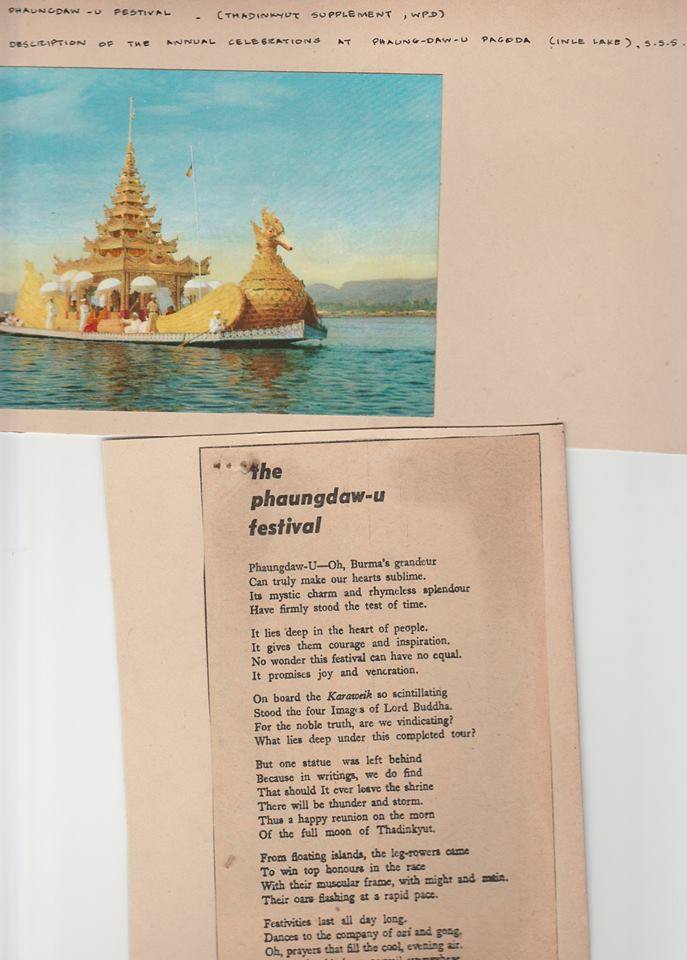
The Phaungdaw-u festival in Inlay Lake is held around the Full Moon of Thadinkyut. I wrote a poem “Phaungdaw-u Festival” for the Thadinkyut Supplement.
Four events related to Thadinkyut : Thadinkyut Lightning Festival, Abhidhamma Day, Pa Wa Ya Na (Monks ask for forgiveness of unintentional wrong doing), Soon San Sein Laung Pway (Mass offering of requisites to the monks)
History
Dr. Kyaw Thet (GBNF)
Studied in UK
Taught in Burma and as Visiting Professor in the USA
Spouse : Daw Khin Khin Gyi (GBNF) taught History at Rangoon University and a US College
Children : Lyn Maung Thet (GBNF), Dr. Khin Nyo Thet (MEHS63, GBNF), Dr. Lyn Aung Thet (MEHS64), Khin Aye Thet (GBNF)
Dr. Khin Nyo Thet & spouse Dr. Lyn Swe Aye established the “Aye-Thet Scholarship” in Khin Aye Thet’e memory. Prizes are awarded to successful participants at the Summer Dhamma Camp at Dhammananda Vihara, Half Moon Bay. Sponsors from Theravada Buddhist Society of America (TBSA) and donors helped run the Camp.
Lyn Aung Thet and Cherry Hlaing were tied for the highest marks in the Matric exam of 1964. Cherry won the tie breaker with a perfect ILA score. Both were selected Tekkatho Luyechun from IM(1).
Lyn Aung Thet led the IM (1) Swimming & Water Polo team (which won Inter-Institute Trophy). He is also good at Tennis and Chess.
U Ba Nyunt (GBNF)
Known for his song “Chit Dukkha” ချစ်ဒုက္ခ
History Professor
Children : Win Nyunt, Tin Tin Oo, Win Oo, Aung Moe, Kyi Shwin
Bohmu Ba Shin (GBNF)
Bohmu & later Colonel
Head of the Burma Historical Commission
Spouse : Sayama
Children : Dr. Nyan Htain (Texas), Daughter (Australia)
Dr. Than Tun
Dr. Than Tun
Professor at Mandalay & Rangoon University
Visiting Professor in Japan and Northern Illinois University (NIU)
Was a vocal critic of sayas being asked to do extra work not related to sudies and research
First met Saya as a Char Taik. My uncle Saya U Than Lwin (GBNF) introduced him at the Recreation Center.
His son-in-law attended classes at UCC.
Dr. Khin Maung Nyunt
He wanted to be a diplomat. While waiting to sit for the examinations, he joined the History Department. The Professor asked him — with full confidence — to be a relieving saya for him. The rest is history.
Even after retirement as Director General, he continued teaching.
Due to the war, the celebrations for RU took place much later than 1945.
RIT Newsletter was published in 1999 and the Silver Jubilee was celebrated in 2024.
Golden Jubilee (50 years)
RU Golden Jubilee was celebrated in 1970.
RIT Golden Jubilee (Shwe YaDu) was celebrated in 2014.
Diamond Jubilee (75 years)
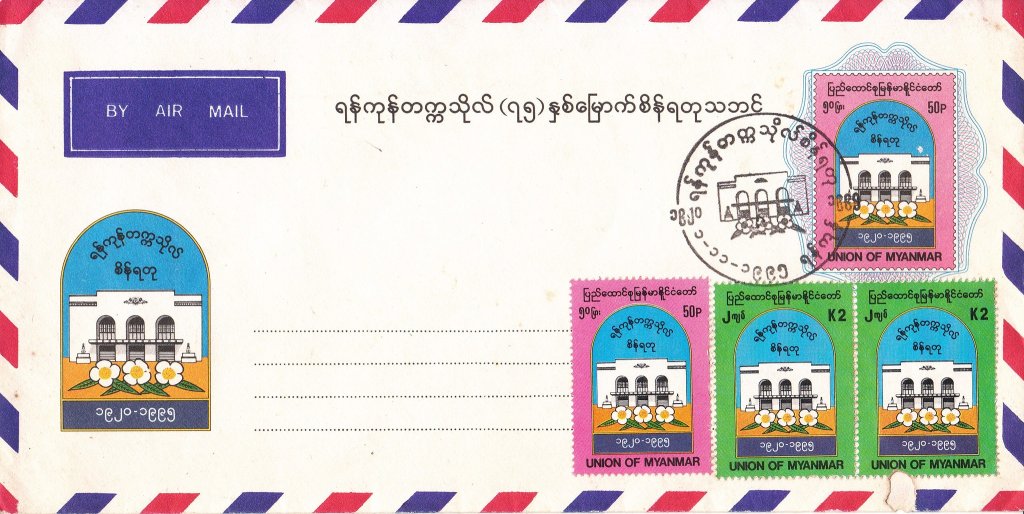
First Day CoverRU Diamond Jubilee
RU Diamond Jubilee was celebrated in 1995.
Centennial (100 years)
SPHS celebrated the Centennial in 1960.
RU Centennial celebrations started in November 2020. Yah Pyay Ah Kyo celebrations kicked off on December 1, 2019 and continued throughout 2020
Sesquicentennial (150 years)
SPHS celebrated the Sesquicentennial in 2010.
Miscellaneous
Bicentennial (200 years)
Tricentennial (300 years)
Millennium (1000 years)
Three Events in December 1920
Rangoon University
Rangoon University Act of 1920 was enacted on December 1, 1920.
The Act established Rangoon University with Rangoon College and Judson College as constituent colleges.
First RU Student Strike
The Strikevto protest the Act took place of December 5, 1920 (two days earlier than planned because the news leaked to the higher authorities).
The senior students requested the junior students not to strike. When their request was not complied, 11 senior students decided to the strike as leaders.
The Burmese date — 10th Waning Day of Tazaungmon — is celebrated as Ah Myo Tha Aung Pwe Nay.
The strike led to the establishment of Ah Myotha Kyaung (National School) and Ah Myotha Kaw Leik (National College).
U Po Kya served as Ah MyothaPyinnyaWun. He is a distinguished author.
Thakhin Kodaw Hmaing served as Principal of Ah Myotha Kaw Leik.
Saya U Ba Toke
U Ba Toke
He’s is a Phwa Bet Taw of RU and the first RU Students’ Strike.
Professor of Mathematics, Rangoon University
Rector of MASU
Professor of Mathematics, Rangoon Institute of Technology
Associate Dean, Assumption University, Bangkok
Publications
Former EC members of the RU Ka Laung Ah Thinn (1958 – 1962) including Daw Kyu Kyu Thin and Saya U Moe Aung (Tekaktho Moe War) published a “Collection of Kabyars” and a commemorative Magazine in February 2020.
Several books, Sar Saungs and Magazines were published for the RU Centennial Celebrations.
Early Sayas
Dr. Maung Maung Kha
Saya Kha Hall
Doctorate in Meteorological Physics from UK
Worked briefly at Meteorology Department
Transferred to RU Physics Department
Interim Dean of Engineering
Longest tenure among Rectors of RU
Hobby : Music / Violin
Former students celebrated Saya’s Yar Pyi
“Saya Kha Hall”
U San Tha Aung
U San Tha Aung
Studied Masters at Harvard University
Senior Lecturer, Physics
Co-authored High School Yupa Beda texts with Dr. Maung Maung Kha
Director General of Higher Education
Passed away after returning from an inspection tour
Dr. Nyi Nyi
He was a mentee of Dr. Tha Hla.
A Minister protested against Dr. Tha Hla’s nomination of Dr. Nyi Nyi’s scholarship citing his ideology. Dr. Tha Hla managed to push through the nomination during the Minister’s absence.
Served as Deputy Minister. Instrumental in establishing the then new Education System
Retired from UN
Pen name : Oak Aw
Rectors and Principals
U Hla Shwe
Rector, Mandalay Arts and Science University (MASU)
Senior Burmese Saya
U Yone Mo
Retired Chief Engineer, Burma Railways
Dean of Engineering, BIT
Rector, Rangoon Institute of Technology
Medicine
Dr. Ba Than (Institute of Medicine 1)
Dr. U E (Institute of Medicine 2)
Dr. Maung Maung Gyi (Institute of Medicine at Mandalay)
Economics
Dr. Aye Hlaing Rector, Institute of Economics Professor of Economics, Faculty of Social Science
Education
Lt. Col. San Myint Rector, Institute of Education
Dentistry
Dr. Aung Than Rector, Institute of Dentistry / Dental Medicine
Vet
U Mya Nyunt Rector, Institute of Veterinary Science
Agri
U Than Tun Rector, Institute of Agriculture
Workers
U Kyaw Principal, Workers’ College
Taunggyi
U Khin Maung Tint (Tekkatho Phone Naing) Principal, Taungyi College Distinguished author / novelist
Attended regular and monastic schools while serving as an Assistant Teacher.
Completed a Teachers Training Certificate.
Worked as a Tally Clerk, but his intense desire to have higher education led him to become a “Kyaung Tha Gyi” at Judson College in his late 20s.
On November 30, 1920 there were two meetings. At one meeting, Mr. Matthew Hunter, Principal of Rangoon College, announced that the Rangoon University Act of 1920 will be implemented the following day (on December 1, 1920). At another meeting at the Jubilee Hall, College students proposed to protest the Act. The “Kyaung Tha Gyis” tried to soften the stand of their young energetic colleagues, but they finally gave in and lead the protests. The Strike was scheduled for December 7, 1920, but the news leaked out to the higher authorities. So, the Strike was rescheduled for December 5, 1920. U Po Kya was not only a member of the strike, but he went on to support the National Schools and serve as “Amyotha Pyinnya Wun“.
During his College days, he studied under the outstanding Burmese and Pali Scholars. Received his BA degree in 1922. Wrote several books including “Myanmar Gon Yi” and a collection of short stories (e.g. Volunteer Coolie for a Kyaung Tha). Some were prescribed as text book for schools.
Sad to learn that he passed away at the tender age of 51 due to malaria.
Many years ago, I met U Zaw Win Kya (son of U Po Kya) at Ava House where he was in charge of text books and publications.
Amyotha Aung Pwe Nay (National Day) uses the Burmese date (10th waning day of Tazaungmon).
A marble stone on Shwe Dagon Pagoda has the names of the 11 students who led the First RU Students’ Strike.
1920s and 1930s
Dr. Saw Mra Aung’s account of “Rangoon University in the 1920s” can be Googled on the Internet.
The early hostels were not inside the Campus. Took time and money to transform the “Nar Nat Taw” and its vicinity into hostels and additional class rooms. Hostel students had to guard themselves against mosquitoes and intruders (from nearby quarters).
Students in the early days include “Chit Dukkha” U Ba Nyunt (later Professor of History, father of Win Oo), U Thein Han (Zawgyi) and U Wun (Minthuwun).
U Nyo (Chauk Htutt Kyee Phaya Daga) was a philanthropist. His donations funded the Rangoon University Student Union Building and several buildings in the RU Estate. He also helped build the Club House for RUBC (Rangoon University Boat Club, which was founded by Law Professor Sir Arthur Eggar).
Chan Mah Phee and Daw Aye Mya were philanthropists. Their donations include a hospital (Chan Mah Phee Say Yone in Ahlone), Hwa Kyone school, and a Tazaung in Shwe Dagon. Their second son, Chan Chor Khine served as a member of the RU Council, and helped build the RU Gymnasium in memory of his beloved parents.
In 1936, U Nu was elected as President of Ta Ka Ta (Tekkatho Kyaung Tha Thumagga), M.A. Raschid (father of Saya Bilal) as Vice President and Bogyoke Aung San as Secretary.
Aung SanTranslation of Invictus
In 1936, the Second RU Student Strike took place. The post has a photo showing U Saw Ba Hein (father of Dr. Daisy and Dr. Edwin), Ludu Daw Amar (Ah Mar), MA Daw Ohn and several more carrying the Banner.
In 1937, M.A. Raschid became President of Ta Ka Tha and also Ba Ka Tha. He would later serve as Minister in the Cabinets led by Prime Minister U Nu.
In 1938, Bogyoke Aung San (Editor of Oway) was expelled, because he refused to disclose the identity of the author of “Hell Hound at large”. The Third RU Student Strike took place. Ko Aung Kyaw was struck by a baton and perished. He was named Bo Aung Kyaw and the Sparks Street was renamed as Bo Aung Kyaw Street.
The Student Union nurtured many students to lead the Independence Movement and to run the democratic Union of Burma.
Dark Moments
There were many Dark Moments during the Adhamma regime starting with indiscriminate shooting on July 7, 1962 and the demolition of the RU Student Union Building on July 8, 1962.
The anniversary of July 7 (in 1963) saw posters and publications condemning the atrocities.
The authorities decided to close the universities (with the exception of Medicine and Engineering).
A new Education System was established in November 1964.
The Universities and Institutes were closed several times citing Security Concerns. Several students lost their lives in U Thant Ah Yay Ah Khin and 8-8-88
It took only a few years (if not a few months) to transform the “Rice Bowl of Asia” into LDC (Least Developed Country) and a highly revered Education System into one that promotes rote learning instead of rational and creative thinking (as implied by the term Tekkatho (Tekkathila or Tekka Sila).
Students were dispersed (some to remote places without proper facilities). Some teachers and students had to commute daily for two hours (or so). Many have to arrange for their transportation.
Resilience
RU and its children are resilient.
They survived to usher in the “Pwint Linn” Era.
Untold stories and hitherto unseen photos can now be seen in the posts.
Many can forgive but not forget the dark moments in history.
Khun Sai (founding member of the RU Centennial Group) was a medical student during the “U Thant Ah Yay Ah Khin”. For his involvement, he was debarred. He has posted memories of the Ah Yay Ah Khin.
For three years (1988 – 1990), RU and the Institutes were closed. There were no Convocations after 1987 and before 1991.
Saya Pu Zaw Pwe
Saya Pu Zaw Pwe (SPZP) is a noble tradition.
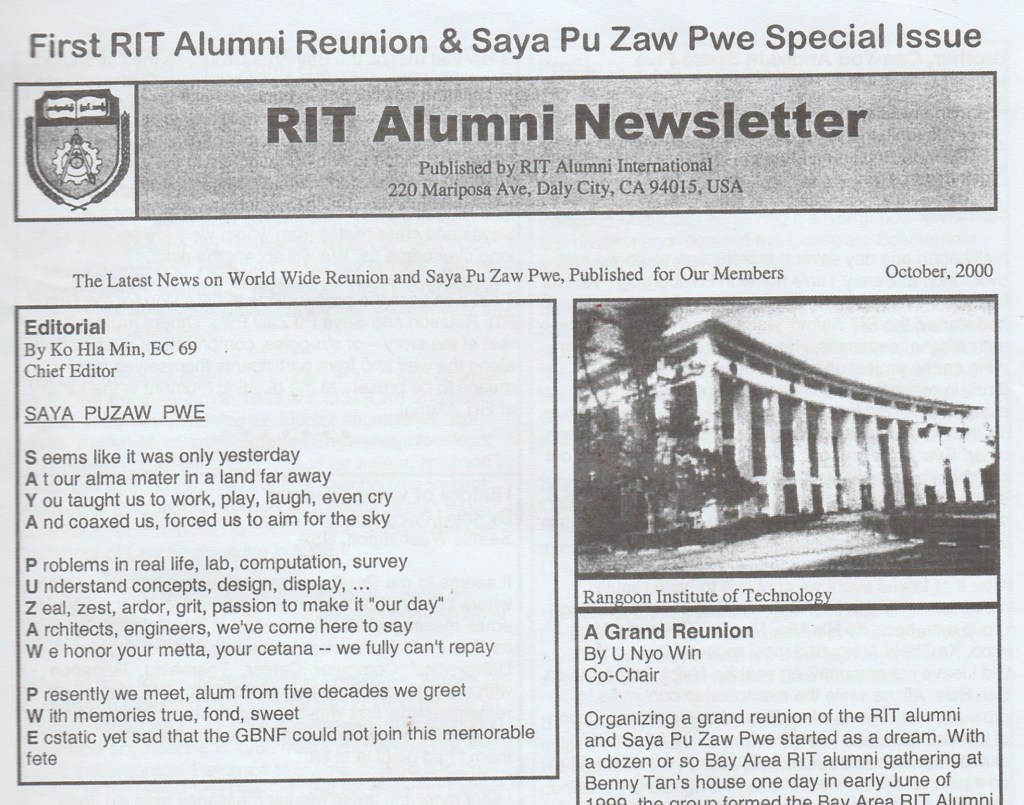
In October 2000, I was honored to be an organizer for a SPZP (in a land far away).
I wrote “SAYA PUZAW PWE”.
Each line starts with corresponding letter from “SAYA PUZAW PWE”.