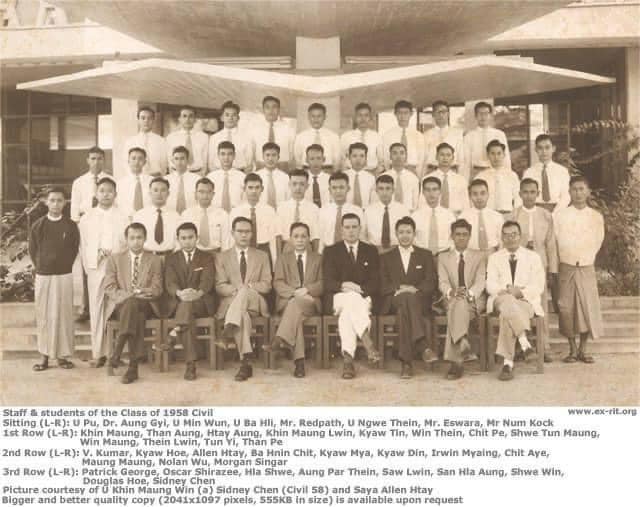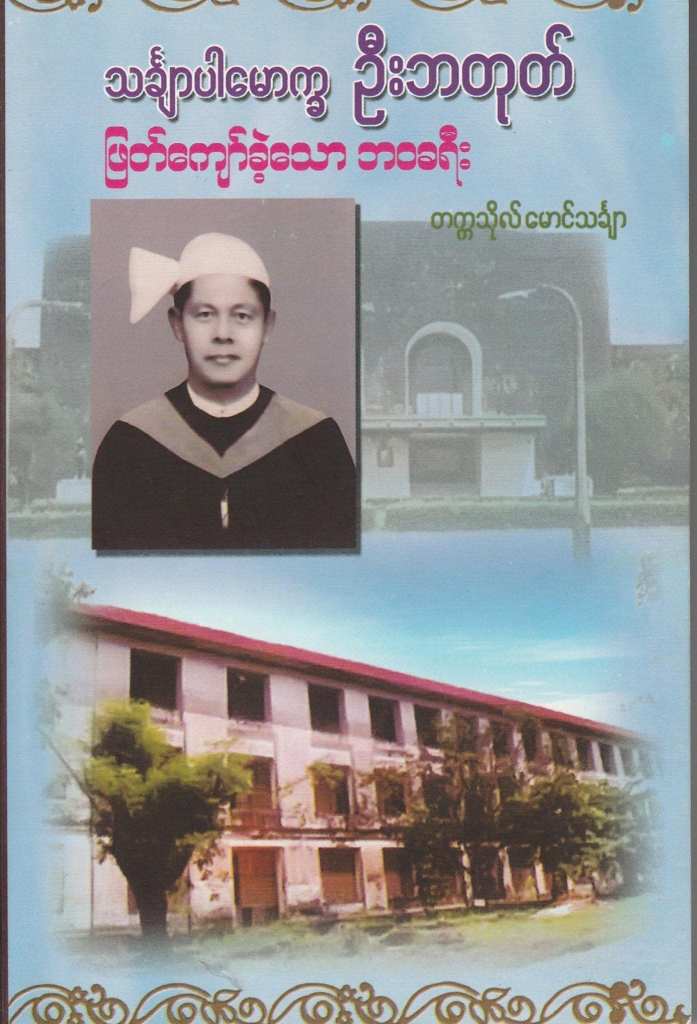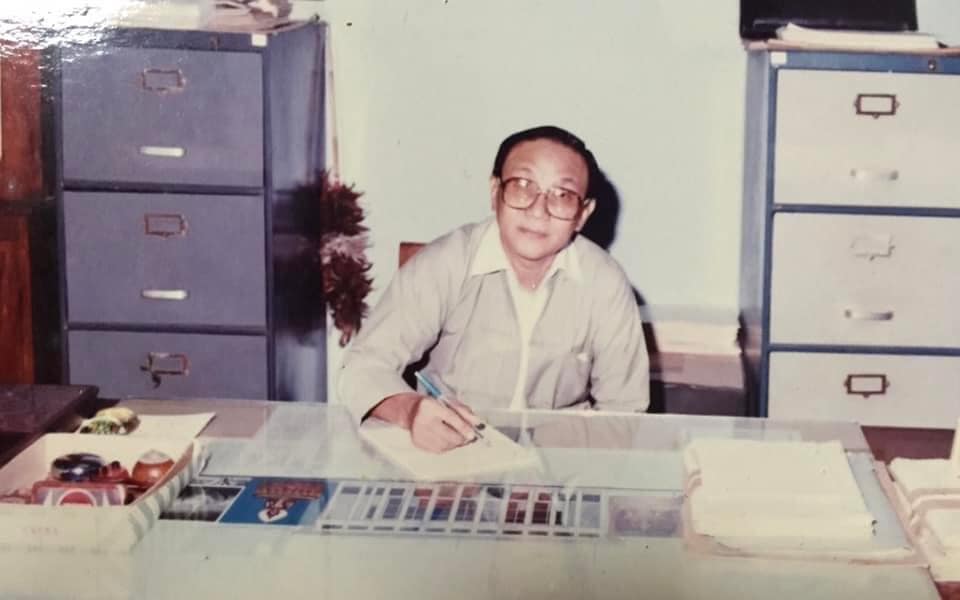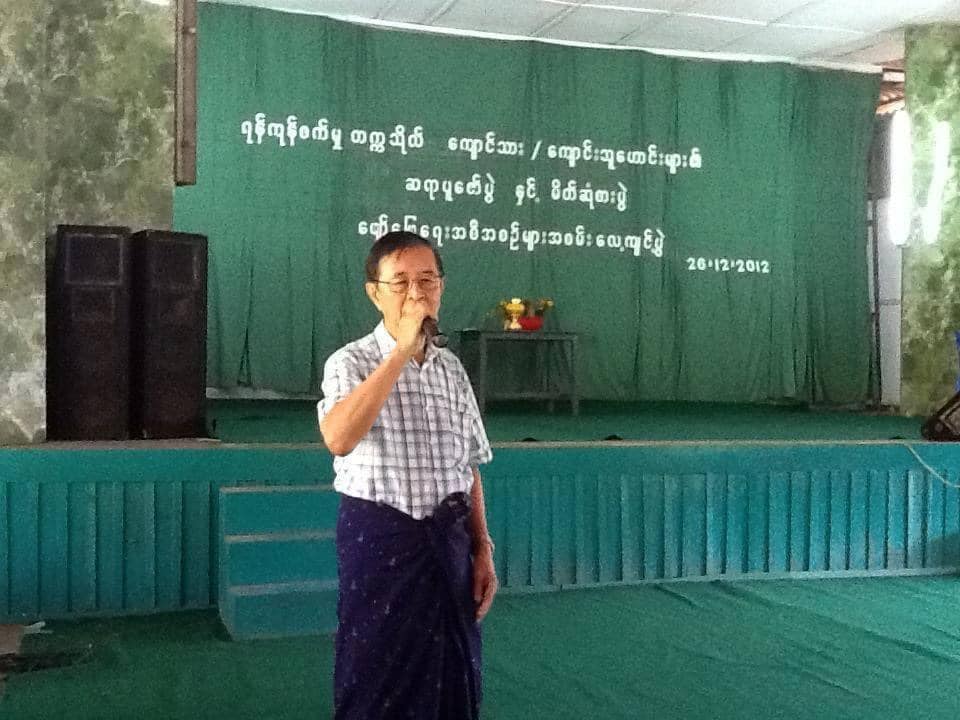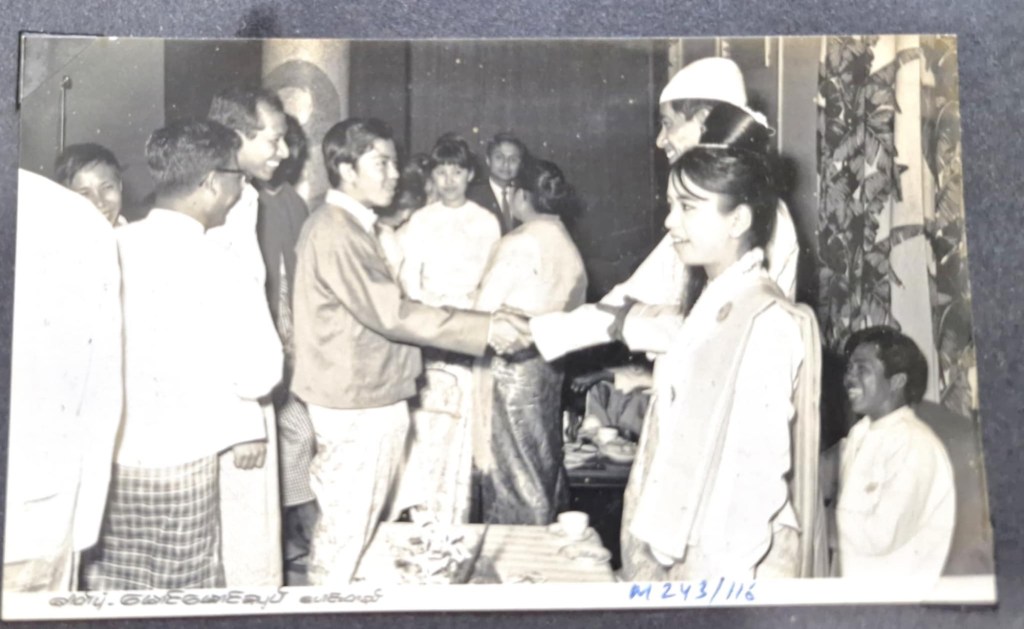
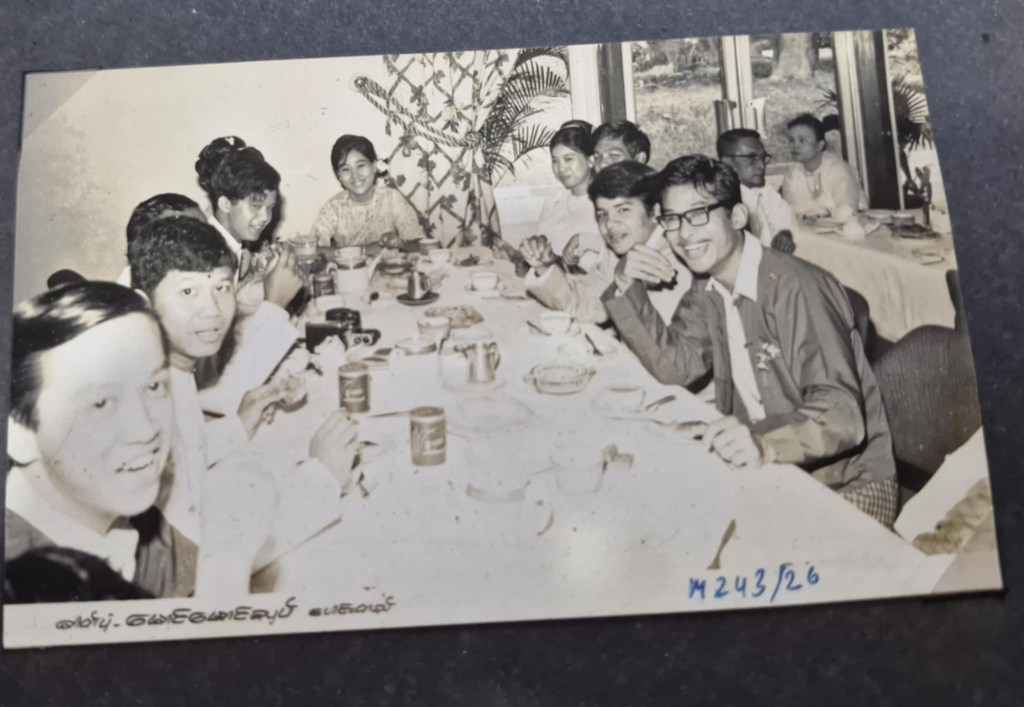
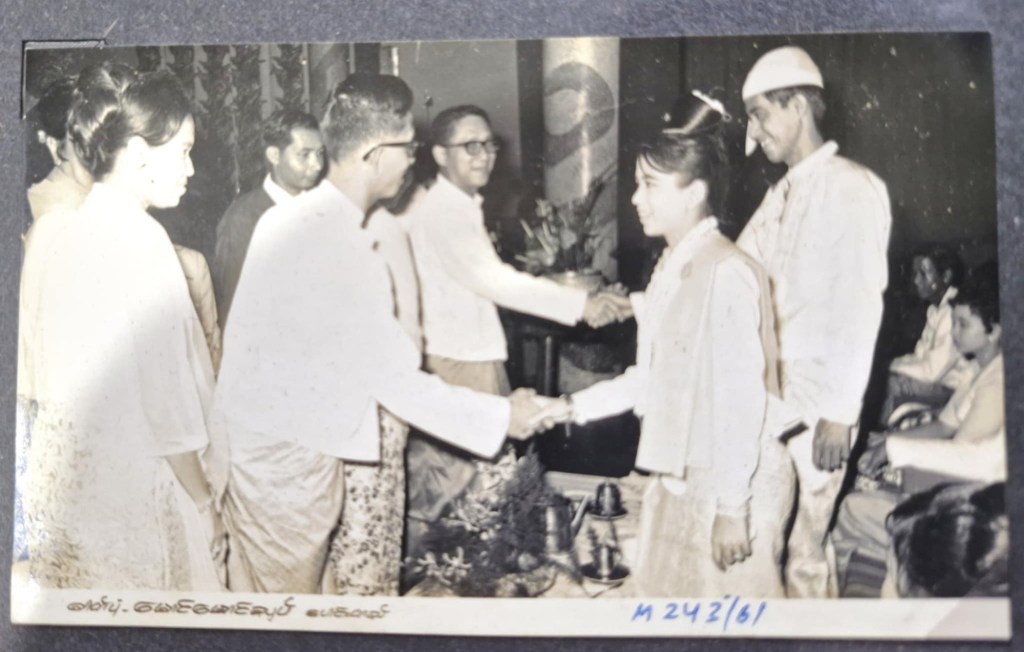
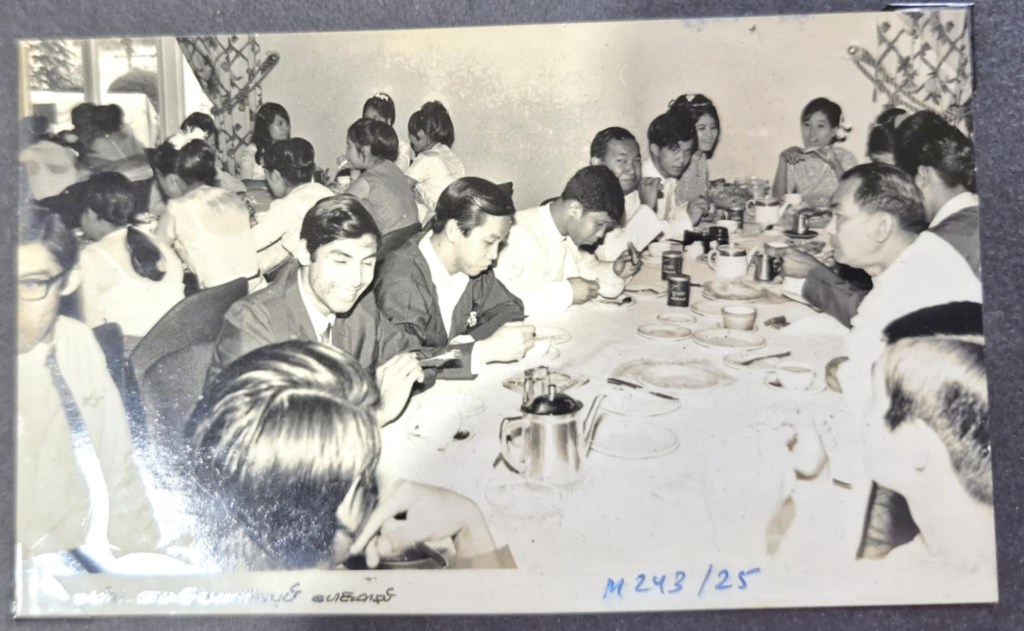
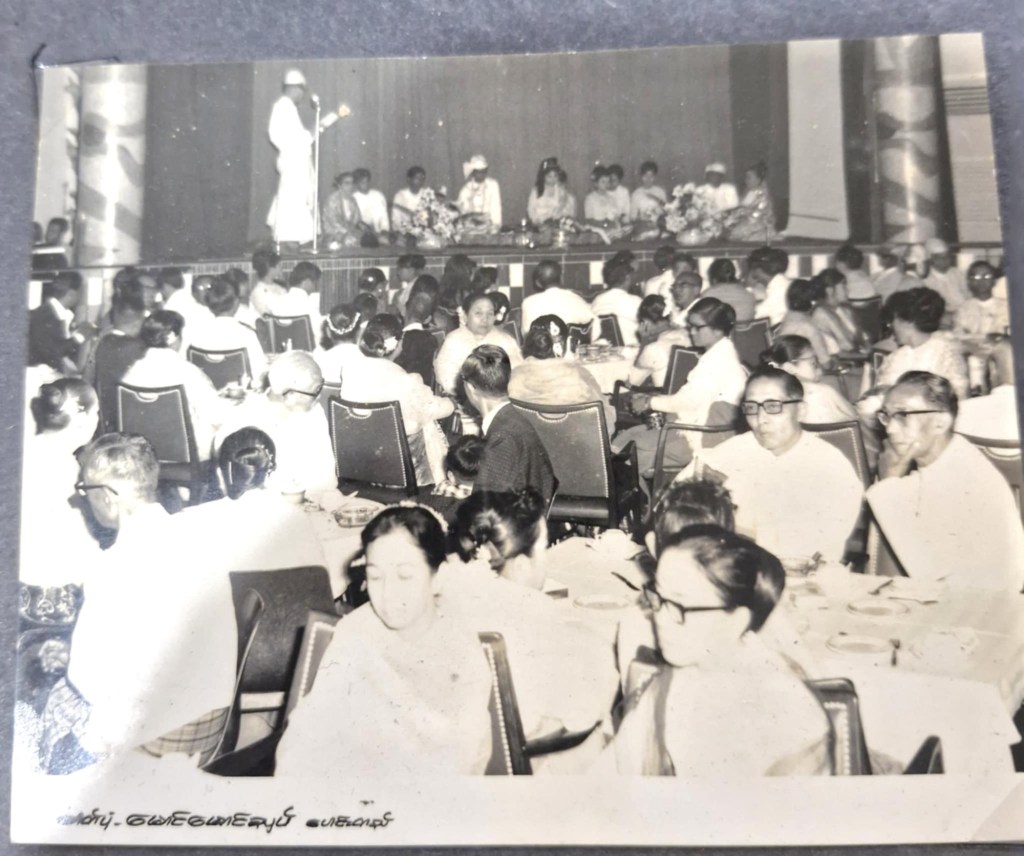
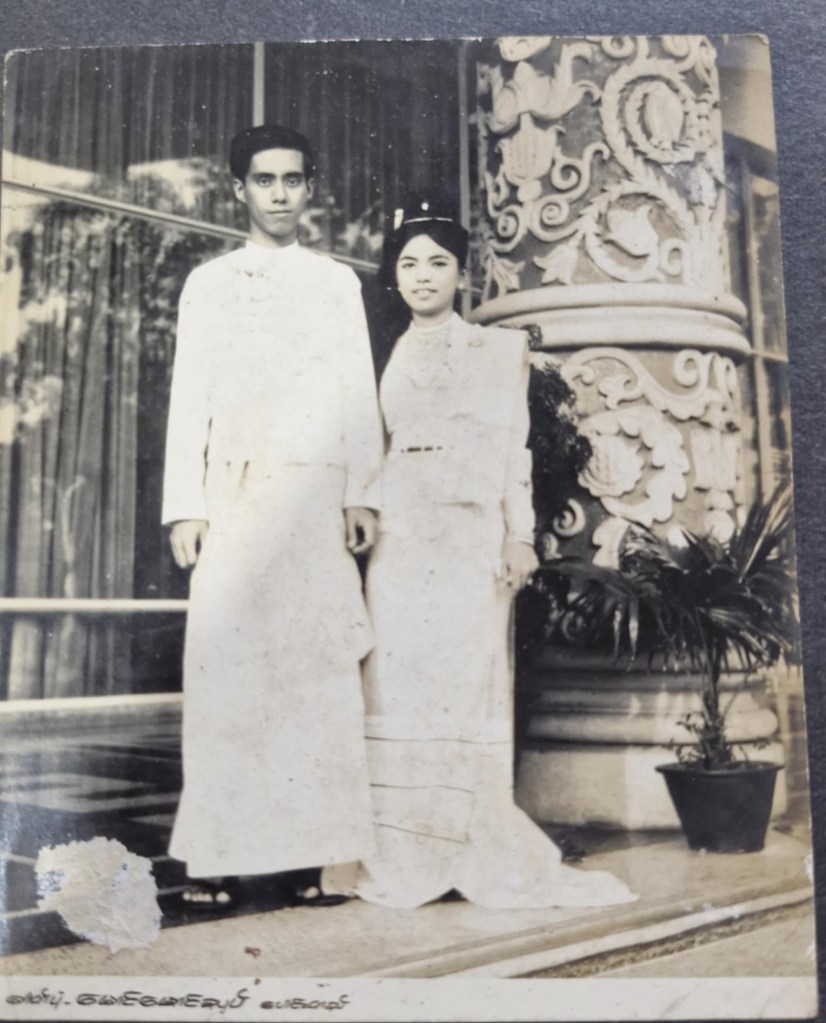
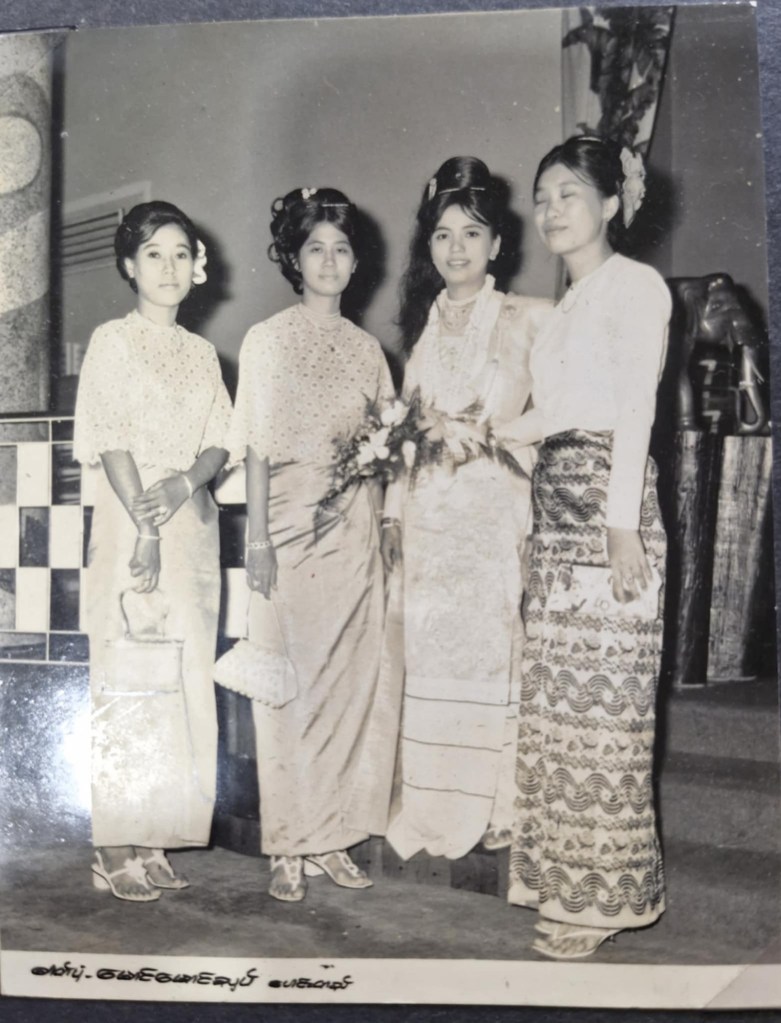
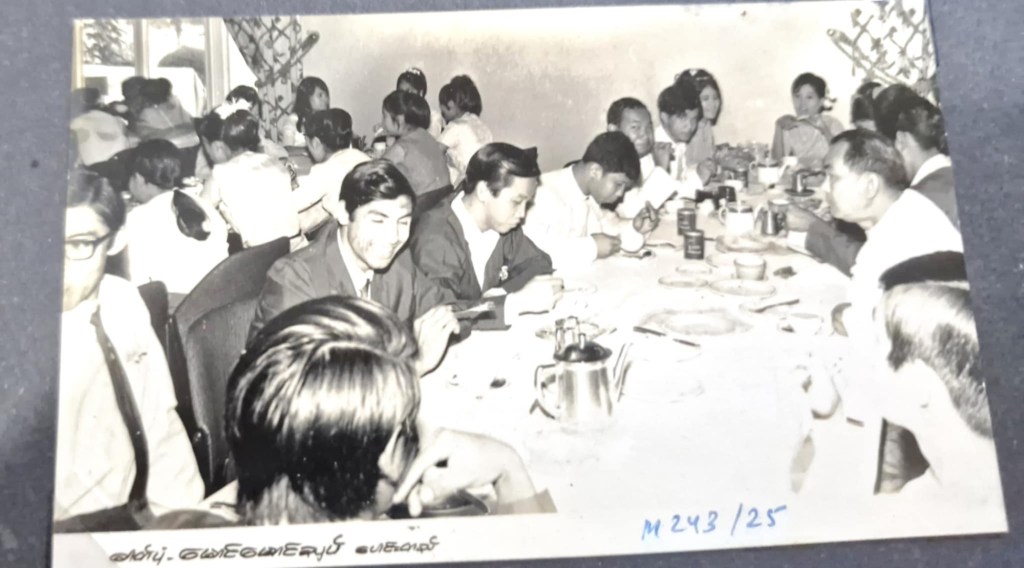
According to a historian from Smithsonian Institution, “There is no single history. There are parallel (often competing) histories.
I volunteered as a Docent for Computer History Museum (CHM) in Moutain View, California.
I was a member of the HMEE (History of Myanmar Engineering Education) project. Ko Ohn Khine (M70) and I compiled the CD supplement for the HMEE-2012 book.
Journey
I am continuing on my journey as a Life Long Learner, freelance writer, translator and editor.
I served at the Last Journey for Sayadaw U Silananda and Dr. Htay Lwin Nyo.
Colleges
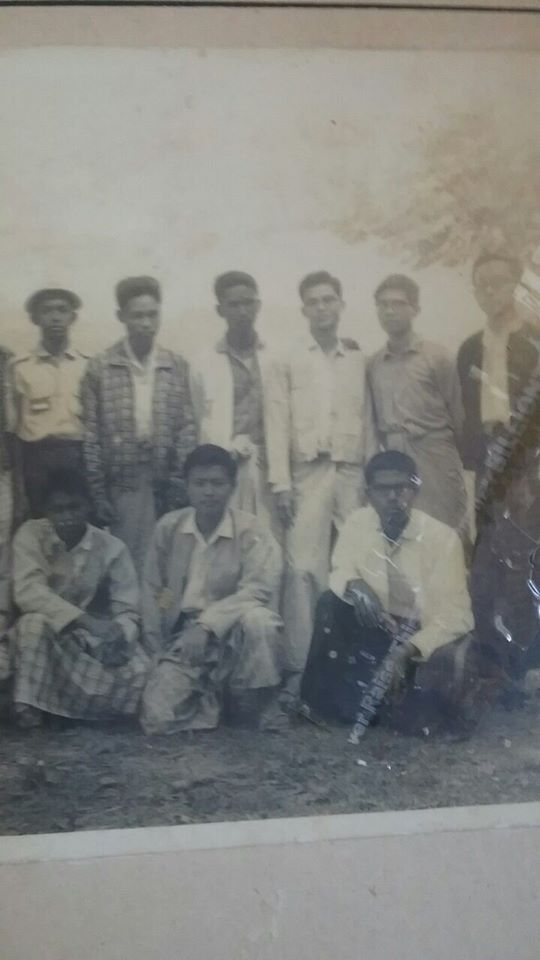
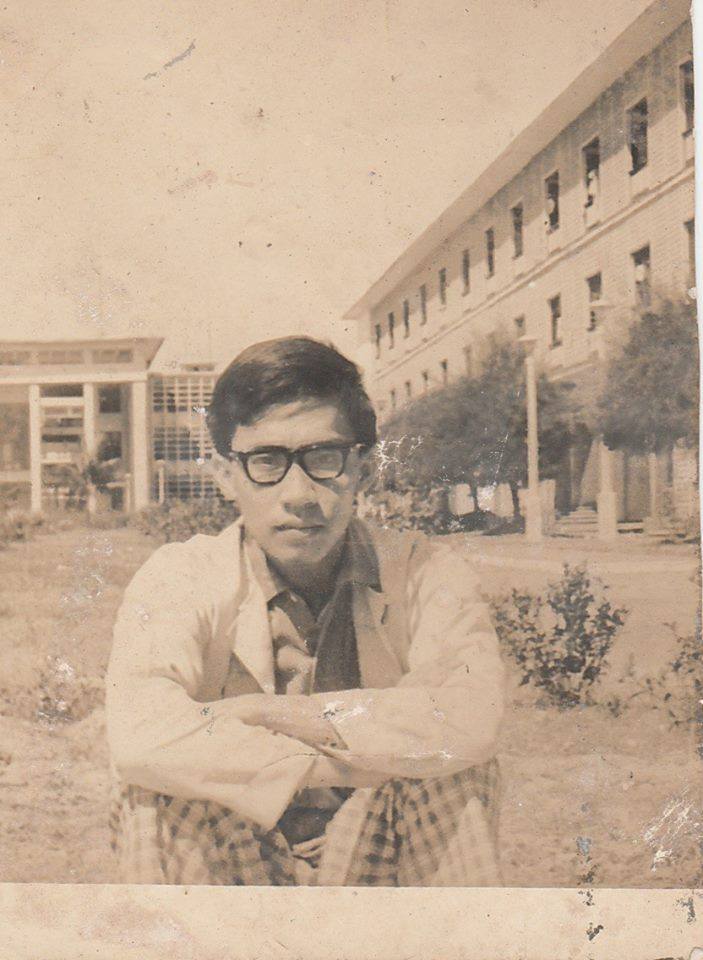
Those senior to us attended Yankin and Hteedan Colleges.
Leik Khone held engineering classes before the Faculty moved to Gyogone Campus in 1961.
In 1962 and 1963, Leik Khone held I.Sc. classes.
In 1964, Leik Khone started offering 1st MB classes.
Volunteer Service
I have served as a volunteer for five decades.
Infounded “RIT Alumni International Newsletter” in 1999 and served as its Chief Editor for 26 years.
I have paid back to UCC and RIT as a messenger and organizer.
My Toastmasters Journey
I joined District 4 of Toastmasters International. When District 4 became too big, it was reorganized into two smaller Districts.
I became a member of District 101.
I completed Distinguished Toastmaster (DTM) under the Old System.
DTM 1DTM 2
Mr. Robert Hole
He was the English Editor for RUESU (Rangoon University Engineering Students Union) Annual Magazine. He is the father of Sayama Daw Gilmore Hole (UCC) and uncle of U Percy Maung Maung (classmate of Saya U Soe Paing at St. Paul’s High School and Stanford University).
Saya asked Mr. Robert to write for the “History of University Engineering Education in Burma/Myanmar”. Mr. Robert asked three weeks.
Sad to say, Mr. Robert did not complete his assignment.
During my visit to Yangon, Gilmore invited UCC alumni to a mini-gathering at her house. We learned from Gilmore that her father had “memory retention problem”.
That is one reason I am sharing my memories before my memory declines.
History
It is appreciated in some countries.
In the USA, there are many museums (with Docents) and historical societies (with Historians).
I volunteered as a Docent at the Computer History Museum (CHM) for a couple of years. I learned that CHM has an “Oral History” Project to record interviews of pioneers, researchers, and notable people. CHM also had live presentations: individuals and/or panels with a moderator.
We understand that there are pressing issues (e.g. rebuilding the alma mater and our beloved motherland to their former glory), but we also need to have historical facts compiled (in writing or in interviews) and preserved.
Passion
A 1000+ mile journey starts with a simple first step. The journey to a printed book or an e-book started with my first Trivia post.
I did not start writing Chronicles or compiling a Knowledge base. I did not have an outline. I was just trying to please my beloved spouse, selected sayas and friends that I would put down my stories (that I heard or learned from Thin Sayas, Myin Sayas and Kyar Sayars) into writing. If the stories can enrich someone’s life, that will be a bonus.
If one has time and energy there are tons of information in the world, but one must be aware that they may be misinformation and materials that not subject to review and proof reading. Thanks to my reviewers, I have managed to keep the typos, inconsistencies and errors quite low. I also learn something new with each comment.
Some friends who are experts or advanced practitioners in astrology said, “You can never really retire. You have a conjunction of Mercury, Venus and Saturn in one Yathi (Rasi) and they are conjunction with Sun in the Tenth House. You will have the benefits as well as disadvantages of those planets. For example, you can never have an easy life and you will be a server of many people. Be careful of your health. If you stay healthy, you will feel pride and happiness to see your work get appreciated.”
The journey will continue as long as I have a reasonably good memory and health.
RU
Rangoon University was opened in December 1920 with Rangoon College and Judson College as affiliated colleges.
In the mid and late 50’s, the Yankin College and the Hteedan College served the First Year Intermediate classes. The Pure Science, Engineering and Medical students attended Yankin College. The Arts and Social Science students attended Hteedan College.
After completing the I.Sc. classes, the engineering students attended BOC College for their main subjects and took some courses (e.g. Mathematics) at the Main Campus.
Later, the engineering students attended Leik Khone (Dome) and its extensions for their main subjects and spent some time (e.g. workshop) at BOC College.
Leik Khone
Saya U Tin Htut (M60) and U Tin Htoon (A60) were the last batch of Engineering students to attend classes at Leik Khone.
In mid-1963, we attended I.Sc.(A) classes at Leik Khone. Those aspiring to become medical doctors take the “A” option. Those aspiring to become engineers and scientists take the “B” option.
Our teachers for our I.Sc.(A) classes included
Daw Tinsa Maw-Naing (English) — mother of Kinsa Maw-Naing
Daw Khin Kyi Kyi (English)
Daw Po (Burmese) — sayama at the 1965 Inlay Luyechun Camp; retired as Professor of Burmese
U Khin Zaw (Maths) — later headed Maths Department at Worker’s College
Mr. Chowdry (Maths)
Daw Khin Ma Ma (Maths) — Sayama and her spouse U Soe Nyunt taught Maths at DSA
U Min Than Thaung (Physics) — RUBC Gold; retired as Rector of Long Distance Learning
Daw Khin Khin Su (Physics)
Daw Khin Khin Aye (Chemistry)
Gyogone Campus
Russia’s gift for the Gyogone Campus was compensated in rice, since Burma was then known as the “Rice Bowl of Asia“.
Russia provided visiting Lecturers. Some sayas speak reasonably good English. Others (e.g. teaching courses in the Agri sub-department of Mechanical Engineering) needed interpreters to conduct their courses.
Saya U Tin Maung Nyunt (M60) visited Sayagyi U Ba Than after returning from his post-graduate studies in the USA. He was waiting to join Yezin College. Sayagyi asked him if he would like to join the Agri sub-department. The Agri students were happy with the teaching and practice of Saya U Tin Maung Nyunt. Saya also served as President of RIT Thaing Club.
Most Russian sayas were good chess players. They helped Ko Aung Than and Ko Maung Maung to form the RIT Chess Club. They conducted Lightning Chess tournaments.
Mr. Lazarov rowed as Timing Stroke for the RIT Eights team, which won the Inter-Institute Eights Trophy. The team consisted of L. Than Myint, U Ohn Hlaing (Elmo, GBNF), U Kyaw Lwin (George, GBNF), U Thaung Lwin, U Myo Myint, U Than Htut, U Htain Linn and U Tin Aung (Victor, GBNF).
Name Change
Folklore says the name BIT (Burma Institute of Technology) was changed to RIT (Rangoon Institute of Technology), so that engineering schools could be set up at Mandalay. Note that IIT (Indian Institute of Technology) uses IIT for all its campuses, but qualifies it with the Campus name.
Saya Dr. Koung Nyunt (A 67, GBNF) mentioned that he was a participant and/or witness in the “physical” changing of the names (BIT to RIT) on the building.
Contributions
Many years ago, I asked a journalist how he could write a weekly column. He replied, “As long as one have friends and there are things to see, it’s not difficult to write even daily.”
For more than five decades, I have offered volunteer service to various organizations.
Paying back to RIT
I started “RIT Alumni International Newsletter” in 1989. I asked at least three times if someone wanted to take over as the volunteer messenger, writer and editor. Even my fiercest critics would not step up. I completed 26 years of my service to my alma mater, mentors and colleagues. The smiles on the faces of my former teachers, and occasional pat on the back by my colleagues give me “second wind” and the energy to “go the extra mile.”
Messenger
For over two decades, I served as a messenger for the RIT sayas, alumni and community.
In the early days, many sayas and alumni provided me with articles, news, and photos.
The idea of getting reconnected electronically and physically was novel. There were several hundred who accessed the first RIT web site designed and maintained by KMZ.
Some traveled a long way (from Burma, Thailand, Singapore, Japan, Australia, and New Zealand) to attend the First RIT Grand Reunion and Saya Pu Zaw Pwe in October 2000.
Some sayas and alumni became GBNF (Gone But Not Forgotten). Some saw a decline in their health.
With the event of social media, the number of RIT related pages grew. There are many silent readers and few active contributors.
Being a messenger is not easy. When an alumni asked me to relay the demise of Ko Victor Win, I double checked before posting the news. Then, someone who is near and dear to Mrs. Victor claimed that Ko Victor was hospitalized, but had not passed away. After some confusion, the sad news was confirmed.
Some sayas and alumni want privacy. They do not want the news of their visits or failing health to be relayed. We have to respect them.
There are many posts by sayas, alumni and friends. I have re-posted only a sample of their works.
As my mentors said, “The message is much more important than the messenger.”
Paying back to UCC
During a visit to Yangon, I spent three days writing “Memories of UCC.” My former student Phyu Phyu Kyaw (USA) called, “You should take time off and enjoy your stay in Burma. You can continue writing when you get back to the USA. I suggest that you should spend two nights and three days in Bagan. She pledged air ticket and hotel stay as Garawa.”
It was my second trip to the ancient city. Things have changed a lot since my quick trip to Bagan and Nyaung Oo many years ago.
I saw tourists taking photographs of the ancient shrines. I saw some driving motor cycles to get around the area and beyond (e.g. to Mount Popa). Some who are short of time take the Package Tour with a tourist guide.
I wrapped up “Memories of UCC” by archiving them in PDF and Word form. I also summarized the long article to a length that can be incorporated into the Special Issue published by UCSY (University of Computer Studies in Yangon).
Sharing Trivia and Knowledge
Upon my return to the USA, I started writing Trivia posts based on what I learned from my Thin Saya, Myin Saya and Kyar Saya.
I was happy when I hit the 100 mark. It was like completing a lap in a long race.
Reviewers and Contributors
Saya Dr. Aung Gyi suggested topics to be covered in the book. Saya wanted us to present the RIT Spirit.
Dr. Thane Oke Kyaw Myint added memories of his father, uncles and aunts. I knew more about the seven siblings :
U Tin Tut
U Kyaw Myint
U Myint Thein
Dr. Htin Aung
Daw Khin Mya Mu
Daw Khin Saw Mu
Daw Tin Saw Mu
I also learned about Dr. Thane Oke Kyaw Myint’s former students who are Professors and Distinguished Authors.
Dr. Nyunt Wai (Victor, SPHS63, Fourth in Burma in Matriculation) added many entries to the “Names” series. He added the names of medical professionals, artists, writers, and statesmen.
Dr. Khin Maung U (SPHS63, First in Burma in Matriculation) shared his writings on Medical Research and Dhamma.
U Khin Maung Zaw (SPHS70, EC76) provided feedback for the RIT, UCC and SPHS posts.
U Ohn Khine (St. Peter’s, M70) sent me selected photos from the CD Supplement of HMEE-2012. He maintains the GBNF list of the Class of 70.
U Aung Min (M69) is Chair of the 69er HCF (Health Care Fund) and a core organizer of the 69er Gatherings. He maintains the GBNF list of the Class of 69.
Dr. Richard Yu Khin (MEHS61, Gold Medalist in 2nd SEAP Games for Yachting, GBNF) wrote about swimmers and the Japanese coach. He also shared photos :
MEHS 61
University Athletes who represented Burma in 2nd SEAP Games.
He has two Facebook pages.
One is about Sailing. He won Gold for Yachting in the 2nd SEAP Games held in Rangoon, Burma.
Another is about his former classmates, neighbors, Economics, …
Toastmasters International
I joined Toastmasters International over a decade to hone my Public Speaking and Leadership skills. Prepared speeches, Impromptu speeches, Listening and evaluation are important in communications.
I completed DTM (Distinguished Toastmaster). I also volunteered as Club Ambassador.
I was a member of five Toastmasters Clubs (not concurrently). Although all clubs follow the general guidelines, they tweak the meeting agenda.
My last club was founded by Silicon Valley Entrepreneurs. Its specialty was to hold a mini “Pitch Practice” on the first meeting of every month and a full Pitch Practice on the middle month of every quarter. One has to state the problem, solution, the differentiators and finally ask for cooperation or funding (as appropriate). All in two minutes or less.
There are currently no Toastmasters clubs in Myanmar. In our younger days, there was a Rotary Club which had a public speaking component.
There have been TEDx talks in Myanmar for three years or so. One organizer is the daughter of U Sann Aung (M74, GBNF).
In 2008, three women set the record by placing First, Second and Third in the “World Championship of Public Speaking”. It has been a decade since there was a woman Champion. The winner and third place winner were from the USA. The runner-up was from China.
In the past few years, the winners were from Asia (India, Sri Lanka, Singapore) and the Middle East.
Awards from District 101
Toastmasters International is based in US.
District 4 (which I joined several years ago) grew too big to warrant splitting into two districts. The clubs mostly north of Highway 101 remained in District 4. The clubs mostly south of Highway 101 fall under District 101.
The following are from the “Fall Conference of District 101 Toastmasters”.
I won four awards.
DTM (Distinguished Toastmaster)
Leadership Excellence
Advanced Leader Silver
Triple Crown
Toastmasters Meetings
As an Ambassador for Toastmasters, I attended meetings at several clubs.
Most clubs follow the three part format :
Prepared Speeches
Table Topics (Impromptu Speeches)
Evaluation
Some clubs occasionally have special meetings
Marathon Speeches
Table Topics Only Meeting
Round Robin Evaluation
Themed Meeting
At one club, members wore Halloween costumes. The speeches also cover Halloween (or similar topics).
Halloween themed meeting
The Ambassador is asked to take one or more roles at the meeting.
Speaker
General Evaluator
Speech Evaluator
A report about the visit is provided to the District.
As an incentive, one who makes 10 or more visits is given a pass to attend the “breakfast meeting” on the day following the main Conference.
Toastmasters International
The mission statement reads, “We empower individuals to become more effective communicators and leaders.”
It
was founded by a former administrator of YMCA. With headquarters in
California, it has members worldwide. The first international conference
outside of the Americas will be held this August in Kuala Lumpur,
Malaysia. The conference crowns the “World Champion of Public Speaking”.
There
are closed clubs (sponsored by companies and corporations) and open
clubs (with little or no restrictions to join or visit).
One can visit several clubs before deciding to become a member.
In the old system, the communication track consisted of 4 levels (a) CC – Competent Communication (b) ACB – Advanced Communicators Bronze (c) ACS – Advanced Communicators Silver (d) ACG – Advanced Communicators Gold.
The initial Luyechun program ran from 1964 to 1988.
1964
Luyechun Program was established in 1964.
Eligible students from 7th Standard to 10th Standard were chosen to attend the Ngapali Luyechun Camp.
1964 Luyechuns include Ko Win Aung (TTC), Ko Oke Soe Kha (MEHS), Ma Pwint Than (Loikaw), Ko Aung Myint (Mandalay), and Ma Mie Mie Khine (Akyab).
1965
Luyechun Program was extended in 1965 for eligible students from Universities and Institutes. There were three Camps
Inlay Camp for high school and university students
Ngapali Camp for middle school students
Combined Camp in Rangoon
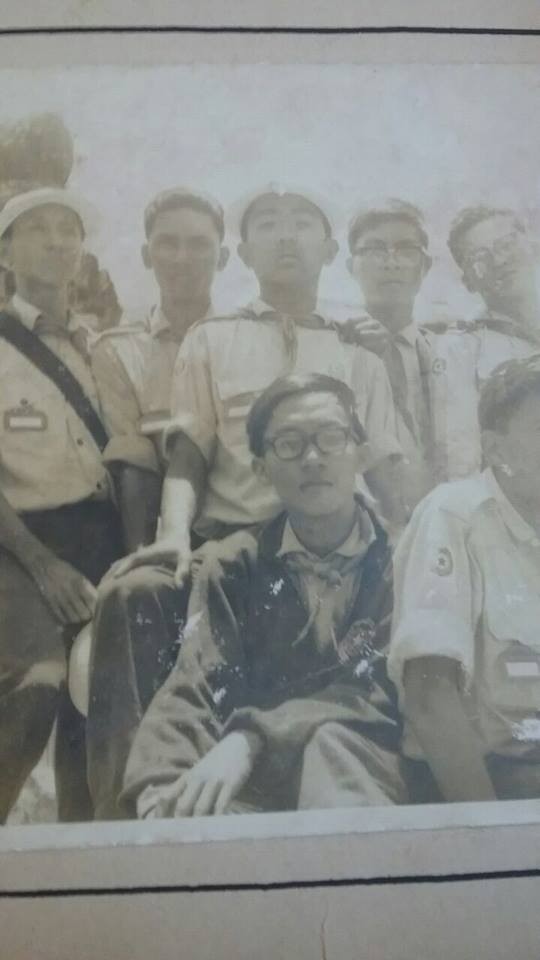
I was selected as RIT Luyechun for the Inlay Camp along with Ko Sein Shwe, Ko Zaw Min and Ma Khin Than Myint Tin (Margaret).
Ko Kyaw Sein Koe (Victor Koe, GBNF), Ma Anita Aye Pe, Ko Khin Maung U & Ma Than Than Tin (Cherry Hlaing) were selected for IM(1).
Ko Tun Naung (GBNF, BDS), Ko Soe Aung & Ko Thein Win (IM2), Ko Min Oo (Maths), Ko Ye Myint & Ma Khin Aye Than (Chemistry), Ko Myint Thein & Ko Soe Lwin (Physics), and Ko Tin Hlaing (Lay Dwin Thar Saw Chit, Burmese) were some who were selected for their disciplines.
Those from Matriculation include Ko Win Myint (later Bogyoke), Ko Aung Win (later RIT Saya), Uttam Singh (later NASA) and Ma Pwint Than (later EPC). They joined RIT.
Others include : Ko Aung Shwe (brother of Tekkatho Phone Naing), Ko Than Sit (GBNF, Liver Foundation), Ko Aung Kyaw Nyunt (GBNF), Ko Aung Myint, Ko Thein Lwin, Nelson Kaw & Ko Kyaw Myint.
Multiple Luyechun
Several students (e.g. Dr. Khin Maung U, Dr. Thynn Thynn Lynn, Daw Mie Mie Khine) were selected Luyechun multiple times.
Staff Sayas
Some sayas from Universities and High Schools were chosen to manage the Luyechuns. e.g. U Aung Gyi (MASU), Daw Po (RASU), Dr. May May Yi (GBNF, IM2)
Ko Min Oo (SPHS63, Maths) was selected Luyechun in 1965 and later as a Staff Saya.
Guest Speaker
Saya U Thein Han (Zawgyi), Saya Dr. Nyi Nyi & U Thu Ta (Meteorology) were Guest Speakers at the Inlay Luyechun Camp.
Saya U Kyaw Myint (DHE) & I were Guest Speakers at the Nagapali Lu Ye Chun Camp in 1988.
Status
Luyehun project ended in 1988.
Several years back, an Association was formed for Luyechuns from 1964 to 1988.
The 7th Annual General Meeting was held online in January 2021.
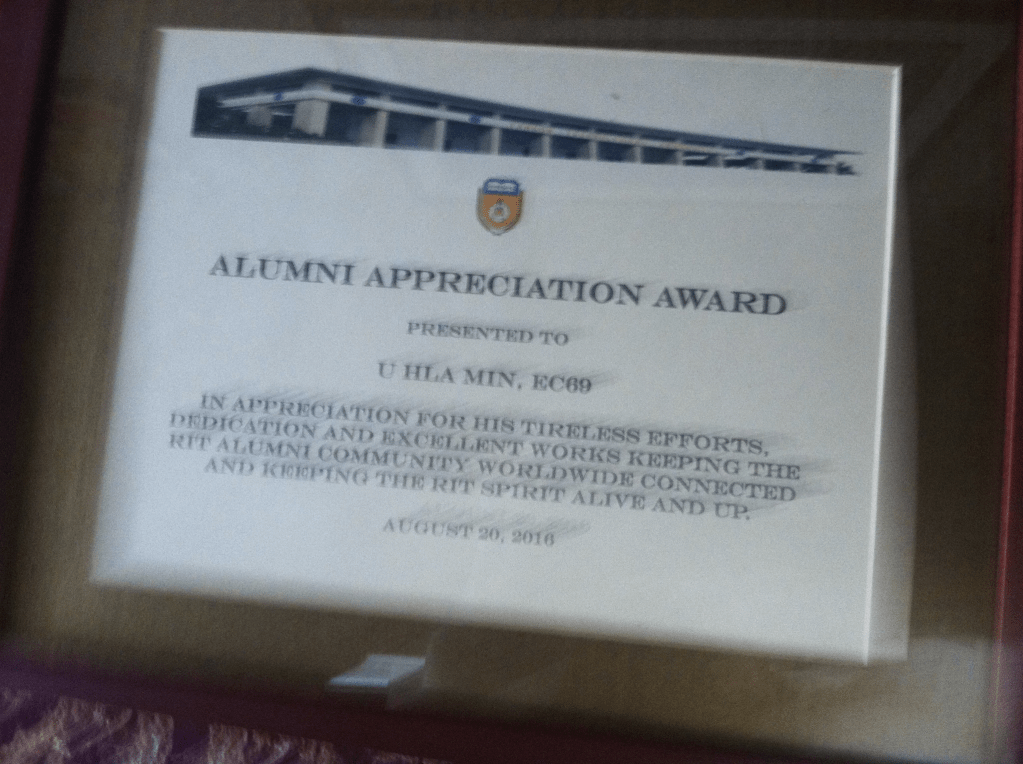
The first was given to me at SPZP-2000 (First RIT Grand Reunion & Saya Pu Zaw) for founding the RIT Alumni Newsletter in 1999, and serving as Content Provider & Editor for ex-rit website and as Core Organizer for SPZP.
SPZP-2000
I received the second one at the Birthday Soon Kyway Gathering at Dhammanda Vihara in Half Moon Bay, California in August 2016.
Award
I received the third one at the Annual Dinner of NorCal RIT Alumni Association.
NorCal RITAA dinner in 2016
HMEE
HMEE team
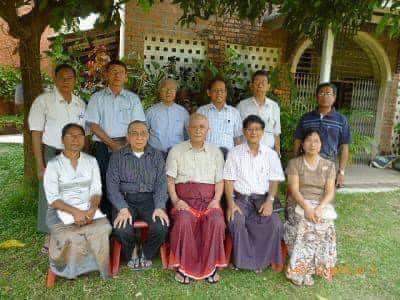
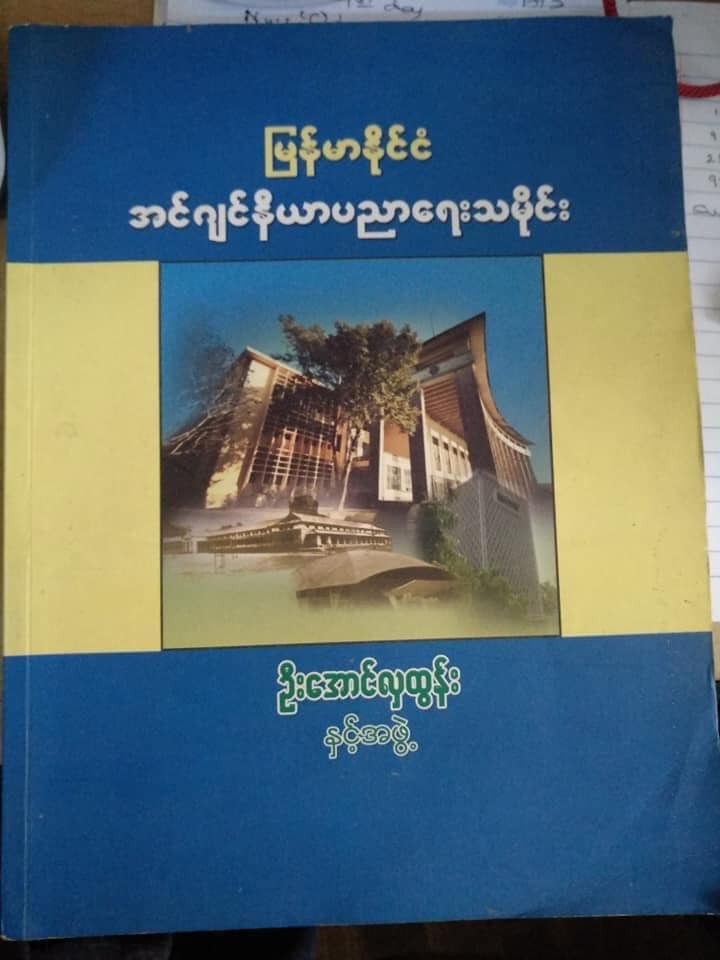
In 2012, the HMEE (History of Myanmar Engineering Education) team led by Saya U Aung Hla Tun published the HMEE book.
HMEE Book
U Ohn Khine (M70) and I compiled the CD supplement. The books were sold at SPZP-2012 (Sixth RIT Reunion & Saya Pu Zaw Pwe).
CD Supplement for HMEE book
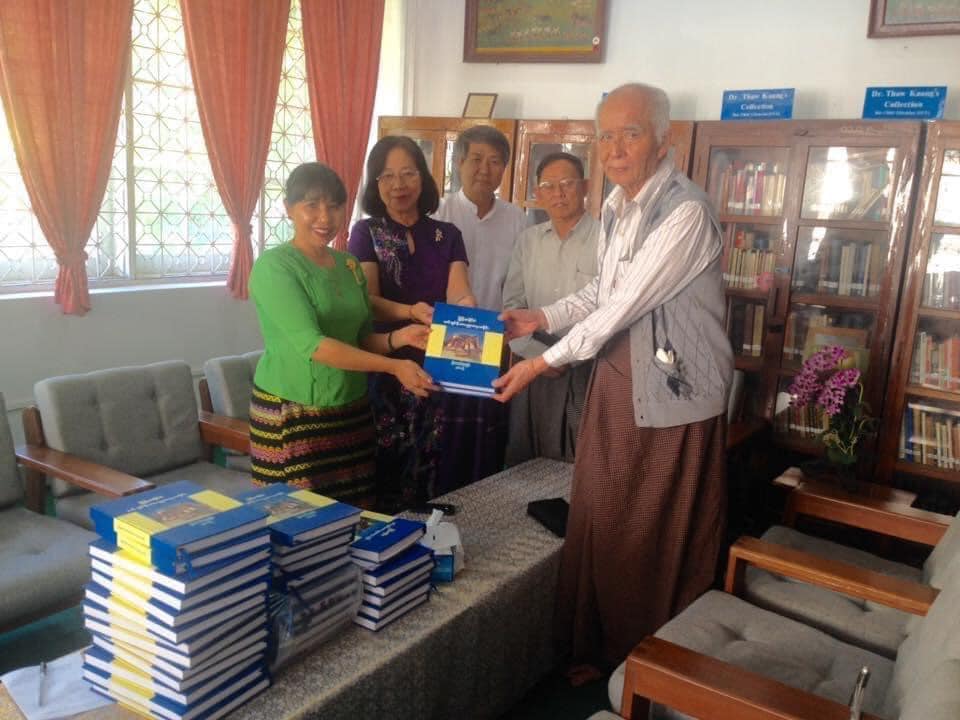
Several copies were donated to Universities’ Central Library and YTU (Yangon Technological University).
Donation to RUCL
SPZP-2016
Bagyee Myat Myo Myint (U Myo Myint) had an exhibition booth at SPZP-2016. He sold several paintings and donated some earnings to SPZP Organizing Committee.
U Myo Aung and I took a photo at the booth.
Exhibition booth at SPZP-2016
Weekly Routine
Ride a stationary bike for 30 minutes daily.
Learn new things.
Listen to Dhamma CDs, Blinkist, “Word of the Day” from Merriam Webster and selected “Language courses”.
Write articles for RIT Updates and my Facebook Groups
Do not use notes to write articles, poems & translations. My readers point out typos, errors & inconsistencies. They provide information and suggestions for improvement.
My Nicknames
“Jack of all Trades and Master of some”
“Walking Dictionary”
“Spelling Checker”
Mini-Encyclopedia”
“Pre-Google Search Engine”
“Tone Kyaw”
History
A teacher told me, “You cannot make money by studying History”.
There are Social & Intellectual Currencies.
Learned interesting stories from a former student leader, Say Saya ဆေးဆရာ (who lost his wife to his Political Boss), elders who experienced WWII, barbers and cab drivers.
Docent at Computer History Museum for two years
Member of “History of Myanmar Engineering Education” project. U Ohn Khine (M70) and I compiled the CD Supplement for HMEE book.
Moderator for Rangoon University Centennial FB Group
Speaker for “U Thant Centennial” in SF Bay Area.
I have honored Mentors, Benefactors and Pioneers in my posts.
Utility
A manager said, “What’s the use of learning about your colleagues’ hobbies?”
I know only a fraction of sayas & colleagues, but I appreciate their achievements & expertise.
Some Thoughts
A Veda Saya (who has passed away) predicted that my works will be appreciated.
Wrote many articles over five decades. Almost 3000 posts can be read from my website hlamin.com. They might help researchers, educators, folklorists & historians.
Edited articles and books for selected Sayadaws & friends.
Translated poems & articles.
Volunteered as translator / interpreter at Dhamma Lectures & Meditation Retreats.
Saya Dr. Aung Gyi (former Rector of Rangoon Institute of Technology) said, “I cannot reply to all your mails with links to your posts. I appreciate what you have done for the RIT Community.”
I have served as volunteer for the RIT Community for 26 years. The smiles of our sayas and colleagues give me Second Wind.
I still have good physical and mental health.
About 40% of our Class of 69 are GBNF. Several succumbed to Covid. I had six doses of Covid vaccine. I also had RSV.
U Zaw Min Nawaday (EP70) said, “I hope to die before you, so that our friends can read about me in your posts.” Hope he will live to 100.
Several Sayas were interviewed for the HMEE (History of Myanmar Engineering Ecucation) Project.
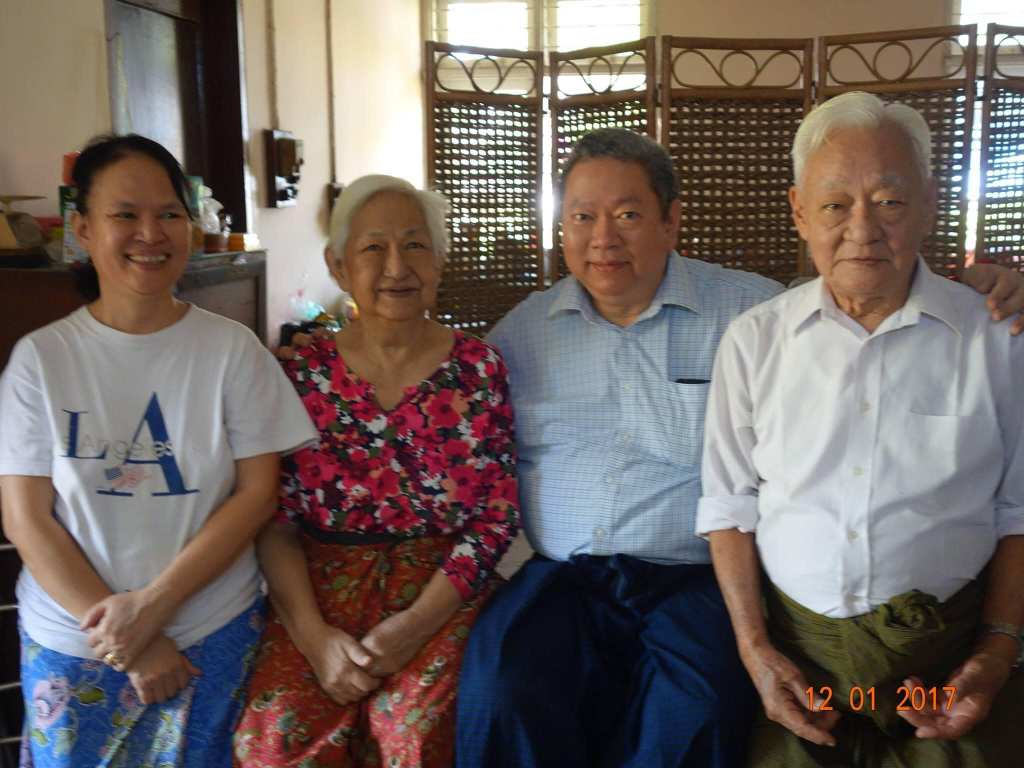
Saya U Tin U
U Soe Paing (EE, UCC) interviewed U Tin U (C).
U Tin U joined RU in 1946 and attended Engineering classes before studying in the USA.
BS in Civil Engineering from Oregon State University
MS in Civil Engineering from Yale.
He taught Part-time at Rangoon University while working for a private Construction Company.
Treasurer, BSCE (Burma Society of Civil Engineers)
He is the Most Senior & Oldest Past Captain of RUBC and Past Captain of RGC.
U Khin Aung Kyi (GBNF)
U Khin Aung Kyi
U Ohn Khine (M70) and team interviewed Saya U Khin Aung Kyi.
He joined RU in 1949 and attended Engineering classes before studying in the USA.
BS and MS in Chemical Engineering at MIT.
He served as Professor and Head of Chemical Engineering, and as Rector of RIT (1977 – 1988).
Interview by Gazettes
Mandalay Gazette and Myanmar Gazette interviewed selected Sayas and Alumni.
U Maung Maung Kyi founded Mandalay Gazette.
Thakin Kai Bhor is Chief Editor and Publisher of Myanmar Gazette. He earlier served as Editor and Technical Advisor for Mandalay Gazette.
I was interviewed by Mandalay Gazette several years ago.
Mandalay Gazette
Saya U Min Wun and Saya Dr. Tin Win were interviewed by Myanmar Gazette.
Interview by AZMTV
U Htaik San (Henry Kao, M81) is Past President of Burmese Associations in Southern California.
He is Past Captain and Gold of RUBC.
He and his spouse helped run AZMTV. They and their team interviewed selected sayas and alumni who attended 2015 RIT Alumni Reunion in Los Angeles.
Henry sent me links to the videos (published in You Tube). I have posted the links.
Sample link (for Saya U Min Wun’s interview)
Saya U Min Wun
He joined RU in 1949 and attended Engineering classes before studying in the USA.
BS from MIT and MS frim Cornell.
He served as Professor and Head of Civil Engineering before moving to USA.
He retired from Caltrans at the age of 80.
He was a member of Myanmar Pyeik Ka Dein Ah Phwe.
He wrote articles for RIT Alumni International Newsletter.
Saya U Myo Myint Sein (A58)
He is from the first batch of Architecture graduates.
He received MS from Michigan.
He served as Professor and Head of Architecture before moving to USA.
He served as Consultant / Lecturer and also authored books.
He wrote for Swel Daw Yeik Magazine and HMEE.
He played soccer for Engineering and RU.
He was President of RU ConBro Association.
Life Journey of Saya U Ba Toke
Tekkatho Maung Thin Char (Saya Dr. Khin Maung Swe, GBNF) interviewed Sayagyi U Ba Toke (GBNF).
The tapes were transcribed by his spouse Sayama Daw Myint Myint Khaing (daughter of Arzani Mahn Ba Khaing).
The book was sponsored by RU Thin Char Ah Thinn as a birthday present for Sayagyi.
Interview by Yangon Media
Saya U Thet Lwin (Maung Ngwe Hlinne)
He matriculated from St. Paul’s High School.
He taught Burmese at the Institute of Economics.
He transferred to RIT as Registrar.
He retired as Director from DHE.
He received a Dat Pya and a remuneration of K100 for his song “Mya Kyun Nyo”. The song has been sung at RU Centennial and SPZPs. He played the song for a special TV program.
Patron of RIT Ah Nu Pyinnya Ah Thinn
Publisher of RIT Annual Magazine
Saya U Moe Aung (Tekkatho Moe War)
He matriculated from St. John’s Dio.
He was Editor of RUESU Annual Magazine and learned first hand about early Printing systems.
Poet
Author of five books
Chief Editor of RIT Annual Magazine, Hlyat Sit Sar Saung, Swel Daw Yeik Sar Saung (for SPZPs in 2002, 2007 and 2010) and Swel Daw Yeik Magazine (for Shwe YaDu 2014 and SPZP-2016).