Category: Event

  • SPZP-2004

    SPZP-2004

    by Hla Min

    Updated : June 2025

    Highlights

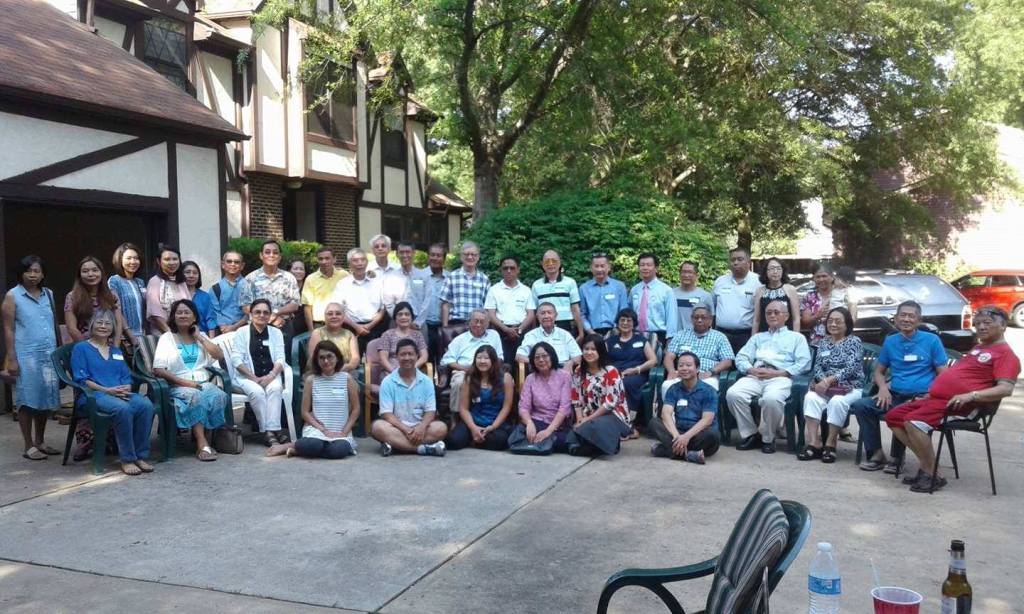
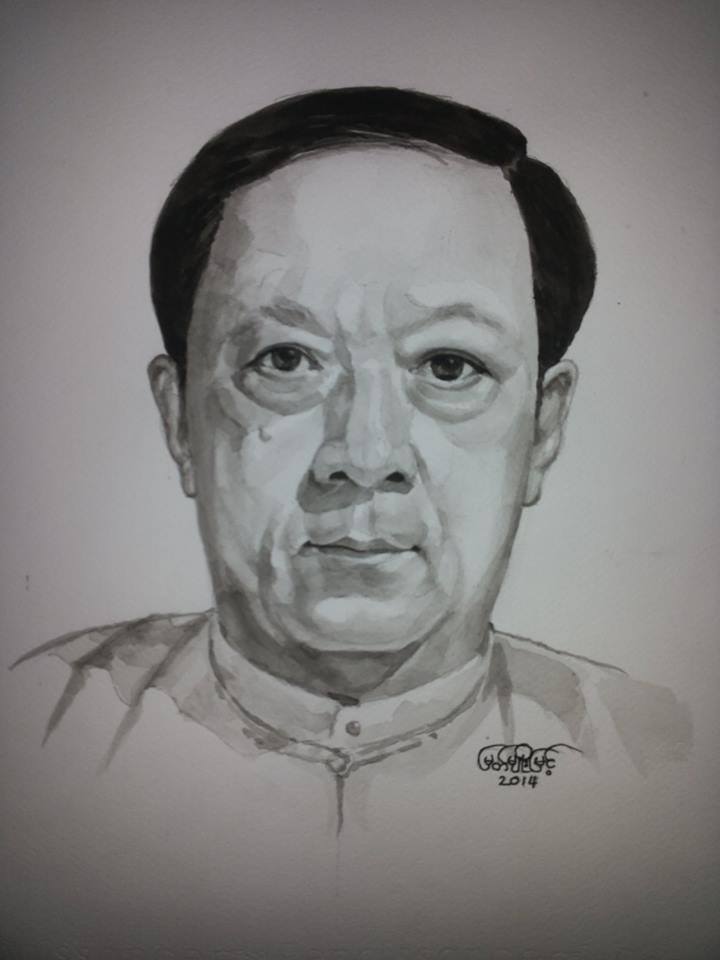
    • U Win Khaing (M75, GBNF) and his team (U Zaw Min, U Hla Win, …) are core Organizers of SPZP-2004.
    Hla Win (Right)
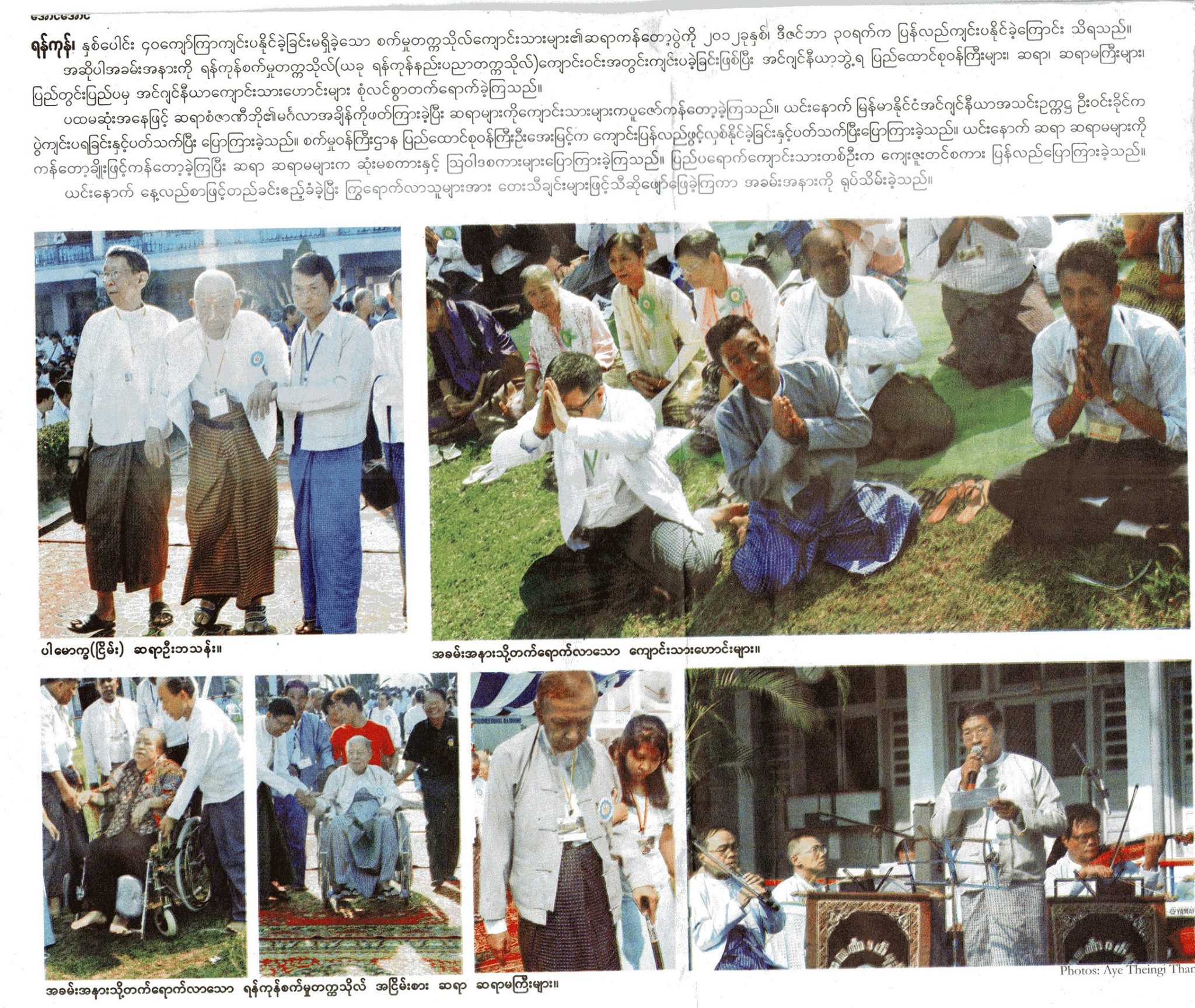
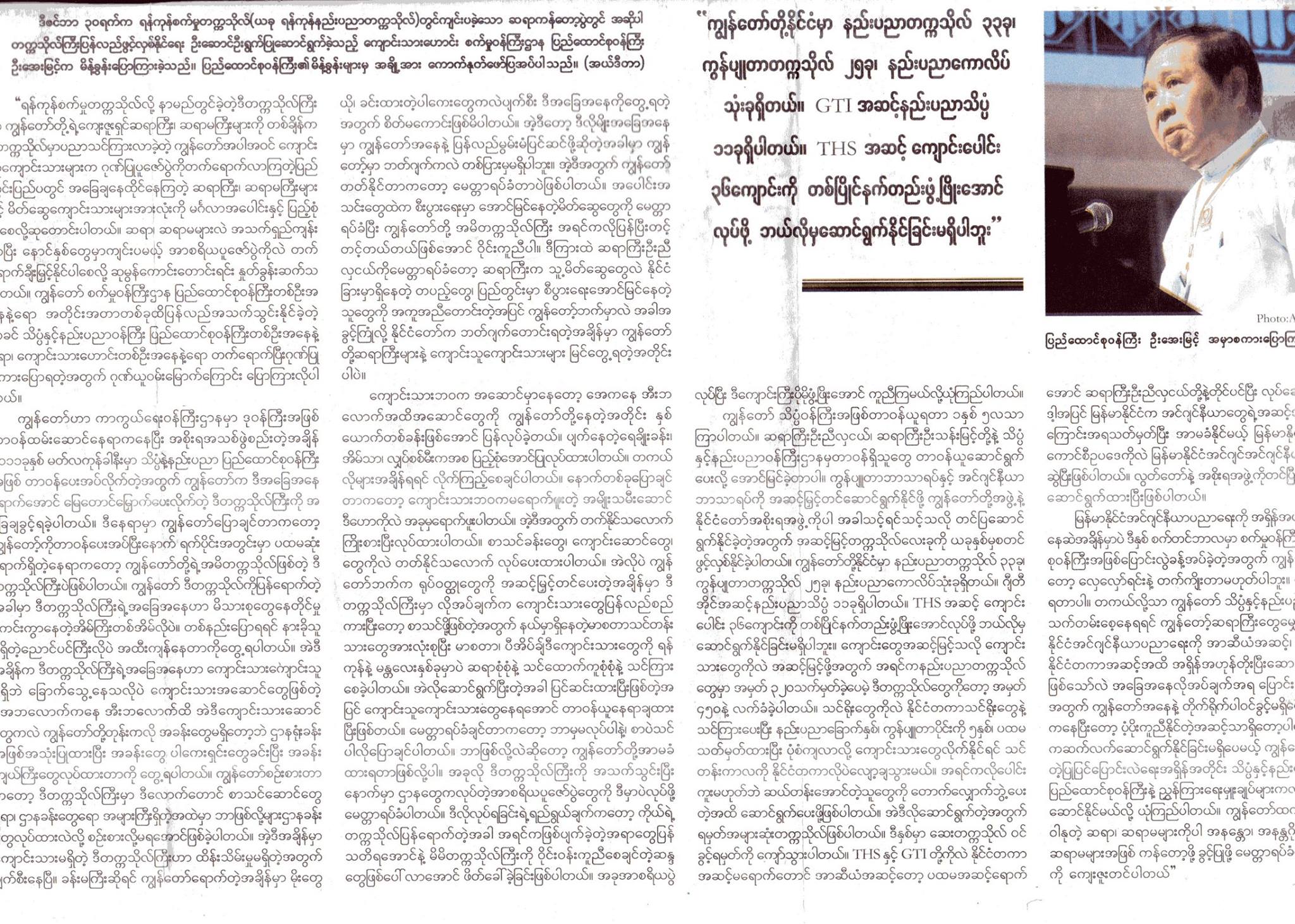
    • The event took place on December 26, 2004.
    • An earthquake that morning did not deter the attendees.

    Reunion 2004 Home Page

    RIT Reunion & Saya Pu Zaw Pwe – 2004
    Yangon, Myanmar
    26th December 2004

    Morning : Saya Pu Zaw Pwe
    Date : Sunday, December 26, 2004
    Time : 9:00 a.m. to 11:00 am
    Place : Myanmar Convention Center (MCC)

    Evening : Dinner & Entertainment
    Date : Sunday, December 26, 2004
    Time : 6:00 p.m. to 10:00 p.m.
    Place : Dusit Inya Lake Hotel

    Pu Zaw Pwe Office & Contact Office : United Engineering Co Ltd
    Corner of Wayzayantar Road & Yadana Road
    Thingangyun Township 11071
    Yangon MYANMAR

    Contacts :

    U Zaw Min (Mechanical 1975)
    U Hla Win (Mechanical 1975)
    Hotline : 571321/ 571877/ 571990/ 571995
    Fax : 571288

    Website :

    http://www.sayapzpygn.com/

    Email : zawmin@uegroup.com.mm

    SPZPs in Yangon

    • December 2004 — Third world wide SPZP
    • December 2012 — Sixth world wide SPZP
    • December 2016 — Seventh world wide SPZP
    • Due to the pandemic, the world wide SPZP scheduled for December 2020 was canceled

    Posts

    • Alumni Worldwide
    • Gatherings
    • M75
    • Noble Tradition
    • Pu Zaw Pwe
  • 1971

    1971

    by Hla Min

    Updated : June 2025

    Video Broadcast on December 14, 2020

    UCC

    Dr. Chit Swe
    • Dr. Chit Swe (GBNF) : Founder / Director; Also, Professor of Mathematics, RASU
    U Soe Paing
    • U Soe Paing : Manager of Systems Division; Transferred from RIT
    U Ko Ko Lay
    • U Ko Ko Lay (GBNF) : Manager of Operations Division; Transferred from PWD
    U Myo Min
    • U Myo Min : Manager of Applications Division; Chartered Accountant;
      Systems Analyst at IBM (UK);
      Came back at the request of his mother and Saya Chit to help with the UCC Project
    U Tun Aung Gyaw
    • U Tun Aung Gyaw : Engineer, Systems Division
    U Hla Min
    • U Hla Min (Systems) : Engineer, Systems Division
    CO U Hla Min (Top row 2nd from Right)
    • U Hla Min (“Pauk Si”) : Chief Operator
    • See “Memories of UCC
    • See “UCC Sayas

    RIT Graduates in 1971

    Rosie Gyi (Center), Ma Sandar (Right)
    • Cho Cho Tin (Ma Sandar) : A71
      Literary Award Winning Author; Wrote “G-Hall Thu”
      Spouse : San Maung (A)
    • Khin Maung Myint & Mai Khin Nyunt (Rosie Gyi) : both ChE71; Members, Combined 1st BE Intake of 64 and 65
    Saw Lin, KMM, RG
    • Saw Lin (GBNF) : C71; MES (VP, Technical Publications Manager); Core Organizer, SPZP-2012; Chief Editor, Swel Daw Yeik Magazine for SPZP-2012; Reprinted 23 RIT Annual Magazines; Provided transportation and welcome dinner
    Win Myint (Left)
    • Win Myint : C71; High School Luyechun; Author; Brigadier General; Dy. Minister
    • Wunna Sithu : EC71; Rowed for Marine Youth, RIT and RUBC;
      Swimming & Water Polo
    Ma Pwint Than
    • Ma Pwint Than : EP71; Twice High School Luyechun; RIT EE Association
    Myint Thin (Standing Rightmost)
    • Myint Thin (GBNF) : M71; RIT Luyechun; RIT Rowing Selection (with Khin Maung Myint, Myint Than, Win Kyaw); Sponsor of U Ba Than to SPZP-2007; Friends : Myint Toe, Aung Win (Owen), Bo Bo Oo (Oscar), Soe Khine, Michael Aye, Uttam Singh
    • See “Class of 1971
    • See “Combined 1st BE Intake of 1964 and 1965
  • Second BE (1965 – 66)

    Second BE (1965 – 66)

    by Zaw Min & Ohn Khine

    Updated : June 2025

    Zaw Min Nawaday (EP70) & Ohn Khine (M70)

    This is part of “RIT Days (1964 -70)”.

    Zaw Min (Standing 2nd from right)
    Ohn Khine

    We were not as excited as we had been in our first year at RIT when the second year started. The novelty of attending college for the first time in our lives had worn off a bit. Still, there were some memorable moments.

    Track and Field

    Sai Thein Maung won the men’s 100 meters dash and the Hop, Step and Jump (Triple Jump) event at the Inter Institute Athletic competition.

    In the men’s 800 meters, how can we forget the sight of Saw Mg Mg Htwe bravely trying to keep up with Ko Kyaw Khin (Old Paulian, later became National Coach) from RASU, one of the top middle distance runners in the country at that time. The heartbreak we felt when Saw Mg Mg Htwe fell down exhausted just a meter or so from the finish line remains with us to this day.

    The elation we had when Ko Aung Khin (M66) won the men’s high jump over Mg Mg Mra (brother of Saya U Win Mra), the national champion from RASU, also remains embedded in our hearts. We watched as Mg Mg Mra failed to clear the bar in all his three attempts, and Ko Aung Khin made his final try. The bar was touched slightly and we watched in suspense as the bar wobbled up and down and finally, it stopped wobbling and did not come down. We all jumped for joy.

    Multi-talented Athlete

    Ko Aung Khin (M66) was an outstanding RIT athlete. He was RIT volleyball selected, RIT basketball selected, RIT football B team selected and finally gold medalist at the men’s high jump in Inter Institute competition. I was lucky to be assigned the same dining table with him during the second half of our first year at RIT and got to know him well.

    Ah Nu Pyinnya Ah Thin

    The biggest event of the first half of our second year at RIT was the formation of the “Ah Nu Pyinnya Ah Thin”. I was not involved so I cannot write about what transpired. Saya U Tein Kyi (Head of Burmese Department, GBNF) made his pitch about the benefits of joining this organization to the students at a meeting held in the theater, which I attended. U Tein Kyi described hearing students sing while taking their showers and he commented that they would sound more pleasing to the ear if they took singing lessons. He ended his pitch with the words, “Ma Kaung Bu Lar?”. In one voice the students replied, “Ma Kaung Par Bu”.

    Inter-Institute Football Champions

    One of the high points of RIT sports during our second year was the winning of the Inter Institute Football Tournament.

    The previous year, was a round robin tournament where the team with the highest points after playing with everyone else got to be the champion (RASU).

    The tournament in our second year was a knockout tournament and RIT met the Cinderella team, Institute of Education, in the finals. RIT won by a wide margin, 6-2 I believe. Our classmates, Sai Thein Maung (C), Ko Myint Sein (M), Ko Win Zaw (A) and Ko Khin Maung Shwe (Kenneth) were in the starting line-up and greatly contributed to the victory.

    B Block Experience

    I was in B-20 that year. I remember Ko “Chee Bu” Soe Myint (C) and Ko Khin Nyo (M) “Hna Khan Hmway” (Student reporter) shared a room in B 22. Sai San Htwee (M) and Sai Aung Hla (M) were in B-1 and Ko Win Htut (C) and Ko Khin Mg Shwe (EP) were in B-2.
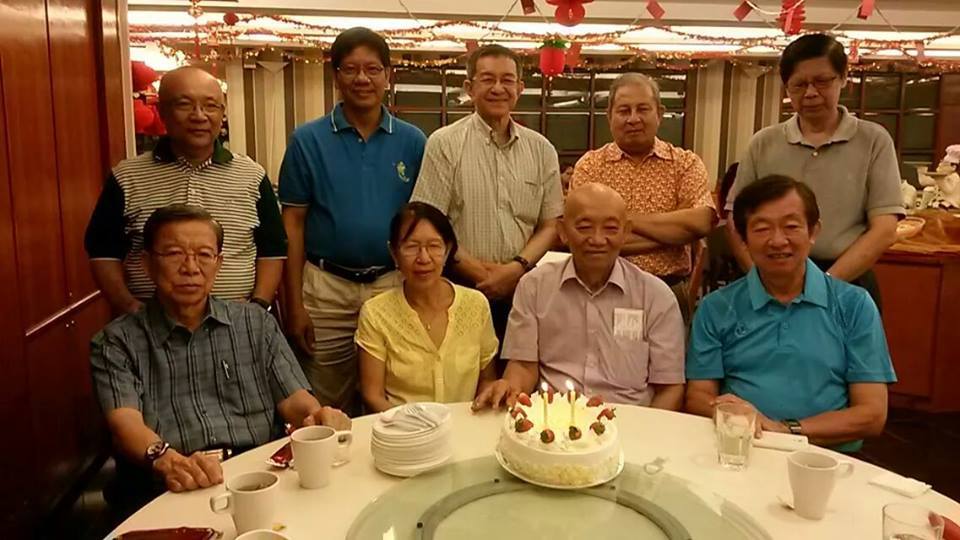
    Note: I met Ko Khin Nyo again, minus his signature Hna Khan Mway, in New York city in the late 80s.

    I shared my room with a certain Ko Zaw Weik. I cannot find his name on our RIT 64 intake list so he must have been one year junior. I don’t remember how I came to be paired with a person one year junior. Actually, I was in B-20 my first year at RIT also. I thought it strange I was assigned the same room for my second year. When I opened the room for the first time, I knew why. I saw a drawing paper hanging on the side I used to sleep with the words “The new education system had ruined my life” written in large block letters. I realized what had happened. My room mate during my first year had wanted to be a doctor and was very sad that he had been sent to RIT. He told me he would hand the room back when the school year ended and I had left the room before him to go to UTC camp. My wonderful room mate had put this paper up on my side of the room. The school administrators probably thought I was the bad guy that did it and assigned me the same room so that I would have to tear it down. There was no point in telling the hall tutor about it so I let it pass.

    RIT English Activities

    I was the secretary of the English Association for that year, at the urging of Saya Des Rodgers. I remember making the rookie mistake of collecting money for the Universities calendar before getting the calendars (trying to ensure that I would sell every calendar we bought). Turned out to be a disaster when I could get only a few calendars for distribution.

    Note: “Rookie” means someone who started out in a job for the first time.

    We also had a ‘Loke Arr Pay‘, and I teamed up with Ko Thaung Sein (EC) to clear up the drain by the place where the RIT trucks were parked. The English Dept. head, Sayama Daw Yin Yin Mya (Terry) mentioned the hard work which Ko Thaung Sein and myself did in the Loke Arr Pay. After the Loke Arr Pay, we had a singing by turns in the English Dept. room. I had never learned the full words of any song except “Outsider” by Cliff Richards. Actually, I would have preferred to sing “My Darling Clementine”, but unfortunately I knew only 2 of the 6 or so verses. Saya Des Rodgers sang “Forget Him” and Saya U Win Mra sang “No More”. At the conclusion, one smart aleck student blurted out, “Saya Rodgers, forget him. Saya Win Mra, no more”.

    Note: Saya U Win Mra later became Myanmar Ambassador to the United Nations. At that time, we were living in New York State and our house was about 15 minutes drive away from U Win Mra’s residence in Westchester County, just north of New York city. My wife and U Win Mra’s wife (Marjorie) were very good friends and we spent many happy memorable hours with U Win Mra’s family.

    The English department also held the annual debate during our 2nd year. Apart from the topic “Are we happier than our forefathers?”, and the fact that I was on the losing team, I don’t remember anything else, not even the names of the other participants.

    I remember going to two picnics with the English department. We went to the bank housing across the Inya Lake from the Universities boat club both times. Saya Des Rodgers was the organizer of these two picnics. In one of them, we were playing a game called “Simon says”. You were supposed to obey Saya Rodgers command only if he says “Simon says” first. For example, we would be standing in two rows, Saya Rodgers would yell, “Sit down”. Anyone who sat down had to leave the game. Finally there were only two of us left in the game, Ma Than Than Yi (T), 65 intake, and I. We were standing facing each other and Saya Rodgers said “Simon says smile” and we both smiled. Suddenly, Saya Rodgers yelled, “Stop smiling”. I stopped smiling and lost.

    Note: Years later, after I got married, I found out that Ma Than Than Yi was my wife’s classmate from St. John’s Convent.

    In another game, male and female students were paired together. One slipper or shoe from each female was collected and piled in a heap a distance off. The task of the male students was to run and find the footwear of his partner and the first person that could bring his partner’s footwear back won. I was paired with Merlin D’Vauz (from Maymyo, younger sister of Hector D’Vauz, who was my geography teacher in 4th Std. at St. Alberts). Ko Kyaw Phone Myint (M) got to the pile of footwear before me, and as he bent down to look for his partner’s footwear, my animal instinct took over and I pushed him to the ground. I saw Merlin’s slipper, grabbed it, and ran back to be the first person that brought back his partner’s slipper. Merlin got a prize and the only thing I got was the satisfaction of seeing her receive the prize.

    There was also a brief class on the latest dance “Casablanca”, which Ma Phyu Phyu Latt (Christine, A) kindly taught us.

    Memories tend to be selective. My mind sometimes does not register a name if there were no associated events that I can relate to with. In 1980, I met a person called U Kyaw Lwin Hla, “Ko Ni” as we called him, who was working at the UNDP as a P4 (Profession Level 4) in New York city. We became very good friends with him and his wife Daw Nay Nwe Ba Swe, and our children would play together sometimes. Only in 1994, when Ma Thynn Thynn Khaing (Janet, EP) told me he used to be a Saya in the English dept. did I find out he had worked at the RIT English dept. That came as a total surprise to me.

    Two UTC Camps

    The two UTC camps we went to during our second year at RIT were dull affairs. We were sent to the “Taing Baho” near Taikkyi. The Taing Baho was meant to be a training center for soldiers who had completed their basic training. We had two PTs a day, one hour in the morning and one hour in the evening. Those PTs were tough and after a week, the time was reduced to about 45 minutes for each PT session. Ko Khin Mg Lay (M), Albert Trutwein, Ko Myint Sein (M), were in our platoon, and so were Roland Thein (EP) and Ko Hla Kyaing (M) both one year senior. Ko Kyaw Phone Myint (M), Ko Kyaw Min Aung, Ko Sein Win (EC) and Ko Soe Tint (Chinlon) were in the squad leader program and became NCOs after 3 weeks of hard training. In addition to being NCOs, Ko Kyaw Phone Myint and Ko Soe Tint were also RPs (Regimental Police). For the rest of us, we practiced the mantra of the UTC students, “Ate Chin, Ngiet Chin, Free Yike Chin” whenever we could.

    One time, the “Pyi Saunt Tat Nyun Kyar Ye Hmu” came to inspect us. Later, we learned that the commanding officer of the Taing Baho had requested his presence because of the unruly behavior (in the CO’s mind) of the 2nd year UTC students. This director came to our platoon, and disappointed the Taing Baho CO by telling us tales instead of reprimanding us.

    I still remember one tale he told us. It was about a young boy who was the favorite of the Sayadaw in a monastery. The Sayadaw taught the boy to say, “Bae Thu Ma Yor, Ba Thar Chaw”. The Kappiya, not liking it, taught the boy, “Yor Mi Yor Yar Ngar Lei Par.” Not to be outdone, the Sayadaw asked the boy to say additionally, “Par Pin Par Nyarr Ngar Ga Myarr”.

    The only good thing I can remember we enjoyed at the summer UTC was the time we spent at the canteen after dark. Ko Kyaw Min Aung showed me that mixing cream soda with milk created a great drink. I was hooked on that drink from that time onward.

    Our classmates that did not go to UTC camp had to undergo Red Cross training at RIT campus. I hope one or more of the participants in this Red cross program share his or her experiences about it.

    Second Camp

    For the second UTC camp of our 2nd year at RIT, we were again sent to the same Taing Baho near Taikkyi. This time, we were housed in barracks that had individual beds. We spent more time doing fun things, like running the obstacle course. Lee Wee Kee (C) was the best rope climber in our unit. There was also a jump we had to take from a platform about 10 feet high. It looked quite low when we looked up at it from the ground. Once you are up there ready to jump, since our eyes are more than 5 feet higher than the platform, the ground looked very far below. There was no time to be afraid and we all jumped when the time came for us to do so. There was also the obstacle where you had to grab a rope and swing across a ditch about 15 to 20 feet wide. If you didn’t push off hard enough, you would not get to the other side and you ended up swinging back and forth over the ditch, listening to the jeers of your friends. And then there was the wall 10 feet high. The instructor showed us how to kick the wall so that you were using the side of the vertical wall as a step to get to the top and over the wall. Looked easy when he showed us. I got a bruised knee hitting the wall with my knee when I kicked the wall to step up to the top. Somehow, I made it over the top. Those that could not make it over the top were allowed to go around it. There was also one obstacle where one of our friends showed off his skills. There was a deep ditch with the trunk of a tree lying across it. We were shown how to sit with our legs dangling from opposite sides of this trunk and slowly move our bodies forward by using our hands to push down on the trunk and move our butts forward in small jumps. The instructor watched with his mouth open when Ko Thar Kyaw Zan (C) nickname “Tarzan”, calmly walked across the tree trunk! For the rest of us, since we did not have Ko Thar Kyaw Zan’s courage, crossed using the method the instructor showed us.

    The most dangerous obstacle was the one where you were supposed to go from one tree to the next, using the rope that had been strung across those two trees. The rope was only an inch in diameter and was strung about 15 feet above the ground. The way to cross was to lie on this one inch diameter Manila rope, hook one leg on it, dangle the other leg and pull yourself forward using your hands. Since it was dangerous, the instructor said he would only let one student do this. Sai Aung Min (M) bravely volunteered. Half way across, his leg that was in the dangling position started to swing back and forth like a pendulum. We watch in stunned silence as his body rolled down from the rope. But Sai Aung Min had the presence of mind to hold on to the rope with his two hands and got to the other tree moving his hands one hand at a time, while his whole body was hanging down.

    The small arms we were taught were the BA 52 (also called the Ne Win Sten) similar to the German machine pistol (sub machine gun) that you see in WW2 movies, and the British Bren gun. The Bren gun was heavy and nobody wanted to carry it. Luckily, we had Sai Loke Khan (Mn) in our platoon and he volunteered to carry it most of the time. I remember Ko Kyaw Nyein (M) was in our platoon also. Target shooting was fun. With the BA 52, we were told to shoot at a shape of a man (yoke pone pyit hmat) about 50 yards away, from a standing position with the butt of the BA 52 against our shoulders. We were asked to set the BA 52 on single fire and shoot 5 rounds, one after another. 50 yards is quite close, yet I managed to miss the target all 5 times. I could hear the instructor cursing under his breath. Next, we were asked to set the BA 52 on automatic fire and shoot 10 rounds. We had been taught to control our fire and shoot a disciplined 2 shots – 3 shots – 2 shots – 3 shots. Fortunately, I hit the target 2 times with this controlled automatic fire. One thing about the BA 52 is that the bullet casing was ejected upwards. This caused the barrel of the gun to move up every time you fire, since part of the recoil force was diverted upwards for the ejection of the cartridge. Ko Myint Sein (M, GBNF), being of small stature and not controlling his automatic fire, letting out all 10 shots automatically, ended up shooting all his rounds into the sky.

    In contrast, the Bren gun ejected the bullet casing downwards and since you fire the Bren while lying on the ground and with your two elbows propping up the butt end of gun, (and two mechanical props propping up the barrel)the barrel remained stable and didn’t move or shake at all during automatic fire. The only problem we encountered was the distance to the target, 200 yards.

    Sports

    Personally for me, in sports, the second closest thing I came to achieving something was during the second half of our second year. (The closest thing was in my final year at RIT, which I will write about when I get to the final year portion). In the Inter Block football competition, I was the goalkeeper for B block. The best players we had on our team were Ko “Sight” Soe Myint (C) and Ko Yan Shin. No player good enough to become RIT selected was on our B block team. In the semi finals, we beat “A” block, which had Sai Thein Maung (C), Ko Win Zaw (A), and Ko Khin Maung Shwe (Kenneth) all three of them the stalwarts of the RIT selected football team. The outcome was decided on penalties after we played to a 1-1 or 0-0 draw after overtime. In the finals, we played against the powerful day scholar team, with Ko Than Hla (C, 65 intake), Ko Soe Myint Lwin, (Ep, 2 years senior), Ko Mg Mg Gyi (T, 2 years senior, Ko Kyaw Myint (C, 2 years senior), Ko Khin Mg Lay (M) and Ko Myint Sein (M). We held them to a goalless draw until about 15 minutes from the end when they scored 3 goals in rapid succession. All three goals were due to my errors. The first goal was due to my mental error. When you are diving for a ball, you cannot let your eyes off the ball for a split second. I made the mental mistake of looking to see how I will hit the ground when I tried to intercept a cross and missed catching the ball.

    Ko Yan Shin, rushing back, inadvertently put the ball into our own goal. The second goal was due to a judgemental error. I tried to jump up and catch a ball that was wet and spiraling down, instead of punching it away. The wet spinning ball slipped through my hands. The last goal was due to my inexperience. I did not challenge the opposing player aggressively in a one on one situation.

    Not so memorable events

    There were some not so memorable moments also at RIT. RIT lost to RASU in the Inter Institute Basketball finals held at the Recreation Center in RASU. Ko Tin Aye (M) from our 64 intake class was one of the RIT players. I remember seeing Ko Aung Khin (M 66) playing in it too. The good thing about losing, we did not get stones hurled at us when we left the RC.

    The heart breaker was the loss to RASU in the volleyball tournament. RIT jumped to a 7-1 lead due to the abilities of Ko Aung Khin (M66) and Ko Pe Oo (M66) to smash balls down into the other side. Salai Myo Myint (C) set up perfect “lifts” for Ko Aung Khin and Ko Pe Oo to smash. RASU played defence and tried hard to block or prevent the ball from landing. After about 10 minutes, with RIT leading 7-1, our leading smashers got tired and could not send the ball smashing down with enough force. RASU took over command of the game and defeated RIT in 3 straight games.

    Taw Tha

    During our first year at RIT, since I was a “Taw Tha” from the hills east of Mandalay, I did not venture out much from RIT hostels. Not once did I go to see a movie at the cinemas on Sule Pagoda road. I did go to Lanmadaw for Tazaungdine with Ko Win Htut (C), Ko Khin Mg Shwe (Ep) Ko Aung Kyi (M), Ko George Ko Ko Gyi (Ch), Ko Kyaw Win (?) senior to us, and a few others (Ko Ohn Khine might be one of those that I went with). I can also count on the fingers of one hand how many times I went to Aung San Stadium, a whopping 3 times. Once for Universities vs P&T, another time for Universities vs Navy, and the last time for the Burma selected against FC Nurnberg (the German team won 6 nil).

    Apart from those times, the only times I would venture out from RIT was to go to Tagaung Hall once a month to pick up my monthly allowance and money to pay the hostel fees from my sister, and sometimes to the Aung Min Gaung section of Winderemere to visit a high school friend. Sometimes, while visiting this friend, I got to go to the Shwe Dagon Pagoda when he had to drive his father to it.

    Second year at RIT was different in that I began to stretch my legs more. Ko Han Kyu Pe (A), was the person who showed me “the ropes”. We would try and see new foreign movies on the 6.30pm show of the first Friday of the new showing. Before going to the cinemas, we would have dinner at the La Ha Pyin Zay, located at that time on Sule Pagoda road, across from the Maha Bandoola Pan Chan.

    Although Ko Han Kyu Pe (A) was from Min Hla, he had been a boarder at St Paul’s and knew his way around. He would order Ah Thar Kin, Ah Khauk Kin, 50 Pyas worth each, Ah Tae Kin 25 Pyas worth, and Bae Thar Kyam Sai 2 Kyats worth. We would guzzle everything down with bowls of rice.

    One time, we could not get the tickets for the 6.30pm show on the first day of showing of “Spartacus” and we waited for the 9.30pm show. We walked to RIT hostels from Thamada Cinema Hall after the movie, arriving back at the RIT hostels around 3am in the morning.

    Near the Final Exams

    When the final exams neared, Ko Nyunt Mg San (C) came up with the idea to study together at one of the Zayats located near the Shwe Dagon Pagoda. (I believe he had access to the keys of that zayat).

    Ko Win Htut (C), Ko Kyaw Phone Myint (M), Ko Phone Thwin (Mn) and Ko Nyunt Mg San (C) were there. Studying together never was a good idea since we started to horse around after a few hours. Ko Nyunt Mg San and Ko Phone Thwin tried jousting at each other with one leg held up behind them, resulting in Ko Nyunt Mg San falling down and hurting his hand. Actually he told me that was really a blessing in disguise since he got the assistance of an instructor to move his Tee Square in the Engineering Drawing exam as his arm was in a swing.

    Some Courses

    Since these first two years at RIT was full of memories of fun times, it may seem I was at RIT to have fun only. I did learn some things which I remember to this day.

    For Engineering Drawing, we had Saya U Maung Maung Win, an excellent lecturer. This was one subject I did not ever forget. I can still make an isometric drawing out of either first angle or third angle projections. I found out that knowing how to read engineering drawings was a necessity when I passed the final year exams and started working.

    I don’t think we can forget Saya U Shwe Hlaing’s free body diagrams and arrows showing the direction of the forces acting on it. Also, I still remember how to do differentiation and integration that was taught by the late Saya U Sein Shan.

    Another thing that is forever in my memory are the first four lines and the last 8 lines of the Ya Za Dar Tu Kalya prose, written by Nat Shin Naung, and read to us by Saya U Tein Kyi to explain how beautiful the words were.

    There were also courses that the only thing I remember is, “Any questions? No questions. You may go”, or “From station A to station B is twenty feet”. There are of course two things I remembered from the Surveying course apart from the “Station A to Station B”. It was the calculated value of the length of my step. (I believe everyone will remember walking from the bench mark near the carports to the bench mark by the Electrical Dept. and back, counting the steps taken and dividing it into the distance walked between the bench marks). The other one being how to calculate “cut and fill”.

    I cannot place the exact date of when the following happened. Either the second half of our 2nd year at RIT or the first half of our 3rd year.

    Farewell to a highly regarded Saya

    Saya U Shwe Hlaing was well regarded by the students as he taught mathematics in a way that we believed engineering students should be taught. Everyone was dismayed when news came out that he was going to be transferred to Mandalay.

    Students from our 64 batch, in conjuction with students from one year senior to us, were in the forefront of arranging a suitable going away present for Saya U Shwe Hlaing. I wrote a letter (in English) praising his work at RIT and how much the students appreciate his teachings. I remember going around the RIT hostels, room to room, asking for donations and for the students to sign on a sheet (to show their support for what was in the letter). Ko Thar Htay (M) suggested that we should also have another letter in Burmese or we might be open to criticism if we were to read a letter in English only. Ko Thar Htay wrote up a letter in Burmese praising Saya U Shwe Hlaing’s work at RIT. Someone took care of asking for donations at G Hall and some others took charge of getting donations from the day students. The money collected, about K300, was given to Ko Myo Khin (C) one yr. senior, who placed an order (with his contacts in the city), for a desk to be given as going away present to Saya U Shwe Hlaing. On the evening of the occasion of presenting the going away present, held in the Assembly hall, Ko Khin Maung Win (Roland) (Ep) one year senior, read the letter in English that I wrote. (Since Roland was a better English speaker than me, I asked him to read the letter). Ko Thar Htay (M) read the letter he wrote in Burmese, and in addition to the desk, both letters were presented to the Saya along with the papers that had the signatures of all the students.

    75% Attendance Policy

    The second year final exams also meant some heartbreak for us when we learned that some of our friends would be barred from taking the final exams because of their failure to have the required attendance. I have mixed feelings about this policy. Although I do understand this was done to ensure the students attend classes, exams were there to gauge what the students had learned. Attendance does not ensure the students had learned anything. Of course, when it comes to the Practicals, the students definitely need to do all of them.

    A Rough Patch

    I also ran into a rough patch in Physics. We were told by the Lecturer, Sayama Daw May Than Nwe (GBNF) not to study certain topics for the Finals. I must be the only fool that took her word for it and did not study those topics. I found out much later that when Sayama Daw May Than Nwe said ‘do not study‘, it meant she was going to ask them in the exam. I was unpleasantly surprised to see questions about all the topics she told us not to study being asked in the final exam. I was fortunate I knew how to answer the other questions or I would have flunked the exam. I only blame myself for this debacle. As a student, I should have studied all the subjects in the text book, regardless of whether I was told to study or not.

    Updates

    • Daw May Than Nwe, Kyaw Phone Myint, Han Kyu Pe, Than Than Yi and a few others are now GBNF.
    • “RIT Days (1964 – 70)” was published in the Golden Anniversary Magazine for the “Combined 1st BE Intake of 64 and 65”.
  • 1st BE (Mech Engg) in 1965

    by Hla Min

    Updated : June 2025

    • 164 ယောက်
    • 164 students were admitted to the 1st BE (Mech Engg) class in 1965.
    • Most graduated in 1971. Some left RIT before graduation.

    ကျောင်းသား (တချို့)
    Some Students

    • မြင့်သင်း (ကွယ်လွန်) — လူရည်ချွန်၊ လှေလှော် Myint Thin (GBNF) — Luyechun, Rowing
    • Winston လှမောင် Winston Hla Maung
    • နေဝင်း Nay Win
    • စိုးမြင့် Soe Myint
    • သိန်းအောင် Thein Aung
    • Edwin Sutherland
    • Stanley Saw — မျိုးလွင် Myo Lwin
    • Oscar Oo — ဘိုဘိုဦး Bo Bo Oo
    • နိုင်မိုး Naing Moe
    • သိန်းဝင်း Thein Win
    • ခင်မောင်မြင့် Khin Maung Myint
    • Michael Aye
    • Uttam Singh

    Updates

    • Some moved to or worked overseas.
    • Stanley Saw — New Zealand
    • Khin Maung Myint — Singapore
    • Willie Ko Shwe — Thailand
    • Michael Aye & Uttam Singh — USA

    Posts

    • Class of 1971
    • Combined 1st BE Intake of 64 and 65
    • Exam Results of 1971
    • Intake of 65
  • Jubilees

    Jubilees

    by Hla Min

    Updated : June 2025

    Rangoon University

    RU was founded in December 1920 with Rangoon College and Judson College as Constituent Colleges.

    Golden Jubilee in 1970

    RIT Ah Nu Pyinnya Shins took part in the Entertainment Program with “Swel Daw Yeik Ah Nyeint စွယ်တော်ရိပ်အငြိမ့်”, “Htee Yein ထီးယိမ်း” and “Ta Bin Daing Ah Ka တပင်တိုင်အက”. Saya U Moe Aung and Saya U Saw Tun headed the Swel Daw Yeik Troupe.

    RIT performers at RU GJ

    Saya Dr. Aung Gyi and U Thet Lwin were Chair and Secretary of a Committee. They later reunited as Rector and Registrar of RIT.

    I was a volunteer member of “Zay Saing Nay Yar Cha Htar Yay” committee.

    Diamond Jubilee in 1995

    MERB (Myanmar Education Research Bureau) produced a documentary about RU Sports (Soccer, Track & Field, Weightlifting).

    U Tin Nyo was the Producer.

    Saya U Nyein (RU Soccer Coach) was the Commentator.

    Hemar Nay Win shared memories of her father Collegian Nay Win.

    Mra Brithers

    U Tun Mra was Captain of RU Track & Field Association. He, his brothers Kyaw Mra & Soe Mra, and Tun Naung competed in the First and Second SEAP Games. They won medals.

    2nd SEAP Games

    U Myo Nyunt represented Burma in Weightlifting.

    RU Centennial in 2020

    U Aung Mon, Dr. Nyi Thet Lwin and friends created a Facebook group for the Centennial. I was a Moderator and Contributor.

    Saya U Moe Aung and former members of RU Ka Laung Shin Ah Phwe published two Kabyar books.

    RU Centennial Magazine
    Centennial Magazine
    RU Centennial Book Promotion

    “Mya Kyun Nyo Nyo” was sung at the opening ceremony.

    Composer Maung Ngwe Hlinne (U Thet Lwin)

    Due to the pandemic, there were mostly Virtual Presentations.

    Rangoon Institute of Technology

    Shwe YaDu in 2014

    Renovation of Gyogone Campus

    Planting of 50 Swel Daw Bin

    Shwe YaDu Lann
    Kabyar by Tekkatho Moe War
    Translation by Hla Min

    Swel Daw Yeik Magazine
    Cover by Bagyee Myat Myo Myint

    RIT 69ers

    30th Anniversary in 1999

    I reported the event and other news in my e-mails (which became known as RIT Alumni Newsletter).

    40th Anniversary in 2009

    See Post for Group Photos

    EE69ers
    M69ers at 40th Anniversary (2009)

    Shwe YaDu (of Admission) in 2014

    2014 Shwe YaDu

    50th Anniversary (GJ) in 2019

    GJ of 69er Graduation 1
    GJ of 69er Graduation 2

    Ma Tin Tin (EC69, USA) had a Homecoming. She donated to the event and 69er HCF.

    Ko Aung Min (M69) & team published a magazine

    Rangoon University Boat Club

    RUBC was founded in 1923 by Law Professor Sir Arthur Eggar, who pledged a third of his salary for the operating costs.

    RU Estate built the Club House with the funds provided by U Nyo.

    40th Anniversary in 1963

    The Annual Regatta was canceled citing Security concerns.

    The Anniversary Dinner was held at a hotel in Kandawgyi.

    The Souvenir Magazine was compiled by Sithu U Tin, U Po Zon and U Tin Htoon (A60).

    90th Anniversary in 2013

    RUBC 90th Anniversary Magazine
    RUBC 90th Anniversary Magazine Committee

    The Souvenir Magazine Committee comprised of U Tin Htoon (A60, Chair), U Myo Myint (EC67, Vice Chair), U Htaik San (Henry, M81, Secretary) and members.

    I was a Contributing Editor. I wrote three articles and Prelude for each section.

    Centennial in 2023

    U Tin U, the Oldest and Most Senior Past Captain, presided at the Opening Ceremony.

    Universities’ Computer Center

    Golden Jubilee in 2021

    After several years of preparation (starting from the mid-1960s), the UCC project was approved in 1971.

    Sayas U Soe Paing, U Myo Min and U Ko Ko Lay (GBNF) helped Sayagyi Dr. Chit Swe (GBNF) found Universities’ Computer Center.

    Other Anniversaries

    • Centennial of First RU Students’ Strike (in 2020)
    • Centennial of Engineering Education in Burma (in 2024)
    • 60th Anniversary of RIT (in 2024)
    • Silver Jubilee of RIT Alumni Newsletter (in 2024)
    RIT Alumni Newsletter

    Posts

    • Rangoon Institute of Technology
    • Rangoon University
    • Rangoon University Boat Club
    • Universities’ Computer Center
  • Towards SPZP-2000

    Towards SPZP-2000

    by Hla Min

    Updated : June 2025

    Reunions

    In April and May of 1999, I received a series of e-mails from Saya U Soe Paing, my mentor at RIT & UCC, and Sayagadaw Alice (Saw Yu Tint, T69) about the mini-reunions in Yangon and Singapore.

    U Soe Paing & Alice

    Newsletter

    I created an e-mail newsletter and passed on the news to several ex-faculty and alumni. They, in turn, forwarded the newsletter to their sayas, friends, and colleagues. The mailing list soon numbered 200+.

    My Dreams

    In my e-mails, I recounted my dreams:
    • to have the sayas, alumni and associates connected
    • to have mini-reunions, reunions, and eventually a Grand Union

    Reach Out

    KMZ

    Thanks to Ko Khin Maung Zaw (KMZ, EC76), our web master, we were able to reach out to faculty, alumni & associates in 30+ countries. They number 800+. The Guest Book entries express surprise, delight, nostalgia, pride, camaraderie, etc. One of my dreams has been fulfilled.

    Photo Gallery

    Several mini-reunions and reunions have taken place. Some are documented in the “Photo Gallery” section.
    • ’69 Grads
    • ’64 Intakes
    • Alumni in Australia
    • Alumni in New Zealand
    • Alumni in UK
    • Alumni in Singapore
    • Alumni in Canada
    • Dinners in honor of Sayas U Num Kock, Dr. Aung Gyi, U Aung Khin, etc.

    Grand Reunion

    The idea was accepted from the start, but the question of logistics was a crucial factor.

    • Have we reached a critical mass?
    • How easily can we reach out to faculty, alumni and associates from all over the world about such an event?
    • How can we raise enough money to sponsor the event?

    The idea was discussed in detail during Saya U Aung Khin’s visit to the Bay Area. October 28-29 weekend was tentatively chosen to have a “Reunion and Homage”.

    Later, during the discussion between the Northern California alumni and Southern California alumni, the term “Saya Pu Zaw Pwe ဆရာပူဇော်ပွဲ” meaning “honoring all sayas” was chosen over “Saya Ga Daw Pwe ဆရာကန်တော့ပွဲ” which has religious connotations. “Saya Ga Daw Pwe” remains an optional event.

    In the subsequent meetings, the Steering Committee, Working (aka Executive) Committee, and subcommittees were formed.

    Finally, several members showed commitment by purchasing tickets. The money was used as non-refundable deposit for reserving “Embassy Suites Hotel” rooms for the main event.

    Several alumni and associates have also donated money and presents to the “Saya Pu Zaw Pwe” fund. Amounts, big or small, are welcome.

    We sincerely hope that the forthcoming “Reunion and Saya Pu Zaw Pwe” will be a resounding success.

    Posts

    • Noble Tradition
    • Paying back to our alma mater
    • SPZP-2000
    • SPZPs in Singapore
    • SPZPs in Yangon
  • Anniversary

    Anniversary

    by Hla Min

    Updated : June 2025

    1970

    Rangoon University Golden Jubilee

    • Rangoon University ရန်ကုန်တက္ကသိုလ် celebrated the Golden Jubilee ရွှေရတု in 1970.
    • RIT Ah Nu Pyinnya Shins အနုပညာရှင်များ debuted the “Swel Daw Yeik Troupe” with “Swel Daw Yeik Ah Nyeint စွယ်တော်ရိပ်အငြိမ့်” , “Htee Yein ထီးယိမ်း” & “Ta Bin Daing Ah Ka တပင်တိုင်အက”.
    Htee Yein
    • The terms “Swel Daw”, “Swel Daw Bin” and “Swel Daw Yeik” became the official synonyms for RIT and its predecessors.
    • I had a minor role as Volunteer for the “Zay Nay Yar Cha Htar Yay Committee စျေးနေရာချထားရေးကော်မတီ”.
    • Dr. Aung Gyi (then, Professor of Civil Engineering) was Chair and U Thet Lwin (then at Eco) was Secretary of one of the main Committees. They reunited later as Rector and Registrar of RIT.
    Dr. Aung Gyi & Arch Students

    1999

    30th Anniversary of 69ers

    • The celebration took place in Yangon.
    • It led to the founding of the “RIT Alumni International Newsletter” by me, ex-rit web site by KMZ, and SPZP-2000 in the USA by SF Bay Area RIT Alumni.
    Newsletter
    SPZP-2000 Organizers

    2009

    40th Anniversary of 69ers

    C69
    EE69
    M69
    T69 & ChE69

    Group photos from the event have been posted in the RIT 69ers, RIT Update pages, and hlamin.com

    2014

    Shwe YaDu

    Golden Jubilee of the Education System introduced in November 1964.

    Shwe YaDu

    Pseudo Golden Jubilee of 69ers

    • It was the Golden Jubilee for Admission to the first ever 2nd BE at RIT in November 1964.

    2019

    True Golden Jubilee of 69ers

    69er GJ
    • Dec 19 Morning : Reunion & PZP at Gyogone Campus
    • Dec 19 Evening : Dinner & entertainment at Ko Aung Min’s old office in PWD kCompound.
    • Close to ninety of our former classmates are GBNF.
    • Several seniors are 75+ years young but are physically and mentally strong as ever.

    2020

    U Ba Toke

    U Ba Toke
    • Sayagyi was a Phwa Bet Taw of “RU” and “First RU Student Strike” (honored as “Ah Myotha Aung Pwe Nay”) in December 1920.
    • Rangoon University was established on December 1, 1920 with Rangoon College and Judson College as the Constituent Colleges,
    • 13 Kyaung Tha Gyis led the first RU Students Strike on December 5, 1920. The Strike contributed to the reform of the RU Act of 1920.
    • Saya was born on Dec 26, 1920. He passed away on Dec 2, 2020.

    RU Centennial

    • RU kicked off the Pre-Centennial celebrations in Dec 2019.
    • There were commemorative publications and exhibitions leading to the Centennial celebrations in Dec 2020.
    • Due to pandemic, several events had limited attendance; they were broadcast on TV for the public.

    HMEE-2018

    • Saya U Aung Hla Tun headed the HMEE-2012 team which published the History book for SPZP-2012. Due to resource constraints, several topics and articles were deferred.
    • Saya is also head of the HMEE-2018 team, which is preparing to revise the HMEE-2012 book and compile books on Engineering & Industry in Myanmar.
    • Due to the pandemic and Saya’s demise, the project is in limbo.

    Miscellaneous

    Jubilees

    • RU Silver Jubilee was delayed due to the War.
    • RU Diamond Jubilee was held in 1995
    RU Diamond Jubilee

    Centennial Celebrations

    • St. Paul’s High School in 1960
    • Bogyoke Aung San in 2015
    Bogyoke Aung San
    • U Thant
    • U Thein Han (Zawgyi)
    • U Wun (Minthuwun)
    • U Khin Maung Latt
    • Daw Khin Myo Chit
    • Dr. Maung Maung Kha
    • U San Tha Aung
    • Burmese / Myanmar Movies in 2020
    • RUBC in 2023
    RUBC
  • 1999 – Present

    by Hla Min

    Updated : June 2025

    1999

    • 30th Anniversary of 69ers Graduation
    • Started “RIT Alumni International Newsletter”

    2000

    SPZP-2000 Organizers
    • First RIT Grand Reunion and SPZP in San Francisco, USA
    Kyauk Si Bagyee
    • Commemorative web pages (thanks to KMZ)
    T shirt
    Mug 1
    Mug 2
    • Commemorative Issues of the Newsletter by U Hla Min and team
    • 64 Countdown to the Reunion posts
    • 36 Post-Reunion posts

    2002

    • Second RIT Grand Reunion and SPZP in Singapore
    • Commemorative Issue of “Swel Daw Yeik Sar Saung”
      by Saya U Moe Aung and team
    • Reprinted my “SAYA PUZAW PWE” poem as Back Cover

    2004

    • Third RIT Grand Reunion and SPZP in Yangon
    • Mild earthquake did not rattle the attendees

    2007

    • Fourth RIT Grand Reunion and SPZP in Singapore
    • Commemorative Issue of “Swel Daw Yeik Sar Saung”
      by Saya U Moe Aung and team
    • Contributed a poem

    2009

    • 40th Anniversary of 69er Graduation

    2010

    • Fifth RIT Grand Reunion and SPZP in Singapore
    • Commemorative Issue of “Swel Daw Yeik Sar Saung”
      by Saya U Moe Aung and team
    • Contributed an article : Sad and short clip — EE sayas

    2012

    • Sixth RIT Grand Reunion and SPZP in Yangon
    • True “Home Coming” in the Gyogone Campus
    • Special publication : History of University Engineering Education in Burma/Myanmar by Saya U Aung Hla Tun and team (
      U Ohn Khine and I prepared the supplemental CD for the book
    • Special publication: Selected RIT Cartoons
    • Commemorative Issue of “Swel Daw Yeik Magazine” by U Saw Lin and team
    • Reprints: Limited number of RIT Annual Magazines

    2013

    • Swel Daw Yeik Foundation
    • Contributions for various projects
    • Health care for the sayas and sayamas
    • “Saya Geha” as long term project

    2014

    • Shwe YaDu
    Shwe YaDu
    • 50th Anniversary of the opening of RIT in 1964
    • Golden Jubilee of Admission to RIT for 69ers
    • Planted 50 Swel Daw Bins
    • Commemorative Issue of “Swel Daw Yeik Magazine” by Saya U Moe Aung and team
      Contributed an article : “Recollections of a 69er”
    • Paved Shwe YaDu lane and set up Swel Daw Yeik benches
    • Translated Saya U Moe Aung’s Shwe YaDu poem
    Shwe YaDu Lann

    2015

    • RIT Alumni Reunion in Los Angeles
    Los Angeles
    • Mini-gatherings in Northern California
    Gathering at iNapa Winery

    2016

    • RIT/YIT/YTU Alumni Association
    • Seventh RIT Grand Reunion and SPZP in Yangon
    • 10000+ attendees (expected)
    • Free food and fun (all day and all night long)
    • Received two “RIT Alumni Appreciation Awards”
    Award 1
    Award 2

    2019

    • Pre RU Centennial events
    • Moderator for RU Centennial Web Page
    • Panelist for 5th Irawaddy Literary Festival
    ILF
    • Golden Jubilee for 69ers Graduation
    GJ for 69ers

    2020

    • Due to pandemic, SPZP-2020 was canceled
    • Low key celebration of RU Centennial
    • Broadcast 220+ educational videos

    2021 – 2023

    • Lost some sayas, classmates and schoolmates
    • Updating / Organizing posts
    • Mostly Online gatherings

    2024

    • Centennial of Engineering Education in Burma / Myanmar
    • 60th Anniversary of RIT
    • Silver Jubilee of “RIT Alumni Newsletter”

    2025

    • Still paying back to my mentors & alma mater
    • Updating Posts
    • @hmin3664
    YouTube Channel for my videos
  • Class of 72

    by Hla Min

    Updated : June 2025

    M72

    • Wynn Htain Oo : Mg Mar Ga See Posts
    WHO
    • Kenneth Ba Aye : Ka Let Tet
    WHO & Hne Pei Myar
    • Myint Pe : Cartoon Box, Lushwindaw See Posts
    Myint Pe, Cartoonists & Cartoon Lovers
    • Han Sein : Saya, Former Dy. Minister
    Han Sein (M72)
    • Win Myint : Kabyaung
    Win Myint
    • Nyan Win Shwe (William) : Chair of SPZP-2007
    Nyan Win Shwe & Singapore Oldies
    • Victor Aung Myin : Scholar Athlete
    Victor
    • Tha Tun (GBNF)
    Tha Tun
    • Khin Maung Myint (John Tint, GBNF) : Soccer
    John
    • Maung Sein Win (Padeegone) : Author, Poet
    • Khin Maung Toe (GBNF) : Musician
    • Kyaw Min Aung : Goalkeeper for RIT B Team
    • Maung Maung : Co-founder, RIT Chess Association

    Electrical

    • Ko Ko Kyi : Saya
    Ko Ko Kyi (Right)
    • Kyaw Myint : Good Morning

    Textile

    • Kyaw Myint : Veda, Indigenous Medicine
    Veda KM (Standing Right)
    • Sandi Hlaing : Veda’s Big Sis

    Chemical

    • Aung Myaing : Saya, Poetic Art Series See Posts
    Aung Myaing
    • Gyn Yu
    Seated : Gyn Yu, Trixie; Standing : Aung Myaing, Tun Shwe
    • Tun Shwe
    • Trixie Tan
    • Tiny Kyi
    • Myo Myint Pe (GBNF) : Organizer
    Myo Myint Pe
    • Aye Aye Kyaw (GBNF) : Sayama
    Aye Aye Kyaw

    A72

    MK Hla Win

    • Honorary member of M72 group
    • Entrepreneur & Philanthropist
    • Donated Noodes (Mar Mar Khauk Swe) for various gatherings
    • In 2018, he donated K10 lakhs for the second time for YTU Library Modernization
  • Dr. Aung Gyi’s Speech (2000)

    Dr. Aung Gyi’s Speech (2000)

    by Dr. Aung Gyi

    Updated : June 2025

    SPZP-2000

    Mr. Chairman, my Sayas, my former colleagues, friends, RIT graduates, Ladies and Gentlemen,

    Before I begin to say anything, I would like to request you to take the word “RIT” as to stand not only for Rangoon Institute of Technology but also BOC College of Engineering and Faculty of Engineering, Rangoon University. I am using RIT only, just for convenience sake.

    Having said that, it is with a chestful of emotions that I am standing before you, trying to say a few words appropriate and befitting to this important and joyful occasion. My overwhelming emotion is, needless to say, happiness – happiness which results from seeing my Sayas, my friends, my former colleagues, and RIT graduates alive and well, after so many years. My happiness is also mingled with a certain amount of pride: pride arising from the knowledge that we have fond memories and a sense of belonging and attachment to the good old institution as well as to one another.

    We are fortunate that we could all gather here to exchange our life experiences, both good and bad, and to reminisce about our past when we were at RIT. While we are doing that, we all must have noticed that all of us have changed quite a bit since we last saw one another, at least physically, some more so than other. We all now have a few gray and also less hair, we have a few wrinkles on our face; maybe we also lost a few teeth and cannot see or hear as well as we did before. Some of us also lost the memory a bit and become forgetful about lots of things such as forgetting names for example. This, as we all know, is life and nature of things. Everything changes and nothing is permanent. Bur fortunately we still have our values. Our values such as respect and gratitude for the elders and teachers, caring of our respective children and family members, helping our friends, and attachment, and gratitude to the institution which nurtured us to meet the challenges of life, are still with us. They have not changed. This Saya Pu Zaw Pwe and reunion is a testimony to those values.

    I must now pause and thank and congratulate the Organizing Committee for their untiring and selfless efforts to make this event possible and successful. This Saya Pu Zaw Pwe and RIT Alumni reunion is, as far as I know, once-in-a-life-time event. As far as I am concerned it is already a resounding success with the cooperation and great enthusiasm that I have seen. I hope this will be the beginning and not the last of our get-togethers. When my wife and I paid visits to Myanmar in 1996, 1997 and 1999 we had mini get-togethers with RIT Alumni. When I was here a few years ago we also got together with a few RIT Alumni. I understood that Saya U Aung Khin also had one mini get-together here some years ago. But these get-togethers were not on a grand scale as the one that we are having here now. However the spirit of camaraderie and friendliness among RIT Alumni mini get-togethers, was the same as the one that we find here now. If you look around you, you will find that all of us came here from different parts of the world, indicating the great attachment and respect that we all have for our old institution and also for one another.

    While I was preparing for this speech, fond memories of the years that I spent as a student, as a teacher and later as Rector at RIT came flashing through my mind. Without going into details, I remember that all my teachers, including Saya Num Kock and Saya U Ba Toke who are here with us, were good inspiring teachers with kind hearts. When I became a teacher and later the Rector at RIT, I noticed that my colleagues were good and dedicated people who tried their best to teach what they had learnt from good Universities and Institutions abroad.

    They made conscious efforts to raise the level of education at RIT so much that the students were fully occupied with classes, studies, projects, and homework. I have to mention here that my Sayas and my former colleagues were, and still are honest, compassionate, gentle and kind people. Within this context I would now like to take this opportunity to offer my humble apologies to my Sayas and colleagues for the wrong things that I may have done or said which might have hurt them in any way in the past.

    As for the students, I remember that they were good, intelligent, and energetic students in general. Since I was also involved in extracurricular activities of the students, I had more interaction and gained more understanding of their needs and feelings. Like most of the other teachers I tried my best to be helpful to them not only in their studies but also in any other problems that they needed my help. Because of the compassion that I had shown for them they became more communicative, and listened to what I had to say most of the time. Like a breath of fresh air, the first batch of female engineering students were among us, I believe in 1958. So far as I remember they did as well as or some even better than the male students in their studies. I remember that as a teacher I felt very good and satisfied whenever some students did well in their studies or did well in their careers after they left school. These are fond memories that I still have with me about the students at RIT.

    As you probably know, I left RIT and Myanmar in 1977 to join UNESCO. I then migrated to Canada to join International Development Research Centre (IRDC) in 1981. For your information, IRDC is a Canadian Agency which funds research projects for development in the developing countries. I retired from IRDC in 1997. Looking back to the past, I must say that I spent the best years of my life at RIT, challenging and troubling at times, but on the whole happy and satisfied with the job that I was doing.

    Now please let me take a few minutes of your time to share with you my thoughts, which I believe are some important elements of life. You might not agree with me to what I am going to say. At least, in that case, you might take them as food for your thoughts. If I sound like lecturing to you now, you must remember that the habit of a former teacher dies hard.
    When I was young and immature. I had great admiration for people with high I.Q. (Intelligence Quotient). I also tended to think in those days that I was quite intelligent. After going through life experiences with ups and downs I became to realize that high Emotional Quotient (E.Q.) or emotional mastery is more important in life than high I.Q., to cope with adversities, disappointments, failures and sometimes even tragedies. No one that I know of, escapes the negative impacts of life in one form or another. If you have emotional mastery you can deal with and overcome these negative impacts and still get ahead in life and be relatively happy. One thing that can help us is to have optimism, hope and courage in life and to minimize the negative thoughts and creeping pessimism. It will be wrong to classify anything in life in opposites either in black or white. One can neither be fully optimistic nor fully pessimistic all the time. There is a gray area which is neither black nor white, and so long as the dominant part of this gray area is optimism, things will turn alright in the end. I read in one of the books long time ago that the Chinese word for “crisis” denotes both risk and chance (opportunity). A pessimistic person would tend to look at the crisis as the big risk and will despair and do nothing, whereas an optimistic person will look at it as a challenge and opportunity and will do something with courage and determination and overcome the crisis. He or she might fail in doing something. But without failures one will not know success. In short, although we will not be able to master the circumstances, and situations in life, we sure can try to master our thoughts and emotions to meet the challenges of life. Here are the spiritual sides of us or our respective religions might be helpful.

    Now that I am getting old and getting inflicted with aches and pains here and there, especially when I get up in the morning, I begin to realize that the important part of my life is to keep myself in good health. There are lots of books and doctors telling us how to keep ourselves in good health. The simple gist of the whole message is to have some form of physical exercise or activity to keep our weights down; and to eat nutritious food and avoid or cut down fatty, sweet, salty and high cholesterol food which are harmful to our health. As you know, it is easier said than done. What I know is we do need to make conscious efforts to keep ourselves in good health by taking physical exercises and by eating nutritious and non-fattening food. One thing is for sure, if we are not in food health we will not be able to enjoy our success or good things in life, and we will be, relatively speaking, unhappy.

    When I was young, my grandmother used to tell me to get ahead in life I would need luck, brain, and industriousness. She was right of course. But one important element in life that she missed telling me was to develop and have good social relationships will all the people that I would come across in life, including family members. No one can live and get ahead in life alone. Each one of us at some stages of our respective lives needed and got help from someone to move on with our lives. From my personal experience, I noted that one must be non-egoistic, not too aggressive, be polite, be helpful, and tries to understand and respect other person’s points of view, needs and feeling, to develop good social relationships. Here I would like to add that each of us can judge who is good, who is bad, who is untrustworthy, etc. and avoid bad people and associate with good people to the extent that each of us can.

    Each one of us had twenty four hours a day and the one who can budget and manage his/her time day by day, week by week, month by month, year by year according to his priorities and short term and long term goals will get ahead in life better. One should use the time and even manipulate it and not waste it to achieve one’s short term and long term goals. One must also be patient if the short term and long term goals are not achieved in budgeted time. So long as the time is used and not wasted, one will reach his/her goads in due course.

    I hope everyone present here will agree with me the importance of financial management at the personal or family level as well as at the business level. At the business level there are of course financial plans and budgets for the present as well as for the future. One should likewise have financial plans and budgets at personal/family level for the present and future, to spend, save and invest within one’s available means. As you know money is neutral. If you are wise, money will treat you well; and if you are foolish it will not stay with you for long. Like time, one’s hard-earned money should be used and not wasted.

    The last thing that I would like to point out to you is the danger of complacency. If you own a business and if you are complacent after a certain level of success, your business will suffer, simply because you fail to keep up with the changes in the market conditions and because of the intense competition one faces nowadays. Likewise at the personal level we should be wary of complacency. We should try not to be complacent by improving ourselves and keeping ourselves busy mentally and physically. Life thrives on activity and activity is the proof of our existence. No one is perfect and there is always something that each of us can improve upon. If we do that, at least we will not be bored, and may achieve some fulfillment in life.

    With these remarks I now conclude my speech. May you all be successful and happy in life. May you have a pleasant stay in SF.

    ______________________________________________________________________________