Category: Discipline

  • Archaeology

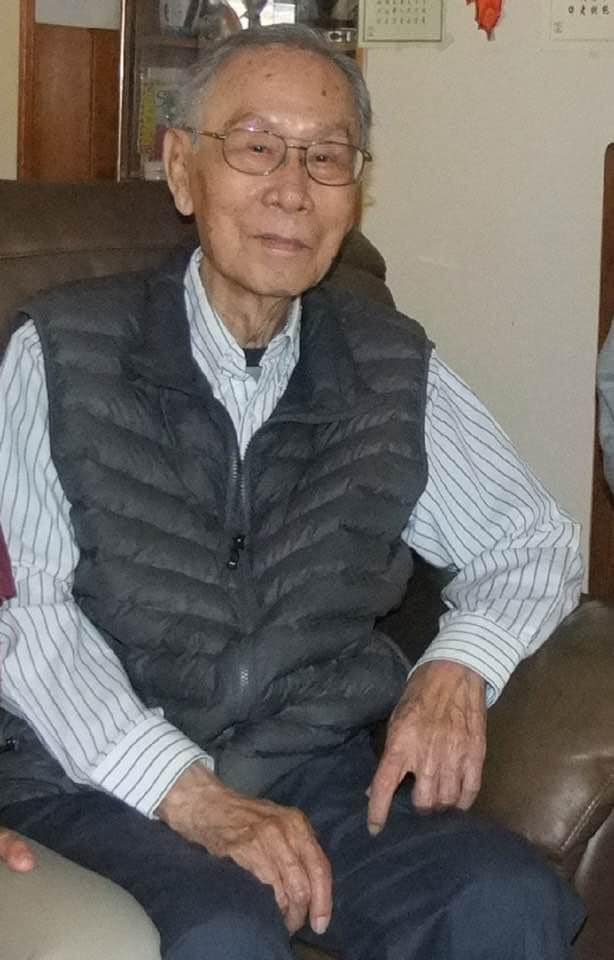
    Taw Sein Kho

    • Regarded as the first Burmese archaeologist.

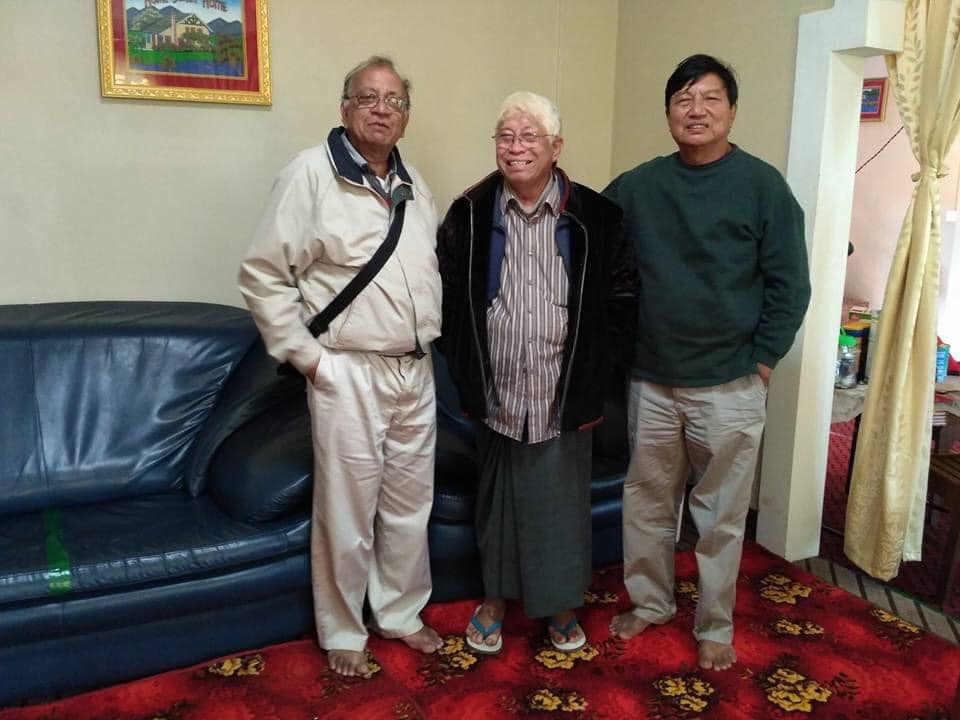
    U Aung Thaw

    • Director General of the Archaeological Department
    • Authored book(s) and research papers on the archaeological sites in Burma.
    • Lived close to the Kaba Aye Sun Lun Gu Kyaung and often meditated with his family members.
    • Spouse : Daw Yi; Sons : Dr. Myo Thaw, Kyaw Lwin Thaw

    Hanlin / Halin

    • UNESCO Cultural Site near Shwe Bo.
    • Has a museum with artifacts (utensils, bones, …)

    Pyu stone inscription (from a tomb)

    • Hanlin is one of the ancient Pyu sites.
      Others include Sri Kresa (Tha Yay Khit Ta Ra), Beikthano, Mainmaw, Binnaka, …

    Archaeologists

    • Archaeologists and their associated researchers (linguists, historians, …) help us learn the past.
    • British archeologists unearthed the Buddhist sites in India.
    • French archeologists and linguists (who accompanied Napoleon Bonaparte to Egypt) discovered “Rosetta Stone”, which enabled them to decipher the ancient Egyptian writings.
    • Stonehenge is an interesting site / study for archaeologists.
  • Astronomy

    Background

    The astronomers studied and mapped the space objects such as stars and comets first with the naked eye and then with the help of telescopes (optical, radio, …).

    Before the advent of the communication satellites and GPS (Global Positioning System), seafarers had to rely on their knowledge of astronomy for navigation.

    Greenwich is known for its observatory and the adoption of GMT (Greenwich Mean Time). UCT (Universal Coordinated Time) is now preferred.


    Edmund Halley is an Astronomer Royal known for the discovery of Halley’s comet. Mark Twain’s birth and death coincided with the two visits of Halley’s comet.

    AstroPhysics and AstroBiology are some disciplines using Astronomy.

    Astronomy Sayas

    U Ba Min

    • He matriculated from SPHS in 1956.
    • He joined the Mathematics Department.
    • He received MS in Mathematics and Astronomy at the University of California at Berkeley in the USA.
    • He resigned citing medical reasons when he was transferred to Myitkyina College.
    • He opened a shop in Mandalay Zay Gyo. One day, a group of Japanese visited his shop. They were surprised to learn that U Ba Min was a classmate of their Professor back in the USA, They took a photo to show to their professor.

    U Min Wun (Civil, GBNF)

    • He retired as Professor from RIT.
    • He is well versed in both Western and Eastern Astronomy.
    • He is a founding member of BARB. He served as Vice President.
    • He was an Advisor for the Myanmar Pyet Gs Dein မြန်မာ ပြက္ခဒိန် Committee
    U Min Wun

    U Aye Win Kyaw (C70, GBNF)

    • He is a founding member of BARB. He was an EC member & Teacher.
    • He taught Astronomy at BARB & MARB.
    U Aye Win Kyaw (Center)

    U Soe Min

    • He received State Scholarship to study Astronomy in the USA.
    • He taught Astronomy at RASU Mathematics Department. His assistant was Saya U Sein Win.
  • LMP

    • During the Pre-War days, those who want to pursue a Medical Career had to get LMP (Licensed Medical Practitioner).
    • Some chose to study MBBS overseas (e.g. Calcutta University).
    • According to U Ko Ko Aye, the LMP school was located near the Bogyoke Market and was destroyed by bombing.

    Choice to become MBBS

    • LMPs were later offered a condensed course to become MBBS (Bachelor of Medicine & Surgery).
    • Colonel Hla Han was an LMP turned MBBS.

    Prank

    • One prankster carried a briefcase with “LMP” on it.
    • He was a Licensed Master Plumber.
  • History

    I love history (History of Computing, History of Myanmar Engineering Education …).

    Why should we study History?

    Saya Dr. Than Tun said, “So that one would not be stupid or dumb.”

    There’s an old adage, “History repeats itself”.

    A historian presents facts. He should not give his opinion.

    The historian from Smithsonian said, “There is no single correct history. There are often multiple competing histories.”

    I am grateful to my spouse, who said “You should pay back to your alma mater and your country.”

    Saya U Tin Maung Nyunt said that I should record my oral stories and put them to print for posterity. Sayamagyi from UCSY asked me if I could help for a commemorative issue of the 30th Anniversary of ICST/UCSY.

    My beloved parents said, “Any thing that’s worth doing is worth doing well”.

    I have shared my memories about the early days of Computing in Burma. I hope that the readers will help “fill in the blanks” and correct errors and inconsistencies in my posts.

    Collectively, we can turn the posts into a reasonably good document worthy of printing (or at least publish as an e-book).

    The readers should suggest topics that I should add or elaborate.

    Dr. TOKM wrote :

    When we conducted the Perinatal Morbidity and Mortality Study, the data analysis was from me at UCC. Ko Ronnie Myo Min and many UCC staff helped us with the data analysis.

    The next project we did was “Risk Approach in Delivery of MCH Care”. We did a prospective study on the risk of mothers dying during pregnancy and child birth. As the outcome was measured by “relative risk” and “absolute risk” it was much easier to analyse the data.

    Our team used 1MB handheld Sinclair computer for our study. Our team did not have monitors nor printers. Your nephew Peter (Khin Tun) worked out RR and AR on Sinclair, read the result on Saya U Tin U’s old TV and copied out the results by hand. Peter still had a copy of the final report. I left my copy at home and got lost.

  • Physics Sayas and Sayamas

    Intermediate College

    U Min Than Thoung (Maurice) and Daw Su Su taught Physics in our I. Sc (A) class in 1963.

    Saya Maurice was the top student of his Honors class in 1961. He rowed as Bow in the Golden Crew along with Victor Htun Shein (Stroke, GBNF), Sunny Teng (3), Mya Maung (Min Aung, 2) and Tun Wa (Cox). They won two Senior Novices and several Color Challenge and later became RUBC Gold. Saya did graduate studies in Germany. He retired as Rector of Universities’ Distance Learning.

    Rangoom Institute of Technology

    We joined 2nd BE in November 1964. We had to take nine subjects including Physics.

    • Daw Nyein (GBNF)
      was Lecturer and Head of Department.
      She was an early Burmese female scholar to receive MS from US.
      She lived to be 101 years young.
    • Daw May Than Nwe (Joyce, GBNF)
      was the top student of her Honors class in 1962.
      She and Saya U Thein Lwin (EE) moved to Singapore.
    • U Saw Hlaing (GBNF)
      volunteered at Thu Ka Kar Yi (Sunday Cleaning) Group at Shwe Dagon Pagoda and a Lu Nge Yay Yar Nya Kyaung.
      He studied in Japan.
      He served as Principal of Taunggyi College and as Director in DHE.
    • U Nyunt Yin
    • U Hlwan Mo
      Head of Department, GBNF)
    • Daw Khin Swe Aye (Emily)
    • U Tha Hlaing (Head of Department)

    Miscellaneous

    At St. Paul’s High School, Saya Beatson taught us Physics. He also served as Scout Master. After retirement, he became a monk. He is the lone remaining saya from our SPHS days. Harry Kyaw, Atom Hla and some more Paulians offered soon to Sayadaw during his visits to Yangon.

    Dr. Maung Maung Kha (GBNF) served as Rector of RU, RASU and U of Distance Learning. He is a good violinist. He attended RUBC Regattas to award prizes.

    U San Tha Aung (GBNF) served as DG of DHE. He co-authored Saya Kha a Physics Textbook in Burmese.

    Dr. Boon Chiong (Hla Shwe, First in Burma in 1963), Dr. Tin Maung and Dr. Tin Aung received their doctorates from US. The first two moved back to US.

    Dr. Tin Aung taught at RU until he was forced to resign in 1988. Saya was elected as Patron (in absentia) of the Sayas’ Association during the 8-8-88 movement.

    U Kin Sein was a Director at DHE.

    U Kyaw Mya Thein (GBNF) wrote Kar Ku La Thin Char (Calculus). He retired as Pro-Rector of ICST.

    Dr. Zin Aung (GBNF) won a Gold Medal as the top student in his Honors class in 1958. He received his doctorate from UK. He later taught at Assumption University.

    U Thein Aung (Micky, SPHS59, GBNF) became RUBC Gold in 1962. He later became a member of the RUBC Admin Committee (after the RU Sports Council decided to ignore the Bylaws). He studied in Japan and later worked for a Japanese company in Yangon.

  • Physics

    Yupa Beda (HSF)

    • We took “Yupa Beda” (Physics in Burmese) in the first ever HSF (High School Final) Only examination in 1962.
    • The text was authored by Saya Dr. Maung Maung Kha and Saya U San Tha Aung.
    • Chu Pu Thein (SPHS) scored the highest marks in “Yupa Beda”.
      After matriculation, he left to study in Europe probably due to the 3 NRC rule.

    Physics (Matriculation)

    • We took “Physics” (in English) in the first ever Matriculation Only examination in 1963.
    • One of the texts was by Sen and Gupta.
    • SPHS Library had reference books, e.g. Sears and Zemansky
    • Dr. Khin Maung U scored “only” 99.
      Grapevine says that the examiners reluctantly took away a point from his perfect score.
      He stood First in Burma and scored 299/300 in Mathematics, Chemistry and Physics.
      He worked as a Medical Researcher and Professor.
      He retired from FDA.

    Examination Systems

    • My elder brother and his friends had to sit for the HSF and Matriculation (Combined) examination.
    • After passing the examination, they were admitted to the Intermediate College (e.g. Yankin College) of Rangoon University.
    • Unfortunately, we had to sit for separate HSF and Matriculation examinations.
    • We took the subjects for the HSF examination in Burmese (except for English).
    • We took the subjects for the Matriculation examination in English (except for Burma),
    • We lost one year in the process, but learned some “Translation”.
    • For the record, we had to take four Government examinations:
      the last 7th Standard examination in March 1960
      the first 9th Standard (HSF only) examination in March 1962 (which was nullified citing leakage of exam questions) and again in August 1962
      the Matriculation only examination in May 1963

    Top Matriculates who pursued Physics

    • Dr. Hla Shwe (Boon Chiong, Yegyaw Methodist 1953), First in Burma
    • Dr. Than Myint (Harry Wang, SPHS 1956), Joint Third in Burma
    • Dr. Htin Kyaw (Sacred Heart 1957), First in Burma
    • Dr. Htin Aung (Sacred Heart 1957), Sixth in Burma
    • Robert Sein (SPHS58), Second in Burma
    • Dr. Frankie Ohn (Hla Ngwe Tin, SPHS59), First in Burma

    Saya Kha (Dr. Maung Maung Kha)

    • He studied in UK for his Ph.D. in Meteorological Physics.
    • Worked for a while in Meteorology Department.
    • Joined Physics Department of Rangoon University.
    • He served as Professor and later as Rector of Rangoon University, RASU and Universities’ Distance Learning.
    • Accomplished violinist.
      He and Saya U Ba Kyi sang “Only Two Darling” (rendition of “Hna Yauk Hte Nay Chin Hte” in English).
    • Attended RUBC Regattas and handed over Trophies (during my tenure at RUBC as Treasurer, Vice Captain and emcee/announcer).
    • His family members and former colleagues and students (Saya U Oo Khin Maung, Sayama Daw Thida, …) celebrated Saya’s Centennial with fund raising concerts and commemorative magazine.

    U San Tha Aung

    • Received A.M (Physics) from Harvard University.
    • Served as Director of Higher Education.
    • Passed away after returning from an inspection tour.
    • Co-author of Saya Kha for Physics Texts in Burmese and English for use in High School.

    Dr. Tin Aung

    • Dr. Hla Shwe (Boon Chiong), Dr. Tin Maung and Dr. Tin Aung studied in USA for their doctorates.
      Dr. Hla Shwe and Dr. Tin Maung moved to the USA.
    • Saya Dr. Tin Aung taught the longest at RU and served as Professor.
    • He was elected as a Patron of the “Saya’s Association” during 8-8-88 movement.
      He left that day for an education mission to the USA.
      Upon his return, Saya was “asked to retire” by the higher authorities.

    Kan Soe Kan Kaung Sayas

    • In the late 60’s, several Physics sayas were selected to study in the Soviet Nation and other East Bloc nations.
      They were not in high spirits.
      They were surprised to learn that they would eventually study in UK. Grapevine says that four Burmese state scholars in GDR (German Democratic Republic, then East Germany) led protests in front of the Burmese Embassy denouncing BSPP and the government. The higher authorities were alarmed and probably concluded that it was safer to send scholars to UK.
      According to Saya U Thein Tan (Civil), he was selected to study in the USSR, but did not get visa (due to the political climate at that time). He ended up studying at the University of Birmingham in the UK.

    My Physics Teachers

    • Saya Beatson (at SPHS)
      Became Uzin after retirement
    • Mehm Than Thaung (Maurice Tun Thaung, RUBC Gold) in I.Sc.(A)
      Retired as Rector of Universities’ Distance Learning
    • Daw Khin Khin Su in I.Sc.(A)
    • Daw Nyein in 2nd BE
      Passed away at 100+ years young
    • Daw May Than Nwe (Joyce) in 2nd BE.
      Passed away in Singapore within a few months of her husband Saya U Thein Lwin (EE)

    Miscellaneous

    • U Thein Aung (Micky Tan, SPHS59, RUBC Gold)
      Recruited students and sayas (Dr. Htin Kyaw & Dr. Htin Aung [twins], …) to join RUBC.
    • U Kyaw Myint (Director, DHE)
      Fellow Guest Speaker at the Ngapali Luyechun Camp in 1988
      Has a Foundation named after him
    • U Tin Oo Hlaing and U Kaung Nyunt served as Principals of College
    • U Kyaw Mya Thein retired as Pro-Rector from ICST.
    • Daw Nyunt Nyunt Win became Registrar of RASU.
    • U Saw Hlaing, U Kin Sein, and Mehm Than Thaung transferred to the administrative positions user the Ministry of Education.
    • U Hlwan Moe and U Tha Hlaing succeeded Sayamagyi Daw Nyein as Head of RIT Physics.
  • Mathematics

    Texts in English and Burmese

    • During our younger days, we studied Basic Mathematics in English as well as Burmese.
    • The authors include U Thon, Daw Hla Kunt, and U Pan Yi.
      Some are based on English texts such as Workman.

    In Primary School and Middle School we studied

    • Ganan Thin Char (Arithmetic)
    • Ek Khaya Thin Char (Algebra)
    • Gair Aw Me Hta Ree (Geometry)

    Examinations

    In the old Government examinations, Mathematics examination is taken as two papers :

    • Thin Char (Tit)
    • Thin Char (Hnit).

    For some time, the HSF and Matriculation offered Additional Mathematics.

    • For our Matriculation, we took Algebra, Geometry and Trigonometry. They seemed easy to Mathematical Geniuses like Min Oo (Kenneth), who had studied Calculus.

    Options

    • Rangoon University used to offer Double Maths (Pure Mathematics and Applied Mathematics) and Triple Maths (Pure, Applied and Statistics).
    • Most early sayas were experts in Pure Mathematics.

    Concrete Mathematics

    Some Professors in the USA view Mathematics as

    • Continuous Mathematics
    • Discrete Mathematics.

    Professor Donald Knuth of Stanford University taught a course called “Concrete Mathematics” with topics from Continuous and Discrete Mathematics to Computer Science students. His teaching assistants published a book based on the course.

    Computational Mathematics

    With the advent of computers, “Computational Mathematics” became a discipline.

  • MD and Ph.D

    • MD may stand for Doctor of Medicine.
    • MD may stand for Managing Director.
    • MD may stand for Maryland, a State in the USA.
    • Ph.D may stand for Doctorate in Philosophy.
    • Phil means “love of” and Sophy means “wisdom”.
    • Barry Paw (GBNF), son of Saya U Htin Paw (EE58), is an MD, Ph.D. He passed away on a plane from a flight from Australia to the USA.
    • Win May (Winsome Ba Thike, MEHS61) is an MD, Ph.D. She is a Full Professor at USC (University of Southern California).
    • Hla Yee Yee (MEHS61) is an MD, Ph.D. She retired as full professor at International Medical University in Kuala Lumpur, Malaysia.
  • Music

    Musical Notation

    Some musicians play by the ear. They may know musical notation, but they often want to improvise. Examples include the Saing Waing and the Jazz troupes.

    Bands and orchestras use Music Sheets. Some Conductors add comments and instructions as guide lines for the musicians in the team.

    I have learned basics, but I am not proficient.

    • Keys
      Major
      Minor
    • Chords
      Major
      Minor
      Augmented
    • Terms and symbols
      Quaver
      Semi-quaver
      Semi-demi-quaver
    • Clefs
      Treble
      Bass
    • Mnemonics
      F-A-C-E
      E-G-B-D-F : Every Good Boy Does Fine

    It was not trivial to transpose music from a sheet into a different key until music software came along.

    My uncle bought a new piano. He allowed me to play. He also bought a booklet for me. It had the Relative Notation (1 for DO, 2 for RE, …, and dots to denote the octave). I learned to play using that notation some of Mar Mar Aye’s song (e.g. “Thet Tant Baw Hmar Kasar Mei”).

    MIDI (Musical Instrument Digital Interface) and versatile Keyboards come along.

    The innovation & information/knowledge explosion are difficult to keep up. One simply has to selectively learn new things without getting burned out.

    I am happy to remain a Jack of All Trades and Master of Some.

    _______________________________________________________________________

    Musical Instruments

    Classification

    The Burmese classify musical instruments as

    • Kyay
    • Kyo
    • Tha Yay
    • Lay
    • Let Khoke

    Myanmar Saing Waing has Jazz as a distant cousin. They perform extemporaneously.

    Myanmar Dobat is often performed in Thingyan and at Ah Hlu.

    Philharmonic orchestras have various sections. They include

    • Wind
    • Brass
    • Strings

    Pop Bands

    During our younger days, most pop bands had

    • Lead guitar (e.g. John Lennon)
    • Rhythm guitar (e.g. George Harrison)
    • Bass guitar (e.g. Paul McCartney)
    • Drums (e.g. Ringo Starr)

    Some musicians play multiple instruments. Examples :

    Paul McCartney plays the Bass guitar and sometimes plays the piano.
    George Harrison plays the Rhythm guitar and plays the sitar.
    U Aunt Gyi usually plays the Accordion, but he sometimes also plays the piano and the guitar. At the Farmers’ Market, I have seen musicians playing two instruments (harmonica & guitar) at the same time.

    Some bands play special guitars. They include

    • Double stringed guitar (with twelve strings)
    • Steel guitar
    • Hawaiian guitar

    String Quartets

    A String Quartet may consist of

    • Violin
    • Viola
    • Cello
    • Bass

    Visiting bands and musicians

    During our younger days, several foreign bands and musicians visited Burma. They include :

    • Benny Goodman (saxophone) and his band
    • Duke Ellington and his band
    • 13th US Air Force band
    • US musicians (via the Cultural Exchange Program)

    Piano

    • Piano means “soft”.
      Forte means “strong”.
      Pianoforte is a musical instrument that can play soft and hard notes.
      Commonly known as Piano.
    • Many composers (e.g. Chopin, Bach, Beethoven) created masterful pieces for the piano.
    • Pianos come in various sizes and flavors.
      Baby Pianos, Regular/Standard Pianos, and Grand Pianos.
    • Traditional piano comes with Black &White Keys, Pedals, Hammers to strike Strings.
    • Piano Tuner” is the name of a hit movie.
    • U Bo Gyi (A59, Uzin) and U Kyaw Oo (M67, GBNF) tuned their pianos.
    • Cousin uncle U Than Lwin owned two pianos.
      Played Classical music for the BBS English program — at the request of BBS U Hla Bu (Uncle Percy), Aunty Olive and Allison Gaudoin — at the old BBS station in Windermere Crescent.
      He allowed me to play on his new piano.
    • Composer U Hla Moe (a distant cousin) would visit U Than Lwin and practice / display some of his compositions.
    • U Than Lwin bought a new piano.
    • BBS had a program called “Keyboard Constellation”.
    • Horowitz, a renowned pianist, said, “If I don’t practice for a day, only I will know. If I don’t practice for three days, my mum will know. If I don’t practice for seven days, my audience will know.”

    Synthesizer

    The Synthesizer can simulate many musical instruments.

    __________________________________________________________________

    Musical Software

    • Until musical software came along, it was not trivial to transpose music from a sheet into a different key.
    • The Book on BASIC had an example for transposition of musical keys.
    • Musical Instrument Digital Interface (MIDI) and versatile Keyboards come along.
    • Innovation & information/knowledge explosion are difficult to keep up.
    • Selectively learn new things without getting burned out.

    MIDI

    MIDI stands for Musical Instruments Digital Interface, Composition and play back of musical instruments can be done with the aid of MIDI.

    Many automobile workers lost their jobs when robotics (and the related fields) gradually displaced them. Those, who did not have alternate skills, were hit hard.

    Touch typists and secretaries found that their skills have been marginalized by the word processors, voice-activated systems and similar advanced tools.

    ______________________________________________________________________

    Recording

    Tape Recorder

    • In our younger days, high quality tape recorders (e.g. Ampex) were not easily available.
    • Burma Broadcasting Service (BBS) used Ampex.
    • Most people use Grundig, Sony, and Akai tape recorders with mono or stereo heads.
      The standard tape reels cover 1200 feet.
      Two tracks are recorded for mono.
      Four tracks are recorded for stereo.
    • Mogok Sayadaw’s dhamma talks were recorded by U Sway Tin (son-in-law of U Than Daing, co-founder of Mogok Yeiktha) and team.
      Over the years, the devotees have distributed Sayadaw’s talks with (a) tapes (b) cassette tapes (c) CDs and DVDs (d) memory sticks.
    • Some companies (e.g. SuperHet) distributed dhamma talks with the media (of the era).

    Record (Dat Pya)

    • For some time, vinyl records were available.
      Even today, some (e.g. U Tin Myint (David Ko, M67)) prefer to build and maintain record players.
    • Burma Broadcasting Service (BBS) issued “Dat Pya” of selected musicians.
      Saya U Thet Lwin (former Registrar of RIT) received several Dat Pyas for his musical compositions (e.g. Mya Kyun Nyo Nyo Kun Yeik Kho). He received a remuneration of 100 kyats per “Dat Pya”, and treated his fellow Ah Nu Pyinnya Shins.

    Miscellaneous

    • Technological advances have made the recording, copying and distribution of music, lectures easy.
    • Ethical issues
    • Legal issues
    • IP (Intellectual Property) issues
    • Copyright issues
    • Digital Rights Management (DRM) issues

    ______________________________________________________________________________

    Stereo Khit

    Tun Naung

    • Tekkatho Tun Naung (1st BDS) was selected Tekkaatho Lu Ye Chun for the Inlay Khaung Daing Camp in 1965. He was from the second batch of students from Dental College (later Dental Institute).
    • He used to play Mandolin placed on his back (preferably in front of the lady hostels).
    • He also entertained at the Camp by playing his mandolin.
    • He is credited as a co-founder of Stereo Khit along with Accordion Ohn Kyaw.

    Musicians

    • The evangelists include Min Min Latt and Kyawt Hmu.
    • Musicians who have gained experience with the BBS Local Talent and Variety Show and free public appearances (e.g. Playboy band at the Golden Jubilee Celebration of Rangoon University in 1970) turned professional.
    • English, Chinese and Indian songs were provided Burmese lyrics.
    • Sai Kham Leik was one of the few who created hit songs with original melody and lyrics. Sai Htee Saing was his primary choice for singing his songs.

    Studios and Shops

    Recording Studios sprang up.
    They include

    • Sabai Oo
    • Lynn
    • May
    • Kumudra

    Many shops sold mass-produced cassette tapes. Most played for 60 minutes. Tapes for 90 and 120 minutes often got stuck in the players.

    Several shops allow a la carte. One can select songs and have them recorded in a tape.

    ______________________________________________________________________________

    So Ka Yay Tee

    Ah Nu Pyinnya Ah Thin

    • “So Ka Yay Tee” is synonymous with “Ah Nu Pyinnya Ah Thin”.
    • Rangoon University has a “Ah Nu Pyinnya Ah Thin”.
      Saya Dr. Maung Maung Kha and Saya U Ba Kyi are Patrons.
      Saya Kha would play the violin and accompany U Ba Kyi singing “Only Two” (Hna Yauk Hte Nay Chin De).
    • Under the then New Education System, Institutes (such as IM, RIT, Eco, Edu) were established.
      Most of them have “Ah Nu Pyinnya Ah Thin”.

    RIT

    • RIT Ah Nu Pyinnya Ah Thin held musical evening extravaganza (“Geeta See Sar”).
      RIT Ah Nu Pyinnya Ah Thin had a powerful presence at the 1970 RU Golden Jubilee Celebrations.
      It featured Swel Daw Yeik Ah Nyeint and Htee Yein.
    • Saya U Moe Aung (Tekkatho Moe War), Saya U Saw Tun (Saw Lu), Saya U Kyaw Sein (M65), Saya U Taing Oke (ChE69), and Saya U Khin Maung Tint (C69) are some of the driving forces for the outstanding performances by the Zat Sayas, Minthas, Minthamees, Lushwindaws, and the talented cast members.

    Soul Mates

    The Pon Chan Chan also helped find soul mates.

    • Don Min U Yu Swan and Sayama Emma Tin Tin Myint
    • U Tin Tun and Daw Mar Mar Yee
    • Saya U Khin Maung Tint and Sayama Daw Khin Sandar Tun
  • LMP

    • LMP stands for Licensed Medical Practitioner.
    • During the Pre-War days, those who want to pursue a Medical Career had to get LMP.
    • Some chose to study MBBS overseas (e.g. Calcutta University).
    • According to U Ko Ko Aye, the LMP school was located near the Bogyoke Market and was destroyed by bombing.
    • LMPs were later offered a condensed course to become MBBS (Bachelor of Medicine & Surgery).
    • Colonel Hla Han was an LMP turned MBBS.
    • One prankster carried a briefcase with “LMP” on it.
    • He was a Licensed Master Plumber.