Founder & Director of “Myanmar Ah Than” (Burma Broadcasting Service).
Has a son (Ko Wint Khin Zaw) and four daughters.
U Thein Han / Zaw Gyi
U Thein Han
Co-founder of the “Khit San Sar Pay”
Literary Award Winner
Laureate Poet
Succeeded U Khin Zaw as Chief Librarian of Rangoon University
U Thaw Kaung
U Thaw Kaung
Succeeded U Thein Han as Chief Librarian of Rangoon University
He and Saya U Ba Than (M) were the early supporters of the HMEE (History of Myanmar Engineering Education) project. He provided access to the library archives for Saya U Soe Paing (EE, UCC) and his team to compile an early draft for the HMEE-2012 book.
Libraries
Universities and Colleges around the world usually maintain libraries and offer cross-loans for rare books and documents.
There are Public Libraries and Private Libraries.
Before the Internet, most libraries use the Dewey Decimal System for cataloging books. Since the distribution of the books is not uniform, some books have several decimal digits following the original three digit category.
ISBN is used by major publishers. A Stanford University Arts Professor wanted to use “The Illustrated History of Buddhism ” by Ashin Janakabhivamsa (Taung Myo Sayadaw) and illustrated by Saya U Ba Kyi. Since the book did not have an ISBN, the book could not be ordered and sold through the University Book Store.
The Library of Congress has a large collection of books. It also has a section for books from Asian countries. The books in the Burma Collection are cataloged using phonetic transcription of the Burmese title.
U Win Pe (Maung Swan Yi) served as Secretary of the Burmese Curriculum and later studied Library Science. He wrote an article in Myanmar Gazette about collecting Burmese books for access via the New York libraries and the Library of Congress.
U Khin Zaw (“K”), Director, Burma Broadcasting Service
U Khin Zaw
Article written in 1958
What is Burmese music like? To ears accustomed only to Western music, ours may at first be a little disconcerting. It may seem more like a medley of spontaneous, unrelated sounds than a careful composition. And its rhythmic patterns may be hard to follow at first hearing. But I think that if you will listen to some of it a few times—and the Burmese Folk and Traditional Music record in the Ethnic Folkways Library offers a good sampling—you will discover that ours is actually a fully developed musical art. Historically, the traditions of Burmese music go back at least fifteen hundred years. For we know from a fascinating description in a Chinese chronicle of the year 802 A.D. that our musical instruments, and compositions for them, were already highly perfected at that time.
To begin with the fundamentals, let us first analyze our Burmese scale. It sounds as though it might have quarter tones and microtones, but actually it does not. It is the same as your European diatonic scale, but with this difference, that the fourth and seventh notes are both “neutral,” so that the succession of notes is different. The makers of our early instruments did not provide for the accidentals in an octave. Yet our music does modulate from the tonic to the dominant—say, from C major to G major—and frequently from the tonic to the subdominant — C major to F major, and back again. But we have no F sharp, or B flat. What we do is to put our F halfway between F natural and F sharp, and our B halfway between B flat and B natural.
Since we do not have the chromatic scale, our music may sound a bit flat to Westerners. Another basic point of difference is its essentially two-dimensional nature. The development of harmony has given Western music enormous depth. Because our instruments were not suitable for harmony, our music has instead developed a complexity of pure melodic patterns. You derive your musical satisfaction from marching in depth with chords. We have to get ours by going in the single file of notes, twisting and turning in graceful patterns. Even our drums play tunes. Thus our putt waing, a circle of tuned drums, is not merely for percussion, but plays a melody itself.
The rhythmic systems of Burmese music may have been determined by the nature of our language, which is not accentual but tonal. Rhythm in English depends largely on differences of emphasis on the syllables in the words and the words in the sentence. Burmese verse depends rather on the schematic arrangement of words with certain sounds recurring at fixed points. This means that timing and caesuras have great importance. In fact, in our singing the caesuras are even more important than the syllables or words in each measure. Often the singer keeps time with a pair of tiny bells and a small clapper in his hand.
The most usual time in our music is a simple duple or a simple quadruple beat. In the duple, the bells and the clapper go alternately. In the quadruple there is a rest on one or the other of the middle beats. No great importance is attached to the variation. In one and the same piece the quadruple may sometimes change into the duple, or become faster or slower. But never must a musician get out of rhythmic time. So far as I am aware, compound time has never been used in our music.
Turning to the instruments which are now most in use, we must give pride of place to the graceful, boat-shaped harp, the thirteen-stringed saung kauk (see Plate 23 in art section). The Burmese orchestra is called a saing. Its ensemble includes the picturesque putt waing, with the player seated in his circle of drums, a circle of gongs (the kyee waing), the big putt ma drum, cymbals, clappers, and wind instruments such as the hnè (like an oboe) and the palwé (a bamboo pipe). The saing accompanies our stage performances (zat pwès), our ritual dances (nat pwès), and others of the many festal occasions that enliven Burmese life.
Even though Buddhist doctrine has sometimes frowned on music as appealing to the senses, we Burmese must be one of the most music-loving peoples in the world. Folk music is very much alive in our villages, where several interesting kinds of drums are especially popular.
The bucolic dohpat (which can be heard on Side II, Band 4 of the Folkways record) presides over village roisterings and goes along with itinerant singers. The pot-shaped ozi, boon companion of the bamboo flute, may be trusted to go off on such a spree of tune and rapid rhythm as to make one’s limbs twitch to dance. The big bongyi (Side II, Band 3) is lord of the paddy fields, where its thundering rhythm eases the toil of those who are transplanting the rice. The byaw drum (Side I, Band 2) has its day in such home ceremonies as our almsgivings and shinpyu head-shavings.
Our classical music is far more elaborate than the instinctive rural drumming and singing, and scholars usually divide it into six main categories, most of which are represented on the Folkways record. But I must not risk tiring you with too many strange names and will say only that these classical compositions are usually songs, ranging in theme and tone from simple lyrics to courtly measures eulogizing the king or the royal city and solemn chants composed in adoration of Lord Buddha.
One of the most important events in the history of Burmese music—and all Burmese culture for that matter— was the second conquest of Siam by King Hsinbyushin in 1767. It is pleasant to think that although our wars with Siam were generally motivated by the Siamese king’s white elephants, we brought back something which was by no means a white elephant to us! Craftsmen, entertainers, musicians, dancers numbering many hundreds were imported from Siam to Burma, and they brought about a vast augmentation of our culture. New life and new forms were infused into our theater, our classical dance style is far closer to that of Siam than, say, to that of India, and a principal type of our classical song, the yodaya (Side I, Band 3 and Side II, Band 8), takes its name from Ayuthia, the old capital of Thailand.
In the years following this Thai “invasion,” there lived a remarkable man named U Sa, a veritable Leonardo da Vinci, who was poet, musician, playwright, soldier, diplomat, and statesman all combined. In a long lifetime, he was constantly creating and adapting new literary, dramatic, and musical forms, and over two hundred of our finest songs are attributed to him. Another important school of classical music comes down to us from the Mons; their beautiful songs were long ago enshrined in a collection called the Mahagita.
Finally, some of the purest and oldest forms of our traditional music are preserved in the propitiatory rituals of rural Nat worship. As Dr. Htin Aung explains in his essay, these spirits from the old animist cults have been welcomed into Buddhism, and the country folk still honor them with wayside shrines, or by hanging a coconut turbaned with a piece of red and white cloth from the king post of the house, to which offerings of fruit or cooked rice are made with music and dancing.
Now what has been happening to Burmese music since the radio and the cinema have vastly magnified the influence of Western music upon us? For my purist taste, far too much! But, to speak for the other side — and I fear they are numerous — let me bring in the views of my much admired and musically learned friend Ko Thant of Mandalay.
Ko Thant is scornful of our Burmese instruments because they lack the precision of the Western ones. But does he stop to consider that, in a sense, their very precision has made a slave of the instrumentalist? Our Burmese players attain extraordinary virtuosity with their crude instruments — making them the slaves — and achieve the most subtle shadings in moving from one note to the next. And because they do not read from a written score, but play entirely from memory, our musicians create the music anew at each playing, with full scope for the expression of personal art.
Ko Thant likes the strict discipline of the Western orchestra and condemns the free-for-all of the Burmese saing. He rails at Sein Beda for tuning a recalcitrant drum in the middle of a concert. Ile does not realize that this really does not matter, that Western music is a compound, whose object is harmonious coalescence, whereas ours is a mixture, the pleasure lying in the artful mixing of sounds. A European listens for the total effect of all, a Burmese for the individual effect of each voice in the orchestra.
In our music, accompaniment to singing does not mean a harmonic background to vocal melody, but a partnership in patterns. In and out of the framework of musical time and melodic direction provided by the instruments, the vocal part weaves another, related pattern and direction. So long as they keep to the framework, both singer and player may embellish and improvise. It is skill in weaving sounds, rather than voice production, which determines the quality of the singer.
Ko Thant maintains that music is an “international language” and that we should allow Western instruments and melodies to overwhelm us so that our musicians may speak the same musical tongue as the rest of the world. But does not this idea stem from a basic misconception of the nature of art? Is not the individual voice the really important thing? And will not the community of world culture be far richer and more stimulating if each regional culture seeks to develop its own traditions?
And since we already have improvisation in our music do we really need Western jazz and popular songs? But perhaps that question has already been answered: we have them. As long ago as 1940, Daw Than E wrote this little sketch on that subject:
An old-fashioned Burmese gentleman was visited by a radio salesman. He settled down expectantly as the set was hooked up; perhaps he would hear the soothing strains of a song from the Mahagita. But what came out shocked him; he looked puzzled. “That’s Johnny, the Burmese yodeller,” explained the salesman, “the public adores Johnny; the new trend in Burmese music, you know. Oh, you’ll hear wonderful things with this set. To give you an idea, there’s Good Morning Tin Tin singing Thama-wa-yama to the tune of John Brown’s Body and Eingyipa to a rumba called Mañana mañana. They have Bei mir bist du schoen and Isle of Capri with Burmese words and even the old favorites like Good King Wenceslas —-that’s a duck of a tune —and Come to the Savior, make no delay . . .” At this point the old Burmese gentleman became unconscious.
Yes, we have been flooded with Hawaiian guitars, hillbilly banjos, and Harlem saxophones. Where will it end? As director of broadcasting in Burma I am trying to fight the menace. There are good modern pieces in the Burmese vein still being produced, and a number of popular songs based on our own folk tunes have become hits. And to preserve our old music—since little of it has been written down—we have been making tapes of the best classical pieces and folk songs.
For certainly our Burmese music is worth preserving, just as Gujarat painting, Khmer architecture, Chinese porcelain, and Mayan sculpture are worth preserving. The tragedy in those cases is that the art of the craftsmen has been lost. We cannot let that happen. We must not hope vainly for the evolution of a style that will be neither Burmese nor Western. Rather, we must go back to the purest traditions of our own music—relearn them, safeguard them, and present them to the world in a way the world can understand. For there is a strange beauty in the remote flowering of Burmese music
Specialization : Medical Astrology; Visiting Professor at တိုင်းရင်းဆေးပညာကျောင်း
Founder, IDEA Astrology
Now GBNF
Veda Programs
Requested me to develop programs for Veda calculations and predictions. Assigned Ko Win Latt and Ko Zaw Tun.
Ko Win Latt (UCC) developed Win Horo. He later founded a Computer Training School & SysMagic. Currently in Bangkok.
Win Latt
Ko Zaw Tun (UCC) developed a Prolog program for prediction. He later founded a Computer Training School. Moved to Singapore. Gawpaka at Singapore Chan Myei
Zaw Tun
Final Years
I visited U Myint Sein at his house. He showed me the text he had written for the School of Indigenous Medicine, where he was a Visiting Professor. He was fond of Medical Astrology. Several doctors would seek his advice for treating patients.
(Later) He passed away peacefully in his house while watching TV. He had earlier come back from Okkalapa where he had brunch.
Veda & Me
Shared my Veda knowledge to selected Computer Science students
Shared my Computing expertise to selected Veda sayas. Helped BARB sayas & students use programmable calculators and handheld computers.
Became acquainted with Veda sayas : U Khin Aung Bo, U Than Htay, U Myint Lwin, Bogyi Kyaw Zan Hla …
Wrote articles (with three pen names) for Jotisha Veda magazine.
U Myint Sein led discussion groups at selected houses (e.g. U Khin Maung San, Bohmu Thane Myint) over lunch.
Veda Sayas
U Myint Sein
He was Principal at BARB. He later founded IDEA Astrology.
U Than Htay
Zartar
He taught Ganita (ဂဏိတ). He also wrote articles, Lecture Guides & Books. He later co-founded MARB and served as VP. He had health problems. He is now GBNF.
U Myint Lwin
Taught Phalita ဖလိတ at BARB and MARB
Vice President, MARB
Helped compile and publish the Veda Calendar
Passed away several years back
U Khin Aung Bo
Taught Thanhita သံဟိတ at BARB and MARB
President, MARB
Passed away peacefully while praying on May 13, 2020 at the age of 80.
Was relatively strong and healthy despite his love of cigarettes
Graduated with Civil Engineering from RIT in 1970 and joined the Faculty
Developed programs for Astronomy and Astrology
Taught Astronomy at BARB and MARB
Passed away in Pwin Oo Lwin a few years back. Sadly, his son passed away unexpectedly a few days before his demise. It was a Double Tragedy for the family.
MARB (Myanmar Astro Research Bureau)
U Than Htay
Former BARB sayas (U Khin Aung Bo, U Myint Lwin, U Than Htay, U Hla Win, U Kyaw Myint …) founded MARB. U Khin Aung Bo was President. U Myint Lwin & U Than Htay were VP. U Kyaw Myint was Secy. U Hla Win headed the Research Program.
Other MARB sayas include U Thein Aung, U Soe Thein, Dr. Aung Myin Bo.
U Kyaw Myint (T72)
U Kyaw Myint & Dr. Kan Nyunt
Thin Char Luyechun in High School
Studied at BARB. Taught at BARB and MARB
Current President of MARB. Succeeded U Khin Aung Bo.
Also Expert on indigenous medicine.
Youngest of 13 siblings.
Four are alive and well. Saya Saw was good at writing Yee Zar Sar. He was reprimanded by his aunt for supposedly helping a friend to write Yee Zar Sar to give to his cousin. Bagyi Kan is a doctor and Patron of MARB. He translated several Veda texts. U Sein Tun and U Kyaw Myint would pay respect to Saya Saw and Bagyi Kan following the noble tradition.
U Kyaw Myint wrote a long letter to the parents of a classmate & belle presenting why is an invaluable suitor.
U Hla Win (M73)
Core Organizer of RIT Saya Pu Zaw Pwes and activities
Attended DAC
Studied at BARB. Taught at BARB and MARB.
Secretary and/or VP of MARB.
Member of Myanmar Pyeik Ka Dein Ah Phwe.
He used to send me his car and/or a Veda saya to pick me up to visit the old MARB office.
U Soe Thein & U Thein Aung
Studied at BARB
Taught at MARB
Dr. Aung Myin Bo
Not related to U Khin Aung Bo.
Studied Veda from distinguished sayas. Helped them (e.g doing research& writing / refining Veda programs).
Gave me a ride to visit the old and new MARB offices.
Veda Sayas
Updates
The founding members of BARB are now GBNF.
Several sayas from BARB and MARB — U Myint Sein, U Myint Lwin, U Khin Aung Bo and U Than Htay — are GBNF.
One may study Uniform Distribution in Probability & Statistics.
Some schools may mandate their students to wear uniform on specified days (and may be every day).
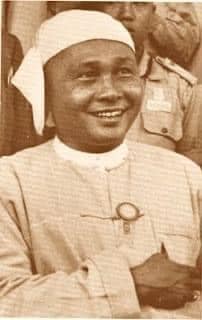
Bogyoke Aung San and U Thant had a debate on Uniform during their University days.
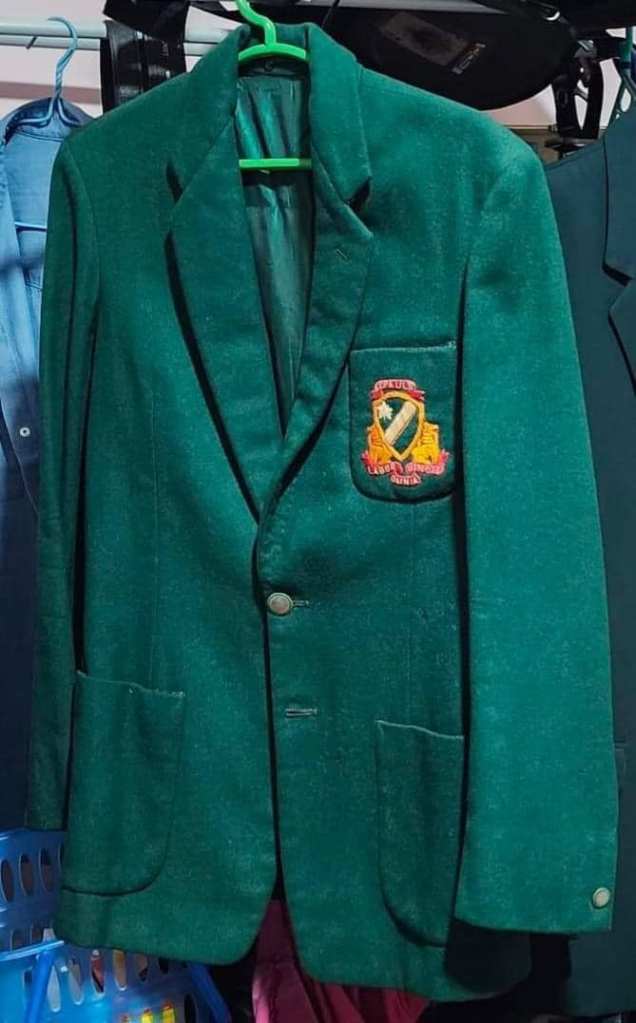
SPHS
SPHS Uniform
During our younger days, we had to perform drill at the School Sports and at the Aung San Stadium for specified events (e.g. Education Day Celebration). We had to dress up in uniform.
The full uniform consisted of
Kakki pants
Long sleeved white shirt
Necktie
Badge
Coat
SPHS Blazer & Badge
Burmese Dress for Males
Pasoe ပုဆိုး (or Longyi လုံခြည်)
Taik Pon တိုက်ပုံ
Gaung Baung ခေါင်းပေါင်း
The formal dress may be worn at functions (e.g. Award Presentation Ceremony).
U Nu
PPBRS Concert
Sailor
Aung Myint (later Thamankyar Ko Myint) & Toe Nyunt were wearing Sailor uniform
Engineering College
C58
Sayagyi U Ba Hli is seen in photos wearing a uniform.
U Ba Hli
UTC
Those joining UTC (Universities’ Training Corps) were two sets of old uniforms. Most prefer to buy or order their own.
UTC
RUBC
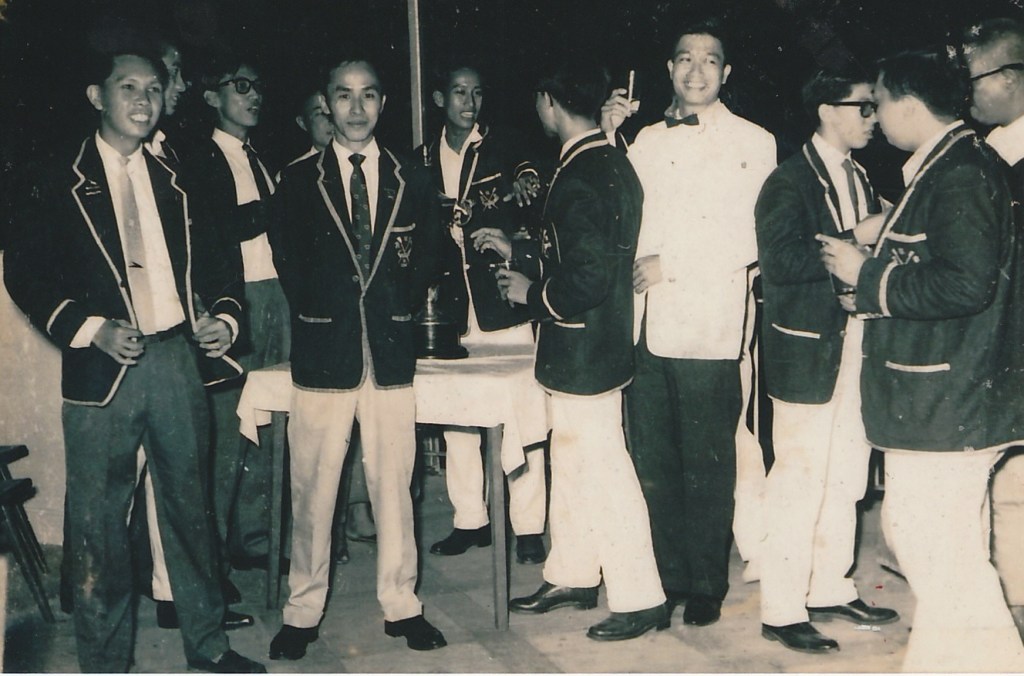
Rangoon University Boat Club (RUBC) awards Half Green, Full Green and Gold. RUBC specifies Dress Code for the award winners.
RUBC 1RUBC 2
Graduation
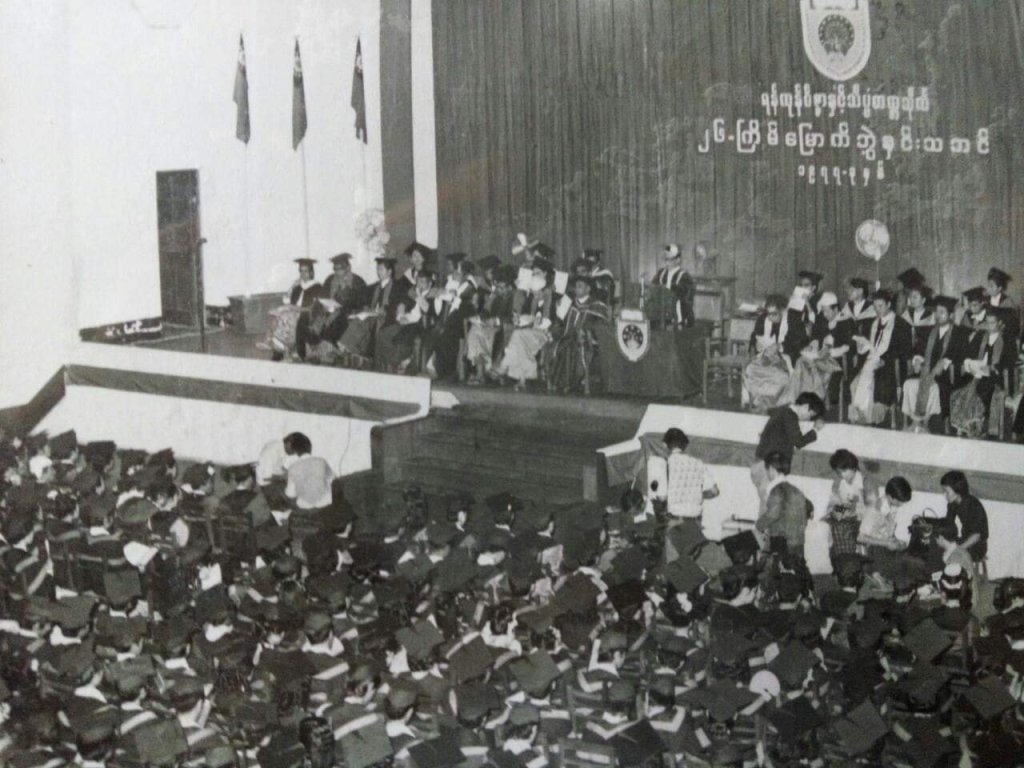
The Admin, Staff and graduates dress up in specified uniforms (e.g gown & cap)
USA Sports
In the USA, sports team have at least two sets of uniforms: one for playing at Home, and another for playing away.
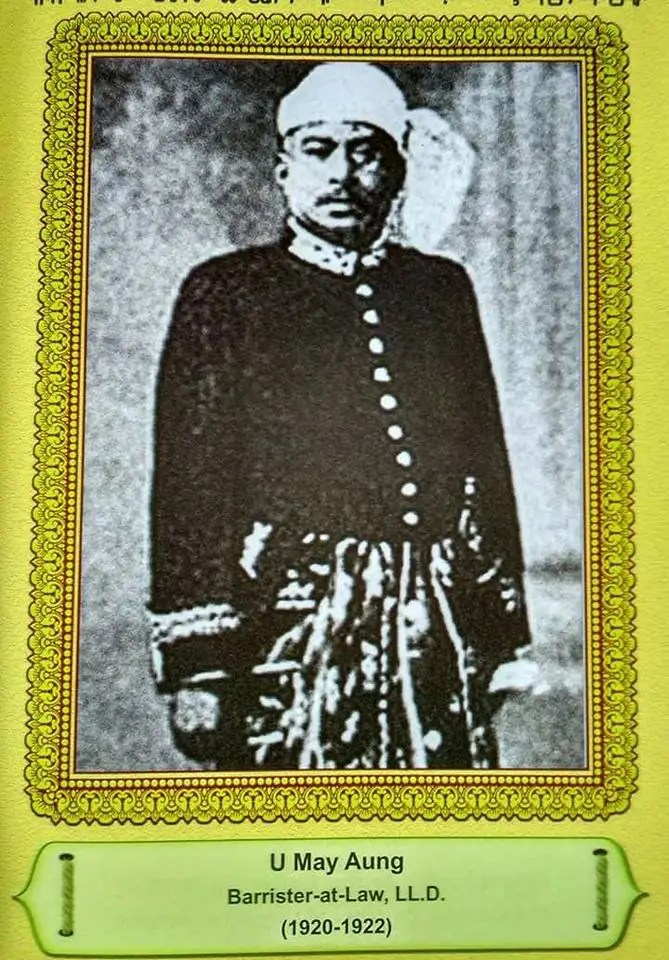
When Rangoon University was established in December 1920, it had the Department of Law.
U May Aung served as the first Professor.
U May Aung
U May Aung
U May Aung (Barrister-at-law, LL.D) served as Professor of Law from 1920 -1922.
Rakkhine national
Later became Home Minister
Father of Daw Mya Sein (Scholar).
Sir Arthur Eggar
Sir Arthur Eggar
Law Professor (1923 – 1937)
Earlier : Lecturer in the Maths Department at Rangoon College, and Legal Advisor in the Middle East
Founded Rangoon University Boat Club in 1923. Elected as Life President.
Pledged a third of his salary for the operation of RUBC.
Wrote autobiography (in three installments) for the Guardian Magazine in the mid 50s.
Autobiography
Several Old Members including me reprinted his autobiography for the 90th Anniversary of the founding of RUBC. YUBC OMA has copies of Sir Arthur Eggar’s autobiography.
Dr. Ba Han
Dr. Ba Han
Alumnus of Sorbonne University
Law Professor for two terms : (1937 – 1942) and (1946 – 1950).
Rangoon University was closed for a period during the war.
Complied a dictionary.
Dictionary
Dr. Ba Maw (Adipati) is his brother. He earlier was English Lecturer at Rangoon University.
Both brothers attended De La Salle Schools.
U Kyaw Myint
U Kyaw Myint
Stood first in Burma in Matric with distinctions in all subjects from Central. He was selected by Mr. Matthew Hunter (Principal of Rangoon College) to take the Entrance exam of Calcutta University to study Medicine. He requested the Principal that he wanted to pay last respect to his mother. The Principal warned that he would be expelled if he did not take the entrance exam. He attended his mother’s last journey and was expelled from the College. Worse still, his father threatened to disown him. The Kan So Kan Kaung story of U Kyaw Myint can be read in a series of blogs by his son Dr. Thane Oke Kyaw Myint and re-printed in my web site hlamin.com
Served as Professor of Law and Dean of the Faculty of Law from 1950 – 1958.
Earlier served as Justice of High Court and Supreme Court, Head of the Tribunal that tried Galon U Saw and co-founder of a political party with Dr. Ba Maw. He later founded his law firm.
Has an elder brother (ICS U Tin Tut), two younger brothers (U Myint Thein & Dr. Htin Aung), and three younger sisters (Daw Khin Mya Mu, Daw Khin Saw Mu & Daw Tin Saw Mu).
According to Dr. Thane Oke Kyaw Myint, his father had full confidence in his students (e.g. Guardian U Sein Win, Sao Hso Holm, U Mya Thein).
Law Professors (for the later periods)
U Myint (1958 – 1961)
U Aung Khine (1961 – 1964)
U Hla Aung (1965 – 1971)
U Tin Ohn (1971 – 1986)
U Tin Aung Aye (1986 – 1994)
Daw Than Nwe (1994 – 2007)
Dr. Daw Khin Mar Yi (2007 – 2018)
Law Degrees
In the early days, BL (Bachelor Law) was studied as a post-graduate degree (e.g. after B.A. or B.Sc.)
Several student politicians enrolled in the program to preserve their eligibility as RU students.
Under the new Education System, LL.B was established.
It was a five year study after Matriculation.
Related posts in RU Centennial
First batch of LL.B graduates
Several other batches
Sayamas known for their beauty and teaching.
Dr. Maung Maung Kha’s daughter Daw May Thi Ka was a sayama at the Law Department before she moved to the USA. She was a core organizer and coordinator for the groups raised fund for Saya Kha’s Centennial.
Some practitioners of Law took exams for HGP and RL.
There are some International Laws for use by the nations.
US Laws
Members of the Congress — House of Representatives and the Senate — vote to pass a new Bill (of Legislation).
POTUS (President of the United States) may sign the Bill into Law.
The President may veto the Bill. The Congress needs a sufficient majority of votes to overturn the bill.
British Laws
The British introduced laws including Penal Code and Civil Code.
Several Burmese attended Temple Inn in the UK to become Barristers. Technically, they were called to the Bar and they could use Bar-at-law in their name tags and cards.
French Laws
Some Burmese studied Law at the University of Sorbonne (in France).
Law Professor
Sir Arthur Eggar was an early Law Professor at the University of Rangoon. He is the Founder and Life time President of the Rangoon University Boat Club (RUBC).
U Kyaw Myint served as a Justice in the High Court & the Supreme Court. He presided the Tribunal for trying Galon U Saw. He served as Dean of the Faculty of Law at the Rangoon University. His students include Guardian U Sein Win, Sao Hso Holm (Mong Pawn Sawbwa Lay) and U Mya Thein.
Law Classes and Practice
In the old Education system, law classes (e.g. for Bachelor of Law (BL)) were conducted early in the morning. It was common to see BA BL and BSc BL holders.
In the new Education system, LLB and LLM were offered.
Some practitioners take exams for RL (Registered Lawyer) and HGP (Higher Grade Pleader).
Subjects in Primary, Middle and High School / ငယ်စဉ်က သင်ခဲ့ရသော ဘာသာများ
Arithmetic / ဂဏန်း သင်္ချာ
Algebra / အက္ခရာ သင်္ချာ
Geometry / ဂဲဩ မေတြီ
Trigonometry / ထရစ်ဂို နိုမေတြီ
စနစ်ဟာင်း / Early examination
သင်္ချာတစ် (Arithmetic)
သင်္ချာနှစ် (Algebra, Geometry)
အပိုသင်္ချာ (Additional Maths)
စနစ်သစ် / Later examination
* High School Maths (Algebra, Geometry, Trigonometry)
Dr. Min Oo / former classmate
Min Oo (Seated Leftmost)
သူငယ်ချင်း ကိုမင်းဦ: က Calculus နှင့် အဆင့်မြင့်သင်္ချာ တို့်ကို High School တက်စဉ် ကိုယ်ပိုင်လေ့လာသည်။ တက္ကသိုလ်ဝင်တန်းတွင် Second in Burma ရရှိပါသည်။
Concrete Maths (Selections from Continuous Maths and Discrete Maths)
Computational Maths
Engineering Maths
Dr. Chit Swe (Saya Chit)
Founder of UCC
Established Computer Science / Education and Applications in Burma
My Mentor ဆရာ၏ projects များတွင် ပါဝင် ထမ်းဆောင်ခဲ့ရသည်။ Maths ဆရာများနှင့် သိကျွမ်းခဲ့ပါသည်။
ဆရာ့အကြောင်း posts များ publish လုပ်ထားပါသည်။
ဆရာကြီးများ နှင့် ဝါရင့်ဆရာများ
U Aung Hla (coded Burmese songs / spouse Daw May Than and son Ko Mya Than are talented musicians)
U Kar (Minister in the Caretaker government)
U Ba Toke (Phwa Bet Taw for Rangoon University and first RU Students Strike in 1920)
U Net (Mandalay; father of Sayama Daw Khin Mar Mar; grandpa of Wunna Ko Ko)
Dr. Chit Swe (Founder of UCC / Computer Systems, Application and Education)
Dr. Ba Kyi (Mandalay)
Dr. Tin Maung (succeeded Dr. Chit Swe as Director of UCC; first Rector of ICST; son of U Kar)
U Hein Tin (DSA)
U Tin Hlaing – Education
U Sein Min – Eco / RASU
U Khin Zaw (My saya in I.Sc.(A))
Choudhury (My saya in I.Sc.(A))
U Ko Lay – Workers
U Ko Lay – Mote Seik
U Hla Myint (1) – Eco; father of Shein Soe Myint
U Hla Myint (2) – RASU / RIT
Dr. Thein Myint (Analysis)
Dr. Khin Maung Win (father of Maung Yit and Junior Win)
Dr. Saw Tin (Engineering Mathematics)
Dr. Khin Maung Swe (Maung Thin Char)
Daw Myint Myint Khaing (daughter of Arzani Mahn Ba Khaing)
Daw Myint Myint – RASU / RIT
Dr. Kyaw Nyunt – Numerical Methods
Dr. Kyaw Thein (succeeded Dr. Tin Maung at ICST)
Dr. Pyke Tin (literally means “left on a net”; succeeded Dr. Kyaw Thein at ICST)
U Aung Sein (Record holder for First Class Honors; brother of Dr. Maung Di)
U Soe Nyunt (Graph Theory)
Daw Khin Ma Ma (My sayama in I.Sc.(A))
U Soe Min (Astronomy)
U Maung Maung Tin (Administrator)
U Sein Win (Astronomy)
U Sein Win (Son of Arzani U Ba Win; later Dr.)
U Khin Maung Latt
U Sein Shan – RIT
U Shwe Hlaing – RIT
U Tun Shein – RIT
Dr. Thaung Nyunt – RIT
Daw Khin Nwe Yi – RIT
Daw Khin Lay Myint – RIT
U Ko Gyi – RIT
Daw Myint Nyan – RIT
Daw Khine Nyan – RIT
Daw Myint Myint – RIT
Dr. Saw Tin – RIT
U Aung – RIT
U Thein Han – RIT
Maths Curriculum Committee
U Ba Shan (Brother of Pagan U Ba Gyan who survived the shooting on July 19, 1947)
U Myint Than
U Myint Thein (later Dr.)
U Kyaw Soe (later Dr.)
U Yan Aung
Some sayas from Burma Education Research Bureau)
Notes
Padamyar Winhtein (U Win Thein) stood first in Third and Final Year Maths.
He had blogged about some of his sayas and his expertise.
The following is his notes about U Aung Sein.
U Aung Sein နဲ့ပတ်သက်လို့ မှတ်တမ်းတင်စရာရှိနေတယ်သူ့အဖေက ကန့်ဘလူ ဘူတာအဝင် Arabic School ရဲ့ ကျောင်းအုပ် မော်လဝီ ဆရာကြီးဒေါက်တာမောင်ဒီ နဲ့ ဖအေတူ အမေကွဲ ညီ အစ်ကို
ရန်ကုန်တက္ကသိုလ် နဲ့မန္တလေးတက္ကသိုလ် သင်္ချာ ဂုဏ်ထူးတန်းကို ၁၉၆၆ ခုနှစ် အထိ ဖွင့်ခဲ့တယ်ရန်ကုန်သင်္ချာ ဂုဏ်ထူးတန် နောက်ဆုံးနှစ် ကျောင်းသားတွေ ထဲမှာ ဒေါက်တာစိန်ဝင်းနဲ့ လှည်းတန်းက ကျူ ရှင် ဆရာ ဦးသာ တို့ပါဝင်တယ်ဦးအောင်စိန် ကို မှတ်တမ်းတင်ရမဲ့ အချက်ကအဲဒီ ကာလက ဖွင့်ခဲ့သမျှသင်္ချာ ဂုဏ်ထူးတန်းမှာ First Class first Division ရခဲ့တဲ့ ဦးအောင်စိန် အမှတ် တွေက recorded ဖြစ်ခဲ့တယ်စံချိန် ချိုးနိုင်သူ မပေါ် ခဲ့သေးဘူး
The following is his notes about Dr. Sein Win
Sein Win received his Bachelor of Science (Hons) Degree in Mathematics from University of Rangoon in 1966 . He received a diploma in Mathematics in 1974, and a Doctorate of Science (Doctor rerum naturalium) from Hamburg University in Germany. He served as a tutor at Rangoon University up to his scholarship to Hamburg University and lecturer at University of Colombo in Sri Lanka from 1980 to 1981 and at Nairobi University in Kenya from 1982 to 1984. Now he returned back home.
Aung Myaing (ChE72) wrote :
Maths or Math?
Let me share my understanding.
Both math and maths are short for the word mathematics. Math is the preferred term in the United States and Canada. Maths is the preferred term in the United Kingdom, Ireland, Australia, and other English-speaking places like Myanmar.
Ko Ko Kyi (EC72) replied :
Aung Myaing Those of us from older generation, who were taught “British English” prefer the English way of spelling or terms. Younger generation who attend or attended American International Schools are used to the American spelling or terms. Canada is a special case. It is a hybrid system, which accepts both British English and American English. This is because, it is influenced by its big neighbor or neighbour, the USA and at the same time wants to keep its British heritage as a former British colony and present member of the Commonwealth. When my daughter was enrolled at a Canadian junior high school many years ago, I asked the teacher what was the preferred way of spelling. She said both British English and American English were accepted.
Aung Myaing added :
Koko Kyi ! Thanks! Glad to know that you’re the reader of Ko Hla Min’s posts. Ko Hla Min has been my icon since my days at RIT as a student.
Ko Ko Kyi replied :
Aung Myaing Yes, I do read Ko Hla Min’s posts. In fact, I had to ask for his advice when we set up the Sunday Dhamma school for Myanmar children at our monastery in Toronto. He has a lot of experience on the children’s Dhamma school in California.
Kekule was searching for the structure of Benzene.
He supposedly had a dream where a snake’s head tried to bite its tail. It was an “Aha” moment for him. He figured out the bonding of the Carbon and Hydrogen molecules.
Some use this example as the power of the subconscious mind in solving problems.
Saya Dr. Soe Win wrote :
Dr. Soe Win
The structure of benzene is indeed a significant discovery in the history of science.
Sayagyi U Ba Hli was the first Dean of Engineering at the University of Rangoon. He also served as Professor of Civil Engineering. He is credited for the “Twinning” with the prestigious universities in the USA.
The commemorative issue of RIT Alumni International Newsletter for the first RIT Grand Reunion and Saya Pu Zaw Pwe paid respect to Sayagyi.
Sayagyi U Aung Khin (former Professor of Mechanical Engineering, and the driving force behind SPZP-2000) wrote an introduction to the special article written by Saya Dr. Freddie Ba Hli (the only child of Sayagyi U Ba Hli).
U Ba Hli’s son
Dr. F Ba Hli 1Dr. F Ba Hli 2
Dr. F. Ba Hli received his Sc.D. in Electrical Engineering from MIT. He helped Sayagyi Dr. Aung Gyi and Sayagyi U Min Wun, who were two of the first undergraduate engineering students from the University of Rangoon to be given State Scholarship as part of the “Twinning” program.
Dr. F. Ba Hli’s spouse is the sister of Sayagyi U Tin U (C), Sayagyi U Ba Than (M), Dr. Myo Tint (father of Ma Kay (EE93)), U Tin Htoon (A60), Saya U Myo Min (UCC) and U Thaung Lwin (EC66). Note that four are Past Captain and Gold of Rangoon University Boat Club.
Dr. F. Ba Hli has a daughter and two sons.
U Ba Hli’s grand children
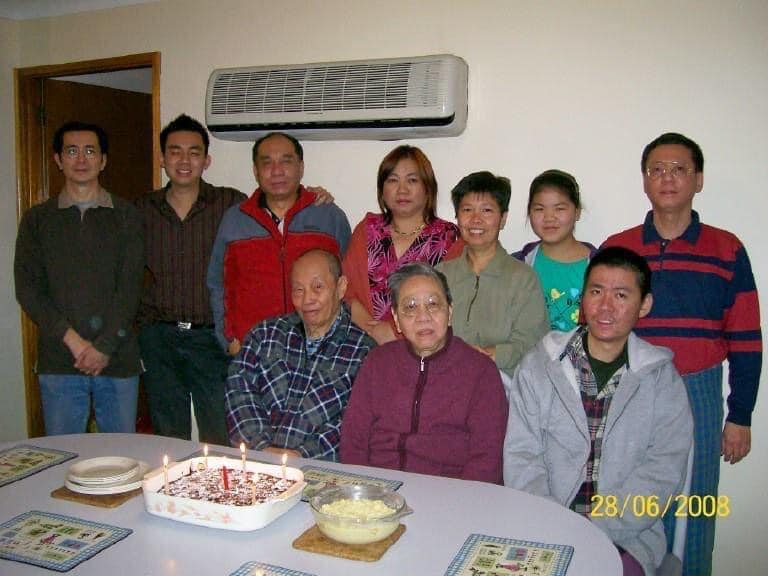
Dr. F Ba Hli’s birthday in 2008
Daw Tin Tin Hlaing (UCC) is the spouse of U Htay Aung (Victor, EC80, UCC, nephew of Saya U Sein Hlaing (EE)).
U Tha Hlaing (EC83, UCC) stood joint first with Ko Thaung Tin (KMD, former Deputy Minister) in their final year. He, his father and his paternal grandfather form Three Generation of Burmese engineers who are sayas or alumni.
Min Thet Tun (GBNF) did not smoke or drink, but succumbed to lung cancer in mid 30s. He lamented why some people who drink and smoke lived long.















 HlaMin