It amazes us that books (and even a book chapter) can change a person’s life.
Salvatore Cioffi was working as a Chemist in the USA.
He was from a devout Catholic family, and his elder brother was a Priest.
He received a book present from his supervisor for Christmas.
One of the chapters was “Dhammapada“. After reading the chapter, Samvegha crept in. He quit his job and then went on pilgrimage to the places sacred to Buddhism.
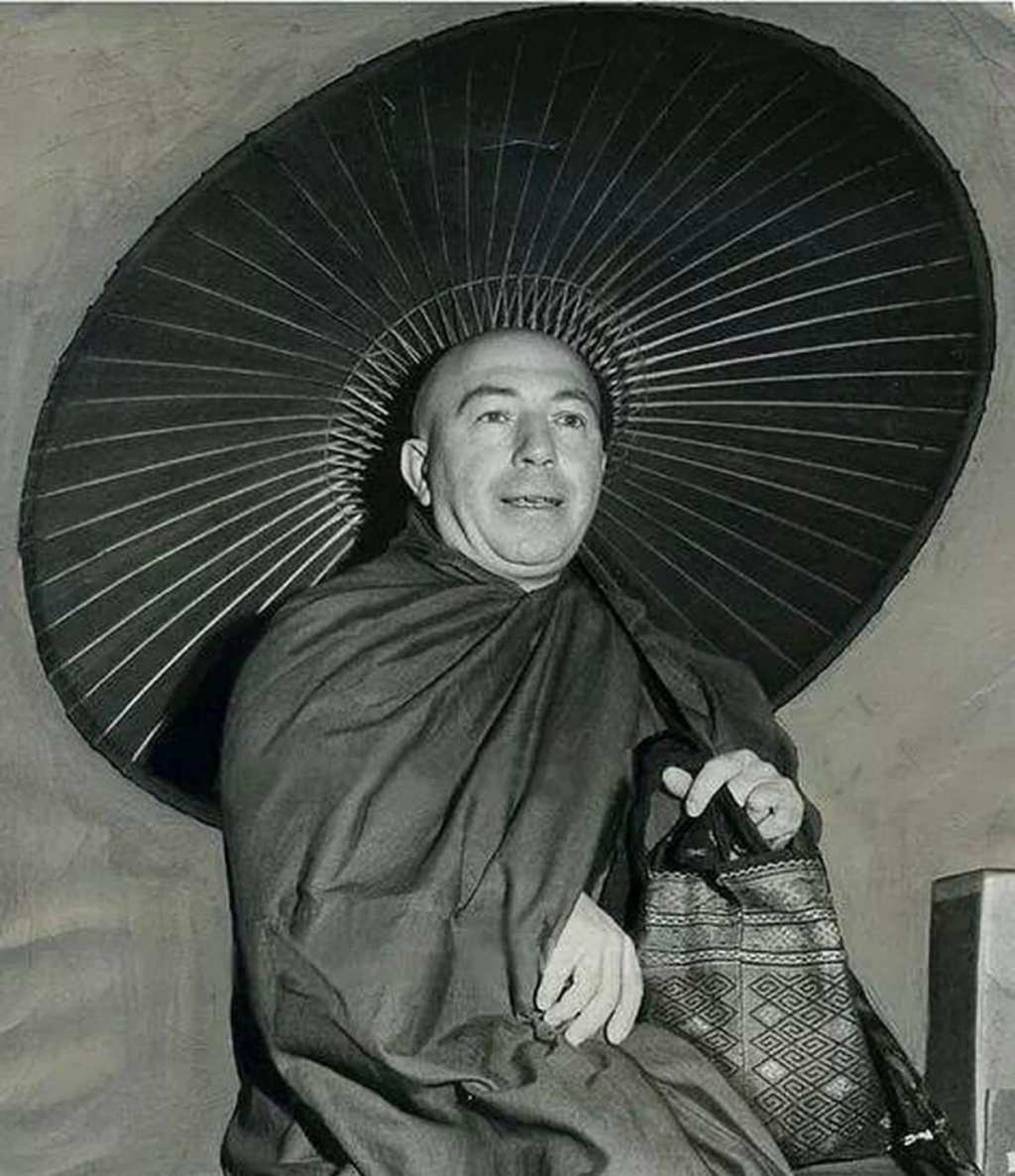
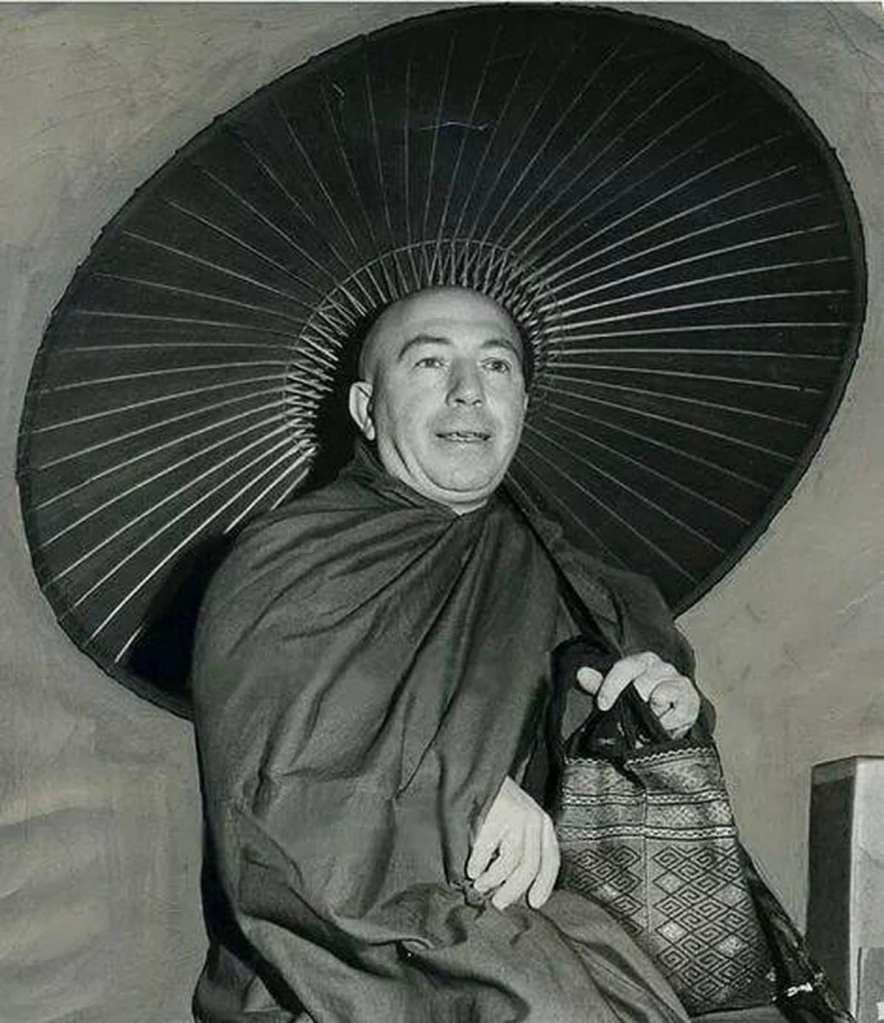
In 1925, he was ordained in Burma as a Buddhist monk named “U Lokanatha“.
He published a booklet, “Why I became a Buddhist.” He wrote, “I became a Buddhist. My supervisor remained a Christian.”
My maternal grand mother offered a monastery for U Lokanatha in Bawdigone (Windermere, Rangoon).
U Lokanatha practiced Dhutanga.
He also preached and had Dhamma Dhuta missions to India and Ceylon
He gave dhamma talks in Mandalay and Maymyo. Dr. Soni was a principal supporter.
He paid respect to Myingyan Sun Lun Gu Kyaung Sayadaw. The event is described in “Sun Lun Sayadaw’s Biography“.
He corresponded with B. R. Ambedkar, the Indian Dalit (“untouchables”) leader.
Ovadacariya to Sanagha Maya Nayaka, trustees of renowned pagodas
Outstanding teacher and writer
Played an important role in reviving Buddhism in India and propagating the study of Abhidhamma
Very modest; rarely talked about his many achievements
Patamagyaw scholar of all Burma (1918) : selected from among 5000 candidates
Panyattisasanahita (1923) : among the 4 out of 150 entrants who passed the toughest monastic examination
Studied Sanskrit in India; English in India and England
Lectured in US, UK, France, … (25+ countries)
Translated Vibhanga (second of the seven Adbhidhamma texts) from Pali to English : published by the Pali Text Society in 1969 under the title of The Book of Analysis
Essential Themes of Buddhist Lectures
Collection of unconnected individual talks given between 1938 – 1983
Part 1 : Introductory articles or Talks of Buddhism (10 lectures)
Part 2 : Talks involving Sila in particular (5 lectures)
Part 3 : Talks involving Samadhi in particular (12 lectures)
Part 4 : Talks involving Panna in particular (4 lectures)
Part 5 : Talks dealing with Buddhism in general (12 lectures)
Sayadaw’s name is Silananda. He became Silanandabhivamsa when he passed the Abhivamsa (tough monastic examination in Mandalay to be completed before the age of 26). I will use both names where appropriate.
Trail blazer
In April of 1979, Mahasi Sayadawgi made a Dhamma Duta mission to the US. At the request of the devotees, Sayadawgyi agreed to leave behind Sayadaw U Silanandabhivamsa and Sayadaw U Kelasa as “trail blazers” for the promulgation, preservation, and the promotion of Sasana.
There were no Burmese Buddhist monasteries and/or temples, but the Sayadaws were determined to sacrifice their blissful lives back in their homeland to do whatever they can to
help with the Buddhist rites and rituals
teach theory and practice of Dhamma
encourage core supporters to found “Theravada Buddhist Society of America” [by the middle of 1979]
solicit donations (often going “door-to-door”) from families who want pass on the legacy to their family members
encourage young adults and children to Dhamma Courses and take “Aye-Thet Scholarship Examination”
hold short term and [some] long term meditation retreats (in Zen temple, and churches)
strive to have “Dhammananda Vihara”.
Supporters
The journey was not smooth as indicated by some entries in his “journal”, but well-wishers (including the Khoo family, Dr. Tin Wa and friends, Dr. Maung Maung Chwan and friends, Dr. Julie Han and Executive Committee members who did the fund-raising, Dr. Rina Sircar who offered Sayadaw to be a Lecturer at her University, the Sri Lankan monks who “sponsored” Sayadaw) all shared Sayadaw’s resolve to spread Dhamma in the San Francisco Bay Area and beyond.
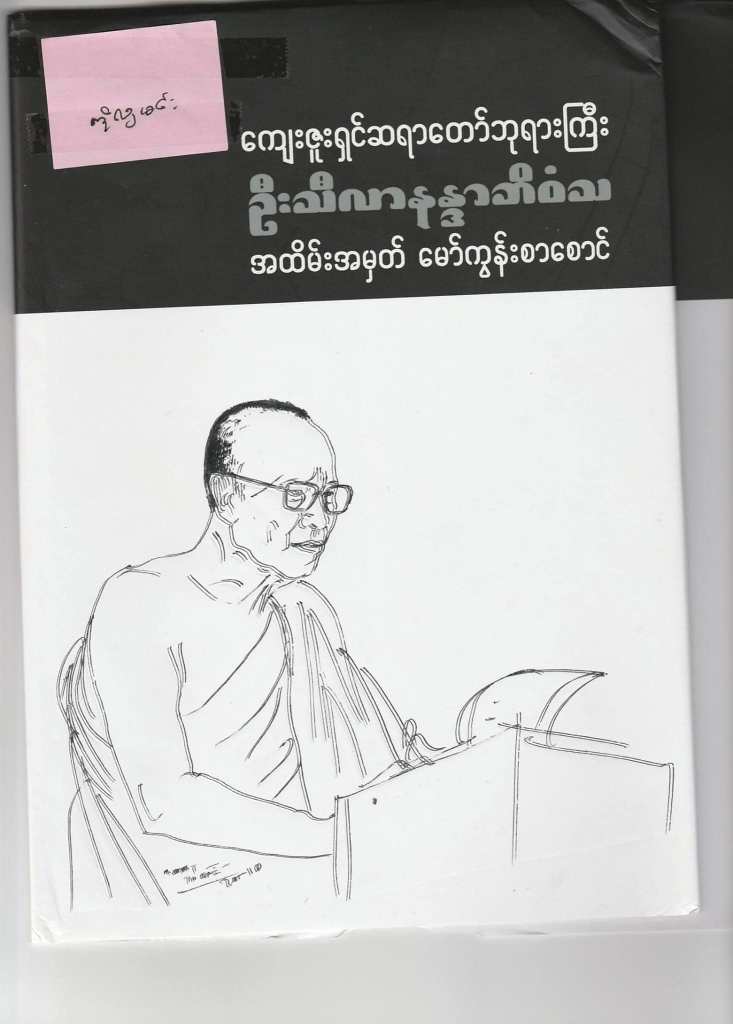
Details can be found in the Commemorative Book for Sayadaw U Silanandabhivamsa (1927 – 2005) and the companion DVD set for “Sayadaw’s Final Journey“.
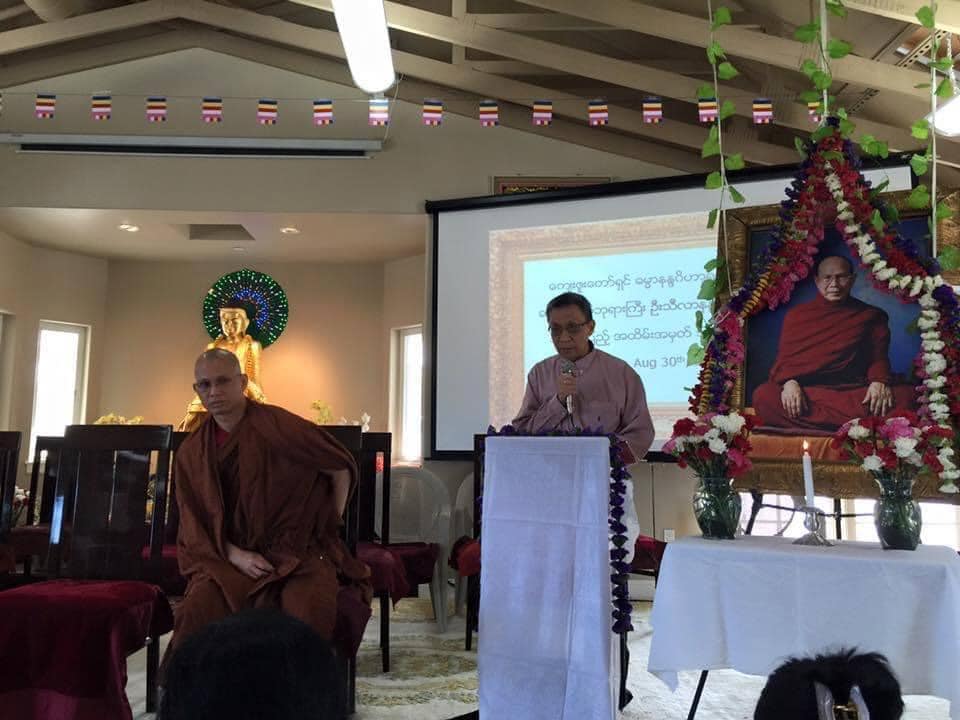
I was fortunate to be asked to be the Master of Ceremony for the Service, which was attended by Sitagu Sayadadaw, Sayadaw Dr. Nandamalabhivamsa and many monks from US, UK, and Burma. I was blessed to be a member and editor for the “Commemorative Book” project.
Wise and humble
Sayadaw U Silanandabhivamsa served as the Chief Compiler of the “Pali-Mynamar Dictionary” as part of the Sixth Buddhist Council.
He is an expert in Pali, Sanskrit family of languages, and English.
He is highly regarded by non-Burmese devotees (including Vietnamese and American) not only for his wisdom but also for his “humble” actions (void of “boasting”).
Teachings and Legacy
Sayadaw’s teachings (“Basic Course in Buddhism for children”, “Abhidhamma courses in Burmese and English”, “Dhammapada”, “Patissasamupada”, “Four Foundations of Mindfulness”, ….) are available as Dhamma Dana.
Tathagata Meditation Center (TMC) depicts Sayadaw’s dhamma duta mission in US and Mexico by photos of the wall of the dining hall, and by publishing Sayadaw’s works.
Many audio tapes were transcribed by Sarah E. Marks, U Osadha, … and edited/polished as books.
I edited a book of Sayadaw’s short talks at the meditation retreat. The tapes were transcribed by U Osadha.
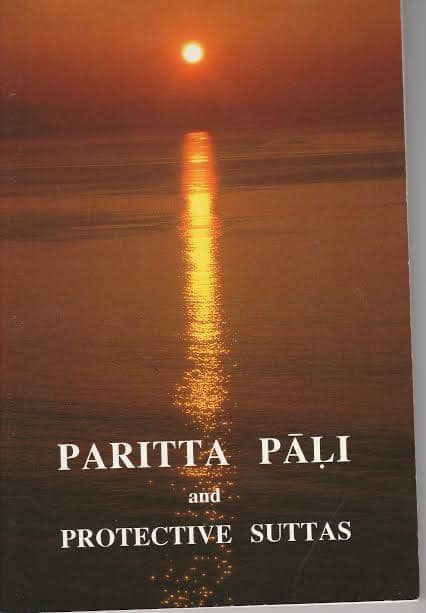
Sayadaw’s Thai devotee published “Paritta Pali: Protective Verses” in Pali and English with an accompanying audio CD.
Ko Jeffey Wong (Fremont) put Sayadaw’s Abhidhamma courses (covering 50+ audio tapes) into COBY MP-3 player and distributed them at Abhidhamma courses offered in the San Francisco Bay Area.
Sadhu, sadhu, sadhu.
Sayadaw’s Works
Rector, IMBTU
Chief Resident Monk of Dhammananda Vihara, Half Moon Bay, California, USA
Ovadacariya Sayadaw of various monasteries in Myanmar, US and Mexico
Chief Editor of the Tipitaka Pali-Myanmar Dictionary
Meditation teacher
Author of several texts in Pali, Myanmar and English. Some are presented in this post.
Details can be found in the Commemorative Book for Sayadaw U Silanandabhivamsa (1927 – 2005) and the companion DVD set for “Sayadaw’s Final Journey”.
I was honored to be the Master of Ceremony for the Service, which was attended by Sittagu Sayadadaw and many monks from US, UK, and Burma.
I was blessed to be a member and editor for the “Commemorative Book” project.
Remembrance
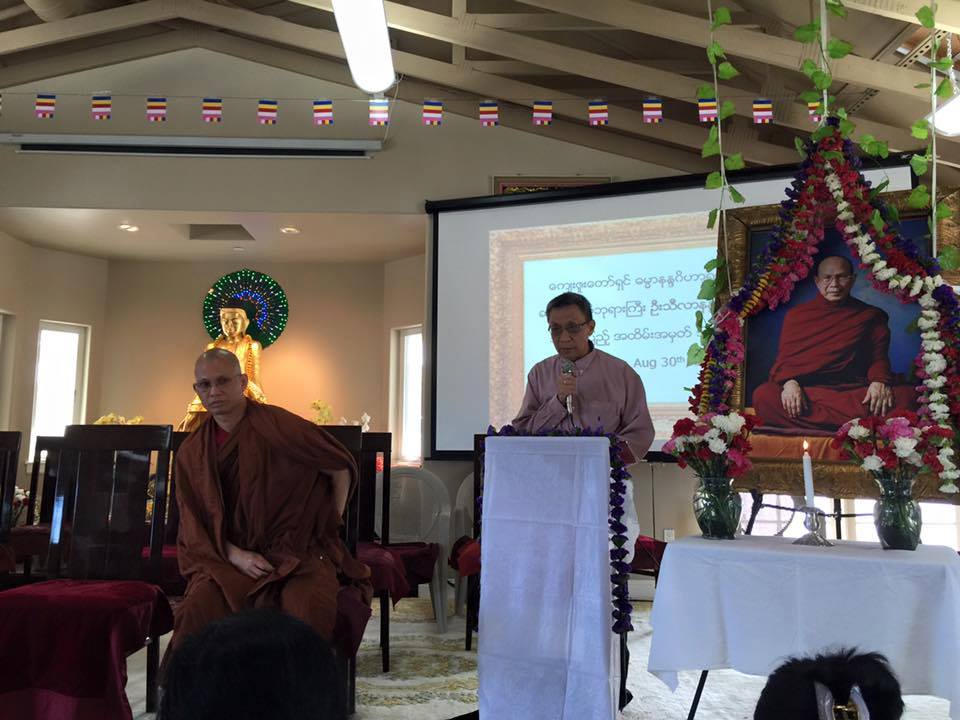
On the morning of December 15, 2013 at Dhammananda Vihara, Half Moon Bay, the resident Sayadaws and devotees conducted the 86th Birthday for Sayadaw U Silanandbhivamsa and offered soon dana in the “U Silanandabhivamsa Memorial Dhamma Hall.”
Fundamentals of Buddhism (Course)
Sayadaw U Silananda taught “Fundamentals of Buddhism” course. The course was made available in MP3/CD (which was distributed at the ceremony for the opening of “U Silananda Hall” at Dhammananda Vihara, Half Moon Bay.
The Four Foundations Of Mindfulness
Author : Venerable U Silananda
Editor : Ruth-Inge Heinze, Ph.D.
Wisdom Publications
First Printing : 2002
Foreword by Larry Rosenberg, Cambridge Insight Meditation Center
PART I : COMMENTARY
Introduction
1. Contemplation of the Body in the Body
2. Contemplation of Feelings
3. Contemplation of Consciousness
4. Contemplation of the Dhammas
5. Assurance of Attainment
PART II : THE GREAT DISCOURSE ON THE FOUNDATIONS OF MINDFULNESS
PART III : MEDITATION INSTRUCTIONS
Notes
Glossary
Select Bibliography
Index
Dependent Origination
Subtitle: Paticca-samuppada
The Wheel of life
Author: Sayadaw U Silananda
Editor: U Hla Myint
Publisher : Tathagata Meditation Center
Contents
Publisher’s notes
Venerable U Silananda’s biography
Dependent origination
Introduction
First link : Avjja-pacaya sankhara
Second link : sabkahara-paccaya vinnanam
Third link : Vinnana-paccaya nama-rupam
Fourth link : Nama-rupa-paccaya salayatanam
Fifth link : Salayatanam-paccaya phassa
Sixth link : Phassa-paccaya vedana
Seventh link : Vedana-paccaya tanha
Eight link : Tanha-paccaya upadana
Ninth link : Upadana-paccaya bhavo
Tenth link : Bhava-paccaya jati
Eleventh link : Jati-paccaya jara-marana
Conclusion
The Fundamentals Of Buddhism
Teacher : Sayadaw U Silanandabhivamsa (1927 – 2005)
Transcribed and edited by Sarah E. Marks, Dhammachakka Meditation Center
First edition : 2008
Fourteen chapters
1. Introduction : The Fundamentals of Buddhism
2. Life of the Buddha
3. Four Noble Truths
4. Kamma
5. Dependent Origination
6. Conditional Relations
7. The Outstanding Characteristics of Buddhism
8. Beings on the Spiritual Path
9. The Spiritual Path
10. Samatha Meditation : The Spiritual Path (Part II)
11. Vipassana Meditation : The Spiritual Path (Part III)
12. Enlightenment : The Goal of Spiritual Path
13. Divisions of the Buddha’s Teachings and Buddhist Councils
14. The Doctrine of Anatta
Eulogy
1. Sayadaw’s student for more than 25 years, USA
2. Luyen Pham, Tathagata Meditation Center, San Jose, USA
The Essence in The Buddha’s Words
Dhamma Dana Book from TRIPLE GEM PUBLICATION
Lectures by Sayadaw U Silananda
Based on the Book: “The Word of The Buddha” Compiled, Translated and Commented by Nyantiloka Mahathera
Transcribed by Sarah E. Marks
Edited by Harry Than Htut
42 Chapters
The Four Noble Truth (1) The Noble Truth of Suffering (2) The Noble Truth of the Origin of Suffering (3) The Noble Truth of the Extinction of Suffering (4) The Path of the Extinction of Suffering
The Noble Eightfold Path (1) Right Understanding (2) Right Thought (3) Right Speech (4) Right Action (5) Right Livelihood (6) Right Effort (7) Right Mindfulness (8) Right Concentration
Fundamentals of Vipassana Meditation
Primary Author : Mahasi Sayadaw
Translator : Maung Tha Noe
Editor: Sayadaw U Silananda
Original Publisher : Dhammachakka Meditation Center, 1991
Republished with other sources : Tathagata Mediatation Center
Other sources included the book
“Instructions to Meditation Practice” by Mahasi Sayadaw
“Benefits of Walking Meditation” by Sayadaw U Silananda
“Guidance for Yogis at Interview” by Sayadaw U Pandita
“An Interview with Mahasi Sayadaw” by Thamanaykyaw, translated by U Hla Myint
Protective Verses (Paritta Pali)
A Thai devotee requested Sayadaw to record Paritta Pali (Protective Verses) in Pali and English.
She sponsored the book (with Pali and English on opposing pages) as a birthday present for Sayadaw.
Abhidhamma
Tathagata Meditation Center (TMC)
Sayadaw U Silanandabhivamsa gave a talk “The ten meanings of Tatagatha” at the Tathagata Meditation Center at 1215, Lucretia Street, San Jose.
In the dining hall, there is an album about Sayadaw U Silanandabhivamsa’s early years in the US (e.g. meditation retreat at a church, dhamma classes at a Zen Buddhism Temple). There are two cabinets of books: one for dhamma dana distribution, and another for sale.
Highest blessing
Excerpts from
Paritta Pali (A Collection of Eleven Protective Suttas)
and
Protective Suttas (An English Translation with an Introduction)
by Sayadaw U Silananda
Not to associate with fools, to associate with the wise and to honor those who are worth of honor.
To live in a suitable place, to have done meritorious deeds in the past, and to keep one’s mind and body in a proper way.
To have much learning, to be skilled in crafts, to be well-trained in moral conduct and to ahve speech that is well-spoken.
Caring for one’s mother and father, supporting one’s spouse and children and having work that causes no confusion.
Giving, practice of what is good, support of one’s relatives and blameless actions.
Abstention from evil in mind, abstention from evil in body and speech, abstention from intoxicants and non-negligence in meritorious acts.
Respectfulness, humbleness, contentment, gratitude and listening to the Dhamma on suitable occasions.
Practice that consumes evil states, a noble life, seeing the Noble Truths and realization of Nibbana.
The mind of a person (an Arahant) who is confronted with worldly conditions does not flutter, is sorrowless, stainless and secure.
Having fulfilled such things as these, beings are invincible everywhere and happiness everywhere. This is the highest blessing for them.
Rahula Sutta
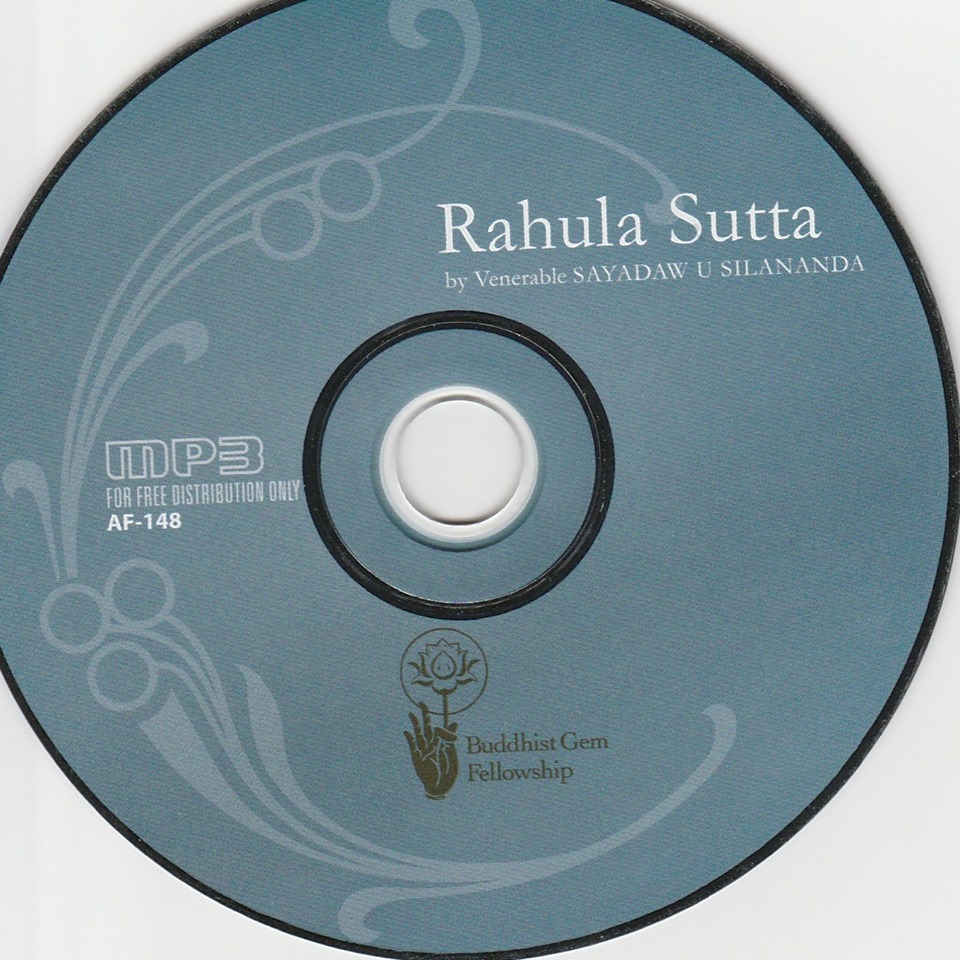
The MP3 “Rahula Sutta by Venerable Sayadaw U Silananda” is offered for free distribution only by “Buddhist Gem Fellowship”.
Teachings and Legacy
Dhamma Dana of Sayadaw’s teachings
Basic Course in Buddhism for children
Abhidhamma courses in Burmese and English
Dhammapada
Patissasamupada
Four Foundations of Mindfulness
Rahula Sutta
…
are available as Dhamma Dana.
Tathagata Meditation Center (TMC)
TMC depicts Sayadaw’s dhamma duta mission in US and Mexico by photos of the wall of the dining hall, and by publishing Sayadaw’s works.
Audio Tapes
Many audio tapes were transcribed by Sarah E. Marks and U Osadha. They were and edited and published as books.
Sayadaw’s Thai devotee published “Paritta Pali: Protective Verses” in Pali and English with an accompanying audio CD.
Ko Jeffey [Wong, Fremont] put Sayadaw’s Abhidhamma courses (covering 50+ audio tapes) into COBY MP-3 player and distributed them at Abhidhamma courses offered in the San Francisco Bay Area.
Remembrance
On the morning of December 15, 2013 at Dhammananda Vihara, Half Moon Bay, the resident Sayadaws and devotees conducted the 86th Birthday for Sayadaw U Silanandbhivamsa and offered soon dana in the “U Silanandabhivamsa Memorial Dhamma Hall.”
Long term memory It is analogous to disk (or similar) storage in a computer system
Short term memory It is analogous to RAM (Random Access Memory)
Photographic memory Some people could glance at documents and recall them
Associative memory Facts are easier to recall if they are associated and chunked
False memory Some innocent people were victimized by key witnesses with “unreliable” memory
Study of Memory
The study of memory transcends medical research, sociology, linguistics, cognitive science, and artificial intelligence.
It is often done by a team of multi-disciplinary experts.
Aging contributes loss of short term memory or the decline in the ability to retain short term memory. My younger cousin sister said, “I forgot what I wanted to say”.
One elderly could recall names of his primary school classmates, but could not recognize his youngest grand son that grew up in his hands.
Memory loss may be temporary. Ko Tin Oo (M87, SDYF, RITAA) temporarily forgot his name, but uttered “I pledged my donation for the YTU library, but I have not made the donation.” The memory lapse was attributed to a fall that hurt his back.
Memory Feats
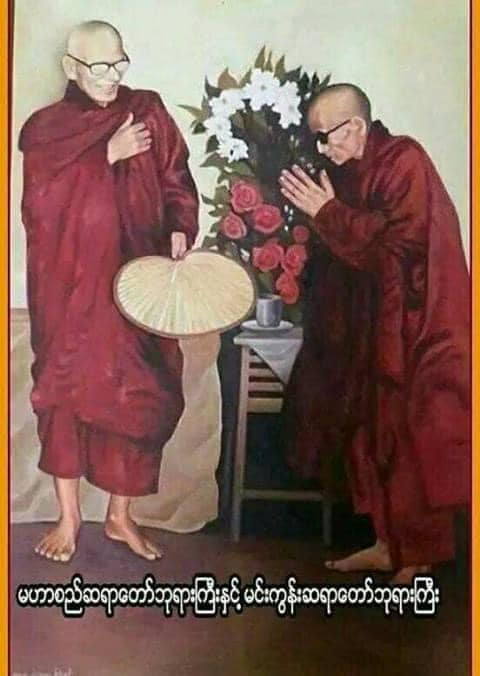
Mingun Tipitaka Sayadaw
Mingun Tipitaka Sayadaw U Vicittasarabhivamsa was recorded in the Guinness Book of World Record for his phenomenal memory that he displayed in the Sixth Buddhist Council held at Kaba Aye (World Peace) Pagoda from 1954 – 1956.
He not only remembered 8000+ pages of the Scriptures, but he could also point out the variants of some Suttas while he took the Oral tests for the Tipitaka Examination.
He passed the Oral and Written tests for Vinaya (Monastic rules of conduct), Sutta (Discourses) and Abhidhamma (Ultimate reality) with Distinction.
Sayadaw became the Grand Custodian of the Tipitaka (Three Baskets) and was the key player in the Sixth Buddhist Council.
Dale Carnegie wrote that Harry S. Truman won the presidency because his campaign manager could address 50,000+ voters by their first name.
I thought that I should try for 500 or 5000 names.
Some trained / developed their memory to compete in memory contests (e.g. recall cards, numbers).
My Memory
Hla Min
When I was in Middle School, Chauk Htutt Kyee Sayadaw came to our house to give a dhamma talk. After Sayadaw returned, I recounted the main points of the talk.
I have a built-in recorder and a reasonably good memory, but the use of association, chunking, mnemonics, and “learning how to learn” helped to make my memory better.
Not everyone appreciated my memory. One person thought that I was dyslexic when I wrote English words and sentences backwards and upside down. I also wrote a few in mirror image. Another said, “What’s the big deal? You just have to remember patterns.”
I often start a talk –tongue in cheek — by saying, “My brain is damaged. It’s easy to remember, but it’s hard to forget.”
He was listed in the “Guinness Book of World Records” for his phenomenal memory. When Burma hosted the Sixth Buddhist Council in 1954 – 56 to commemorated the 2500th year of the “Sasana Calendar”, Sayadaw acted as the “Reciter” of the Tipitaka (Triple Basket : Vinaya (Monastic rules of conduct), Sutta (Discourses), and Abhidhamma (Ultimate Reality)) and selected Commentaries. According to the Kaba Aye Edition, the Tipitaka covers 8000+ pages.
To prepare for the Buddhist Council, Sir U Thwin requested Mingun Sayadaw to take the Tipitaka examination. Sayadaw passed the Oral and Written tests for the Three Baskets with Distinction. He was the first Sayadaw to be conferred “Bearer of the Tipitaka & Treasurer of the Dhamma”. The Oral tests will fail a candidate if he needs five (or six) prompts. Sayadaw did not need a single prompt. The Written tests cover in-depth topics. During the recitation, Sayadaw amazed the examiners by pointing out the variations of the text and highlighted the preferred version.
Sayadaw received requisites. He distributed them to the monks (in the town where he received them). To help ease the monks trying to pass one or more Baskets in the [later] Tipitaka examinations, Sayadaw set up a monastery in Mingun and accepted monks who had finished their Dhammacariya.
Mahasi & Mingun Sayadaws
Memory Types
We have a short term memory and a long term memory.
When people age, most retain their long term memory, but they often experience decline of their short term memory.
My young cousin approached us and then uttered, “I forgot what I was about to say”.
My high school classmate would abruptly stop in the middle of our walk and pondered, “Did I lock the door?”
Ko Tun Aung’s uncle (GBNF) could recall his primary classmates but could not recognize his beloved grand kid.
There are books and courses about memory.
According to some authors, we could use “chunking”, “association”, “reinforced (non-blind) repetition”, … to move important and worthwhile items in the short term memory into long term memory.
Memory is not static. It is elastic. There is restructuring (reorganizing, indexing, …) every time we use it.
There are techniques (mnemonics, visualization, …) to train and improve our memory.
Thanks to the sayas and colleagues who complimented for having a good memory. I was a mini-dictionary, a micro-encyclopedia, and a reliable proof-reader & spelling checker. May be it was partly because I was born before the pervasive use of Internet and on-line tools, and there was not too much diversion.
There are a few who want to down play the importance of memory by saying, “I can Google …”







 HlaMin