Category: Abhidhamma

  • Patthana

    Patthana

    by Hla Min

    Updated : June 2025

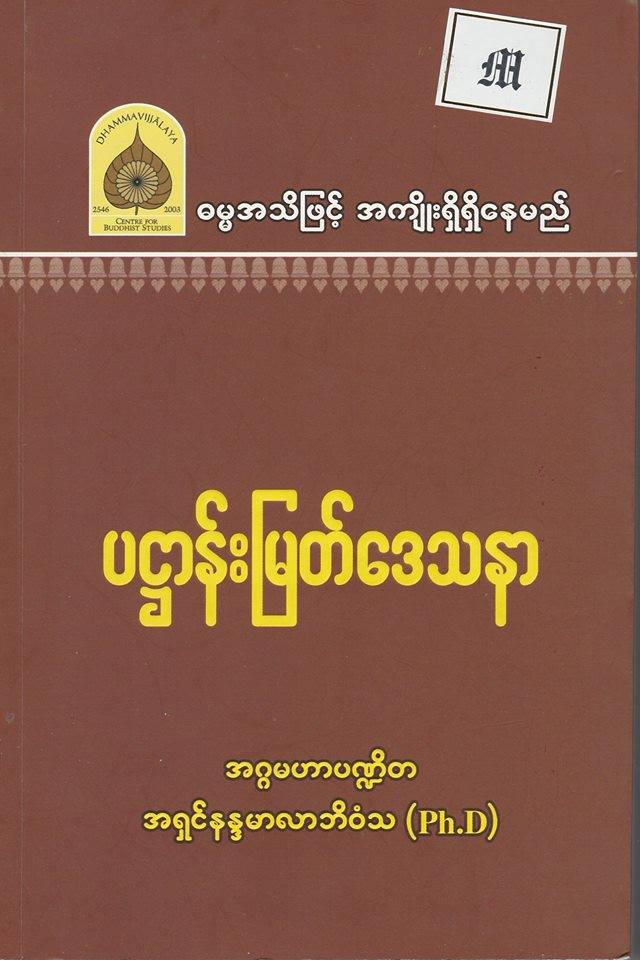
    ပဌာန်း

    7th text in Abhidhamma အဘိဓမ္မာ

    Pathan 1

    Book of Conditional Relations

    1. Root Condition
    2. Object Condition
    3. Predominance Condition
    4. Proximity Condition
    5. Contiguity Condition
    6. Co-nascence Condition
    7. Mutuality Condition
    8. Dependence Condition
    9. Strong-Dependence Condition
    10. Pre-nascence Condition
    11. Post-nascence Condition
    12. Repetition Condition
    13. Kamma Condition
    14. Resultant Condition
    15. Nutriment Condition
    16. Faculty Condition
    17. Jhana Condition
    18. Path Condition
    19. Association Condition
    20. Disassociation Condition
    21. Presence Condition
    22. Absence Condition
    23. Disappearance Condition
    24. Non-Disappearance Condition

    Patthana in Daily Life

    Patthana in Daily Life

    Subtitle : An introduction to the Law of Conditionality
    Author : U Hla Myint
    Publisher : Tathagata Meditation Center, 2010

    CONTENTS

    Introduction

    Root condition : Hetu-paccayo
    Fascination (Sense-object) condition : Arammana-paccayo
    Predominance condition : Adhipati-paccayo (sahajata, arammana)
    Continuity condition : Ananatara-paccayo
    Contiguity condition : Samanantara-paccayo
    Co-nascence condition : Sahajata-paccayo
    Mutuality condition : Annamanna-paccayo
    Dependence condition : Nissaya-paccayo (shajata, purejata)
    Strong-dependence condition : Upanissaya-paccayo (aramana, anantara, pakatupa)
    Pre-nascence condition : Purejata-paccayo (vatthu, araammana)
    Post-nascence condition : Pacchajata-paccayo
    Repetition condition : Asevana-paccayo
    Kamma condition : Kamma-paccayo (shahajata, mamakkhanika)
    Resultant condition : Vipaka-paccayo
    Nutriment condition : Ahara-paccayo (sahajarta, kabalikara)
    Faculty condition : Indriya-paccayo (shajata, rupajivita, vatthu-purejata)
    Jhana condition : Jhana-paccayo
    Path condition : Magga paccayo
    Association condition : Samapyutta-paccayo
    Disassociation condition : Vipayutta-apccayo (sahajata, pacchajata, vatthupurejata)
    Presence condition : Atthi-apccayo (sahajata, pacchajata, vatthupurejata)
    Non-disappearance condition : Avigata-paccayo
    Absence condition : Natthi-paccayo
    Disappearance condition : Vigata-apccayo

    Conclusion

    Resources

    • Patthana Theikpan (College)
    • Basic, Intermediate, and Advanced Courses on Patthana
    • A Manual of Abhidhamma
    • Charts, illustrations, mnemonics
    • Computer programs to study Patthana
    • Tri-lingual book (in Pali, Myanmar, and English)
    Pathan 2
    Mahagandayone Sayadaw
    Pathana 3

    Posts

    • Abhidhamma
    • Dhamma Books
    • Sayadaws
    • Tipitaka
  • Patthana

    Patthana

    by Hla Min

    Updated : Sept 2025

    ပဌာန်း

    7th text in Abhidhamma အဘိဓမ္မာ

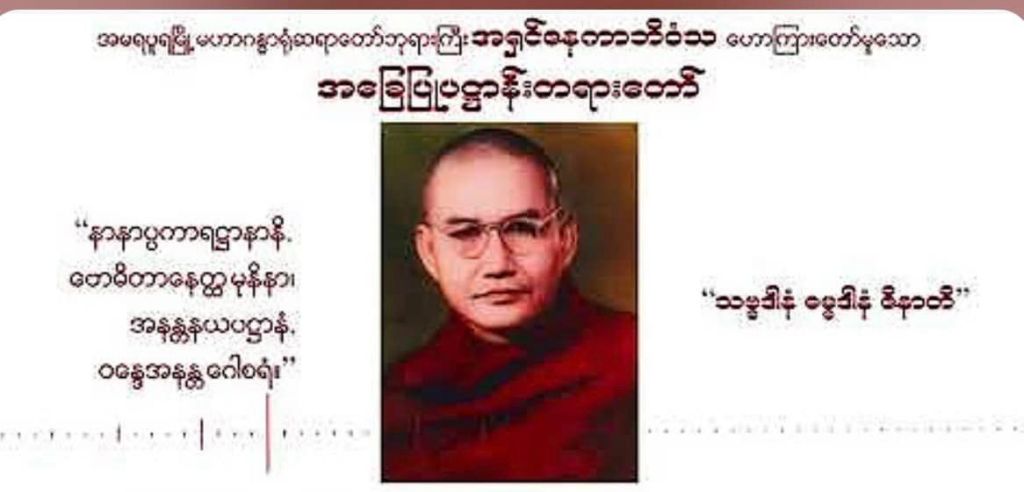
    Ashin Nandamalabhivansa

    Pathan 1

    Book of Conditional Relations

    1. Root Condition
    2. Object Condition
    3. Predominance Condition
    4. Proximity Condition
    5. Contiguity Condition
    6. Co-nascence Condition
    7. Mutuality Condition
    8. Dependence Condition
    9. Strong-Dependence Condition
    10. Pre-nascence Condition
    11. Post-nascence Condition
    12. Repetition Condition
    13. Kamma Condition
    14. Resultant Condition
    15. Nutriment Condition
    16. Faculty Condition
    17. Jhana Condition
    18. Path Condition
    19. Association Condition
    20. Disassociation Condition
    21. Presence Condition
    22. Absence Condition
    23. Disappearance Condition
    24. Non-Disappearance Condition

    Patthana in Daily Life

    Patthana in Daily Life

    Subtitle : An introduction to the Law of Conditionality
    Author : U Hla Myint
    Publisher : Tathagata Meditation Center, 2010

    CONTENTS

    Introduction

    Root condition : Hetu-paccayo
    Fascination (Sense-object) condition : Arammana-paccayo
    Predominance condition : Adhipati-paccayo (sahajata, arammana)
    Continuity condition : Ananatara-paccayo
    Contiguity condition : Samanantara-paccayo
    Co-nascence condition : Sahajata-paccayo
    Mutuality condition : Annamanna-paccayo
    Dependence condition : Nissaya-paccayo (shajata, purejata)
    Strong-dependence condition : Upanissaya-paccayo (aramana, anantara, pakatupa)
    Pre-nascence condition : Purejata-paccayo (vatthu, araammana)
    Post-nascence condition : Pacchajata-paccayo
    Repetition condition : Asevana-paccayo
    Kamma condition : Kamma-paccayo (shahajata, mamakkhanika)
    Resultant condition : Vipaka-paccayo
    Nutriment condition : Ahara-paccayo (sahajarta, kabalikara)
    Faculty condition : Indriya-paccayo (shajata, rupajivita, vatthu-purejata)
    Jhana condition : Jhana-paccayo
    Path condition : Magga paccayo
    Association condition : Samapyutta-paccayo
    Disassociation condition : Vipayutta-apccayo (sahajata, pacchajata, vatthupurejata)
    Presence condition : Atthi-apccayo (sahajata, pacchajata, vatthupurejata)
    Non-disappearance condition : Avigata-paccayo
    Absence condition : Natthi-paccayo
    Disappearance condition : Vigata-apccayo

    Conclusion

    Resources

    • Patthana Theikpan (College)
    • Basic, Intermediate, and Advanced Courses on Patthana
    • A Manual of Abhidhamma
    • Charts, illustrations, mnemonics
    • Computer programs to study Patthana
    • Tri-lingual book (in Pali, Myanmar, and English)

    TBSA Publication

    Pathan 2

    Ashin Janakabhivsmsa

    Mahagandayone Sayadaw

    Mahagandayone Sayadaw
    Pathana 3

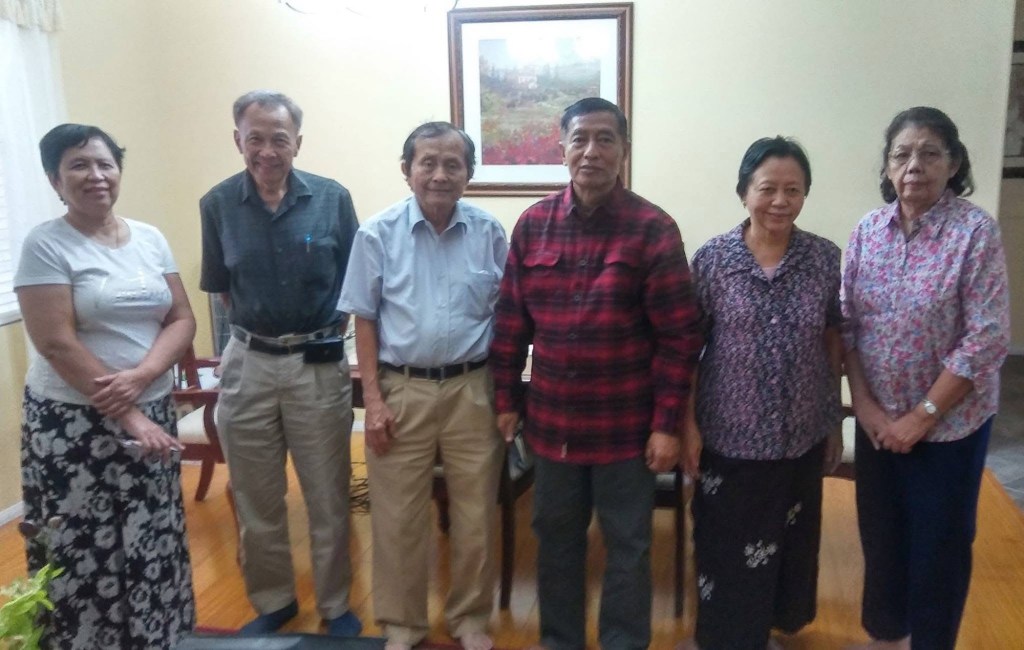
    U Ohn Kyaw (EP73)

    Pathan Lecturer

    U Ohn Kyaw 1
    U Ohn Kyaw 2

    Posts

    • Abhidhamma
    • Dhamma Books
    • Sayadaws
    • Tipitaka
  • Mental States

    Mental States

    by Hla Min

    Updated : Aug 2025

    Cetasika စေတသိက်

    • Mental states
    • All types of cetasikas are able to arise only be depending on Citta (စိတ် consciousness)
    • There are 52 types = 13 + 14 + 25
    • Classified into three groups

    First Group : 13 types

    • Annasamana : Common to others : 13 types = 7 + 6

    • Universal annasamana : associates with all cittas : 7 types
    • Contact, Feeling, Perception, Motivation, One-pointedness, Faculty of mental life, Attention

    • Particular annasmana : associates with some cittas : 6 types
    • Initial application, Sustained application, Decision, Effort, Joy, Wish to do

    Second Group : 14 types

    • Akusla : Immoral mental state : 14 types
    • Ignorance, Shamelessness, Fearlessness, Restlessness, Attachment, Wrong view, Hatred (fear), Envy, Stinginess, Remorse, Sloth, Torpor, Doubt

    Third Group : 25 types

    • Sobhana : mental state with virtue : 25 types = 19 + 3 + 2 + 1
    • Mental states that are common to all types of sobhana citta : 19 types
    • Faith, Mindfulness, Moral shame, Moral dread, Non-attachment, Non-hatred, Equanimity, Tranquility of mental factors, Tranquility of mind, Lightness of mental factors, Lightness of mind, Pliancy of mental factors, Pliancy of mind, Adaptability of mental factors, Adaptability of mind, Proficiency of mental factors, Proficiency of mind, Rectitude of mental factors, Rectitude of mind
    • Mental state that abstains from evil speech, action, and livelihood : 3 types
    • Right speech, Right action, Right livelihood
    • Mental state that has limitless objects on which one must be practiced : 2 types
    • Compassion, Sympathetic joy
    • Mental state that realizes an object : 1 type
    • Faculty of wisdom

    Books by

    • Dr. Nandamalabivamsa
    • Dr. Mehm Tin Mon
    Abhidhamma
  • Abhidhamma Books & Courses

    Abhidhamma Books & Courses

    by Hla Min

    Updated : July 2025

    U Silananda

    U Silananda
    • Chief Resident Monk of Dhammananda Vihara
    • First Rector of IMBTU
    • Taught Abhidhamma courses in Burmese and English.
    • The course in Burmese is available in CD and MP3 tapes.
    • The course is English is available as a 3-volume book.

    Abhidhamma Course (in Burmese)

    This image has an empty alt attribute; its file name is abhidhamma-book-1.jpg
    Abhidhamma (Burmese)
    • Sayadaw U Silananda gave a course at Dhammananda Vihara (then in Daly City) over several weekends.
    • Saya U Tin Maung Nyunt (M60) completed the course.
    • Some devotees converted the 26 tapes into MP3 format.
    • Ko Jeffrey (from Fremont) loaded them onto an MP3 player, and offered them as dhamma dana to students taking Abhidhamma courses.

    Handbook of Abhidhamma Studies

    • Three Volumes by Venerable Sayadaw U Silananda
    • Transcription by Sarah E Marks
    This image has an empty alt attribute; its file name is handbook-1.jpg
    Abhidhamma (English)
    This image has an empty alt attribute; its file name is handbook-2.jpg
    Back cover

    Dr. Nandamalabhivamsa

    Dr. Nandamalabhivamsa
    • He succeeded U Silanandabhivamsa as Rector of IMBTU
    • He taught Abhidhamma in Myanmar and beyond.
    • Fundamental Abhidhamma Part I was first taught in 1997 at Maryland, USA. The book was edited by Dr. Khin Maung U (First in Burma in the Matric exam of 1963). The second edition was published by the Center of Buddhist Studies (CBS), Sagaing Hills in 2005.
    • Fundamental Abhidhamma Part II was published by the Center of Buddhist Studies (CBS), Sagaing Hills in 2007.
    This image has an empty alt attribute; its file name is abhidhamma-1.jpg
    Fundamental

    Fundamental Abhidhamma

    Part I

    • By Dr. Nandamalabhivamsa
    • First edition : June 1997
    • Editor : Dr. Khin Maung U
    • Myanmar-Buddhist Meditation Society, Baltimore, Maryland, USA
    • Second, extended edition : January 2005
    • revised : November 2005
    • Center for Buddhist Studies (CBS), Sagaing Hills, Sagaing, Myanmar

    Contents

    The History of Abhidhamma

    (1) Why is it called Abhidhamma?
    (2) Who is the author?

    (8) The role of Abhidhammattha sangaha
    (9) The role of Vibhavani
    (10) Ledi Sayadaw
    (11) Paramatthadipani, the critic of Vibhavani

    The Fundamental of Abhidhamma

    Chapter 1 : Citta
    Chapter 2 : Cetasika
    Chapter 3 : Rup (Matter)
    Chapter 4 : Pikinnaka (Miscellaneous)
    Chapter 5 : Vithi : Mental Process

    This image has an empty alt attribute; its file name is abhidhmma-2.jpg

    Fundamental Abhidhamma

    Part II

    • By Dr. Nandamalabhivamsa
    • Version Dec 2007
    • Center for Buddhist Studies (CBS)
    • Mahadubodhayon Monastery, Sagaing Hills, Sagaing, Myanmar

    Contents

    • Chapter 5 : Vithi
      Mental Process
    • Chapter 6 : Vithimutta
      Passive Mental Process
    • Chapter 7 : Paccayasangaha
      Compendium of Causality
    • Chapter 8 : Kammatthana Sangaha
      Meditation Subject

    Kusalakari Monastery

    • Ashin Garudhamma teaches two courses at the monastery in Spady, Fremont.
    • One is Pali.
    • The other is Abdhidhamma.
    Gary dhamma

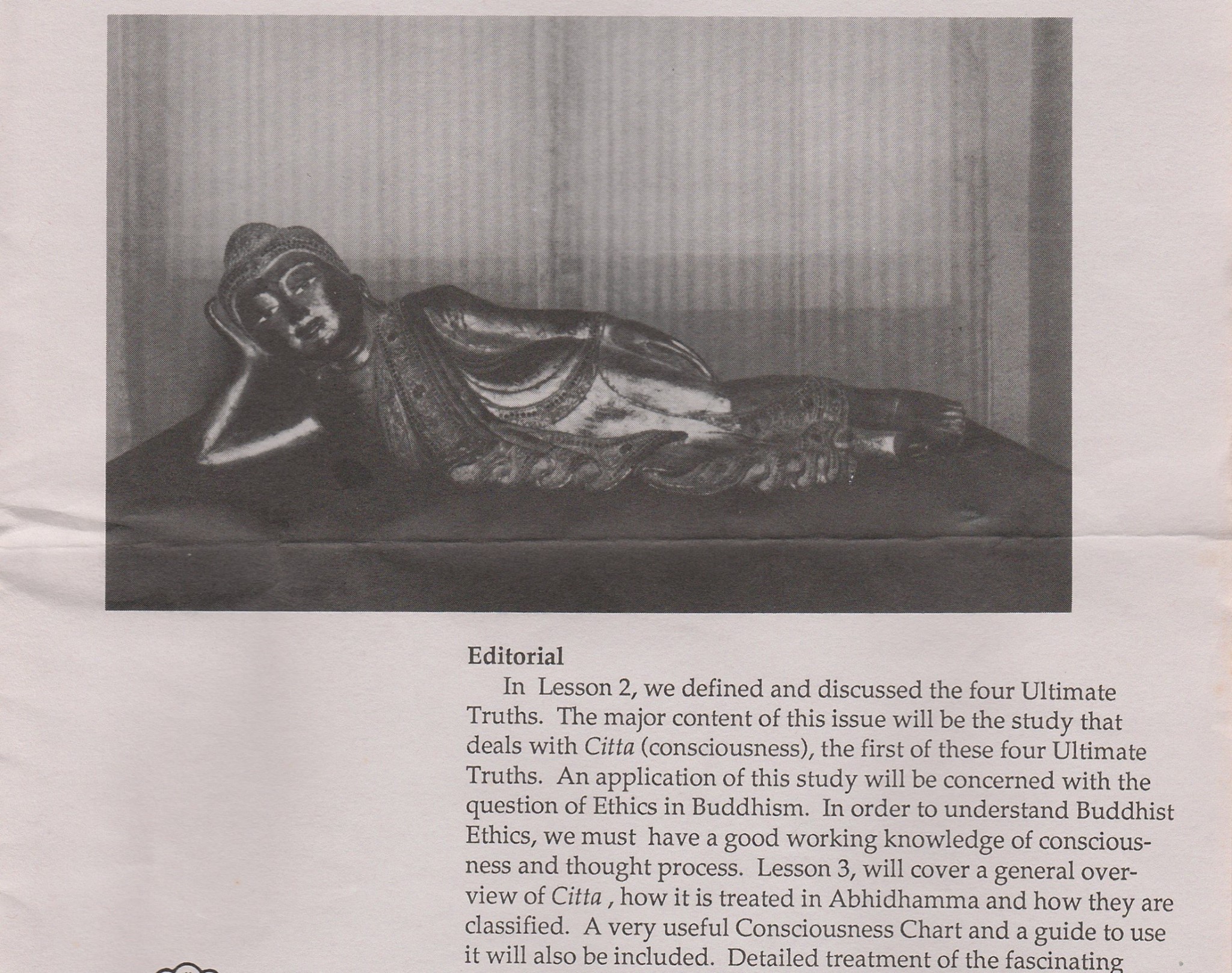
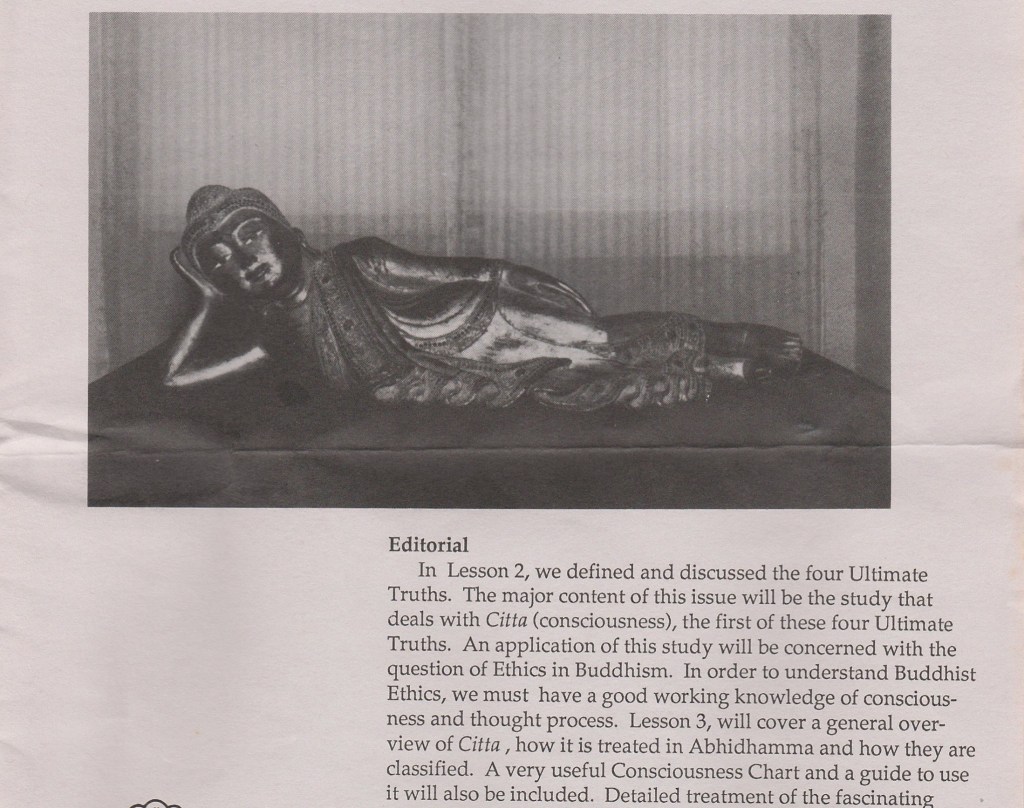
    Abhidamma Newsletter (1999)

    • Sayadaw U Silanandabhivamsa was Patron of Dhammachakka Meditation Center, Berkeley, C.A.
    • Abdhidhamma Newsletter was published by the Abhidhamma Study Group of DMC.
    This image has an empty alt attribute; its file name is abhidhamma-newsletter.jpg
    Abhidhamma Newsletter

    Abhidhamma Newsletter
    Volume 1 Number 3 (April 1999)
    Adviser: Venerable U Silananda
    Editor: Maung Tin-Wa (Ph.D.)
    Editorial Board: James Cameron, U Aye Cho, Aung Khin (M.D.).
    Marc F. Lierberman (M.D.), Yan Naing Lwin (Ph.D.),
    Sarah E, Marks, Tin Than Myint (M.D.), Bach Dong Nhut,
    U Han Nyo, Phil Rohrer, Larry Rosenberg,
    Anna Spievogel (M.D., Ph.D.), Tin Myo Than (M.D.),
    Hla N. Tin (Ph.D.), Rita Adelman
    Graphic Designer: Scott Jordan
    Transcribing and Word Processing: Pat McMahon
    Published by the Abhidhamma Study Group of Dhammachakka Meditation Center, Berkeley, C.A.

  • Abhidhamma

    Abhidhamma

    by Hla Min

    Updated : June 2025

    Abhidhamma Newsletter
    Volume 1 Number 3 (April 1999)
    Adviser: Venerable U Silananda
    Editor: Maung Tin-Wa (Ph.D.)
    Editorial Board: James Cameron, U Aye Cho, Aung Khin (M.D.).
    Marc F. Lierberman (M.D.), Yan Naing Lwin (Ph.D.),
    Sarah E, Marks, Tin Than Myint (M.D.), Bach Dong Nhut,
    U Han Nyo, Phil Rohrer, Larry Rosenberg,
    Anna Spievogel (M.D., Ph.D.), Tin Myo Than (M.D.),
    Hla N. Tin (Ph.D.), Rita Adelman
    BGraphic Designer: Scott Jordan
    Transcribing and Word Processing: Pat McMahon
    Published by the Abhidhamma Study Group of Dhammachakka Meditation Center, Berkeley, C.A.

  • Buddhist Councils

    Buddhist Councils

    by Hla Min

    Updated : June 2025

    According to the Theravada Buddhist tradition, there are six Buddhist Councils. The last two were held in Burma.

    Mandalay

    Ripley’s “Believe it or not” named U Khanti Kyauksar (inscriptions) of the Fifth Buddhist Council (Synod) held in Mandalay as the “Largest Book” in the world.

    The Council was held to celebrate the 2400th Year in Sasana Era.

    King Mindon was the Sponsor.

    Kaba Aye

    U Nu & Sir U Thwin were prime movers for the Sixth Buddhist Council, which was held to celebrate the 2500th Year in Sasana Era.

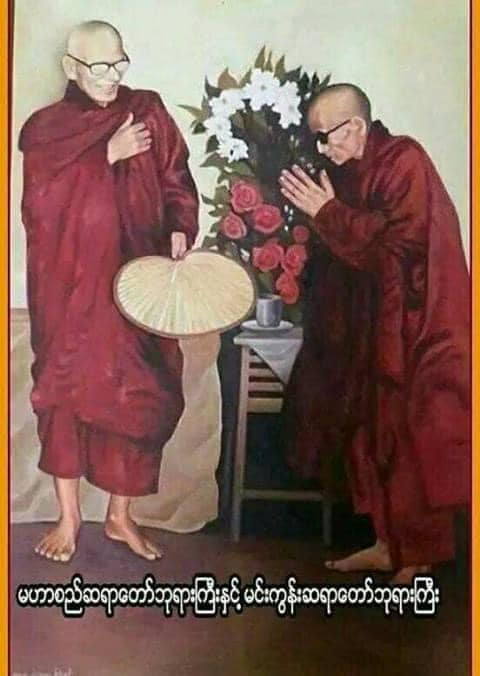
    Mahasi Sayadaw မဟာစည်ဆရာတော် acted as the Questioner.

    Mingun Sayadaw မင်းကွန်းတရာတော် acted as the Reciter & Responder.

    Mahasi & Mingun Sayadaws

    The Guinness Book of World Records listed Tipialkadara Sayadaw Ashin Vicittathara as having an outstanding memory — the best at that time [in 1954]. Sayadaw served as the Chief Reciter (a la Ashin Upali and Ashin Ananda at the First Buddhist Council) at the Sixth Buddhist Council held at KabaAye (World Peace) Pagoda in Rangoon, Burma from 1954 – 1956.

    Sayadaw could memorize, recall, and give exposition on 8027 pages of the Buddhist Scriptures known as Tipitaka [“Three Baskets”] :

    • Vinaya – Rules of monastic conduct
    • Sutta – Buddha’s discourses
    • Abhidhamma – Ultimate reality)

    He took the 2nd – 5th Tipitakadara examinations and passed with distinction in both oral and written parts. Sayadaw served as an examiner for the first Tipikadara examination. Sir U Thwin requested him to take the examination. The rest is history.

  • Process of Consciousness and Matter

    by Hla Min

    Updated : June 2025

    Subtitle : The Philosophical Psychology of Buddhism

    By Sayadaw Rewata Dhamma

    Completed : 2004

    Last book by Sayadaw

    Publisher: Triple Gems Publication

    The book is intended for all serious students of the Abhidhamma.

    It serves as supplement to Bhikkhu Bodhi’s book “A Comprehensive Manual of Abhidhamma”, and treats various important aspect in more detail – in articular the process of consciousness and matter.

    Preface by Sayadaw U Silanandabhivama, Rector of the International Theravada Buddhist Missionary University, Yangon

    Acknowledgement by Sayadaw Dr. Ottaranyana, Birmingham Buddhist Vihara, UK

    Introduction

    Chapter I : CONSCIOUSNESS AND ITS FACTORS

    CHAPTER II : PROCESS CONSIOUSNESS (CITTA VITHI)

    CHAPTER III : MIND-DOOR COGNITIVE PROCESS (MANODVARA VITHI)

    CHAPTER IV : ABSORPTION JAVANA IN THE MIND-DOOR PROCESS (APPANA JAVANAVARA MANODVARA VITHI)

    CHAPTER V : PROCESS OF MATTER

  • Patthana

    It is the 7th text in Abhidhamma

    Book of Conditional Relations

    1. Root Condition
    2. Object Condition
    3. Predominance Condition
    4. Proximity Condition
    5. Contiguity Condition
    6. Co-nascence Condition
    7. Mutuality Condition
    8. Dependence Condition
    9. Strong-Dependence Condition
    10. Pre-nascence Condition
    11. Post-nascence Condition
    12. Repetition Condition
    13. Kamma Condition
    14. Resultant Condition
    15. Nutriment Condition
    16. Faculty Condition
    17. Jhana Condition
    18. Path Condition
    19. Association Condition
    20. Disassociation Condition
    21. Presence Condition
    22. Absence Condition
    23. Disappearance Condition
    24. Non-Disappearance Condition

    Patthana in Daily Life

    Subtitle : An introduction to the Law of Conditionality
    Author : U Hla Myint
    Publisher : Tathagata Meditation Center, 2010

    CONTENTS

    Introduction

    Root condition : Hetu-paccayo
    Fascination (Sense-object) condition : Arammana-paccayo
    Predominance condition : Adhipati-paccayo (sahajata, arammana)
    Continuity condition : Ananatara-paccayo
    Contiguity condition : Samanantara-paccayo
    Co-nascence condition : Sahajata-paccayo
    Mutuality condition : Annamanna-paccayo
    Dependence condition : Nissaya-paccayo (shajata, purejata)
    Strong-dependence condition : Upanissaya-paccayo (aramana, anantara, pakatupa)
    Pre-nascence condition : Purejata-paccayo (vatthu, araammana)
    Post-nascence condition : Pacchajata-paccayo
    Repetition condition : Asevana-paccayo
    Kamma condition : Kamma-paccayo (shahajata, mamakkhanika)
    Resultant condition : Vipaka-paccayo
    Nutriment condition : Ahara-paccayo (sahajarta, kabalikara)
    Faculty condition : Indriya-paccayo (shajata, rupajivita, vatthu-purejata)
    Jhana condition : Jhana-paccayo
    Path condition : Magga paccayo
    Association condition : Samapyutta-paccayo
    Disassociation condition : Vipayutta-apccayo (sahajata, pacchajata, vatthupurejata)
    Presence condition : Atthi-apccayo (sahajata, pacchajata, vatthupurejata)
    Non-disappearance condition : Avigata-paccayo
    Absence condition : Natthi-paccayo
    Disappearance condition : Vigata-apccayo

    Conclusion

    Resources

    • Patthana Theikpan (College)
    • Basic, Intermediate, and Advanced Courses on Patthana
    • A Manual of Abhidhamma
    • Charts, illustrations, mnemonics
    • Computer programs to study Patthana
    • Tri-lingual book (in Pali, Myanmar, and English)