Category: Broadcast

  • MASTAA — Interview

    MASTAA — Interview

    by Hla Min

    Updated : September 2026

    MASTAA

    • Myanmar American Science and Technology Alumni Association
    • Based in East Coast, USA
    • Published several interviews
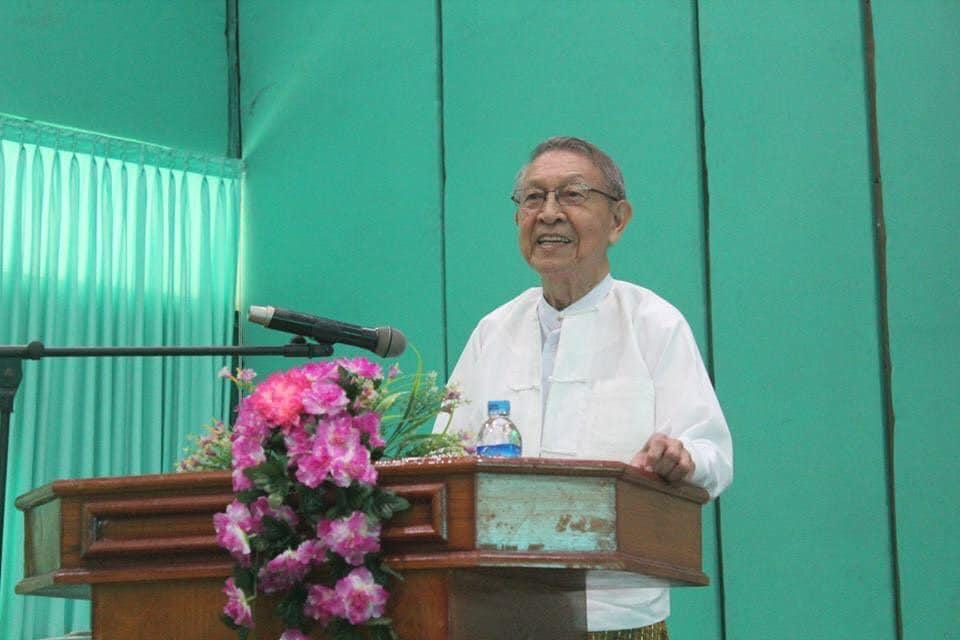
    U Soe Paing
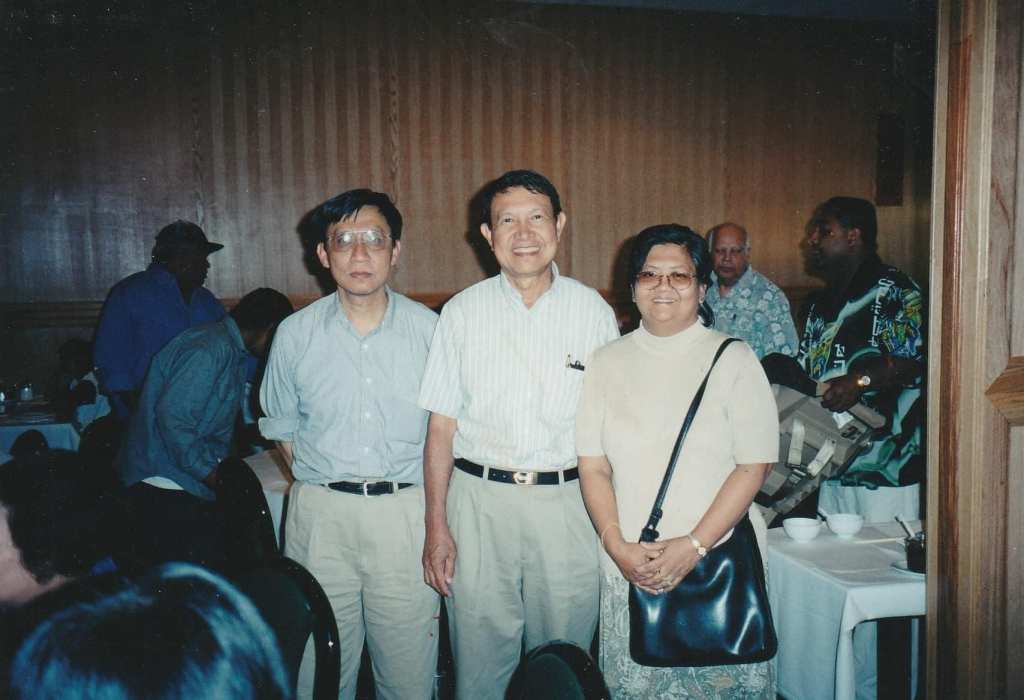
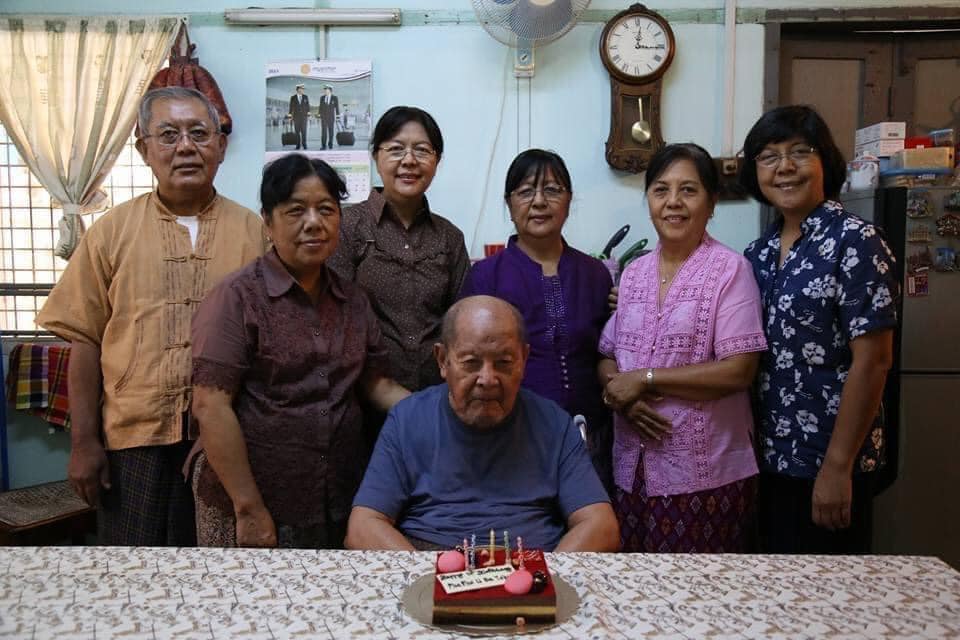
    U Soe Paing, U & Mrs. Hla Min

    U Soe Paing

    Note : Comments in italics are provided by Hla Min.

    • I have written many articles on the History of Computerization in Myanmar.
      ** Most can be read from SCRIB-D.
    • However many people have not read them. MASTAA has requested me do an interview.
      ** It is tentatively planned for July 19, 2020 (at 10 PM. EST). It will be morning in Yangon, Myanmar.
    • Facts are very important because there are some people who want to twist them to their advantage. Especially since the project was very successful in introducing computers and computer education in the country.
    • I was with the project right from its inception.
      ** Sad to report that Saya Dr. Chit Swe and U Ko Ko Lay have passed away.
    • I would like to go over the facts.

    When and how I got involved in UCC Computer project

    • Took programming and DP courses at Stanford University.
    • Around 1962, there was no CS Department or CS courses.
      ** Professor George Forsythe later founded and Chaired the CS Department at Standford.
    • Computer programming was given by Mathematics Department as part of Numerical Analysis
    • Introduction to Data Processing was given by Industrial Engineering Dept
    • Worked as part time computer operator for the Stanford Computation Center.
    • Joined Electrical Engineering Department, RIT as Assistant Lecturer in January 1964,
      RIT was closed.
      As part of the staff development program, I gave lectures to Elect Engg staff on computers and programming.
    • Ko Nyi Nyi (Instructor in Elect Eng Dept) told Dr Chit Swe, Head of Maths Dept at the Institute of Economics who was preparing to start a project with the assistance of the UN to install a computer.
    • Dr Chit Swe and U Hla Myint (Maths Dept) came to recruit me to assist them in the computer project.
    • Immediately agreed and joined the project preparation team.
    • Ko Nyi Nyi and Dr. Than Htaik (Chem Eng Dept) also joined the team.
    • At that time Unit Record Machines using punched cards (both IBM and ICL) were used in Burma by the Railways, Central Economics and Statistics Department (CSED), Records Office Burma Army.
    • At one point all the Unit Record Machines were centralized in one place (Burma Machines Corporation??) and then decentralized again.
      ** Per U Thein Han, IBM unit record machines were used in the first Demonatization. The machines were set up in Rangoon University (e.g. Convocation Hall).
    • Burma Railways wanted to replace their Unit Record Machines with a computer and was requesting funds from the government.
      ** However, the nationalization followed by tight control of foreign exchange caused the request to be denied.

    Preparation for the UCC project (1965 – 70)

    • The UNDP in Yangon and the Goverment agreed to explore the possibility of having a UNDP funded UNESCO executed project of installing a computer at the Institute of Economics.
    • In 1965 Dr Abou Taleb from Egypt visited Burma at the Institute of Economics for one month as a UNESCO consultant on the formulation of the project. He had discussions with the project team, the concerned persons at the Directorate of Higher Education and other government departments, UNDP personnel and managers of IBM (** U Aung Khin) and ICL (** U Kyaw Tha).
    • Dr Abou Taleb prepared a report that was submitted to the UNESCO and UNDP.
    • Around 1968 UNDP mission composed of Professor Owens of Columbia University and Mr Talbot of UNDP HQs came to Burma (Institute of Economics) to write a project proposal for the UNDP/UNESCO Computer Project.
      The mission had discussions with the project team, the concerned persons at Higher Education and other government departments, UNDP personnel and managers of IBM and ICL.
    • The report and the project proposal were submitted to UNDP, UNESCO and the Government.
    • It was agreed to implement the UNDP funded, UNESCO executed Computer project.
    • The project document for the UNDP/UNESCO Universities’ Computer Center Project was signed in 1970.

    Preparation for the establishment of UCC

    • In 1969 the project preparation team office moved to the Maths Department, RASU.
    • The Government decided to establish the Universities’ Computer Center directly under the Department of Higher Education.
    • A new building was to be constructed for the Center on the Hlaing Campus.
    • The project preparation team started to develop the organizational structure, budget, as well as the design for the building.
    • Ko Tun Aung Gyaw (UTAG) joined the project preparation team.
    • A temporary office / room was given to the project preparation team on the 3rd /top floor of the RASU Maths Dept.
      The Maths department still provided the logistics support.
      Saya U Maung Maung Tin of the RASU Maths Department was extremely helpful to the project preparation team.
    • The UCC organization structure consists of the Director at its head advised by the Board of Management.
      Under the Director are three technical divisions: Operations, Systems, Applications and an Administrative Support Section.
      One Manager heads each division.
    • Operations division consists of the Computer Operations section and the Data Preparation section.
    • Systems Division consists of the Systems Hardware section and the Systems Software section.
    • Applications Division consists of the Scientific Applications section and the Business Applications section.
    • The UCC organization structure was approved by the government and the Board of Management was formed.
    • Dr. Chit Swe was appointed Director of UCC in addition to his duties as Professor.
    • The Board of Management was formed with Dr Nyi Nyi, Deputy Minister, Ministry of Education as Chairman and Dr. Chit Swe as Secretary.
      The members include U Thet Tun, DG of CSED; U Win Pe, Research Dept, Planning; U Nyunt Maung, Dy Director, Finance; Dr Khin Maung Kyi, Inst of Economics, Dr Aung Gyi, RIT; etc
    • The UCC building on Hlaing Campus was to be designed and built by the Public Works Corporation.
      It was designed by the Chief Architect U Aung Myint. The team also met my high school and Stanford friend Ko Ko Lay who was a structural engineer there.
    • Ko Myo Min returned from the UK after studying as a Charted Accountant and working (** as Systems Analyst) at IBM UK.
    • Ko Ko Lay, Ko Myo Min and other volunteers joined the project preparation team.
      The volunteers are Ko Win Myint (Gyi) etc.
    • The three managers were recruited.
    • I transferred to UCC from RIT as Systems Engineer/Manager of the Systems Division of UCC on April 1971.
    • Ko Ko Lay transferred from Public Works/Construction Corporation as Manager of the UCC Operations Division.
    • Ko Myo Min joined as Manager of the Applications Division.
    • 1st April 1971 is considered as the start of UCC.
    • The first batch of other staff were recruited and appointed.
      UTAG and Johnny Hla Min joined as Maintenance Engineers.
    • UCC was given a temporary office on the third floor of the Mandalay Hall.
    • The project preparation team organized courses in computers, programming and applications for the staff of Universities and government departments.

    Choice of the computer

    • In October 1970, Dr Chit Swe went to UNESCO, Paris to participate in the selection of the computer for the project.
    • ICL 1900 series was chosen over IBM.
    • IBM was only willing to supply the IBM 360 and not the recently introduced IBM 370.
    • Dr Chit Swe then went on to London for discussions with ICL.
      ICL gave a more powerful version 1902S for the same price.

    Installation of the Computer and start of UCC

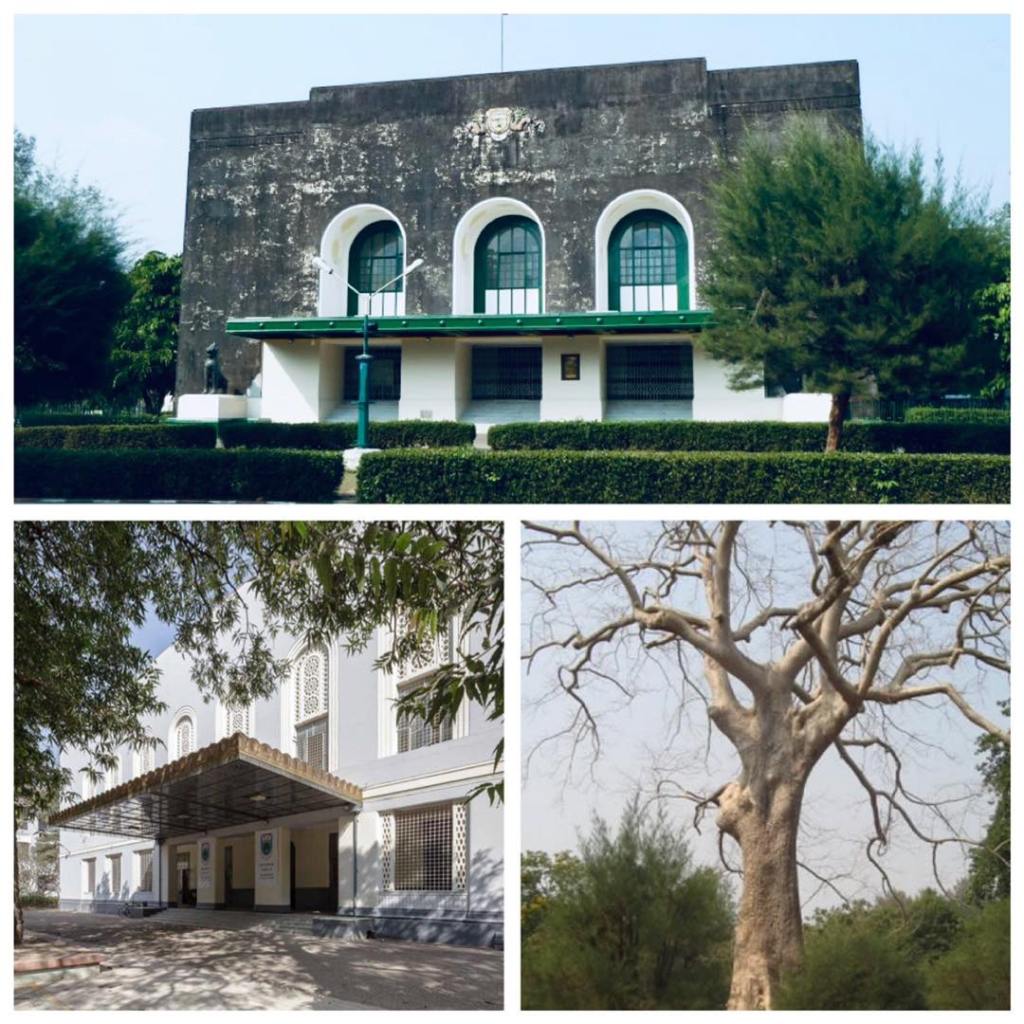
    • In 1972 UCC moved to its new building on Thamaing Campus.
    • The site preparation for the computer and environmental equipment started.
    • A firm from the UK was subcontracted by ICL to do the site preparation.
    • The ICL 1902S computer was delivered and moved into the computer room to start the installation process.
    • ICL resident Maintenance Engineer Gaber Khalef (Egypt) and the ICL resident Software Expert Ian Shearer (UK) arrived and took up their responsibilities.
    • Acceptance trials for the ICL 1902S started on 25 February 1973, and formally completed on 8 March.
    • Professor Huskey arrived on 4 March and took part in the acceptance of the ICL 1902S.
    • The original UCC organization was meant to be minimal and mainly for a one shift per day start.
    • However due to the Census and more than expected use, volunters were paid minimum salary wages (which can be authorized by the Director) used to do the required support work.

    Computer Use

    • The Board of Management decided to process the 1973 Population Census on the UCC computer.
    • Training of the Census Programmers conducted at UCC.
    • Alic Heinrici (UK, the ICL FILAN (ICL Census Tabulation system)) expert came from September to November to train Census and UCC Programmers in FILAN to be used in Census Tabulation.
    • The processing of the Burma Population Census started in May 1974.
    • The data entry was done in the Census Dept (old Rowe Co. Building) with over 100 rented keypunches from IBM.
    • The morning shift (8:00am – 4:00pm) was reserved for UCC.
      The evening shift (4:00pm – 12:00am) and night shift (12:00am-8:00am) were reserved for Census processing.
      At the start the Census processing did not take the two shifts.
    • Saturdays were reserved for Maintenance and the center was closed on Sundays.
    • ICL experts and UCC senior staff designed the Census Processing System containing Sequence and Completeness check (PLAN), Consistency checks (FORTRAN), Tabulation (FILAN).
    • UCC staff also supervised the processing.
    • Burma Railways, Central Economics and Statistics Department (CSED)/(CSO), Records Office Burma Army (ROBA) converted some of their Unit Record Machines applications on to the computer.
      Railways passenger and goods statistics; CSED Health and Trade Statistics; ROBA Miltary records.
    • RIT final year students implemented projects.
      Civil Engg: Structural Engineering, Astronomical Calculations,
      Electrical: Power System Analysis, Electronic Circuit Analysis.

    Computer Education

    • The project preparation team organized courses in computers, programming and applications for the staff of Universities and government departments. (1971)
    • Preparations start for the MSc Computer Science and Postgraduate Diploma in Automatic Computing (DAC) to be given under the Mathematics Department, RASU. (1973)
    • Start of the MSc Computer Science and DAC courses. (1974)
    • There were three options under the MSc course : Computer Systems, Computer Oriented Operations Research Techniques and Computational Mathematics.
      Coursework plus dissertation/thesis.
    • DAC course was 2 years part-time from 7:00 am to 9:00 am.
    • Entrance Aptitude Tests for all applicants meeting the University requirements for post graduate studies.
    • The six months part time course (the predecessor to the full time 4 months course ) was started for the staff of the government departments and universities in 1976.
      It consisted of Introduction to Programming with FORTRAN, Mathematics and Statistics, COBOL Programming, Systems Analysis & Design.
    • The UCC Staff and visiting experts taught most of the courses.
      However Maths sayas helped out in the MSc and DAC courses. U Hla Myint and Dr Kyaw Nyunt in Computational Mathematics; U Soe Nyunt and Dr Pike Tin in OR courses.
    • Paid and unpaid volunteers were expected to attend the courses according to their ability and wishes.

    Expert Services

    • The University of California at Santa Cruz(UCSC) was given the expert subcontract under the project.
      Professor Harry D. Huskey Chairman of the Department of Computer Science at UCSC and the well known pioneer in computers (in the development of the first electronic computer ENIAC at the University of Pennslyvania) was the coordinator of the contract.
      ** He co-authored the first Computer Handbook. His students include Nickaus Wirth (inventor of Pascal and Modula). He is a Past President of ACM and a Fellow of ACM, IEEE and CHM.
    • The UCSC expert subcontract was to provide four long term (4x12m) experts and a few short term (1m) experts, in addition to yearly visits by Professor Huskey.
    • Long Term Experts :
      Mr Sheldon Bachus (Systems Analysis & Design, 1973)
      Dr. Malcolm Atkinson (Computer Science Expert, 1974)
      Dr. Paul Keogh (Operations Research Expert, 1974)
      Mr. Bjorn Hustaad (Simulation, 1977)
    • Short Term Experts :
      World renowned people able to visit and give lectures for one month.
    • Professor Anthony Ralston Professor and Head of the Computer Science Department of the State University of New York (SUNY) in Buffalo, NY USA , and Past President of the Association for Computing Machinery (ACM) came as a one month short term expert in Computer Science. He introduced Structured Programming to UCC, Burma and even to the long term expert in Computer Science. (1975).
    • Professor Foreman Acton of Princeton University, Princeton NJ USA came as a one month short term expert in Numerical Analysis and conducted training courses .(1975)
    • Professor Peter Wegner of Brown University, Providence, Rhode Island came as a one month short term expert in Computer Science and conducted training courses in Automata Theory.(1975)
    • Professor Wilde of Stanford University, Operations Research (1976)
    • Professor Leon Lasdon of University of Michigan, Operations Research (1976).
    • Professor Michael Stonebraker, University of California (Berkeley), INGRES Relational Database, Database 1977)

    UN Experts

    • Dr. Shafeek Saleeb(Egypt) arrived to take up his assignment as Chief Technical Adviser of the UCC project. (1974)
    • Mr. Jan Rademaker (Netherlands) arrived to take up his assignment as an associate expert in Computer Applications under the UCC project. (1975)

    Further Development

    • More memory, 2 disk drives and card reader supplemented by the Census project.
    • For scientific and engineering applications a flat bed Calcomp plotter was acquired.
    • For teaching purposes Professor Huskey advised to get an on line time sharing mini computer system like most American Universities.
      A PDP-11/70 mini computer system was acquired.
    • Prof Huskey also lectured on micro processors and micro computers.
      UCC decided to get a microcomputer for trying out.
      Chose Cromemco (** System Three). Very good except for the 8” disk drive problems. A lot of experience gained.
    • Government relaxed on buying microcomputers for the govt departments. Many acquired Cromemco and started their applications on microcomputers.
    • Since UCC is to be used mainly for training the Board proposed the establishment of a National Computer Center for use by government departments.

    Updates

    MASAA recorded & broadcast interviews by

    • Dr. Aung Gyi
    • Dr. San Hla Aung
    • U Soe Paing

    Posts

    • Associations
    • Interviews
    • Memories of UCC
    • Paing Brothers
  • Talk — Commerce

    Talk — Commerce

    by Hla Min

    Updated : September 2026

    Video Broadcast on October 14, 2020

    YouTube Channel for my Videos

    Introduction

    • Started as Option of Economics Department in the Faculty of Social Science
    • Became a separate department
    • Later : department in the Institute of Economics

    Sayas

    • Saw William Paw : Professor and Head of Department;
      Chair, Rangoon University Sports Council; Succeeded Sithu U Tin as President of RUBC; During my tenure as Treasurer of RUBC, I had to see him frequently.
    • Dr. Khin Maung Kyi : Attended RU as a monk. Known for his debates and writings. Taught at Commerce Department and later headed the Research Department. Performed Research in Malaysia & Singapore. During my visit to Singapore, I had to see Saya and gave him the package presented by Saya U Myo Min (UCC)
    • Dr. Khin Maung Kyawe (Jimmy) : Became DG of BERB.
      First met him when my uncle Saya U Than Lwin (Eric) took me to the Social Science Library. Uncle Eric taught Economics and also served as Librarian. He would give rides to the sayas including Saya Jimmy.
    • U Maw Than : Auditor General. Used APL in his studies.
    • Dr. Mya Than taught and/or did research at the Institute of Economics, Singapore and Thailand. Before going for further studies, he taught at PBRS (Private Boundary Road School). Spouse : Daw Kyi May Kaung
    • Daw Yi Yi Myint and Daw Hla Myint : Attended UCC courses prior to their studies in the USA
    • U Mya Thein (GBNF) : Transferred to UCC as Business Application Programmer/Analyst. Retired as Manager of Business Applications at UCC.
      Also taught at ITBMU.
    • U Thein Oo : Transferred to UCC as Business Application Programmer/Analyst. Taught at UCC, DCS and ICST. Co-founder, MCI. Founder, Ace
    • U Khin Nyo : RUBC; Became Registrar, Mawlamyine College / University

    Alumni

    • U Myo Min : First in I. Com in 1960; First in B. Com (Accounting) in 1962;
      Chartered Accountant (UK);
      Systems Analyst (IBM UK);
      Per request from his mother and Dr. Chit Swe, he came back to Burma to help co-found UCC. In April 1971, he joined UCC as Manager of Business Applications. Taught classes at UCC and the Institute of Economics. Moved to Singapore and then to USA.
      Passed Thingyo examination.
    • Dr. Yi Yi Chit Maung : First in B. Com (Management) in 1962;
      Studied in Canada; Retired in USA
    • U Kyi Soe : Secretary, CGA (Commerce Graduate Association); Rowed for Eco;
      Attended UCC; Worked for MOC
    • Uzin Kondannadhaja (“George” Chan Min) was the de facto leader for the Institute of Economic Rowing teams (including Htin Kyaw and Soe Thin). Worked for EPC and found soul mate (Engineer).
      Attended courses at UCC.
      Moved to the USA. After retirement, he decided to become a monk. For the transition, he asked me to be a temporary monk with him for a week. He resides at Dhammananda Vihara in Half Moon Bay, California. Per request from his brother Dr. Patheda Tin, he spent one vassa at the Chan Myei Yeiktha in Springfield, Illinois.
    • U Kun Pe, U Kyi Khin and U Ohn Myint : Classmates of Uzin Chan Min; Accountant / Auditor; Volunteer for social and religious organizations in SF Bay Area
    • U Than Maung Maung : Worked for UCC and TSC; Moved to the US

    General

    • Per request of Ko Kyi Soe, I taught Mathematics of Finance & related topics at a course conducted by CGA
    • I succeeded U Myo Min as Business Application Manager at UCC
    • Chambers of Commerce :
      Burmese, Chinese, Indian
    • e-Commerce
    • B2B : Business to Business
    • eBMS : e-Business Management System
    • @hmin3664
  • December 1920 (Talk)

    December 1920 (Talk)

    by Hla Min

    Updated : Nov 2025

    Video Broadcast

    Rangoon University

    In December 1920, there were three significant events.

    • On December 1, 1920, Rangoon University was established with Rangoon College and Judson College as the constituent colleges. The colleges are also known by other names (e.g. Government College, Baptist College)
    • On December 5, 1920, the First RU Students’ Strike took place. They protested the 1920 Rangoon University Act as too narrow and restrictive.
    • On December 26, 1920, Saya U Ba Toke was born as a Phwa Bet Taw of the above two.

    Rangoon University (RU)

    • Initially had three Faculties and eight departments (including Law)
    • Initially had six professors
    • RU gradually extended its offerings (beyond Science and Arts)
    • The opening of engineering classes was planned around 1923 and executed in 1924.
    • In 1927, the first batch of engineering students (who had Bachelors degree) graduated with the “accelerated courses” option.
    • In 1928, the second batch of engineering students (who joined after finishing the I.Sc.) graduated.
    • RU was closed from 1942 to 45.
      RU Silver Jubilee was celebrated much later (and without high key).
    • RU celebrated the Golden Jubilee (GJ) in 1970. Dr. Aung Gyi (Professor of Civil Engineering) and U Thet Lwin (Burmese saya at the Institute of Economics) were some of the GJ organizers. The RIT Ah Nu Pyinnya Shins took part in the GJ Entertainment Program as “Swel Daw Yeik Troupe“.
      The term “Swel Daw Yeik” became synonymous with RIT [its predecessors and its successors]. Swel Daw Yeik Ah Nyeint (စွယ်တော်ရိပ်အငြိမ့် with Minthamees မင်းသမီး and Lu Shwin Daws လူရွှင်တော်), Htee Yein (ထီးယိမ်း RIT Belles with colorful Parasols) and Da Bin Daing Ah Ka (တပင်တိုင်အက) were hits at the GJ celebration.
      I was a volunteer member of the “Zay Nay Yar Cha Hta Yay” subcommittee headed by Saya U Hla Tun Aung (Geography). Those who applied for stalls and/or stage included Actor Maung Maung Tar (promoting his make up) and the then amateur band “Playboys” requesting a high stage (for security concerns).
    • RU celebrated the Diamond Jubilee in 1995.
    • RU celebrated the “Yar Pyie Ah Kyo” in December 2019. The opening song was “Mya Kyun Nyo” composed by Maung Ngwe Hlinne (Saya U Thet Lwin).
    • RU Centennial Celebrations were planned for November and December of 2020.
      Due to the pandemic, many events were held virtually.
      Kyemon and Myanar Ah Lin newspapers featured articles about RU. The TV stations featured interviews, songs …

    First RU Students’ Strike

    • Eleven “senior” students led the Boycott of the Rangoon University Act of 1920.
    • They were unhappy with the restrictions of the RU Act and decided to hold a boycott (strike) on December 7, 1920.
    • Due to a news leak, the protests were moved to December 5, 1920.
    • The strike resulted in the establishment of Amyotha Kyaung (National Schools) and Amyotha Kaw Leik (National College). The event is celebrated as Ah Myo Tha Aung Pwe Nay (National Day).
      The Burmese date (10th Waning day of Tazaungmon) is used for the Celebration.
    • Arzani U Razak was an early graduate of the National College. He served as Principal of a National School in Mandalay. He became Minister of Education in Bogyoke Aung San’s cabinet.
    • Prime Minister U Nu, United Nations Secretary General U Thant and Ahmyotha Pyinnya Wun / Educator / Writer U Po Kyar are notable sayas from the National Schools.
    • The boycott was responsible for the amendments to the RU Act. e.g. opening of schools for engineering and medicine,
    • A pillar was set up on Shwe Dagon Pagoda in memory of the Boycott.

    Sayagyi U Ba Toke (Dec 26, 1920 – Dec 2, 2020)

    • He is one of the oldest and senior sayas. Some senior sayas (e.g. Daw Hla May / Anne Sine) passed away in early 2020.
    • Received A.M (Master of Arts in Mathematics) from Harvard University.
    • Served as Assistant Lecturer, Lecturer and Professor of Mathematics at RU and RASU.
    • Promoted to Rector, MASU.
    • With his own volition, he transferred to RIT as Professor of (Engineering) Mathematics.
    • As a Saya of engineering sayas (e.g. Dr. Aung Gyi, U Min Wun and U Khin Aung Kyi), he was invited to attend SPZP-2000 and give a speech.
    • Saya attended all SPZPs except SPZP-2002 (which he had to forgo due to Sayagadaw’s health).
    • Played Chinlon and Soccer.
    • Co-chair of RU Sports Council
      Managed the Soccer program.
    • Headed the Burmese delegation to the 1964 Summer Olympics in Tokyo.
    • Until his 80s, Saya was active
      (e.g. walk to Shwe Dagon Pagoda with his dhamma friends).
    • In his 90s, Saya had physical limitations, but his mental faculty was strong as ever.
    • Saya Dr. Khin Maung Swe (Tekkatho Maung Thin Char, GBNF) interviewed Saya.
      Sayama Daw Myint Myint Khaing (daughter of Arzani Mahn Ba Khaing) transcribed the tapes. The book covering Sayagyi’s Life Journey was published by the RU Thin Char Mi Thar Su for Sayagyi’s 80th birthday.
    • Sayagyi gave me an autographed copy.

    Two Sayagyis

    U Ba Toke & U Ba Than
    • Pu Zaw Pwe (PZP) — paying homage to mentors — is a noble tradition. They are also known as Saya Pu Zaw Pwe and Acariya Pu Zaw Pwe.
    • There have been micro-PZPs, mini-PZPs and grand PZPs.
    • Saya U Ba Than (born on October 2, 1930) usually visits and pay homage to his saya Sayagyi U Ba Toke at least once every year.

    Paying homage to Sayagyi U Ba Toke

    • During my visits to Yangon, I paid homage to Sayagyi U Ba Toke.
    • On one visit, Sayagyi gave me an autographed copy of “Life Journey of Mathematics Professor Sayagyi U Ba Toke”.
      The book was written by Saya Dr. Khin Maung Swe (Tekkatho Maung Thin Char, GBNF) based on his interviews with Sayagyi U Ba Toke. It also covers the early Thin Char Sayagyis. The book was published by Rangoon University Thin Char Mi Thar Su for Sayagyi’s 80th birthday.
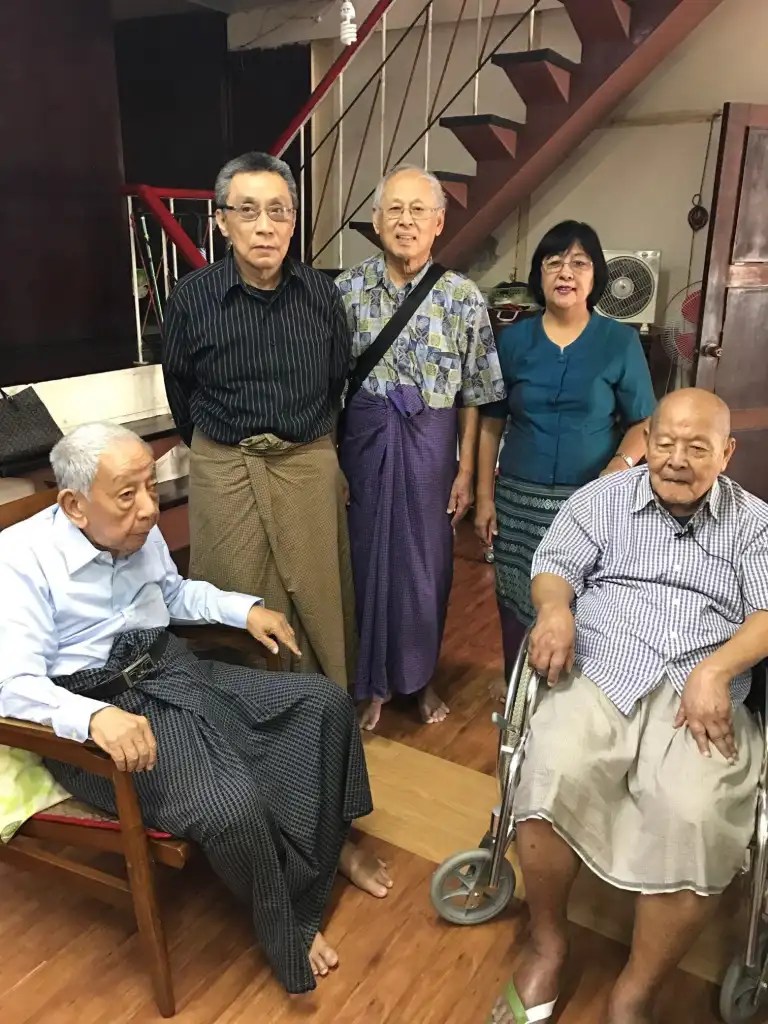
    • In January 2017, Pansy Ba Toke (Thynn Thynn, ChE 74) asked her son-in-law and daughter to pick up Sayagyi U Ba Than, Saya U Tin Htut and me at Winner Inn to see her father Sayagyi U Ba Toke.
      Sayagyi had some problems with mobility and vision, but his mind remains crisp and clear.
    • Pansy was a member of the Swel Daw Yeik “Htee Yein” at the Rangoon University Golden Jubilee in 1970.She has offered transportation to the Sayas who want to visit her father.
    • Sayagyi sometimes defer celebrating his birthday so that his children, grandchildren and great grandchildren — far and near — could join the celebration.
    • Sayagyi is pre-deceased by
      his beloved spouse, his second son (Soe Win, 6th out of his 8 children) and his second daughter (Kitty, 3rd out of his 8 children)
    U Ba Toke & family
  • Prize And Award (Talk)

    Prize And Award (Talk)

    by Hla Min

    Updated : Aug 2025

    Video Broadcast on January 16, 2021

    U Hla Min

    Nobel Prize

    • Physics
    • Chemistry
    • Medicine
    • Literature
    • Peace

    Awards (considered equivalent to Nobel Prize)

    • “Nobel Prize in” Economics
    • ACM Turing Award (in Computing)
    • Field Medal (in Mathematics)

    Prizes at School

    • Highest score in a test or examination
    • Prize for reciting poems (e.g. Mingalar Kabyar)
    • Prize for good handwriting
    • Prize for good behavior
    • Prize for sports events
    • Collegiate Scholarship (for top students in Matriculation examination)

    Rangoon University Boat Club (RUBC)

    • In the early days, RUBC awarded cups to the winning teams.
    • The President of the Union of Burma donated the “President’s Challenge Cup for Inter-Club Eights.”
      In the inaugural competition, RUBC beat the combined team of Calcutta Lake Club and Calcutta University Rowing Club.
    • The Prime Minister of the Union of Burma donated the “Prime Minister’s Challenge Cup for Inter-Club Fours.”
    • The Challenge Cups are listed in the commemorative issue for the 90th Anniversary for the founding of RUBC.
    • Sir Arthur Eggar donated a Pewter Cup for the Senior Novices.
      The Senior Novice Winners receive a brooch.
    • Gold, silver and bronze medals were awarded in the latter days.
      For obvious reasons, the medals are plated.
      P. Orr Tun Yin was a primary supplier of the cups and medals.
      U Hla Din and sons became the secondary source.

    Soccer

    • For World Cup, there was Jules Rimet Trophy.
    • For soccer in Burma, there was “Dunlop Shield (Daing)”

    Number of Medals

    • In some competitions, the two losing semi-finalists are awarded Joint Third prize.
      So, the number of bronze medals can be higher than the number of gold medals.
    • Due to the introduction of tie-breakers in most sports, we rarely have joint champions.
      In a few instances (e.g. the clock cannot discriminate the two winners), two gold medals were awarded to the joint champions.

    Miscellaneous

    • Fellowship
    • Lifetime Achievement Awards
    • National Awards
    • Literary Awards
  • My English Teachers (Talk)

    My English Teachers (Talk)

    by Hla Min

    Updated : Aug 2025

    Video Broadcast on January 8, 2021

    Hla Min

    Introduction

    • Private Boundary Road School
      Daw Ku Paw, Daw Kywe, Daw Yi Yi, Daw Khin Khin Aye
    • St. Paul’s High School
      Ms. A Benjamin, Mrs. V Boudville, Ms. Amelia Kyi (Miss Hong Kong), Brother Xavier, Brother Austin
    • I.Sc. (A)
      Daw Tinsa Maw-Naing, Daw Khin Khin Kyi
    • 2nd BE
      Mr. Des Rodgers (Primary), Sao Kan Gyi, U Khin, U Win Mra

    Saya Des

    IMG_0643

    Saya Des

    • Our main English Teacher in our 2nd BE Class in 1964 – 65.
    • Chief Editor of the RIT English Association Newsletter.
    • Core organizer of debates (in English) between 1st BE and 2nd BE students.
      e.g. “Money is the Root of All Evils”
              “Are we happier than our forefathers?”
    • Played on the RIT Saya soccer team.
    • Accomplished musician : guitarist and vocalist, a regular on the BBS Variety Show.
      Would often play with Saya U Win Mra (Burma’s Elvis Presley in his younger days).
    • Won Singles and Doubles tournaments in Scrabble.
      Held at Guardian, YMCA and RIT.
    • Did post-graduate studies in the UK.
    • Moved to Canada.
    • Taught “English as a Specialty Language” and other English courses.
    • Set up a consultancy firm
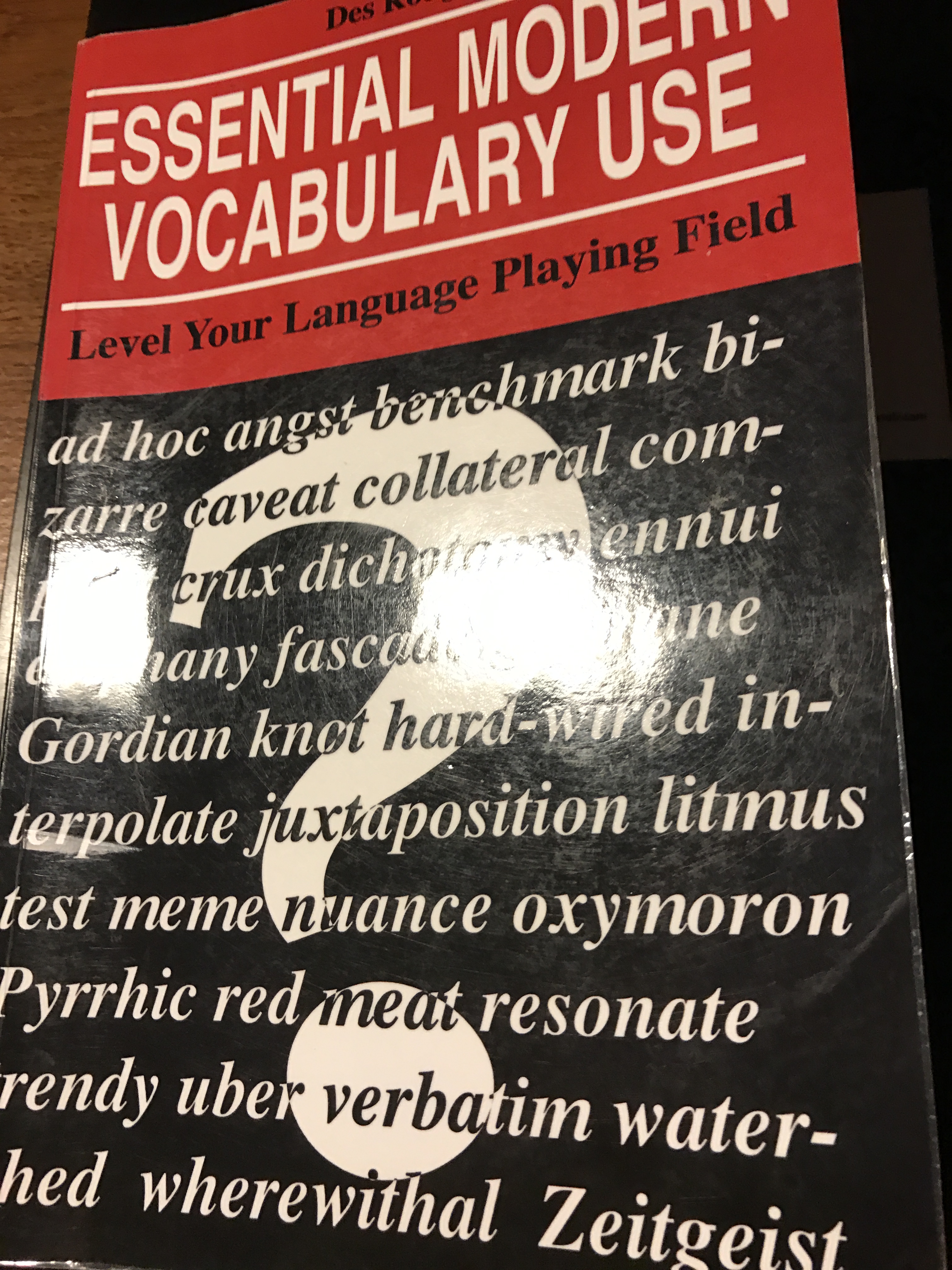
    • Published a book on English words that have been “selected” from contemporary news media and magazines. I helped catch some typos (which would go into an amendment).
    • Conducted on-line courses to students (mostly outside Canada).
    • Published two books.
    • The first book selected words from the contemporary publications (news media and magazines), provided definitions and usage.
      Synonyms and antonyms are given.
    • Sent his book by air mail.
      Sadly, I received only the envelope.
      So he sent a second time using registered/insured option.
      The mailing costs are prohibitive.
      Cost more than the sales price of the book.
    • E-mailed back typos in the book to Saya.
      They will be corrected in a future edition.

    Related Posts

    • Memories of PBRS
    • Memories of SPHS
    • Articles on RIT English
      by Saya Des
    • RIT English Sayas and Sayamas
      by Saya U Khin
    • Scrabble
    • RIT Saya Soccer Team
      by Saya U Soe Paing
  • English Study 2 (Talk)

    English Study 2 (Talk)

    by Hla Min

    Updated : Aug 2025

    Video Broadcast on January 23, 2021

    U Hla Min

    Courses and/or Tests

    • Test of English as a Foreign Language (TOEFL)
    • English as a Second Language (ESL)
    • English as a Specialty Language (ESL)

    My English Teachers

    • I.Sc.(A)
      Daw Khin Kyi Kyi
      Daw Tinsa Maw Naing
    • RIT
      Saya Des Rodgers
      Saya U Khin
      Saya U Win Mra

    Some Reference Books

    • Idioms
    • Proverbs
    • How to improve your diction
    • Rhyming Dictionary
  • Three (Talk)

    Three (Talk)

    by Hla Min

    Updated : Aug 2025

    Video Broadcast on January 15, 2021

    U Hla Min

    Numerals

    • Hindu-Arablic numeral : 3
    • Roman numeral : III

    Triple Gems

    • Buddha (the Enlightened One)
    • Dhamma (His Teachings)
    • Sangha (Monastic Order)

    Tipitaka (Three Baskets)

    • Vinaya (Monastic Rules of Conduct)
    • Sutta (Discourses)
    • Abhidhamma (Ultimate Reality)

    Trinity

    • Father
    • Son
    • Holy Spirit

    Most well-known Hindu Gods

    • Brahma, the Creator
    • Vishnu, the Preserver
    • Shiva, the Destroyer

    Early NASA Projects

    • Mercury : carried only one astronaut
    • Gemini : carried two astronauts
    • Apollo : carried three astronauts

    Apollo Crew

    • Mission Commander (e.g. Neil Armstrong for Apollo11)
    • Command Module Pilot (e.g. Michael Collins for Apollo11)
    • Lunar Module Pilot (e.g. Buzz Aldrin for Apollo11)

    Apollo Modules

    • Service Module
    • Command Module
    • Lunar Module

    Musical Envelope

    • Rise (or attack)
    • Sustain
    • Fall (or decay)

    Prime constituents of an atom

    • Electron
    • Proton
    • Neutron

    Persuasion Techniques

    • Ethos
    • Pathos
    • Logos

    Typical Toastmasters Meeting

    • Prepared Speeches
    • Table Topics (Impromptu Speeches)
    • Evaluation

    Three-valued Logic

    • Yes
    • No
    • Do not care

    Essay (and most writings)

    • Introduction (or Beginning)
    • Body
    • Conclusion (or Ending)

    Medals

    • Gold (for first prize)
    • Silver (for second prize)
    • Bronze (for third prize)

    Measurement of Time

    • Hour
    • Minute
    • Second

    Angular Measure

    • Degree
    • Minute
    • Second

    Academic Degrees

    • Bachelor
    • Master
    • Doctorate

    Some School Types

    • Primary School
    • Middle School
    • High School
  • Audio Book (Talk)

    Audio Book (Talk)

    by Hla Min

    Updated : Aug 2025

    Video Broadcast on January 27, 2021

    Books

    • Regular Print
    • Large Print
    • Braille
    • e-Book
    • Audio Book
    • Special hardware and software to “scan and read” books

    Audio Books

    • Some may be available from Public Libraries
      Early : CDs
    • Some may require “Subscription”
      For downloading
    • Some may be offered at Discount in a Bundle
      Podcasts
      Book summaries
      Books
      e.g. Premium Subscription to Blinkist

    Listeners’ Heaven

    https://www.facebook.com/listenersheaven

    • Established in November 2020
    • Facebook Group
    • Provides “Subscription”
    • Offerings
      Win Pe
      Minthuwun
      Zat Kyee Hse Bwe
      Selected Novels
      Overview of selected “hot” topics
  • Vipassana (Talk)

    Vipassana (Talk)

    by Hla Min

    Updated : Aug 2025

    Video Broadcast

    U Hla Min

    Disciples of Mingun Narada Sayadaw

    • Mahasi Sayadaw
    • Taung Pu Lu Sayadaw

    Disciples of Mahasi Sayadaw

    • Panditarama Sayadaw
    • Saddamaramsi Sayadaw
    • Chan Myei Sayadaw U Janakabhivamsa
    • Dhammananda Sayadaw U Silanandabhivamsa
    • Kheippa Bein Nyaw (Vietnamese)

    Dhamma Lineage of Ledi Sayadaw

    • Saya Thet
    • U Ba Khin
    • S N Goenka

    Fundamentals of Vipassana Meditation

    • Primary Author : Mahasi Sayadaw
    • Translator : Maung Tha Noe
    • Editor : Sayadaw U Silananda
    • Original Publisher : Dhammachakka Meditation Center, 1991
    • Republished with other articles : Tathagata Meditation Center

    Other articles included the book

    (1) “Instructions to Meditation Practice” by Mahasi Sayadaw
    (2) “Benefits of Walking Meditation” by Sayadaw U Silananda
    (3) “Guidance for Yogis at Interview” by Sayadaw U Pandita
    (4) “An Interview with Mahasi Sayadaw” by Thamanaykyaw, translated by U Hla Myint

  • Word Games (Talk)

    Word Games (Talk)

    by Hla Min

    Updated : Aug 2025

    Video Broadcast on January 6, 2021

    U Hla Min

    Introduction

    • Crossword Puzzle
      Various levels of complexity
    • Lexicon
      Card Game
    • Anagram
      Making new words and phrases from the given word
      e.g. North, South, East and West can be transformed into Thorn, Shout, Seat and Stew
    • Jumbled Words
      Feature of a newspaper column
    • Scrabble

    Scrabble

    This image has an empty alt attribute; its file name is img_20190821_0001.jpg
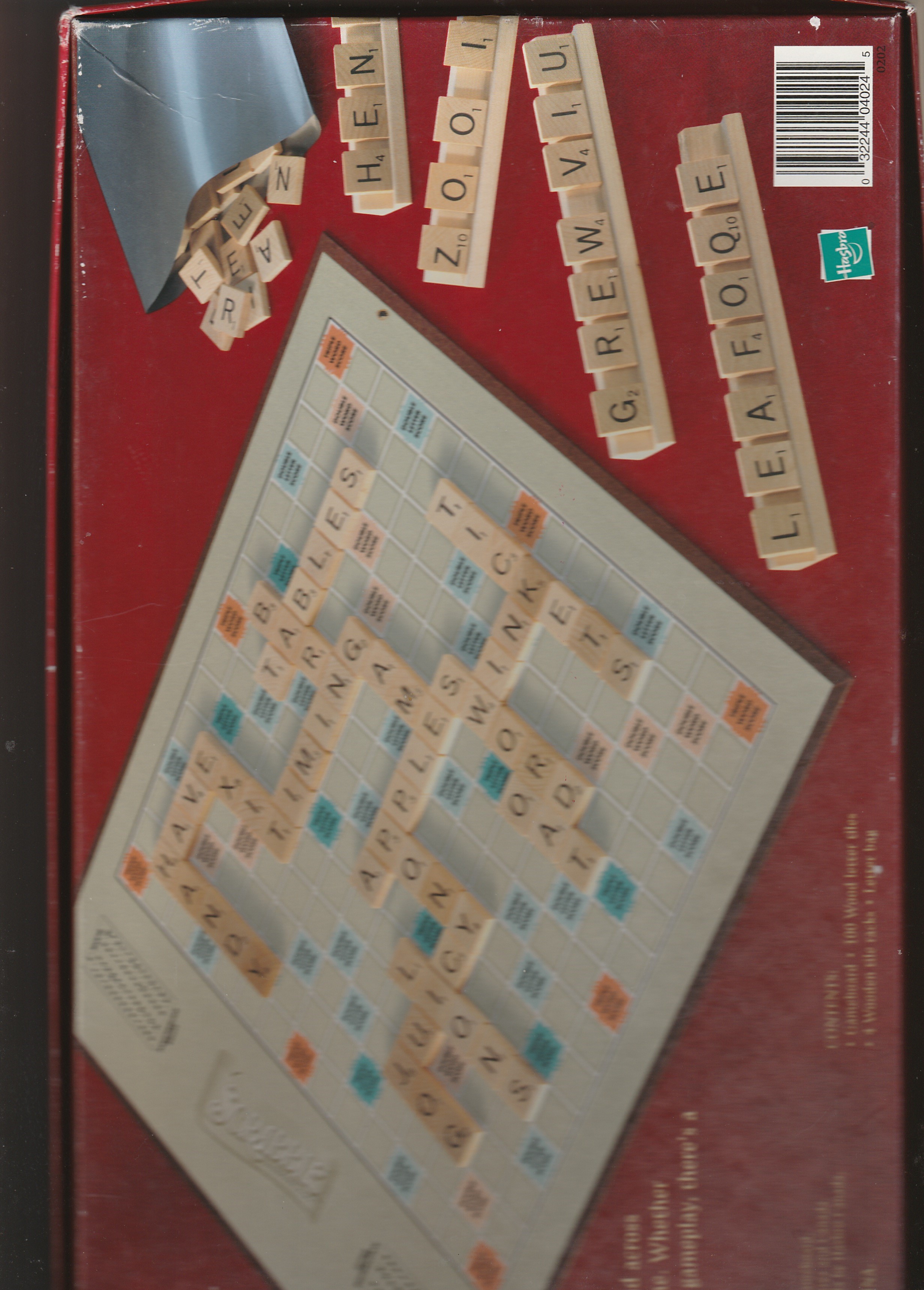
    • Scrabble is a board game.
    • A game can be played by two to four players.
    • There are a specified number of tiles.
    • Each tile holds a letter worth one to ten points, or a “blank” (similar to a “joker” or a “wild card” in card games).

    Rules

    • The word must appear in the official set of dictionaries (e.g. Chamber’s Dictionary, Jone’s Pronouncing Dictionary).
    • A player can challenge the validity of a word.
      He or she will forfeit a turn if the challenge is unsuccessful.
    • A bonus of 50 points is given for a word formed with all seven tiles. e.g. MAJESTY
    • In some contests, adding “s” to a singular to make it plural is disallowed.

    Scrabble Tournaments

    In our younger days, Scrabble tournaments were held by

    • Guardian Newspaper
      P. (Paul) Aung Khin (Editor, “Dawlay’s Circle”) was a host.
      There was a “Tiger” Scrabble team with U Tin Shwe, U Ba U and their friend.
      One of the Tigers joined Saya Des Rodgers to play Doubles.
    • RIT Scrabble Club
      Saya Des and Saya U Khin were hosts.
    • YMCA
      Known for the Chess Champions (e.g. Saya Dawson).
      Hosted Scrabble tournaments.

    Saya Des Rodgers won several trophies. Most of the English sayas (e.g. U Khin) and sayamas (e.g. Daw Toni) played Scrabble along with the students such as Ko Myo Tun (Bobby) and Ko Khin Maung Win (Roland). Civil Engineering sayas (e.g. U Tin Win) also frequent the English Department for Scrabble sessions and tournaments.

    Saya U Khin has Chamber’s Dictionary and Jone’s Pronouncing Dictionary on his desk for use in the challenges.

    Update of RIT Scrabble Players

    • Saya Des moved to UK and then Canada.
    • Saya U Khin moved to Taiwan.
    • Sayama Toni joined her husband U Nyi Than (who retired as Ambassador).
      After his demise, Sayama moved back to Yangon.
      She attends and/or host gatherings (sumptuous food and Scrabble) in Yangon.
    • Bobby is now Ashin Pannagavesaka (Former Dhamma Librarian, Pa Auk Tawya monastery in Mawlamyine).
      Bobby mentioned that Paul requested him to be a judge at the Guardian Scrabble tournaments, so he could not participate.
    • Roland retired after working for an Embassy in Yangon.