Category: Broadcast

  • Architecture

    Video Broadcast on December 29, 2020

    Discipline

    • Design Principles
      Safe and Reliable
      Useful
      Aesthetics
    • Career
      Academic degrees
      Licensed practitioner (for an aspect)
    • Study and related areas
      History of Architecture
      Design
      Building and materials
      Interior Decoration and System (e.g. HVAC)
      Urban planning
      Landscaping
      Tools : CADD and BIM

      Civil Engineering
      Project Management
      Communication
    • Early Sayas
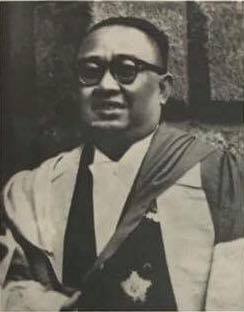
      U Tha Tun
      U Khin Maung Thint (Jimmy)
      U Kyaw Min (Pithuka, MIT)
    • 1958 Graduates (First Batch)
      U Myo Myint Sein (Professor)
      U Myint Thein (Chief Architect, PWD)
    • 1959 Graduates (Second Batch)
      U Bo Gyi (Daw Khin Kyi Mausoleum, Pianist, Modeler, Uzin)
      Dr. Lwin Aung (Pro-Rector, Uzin)
    • 1960 Graduates (Third Batch)
      Koon Yin Chu (First in Class, Also First in Burma in Matriculation of 1954)
      U Tin Htoon (Thiri Pyitsaya Hotel in Bagan, RUBC Captain and Gold, ARAE Champion in 1958 and 1960, Silver Medalist for Yachting in SEAP Games, Helped with several Publications and Photo Albums)
      U Aung Kyee Myint (Chief Architect, PWD)
      U Kin Maung Yin (GBNF, Modern Art, Movie Director)
    • Myanmar Pithuka
      Saya Saing (father of Sayadaw U Silananda, grand father of U Than Tun and U San Maung)
    • Related Posts
      Architecture Department by U Myo Myint Sein
      U Tha Tun by Dr. Koung Nyunt (A67, GBNF) and U Than Tun (A65)
      Architecture Student by U Thet Win (A80)
      Architecture Students won International Contest by Daw Min Thet Mon (A70)
      Senior Architects
      Thet Kyee Pu Paw Pwe by AMA

    Memories by U Tin Htoon (A60)

    Architecture was introduced for the very first time in 1954 at BOC, University of Rangoon. U Myo Myint Sein belongs to this first batch. One of his classmates, Ko Myint Thein retired as Chief Architect of Public Works Department in Yangon. We were the “third batch” and were fortunate to study at the brand new “Faculty of Engineering” campus, commonly known as “Leik-khone” at Pyay [Prome] Road. There were nine of us in the first year, (1956). One of them was Shajahan, an Indian lady who became the first female to join the male dominated Engineering campus. However, she was unfortunate to be the victim of the “2F” system of our days. She left for India and later graduated as an Architect from there.

    In our second year, three guys from the second batch joined us. One from the first batch joined us in the final year. Two of the old-timers became the victims of the “2F” system.

    One very unique and interesting aspect of being an architecture student is doing design work. We were trained to solve design problems within a stipulated time and because of that we use to spend most of our time in our studio class. Eventually, the studio became our second home. We practically eat and sleep there and we spent our break times in the studio as well.

    Only when attending related Engineering subjects, we join together with other Engineering students. Otherwise, we normally confined ourselves within the Department of Architecture block and among our own group. Thus, the reason that most of the Engineering students came to know us because we were like “caged animals” in the zoo; being watched by people from outside and in our case by our friends as they walked along the corridors. Although the majority of us were day students, we were better off than those staying in the hostels as we didn’t have to pay extra to live in the studios. It was fun spending our time in the studios and as we were able to come up with fantastic ideas and designs and draw them as and whenever desired and complete the project within the stipulated time. For us, we didn’t had “days” and “nights”. The nights were more peaceful and productive for us. Only the studios in the architecture block were lit up at night. Sometimes, we even walk over to Hledan, Kamayut to have our break and supper.

    When architecture was introduced at BOC in 1954, there were one British and two Indian architects as full time staff assisted by their Myanmar counterparts. They were still teaching us during our first year. Roger Johnson, also a British architect became head of Department when we got to the second year. He was assisted by Nagler, an American architect and Saya U Kyaw Min (GBNF) and Saya U Win Htain in the later years. Sayagyi U Tha Tun (GBNF), Saya U Maung Maung, Saya U Aung Myint, Saya U Khin Mg Thint and Saya U San Tun Aung were part time staff. All the architectural subjects and the studio design work were taught by them except the freehand drawing class which was taught by an artist. We were fortunate that there were no changes in the staff and they all taught us till we graduated in 1960.

    Apart from the architectural staff, our years at the University will not be complete without mentioning some of our Engineering Faculty staff who taught us some of the related Engineering subjects.

    The first person I wish to mention is Sayagyi Num Kock. He taught us structure and we sometimes didn’t attend his class due to our studio design assignments. Since the class was meant only for architectural students, and since he knew where to find us, he used to come straight to our studio and requested us to come and attend his class. He was very good natured, humble, and led a simple life carrying a shan bag instead of a leather brief case. We always saw him with a smiling face and was very soft spoken.

    Another Saya I remembered well was Saya U Kyit In (later known as U Min Wun). He taught us survey and he was just back from the United States at that time. Whenever I had problem with the survey readings, he came over and nudged me out and checked the readings himself. He used to wear khaki long pants with a single buckle at the rear, which was the fashion of those days.

    Then I remember my Strength of Materials saya, Saya U Ba Than, who happens to be my brother. He was very strict and didn’t give any special favors even to his own brother. He was famous in setting questions for the exam as he never repeated the same ones that were given and worked out in the class.

    The list won’t be complete without mentioning Saya U Kyaw Tun(GBNF) who taught us Electro Technology. Since his classes were immediately after the lunch break, we had a hard time to overcome sleepiness and be attentive to his lectures.

    Last, but not least, I wish to mention about Saya Solomon and Saya Wein Choung. Their metal and wood work classes were always enjoyable and plenty of fun. We were in a totally different environment, not like those of lecture theaters or studio rooms. It was in these classes that we learnt the practical aspect of transforming design drawings into finished products.

    My wonderful six years at the Rangoon University will not be complete without mentioning about my rowing activities. Since I came from a rowing family starting from my uncle Chan Cheng Hock who was Captain (1940-41) and the present oldest surviving Captain, I also became Captain (1959-60) after my two brothers U Tin U (ex-faculty member of BOC) and Dr. Myo Tint. I earned my “Gold” in 1956 by competing in the Inter-varsity regatta at Calcutta. I had the opportunity to represent RUBC seven times in regattas abroad and several times in Yangon.

    Although we started with nine students in the first year in 1956, ten of us graduated in 1960 due to the circumstances explained earlier. Philip Koon Ying Chu, who is now retired after being a very successful restaurant businessman in the Bay area, stood first. It was not the first time for him to have this academic achievement as he got first in the matriculation (in the whole of Burma) and was able to maintain the same position for the Intermediate of Science as well. Out of these ten graduates, six are now residing in the States. Among these six, Tan Teong Kiat (aka) Wai Lwin is the most successful professionally. He is doing consultancy work specializing in conceptual design. S. Hsiang Wu, Victor Pe Win and Jack Min continue to practice architecture in the private sector. Aung Kyee Myint became the Chief Architect of Public Works Department in Yangon and is now serving as an Advisor after his retirement. Khin Maung Yin excels in design and eventually became a well known artist in Myanmar. Later, he spent most of his time giving tuition to children. H. Hla Myint was unfortunate not to live long and passed away a few years ago.

    As for me, I had to be contented with being a Managing Partner of Architects Incorporated after graduating and running my own business. It was challenging, exciting and rewarding compared to being in the Government service. However, in 1962, we had to close down our business. I joined the Industrial Development Corporation (IDC) to open a new architectural division with my two partners Aung Kyee Myint and Bo Gyi in 1964. IDC, together with Housing Board and other Civil Engineering organizations were amalgamated to form Public Works Corporation. While working with Public Works, I had the opportunity to design Thiripyitsayar Hotel in Pagan (Bagan). Now, it is the only hotel complex left within the archaeological zone of Pagan and I am proud to be associated with it. I left Myanmar in 1980 and worked as Sr. Architect with one of the well known architectural firms in Singapore. I had a wonderful and memorable time for over ten years designing multi-story hotels, aerospace exhibition pavilions, commercial complexes, restoration projects and luxurious bungalows. In the beginning I had to work very hard to get acquainted with building codes, bye-laws and local regulations as we never had such standards and regulations to abide by at home. It was wonderful to discharge the duties of an architect properly as “Prime Consultant”. It was like a “Commander-in-Chief”, coordinating with other Engineering disciplines and the related fields like interior decorators and landscape architects, chairing site meetings etc.

    Now that I have settled down in Los Angeles and working for Design Division of L.A. County Dept. of Public works, I am devoting most of my time more in assisting those who are deeply involved in the propagation and perpetuation of Buddha Sasana.

    In conclusion, I wish to pay my tribute to all my Sayas and wish to thank them for educating and equipping us with proper tools in order to be able to face any type of situation in this world. And to my classmates, I salute all of you for your lifetime achievements and hope that this article will throw some light about our wonderful days at “Leik-khone”.

  • Acronyms

    Video Broadcast on November 26, 2020

    Meaning

    Acro (prefix) means High

    • Acrobat
    • Acrophobia

      Nym (root) means Name
    • Pseudonym
    • Synonym
    • Antonym
    • Homonym

    Examples


    In Military

    • SNAFU
      Situation Normal. All Fouled Up
    • FUBAR
      Fouled Up Beyond All Recognition

      In Computer Systems and Applications
    • FORTRAN
      Formula Translator
    • BASIC
      Beginners’ All-purpose Symbolic Instruction Code

      In Models
      There are variants
    • GROW
      Goal
      Review / Result
      Options
      What next? / Willpower
    • SMART
      Specific
      Measurable
      Achievable
      Realistic
      Time-bound
  • Astro-

    Video Broadcast on September 17, 2020

    Astronomy

    • Branches of Astronomy
    • Astrophysics
    • Astrobiology
    • Astrochemistry
    • Planetary science

    Measurement

    • Techniques and tools
    • Observation and mapping
    • Observatory
    • Naked eye
    • Telescopes
    • Galileo
    • Hubble

    Object of study

    • Milky Way
    • Galaxy
    • Solar system
    • Comet

    Astronomers

    • Astronomer Royal
    • Often also Astrologer (in early days)
    • Edmund Halley
      Comet
      Halley’s comet (return every 74 – 75 years)
      Mark Twain (birth and death)

    Sayas who taught Astronomy

    • U Ba Min
    • U Soe Min
    • U Sein Win
    • U Min Wun
    • U Aye Win Kyaw

    Miscellaneous

    • Zodiac systems
    • Constellations
    • Calendars
    • Stonehenge
    • Placement of selected pyramids
    • History of Astronomy
  • Apples

    Video Broadcast on September 2, 2020

    Adam and Eve

    • Forbidden fruit in the Garden of Eden
    • Some translators probably named it as Apple
      (since it is common)
    • Adam’s Apple
      Present in both men and women
      Significantly larger in men

    Sir Isaac Newton

    • Anecdote
      Apple falling on Newton’s head lead to the discovery of the “Law of Gravitation”
    • Fact
      Newton was in an orchard, but no apple fell on his head.
    • Newton saw an apple fall in front of him.
      He probably asked himself, “Apples fall to the ground. Why doesn’t the Moon fall to the Earth?”

    Beatles

    • Founded the company “Apple Corps” in UK to publish and distribute their music.
    • Used Granny Smith (an apple variety) as the Logo.
    • Sued “Apple Computer” for violation of Trademark.

    Steve Jobs

    • Founded the company “Apple Computer Inc.”
    • Supposedly came up with the name “Apple” after visiting an orchard.
    • Some believe “Apple” was chosen since it wanted to be listed at the head of the Yellow Pages.
      “Atari” was the first entry at that time.
    • Settled the law suit partly because the Judge thought that the two names are from different domains.
    • Several decades later, due to Convergence, Beatles’ music was offered on iTunes.
    • Apple later manufactured “Mac” (short for Macintosh).
    • It is a misspelling — intentional or unintentional — of McIntosh (a well known variety of apple).

  • 1962

    Broadcast on December 8, 2020

    First ever HSF Only

    • All subjects except English are taken in Burmese
      Thin Char (Mathematics)
      Yupa Beda (Physics)
      Dhatu Beda (Chemistry)
    • First ever HSF only exam in March, 1962
    • Coup d’etat took place on March 2, 1962
    • The exams continued with Security forces patrolling the streets (in Rangoon)
    • Rangoon Division results were annulled (citing leakage of exam questions)
    • Make up HSF exam in August, 1962
      Chu Pu Thein scored highest in Yupa Beda.
      Maung Maung Kyi scored highest in Dhatu Beda.
      Khin Maung U has English distinctions in HSF, Matriculation and I.Sc.(A) in addition to other distinctions.

    17 man Revolutionary Council

    • General Ne Win
    • Brigadier Aung Gyi (Army)
    • Commodore Than Pe (Navy)
    • Brigadier T Clift (Air)
    • 12 Colonels (from War Office and Commands)
    • According to Kyemon U Thaung, six or so did not know the decisions
    • BSPP
      Open to “Cadre” members
    • Burmese Way to Socialism
      Transformed the Rice Bowl of Asia into “Black Market” and decline
      Cause for indiscriminate nationalization, demonetization, harsh censorship …
    • For a while, the government used the term “Tar Wun Khan” instead of “Wun Gyi” for Minister.

    State Funerals

    • Commodore Than Pe (Revolutionary Council Member, Minister of Health and Education)
      Passed away after an inspection tour
      Successors :
      Colonel Hla Han : Minister of Health and Education
      Commodore Thaung Tin : Vice Chief of Staff (Navy)
    • Ko Tin Maung Thant (Son of UNSG U Thant)
      Fell from a moving bus
      The cortege was “longer” that that of Commodore Than Pe

    Dark moments

    • 7th July 1962
      17 victims were announced in the media
      Ko Aung Khin was hit by a stray bullet while returning from RUBC to his home in Windermere Road
    • 8th July 1962
      Demolition of the RUSU Building
      Finger pointing between the Top Two about who gave the order (Unresolved since both have passed away)
      First of the many disruptions (closing of classes and schools)

    BIT

    • The Faculty of Engineering moved to the Gyogone Campus in 1961.
      It was renamed BIT.
    • Some from the First batch of BIT graduates in 1962 can be found in the post “Class of 1962”
    • Bohmugyi Myint Thein Lwin (M62) and U Aye (M62) provided group photo, names and info.
    This image has an empty alt attribute; its file name is m62-group-photo.jpg
  • Political Science

    Video Broadcast

    • During our RIT days, we did not have to study Political Science.
    • Some of our juniors had to study Political Science.
    • I know three sayas who taught Political Science.

    U Nyein Aung

    • Taught Political Science at RIT.
    • Was among the sayas from the Supporting Departments, who were invited to attend SPZP-2007 in Singapore.
    • Was surprised when I mentioned that I had read his articles written in a Veda magazine.
    • One of his pen names was “Aung Nyein Oo (or U)”, which is the reverse of his real name.
    • Also wrote as “Saya Beda”. He studies and practices astrology, palmistry, numerology, and Tarot cards.
    • Told me, “Since you know a lot about people and their names, you should try working for projects that can benefit by your skills.”

    U Tha Din

    • Taught Political Science at RIT.
    • Close friend of Ko Aye Ko, a member of RUBC.
    • Met him at a SPZP-2012.

    U Khin Aung Bo (GBNF)

    This image has an empty alt attribute; its file name is veda-2.jpg
    U Khin Aung Bo (second from right)
    • Has a B.Ed.
    • Was recruited to teach Political Science.
    • Taught at BARB (Burma Astro Research Bureau).
    • President of MARB (Myanmar Astro Research Bureau).

    LSE

    • LSE is known for Economics.
    • Several Burmese studied Economics at LSE.
    • LSE also teaches Political Science.
    • Its full name is the London School of Economics and Political Science.

    Ideologies and Theories

    • There are several Ideologies (e.g. Capitalism, Socialism).
    • Most are ideal on paper and not so ideal in practice.
    • The choice of “Burmese Way to Socialism” had dire consequences on the nation.
      Burma lost its status as the “Rice Bowl of Asia” and the envy of neighboring nations to be ultimately designated as LDC (Least Developed Country).
  • Obsolescence

    Video Broadcast on October 15, 2020

    Types

    • Technical Obsolescence (T.O)
    • Functional Obsolescence
    • Architectural Obsolescence
    • Style Obsolescence

    Writing

    By hand

    Slate
    Chalk / Blackboard
    Pencil / Sharpener
    Mechanical Pencil
    Pen / Ink
    Ball Pen / Disposable / Long lasting
    Soft Pen / Whiteboard
    Slide / Projector

    Aids

    Short hand
    Typewriter
    Selectric (e.g IBM)
    Word Processor (e.g Wang)
    Word Processing / Language Processing Systems

    Computing

    Mental arithmetic
    Abacus
    Logarithmic Tables
    Slide Rule
    Adding Machines
    Mechanical Calculators
    Electric /Electro-mechanical / Electronic Calculators, Tabulators, Unit Record Machines
    Computers (Generations)
    PCs

    Communications

    Telegraphy
    Signals / Semaphores
    Rotary Phones
    Switch boards / Telephone Exchange
    Smart Phones
    Convergence of Computers and Communications (VOIP, on-line meetings, …)

    O Pei

    • In our younger days, Opal was a decent car.
      Some Burmese jokingly call it “O Pei”.
    • When one is called “O Pei”, then one is considered obsolete (good to be ignored for getting old).

    T. O.

    • Stands for Technical Obsolescence
    • Can cause the slow or quick death of old technologies
      Slide rules gave way to calculators and smart devices
      Vacuum tubes were superseded by transistors and Integrated Circuits
      Manual typewriters were replaced by electric typewriters and word processors
      Floppy disks were replaced by CDs and solid state storage
    • Some artifacts can be found only in museums, antique fairs, and die-hard collectors.
    • Some technologies (e.g. automation, robotics, AI) are disruptive.
    • Many automobile workers lost their jobs when robotics (and the related fields) made them dispensable
      Those, who did not have alternate skills, were hit hard
    • Touch typists and secretaries found that their skills have been marginalized by the word processors, voice-activated systems and other advanced tools

    Silver Lining

    • Survived T.O. by being a Life Long Learner.
    • In our youth, we did not have access to the wonderful world of Internet, AI, and Gaming
    • Slates, Chalk & Talk, Logarithm tables, Slide rules, Multiplication tables (up to 16), Grammar books, Pronouncing Dictionaries, and most now hard-to-find artifacts trained us to “remember” (not rote learning per se, but using visualization and tricks)
    • Ended up having a reasonably good memory and a knack of “connecting the dots” of diverse topics
    • For me, it’s easy to remember and too hard to forget
    • I am a mini-dictionary, a micro search engine and a walking encyclopedia.
      Those skills were useful in the early days.
    • Sad to learn that several sayas, colleagues and friends have memory loss.
    • Glad to learn that some sayas in the 80s and 90s still have sharp memory

    Brain

    • Some people (especially in the USA) believe that I am either “brain damaged” or have an “unusual brain“.
    • One complimented me, “You can write backwards faster than most of us can write forward”.
      A few were not impressed.
    • A professor said, “You cannot earn money by being an expert in History in general, and History of Computing in particular.”
    • A manager said, “What is the use of knowing the Trivia (e.g. hobbies, awards) of your fellow workers?”
    • T.O. required me to unlearn some old skills, and to learn new “latest and the greatest” skills.
    • After procrastinating for several decades, I had a wake up call to dump my Knowledge and Experience while I still have reasonably good health and memory.
    • My spouse told me that we should pay back to our mother land, alma mater, mentors and benefactors.
    • I am heeding my spouse’s excellent advice.
    • Need volunteers to lighten some of my load and to enhance the quality of my oral and written materials.

    Miscellaneous

    • Smart watches (additional functions)
    • Antique Shows / Museums
    • Converters (transfer information from old devices and formats)
    • Friend who has advanced equipment to enjoy vinyl records
    • Life Long Learning (to safeguard against T.O)
  • Memory

    Video Broadcast

    Types

    There are several types of memory

    • Long term memory
    • Short term memory
    • Photographic memory
    • Associative memory
    • False memory

    Study

    The study of memory transcends medical research, sociology, linguistics, cognitive science, and artificial intelligence.

    It is often done by a team of multi-disciplinary experts.

    Aging contributes loss of short term memory or the decline in the ability to retain short term memory. My younger cousin sister said, “I forgot what I wanted to say”.

    One elderly could recall names of his primary school classmates, but could not recognize his youngest grand son that grew up in his hands.

    Ko Tin Oo (M87) temporarily forgot his name, but uttered “I pledged my donation for the YTU library, but I have not made the donation.” The memory lapse was attributed to a fall that hurt his back.

    Memory Feats

    Dale Carnegie wrote that Harry S. Truman won the presidency because his campaign manager could address 50,000+ voters by their first name. I thought that I should try for 500 or 5000 names.

    Mingun Tipitaka Sayadaw U Vicittasarabhivamsa was recorded in the Guinness Book of World Record for his phenomenal memory that he displayed in the Sixth Buddhist Council held at Kaba Aye (World Peace) Pagoda from 1954 – 1956. Sayadaw not only remembered 8000+ pages of the Scriptures, but he could also point out the variants of some Suttas while he took the Oral examination. Sayadaw passed the Oral and Written examinations for Vinaya (Monastic rules of conduct), Sutta (Discourses) and Abhidhamma (Ultimate reality) with Distinction. Sayadaw became the Grand Custodian of the Tipitaka (Three Baskets) and was the key player in the Sixth Buddhist Council.

    My Memory

    When I was in Middle School, Chauk Htutt Kyee Sayadaw came to our house to give a dhamma talk. After Sayadaw returned, I supposedly recounted the main points of the talk.

    I have a built-in recorder and a reasonably good memory, but the use of association, chunking, mnemonics, and “learning how to learn” helped to make my memory better.

    Not everyone appreciated my memory. One person thought that I was dyslexic when I wrote English words and sentences backwards and upside down. I also wrote a few in mirror image. Another said, “What’s the big deal? You just have to remember 26 patterns.”

    I often start a talk –tongue in cheek — by saying, “My brain is damaged. It’s easy to remember, but it’s hard to forget.”

  • Soccer

    Video Broadcast on October 25, 2020

    Football (in Myanmar)

    • Divisions
      First Division : played at BAA / Aung San Stadium
    • Knock out Tournament
      Dunlop
    • League Play
      Points : 2 for Win, 1 for Tie
      Bottom teams get relegated
    • Inter State and Division (ISD)
      Shan States : Inaugural winner
      Suk Bahadhur later played for Army, Burma and Asia
      Mandalay and Tenasserim : Later winners
    • SEAP Games
      Won several times
    • Asian Games
      Won twice
      See Memoirs of Ko Aung Khin

    Asian All Stars

    Burma produced Asian Selected including Suk Bahadur, Maung Maung, and Goalkeepers — Khin Maung Tun and Tin Aung.

    Olympics

    • 1972 Munich Olympics
    • Placed third in Group (first round)
      Lost to USSR 0-1
      Lost to Mexico 0-1
      Beat Sudan 2-0 (Goals by Than Soe and Tin Aung Moe)
    • Rank : 9 / 16

    Diocesan

    • Scott / Shwe Yoe
    • Saya Nyein (RU Coach)
    • Toe Aung (Youth Selected)

    RU First Eleven

    • Aung Khin
    • B. Singh
    • Ba Maung
    • Chan Tha
    • Hla Aye
    • Htay Aung
    • Kenneth Shein
    • Khin Maung Myint (John Tint, RIT)
    • Kyaw Htin (RIT)
    • Kyaw Sint (RIT)
    • Mahindar Singh
    • Maung Maung
    • Soe Myint
    • Soe Myint Lwin (RIT)
    • Than Win
    • Tint Lwin (Goal, Dr)
    • Tun Kyi
    • Collegian Nay Win (Pa Pu)

    Outstanding Footballers include :

    • Auro (Thaung Tin)
    • Aye Maung (Aye Maung Lay, BAF)
    • Aye Maung (Aye Maung Gyi, PWD)
    • Gale
    • Gwan Shein (SPED)
    • Hla Htay
    • Hla Tin (Kee)
    • Htoo War
    • Kenneth Shein
    • Khin Maung Tun
    • Ko Ko Gyi
    • Kyaw Min
    • Maung Maung (Navy)
    • Maung Maung (RU)
    • Collegian Nay Win
    • Pe Khin
    • Suk Bahadhur
    • Than Soe (Suttee)
    • Tin Aung
    • Tin Aung Moe
    • Tin Han
    • Tun Kyi
    • Tun Wain
    • Vernon Stiles (Tin Tun)

    Aung San Stadium

    The First Division matches are played at Aung San Stadium. The teams include Rangoon University, Burma Railways, Customs, Army, Navy and several others. The bottom teams in the League get relegated to Second Division the following year.

    My uncle U Win Tin (GBNF) took me to watch soccer matches. We watched selected matches (e.g. Dunlop Trophy) and some International matches (e.g. 2nd SEAP Games).

    The Northern and Southern Stands cost about fifty pyas, but they provided limited scope and vision. But, they have roofs.

    Grand Stand costs about five kyats. It would be a rare treat to watch from the Grand Stand (especially near the center line).

    The Open Stand opposite the Grand Stand is a good compromise for about K1.50. We had to carry umbrella or wear raincoat for matches during the Rainy Season.

    The Inter State and Division (ISD) Soccer tournament was established in 1952. Shan States with Suk Bahadhur won the inaugural tournament ISD Champions.

    Mandalay (with Ba Pu), Tennessarim (with Ko Ko Gyi), Irrawaddy (with Hla Htay) became Contenders and/or Champions. Many players were recruited by the First Division teams and some became Burma Selected.

    World Cup / Jules Rimet Trophy

    Early tournaments had 16 teams. Later tournaments had 24 – 32 teams.

    • Brazil
      Pele, Garrincha, …
    • France
    • Germany
    • Italy
    • Argentina

    English Premier League

    Points : 3 (for Win), 1 (for Draw), 0 (for Loss)

    • Liverpool

    Euro Cup

    • Barcelona
    • Real Madrid

    U Aye (M62, HIC/FAO/UN (Retired)) wrote :

    Inter State and Divison – 1952

    The final match was played between Shan State and Sagaing Division. Shan State was led by Suk Bahadur,
    Bahadur Lama and another Bahadur. Sagaing Division had an excellent goalkeeper Pho Tha Bay. Many deadly shots from the Shan State were saved by Pho Tha Bay. Shan State won the shield after narrowly beat the Sagaing division. Suk Bahadur was recruited by the Army team and became a legend. Two other Bahadurs and Pho Tha Bay faded out.

    Tenasserim division was third, (If I remember correctly).

    The following footballers also played for RU First Eleven. (in different times)

    • Khin Pe Gyi
    • Goal keeper Than Shwe
      (before B. Singh arrived)
    • Nyi Nyi Lwin
      Joined Navy after graduation later
      Worked in Dept.of Fisheries as Dy. DG
    • Maung Pyone (from Mandalay Hall)
      A good volleyball player, he played for Pyapon District.
      Joined Army after graduation.
    • Kyi Gwan (from Mandalay Hall)
      He was from Dawei.
    • Ngwe Gaing (from Sagaing Hall)
      He was a Burma selected Youth team.
      He was from Morton Lane Judson HS, Moulmein.
  • Cards

    Video Broadcast on October 1, 2020

    Different kinds of Cards

    • ID : for identification
    • Credit Card
    • Debit Card
    • Cash Card
    • Prepaid Card
    • Greeting Card
    • Playing Cards

    Standard Deck

    • 52 cards
    • Jokers / Wild Cards

    Four Suits

    • May signify the four seasons or the four quarters of a year
    • Usually called Clubs, Diamonds, Hearts and Spades
      (Implicit ordering of the suits in some games such as Bridge)

    13 cards in a Suit : may signify the number of weeks in a season or quarter

    52 cards in a Deck : may signify the number of weeks in a year

    2 colors

    • Usually Black and Red
    • May signify two-valued concepts (e.g Ying and Yang)
    • Model for Deque (Double Ended Queue)
    • Data structure
    • Items can be added to both ends of a Deque, and can be retrieved from both ends.
    • With restrictions, a Deque can be used as FIFO (First In First Out) Queue and LIFO (Last In First Out) Stack.

    Bridge

    • Card Game requiring intellect, communication and finesse.
    • Championships
    • Ivan Lee (Khin Maung Oo, M69) is a Life Time Platinum in Bridge (after completing Bronze, Silver and Gold).

    Solitaire

    • Collection of Card Games that can be played by a person.
    • May be played on a computer.
    • I spent a lot of time (several months) to earn and defend “Daily Challenge” title (five games of varying complexity every day for the whole month).

    Card Games (involving betting)

    • Games in Myanmar
      (e.g Koe Mee and variants)
    • Casino
      (e.g Black Jack, Poker and variants)
    • Computers and Online