Author: Hla Min (Lifelong Learner)

  • Burma — Festivals

    Burma — Festivals

    by Ashin Acariya & Hla Min

    Updated : September 2026

    Hla Min

    The Burmese Calendar is a luni-solar-socio-religious calendar.

    The Burmese New Year falls on or around April 16. The three (or sometimes four) days preceding the New Year is celebrated as Thingyan (similar to Songkran festival in Thailand).

    It is a lunar calendar with 12 lunar months in most years. An intercalary month called “Second Waso” is added every three years. There are 12 religious and/or social festivals (one for each Burmese month).

    Most religious festivals are celebrated on the Full Moon Day.

    The following is a brief description of the 12 Burmese months and the associated festivals.

    1. Month of Tagu

    Name of the auspicious event:
    Ushering in the Burmese New Year by the Buddhists

    Associated festival:
    A Ta Thingyan Water Festival (generally held from April 13 – 15 or 16)

    Details for the celebration:
    (a) Invite guests for special treat. (b) Take eight precepts and practice Sila (morality). (c) Listen attentively to the “38 Blessings” by the sangha. (d) Chant Paritta (protective verses) and Pathana (“relations”) (e) Pay homage to the elderly people as if they were one’s own parents (f) All the above are performed (by the Burmese Buddhist) to accumulate kusala (wholesome deeds) (g) Most younger people usher in the Burmese New Year by throwing water (h) Thingyan festival is the most prominent among the 12 (monthly) festivals.

    Objectives:
    To cleanse akusala (unwholesome deeds) from the past year (a) symbolically by throwing water (b) practically by performing meritorious deeds such as dana (charity), sila (mrality), and bhavana (meditation)

    2. Full Moon Day of Kason

    Name of the auspicious event:
    Buddha’s Day. It is the most prominent day for the (Theravada) Buddhists celebrating four milestones (a) the proclamation that the Bodhisatta Sumeda would become Buddha in four incalculables and 100,000 worlds (b) birth of the Boddhisatta Sidartha (c) enlightenment of Gautama Buddha (d) Mahaparinibbna (final passing away of Buddha)

    Associated festival:
    Kason Nyaung Ye Thun Pwe (pouring water on the Bodhi tree)

    Details for the celebration:
    (a) Invite guests for special treat. (b) Invite sangha and offer requisites (c) Take (five or eight) precepts and practice Sila (morality) (d) Listen to the dhamma talks (e) Practice metta (loving kindness meditation) (f) Share merits (g) Pour water on the Bodhi tree

    Objectives:
    (a) To acknowledge the practice of parami (perfection) for four incalculables in order to become a Buddha (b) To realize that Buddha’s teachings are for our own good (c) To make a determination that we should practice Buddha’s teachings to the fullest extent

    3. Full Moon Day of Nayone

    Name of the auspicious event:
    Mahasamaya (“Great Occasion”) A Kha Daw Nay
    (a) Commemorating truce between Kapilavutta and Koliya countries (b) Assembly of devas, brahmas, galons, nagas, and sanghas expressing their metta (unbounded love) (c) Ordination of 500 princes from the Sakya clan (d) In sum, distinguished and outstanding day of love and peace

    Associated festival:
    Recitation of Mahasamaya Sutta

    Details for the celebration:
    (a) Invite guests for special treat. (b) Invite sangha and offer requisites (c) Take (five or eight) precepts and practice Sila (morality) (d) Listen to the dhamma talks (e) Recite Mahasamaya Sutta (f) Practice metta (loving kindness meditation) (g) Share merits

    Objectives:
    (a) To advocate love and peace among nations with diverse cultures and beliefs (b) To practice metta (unbounded love) not only for humans but for all beings

    4. Month of Waso

    Name of the auspicious event:
    (a) Offering of Waso robes (b) Recitation of Dhammacakkapavutna Sutta (“Turning the Wheel of Dhamma”)

    Associated festival:
    There is no specific date for the offering of Waso robes to the sangha.
    Full Moon Day of Waso is a prominent day for (Theravada) Buddhists celebrating three milestones (a) the day when Boddhisatta was conceived in the womb of Queen Mahamaya (b) the day when Prince Sidharta renounced his worldly pleasures (c) the day when the First Sermon Dhammacakkapavutna Sutta was delivered to his five disciples

    Details for the celebration:
    (a) Invite guests for special treat. (b) Invite sangha and offer requisites (c) Take (five or eight) precepts and practice Sila (morality) (d) Listen to the dhamma talks about Magga (Noble Eight-fold Path) (e) Collectively recite Dhammacakkapavutna Sutta (f) Practice metta (loving kindness meditation) (g) Share merits

    Objectives:
    (a) To avoid the two extremes of sensual pleasure and self-mortification (b) To practice the Noble Eight-fold Path

    5. Full Moon Day of Wa Khaung

    Name of the auspicious event:
    Metta (“Unbounded Love”) A Kha Daw Nay
    500 monks who were practicing meditation in the forest were intimidated by nats (guardian spirits) and returned to Buddha’s monastery. Buddha preached them Metta Sutta and exhorted them to practice loving kindness meditation to the nats before meditating. The monks returned to the forest and practiced per Buddha’s exhortation. The nats no longer obstructed the practice of the monks, thereby allowing them to progress and get enlightened. Thus, Metta A Kha Daw Nay came into being.

    Associated festival:
    Recitation of Metta Sutta & Sar Ye Tan Mei (deciding the donation to a monk based on a “raffle” [letter written on a stick, in ancient times]

    Details for the celebration:
    (a) Invite guests for special treat. (b) Invite sangha and offer requisites (c) Take (five or eight) precepts and practice Sila (morality) (d) Collectively recite Metta Sutta (e) Offer requisites to the monks based on the Sar Ye Tan Mei “raffle” (f) Dhamma talk on metta and the virtues of practicing metta (g) Share merits

    Objectives:
    To practice metta (unbounded love), karuna (compassion), mudita (altruistic joy), & uppekha (equinamity)

    6. Full Moon Day of Tawthalin

    Name of the auspicious event:
    Garudhamma (“Five precepts”) A Kha Daw Nay
    A brief history is as follows. Bodhisatta was (once) born in Kuru Taing (province), where the king and his people practiced Garudhamma. They refrain from (a) killing (b) stealing (c) sexual misconduct (d) lying (e) taking intoxicants. So, the weather was fine and wealth was amassed. Kawlinga Taing (province) suffered from (a) war (b) famine (c) disease. Many perished. The king and people of Kawlinga Taing decided to emulate the king and people of Kuru Taing. Soon, the weather became fine and wealth was amassed. The three sufferings disappeared. The Full Moon Day of Tawthalin, which is part of the rainy season, was named Garudhamma (“Five precepts”) A Kha Daw Nay.

    Associated festival:
    Competition for reciting poems about the merits of taking five precepts.

    Details for the celebration:
    Host competitions for reciting poems about the merits of taking five precepts.

    Objectives:
    (a) To make people aware of the merits of taking five precepts (b) To have a peaceful community (c) To promote world peace

    7. Full Moon Day of Thadinkyut
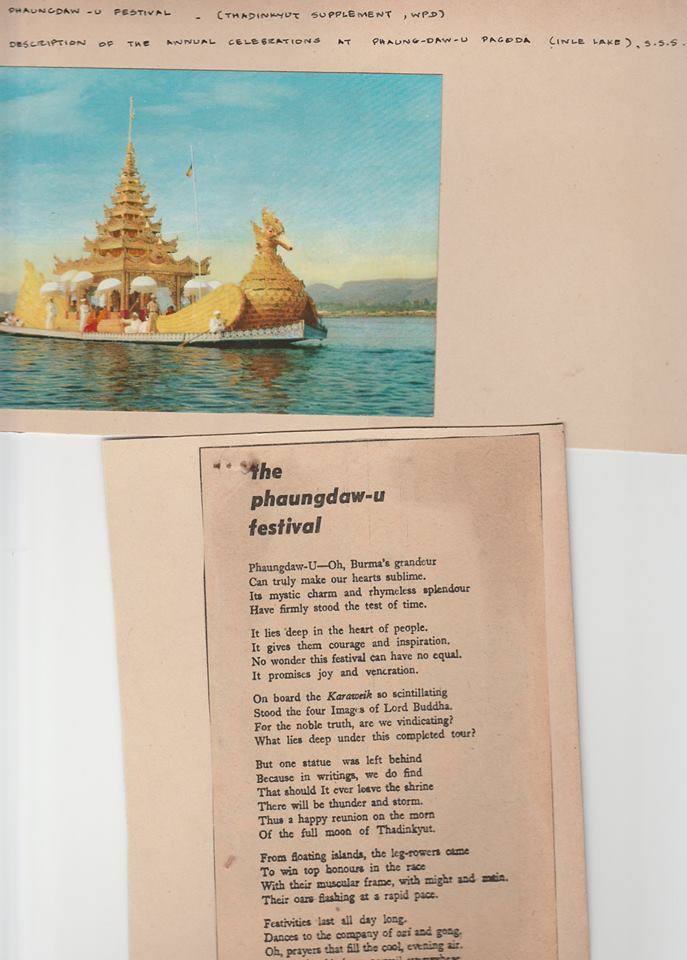
    Phaungdaw-u Festival

    Name of the auspicious event:
    Abhidhamma (“Ultimate Reality”) A Kha Daw Nay & Mahapavayana Nay
    Buddha taught Abhidhamma to the devas in Savateinsa (during the Buddhist Lent) and returned to earth on the Full Moon Day of Thadinkyut

    Associated festival (1):
    Festival of Light

    Details for the celebration:
    (a) Light candles (b) Light incandescent bulbs
    Objectives: Emulate the scene where the devas and the people paid homage with candles and lights to the Buddha upon his return from Savateinsa

    Associated festival (2):
    Pavayana Pwe

    Details for the celebration:
    (a) Monks assemble in a sima hall (b) Each monk invites other monks to give advice. He says, “If you have seen me commit a misdeed, you may reprimand me. If you hear that I have committed a misdeed, you may reprimand me. If you doubt me, you may reprimand me. I will try not to commit that misdeed in the future.” (c) Lay people might also invite their fellow people to give advice.


    Objectives:
    (a) To practice Nivata Mangala — blessing where one displays humility (b) For monks to practice Sovacasatta Mangala — blessing where one takes constructive critism (c) For lay people to become good & wise people

    8. Full Moon Day of Tazaungdaing

    Name of the auspicious event:
    Samyannaphala (“Virtues of monkhood”) A Kha Daw Nay
    Buddha gave the sermon to King Ajjasathat on the Full Moon Day of Tazaungdaing

    Associated festival:
    Tazaungdaing Festival

    Details for the celebration:
    (a) Light candles (b) Take (eight) precepts and practice Sila (morality) (c) Dhamma talks based on Samyannaphala Sutta (d) Practice metta (loving kindness meditation) (e) Share merits

    Objectives:
    (a) Make people aware of the virtues of monkhood and the qualities of sangha (b) If one has conducted misdeeds like King Ajjasathat, one should acknowledge the fact, but be determined to be good by doing meritorious deeds.

    9. Full Moon Day of Nadaw

    Name of the auspicious event:
    Dhamma Sarsodaw Myar Nay
    In Burmese History, Full Moon Day of Nadaw honors the literary giants (writers, poets). In modern days, the Department of Religious Affairs designated the day to honor writers for the dissemination of dhamma

    Associated festival:
    Sar Pyan Pwe (Oral and written examination for the monks)

    Details for the celebration:
    (a) Hold religious examinations (b) Written examination about Tipitaka (“Three Baskets”) : Vinaya (Monastic rules of conduct), Sutta (Discourses), Abhidhamma (Ultimate Reality) (c) Oral examination about Tipitaka (d) Lay people may visit libraries and borrow religious books (e) Lay people may hold discussions about dhamma

    Objectives:
    (a) Preservation and propagation of Tipitaka (b) Encourage youths to be highly literate and have good moral character

    10. Month of Pyatho

    Name of the auspicious event:
    Shin Ta Htaung (1000 ascetics) A Kha Daw Nay
    During Buddha’s time, 1000 ascetics in Uruvela forest led by the Kassappa brothers renounced their wrong beliefs and become arahants.

    Associated festival:
    Ordination of monks and novices

    Details for the celebration:
    (a) Hold ceremonies for higher ordination of monks (b) Allow youths to become novices

    Objectives: (a) To reinforce the importance of practicing morality (b) To familiarize people with religious ceremonies & the performing of meritorious deeds

    11. Full Moon Day of Tabodwe

    Name of the auspicious event:
    Ovada Patimauk (Buddha’s exhortation to avoid akusala, to perform kusala, and to purify one’s mind) A Kha Daw Nay

    The Full Moon Day of Tabodwe is significant for several reasons. (a) Venerable Sariputta became an arahant (b) Both Venerable Sariputta and Venerable Mogallana were proclaimed by Buddha as the Best in their specialties (c) Without any explicit notice, Ehi Bhikkhu Calabinna Patisambidapatta arahants (elite monks who do not need explicit ordination, who possess six divine powers, and who easily became enlightened) convened for the Ovada Patimauk ceremony.

    Associated festival:
    Ovadaha Partimauk & Htamane Pwe (Sticky rice) festival

    Details for the celebration:
    (a) Collectively prepare Htamane (b) Offer htamane to monks and devotees (c) Listen to dhamma talks

    Objectives:
    (a) Emphasize the strength of unity (b) Perform meritorious deeds collectively (c) Understand Buddha’s exhortation to avoid akusala, to perform kusala, and to purify one’s mind & practice accordingly

    12. Full Moon Day of Tabaung

    Name of the auspicious event:
    Myat Buddha Pyi Daw Win A Kha Daw Nay
    At the request of his father’s emissary Kaludayi, Buddha accompanied by 20000 arahants returned to Kapilavutta from Rajagaha. The return trip commenced on the 1st waning day of Tabaung in year 103 of Mahatheikarit (calendar used in Buddha’s time)

    Associated festival:
    Buddha Pujaniya Tabaung Festival (paying homage to Buddha)

    Details for the celebration:
    (a) Invite as many sangha as possible (b) Offer requisites to the sangha

    Objectives:
    To remember the Triple Gems: Buddha , Dhamma, and Sangha

    Posts

    • Calendars
    • Holidays & Festivals
    • Seasonal Changes
    • Translation
  • Zaw Min Nawaday ဇော်မင်းနဝဒေး

    Zaw Min Nawaday ဇော်မင်းနဝဒေး

    by Hla Min

    Updated : September 2026

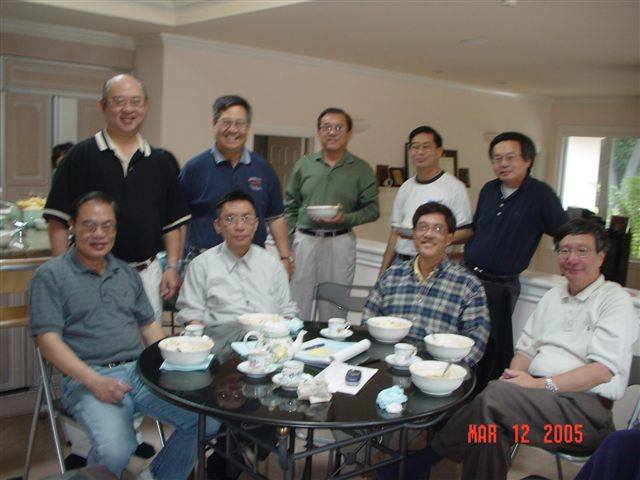
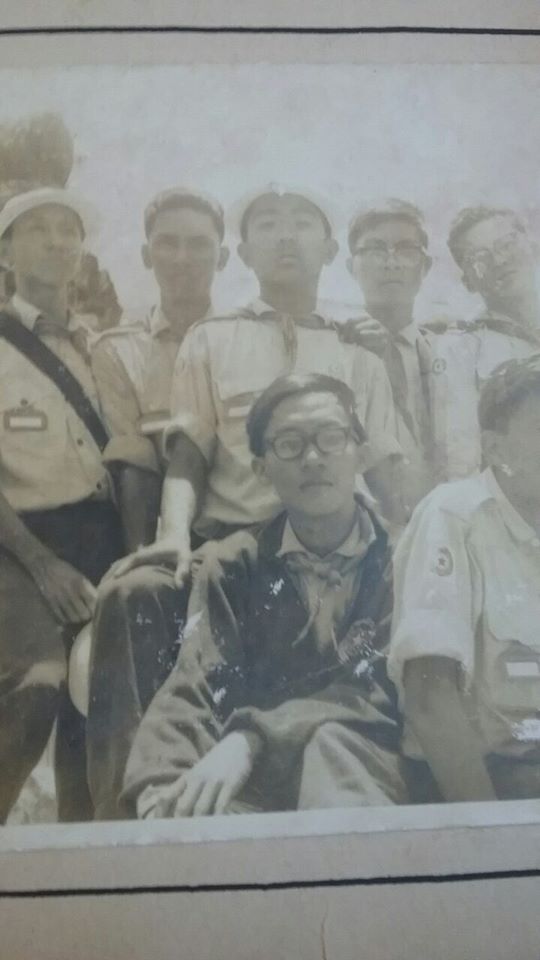
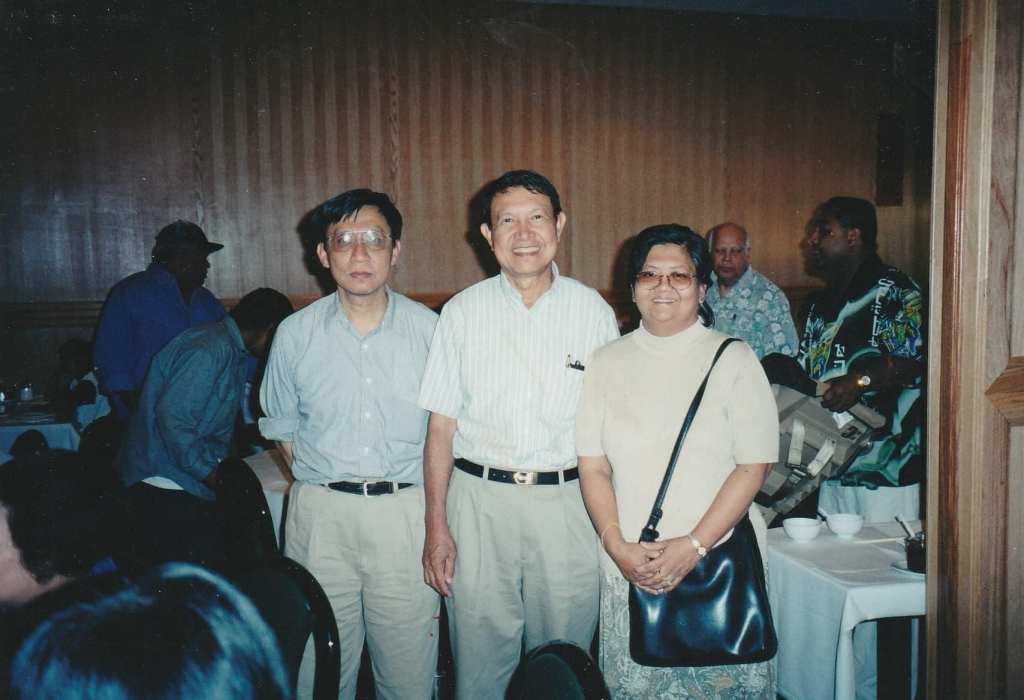
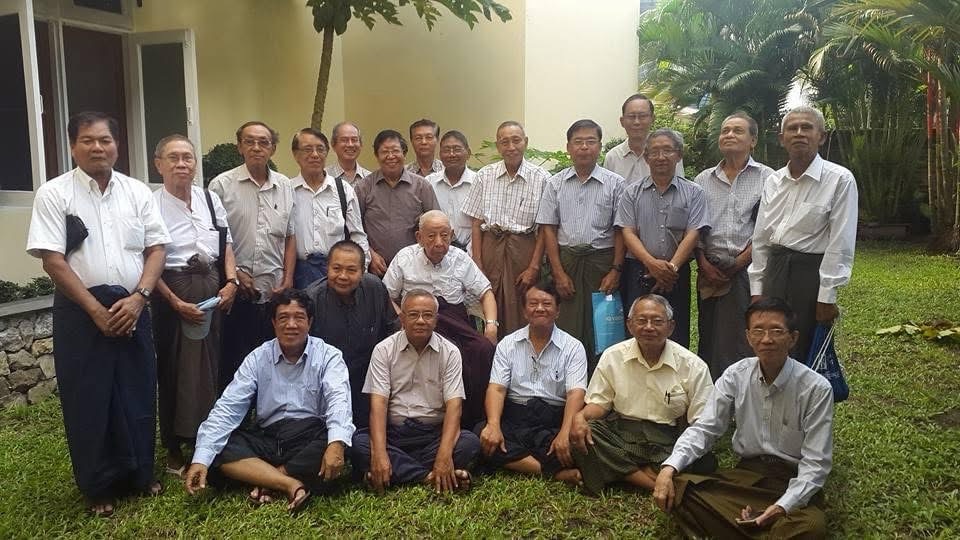
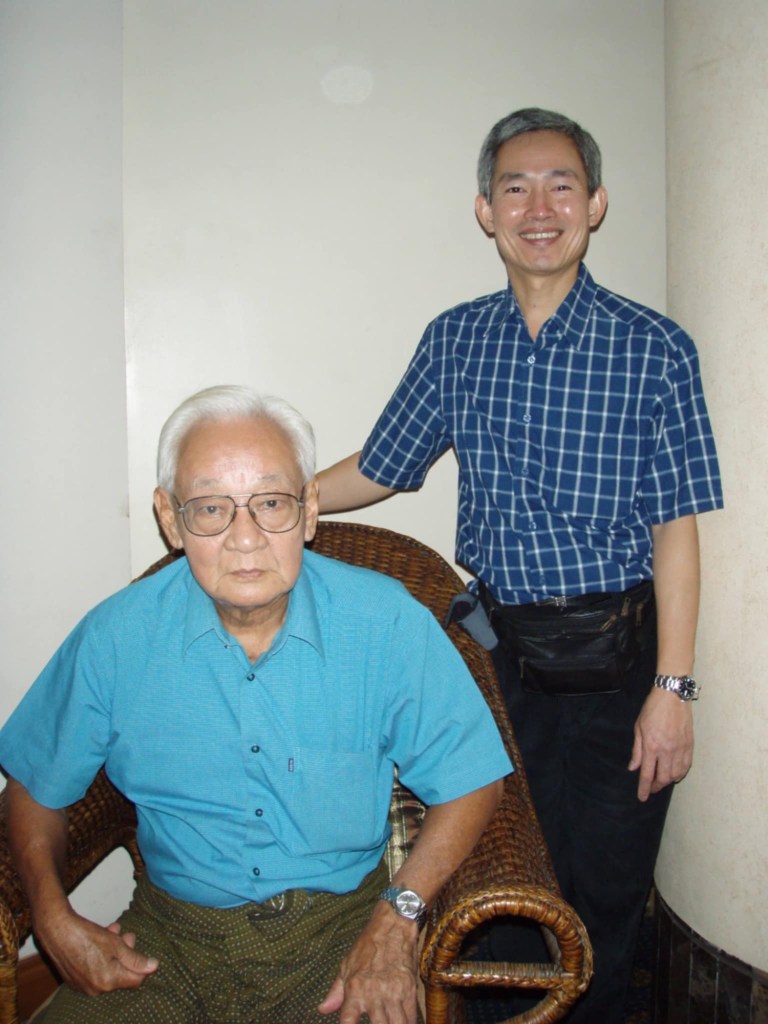
    Zaw Min Nawaday (Standing 2nd from R)

    Brief Bio

    • He matriculated from St. Albert’s High School, Maymyo.
    • He was admitted with Roll Number One to the first ever 1st BE in November 1964.
    • He graduated with Electrical Power in 1970.
    • He worked for HIC briefly and Ceramics Corporation.
    • He moved to USA, did his MS and worked in the Electronics Industry until retirement.

    Activities and Achievements

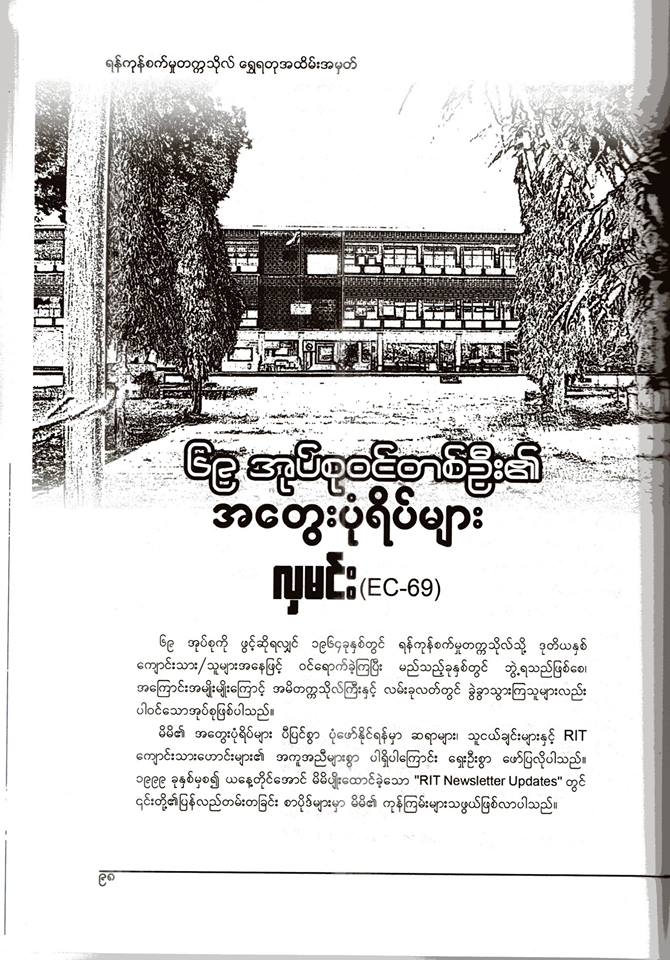
    • He was selected as RIT Luyechun in the Summer of 1965 to attend Inlay Khaung Daing Camp.
    • He wrote a long article about “RIT Days 1964 – 1970”. U Ohn Khine (M70) added details and posted in the Google Group for the 1st BE Intake. I added the article and published it in RIT Alumni Newsletter.
    • He hosted Sayagyi U Ba Toke (who was invited to attend SPZP-2000 by his former students) at his new house in Hayward California.
    • He played Soccer for his Block, Class and EE department (mainly as Goalkeeper).
    • He was EC of Hostel Committe, Burmese Association, Maths Association, EE Association, English Association, Track & Field Association, RIT Magazine Committee.

    Notes

    • He made waves when he complained about mismanagement at the Luyechun Camp. Later Camp Commandants were sayas (including Sayagyi U Ba Toke).
    • He added Nawaday to his name to minimize name conflicts (which are common for Burmese names).
    • Ko Ye Myint (son of Sayagyi U Ba Toke) and Ko Nyunt Maung San were Best Men at his wedding.
    • Ko Naing Win (GBNF) asked Ko Zaw Min to accompany him to a Cinema with his girlfriend and another (who became Ko ZM’s soul mate).
    • He had a short temper. He was given a stern warning for hitting a student (who instigated him). It appeared in a report requested by the father (DIG of Police) of his girlfriend, but …
    • He competed in the English Debate between 1st year and 2nd year classes. He won as a 1st year student. He lost as a 2nd year student.
    • He was a preliminary selection for the RIT crew at RUBC.
    • He hiked to Rakkhine with Ko Han Tha Myint and Ko Sein Win. It was reported in the newspapers.
    • He lived and worked in New York and California. After retirement, he moved to Las Vegas.
    • He does not initiate phone calls.
    • He does not use Social Media.
    Zaw Min : Standing 2nd from left
  • 1961 – 65

    1961 – 65

    by Hla Min

    Update : September 2026

    1961

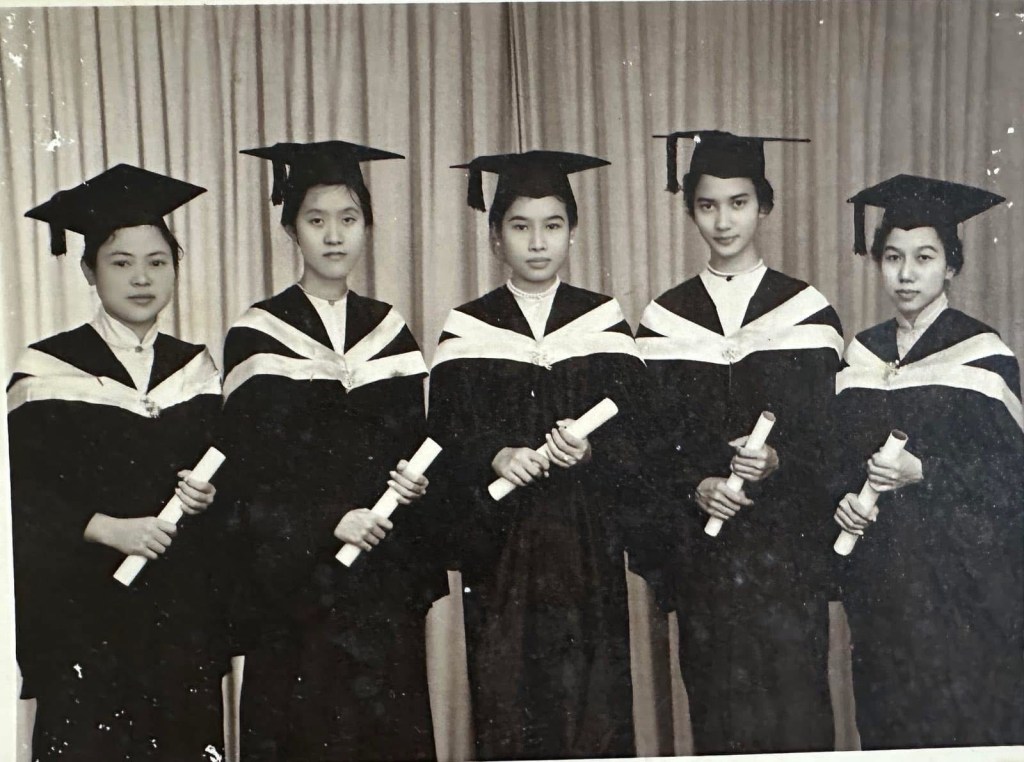
    Female Engineers

    • Mi Mi Lay (Tex, GBNF)
    • Julie Han (Tex, GBNF)
    • Yin Yin Kyi (Tex)
    • Pauline Reynolds (ChE)
    • Tin Tin Ohn / Amy (Tex, GBNF)
    61 Graduates

    Burma Institute of Technology

    U Yone Mo
    U Sein Hla

    In the 1961 – 62 Academic Year, the Faculty of Engineering of Rangoon University moved to the Gyogone Campus.

    It was named Burma Institute of Technology (BIT).

    Sayas & Sayamas

    U Yone Mo served as Dean.

    U Sein Hla served as Registrar.

    Newly minted sayas & sayamas include U Aung Soe (C), U Maung Maung Win (M), Daw Tin Tin Ohn (T) & Daw Julie Han

    Matriculation & HSF

    In 1961, the last Matric & High School Final exam took place. Those who pass the exam could attend the University.

    In 1962, there were separate exams for Matric & HSF. Those who pass HSF had to take the Matric exam in order to attend the University.

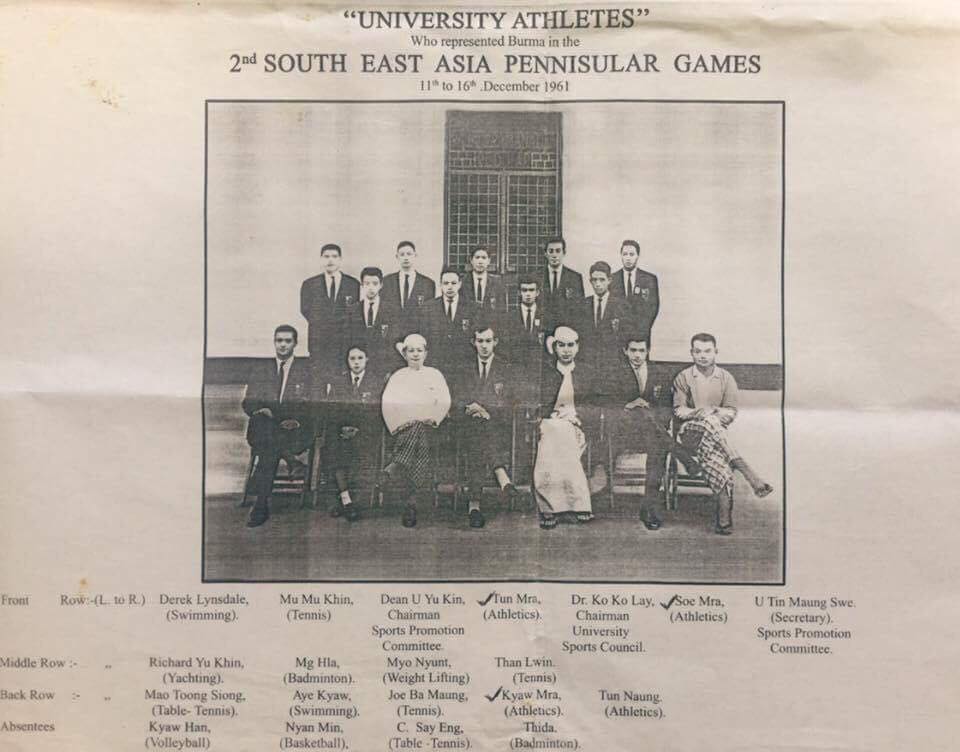
    2nd SEAP Games

    RU athletes in 2nd SEAP Games
    • In December 1961, Burma hosted the 2nd South East Asian Peninsular Games.
    • Burma placed First (according to the Tally of Medals) in the Games. Burma was dominant in Track & Field, Swimming & Diving (to name a few).
    • About 20 students Rangoon University represented Burma in the Games. Several won Gold Medals : Tun Mra (4 x 100 meters relay), Soe Mra (Pole Vault), Kyaw Han (Volleyball), Richard Yu Khin (Yachting).
    • Ko Richard (GBNF) provided the group photo. He also wrote about the swimming training with Ko Tin Maung Ni under a Japanese coach.
    • Met Ko Tun Mra, Ko Khin Maung Latt & Ko Tin Myint (GBNF) at the RUBC/YUBC Annual Regatta in December 2019. Ko Tun Mra mentioned that he, Ko Kyaw Mra (GBNF), Ko Soe Mra & Ko Tun Naung represented Burma in the first SEAP Games held in Bangkok in 1959.

    1962

    Coup d’etat

    • On March 2, 1962, a 17-member Revolutionary Council staged a Coup d’etat. Sao Shwe Thaik’s son was killed.
    • Mahn Win Maung (President), U Nu (Prime Minister), U Myint Thein (Chief Justice), several high ranking officers & Sawbwas were imprisoned.
    • U Myint Thein was among the first to be detained and the last to be released. He was given only a part day off to attend the last journey of his spouse Daw Phwa Hmi (pioneer Burmese female barrister).
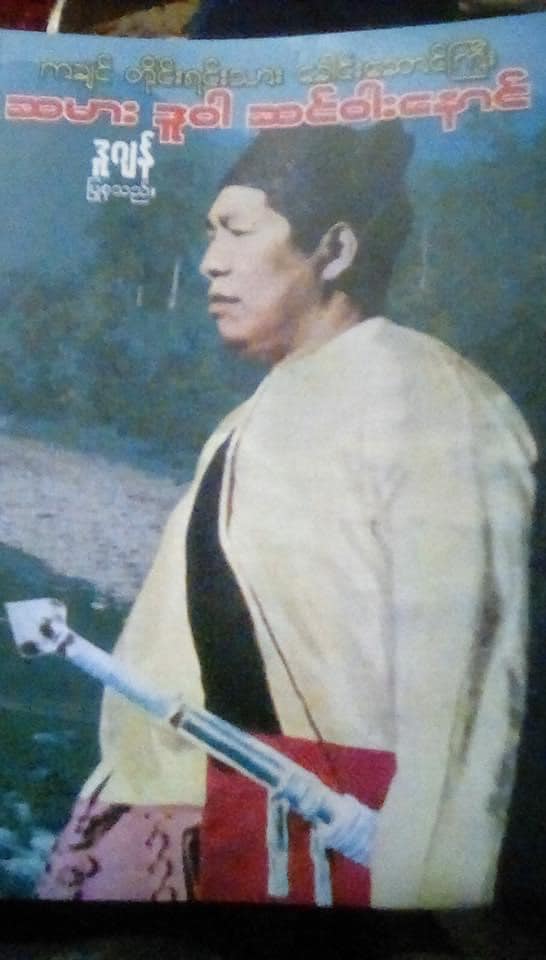
    • Sama Duwa Sinwa Naung had been selected to succeed Mahn Win Maung as the President, but the Coup ended the democratic parliamentary system.
    Sama Duwa Sin Wa Naung

    HSF Exam

    • The HSF exam results for Rangoon Division was annulled claiming a leakage of exam questions.
    • The students had to retake the HSF exam in August, 1962.

    Dark Days in July

    • There were two Dark Days.
    • Student protesters faced indiscriminate shooting on July 7, 1962. The newspapers & Myanmar Ah Than said that there were 17 victims.
    • Ko Aung Khin who was killed by a stray bullet on his way back from RUBC to his home in Windermere Road was listed as the 17th casualty.
    • On July 8, 1962, the revered RU Student Union Building was demolished.

    1963

    Matric Exam

    SPHS63 Scholarship Winners
    • Most exams were held in March. However, the Matric exam in 1963 was held in May.
    • St. Paul’s High School had five students in the Top Five, seven in the Top Ten, and ten in the Top Twenty.

    Anniversary of 7th July

    • In July 1963, the first Anniversary of 7th July 1962 was celebrated with posters, pamphlets & magazines.
    • Some time later, the higher authorities announced the closure of most schools except the Faculty of Medicine & the Faculty of Engineering.

    Rangoon University Boat Club

    Dinner to celebrate the RUBC 40th Anniversary
    • Annual Regatta was canceled citing security reasons.
    • Sithu U Tin (President) decided not to cancel the Dinner commemorating the 40th Anniversary of the Founding of RUBC by Sit Arthur Eggar (Law Professor).

    1964

    Scholarship for USSR & East Bloc

    • Soviet Union and East Bloc nations offered scholarships for undergraduates & graduates.
    • Some classmates (who were concerned about how long the schools will close) applied & were accepted.
    • Maung Maung Kyi studied Chemical Engineering (specializing in Pulp & Paper) at Dresden University, GDR.

    New Education System
    Shwe YaDu
    • Enacted in November 1964
    • The reorganization saw former Faculties as independent Institutes with their own Rector and Registrar. The remaining faculties of Rangoon University became Rangoon Arts & Science University (RASU).
    • Under the new Education system, BIT became Rangoon Institute of Technology (RIT). It had autonomy. U Yone Mo served as Rector. U Soe Thein (former student leader) served as Registrar.
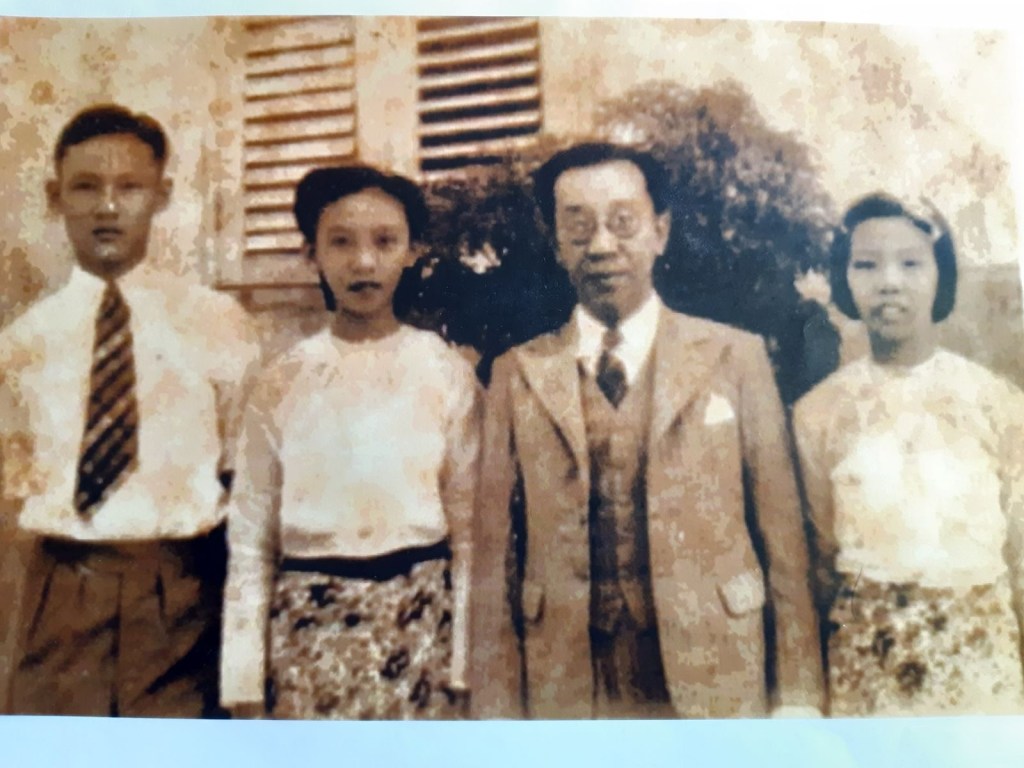
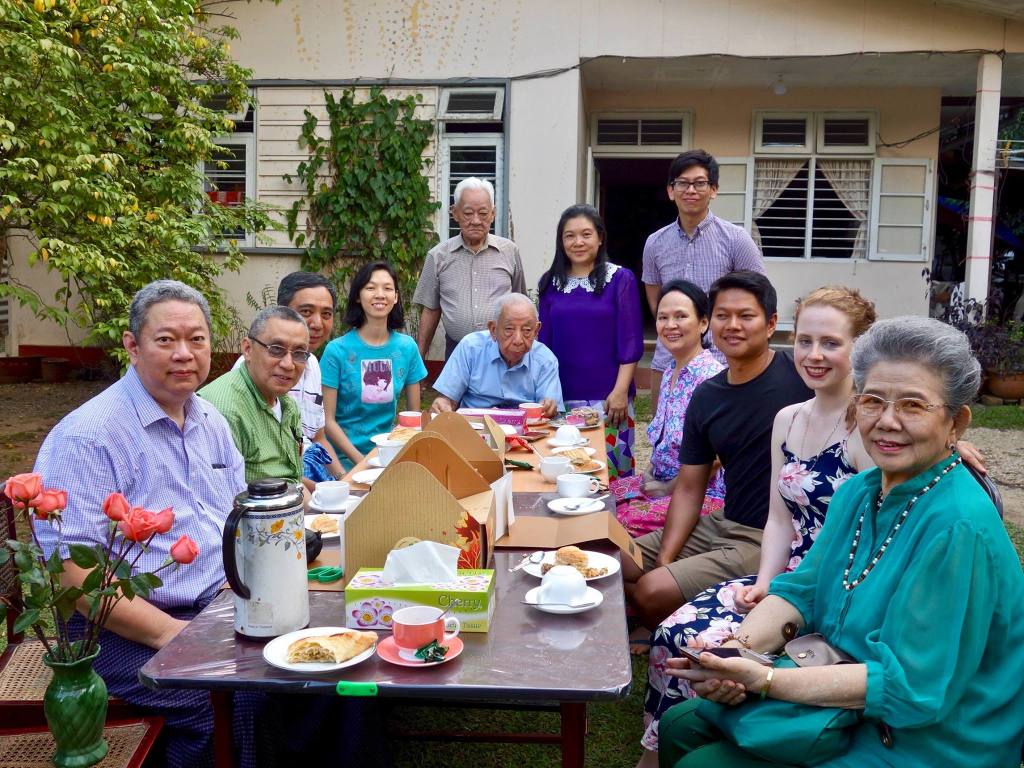
    • Matriculates were admitted to the fresher classes at the Universities & Institutes using Intelligence Level Aggregate (ILA).
    • The marks for each subject were converted to an ILA score (1 – 20). Those who have a balanced score can have a higher ILA than someone who has high marks in most subjects but a low score in one subject.
    • There were name changes to the degrees offered, e.g B.E instead of B.Sc.(Engg)
    • Majors were introduced.
    • LL.B was offered.

    Luyechun

    • The program was initiated in the Summer of 1964.
    • Outstanding students from middle school and high school was chosen as Luyechun. They were sent to the Ngapali Luyechun Camp.
    • Oke Soe Kha (MEHS), Win Aung (TTC) and Ma Pwint Than (Loikaw) were some High School Luyechuns.

    1965

    Nationalization

    • On April 1, 1965 private schools were nationalized.
    • St. Paul’s High School (SPHS) became No. 6 Botathaung State High School.
    • Methodist English High School (MEHS) became No. 1 Dagon State High School.

    Luyechun Camps

    Inlay Luyechun
    • The Luyechun program was extended to students of Universities & Institutes in the summer of 1965.
    • I was selected as RIT Luyechun along with Ko Sein Shwe, Ma Khin Than Myint Tin, and Ko Zaw Min. We were sent to the newly opened Inlay Khaung Daing Camp was added.
    • The Rangoon Combined Camp was the meeting point for those from Ngapali Camp and Inlay Camp.

    Updates

    • There were more changes in the Education System.
    • Some were name changes : RIT to YIT & YTU
    • There were more closures to Schools.
    • There were more Coup d’etat — in 1988 & 2021
    • Burma hosted 5th SEAP Games in 1969.
    • The Luyechun Program ended in 1988.

    Posts

    • Calendar
    • Education Systems
    • Exams
    • Luyechun
    • Memories of a 69er
    • Rangoon University
    • SEAP Games
  • St. Patrick’s High School, Moulmein

    St. Patrick’s High School, Moulmein

    By U Aye (M62)

    Updated : September 2026

    • First school established by the De La Salle Brothers in Burma.
    • Built in Moulmein (1860)
    • Photos taken during my visit to the school (2016)

    Clock Tower, boarding house upstairs, exam hall below

    St. Patrick’s HS, Moulmein

    Photos taken during my visit

    St. Pat 1
    St. Pat 2
    St. Pat 3
    Entrance

    Memories

    Our class photo V B

    Our class photo VII Std

    Class teacher Bro. Sebastian.
    I met Bro Sebastain during our first year at Leikkone in 1958-59 while he was attending BAed.

    Ko Ko Lay (UCC) first row, sitting second from left.
    U Aye (M62), second row, sitting second from right.
    B. Singh (RU goalkeeper) third row, first from right,
    Myo Lwin (M63), third row third from right.

    Absentees : Kyaw Win (M62), Peter Gale.

    Bro Canice was Bro Director,
    House Master Mr. E. Swarris,
    House Capt. Dr. Aung Myin (Eye, passed away in UK around 2018),
    U Win Naing (MS pulp and paper)(CRO) third row, fourth from right,
    U Aye, third row, third from right.

    Our matriculation class 1955-56

    Bro Austin, Bro Director,
    Bro Wilfrid, Class teacher,
    U Tun Shwe, Myanmar Sar,
    Mr. DeMonte, Moral and Manners.

    Peter Gale,
    Dr. Thet Lwin (Statistics),
    B. Singh (RU goalkeeper),
    medical doctors Dr JK Sinha (UK), Dr Rafi, Dr Rajani Vora, India,
    Capt. Aung Myint, Capt Ya Kyaw, Myo Lwin (M63),
    Kyaw Win (M62), John Ba Maung, Russian Lecturer (IFL)

    Prof. Khin Zaw (Chemistry),
    Saw Alfred Keh (Preacher after graduation, son of pre-WW2, RU footballer Washington Keh),
    U Kyi Win (BPI),
    U Aye
    among others.

    St Patrick’s HS football team of late 40s and early 50s

    During 1948-49, St Pat’s team beat all other Schools’ Combined team. Some of the team members were-

    Bernard Henry – Goalkeeper,

    R. S. Pathy, Tin Aye — Fullbacks,

    Pway Ain (Htay Aung), Jimmy Innes, Tin Ngwe (Mid-field),

    Rama (Rightwinger), Khine Thein, SV Lingham, Jimmy Sein (Tint Swe), B. Boudville (Left winger).

    Later Pway Ain (Htay Aung) played for RU, Jimmy Sein (Tint Swe) played for Prome Hall and RU.
    Jimmy Innes played for Customs FC in Rangoon first div.

    Many played in Friends Union FC in Moulmein first div.

    St Patrick’s Alumini, Ko Ko Gyi,
    Tenasserim division and Burma selected footballer.
    Standing second from L Pway Ain(Hyay Aung)) and Jimmy Sein(Tint Swe) seated second from L, were from St Patrick’s HS football team

    B.Singh back row, fifth from L in black goalkeeper jersey, the tall guy was from St Patrick’s HS, he was also a Tenasserim Division player. He was my classmate in St Pat.

    Dennis Mackey (C73) wrote

    Thanks for this piece as part of your “Work in Progress”.

    Below are photos and notes that I posted on my FB page and on St. Patrick’s HS, Moulmein FB public group page.

    April 8, 2017 When I visited former St. Patrick’s High School
    https://www.facebook.com/dennis.mackey.kyawthu/posts/506160823105973

    My posts – St Patrick’s High School, Moulmein (Public group)
    https://www.facebook.com/groups/140542742679500/user/100011361797511

    St Patrick’s High School, Moulmein (Public group)
    https://www.facebook.com/groups/140542742679500/

    Updates

    • De La Salle Schools — St. Pat (Moulmein), St. Paul’s (Rangoon), St. Peter’s (Mandalay), St. Albert’s (Maymyo), St. Columban’s (Bhamo), St. Joseph’s (Loikaw), DLS (Twante)
    • Private schools were nationalized on April 1, 1965
    • U Aye represented RU & BIT in Volleyball. He graduated with Mechanical Engineering in 1962. He worked for HIC and FAO.

    Posts

    • Burma Selected
    • De La Salle
    • RU Athletes
    • Sports
    • Volleyball
  • MASTAA — Interview

    MASTAA — Interview

    by Hla Min

    Updated : September 2026

    MASTAA

    • Myanmar American Science and Technology Alumni Association
    • Based in East Coast, USA
    • Published several interviews
    U Soe Paing
    U Soe Paing, U & Mrs. Hla Min

    U Soe Paing

    Note : Comments in italics are provided by Hla Min.

    • I have written many articles on the History of Computerization in Myanmar.
      ** Most can be read from SCRIB-D.
    • However many people have not read them. MASTAA has requested me do an interview.
      ** It is tentatively planned for July 19, 2020 (at 10 PM. EST). It will be morning in Yangon, Myanmar.
    • Facts are very important because there are some people who want to twist them to their advantage. Especially since the project was very successful in introducing computers and computer education in the country.
    • I was with the project right from its inception.
      ** Sad to report that Saya Dr. Chit Swe and U Ko Ko Lay have passed away.
    • I would like to go over the facts.

    When and how I got involved in UCC Computer project

    • Took programming and DP courses at Stanford University.
    • Around 1962, there was no CS Department or CS courses.
      ** Professor George Forsythe later founded and Chaired the CS Department at Standford.
    • Computer programming was given by Mathematics Department as part of Numerical Analysis
    • Introduction to Data Processing was given by Industrial Engineering Dept
    • Worked as part time computer operator for the Stanford Computation Center.
    • Joined Electrical Engineering Department, RIT as Assistant Lecturer in January 1964,
      RIT was closed.
      As part of the staff development program, I gave lectures to Elect Engg staff on computers and programming.
    • Ko Nyi Nyi (Instructor in Elect Eng Dept) told Dr Chit Swe, Head of Maths Dept at the Institute of Economics who was preparing to start a project with the assistance of the UN to install a computer.
    • Dr Chit Swe and U Hla Myint (Maths Dept) came to recruit me to assist them in the computer project.
    • Immediately agreed and joined the project preparation team.
    • Ko Nyi Nyi and Dr. Than Htaik (Chem Eng Dept) also joined the team.
    • At that time Unit Record Machines using punched cards (both IBM and ICL) were used in Burma by the Railways, Central Economics and Statistics Department (CSED), Records Office Burma Army.
    • At one point all the Unit Record Machines were centralized in one place (Burma Machines Corporation??) and then decentralized again.
      ** Per U Thein Han, IBM unit record machines were used in the first Demonatization. The machines were set up in Rangoon University (e.g. Convocation Hall).
    • Burma Railways wanted to replace their Unit Record Machines with a computer and was requesting funds from the government.
      ** However, the nationalization followed by tight control of foreign exchange caused the request to be denied.

    Preparation for the UCC project (1965 – 70)

    • The UNDP in Yangon and the Goverment agreed to explore the possibility of having a UNDP funded UNESCO executed project of installing a computer at the Institute of Economics.
    • In 1965 Dr Abou Taleb from Egypt visited Burma at the Institute of Economics for one month as a UNESCO consultant on the formulation of the project. He had discussions with the project team, the concerned persons at the Directorate of Higher Education and other government departments, UNDP personnel and managers of IBM (** U Aung Khin) and ICL (** U Kyaw Tha).
    • Dr Abou Taleb prepared a report that was submitted to the UNESCO and UNDP.
    • Around 1968 UNDP mission composed of Professor Owens of Columbia University and Mr Talbot of UNDP HQs came to Burma (Institute of Economics) to write a project proposal for the UNDP/UNESCO Computer Project.
      The mission had discussions with the project team, the concerned persons at Higher Education and other government departments, UNDP personnel and managers of IBM and ICL.
    • The report and the project proposal were submitted to UNDP, UNESCO and the Government.
    • It was agreed to implement the UNDP funded, UNESCO executed Computer project.
    • The project document for the UNDP/UNESCO Universities’ Computer Center Project was signed in 1970.

    Preparation for the establishment of UCC

    • In 1969 the project preparation team office moved to the Maths Department, RASU.
    • The Government decided to establish the Universities’ Computer Center directly under the Department of Higher Education.
    • A new building was to be constructed for the Center on the Hlaing Campus.
    • The project preparation team started to develop the organizational structure, budget, as well as the design for the building.
    • Ko Tun Aung Gyaw (UTAG) joined the project preparation team.
    • A temporary office / room was given to the project preparation team on the 3rd /top floor of the RASU Maths Dept.
      The Maths department still provided the logistics support.
      Saya U Maung Maung Tin of the RASU Maths Department was extremely helpful to the project preparation team.
    • The UCC organization structure consists of the Director at its head advised by the Board of Management.
      Under the Director are three technical divisions: Operations, Systems, Applications and an Administrative Support Section.
      One Manager heads each division.
    • Operations division consists of the Computer Operations section and the Data Preparation section.
    • Systems Division consists of the Systems Hardware section and the Systems Software section.
    • Applications Division consists of the Scientific Applications section and the Business Applications section.
    • The UCC organization structure was approved by the government and the Board of Management was formed.
    • Dr. Chit Swe was appointed Director of UCC in addition to his duties as Professor.
    • The Board of Management was formed with Dr Nyi Nyi, Deputy Minister, Ministry of Education as Chairman and Dr. Chit Swe as Secretary.
      The members include U Thet Tun, DG of CSED; U Win Pe, Research Dept, Planning; U Nyunt Maung, Dy Director, Finance; Dr Khin Maung Kyi, Inst of Economics, Dr Aung Gyi, RIT; etc
    • The UCC building on Hlaing Campus was to be designed and built by the Public Works Corporation.
      It was designed by the Chief Architect U Aung Myint. The team also met my high school and Stanford friend Ko Ko Lay who was a structural engineer there.
    • Ko Myo Min returned from the UK after studying as a Charted Accountant and working (** as Systems Analyst) at IBM UK.
    • Ko Ko Lay, Ko Myo Min and other volunteers joined the project preparation team.
      The volunteers are Ko Win Myint (Gyi) etc.
    • The three managers were recruited.
    • I transferred to UCC from RIT as Systems Engineer/Manager of the Systems Division of UCC on April 1971.
    • Ko Ko Lay transferred from Public Works/Construction Corporation as Manager of the UCC Operations Division.
    • Ko Myo Min joined as Manager of the Applications Division.
    • 1st April 1971 is considered as the start of UCC.
    • The first batch of other staff were recruited and appointed.
      UTAG and Johnny Hla Min joined as Maintenance Engineers.
    • UCC was given a temporary office on the third floor of the Mandalay Hall.
    • The project preparation team organized courses in computers, programming and applications for the staff of Universities and government departments.

    Choice of the computer

    • In October 1970, Dr Chit Swe went to UNESCO, Paris to participate in the selection of the computer for the project.
    • ICL 1900 series was chosen over IBM.
    • IBM was only willing to supply the IBM 360 and not the recently introduced IBM 370.
    • Dr Chit Swe then went on to London for discussions with ICL.
      ICL gave a more powerful version 1902S for the same price.

    Installation of the Computer and start of UCC

    • In 1972 UCC moved to its new building on Thamaing Campus.
    • The site preparation for the computer and environmental equipment started.
    • A firm from the UK was subcontracted by ICL to do the site preparation.
    • The ICL 1902S computer was delivered and moved into the computer room to start the installation process.
    • ICL resident Maintenance Engineer Gaber Khalef (Egypt) and the ICL resident Software Expert Ian Shearer (UK) arrived and took up their responsibilities.
    • Acceptance trials for the ICL 1902S started on 25 February 1973, and formally completed on 8 March.
    • Professor Huskey arrived on 4 March and took part in the acceptance of the ICL 1902S.
    • The original UCC organization was meant to be minimal and mainly for a one shift per day start.
    • However due to the Census and more than expected use, volunters were paid minimum salary wages (which can be authorized by the Director) used to do the required support work.

    Computer Use

    • The Board of Management decided to process the 1973 Population Census on the UCC computer.
    • Training of the Census Programmers conducted at UCC.
    • Alic Heinrici (UK, the ICL FILAN (ICL Census Tabulation system)) expert came from September to November to train Census and UCC Programmers in FILAN to be used in Census Tabulation.
    • The processing of the Burma Population Census started in May 1974.
    • The data entry was done in the Census Dept (old Rowe Co. Building) with over 100 rented keypunches from IBM.
    • The morning shift (8:00am – 4:00pm) was reserved for UCC.
      The evening shift (4:00pm – 12:00am) and night shift (12:00am-8:00am) were reserved for Census processing.
      At the start the Census processing did not take the two shifts.
    • Saturdays were reserved for Maintenance and the center was closed on Sundays.
    • ICL experts and UCC senior staff designed the Census Processing System containing Sequence and Completeness check (PLAN), Consistency checks (FORTRAN), Tabulation (FILAN).
    • UCC staff also supervised the processing.
    • Burma Railways, Central Economics and Statistics Department (CSED)/(CSO), Records Office Burma Army (ROBA) converted some of their Unit Record Machines applications on to the computer.
      Railways passenger and goods statistics; CSED Health and Trade Statistics; ROBA Miltary records.
    • RIT final year students implemented projects.
      Civil Engg: Structural Engineering, Astronomical Calculations,
      Electrical: Power System Analysis, Electronic Circuit Analysis.

    Computer Education

    • The project preparation team organized courses in computers, programming and applications for the staff of Universities and government departments. (1971)
    • Preparations start for the MSc Computer Science and Postgraduate Diploma in Automatic Computing (DAC) to be given under the Mathematics Department, RASU. (1973)
    • Start of the MSc Computer Science and DAC courses. (1974)
    • There were three options under the MSc course : Computer Systems, Computer Oriented Operations Research Techniques and Computational Mathematics.
      Coursework plus dissertation/thesis.
    • DAC course was 2 years part-time from 7:00 am to 9:00 am.
    • Entrance Aptitude Tests for all applicants meeting the University requirements for post graduate studies.
    • The six months part time course (the predecessor to the full time 4 months course ) was started for the staff of the government departments and universities in 1976.
      It consisted of Introduction to Programming with FORTRAN, Mathematics and Statistics, COBOL Programming, Systems Analysis & Design.
    • The UCC Staff and visiting experts taught most of the courses.
      However Maths sayas helped out in the MSc and DAC courses. U Hla Myint and Dr Kyaw Nyunt in Computational Mathematics; U Soe Nyunt and Dr Pike Tin in OR courses.
    • Paid and unpaid volunteers were expected to attend the courses according to their ability and wishes.

    Expert Services

    • The University of California at Santa Cruz(UCSC) was given the expert subcontract under the project.
      Professor Harry D. Huskey Chairman of the Department of Computer Science at UCSC and the well known pioneer in computers (in the development of the first electronic computer ENIAC at the University of Pennslyvania) was the coordinator of the contract.
      ** He co-authored the first Computer Handbook. His students include Nickaus Wirth (inventor of Pascal and Modula). He is a Past President of ACM and a Fellow of ACM, IEEE and CHM.
    • The UCSC expert subcontract was to provide four long term (4x12m) experts and a few short term (1m) experts, in addition to yearly visits by Professor Huskey.
    • Long Term Experts :
      Mr Sheldon Bachus (Systems Analysis & Design, 1973)
      Dr. Malcolm Atkinson (Computer Science Expert, 1974)
      Dr. Paul Keogh (Operations Research Expert, 1974)
      Mr. Bjorn Hustaad (Simulation, 1977)
    • Short Term Experts :
      World renowned people able to visit and give lectures for one month.
    • Professor Anthony Ralston Professor and Head of the Computer Science Department of the State University of New York (SUNY) in Buffalo, NY USA , and Past President of the Association for Computing Machinery (ACM) came as a one month short term expert in Computer Science. He introduced Structured Programming to UCC, Burma and even to the long term expert in Computer Science. (1975).
    • Professor Foreman Acton of Princeton University, Princeton NJ USA came as a one month short term expert in Numerical Analysis and conducted training courses .(1975)
    • Professor Peter Wegner of Brown University, Providence, Rhode Island came as a one month short term expert in Computer Science and conducted training courses in Automata Theory.(1975)
    • Professor Wilde of Stanford University, Operations Research (1976)
    • Professor Leon Lasdon of University of Michigan, Operations Research (1976).
    • Professor Michael Stonebraker, University of California (Berkeley), INGRES Relational Database, Database 1977)

    UN Experts

    • Dr. Shafeek Saleeb(Egypt) arrived to take up his assignment as Chief Technical Adviser of the UCC project. (1974)
    • Mr. Jan Rademaker (Netherlands) arrived to take up his assignment as an associate expert in Computer Applications under the UCC project. (1975)

    Further Development

    • More memory, 2 disk drives and card reader supplemented by the Census project.
    • For scientific and engineering applications a flat bed Calcomp plotter was acquired.
    • For teaching purposes Professor Huskey advised to get an on line time sharing mini computer system like most American Universities.
      A PDP-11/70 mini computer system was acquired.
    • Prof Huskey also lectured on micro processors and micro computers.
      UCC decided to get a microcomputer for trying out.
      Chose Cromemco (** System Three). Very good except for the 8” disk drive problems. A lot of experience gained.
    • Government relaxed on buying microcomputers for the govt departments. Many acquired Cromemco and started their applications on microcomputers.
    • Since UCC is to be used mainly for training the Board proposed the establishment of a National Computer Center for use by government departments.

    Updates

    MASAA recorded & broadcast interviews by

    • Dr. Aung Gyi
    • Dr. San Hla Aung
    • U Soe Paing

    Posts

    • Associations
    • Interviews
    • Memories of UCC
    • Paing Brothers
  • Talk — Commerce

    Talk — Commerce

    by Hla Min

    Updated : September 2026

    Video Broadcast on October 14, 2020

    YouTube Channel for my Videos

    Introduction

    • Started as Option of Economics Department in the Faculty of Social Science
    • Became a separate department
    • Later : department in the Institute of Economics

    Sayas

    • Saw William Paw : Professor and Head of Department;
      Chair, Rangoon University Sports Council; Succeeded Sithu U Tin as President of RUBC; During my tenure as Treasurer of RUBC, I had to see him frequently.
    • Dr. Khin Maung Kyi : Attended RU as a monk. Known for his debates and writings. Taught at Commerce Department and later headed the Research Department. Performed Research in Malaysia & Singapore. During my visit to Singapore, I had to see Saya and gave him the package presented by Saya U Myo Min (UCC)
    • Dr. Khin Maung Kyawe (Jimmy) : Became DG of BERB.
      First met him when my uncle Saya U Than Lwin (Eric) took me to the Social Science Library. Uncle Eric taught Economics and also served as Librarian. He would give rides to the sayas including Saya Jimmy.
    • U Maw Than : Auditor General. Used APL in his studies.
    • Dr. Mya Than taught and/or did research at the Institute of Economics, Singapore and Thailand. Before going for further studies, he taught at PBRS (Private Boundary Road School). Spouse : Daw Kyi May Kaung
    • Daw Yi Yi Myint and Daw Hla Myint : Attended UCC courses prior to their studies in the USA
    • U Mya Thein (GBNF) : Transferred to UCC as Business Application Programmer/Analyst. Retired as Manager of Business Applications at UCC.
      Also taught at ITBMU.
    • U Thein Oo : Transferred to UCC as Business Application Programmer/Analyst. Taught at UCC, DCS and ICST. Co-founder, MCI. Founder, Ace
    • U Khin Nyo : RUBC; Became Registrar, Mawlamyine College / University

    Alumni

    • U Myo Min : First in I. Com in 1960; First in B. Com (Accounting) in 1962;
      Chartered Accountant (UK);
      Systems Analyst (IBM UK);
      Per request from his mother and Dr. Chit Swe, he came back to Burma to help co-found UCC. In April 1971, he joined UCC as Manager of Business Applications. Taught classes at UCC and the Institute of Economics. Moved to Singapore and then to USA.
      Passed Thingyo examination.
    • Dr. Yi Yi Chit Maung : First in B. Com (Management) in 1962;
      Studied in Canada; Retired in USA
    • U Kyi Soe : Secretary, CGA (Commerce Graduate Association); Rowed for Eco;
      Attended UCC; Worked for MOC
    • Uzin Kondannadhaja (“George” Chan Min) was the de facto leader for the Institute of Economic Rowing teams (including Htin Kyaw and Soe Thin). Worked for EPC and found soul mate (Engineer).
      Attended courses at UCC.
      Moved to the USA. After retirement, he decided to become a monk. For the transition, he asked me to be a temporary monk with him for a week. He resides at Dhammananda Vihara in Half Moon Bay, California. Per request from his brother Dr. Patheda Tin, he spent one vassa at the Chan Myei Yeiktha in Springfield, Illinois.
    • U Kun Pe, U Kyi Khin and U Ohn Myint : Classmates of Uzin Chan Min; Accountant / Auditor; Volunteer for social and religious organizations in SF Bay Area
    • U Than Maung Maung : Worked for UCC and TSC; Moved to the US

    General

    • Per request of Ko Kyi Soe, I taught Mathematics of Finance & related topics at a course conducted by CGA
    • I succeeded U Myo Min as Business Application Manager at UCC
    • Chambers of Commerce :
      Burmese, Chinese, Indian
    • e-Commerce
    • B2B : Business to Business
    • eBMS : e-Business Management System
    • @hmin3664
  • Buddhist Councils

    Buddhist Councils

    by Hla Min

    Updated : September 2026

    • According to the Theravada (Way of the Elders) Tradition, there have been six Buddhist Councils.
    • The Fifth Buddhist Council was held in Mandalay, Burma. The Pali Canon was enshrined in Stone Inscriptions ကျောက်စာ by the team led by ရသေ့ကြီးဦးခန္တီ
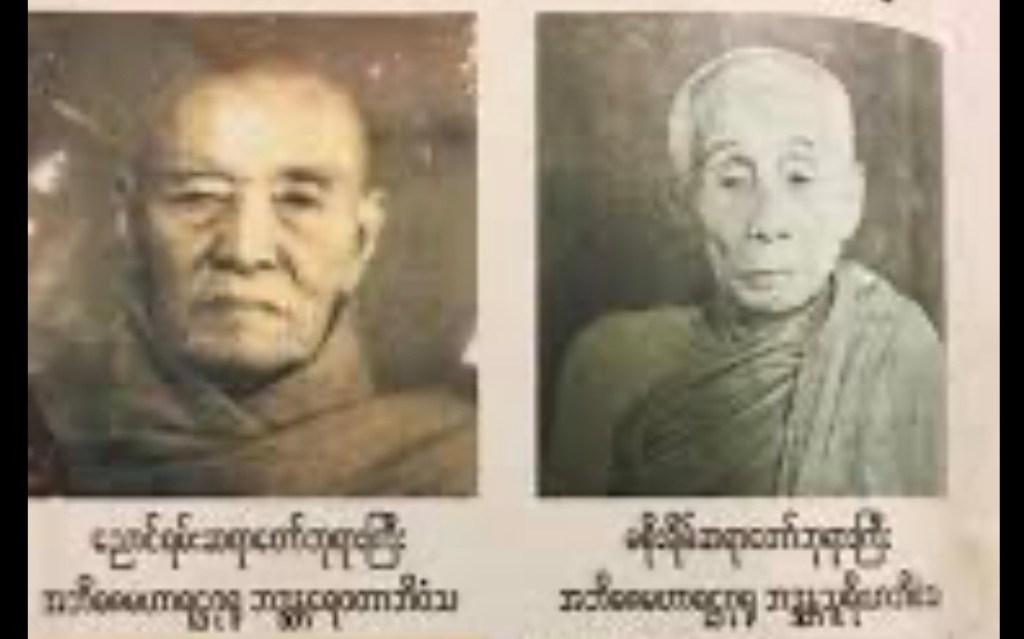
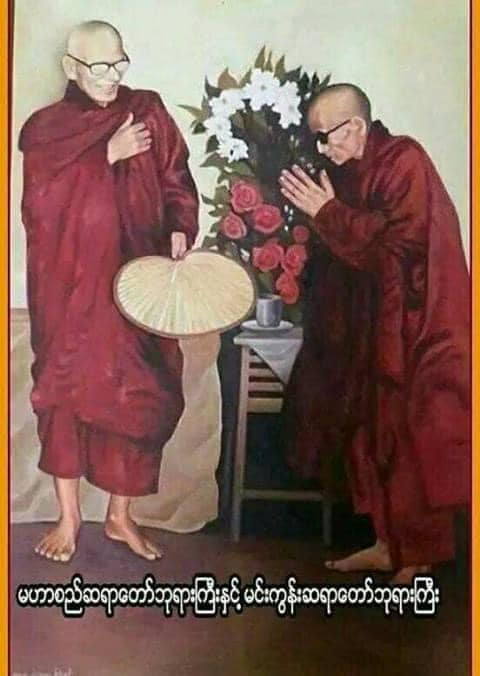
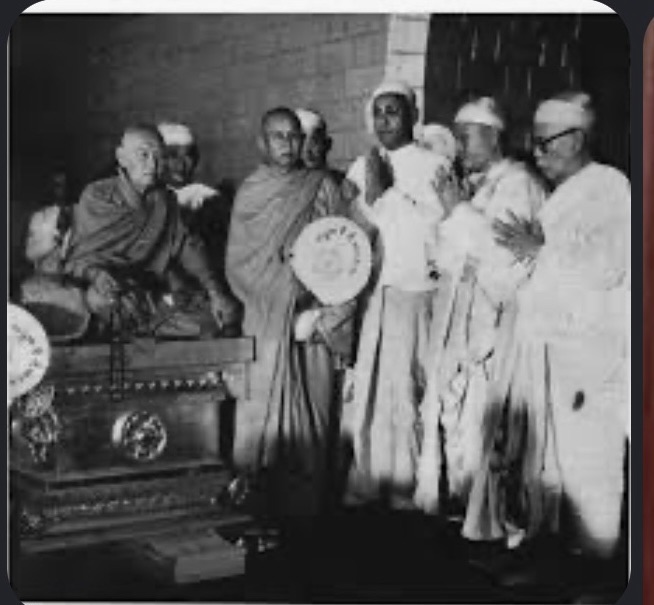
    • The Sixth Buddhist Council was held at Kaba Aye (World Peace) Pagoda, Rangoon, Burma from 1954 – 1956. The Presiding Sayadaws include Nyaung Yan Sayadaw (ညောင်ရမ်းဆရာတော်) Ma Soe Yein Sayadaw (မစိုးရိမ်ဆရာတော်) Mahasi Sayadaw (မဟာစည်ဆရာတော်) and Mingun Tipitaka Sayadaw (မင်းကွန်းတိပိဋကဆရာတော်)
    Nyaung Yan Sayadaw
    Sangha Maha Nayaka for Sixth Buddhist Council

    Tipitaka တိပိဋက

    • It is a Pali term. It is commonly rendered as “Three Baskets” :
    • Vinaya (Monastic rules of conduct) ဝိနည်း
    • Sutta (Discourses) သုတ္တန်
    • Abhidhamma (Ultimate reality) အဘိဓမ္မာ

    Buddhist Councils သံဂါယနာ

    U Silananda
    • According to the Theravada tradition, there are six Buddhist Councils.
    • The First, Second and Third Councils were held in India.
    • The Fourth Council (which recorded the teachings on palm leaves) was held in Ceylon.
    • The Fifth Council was held in Mandalay, Burma. U Khanti inscribed the Tipitaka on marble slabs. It was featured as the World’s Largest Book in Ripley’s “Believe it or not”.
    • The Sixth Council was held in Rangoon, Burma. Tipitaka was reconfirmed and published as printed texts. Selected Pali texts were also translated into Burmese.

    First Buddhist Council

    Source : U Silananda

    • Date : 3 months and 5 days (Sasana Era)
    • Place : Rajagaha (India)
    • King : Ajasattha
    • Leader : Mahakassapa Thera
    • Number of Monks : 500
    • Duration : 7 months
    • Accomplishment :
      Collected, examined, classified, and recorded orally the Buddha’s Teachings
    • Ashin Maha Kassapa acted as the Chief Questioner.
    • Ashin Upali recited Vinaya.
    • Ashin Ananda recited Sutta and Abhidhamma.
    • 500 Arahants confirmed Buddha’s teachings.

    References :

    • Culavagga-Pali pp. 479 – 490
    • Dipavamsa 1.24; 5.4
    • Mahavamsa 3.26 – 41
    • Vinaya Atthakatha I 2 – 25
    • Digha-Attahakatha I 3-26

    Second Buddhist Council

    Source : U Silananda

    • Date : 100 (Sasana Era)
    • Place : Vesali (India)
    • King : Kalasoka
    • Leader : Yasa Thera (Vinaya Athakatths)
      Revata Thera (Mahavamsa)
    • Number of Monks : 700
    • Duration : 8 months
    • Accomplishment :
      Reaffirmed the Texts accepted at the 1st Council after a group of monks tried to relax the rules of discipline (oral)

    References :

    • Culavagga-Pali pp. 490 – 508
    • Dipavamsa 5.30
    • Mahavamsa 4.9 – 64
    • Vinaya Atthakatha I 25 – 29

    Third Buddhist Council

    Source : U Silananda

    • Date : 234 (Sasana Era)
      310 BC
    • Place : Pataliputta (India)
    • King : Asoka
    • Leader : Mogallaputta-Tissa Thera
    • Number of Monks : 1000
    • Duration : 9 months
    • Accomplishment :
      Reaffirmed the Texts accepted at the previous Councils. The Kattavatthu (5th book of Abdhidhamma) is added (oral)

    References :

    • Dipavamsa 7.34-43, 44-59
    • Mahavamsa 5.228-279
    • Vinaya Atthakatha I 29 – 78

    Fourth Buddhist Council

    Source : U Silananda

    • Date : 450 (Sasana Era)
      94 BC
    • Place : Alokavihara (Sri Lanka)
    • King : Vattagamani Abhaya
    • Number of Monks : 500
    • Accomplishment :
      Wrote the Buddha’s Teachings together with the Commentaries on palm leaves

    References :

    • Vajirabuddhitika 543
    • Mahavamsa 33.100-101

    Fifth Buddhist Council

    Source : U Silananda

    • Date : April 5, 1871 (*)
    • Place : Mandalay (Burma)
    • King : Mindon
    • Leader : Jagara Thera
    • Number of Monks : 2400
    • Duration : 5 months (recitation)
      Began on April 14, 1871
      Ended on September 9, 1871
    • Accomplishment :
      Reaffirmed the Texts accepted at the previous Councils and wrote them on 729 marble slabs.

    References :

    • Burmese Chronicles

    (*) 1853 – 59 Writing on palm leaves in gold-color ink, ink and stylus – over 200 volumes.

    Began writing on marble slabs on October 26, 1859. Ended writing on marble slabs on May 4, 1868. Took 7 years, 6 months and 19 days.

    Seven books of Abidhamma on 208 slabs.

    Slab size : 5 feet high, 3 feet across, 5 inches thick and about 90 lines long

    Ripley’s “Believe It or Not” named it the “Largest Book in the World”.

    Sixth Buddhist Council

    Source : U Silananda

    • Date : May 1954 – 56
    • Place : Rangoon (Burma)
    • Prime Minister : U Nu
    • Leader : Revata Thera
    • Number of Monks : 2500
    • Duration : Two years for the Pali Texts
    • Accomplishment :
      Reaffirmed the Texts accepted at the previous Councils.
      Editions of Pali Texts, Commentaries and Sub-commentaries.

    References :

    • Sangayana Album

    Editor’s Notes :

    • The Sixth Buddhist Council was held in Kaba Aye Pagaoda, Rangoon.
    • 2500 Sayadaws from Burma and neighboring Theravada Buddhist nations re-confirmed Buddha’s teachings.
    • Mahasi Sayadaw U Sobhana acted as the Chief Questioner.
    Mahasi & Mingun
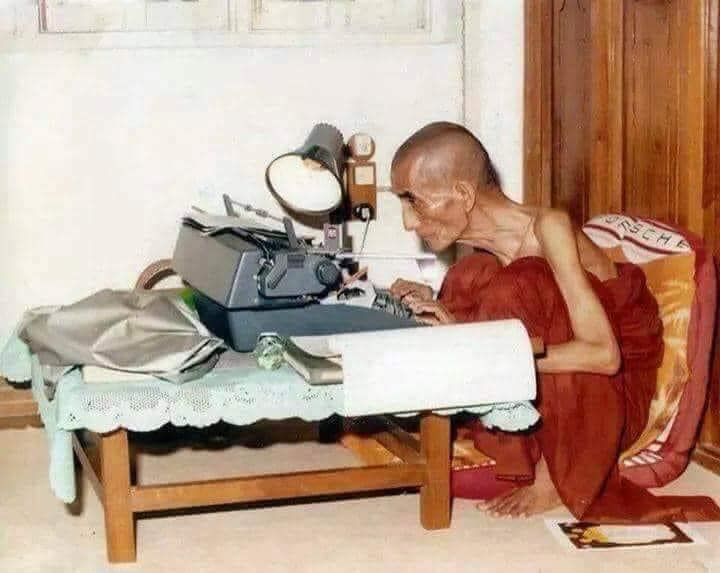
    • Mingun Sayadaw Ashin Vicittacarabhimvamsa acted as the Chief Reciter.
    • Mingun Sayadaw’s memory feat was recognized in the Guinness Book of World Records (in the mid-50s).

    Tipitaka Examination

    Background

    • Burma wanted to host the Sixth Buddhist Council.
    • The Sayadaws visited neighboring Theravada countries to seek advice and to solicit participation in the Council to celebrate 2500 years of Sasana.
    • The Theravada Sayadaws expressed the need for a Tipitaka Sayadaw.

    Burma invited interested Sayadawa to sit for Oral and Written Examination over four years (or more)

    • Vinaya
    • Sutta
    • Abhidhamma (Part One)
    • Abhidhamma (Part Two)

    Mingun Tipitaka Sayadaw U Vicittacara

    Mingun Sayadaw
    • He served as an Examiner for the first Tipitaka examination.
    • One Sayadaw passed the Vinaya, but said that he would not take further examinations to concentrate on his Practice of the Dhamma.
    • Sir U Thwin requested Mingun Sayadaw to take the Tipitaka examination as preparation for the Sixth Buddhist Council.
    • Mingun Sayadaw passed with Distinction in all subjects, and was awarded “Tipitakadara Bandakarika”.
  • Gathering — Winner Inn

    Gathering — Winner Inn

    by Hla Min

    Updated : September 2026

    • Winner Inn is run by Saya U Ba Than’s family : son Ye Than, daughter-in-law Win Mar Oo, grandson Aung Myo Myint and granddaughter Ei Khine.
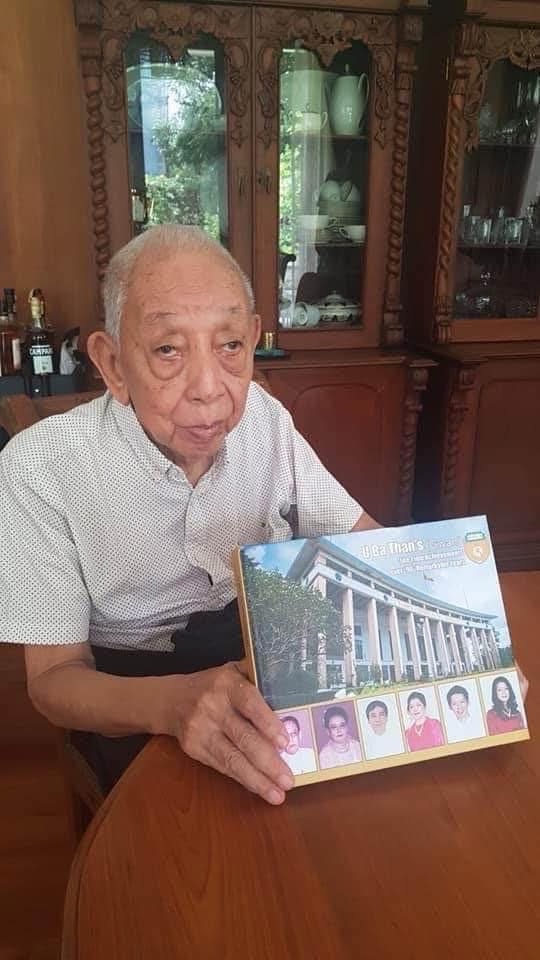
    U Ba Than
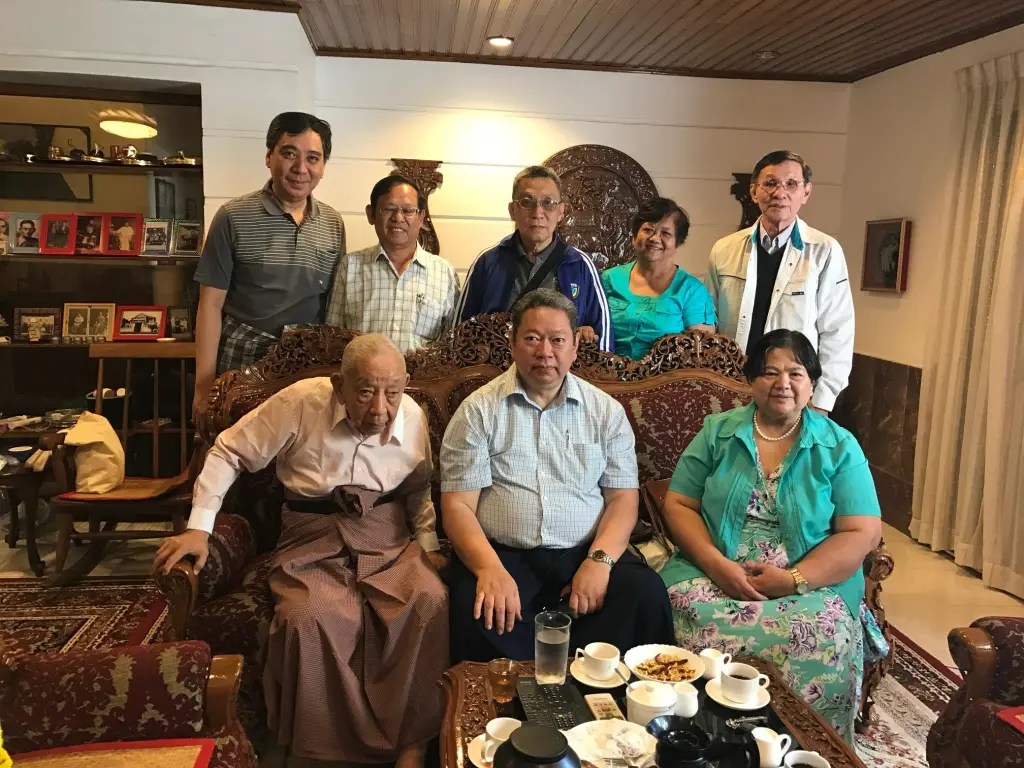
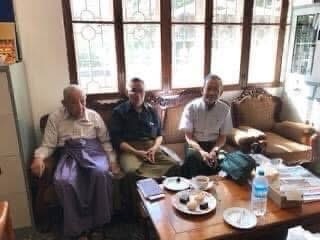
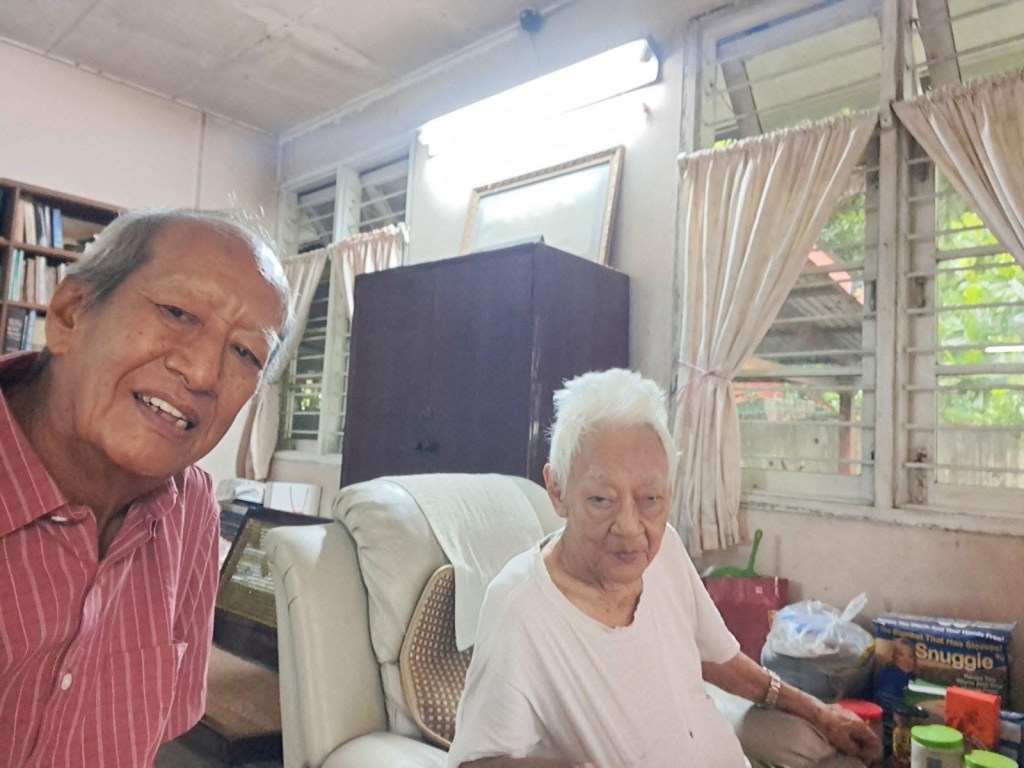
    • Before the family moved to a new residential home (a little bit further down Than Lwin Road), Saya would entertain his relatives (visiting from abroad), former colleagues and students at Winner Inn.

    Gatherings

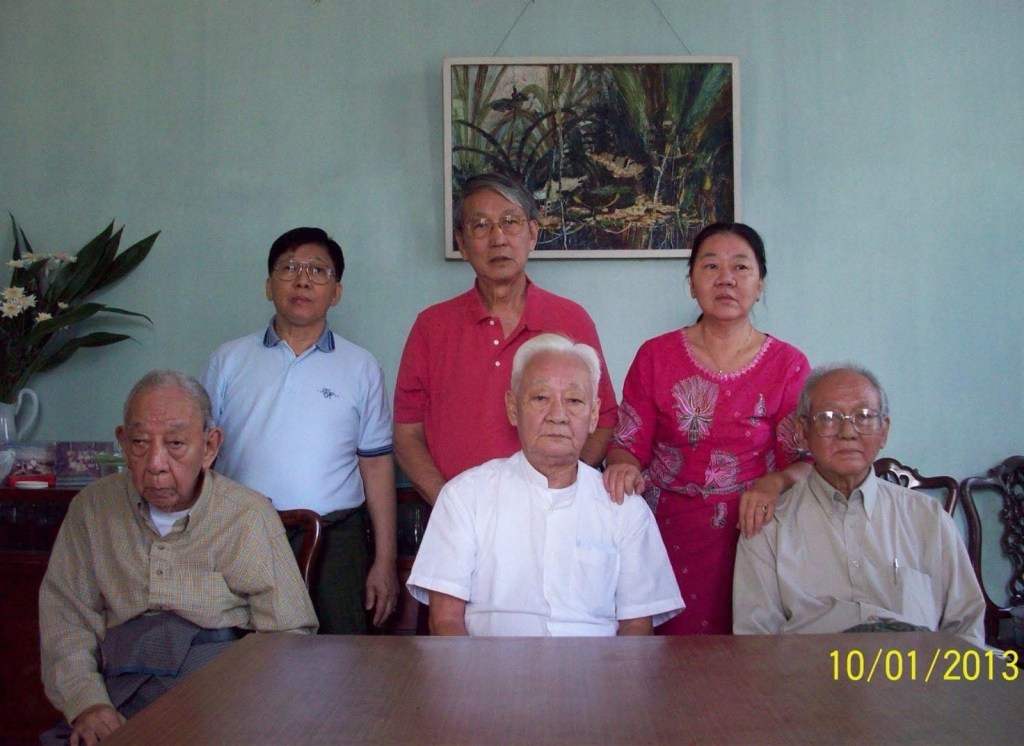
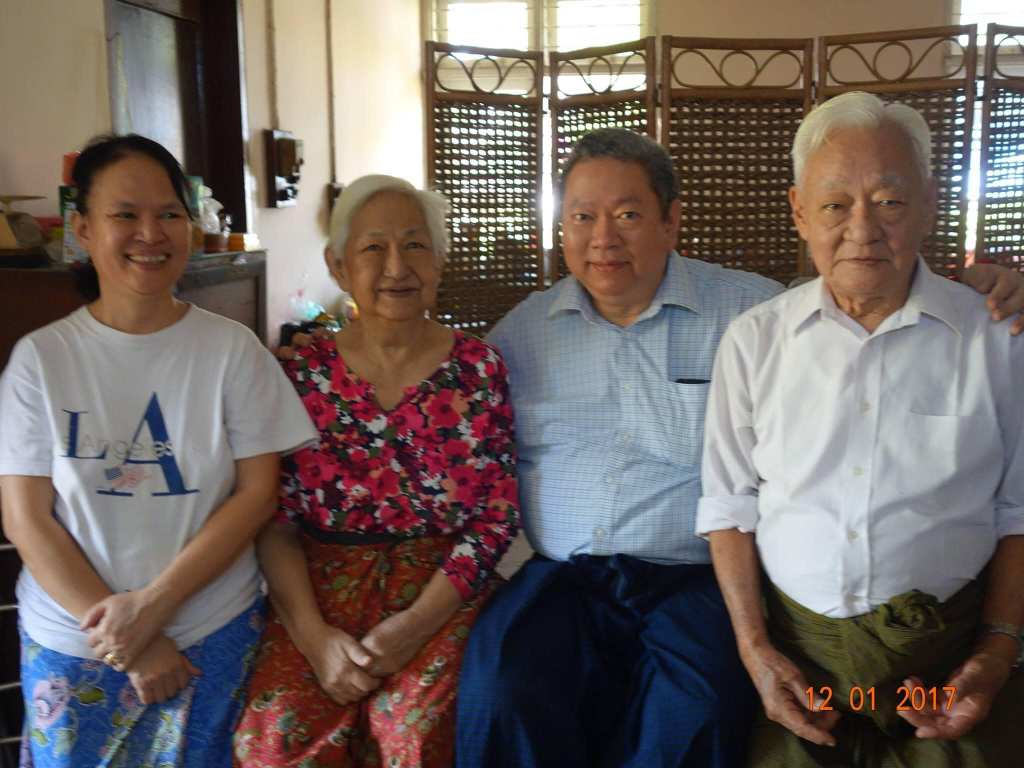
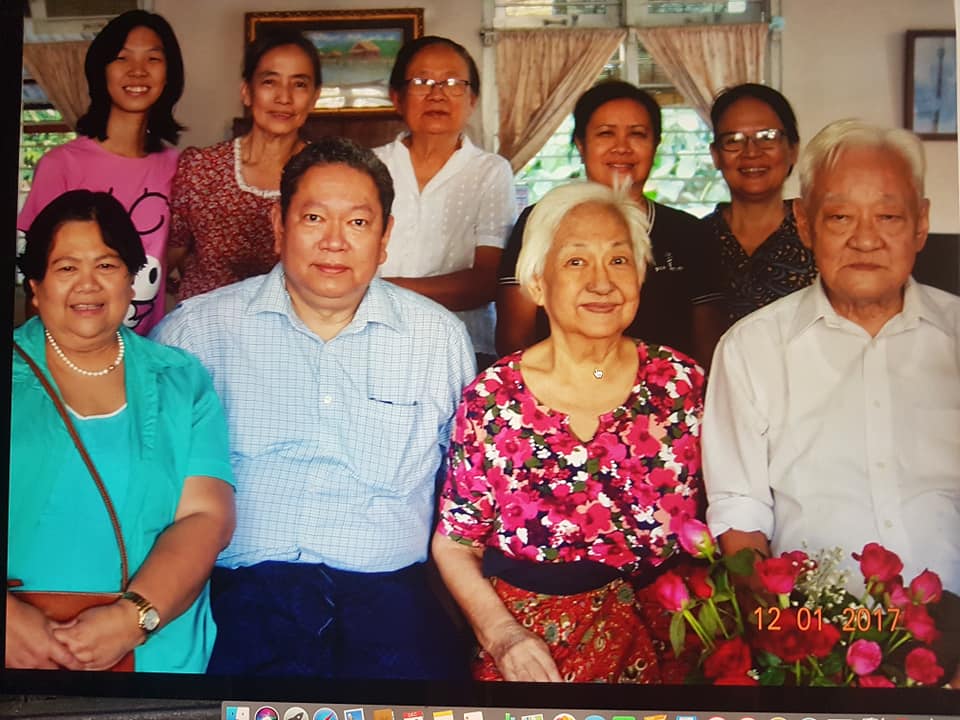
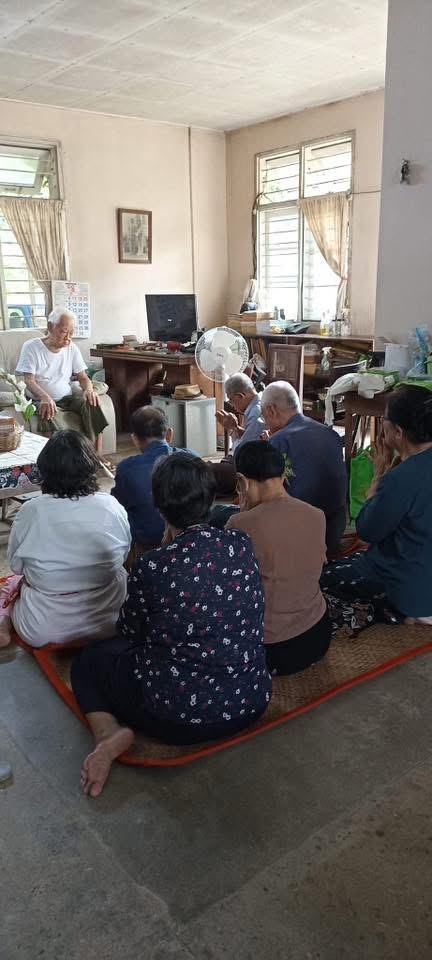
    • An informal gathering took place at Winner Inn in January 2017.
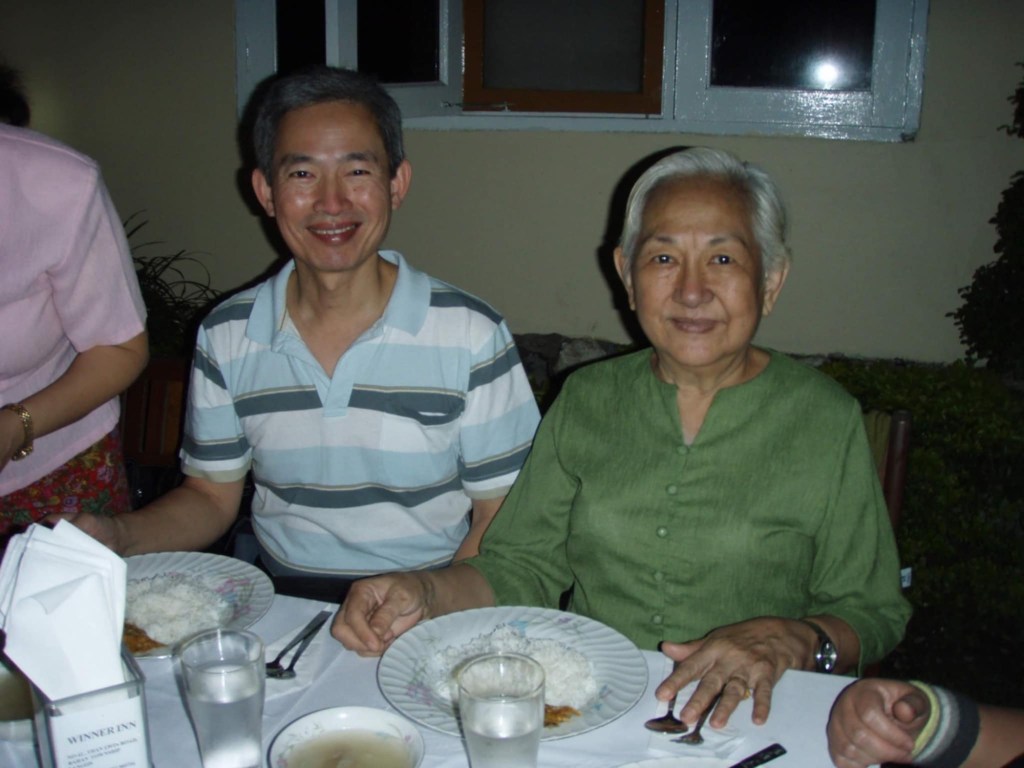
      Attendees include Dr. Khin Tun (Peter, GBNF) & Daw Win Mar, U Hla Win, U Aung Moung (GBNF), my spouse and me
    • U Aung Moung came to see Saya U Ba Than and Daw Win Mar.
      It’s a small world. Win Mar’s older brother was a childhood friend of U Aung Moung.
    • Sadly, U Aung Moung passed away in 2018.
      He was active in HMEE, SDYF and several social and religious organizations.
      Several monks arranged their own transportation to attend U Aung Moung’s last journey at Yay Way.
    Peter, Win Mar, Aung Moung, Hla Win

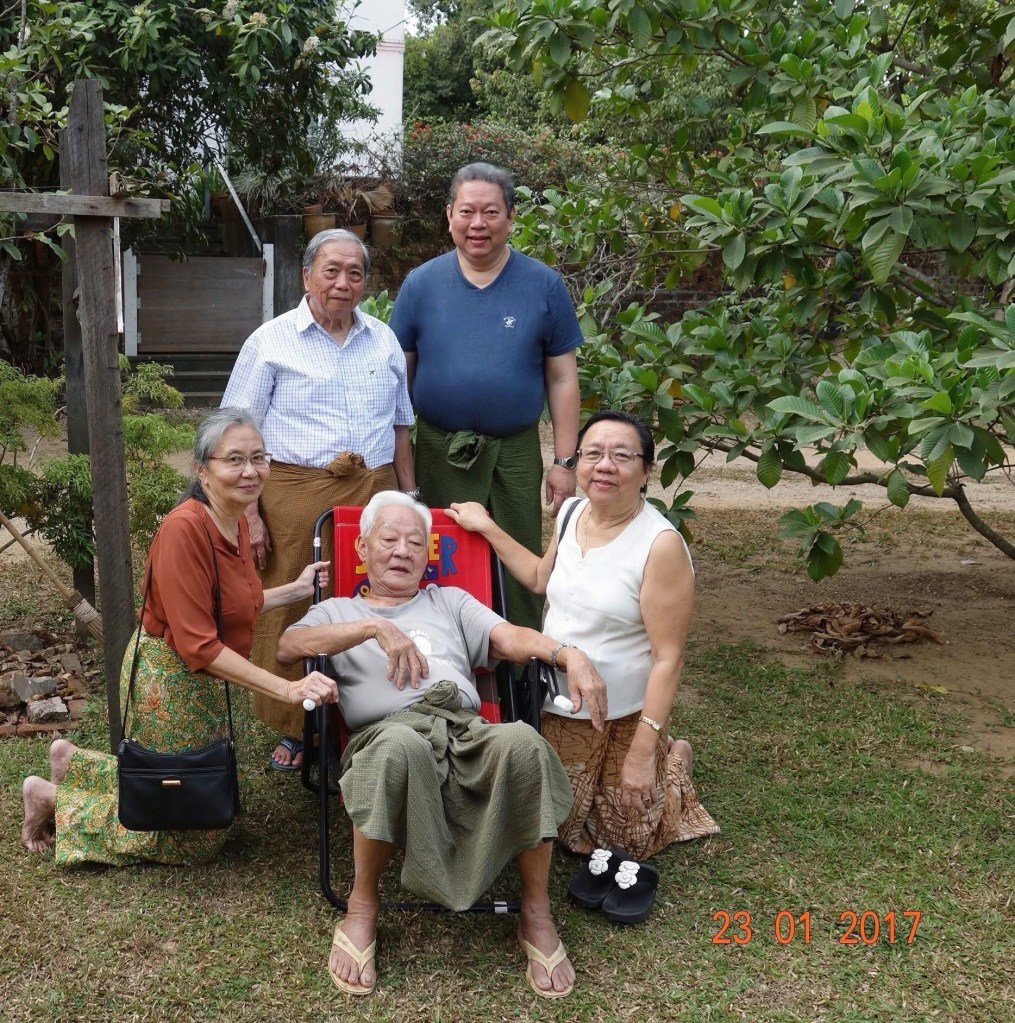
    Dr. Peter Khin Tun (GBNF)

    • Peter would usually come back to Yangon before January 12 to celebrate his mother Dr. Kyi Kyi Nyunt’s birthday. His father U Tin U is the elder brother of Saya U Ba Than.
    • Peter would host some celebrations (e.g. engagement party of his elder son Min Ko) at Winner Inn.
    • Sad to report that Peter was an early victim of Covid and lax UK Hospital policies about PPE. He passed away on April 13, 2020 (which was Easter Monday & start of Thingyan). The sad news is covered in BBC and some UK newspapers.
    • His spouse Win Mar recovered after two weeks of treatment at the hospital.
    • On a bright note, Peter was given awards posthumously and the UK hospital systems adopted better procedures.
  • U Ba Than ဦးဘသန်း

    U Ba Than ဦးဘသန်း

    by Hla Min

    Updated : September 2026

    Saya U Ba Than

    • Matriculated from St. John’s Dio in 1947 and won Collegiate Scholarship
    • Gold medal in 1949 for Highest Marks in I. Sc. (Combined); Highest overall; Highest for Pure Science
    • B.Sc (Special) in Mechanical Engineering from Imperial College
    • Joined RU Faculty of Engineering as Assistant Lecturer
    • M.Sc in Mechanical Engineering from Imperial College
    • Promoted to Lecturer
    • Retired as Professor and Head, Mechanical Engineering
    • Helped establish the Engineering Library
    • Early Supporter of HMEE (History of Myanmar Engineering Education); hosted inaugural meeting; donated photo albums to HMEE and MES
    • Soon Kyway on his birthday; invited former colleagues and students
    • Passed away soon after his 94th birthday

    Family

    • Father : U Chan Sein passed away around 60
    • Mother : Daw Cheng Kim lived to be 94; started the elite 90+ club
    • Brothers : Tin U, Ba Than, Myo Tint, Tin Htoon, Myo Min, Thaung Lwin
    • Sisters : Ruby / Win Hlaing, Betty / Myint Thwe, Cho Cho Hlaing
    • Spouse : Emerald / Mya Mya
    • Son : Ye Than
    • DIL : Lwin Mar Oo
    • Grandchildren : Aung Myo Myint, Ei Khine
    U Ba Than and family
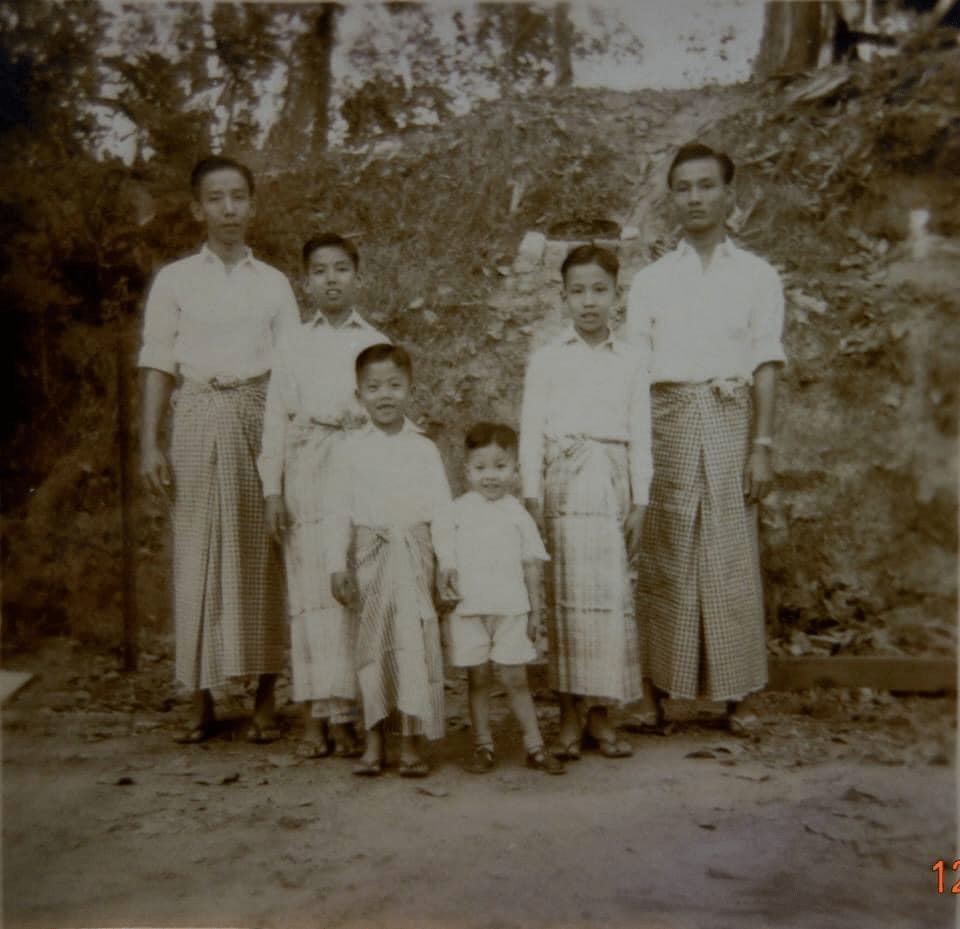
    Ba Than, Myo Tint, Myo Min, Thaung Lwin, Tin Htoon, Tin U
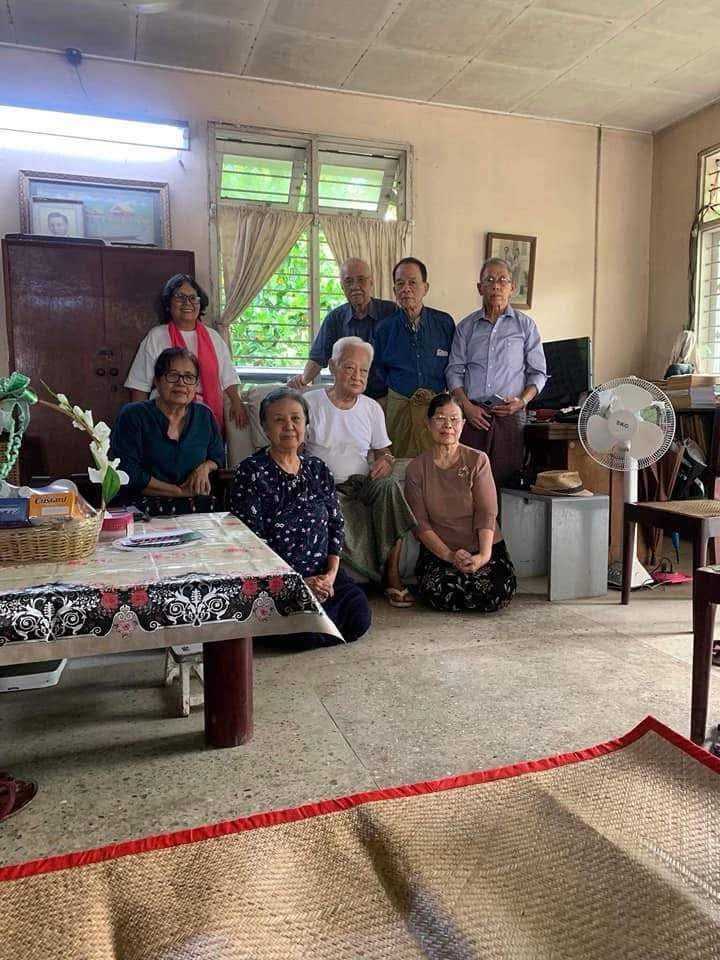
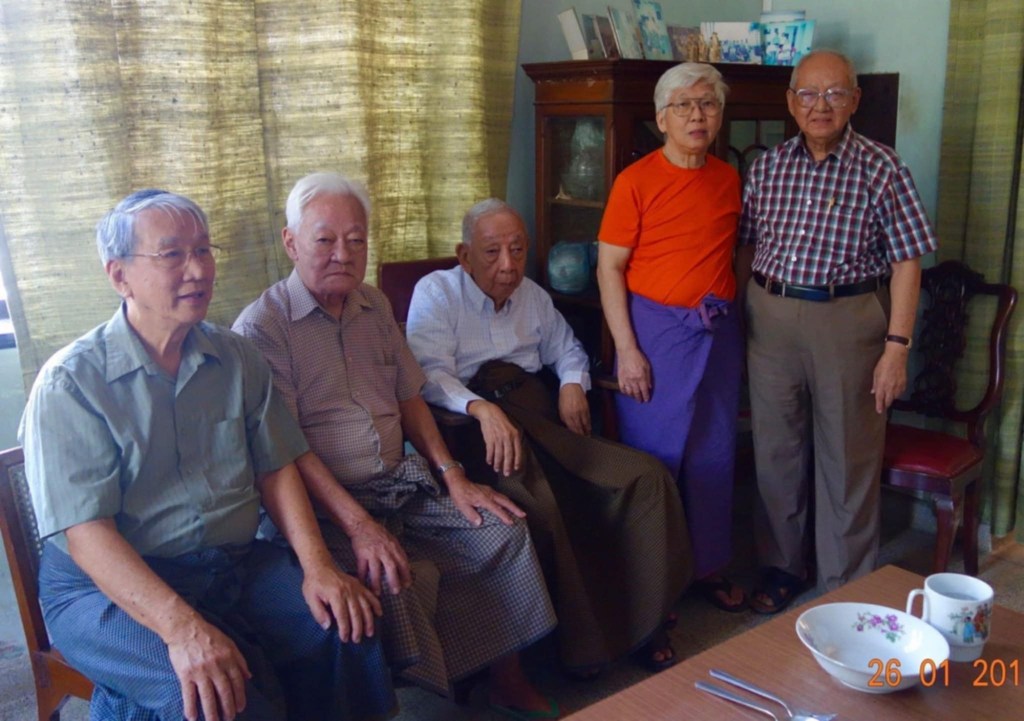
    U Tin Htoon, U Tin U, U Ba Than, U Thaung Lwin, Dr. Myo Tint
    U Tin U, Ruby, Father U Chan Sein, Betty
    With Relatives

    Six Siblings

    Six Siblings
    • U Ba Than (Scholarship Winner in 1947, Gold Medalist for I.Sc in 1949, Alumnus of Imperial College, Retd. Prof. of Mech. Engg) — GBNF
    • Dr. Daw Win Hlaing (Ruby)
    • Daw Myint Thwe (Betty, B.Com, Spouse of Dr. F Ba Hli) — GBNF
    • Dr. Myo Tint (3rd in Burma in 1952, RUBC Captain) — GBNF
    • U Tin Htoon (A60, RUBC Captain, ARAE Champion, SEAP Silver Medalist in Yachting)
    • U Myo Min (1st in I.Com & B.Com, Chartered Acct, UCC Co-founder)
    • U Thaung Lwin (Scholarship Winner in 1960, First in EC66, RUBC Captain)
    • Daw Cho Cho Hlaing (CRO, German Diploma)

    Yahan Khan

    Yahan Khan

    Birthday Presents

    • Photo Album for 90th birthday by Tin Htoon & Htaik San
    • Photo Cards for several birthdays by Tin Htoon & family
    With 90th Birthday Present (Photo Album)
    Young U Ba Than
    Birthday Soon Kyway

    Garawa

    • Pay respect to his saya U Ba Toke
    • His former students (eg. 69ers) pay respect to Saya U Ba Than
    At Saya Pu Zaw Pwe with Sayagyi U Ba Toke
    With former students, who came to pay respect
    At Winner Inn

    Dana

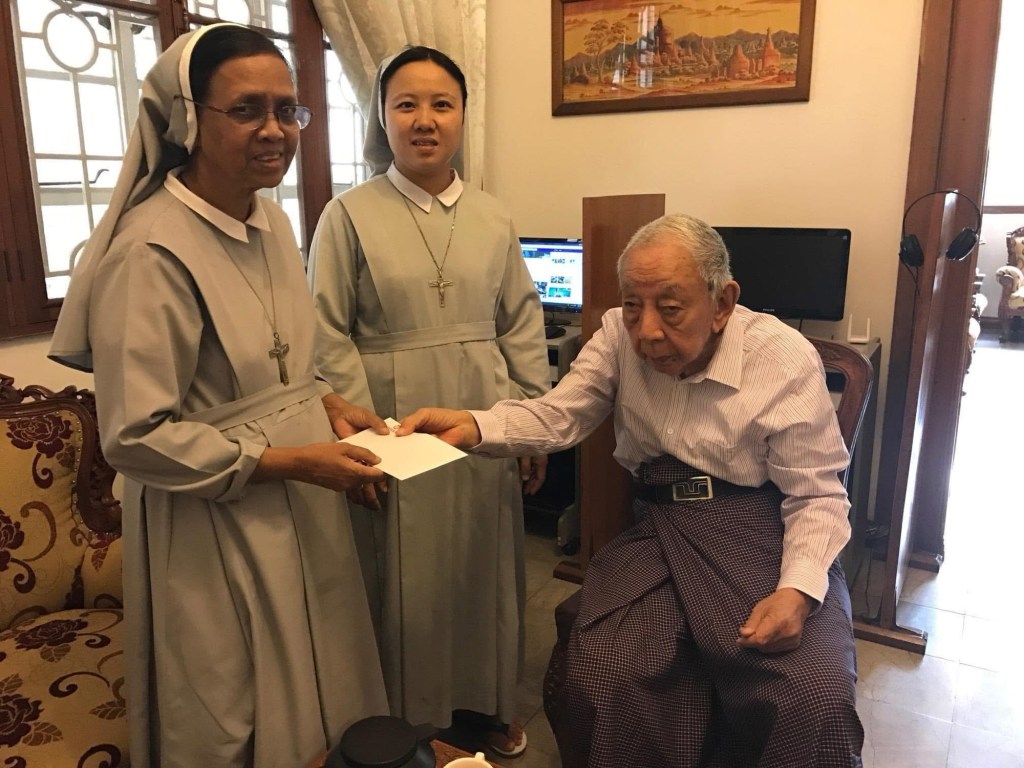
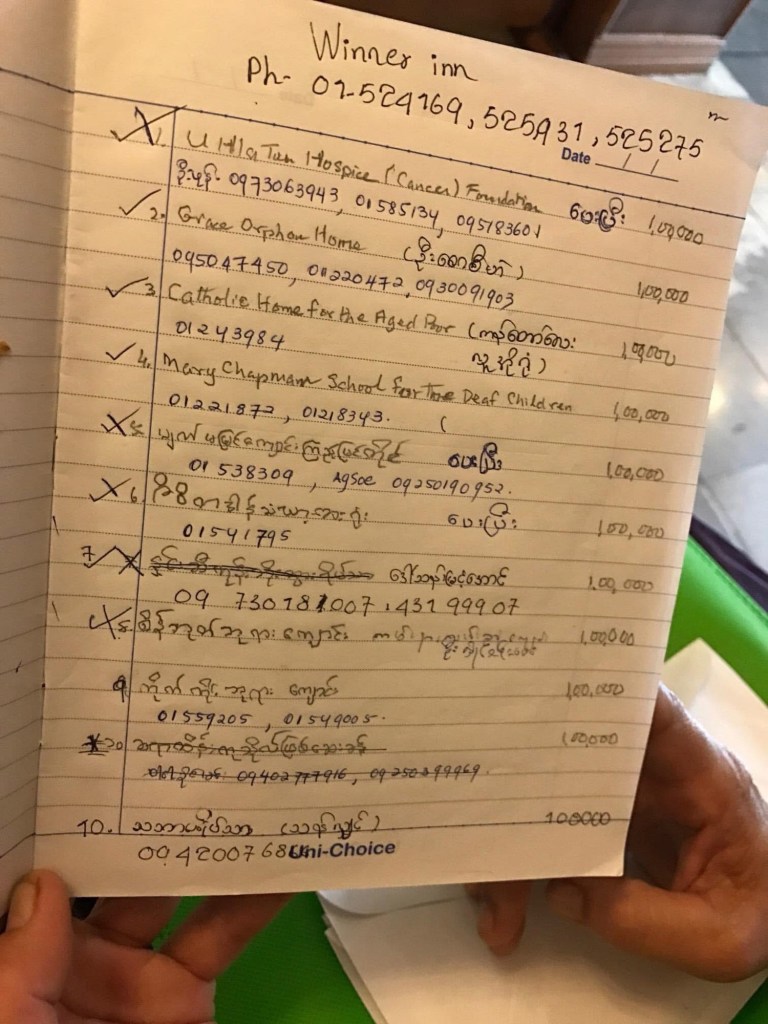
    • He donated his Garawa money to selected charities.
    • On one occasion, he donated to ten charities.
    Double Dana : Donated Garawa money to selected Charities
    Partial List of Donations

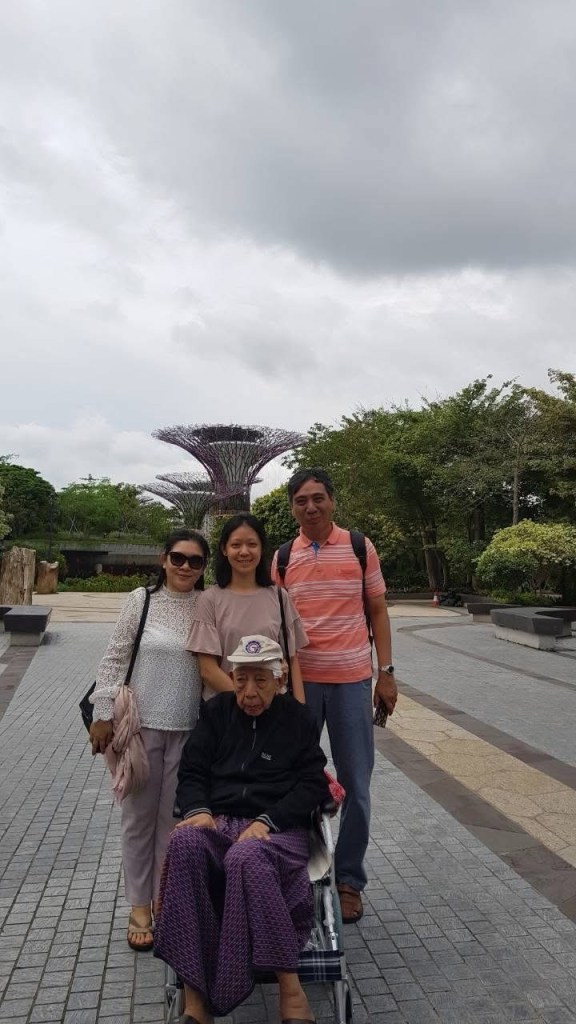
    Medical Checkup in Singapore

    • He visited Singapore for medical checkup
    In Singapore for medical check up

    Young & Old

    • Photos of U Tin U and U Ba Than
    U Tin U & U Ba Than
  • U Tin U ဦးတင်ဦး

    U Tin U ဦးတင်ဦး

    by Hla Min

    Updated : September 2026

    Saya U Tin U

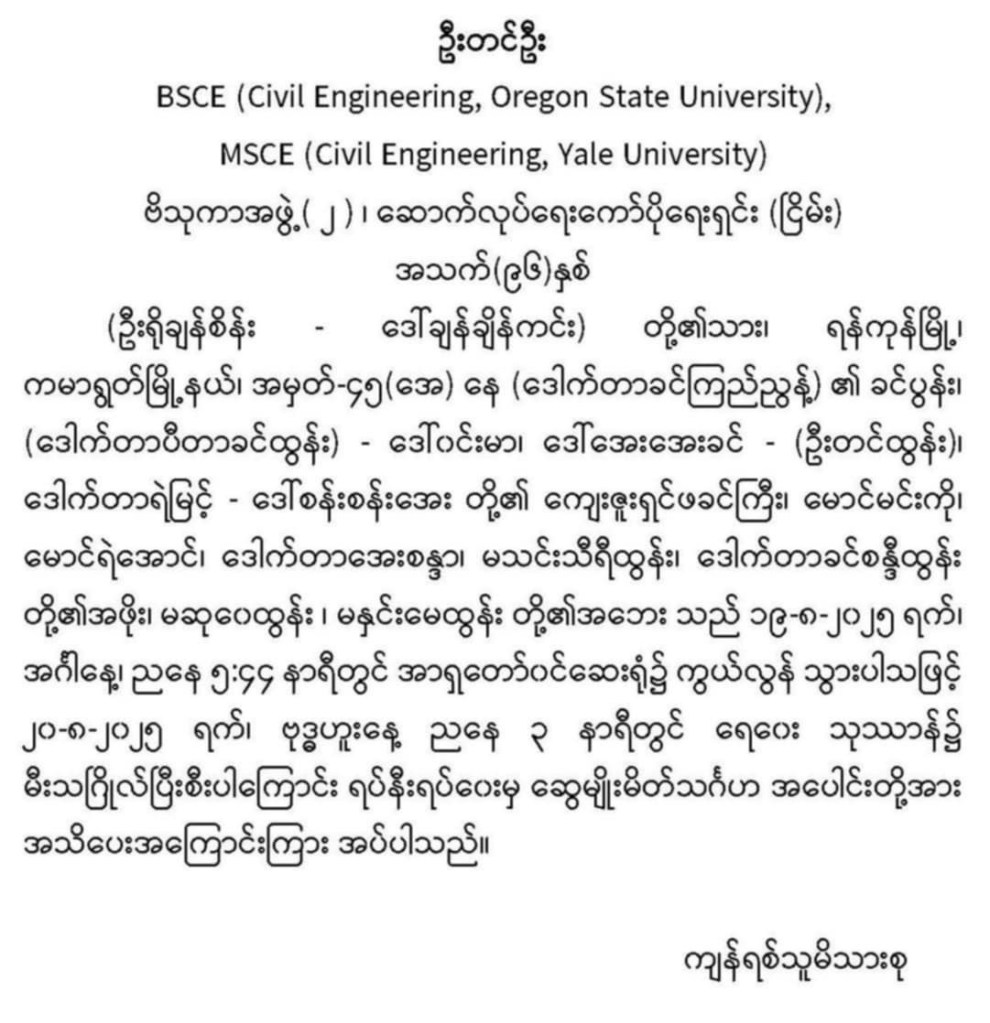
    • Scholar Athlete : BSCE from Oregon State; MSCE from Yale; Past Captain of RUBC; Past Captain of RGC
    • Survived a Kidnapping (with intent to kill him) : by a former employee
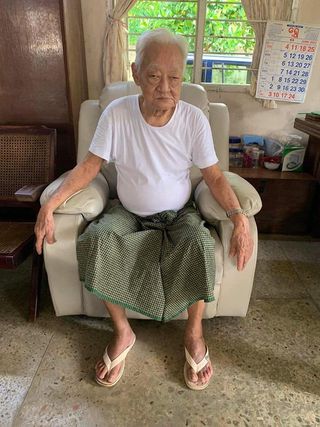
    • Had good memory and strong hands until his final days
    Tin U
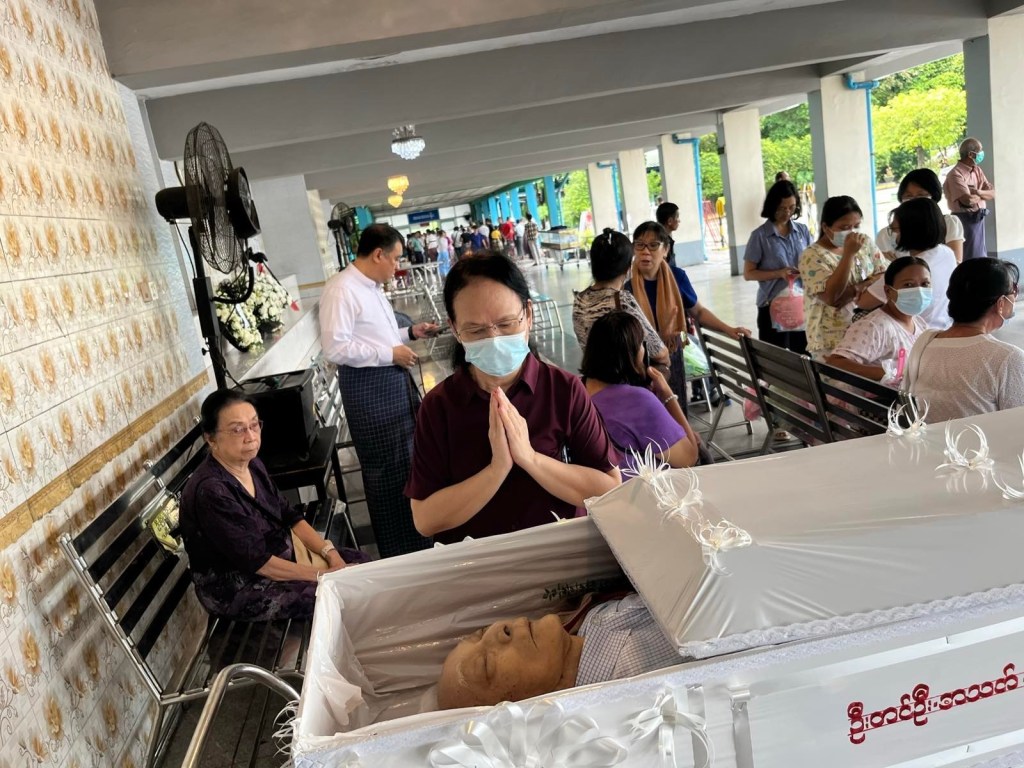
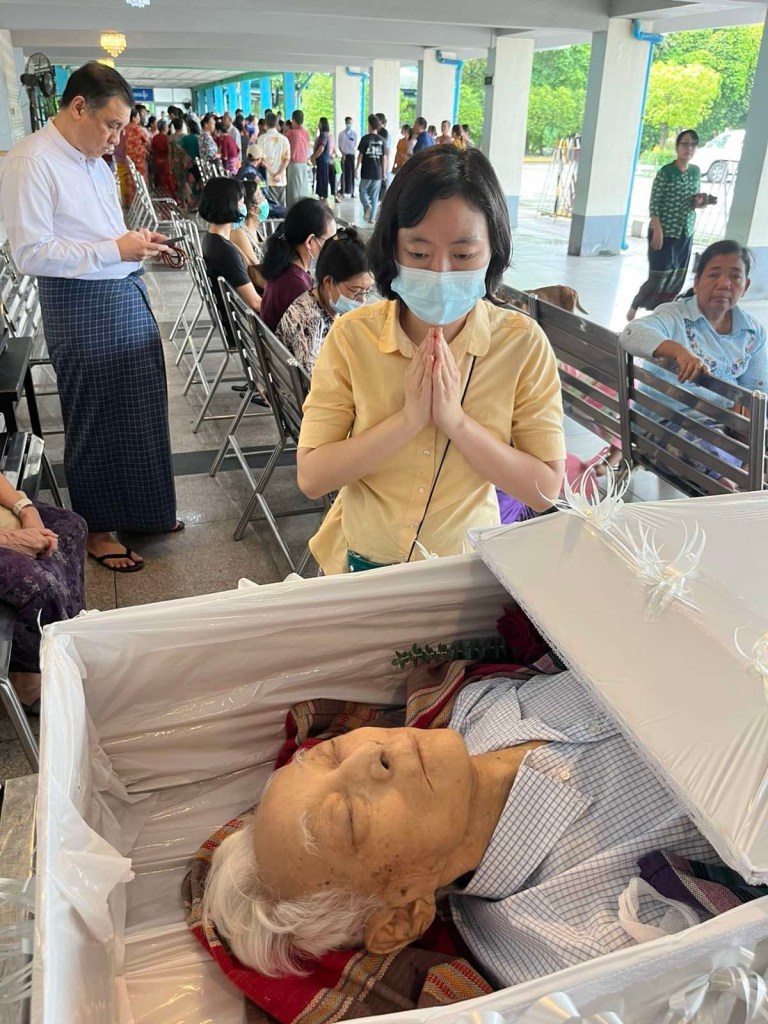
    • Passed away in Yangon on August 19, 2025
    • He was 96 years young.

    Obituary

    Obituary

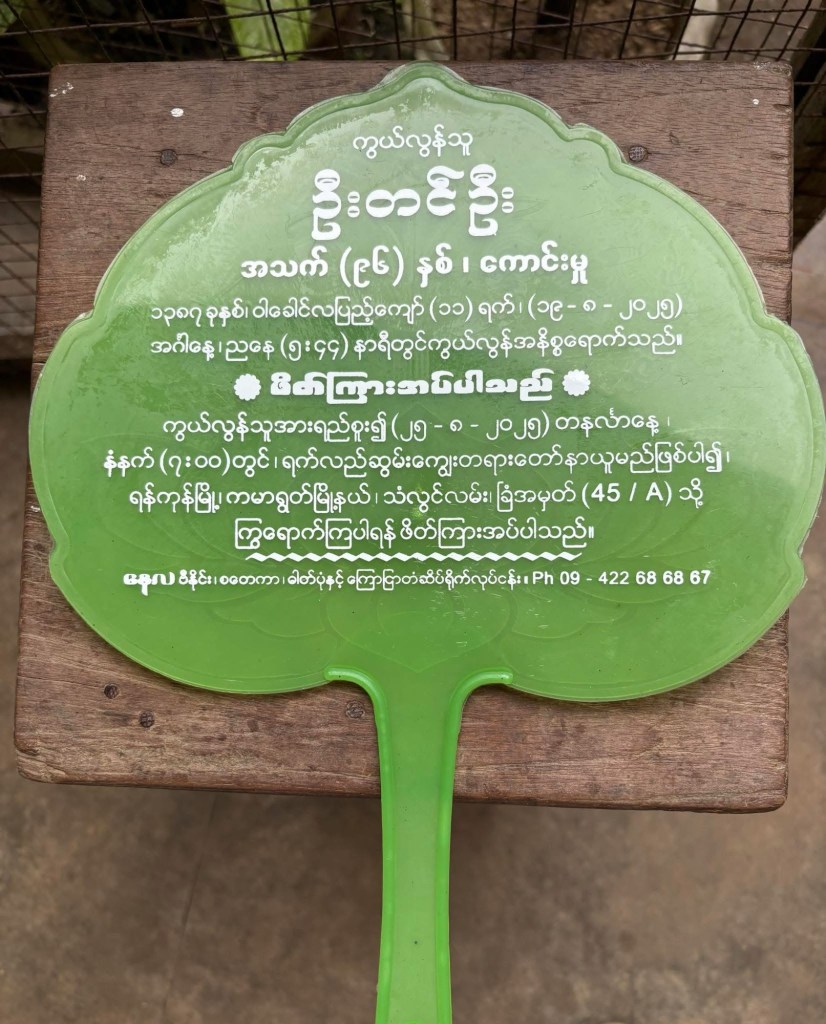
    Final Journey

    • Attended by Family members, relatives and friends
    Invitation for Yet Le Soon Kyway
    Aye Aye Khin (Daughter)
    Thin Thiri Tun (Granddaughter)

    Academic & Experience

    • BSCE (Oregon State University)
    • MSCE (Yale University)
    • Former Part-time Lecturer, Civil
    • Former Director, Clark & Grieg
    • Former Advisor, InterKiln
    • Former Advisor, PWD Architect Group 2
    • Oldest & Most Senior Past Captain, Rangoon University Boat Club
    • Past Captain, Rangoon Golf Club
    • Former Treasurer, Burma Society of Civil Engineers

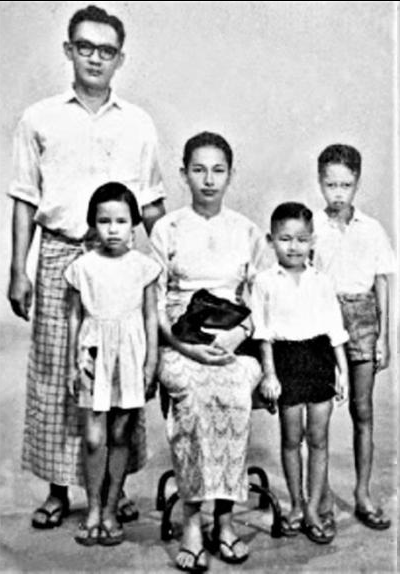
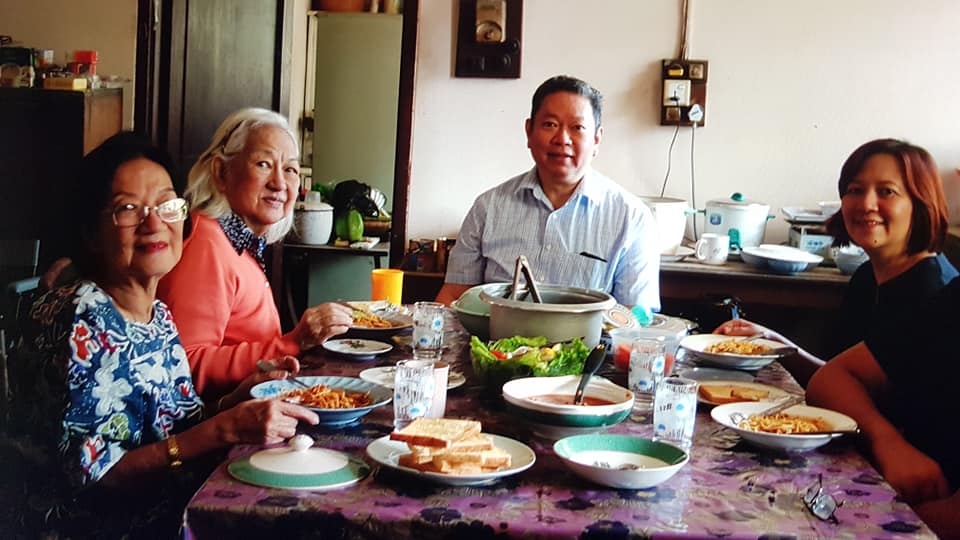
    Family

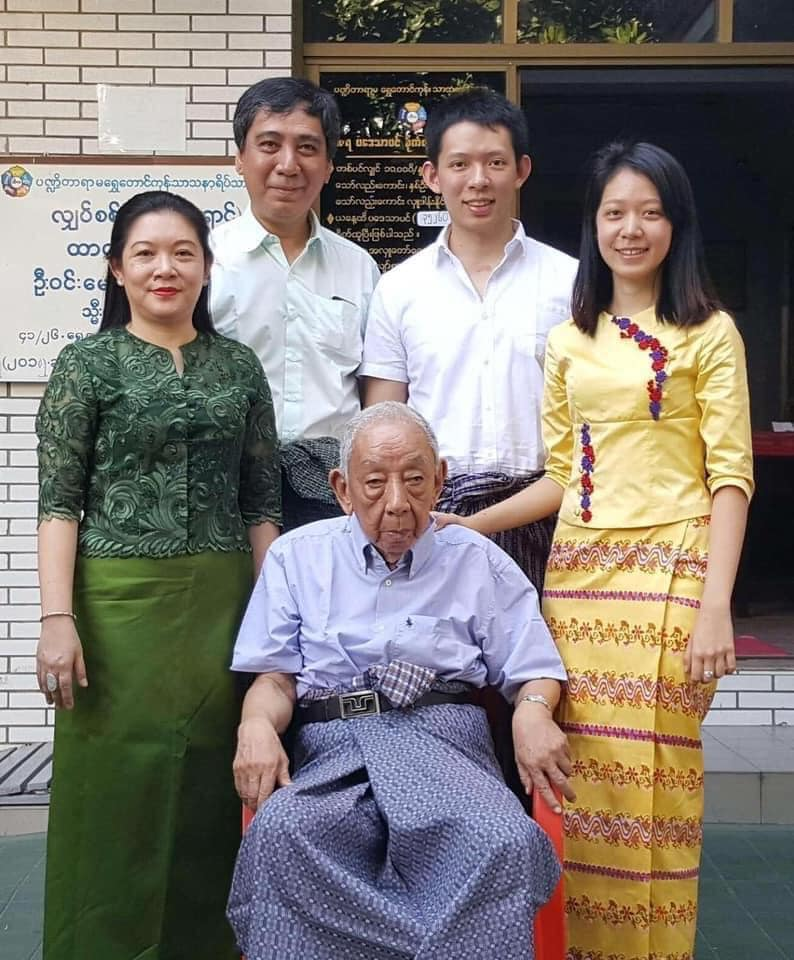
    U Tin U, Aye Aye Khin, Daw Cherry, Ye Myint, Peter

    Spouse

    Dr. Cherry 1
    • Dr. Khin Kyi Nyunt (Cherry) — passed away in November 2019
    • She did Nutrition Research at BMRI.

    Children

    Peter & his mom Dr. Cherry
    Family & Relatives
    Aye Aye. Dr. Cherry, Dr. Peter, U Tin U
    Family & Relatives 2
    Daw San San Aye, U Tin U, Dr. Ye Myint& Dr. Aye Sandar
    • Dr. Khin Tun (Peter, MRCP, Former Associate Dean of Oxford University, passed away in April 2020) & Daw Winmar;
    • Daw Aye Aye Khin (B.Com, CPA) & U Tin Tun (passed away in May 2020)
    • Dr. Ye Myint (Fellowship training in Intensive Care and Anesthesia, Took care of his father’s health in the final days) & Daw San San Aye
    YM 1
    YM 2
    YM 3

    Grandchildren

    • Min Ko & Prudence
    • Ye Aung
    • Dr. Aye Sandar
    • Thin Thiri Tun
    • Dr. Khin Sandy Tun

    Great Grandchildren

    • Su Wai Tun
    • Hnin Wai Tun
    Peter, Winmar, Ye Aung, Min Ko

    Siblings

    U Tin U, Ruby, Father U Chan Sein, Betty
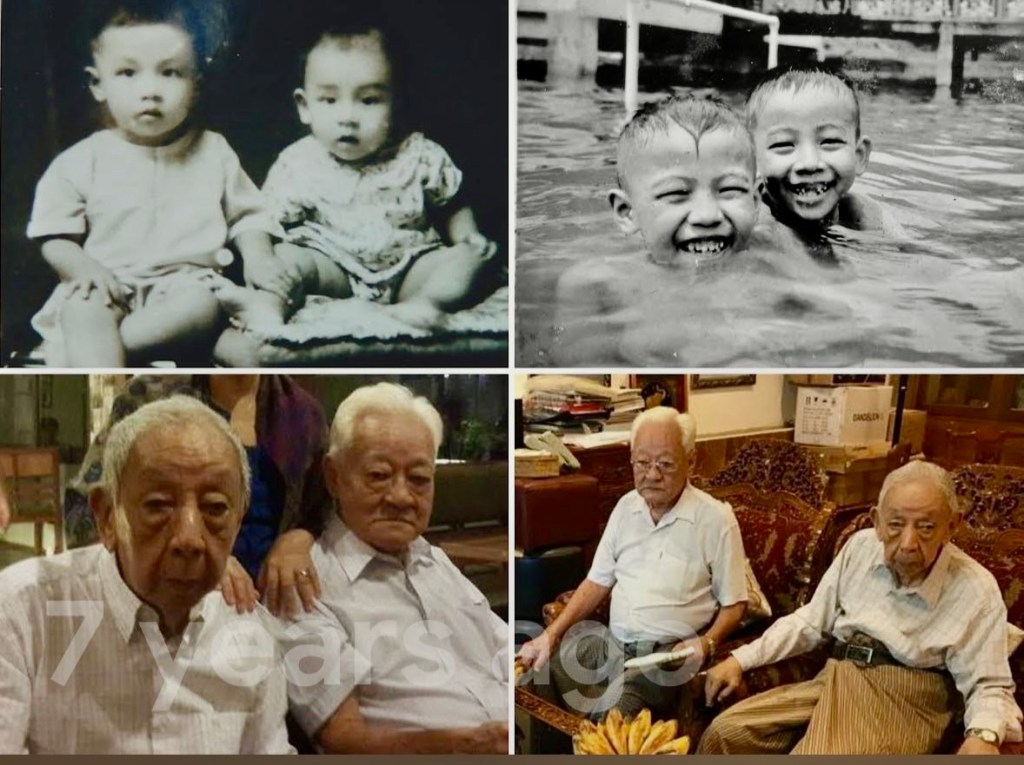
    Ba Than, Myo Tint, Myo Min, Thaung Lwin, Tin Htoon, Tin U
    U Tin Htoon, U Tin U, U Ba Than, U Thaung Lwin, Dr. Myo Tint
    Six Siblings
    • U Ba Than (Scholarship Winner in 1947, Gold Medalist for I.Sc in 1949, Alumnus of Imperial College, Retd. Prof. of Mech. Engg) — GBNF
    • Dr. Daw Win Hlaing (Ruby) — GBNF
    • Daw Myint Thwe (Betty, B.Com, Spouse of Dr. F Ba Hli) — GBNF
    • Dr. Myo Tint (3rd in Burma in 1952, RUBC Captain) — GBNF
    • U Tin Htoon (A60, RUBC Captain, ARAE Champion, SEAP Silver Medalist in Yachting)
    • U Myo Min (1st in I.Com & B.Com, Chartered Acct, UCC Co-founder)
    • U Thaung Lwin (Scholarship Winner in 1960, First in EC66, RUBC Captain)
    • Daw Cho Cho Hlaing (CRO, German Diploma)

    Highlights

    • Matriculated from St. John’s Dio in 1946
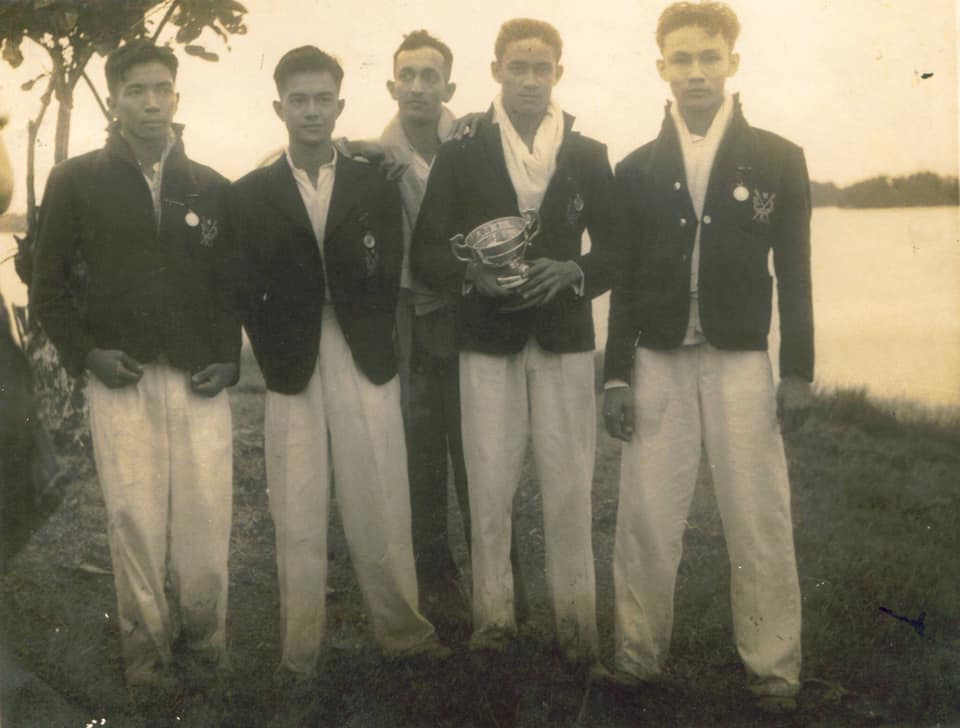
    • Represented RUBC at the 1948 Independence Day Regatta at Kandawgyi with Pe Nyun, Pe Thein and Khin Maung Wint
    1948 Independence Day Regatta

    Rowing

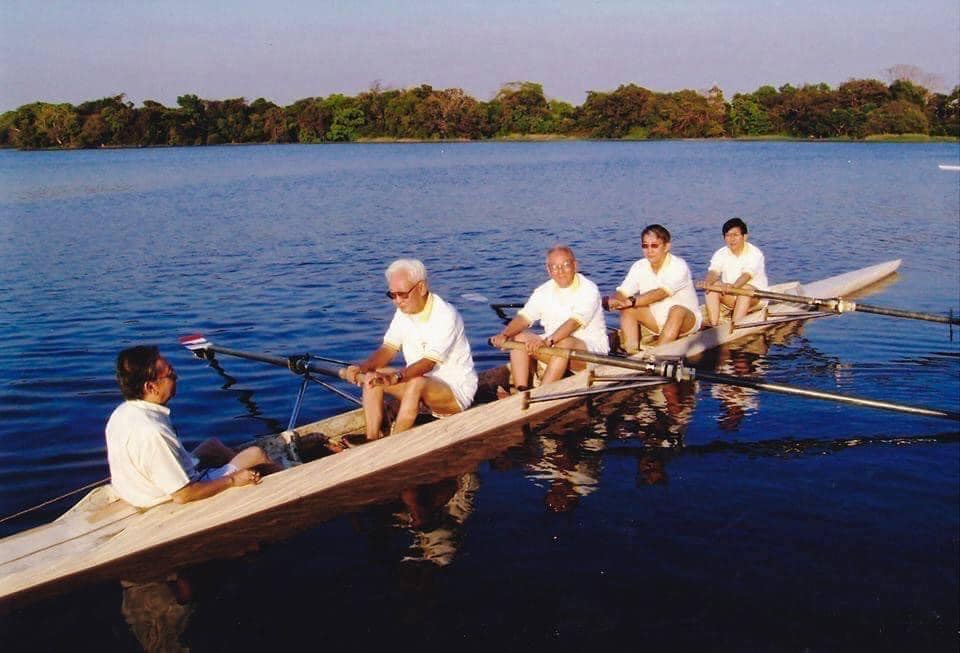
    • Four brothers — Tin U, Myo Tint, Tin Htoon & Thaung Lwin — are RUBC Captain & Gold
    • Two other brothers — Ba Than and Myo Min — are RUBC Green
    Tin U & Thaung Lwin
    RUBC Captains
    • Photo shows Five RUBC Captains. Sein Htoon (Cox) is a cousin; he is 1960 ARAE Champion

    Most Senior Past Captain

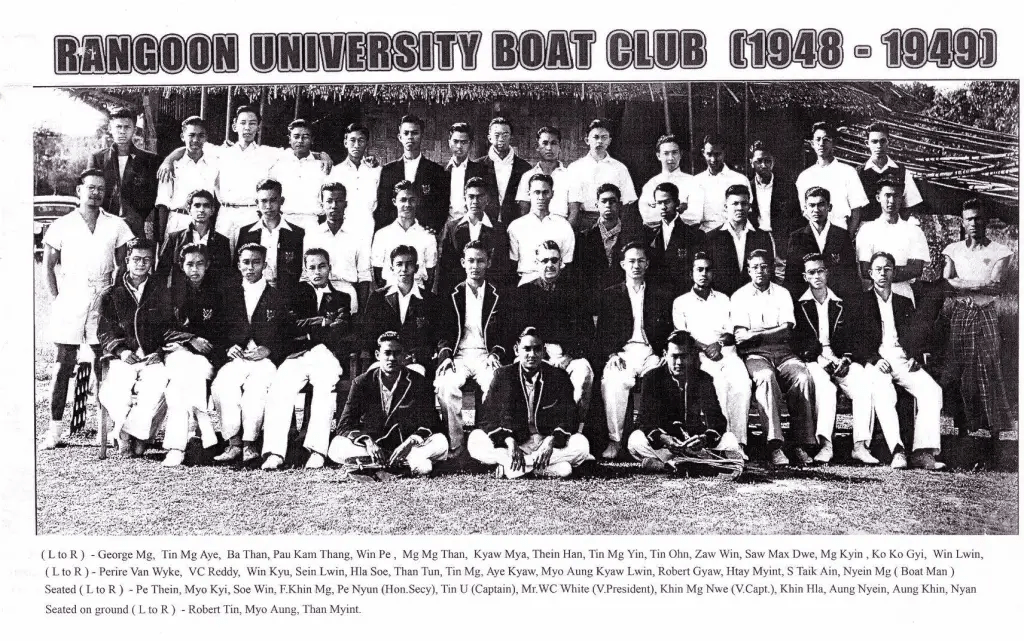
    • Captain of Rangoon University Boat Club (1948 – 49)
    RUBC
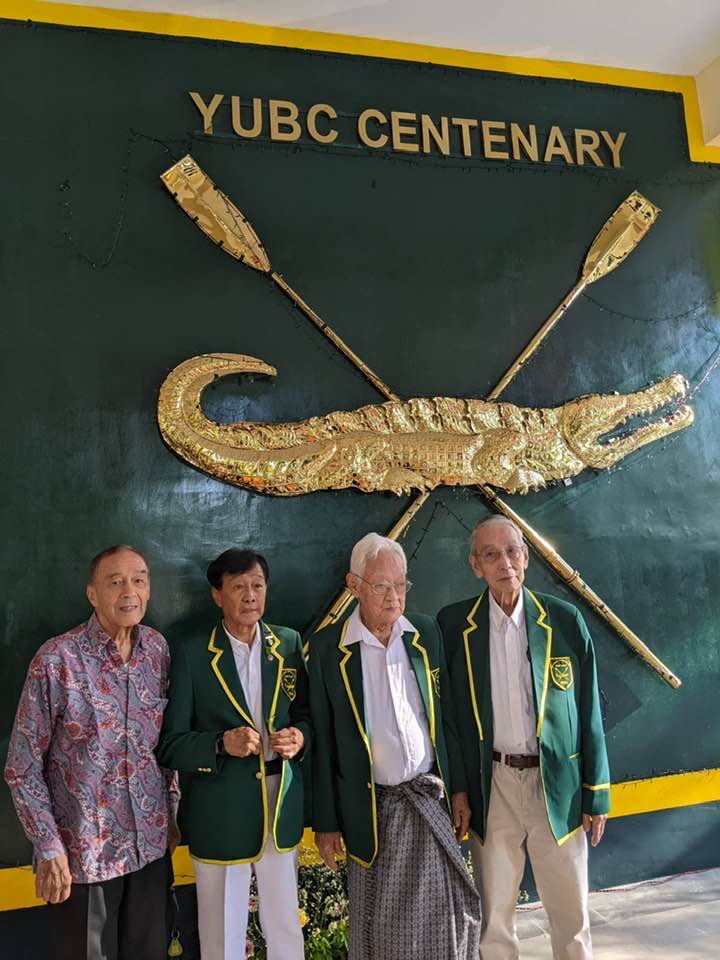
    • As the Most Senior and Oldest Past Captain of RUBC, U Tin U was invited to open the RUBC Centennial Celebration in 2023
    RUBC Centennial

    Bridge

    • Played with friends (e.g Richard Po Ohn)
    • Played with Uncle and two cousins

    Golf

    • Past Captain, RGC
    • Played with senior (e.g U Yaw Hlaing) & junior (e.g U Soe Paing) partners until his early 80s

    Memories

    • Relaxing in the garden
    Tin U
    • Visit
    With Than Htut

    Interviews

    • For RGC (Rangoon Golf Club)
    • For HMEE (History of Myanmar Engineering Education)
    • For his grandson Min Ko

    Kidnap Survivor

    • See account by his son Dr. Khin Tun (Peter)

    Yahan Khan

    Yahan Khan

    Garawa

    • SPZP-2012
    SPZP-2012
    • PWD Architect 2 Group
    PWD 1
    PWD 2
    PWD 3

    Birthday Presents

    • Photo Album for 90th birthday by Tin Htoon & Htaik San
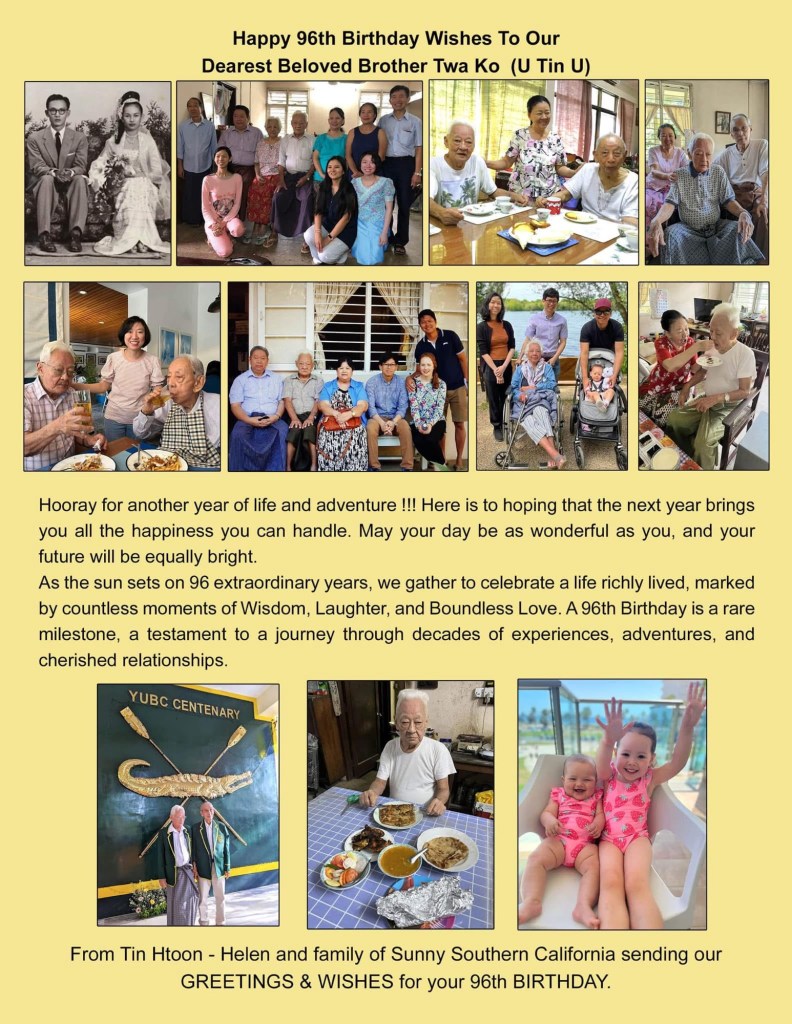
    • Photo Cards for several birthdays by Tin Htoon & family
    Birthday Card from U Tin Htoon & family