February has 28 days in a common year, and 29 days in a leap year.
April, June, September and November have 30 days.
January, March, July, August, October and December have 31 days.
January : 31
February : 28 (or 29) February is the shortest month in the year with 28 days in a Common Year and 29 days in a Leap Year.
March : 31
April : 30
May : 31
June : 30
July : 31
August : 31
September : 30
October : 31
November : 30
December : 31
Days in a year
A common year has 365 days, while a Solar year has 365.2422 days.
A year which is not a Century year is a Leap Year if it is divisible by 4. The discrepancy of .9688 days is rounded up to a day.
A year which is a Century year is a Leap Year if it is divisible by 400. This ensures that there are 97 leap years in four centuries.
Grapevine
February initially had 30 days, but one day each was transferred to July (honoring Julius Caesar) and August (honoring Augustus Caesar) to have 31 days in those months (worthy of Roman Emperors).
February was left with 28 days.
Ripley’s “Believe it or not” illustrated a grave stone which had February 30.
Special Days
We were aware of
Father’s Day
Mother’s Day
Labor Day
Christmas
Easter
Thanksgiving
Independence Day
Presidents’ Day
Valentine’s Day
Differences
For a long time, we were not aware that some special events are celebrated on different days (depending on the country and religious order).
Most Christian denominations celebrate according to the Gregorian Calendar.
The Orthodox Church celebrate Christmas and Easter according to the old calendars (e.g. Julian).
The Theravada Buddhists celebrate the Full Moon Day of Kason as the “Thrice Blessed Day”.
The Mahayana celebrate the events (Birth, Enlightenment, Maha Parinibbana) on dates different from those of Theravada Buddhists.
Some Thoughts
We later learn about
Kabyar (Poem) Nay
Myat Saya (Teacher) Nay
Secretary Day
Friend Day
Pi Day
Some wonder why there is no Grandfather’s Day, Grandmother’s Day or Grandparent’s Day.
Holidays
Not all special days and events are holidays.
Even among holidays, there are Public Holidays, State Holidays, and Bank Holidays.
There may be good reasons (social, commercial) for having the designated days.
Thanksgiving
For us, every day is Thanksgiving (time to repay to our parents and mentors for their unbounded love and care).
Adeline Hpyu Hpyu Aung wrote :
Yes Saya. We should be thanking God, Parents and teachers everyday, without them we will not be who we are.
KMZ wrote :
My left brain at times over-analyzed many of these days.
Many of these holidays are the work of “Holiday Industrial Complex”.
As Ma Adelyne Hpyu Hpyu Aung posted, some of these days like Mothers’ Day/Fathers’ Day should be 365 days a year, not necessarily just the designated day a year.
Believe it nor not there also is a ‘National Splurge Day’ which is June 18th. US Congress eventually passed a law to stop creating those days.
AD stands for Anno Domini / “In the year of our Lord”
Also known as CE (Common Era)
Usually differs from the Burmese Era by 638 Note : Burmese New Year falls in mid-April. So, the Gregorian year will span two Burmese years.
BC
BC stands for “Before Christ“
BE / ME
Burmese / Myanmar Era
Started off with Sasana Era
Now differs by 1182 due to “Thet ka rit phyo” (adjustment by two Kings who believed in the astrological “kain khan” sayings)
SE
SE stands for Sasana Era Sasana is usually rendered as “Dispensation of Buddha”
SE is reckoned from Maha Parinibbana (Death of Lord Buddha)
In the mid 1950s, the Sixth Buddhist Council was held at the Kaba Aye (World Peace) Pagoda to celebrate the 2500 year of the Sasana Era.
Sample Conversions
Suppose the Burmese Era is 1382 BE, then Sasana Era = 1382 + 1182 = 2564 and Common Era = 1382 + 638 = 2020
Note: January, February, March and early April of 2020 AD will correspond to 1381 BE. The latter part of April, and May to December of 2020 AD will correspond to 1382 BE.
A : Achievable / Achievable ပြီးမြောက်နိုင် / ရနိုင်
R : Realistic / Relevant အမှန်မြင် / အသုံးတဲ့
T : Time-bounded / Timely အချိန်ကန့်သတ် / အချိန်မီ
SMARTER (which extends SMART) is a lesser used acronym.
Smart Card and Devices
I worked for a Defense Contractor. My assignment was at DMDC (Defense Manpower Data Center). Every employee and contractor was issued a Smart Card, which has a processor and memory to hold Biometrics (e.g. fingerprint), Photo ID, and Cryptographic Keys. One has to use a Smart Card to (a) enter specified areas of the building (b) logging on to a computer system. Smart cards were not cheap at that time, and there were limitations in the resources (e.g. memory on the card)
Smart devices (e.g. smart phones) are ubiquitous.
Smart cars (e.g. driver-less) are available.
Smart Car / Autonomous vehicles
Smart Monitors
SMART Group of Companies
Founded by KK (Kyaw Kyaw Hlaing) about 25 years ago
Started with Technical Services
Currently 7 companies in the group
SMART Sar Pay / Publishing
published several award winning books
latest : reprint of Maung Aung Mon (U Win Aung Gyi)’s collection of short stories from the 1950s : to celebrate RU Centennial
SMART Media
Talk shows
Interviews
Documentary
Sponsor for 5th ILF (Irrawaddy Literary Festival) in November 2019
Diamond Sponsor for PSA 2020 Tour to six (or so) cities in Upper Myanmar in January 2020
U Aung Myaing added:
Work smarter. Not harder. ဆိုတာနဲ့ပတ်သက်ပြီး ကျနော့်အမြင်ကို လက်တွေ့ ဥပမာနဲ့ ပြောချင်ပါတယ်။
ကျန်တစ်ယောက်ကတော့ KPI ကို အကျအနပြင်တယ်။ အပေါ်က approval ရပြီဆိုတော့ အဲဒီ KPI ထဲက အလုပ်တွေကို ပီပီပြင်ပြင်လုပ်တယ်။ both hard and smart, but not as hard as the first one. နှစ်ကုန်တော့ scores ကောင်းကောင်းရတယ်။
သူတို့နှစ်ယောက်က hard က မတိမ်းမယိမ်းဘဲ။ Smart ကတော်တော်ကွာသွားတယ်။
For example, August 22, 2018 can be displayed in various flavors.
DD-MM-YYYY (The day, month and year are displayed as numbers. e.g. 22-08-2018)
A different delimiter/separator may be used. Using the forward slash as a delimiter, the format becomes DD/MM/YYYY (e.g. 22/08/2018)
DD-MMM-YYYY (The month is represented by three letters. (e.g. 22-AUG-2019)
Y2K Problem
In the early days of computing, some people tried to save space, time and money by using only two digits for the Year. As the Millennium approach, the news media ran stories of possible errors, ambiguities and accidents due to computers using two-digit year format.
To represent the dates of very old people and events may be tricky using the two-digit format.
It can be ambiguous for some dates. 22-08-18 could mean 22-08-2018, 22-08-1918 or even earlier dates.
Month, Day, Year
This is the format used in the USA
MM-DD-YYYY (e.g. 08-22-2018)
MM/DD/YYYY (e.g. 08/22/12018)
MMM-DD-YYYY (e.g. AUG-22-2018)
In the early days, only two digits were used for the Year. It was the cause of the infamous Y2K Problem.
Year, Month, Day
YYYY-MM-DD (e.g. 2018-08-22)
YYYY/MM/DD (e.g. 2018/08/22)
YYYYMMDD (e.g. 20180822). One advantage of this representation is that the dates can be sorted easily.
Number of days from a specified base date
The representation uses the interval between the two dates.
Number of days in a year (instead of Month and Day)
In this system, 1st January is represented as 001.
1st February is represented as 032.
The interval between two dates in the same year is easily calculated.
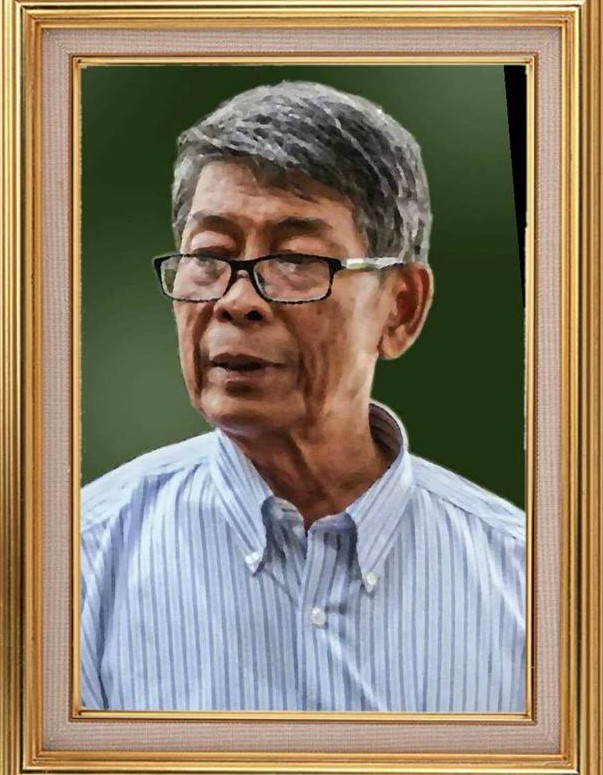
Daw Helen Lim, 88+ years young passed away. She is the mother of Margaret Lim and Daisy Lim. She is the aunt of Saya U “Charlie” Hla Myint (M 65), U Michael Lim (C74), Daw Kyu Kyu Lin (T75) and Dr. San Lwin Lin (EC77).
Daw Kyin Shwe, 98+ years young, passed away at 7 am on February 8, 2014. She is the mother of U Nyunt Tin (M 70, RIT table tennis), Daw May Win Kyi (my primary school classmate), the late Daw Khin Pa Pa (Mrs. Sein Yaung, M 67), and U Nyunt Tun (Khamee khamet of Daw Kyu Kyu Lin).
U Soe Win Thaw Mechanical 1987 ( 1991 ) passed away on 7th Feb, 2014
June 2014
U Kyaw Zaw and Daw Khin Khin AyeDaw Khin Khin Aye
Daw Khin Khin Aye Her elder sister Daw Tin Tin Aye founded Private Primary Boundary Road School (PPBRS). She taught at PPBRS and later became the Principal. She extended the school to teach Middle School and High School. The school was renamed PBRS. After nationalization, she worked as Township Education Officer for Bahan.
Matriculated with Distinctions in Maths, Physics and Chemistry.
In November 1964, he was admitted as a top Student to RIT (Rangoon Institute of Technology) along with Zaw Min, Tommy Shwe (GBNF), Peter Pe (GBNF) and Cho Aye (GBNF).
Graduated in 1970 with BE (Bachelor of Engineering) with specialization in EC (Electrical Communications).
Moved to California, USA.
MSEE (Master of Science in Electrical Engineering) from Stanford University
MBA (Master in Business Administration) from Pepperdine University
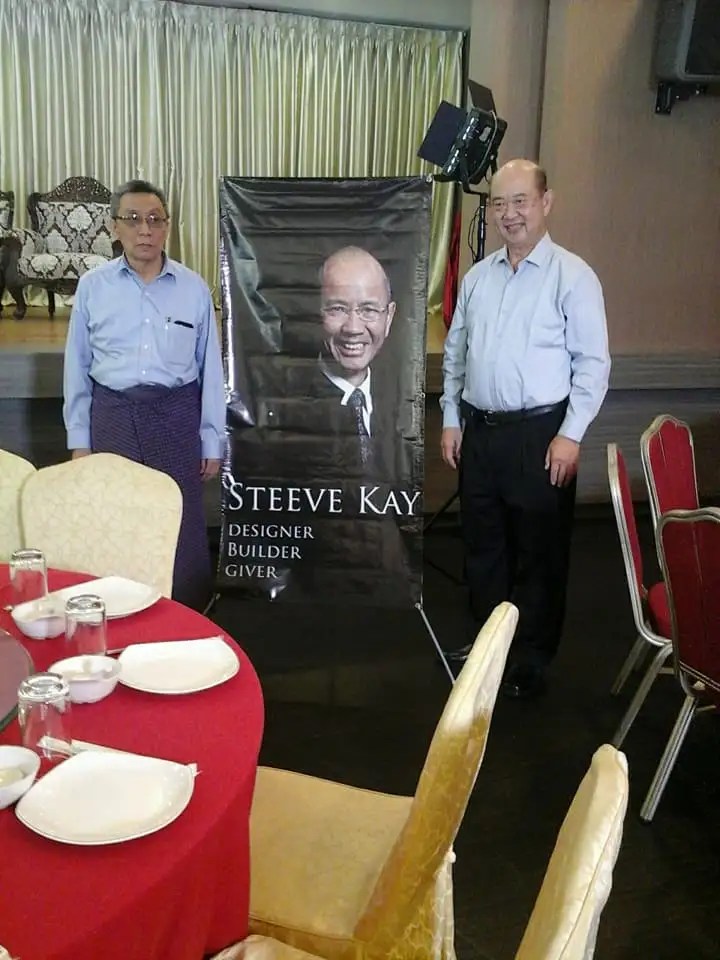
Steeve 2
Experience
Worked in the Electronics Industry as IC (Integrated Circuit) Designer.
Per request from his younger sister Dr. Kay, he co-founded QTC and served as CEO (Chief Executive Officer). See Souvenir book for the Silver Jubilee of QTC.
QTC was acquired for a sizable sum. Became a Serial Entrepreneur & Philanthropist. Founded Eleok, Teehub & Kay Family Foundation.
Traveled to the Holy Places of Christianity, Hinduism, Buddhism & Islam to study Comparative Religion.
Visited prominent historic sites. Tried to trace his roots dating back ten or more generations.
Philanthropist
Founded CABA (Charitable Alliance of Burmese Associations). A notable CABA donation was to Disaster Relief Fund help the victims of Cyclone Nargis in Burma. Details can be found in the reports prepared by Benny Tan (M70) who served as a CABA administrator.
Established KFF (Kay Family Foundation) to support a wide range of support. KFF donated to Universities (Stanford, Harvard, UC Irvine …), Research Institutes and Libraries. KFF sponsored the visit of Myanmar Education Delegation to California. KFF provided a Matching Donation of $30000 for the 2015 RIT Alumni Reunion in Los Angeles.
He never forgot his roots. He wanted to show his appreciation for his schools, mentors, classmates and schoolmates.
KFF sponsored the publication of the “Centennial of Hwa Kyone School” and its Sequel.
He has donated $200000+ (via CABA and KFF) to RIT-related activities.
In October 2000, he donated $3000 to the First RIT Grand Reunion and Saya Pu Zaw Pwe and became the first Golden Sponsor. He also sponsored the subsequent SPZPs (Saya Pu Zaw Pwes) at Singapore in December 2002, April 2007 and December 2010; at Yangon in December 2004, December 2012 and 2016.
In 2004, he set up the “Steeve and Helen Kay Health Care Fund for RIT Sayas” with a pledge of $50000.
Final Years
In 2018, he was diagnosed with a medical problem. His doctors recommended to work from home and avoid long travels.
He requested Benny and me to organize a special Reunion and Acariya Pu Zaw Pwe on his behalf. For details, see my post about that event.
Started writing books to share his expertise and memories.
Offered Academic & Professional Courses in Computer Science, Computer Technology and Computer Applications
UCC Founders
Dr. Chit Swe (GBNF)
U Soe Paing
U Myo Min
U Ko Ko Lay (GBNF)
Saya Dr. Chit Swe
Saya Chit in 2006
He founded UCC with the help of U Soe Paing, U Myo Min and U Ko Ko Lay.
U Soe Paing
U Soe Paing
He was my mentor at RIT and UCC. He contributed news and articles to “RIT Alumni International Newsletter”.
He also wrote the draft for the HMEE (History of Myanmar Engineering Education) book.
U Myo Min
U Myo Min
He was working as Systems Analyst for IBM in UK when Saya Dr. Chit Swe requested him (via Saya Myo’s mother) to help co-found UCC
U Ko Ko Lay
U Ko Ko Lay (GBNF)
He served as Operations Manager and Scientific Applications Manager at UCC, Professor at the Department of Computer Science and at the Institute of Computer Science and Technology.
Still So Young And Passionate: Saya Chit (Dr. Chit Swe)
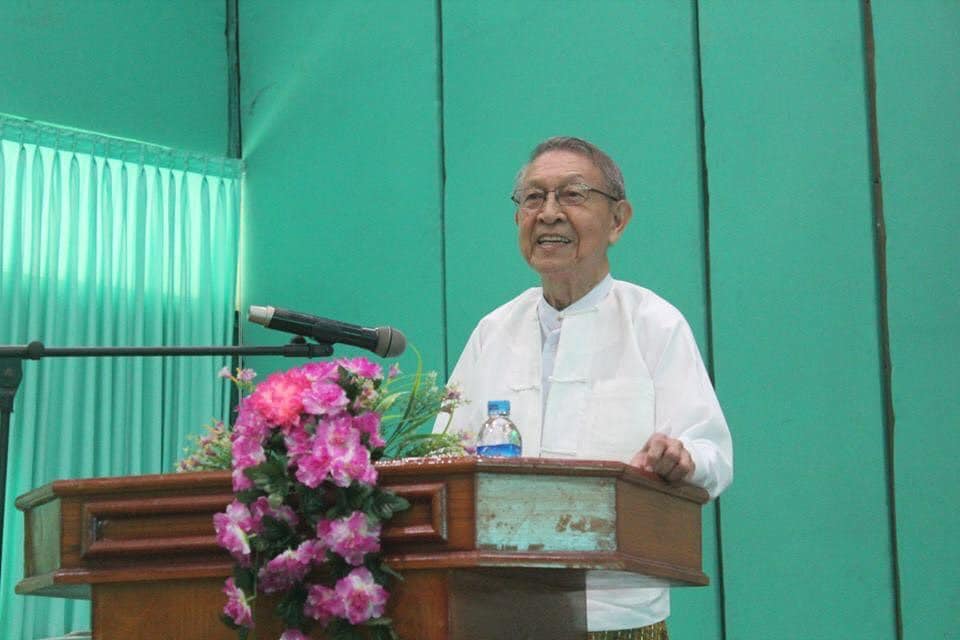
Even in his late 80’s, Saya had an active mind and a burning desire to payback to Myanmar.
He supervised Burmese students in Australia with their research and theses.
He studied Mathematics at Mandalay University. His contemporaries include Dr. Maung Di and U Khin Maung Tint (Tekkatho Phone Naing).
He did graduate studies at Imperial College (University of London) , Glasgow University and the University of Liverpool in the UK.
During his studies at Imperial College, Saya U Ba Than (Retired Professor of Mechanical Engineering, RIT, GBNF) was his room mate.
Saya was Head of Mathematics Department at the Institute of Economics when he proposed to the Ministry of Education to acquire a computer for research and teaching. Dr. Nyi Nyi requested saya to extend the scope of his proposal to cover selected universities and institutes. The UCC project was born.
It would take several years before UNDP would approve to fund the UCC project. UNESCO would act as the Executing Agency.
Mandalay Hall
Dr. Chit Swe succeeded U Ba Toke as Professor of Mathematics Department at RASU. He recruited volunteers to help plan for the implementation of UCC. He received permission to use Mandalay Hall as the temporary home for UCC.
Sayas — Dr. Chit Swe, U Soe Paing, U Myo Min, U Ko Ko Lay and several others — conducted courses on Computer Fundamentals & Programming, Systems Analysis and Design, and Numerical Methods.
Thamaing College Campus
UCC moved over to Thamaing College Campus as a neighbor to RC2 (Regional College Two). Dr. Chit Swe became the Founder and Director of UCC. U Soe Paing, U Myo Min and U Ko Ko Lay became Managers in charge of Systems Division, Applications Division, and Operations Division.
After reorganization, Applications Division was split into Business Applications Division and Scientific Applications Division.
Saya’s Vision
Saya was a pioneer and an advocate of “Technology Transfer”, “Leapfrogging Technology”, “Knowledge Sharing”, and TOSS (Team of System Specialists).
Saya is modest. During a trip to Chauk Htat Yone (Six Storey Office), the admin would “ignore” him and would pay respect to Ko Myint Oo (his student and volunteer assistant), who was well dressed and was carrying a suitcase.
Saya insisted a Component in the UCC Project Plan to invite the elite Computer Scientists and Practitioners including
(a) two Past Presidents of the prestigious ACM (Association of Computing Machinery) : Professor Harry Huskey (UCSC) and Professor Anthony Ralston (SUNY Buffalo),
(b) a future ACM Turing Award Winner (considered as the Nobel Prize for Computing) : Professor Michael Stonebraker (UCB) to UCC and jump start courses in Computer Science and Applications.
Misconception
Saya thought that I had served as an Editor for a newspaper. I had written articles, poems and translations for Guardian, WPD (Working People’s Daily) newspapers and Forward Magazine.
Upon learning that I was an RIT graduate volunteering for the UCC Project Maung Thaw Ka (Bohmu Ba Thaw, Chief Editor of Forward Magazine, GBNF) suggested that I should join his staff.
In my 3rd BE, editors from NAB (News Agency Burma) headed by Tet Toe (U Ohn Pe, Chief Editor) invited me to join their staff.
My parents supported my hobbies, but they wanted to make sure that I have a good education and a decent job.
I became a writer for Saya’s projects:
High School Mathematics Curriculum Development
Children’s Treasury of Knowledge (CTK)
Planning for computerization of Government Departments
Team of System Specialists (TOSS).
Saya believed in me and gave the opportunity to take challenges.
Life After UCC
After UCC, Saya served as Rector of RASU, but his passion for his “Dream Child” and his care for his former students never diminished.
After retirement, Saya taught at Assumption University — formerly known as ABAC (Assumption Business and Accounting College) — in Bangkok, Thailand.
Saya later relocated to Sydney, Australia and served as Visiting Professor of Macquarie University. Several Burmese completed their doctorates under his supervision.
Reunion With Saya In Australia
In June 2006, I visited Sydney, Australia to attend several gatherings:
RIT alumni gathering headed by Saya U Hla Myint (Charlie, M65) and Saya U Myo Win (Melvin, M65, GBNF)
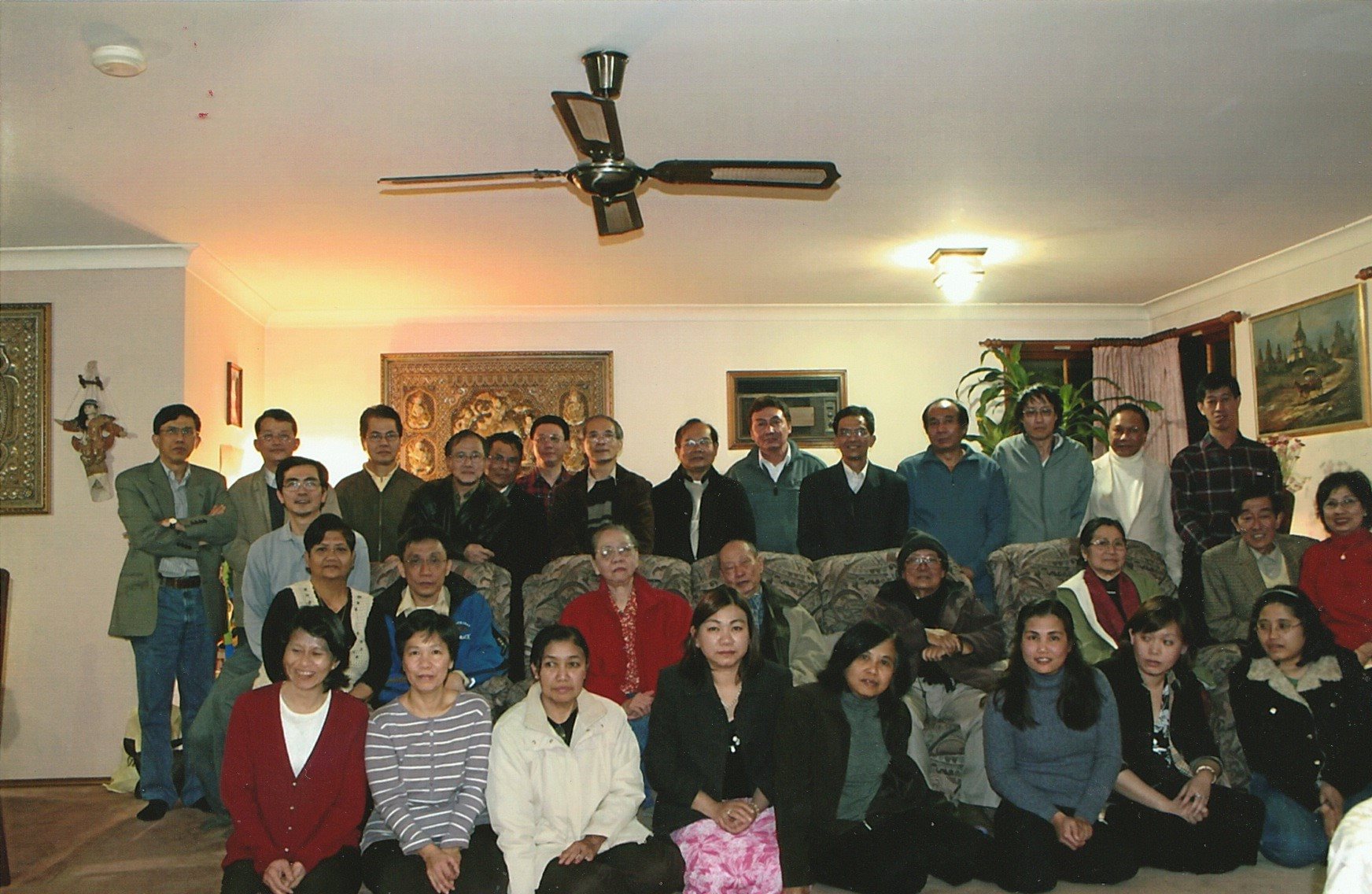
UCC alumni gathering at Saya U Aung Zaw’s house where we paid homage to Saya Dr. Chit Swe and Saya Dr. Freddie Ba Hli (National Planning Adviser & Board Member of UCC)
Old Paulians gathering at Olympic Park organized by Dr. Thann Naing (Bonnie Kywe, SPHS66, Geology70)
Saya’s Present
Saya asked me to give a lecture or seminar to interested young people in Sydney. He then presented me with his hat. I hope that Saya’s hat can “transfer” his brilliant thinking into my head.
Visits
In the past years, Saya visited Singapore and Myanmar and shared his wisdom, knowledge and experience.
He has minor health problems, but his mind is sharp as ever.
Saya Dr. Tin Maung (GBNF)
Dr. Tin Maung
His father Saya Kar was Minister of Education in the Caretaker Government and Rector of Rangoon University.
Saya joined the Department of Mathematics as Tutor. He went for further studies in UK. Upon his return, he was promoted to Lecturer.
He succeeded Saya Dr. Chit Swe as Director of UCC. During his tenure, DCS (Department of Computer Science) was established with U Ko Ko Lay as Professor and U Tun Aung Gyaw as Associate Professor.
In 1987, ICST (Institute of Computer Science and Technology) with Saya as Rector. There were four Departments : (a) Hardware Technology (b) Software Technology (c) Information Systems (d) Computational Mathematics. U Ko Ko Lay was Professor of Information Systems. U Tun Aung Gyaw was Associate Professor for Hardware Technology. I was Associative Professor of Software Technology. Bachelor degree courses in Computer Science (CS) and Computer Technology (CT) were given. In the first batch, there were 30 CS and 15 CT students.
Saya Dr. Tin Maung continued to implement the Vision and Mission set by the UCC Founders, and managed to go further.
He did not live long enough to see 26 batches (from ICST and UCSY) host the 5th Acariya Pu Zaw Pwe on January 14, 2018. San Yin Myint (Samanta, cousin of Ko Maurice Chee) and her friends posted a “Live” Facebook session of the Acariya Pu Zaw Pwe. Dr. Kyaw Thein (GBNF), Dr. Maung Maung Htay, U Myint Swe, Daw Nwe Nwe Win (Judy) and I gave short speeches at the Pu Zaw Pwe.
Saya U Ko Ko Lay (GBNF)
He matriculated from SPHS in 1956 along with Saya U Soe Paing), U Win Htein (GBNF), Bohmu Percy Maung Maung (GBNF), Saya U Ba Min and U Than Se (Richard, ChE62).
He is the elder brother of U Than Htut (M67, RUBC Gold), Maw (BDS) and Zaw (RUBC Gold, GBNF).
He studied BSCE and MSCE at Stanford University in the US.
He joined PWD as Assistant Engineer.
He was recruited by his friend U Soe Paing to help with the UCC Project in general and the design and implementation of UCC Building in particular.
He transferred to UCC as Operations Division Manager.
He served as Scientific Applications Division Manager.
He received Masters in Systems Engineering from the University of Lancaster, UK.
Professor at the Department of Computer Science (DCS)
Professor of Information Systems (IS) at the Institute of Computer Science and Technology (ICST)
He enjoyed playing tennis, soccer and volleyball.
He has an excellent command of English
He passed away in the early 1990s.
Dr. San Tint and U Shein Soe Myint (both GBNF)
Dr. San Tint (EE61) was my saya at RIT. He served as External Examiner for Computer Science students at UCC and DCS.
U Shein Soe Myint (EC83) is a classmate of U Thaung Tin (KMD, former Minister) and my cousin nephew U Thar Hlaing. He joined UCC, DCS and ICST as a graduate student, engineer and later saya. He was studying for his doctorate at NUS when he unexpectedly passed away.
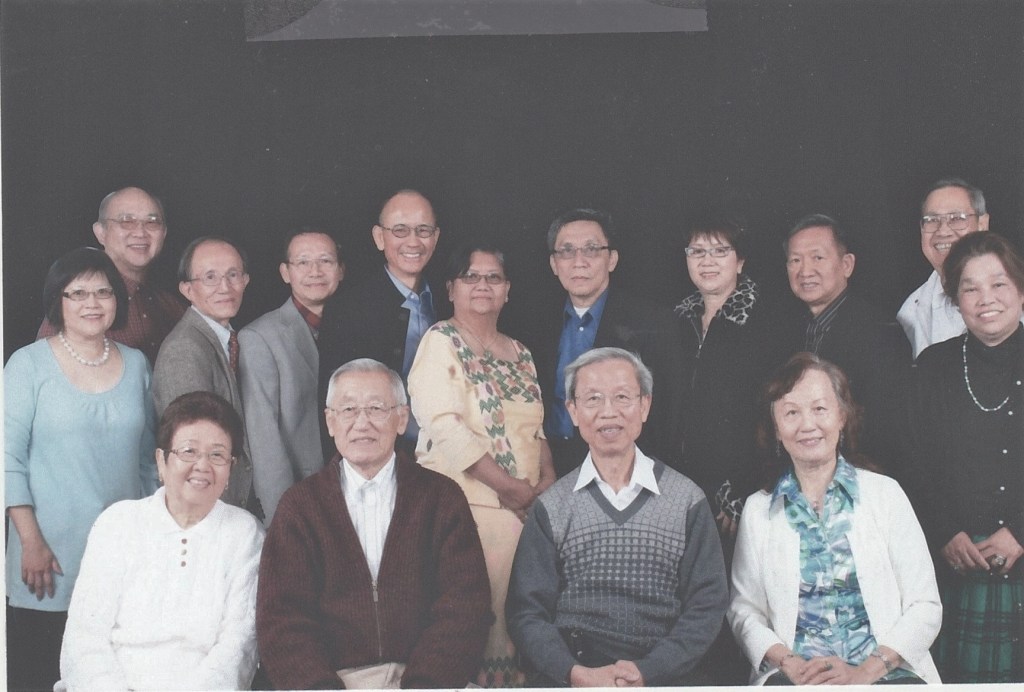
The picture was taken at a mini-reunion of RIT & UCC alumni during my visit to Singapore.
Standing : Dr. San Tint (3rd from left), U Shein Soe Myint (5th from left)
Dr. Freddie Ba Hli (GBNF)
He received Sc.D. (Doctor of Science) from MIT (Massachusetts Institute of Technology). At MIT, Saya helped “fresh” scholars including Saya Dr. Aung Gyi and Saya U Min Wun acclimatize with the environment and studies.
He served as DG (Director General) of UBARI (Union of Burma Applied Research Institute) and Advisor for the Ministry of National Planning. He was a supporter of UCC Project and served as a member of the Board of Directors and as an External Examiner for the Computer Science graduates.
Daw Myint Thwe (Saya’s spouse) is the sister of Saya U Tin U (C), Saya U Ba Than (M, GBND), Dr. Daw Win Hlaing, Dr Myo Tint (GBNF), U Tin Htoon (A60), Saya U Myo Min (UCC), U Thaung Lwin (EC66) and Daw Cho Cho Hlaing.
Saya’s children — Ma Tin Tin Hlaing and Ko Tha Hlaing (EC83) — are UCC alumni.
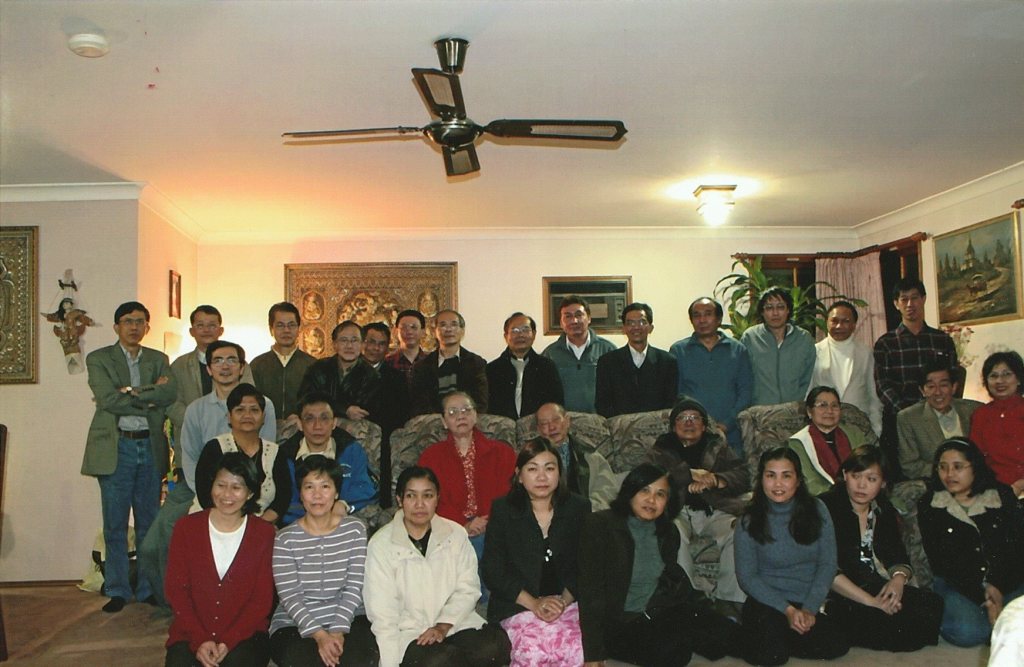
During my visit to Sydney (Australia) in 2006, Saya U Aung Zaw hosted a UCC reunion and mini-PZP (Pu Zaw Pwe) for Saya Dr. F Ba Hli and Saya Dr. Chit Swe. Saya Chit gave me his hat. Ko Tha Hlaing gave me a book “This is Sydney”.
Ko Htay Aung (Victor, EC80) is a nephew of Saya U Sein Hlaing. He is the spouse of Ma Tin Tin Hlaing (Saya FBH’s daughter). Ko Htay Aung and team “programmed” a PROM (Programmable Read Only Memory) to print Burmese characters on the Cromemco System Three micro-computer. He worked on Burmese Word Processing for Wang Computers. He migrated to Australia. For the past few years, he came back to Yangon to volunteer as an interpreter for the “10-day Mediation Retreat for Foreign Yogis” at the Mahasi Sasana Yeik Tha.
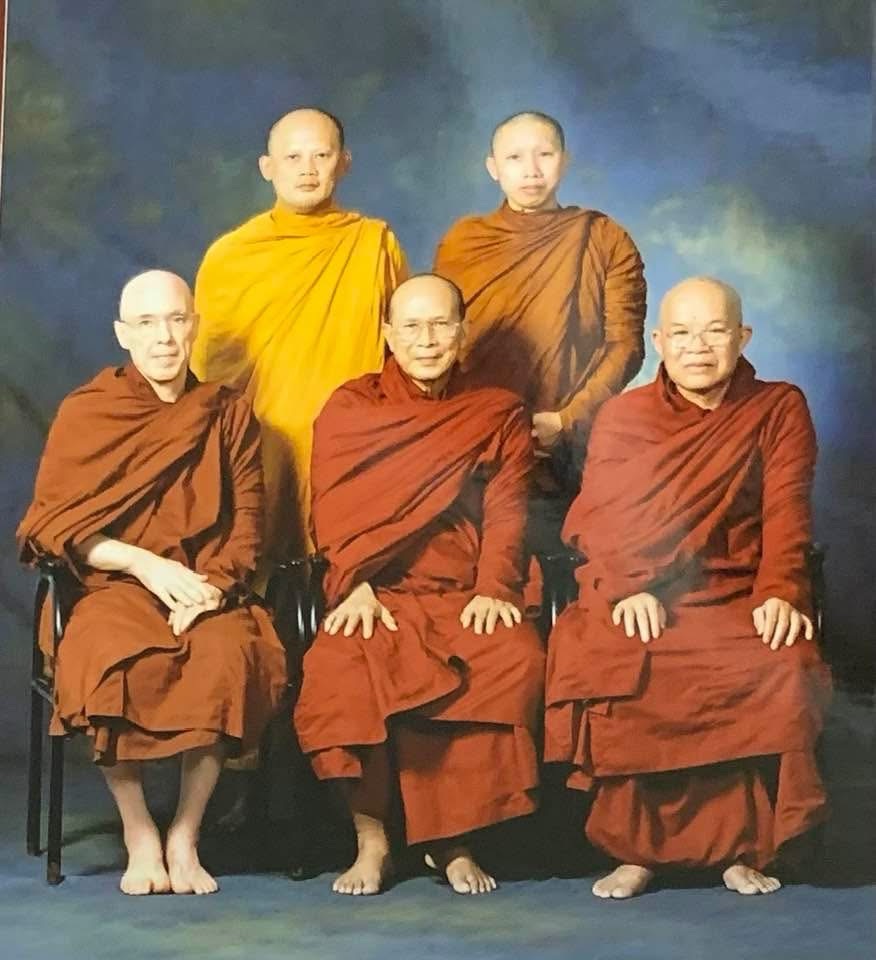
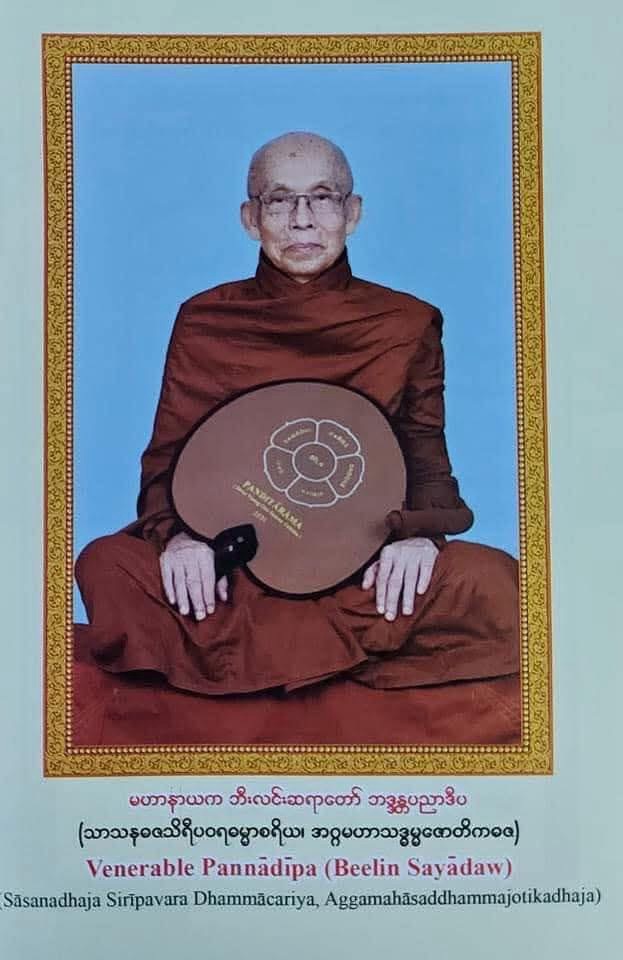
U SilanandaThree Abhidhamma ScholarsAt Insight Meditation Society
First Rector, International Theravada Buddhist Missionary University
Trailblazer for the Buddhist monks doing Dhamma Duta missions in the USA and beyond. See the book by Nyaung Kan Aye Sayadaw.
Ovada Sayadaw and Spirtual Advisor of Monasteries (Dhammanada Vihara, TMC, Abayarama, Mahasi) & Meditation Centers (DMC).
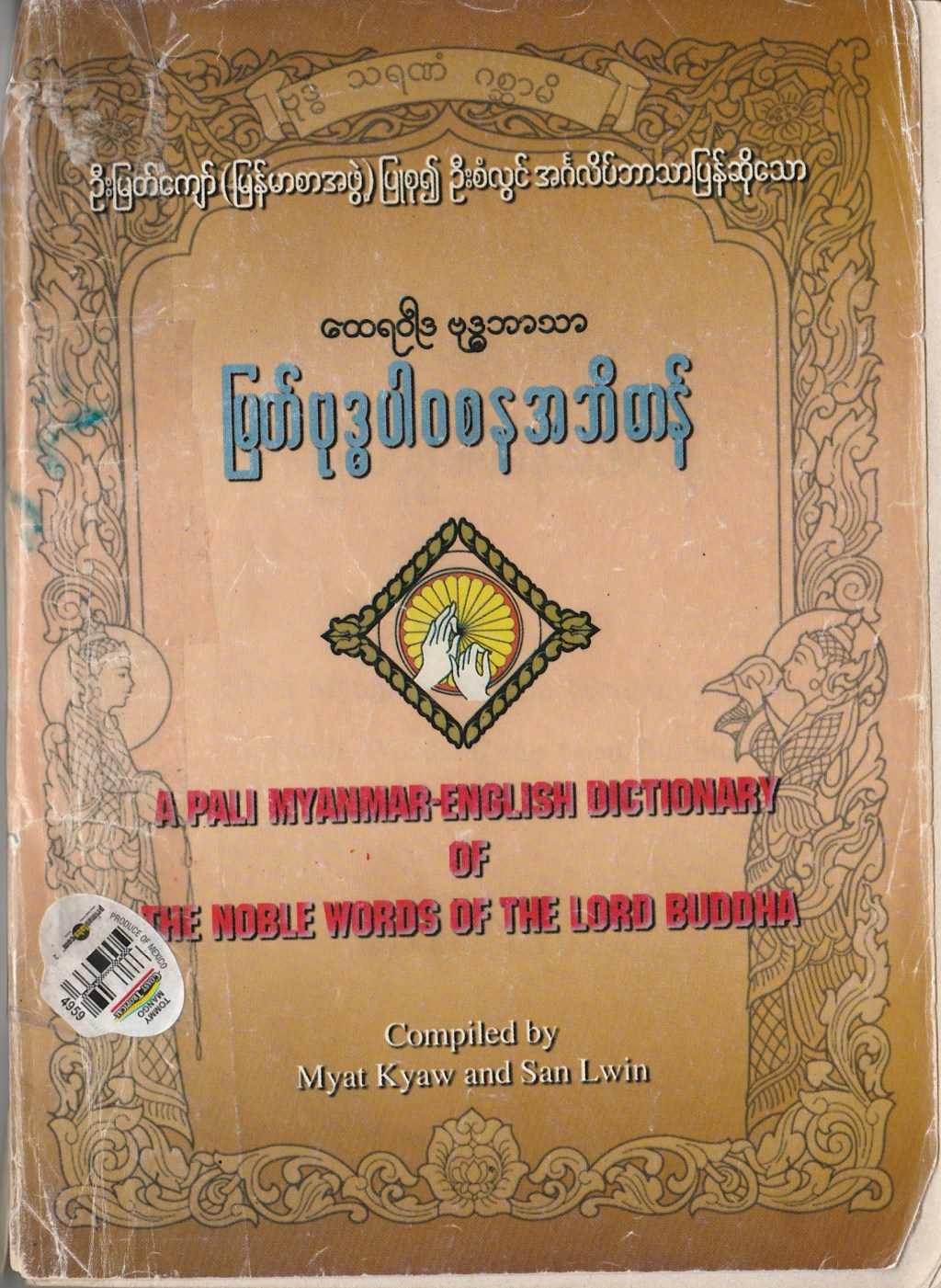
Lexicographer, Tipitaka Pali-Myanmar Dictionary
Author — Books (in Burmese & English)
Dependent Origination
Courses — Fundamentals of Buddhism, Abhidhamma (in Burmese & English), Consecration of Sima, Dhamma Topics & Discussions
CourseCD
Passed away on August 13, 2005. I was Emcee of the Memorial Service. I accompanied Saya U Myat Htoo (TBSA) and carried the Box of Sayadaw’s ashes to be scattered near the Golden Gate Bridge.
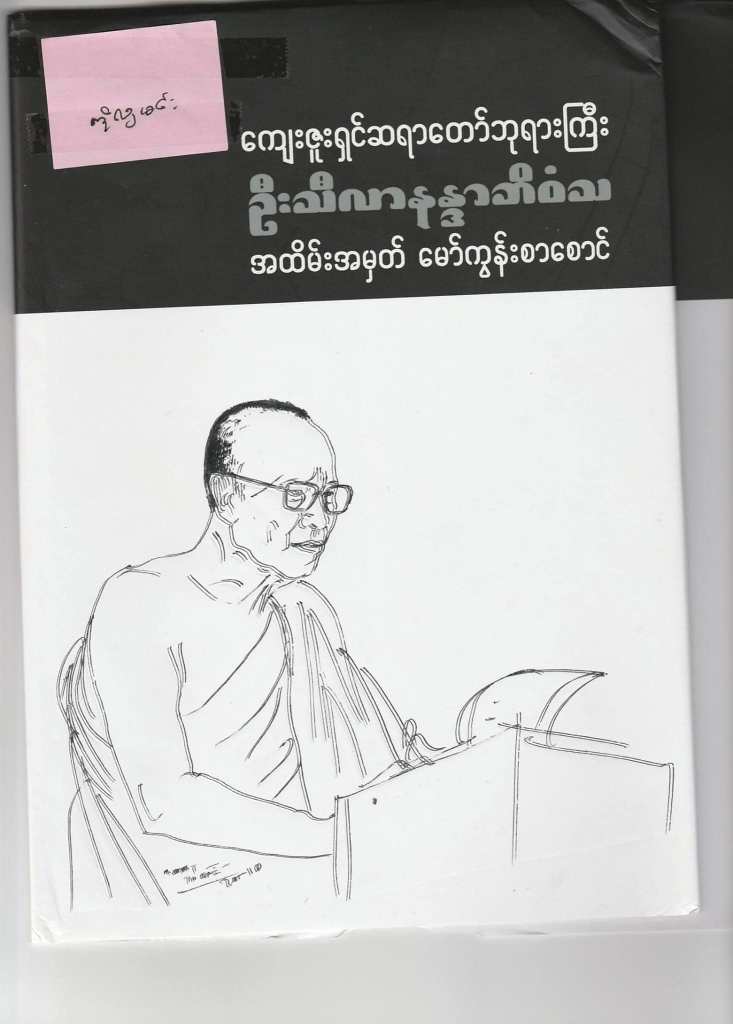
I was Contributing Editor of the book “Paying Homage to Sayadaw U Silandabhivamsa”.
Book 1
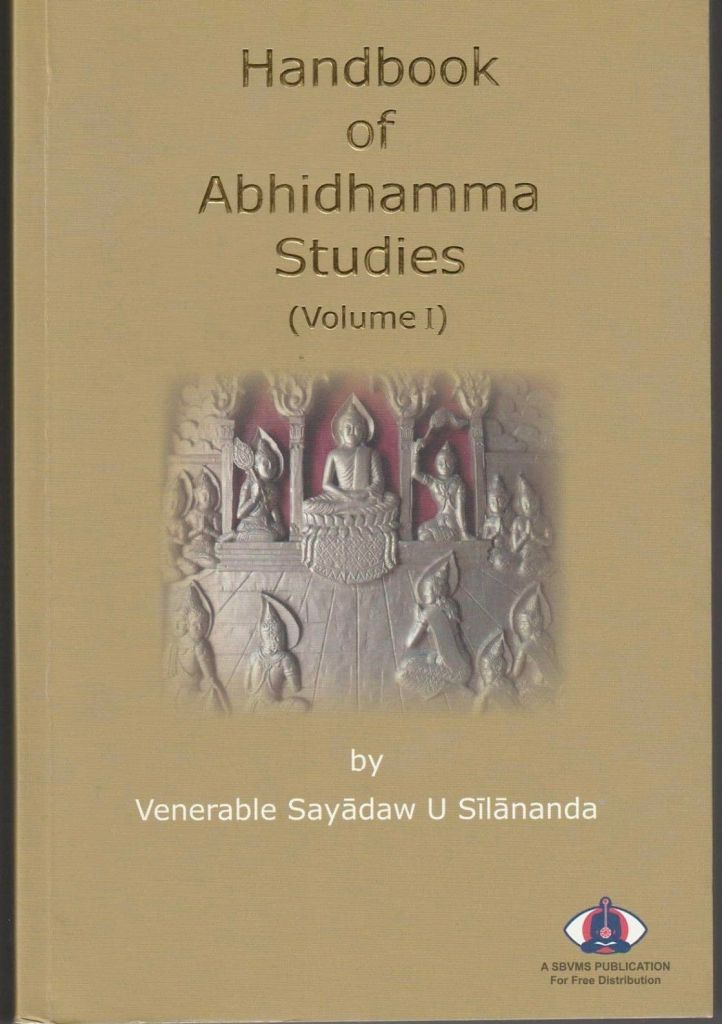
Sarah Marks transcribed Sayadaw’s talks on Abdhidhamma. It was published in three volumes.
Abhidhamma
A Thai devotee published “Paritta Pali and Protective Verses” as a birthday present for Sayadaw.
Paritta
Sayadaw’s first book “Taya Oo” was reprinted for Sayadaw’s 75th Birthday. It also had Sayadaw’s Biography.
Bio 1Bio 2
10th Anniversary
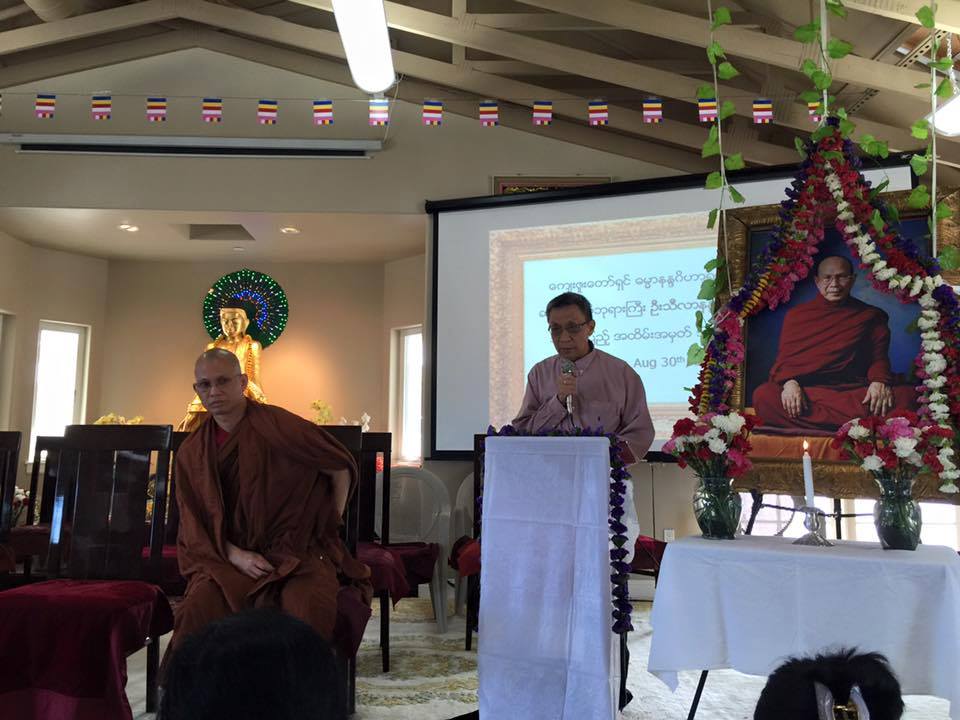
In August 2015, TBSA celebrated the 10th Anniversary of Sayadaw’s demise
I read Sayadaw’s biography
Remember 1Remember 2Remember 3Remember 4
Last Journey
Sayadaw (Rector, ITBMU and Chief Resident Monk, Dhammananda Vihara, Half Moon Bay, California) passed away on August 13, 2005.
I had the honor to serve as Master of Ceremonies at the Services.
50+ Theravada monks from Burma, USA, and UK paid respect to Sayadaw.
U Nandamalabhivamsa (then Pro-Rector, Academic, IMBTU) and Dr. Myint Kyi (then Pro-Rector, Admin, IMBTU) attended the ceremonies as Representatives of IMBTU.
Devotees mourned that “The sun that rose in the East has set in the West”
Sayadaw was cremated.
I had the honor to carry the box containing Sayadaw’s ashes to be scattered from a yacht into the waters near Golden Gate Bridge.
Saya U Myat Htoo (C68, President of TBSA) led the procession.
Sayadaw’s last journey is recorded as a 2-set DVD.
Paying Homage
I served as a Contributing Editor and the Committee member for compiling and publishing the book “Paying Homage to Sayadaw U Silananda”.
Homage
In August, 2015, the saydaws and devotees of Dhammananda Vihara to celebratethe 10th Anniversary of Sayadaw’s demise. See photos
There are eight parts of speech in the English language.
(1) Noun
A noun is a name of a person, place, thing, or concept.
It may be classified as (a) Proper noun (b) Common noun (c) Collective noun (d) Abstract noun.
(2) Verb
A verb usually describes an action or a process.
It may be classified as (a) Transitive verb (b) Intransitive verb.
(3) Pronoun
A pronoun stands for a noun. Associated with a pronoun is person and number.
When we speak, the first person is the one who speaks. The second person is the one being spoken two. The third person is some other being referenced.
Number may be Singular or Plural. If there is only one person, we say it is singular. If there is more than one, we say it is plural. In English, the term “You” may be singular or plural.
(4) Adjective
It is a Modifier
An Adjective usually modifies a Noun or Pronoun.
(5) Adverb
It is a Modifier
An Adverb usually modifies a Verb.
(6) Conjunction
It is a Connector
A Conjunction (such as And or But) connects two parts of a Sentence
(7) Preposition
It is a Connector
A Preposition adds information such as position (e.g. in, on, upon, under) and time (e.g. before, after).
(8) Expression of Mood
There are words to express Mood (e.g. surprise).
They are called Exclamation or an Interjection.
Techniques
In a Grammar class, we had to learn two techniques :
Synthesis combining the parts of speech
Analysis breaking down into the parts of speech.
Need for Grammar
Many native speakers read and write fluently without caring much for grammar.
Knowledge of grammar is needed in
Formal Languages
Automata Theory
Compilers
Translation
Natural Language Understanding and Processing
Burmese
In middle school, we had to study မြန်မာသဒ္ဒါ based on the text by Saya U Pe Maung Tin.
Parts of Speech
နာမ် — noun
ကြိယာ — verb
နာမ်စား — pronoun
နာမဝိသေသန — adjective
ကြိယာဝိသေသန — adverb
သမ္ဗန္ဒ။ — conjunction
ဝိဘတ် — preposition
အာမေဋိတ် — interjection
Pali
Parts of Speech
Pali has only four parts of speech.
Noun
Pronoun
Verb
Clitics (which are equivalent to conjunctions and interjections).