Many Myths have been debunked, but they still appear in posts.
Do not share Myths without verifying them first.
U E Maung is not Bagyi Aung
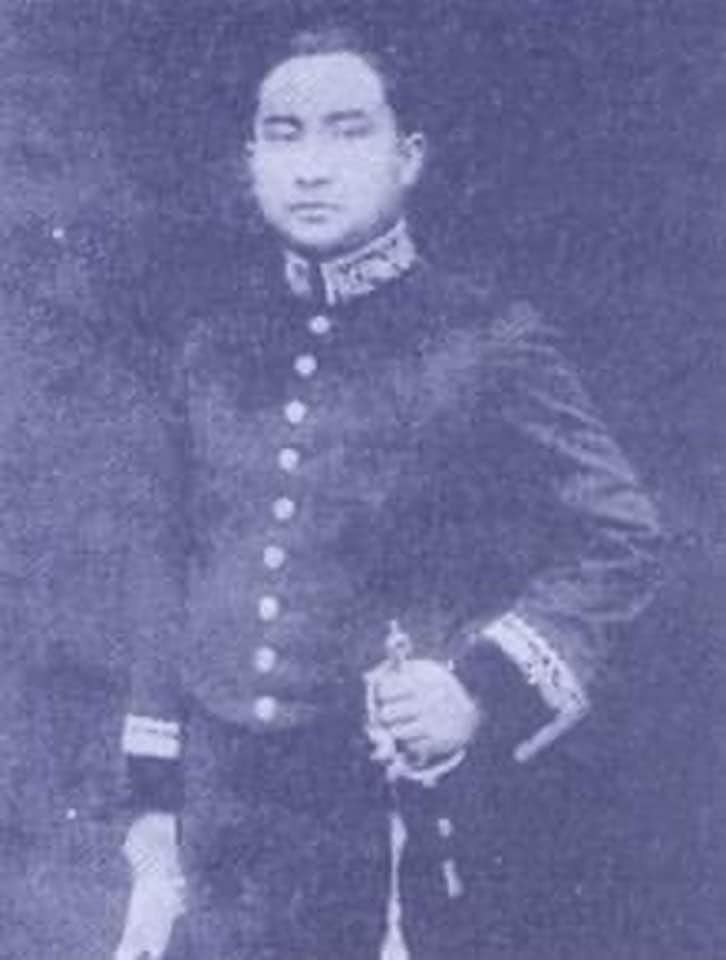
A post wrongly said Professor U E Maung was “Bagyi Aung”. It was liked and/or shared by thousands of readers even after U Nay Oke (St. Paul’s) had given TEDx InyaLake talk about his mother (Daw Khin Saw Mu), father (ICS U Ba Tint), his Bagyi (ICS U Tin Tut) and Minthuwun (Saya U Wun). U Nay Oke mentioned that the four main characters in “Bagyi Aung Nyar De” have all passed away.
The three younger sisters were in the charge of ICS U Tin Tut especially during the school / university holidays.
ICS U Ba Tint was U Tin Tut’s deputy.
Dr. Htin Aung is not Bagyi Aung
The earlier wrong version said that Dr. Htin Aung was Bagyi Aung.
At least the names share “Aung”.
ICS U Tin Tut is Bagyi Aung
U Tin Tut
The knowledge was a family secret, but it was later known by close friends.
U Nay Oke (St. Paul’s) gave a TEDx InyaLake talk on the subject.
In the US, second Sunday of May is celebrated as Mother’s Day.
For multi-generational families, it would also be Grandmother’s Day and Great Grandmother’s Day as well.
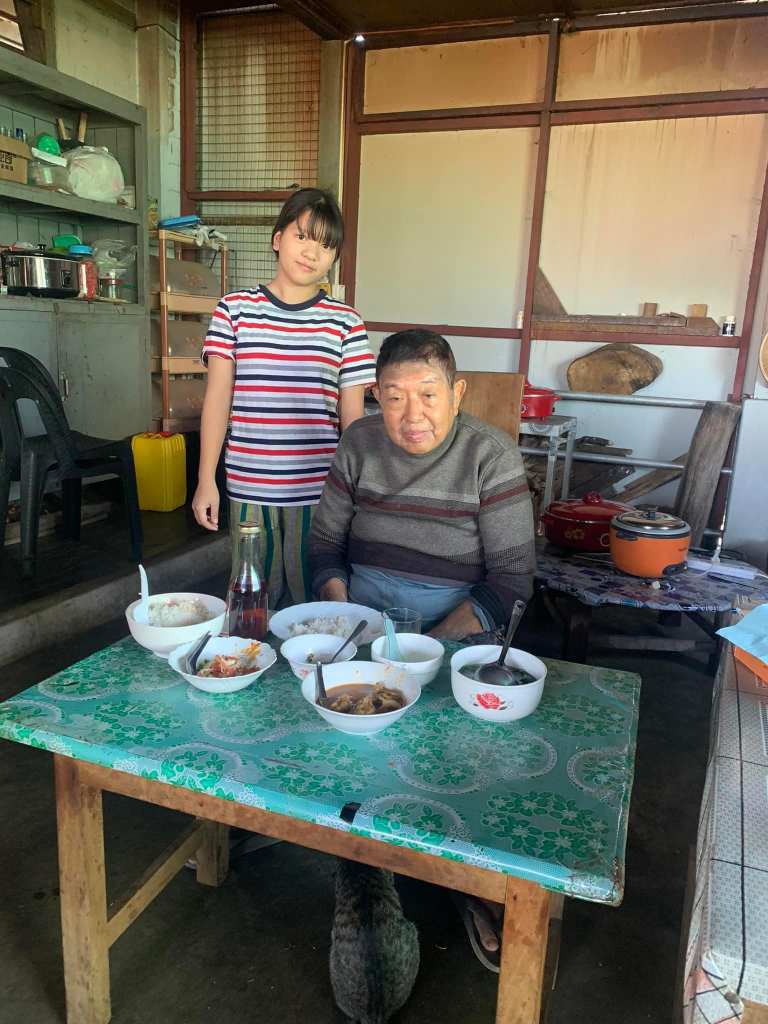
U Hla Min, spouse and two grandchildren
Some countries and cultures celebrate “Mother’s Day” on a different day. In Myanmar, it is celebrated on the Full Moon Day of Pyatho.
The first words that most people learn in their lives include the following and their variants. Mum, Mummy, Mom, Mommy, Mah Mah, May May, …
We extend the term Mother to our schools (e.g. Alma Mater) and our country (e.g. Motherland).
In idiomatic usage, Mother is “the hand that rocked the cradle”.
Mother’s unbounded love is honored in many real-life stories (e.g. “Toe Aye” ship wreck).
The following song has been recorded by many artists.
I have reprinted a sample verse. The verses may have variations.
M-O-T-H-E-R (song)
M is for the Mercy she possesses (Variant: Million things she gave me)
O means Only that she’s growing Old (Variant : that I Owe her all I owe)
T is for her Tender sweet caresses (Variant : for the Tears she shed to save me)
H is for her Heart of purest gold (Variant: her Hand that touch and hold)
E means Everything she’s done to save me
R means Right and Right she’ll always be
Put them all together
They spell MOTHER
A word that means a world to me
My Beloved Mother
My beloved mother
I would like to acknowledge my beloved mother. When we were young, she would wake up before her housemaids at 4 a.m. to prepare breakfast for us. She supervised our homework when we were in primary and middle school. She bought us cameras (e.g. Yashica and Kodak), bicycles (e.g. Rayleigh and Hercules), scooter (e.g. Silver Pigeon), cars (e.g. Datsun and Dodge Jeep), two typewriters (e.g. Remington for English, Olympia for Burmese), musical instruments (e.g. guitar, harmonica), comics (e.g. Beano, Dandy, Topper, Beezer), Classics Illustrated and Junior Classics Illustrated, “How and Why” series, “Myanmar Swel Sone Kyan” (Burmese Encyclopedia), Reader’s Digest and other periodicals, to name a few.
Although my parents were devout Buddhists, they sent their children to SPHS (St. Pauls’s High School) and SJC (St. John’s Convent) — run by the Roman Catholic missionaries — to get a good education.
The seeds that were sown by my beloved parents have bloomed allowing me to pay back to my alma mater and my community.
I have served as
Organizer, SPZP-2000
Chief Editor of “RIT Alumni International Newsletter” and Editor of several other newsletters (BAPS Newsletter, Dhammananda Newsletter)
Contributor to the Encyclopedia of Asian American Folklife and Folklore (published by ABC CLIO)
Burmese Language expert for a course developed by the National Foreign Language Center, University of Maryland (College Park)
Docent at Computer History Museum
Distinguished Toastmaster (DTM) at Toastmasters International
Translator/interpreter at meditation retreats (e.g. at Tathagata Mediatation Center)
Editor of books and magazines Homage to Sayadaw U Silanandabhivamsa Collection of dhamma talks by Sayadaw U Silananda Three books by Sayadaw U Jotalankara 90th Anniversary Issue of RUBC.YUBC) Bawa and Dhamma Cetana Thi Thar Kan
Without my mother’s exhortation “Eyes have you and you see not, Ears have you and you hear not, …”, and “Any thing that’s worth doing is worth doing well”, I would not be here today.
There are two forms of Myanmar / Burmese language.
Myanmar Sagar (Oral / spoken)
Myanmar Sar (Written)
Alphabet
The Alphabet has 33 Eik Khaya (loosely rendered as letter or character).
Grouping
There are several groups (Wagga) of five letters.
Linguists and phonologists refer to the groups as
Gutturals (Ka group)
Palatels (Sa group)
Cerebrals (Ta-ta-lin-chaik group)
Dentals (Ta group)
Labials (Pa group)
The first group (known as “Ka” wag [or wagga]) consists of Ka (Ka gyi), Kha (Kha Gway), Ga (Ga Nge), Ga (Ga Gyi) and Nga. Note that the 3rd and 4th members have the same sound.
Basic Rules
There are some basic rules for “Pa Sint” (where one letter is placed on top of the other).
One rule says “Eik Khaya Tu, Wag Tu Sint”. It means the two letters forming a “Pa Sint” must be the same, or from the same group. So, it is a “No No” to have a Ka on top of Sa.
Another rule says, “Even for letters within a group, the ordering must be preserved”. So, Ka can be put on top of Kha, but not the other way. Also, Ga Nge can be put on top of Ga Gyi, but not the other way.
Byee and Thara
Ah is used as a Byee (Consonant) and sometimes as a Thara (Vowel).
A Burmese word can be formed with a Byee and one or more Thara.
Typewriter Keyboard
When the Burmese Keyboard was implemented for a typewriter (e.g. Olympia), the keys are labeled Red (keys that prevent the shifting of the carriage to type Thara) and Black (keys that signal the completion of the word and allows the carriage to advance).
Word Processing
The early Burmese word processing systems use
transliteration (e.g. on Apple Macintosh computers)
Thara before Byee (as in the typewriter)
Byee followed by Thara (which requires processing to delimit the words and to have a canonical ordering for representation).
Issues
The Myanmar Sar Ah Phwe published two major revisions for spelling. It forced publishers to use “Tit” instead of “Ta” (without exception) with a fine of ten pyas for each “violation”. Scholars pointed out the ancient pagoda had “Bo Ta Htaung” and not “Bo Tit Htaung” in its inscriptions, but the group who wanted to please Number One prevailed.
There was a rush to implement Burmese type faces and type fonts. The implementations did not have consensus and did not address compliance (e.g. with Unicode). They led to the incompatibility issues in the current computer systems, smart phones and devices.
Short Messaging Systems inadvertently degraded the spelling prowess.
Their motto : “Anything that’s worth doing is worth doing well“.
My mother would scold me lightly by saying “Eyes have you and you see not. Ears have you and you hear not.”
She would tell the story of Robert Bruce and the spider, and remind us “If at first you don’t succeed, try, try and try again.”
RUBC (Rangoon University Boat Club)
Motto : “Row Till You Are Dead.”
The background story is covered in Sir Arthur Eggar’s autobiography and in the commemorative issues for the 40th and 90th Anniversary of the founding of RUBC.
RUBC members are used to the shout “Give her a ten” during a race (especially near the finish line), and also at the Close of the Awards Presentation at the Regatta.
After a long day, in the tradition of RUBC, I shout, “Give her a ten”. 10 – 9 – 8 – 7 – 6 – 5 – 4 – 3 – 2 -1 followed by EASY OARS.
Companies
The motto may change over time.
International Business Machines (IBM)’s slogan was “Think“.
General Electric (GE)’s claim to fame was “Built to last.“
There are two forms of Myanmar / Burmese language.
Myanmar Sagar (Oral / spoken)
Myanmar Sar (Written)
Alphabet
The Alphabet has 33 Eik Khaya (loosely rendered as letter or character).
Grouping
There are several groups (Wagga) of five letters.
Linguists and phonologists refer to the groups as
Gutturals (Ka group)
Palatels (Sa group)
Cerebrals (Ta-ta-lin-chaik group)
Dentals (Ta group)
Labials (Pa group)
The first group (known as “Ka” wag [or wagga]) consists of Ka (Ka gyi), Kha (Kha Gway), Ga (Ga Nge), Ga (Ga Gyi) and Nga. Note that the 3rd and 4th members have the same sound.
Basic Rules
There are some basic rules for “Pa Sint” (where one letter is placed on top of the other).
One rule says “Eik Khaya Tu, Wag Tu Sint”. It means the two letters forming a “Pa Sint” must be the same, or from the same group. So, it is a “No No” to have a Ka on top of Sa.
Another rule says, “Even for letters within a group, the ordering must be preserved”. So, Ka can be put on top of Kha, but not the other way. Also, Ga Nge can be put on top of Ga Gyi, but not the other way.
Byee and Thara
Ah is used as a Byee (Consonant) and sometimes as a Thara (Vowel).
A Burmese word can be formed with a Byee and one or more Thara.
Typewriter Keyboard
When the Burmese Keyboard was implemented for a typewriter (e.g. Olympia), the keys are labeled Red (keys that prevent the shifting of the carriage to type Thara) and Black (keys that signal the completion of the word and allows the carriage to advance).
Word Processing
The early Burmese word processing systems use
transliteration (e.g. on Apple Macintosh computers)
Thara before Byee (as in the typewriter)
Byee followed by Thara (which requires processing to delimit the words and to have a canonical ordering for representation).
Issues
The Myanmar Sar Ah Phwe published two major revisions for spelling. It forced publishers to use “Tit” instead of “Ta” (without exception) with a fine of ten pyas for each “violation”. Scholars pointed out the ancient pagoda had “Bo Ta Htaung” and not “Bo Tit Htaung” in its inscriptions, but the group who wanted to please Number One prevailed.
There was a rush to implement Burmese type faces and type fonts. The implementations did not have consensus and did not address compliance (e.g. with Unicode). They led to the incompatibility issues in the current computer systems, smart phones and devices.
Short Messaging Systems inadvertently degraded the spelling prowess.
Mangala is usually rendered as Auspices or Blessings. Myanmar call it Mingalar
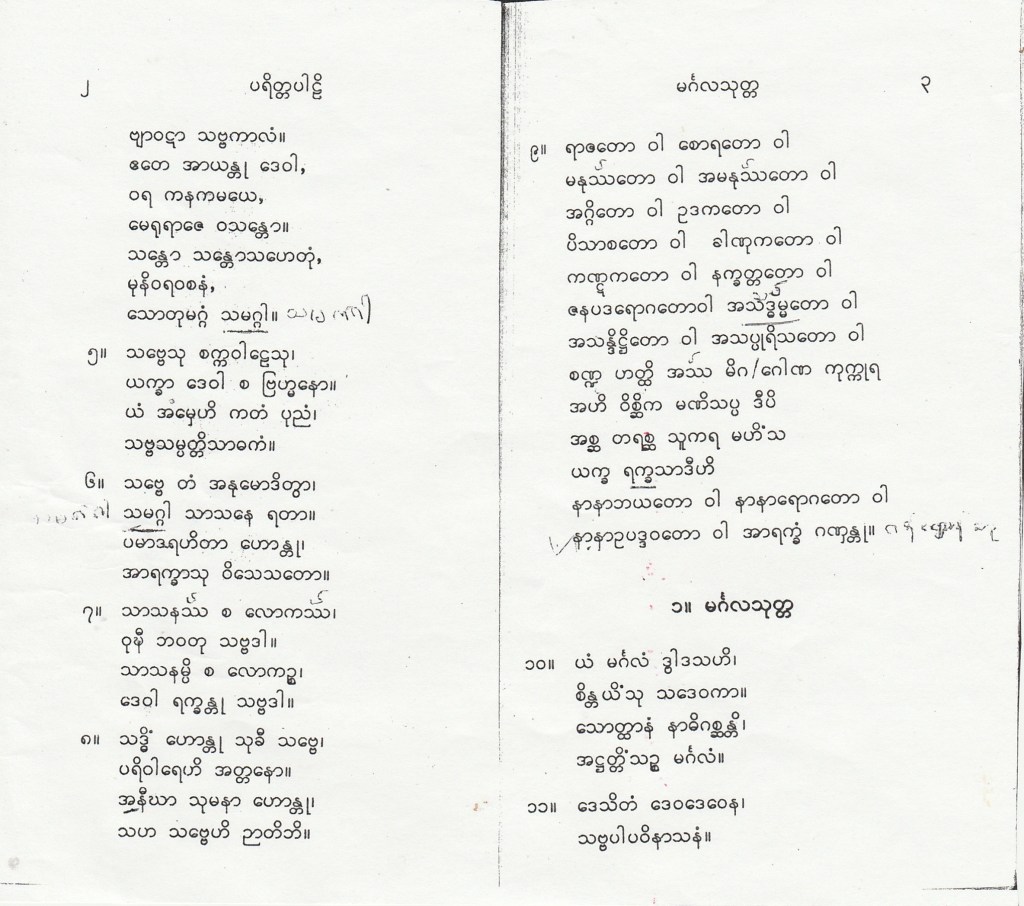
Mangala Sutta describes 38 Blessings, which are related to both Loki (mundane) and Lokotra (supramundane). First of the 11 Suttas covered in Paritta Pali / Protective Verses.
For lay persons
U Thu Kha wrote a book discussing the Mangala Sutta (using lay people’s terms).
At PPBRS, we had to study “Mingalar Kabyar” (poem) by Saya Dagon U Tun Myint. Received a Thermos flask for successfully reciting the Kabyar.
Cartoon U Pe Thein illustrated the 38 Blessings.
Highest Blessing
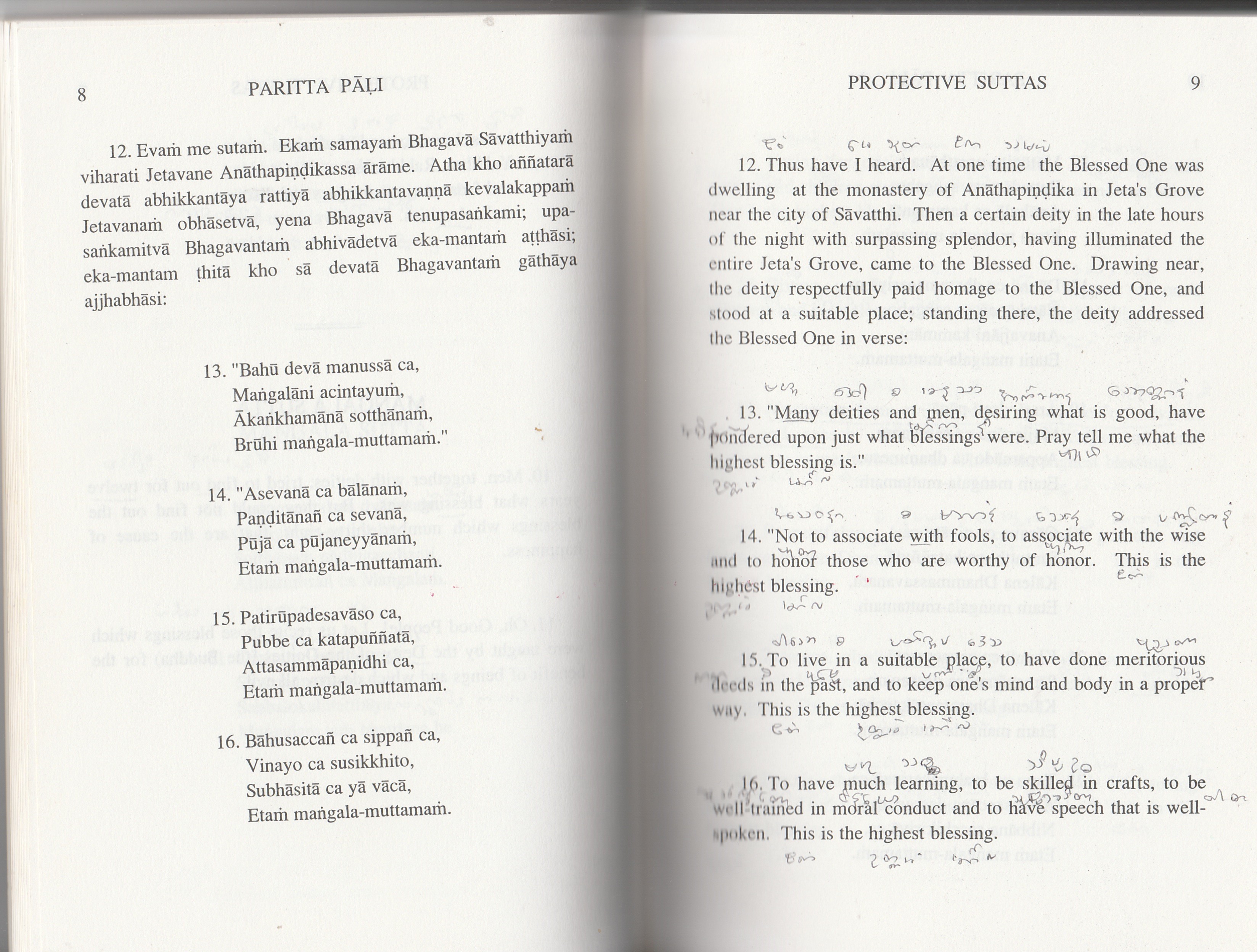
From Paritta Pali and Protective Suttas by Sayadaw U Silananda
Not to associate with fools, to associate with the wise and to honor those who are worth of honor.
To live in a suitable place, to have done meritorious deeds in the past, and to keep one’s mind and body in a proper way.
To have much learning, to be skilled in crafts, to be well-trained in moral conduct and to have speech that is well-spoken.
Caring for one’s mother and father, supporting one’s spouse and children and having work that causes no confusion.
Giving, practice of what is good, support of one’s relatives and blameless actions.
Abstention from evil in mind, abstention from evil in body and speech, abstention from intoxicants and non-negligence in meritorious acts.
Respectfulness, humbleness, contentment, gratitude and listening to the Dhamma on suitable occasions.
Practice that consumes evil states, a noble life, seeing the Noble Truths and realization of Nibbana.
The mind of a person (an Arahant) who is confronted with worldly conditions does not flutter, is sorrowless, stainless and secure.
Having fulfilled such things as these, beings are invincible everywhere and happiness everywhere.
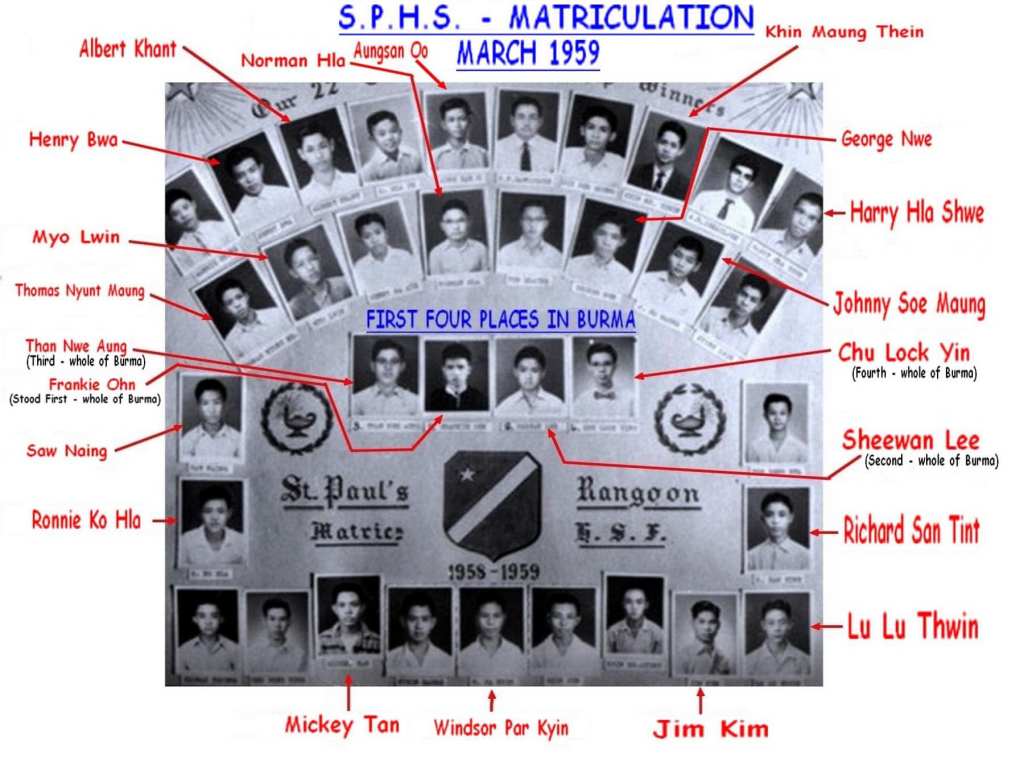
Thanks to Sayama Daw May Saw Lwin (MEHS57), Saya Dr. Soe Win (SPHS58), Dr. Tin Wa (SPHS57, brother of Dr. Frankie Ohn, SPHS59), Dr. Swe Khin Tun and Bernard Khaw for providing the details of the 1957, 1958, 1959, 1963 and 1965 Matriculates.
The ILA system was employed for 1964 and 1965. Along with the 3-NRC rule, the definition of “Top Matriculates” changed.
Matriculation (1951 – 1965)
I had posted about “First in Burma in the Matriculation examination from 1951 – 1965. There were a few missing items (e.g. for 1955).
This morning at the Hta Pa Na Peik Ceremony at Sae Taw Win 2 Dhamma Center in Sebastapol, California, Sayama Daw Tin Tin Maw (Chemistry) told me that her elder sister Lily Hwang (MEHS55) stood First in Burma in the Matriculation of 1955.
Earlier, Thit Yine commented that Boon Chiong (Dr. Hla Shwe, Yegyaw Methodist) stood First in Burma in the Matriculation of 1953.
The following is the updated list of “Top Students in Burma”. There are a few items still missing.
1951 : George Chapman (SPHS / St. Paul’s High School) : First
1952 : Dr. Nyunt Tin (SPHS) : First / FRCP / GBNF Dr. Myo Tint (TTC) : Third / MBBS
1953 : Dr. Hla Shwe (Boon Chiong, Yegyaw Methodist) : First / Physics U Ohn Khin (Yegyaw Methodist) : Second
1954 : Koon Yin Chu (Phillip Chu, SPHS) : First / Architecture Dr. Tin Myo Than (TTC) : Second
1955 : Lily Hwang (MEHS / Methodist English High School) : First
1956 : Ye Myint (St. Peter’s High School) : First Thaung Tin (St. Peter’s) : Second Khin Maung Than (St. Peter’s) : Joint Third Dr. Than Myint (St. Paul’s) : Joint Third / Physics
1957 : Dr. Htin Kyaw (Hein Kyu, Sacred Heart) : First / Physics Honors Dr. Nellie Liu (MEHS) : Second Dr. Htin Aung (Hein Pu, Sacred Heart) : Sixth / Physics Honors
1958 : Dr. Soe Win (SPHS) : First / Chemistry Honors Robert Sein (SPHS) : Second / Physics Honors Myint Myint Tin (MEHS) : Third
1959 : Dr. Hla Ngwe Tin (Frankie Ohn, SPHS) : First / Physics Honors Dr. Shewan Lee (SPHS) : 2nd / Chemistry / California Institute of Technology Dr. Than Nwe Aung (SPHS) : 3rd / MBBS “Rocky” Koon Yin Chu’s younger brother : Tie 4th / Doctor Oo Oo Tha : Tie 4th / Mathematics Honors / well know private tuition teacher
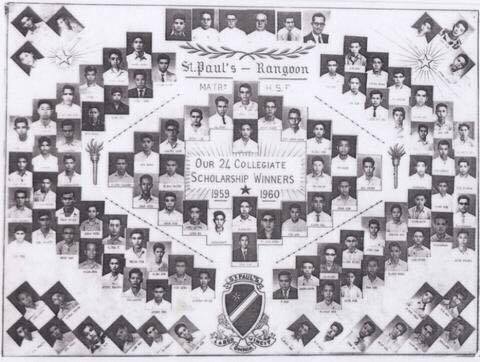
1960 : Austin Kyan (MEHS) : First Dr. Nyan Win : Second Arthur Hla Maung : Third Marie Nyun : Fourth Indian lady : Fifth Dr. Thane Oke Kyaw Myint (SPHS) : Sixth
1961 : Lina Ong (MEHS) : First Dr. Robin Ban (Kyaw Win, SPHS) : Second
1962 : Need Information
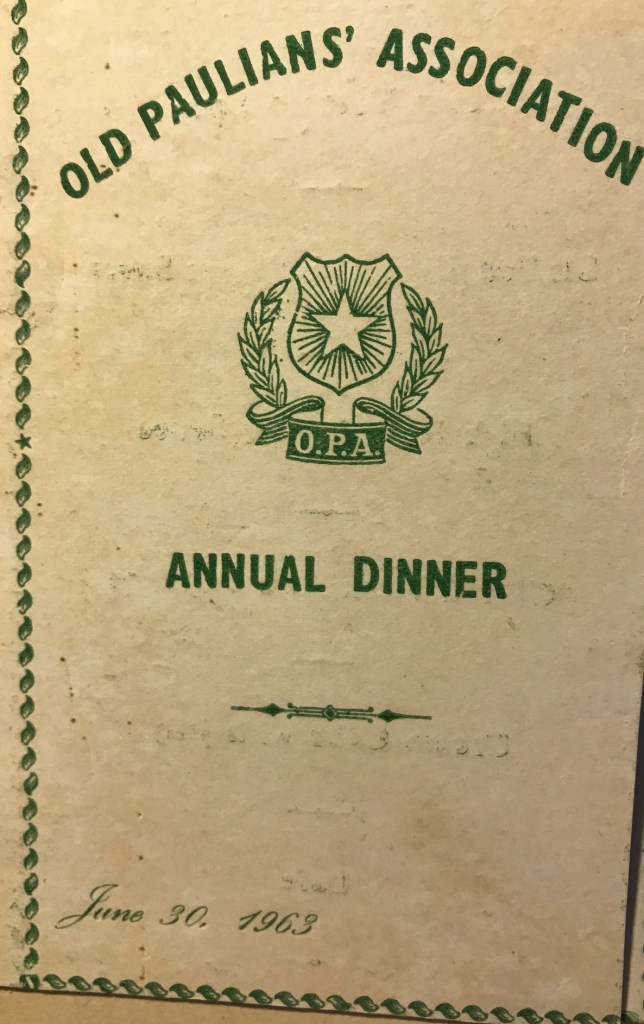
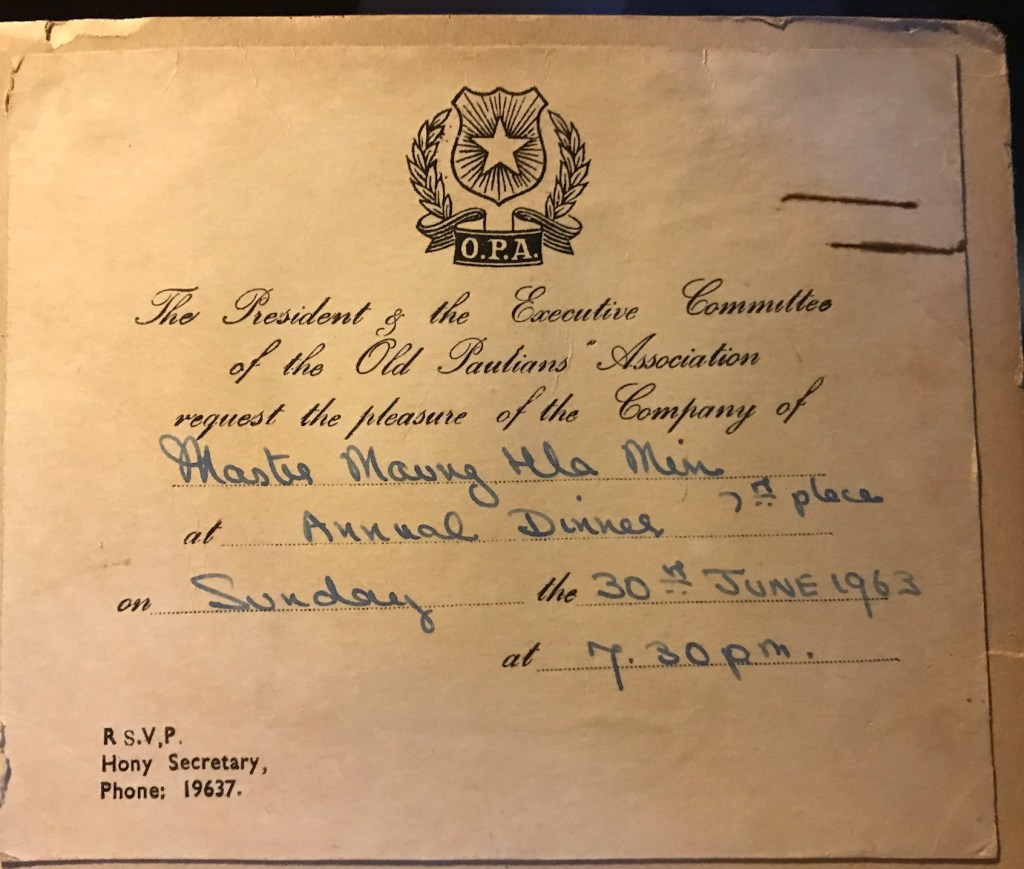
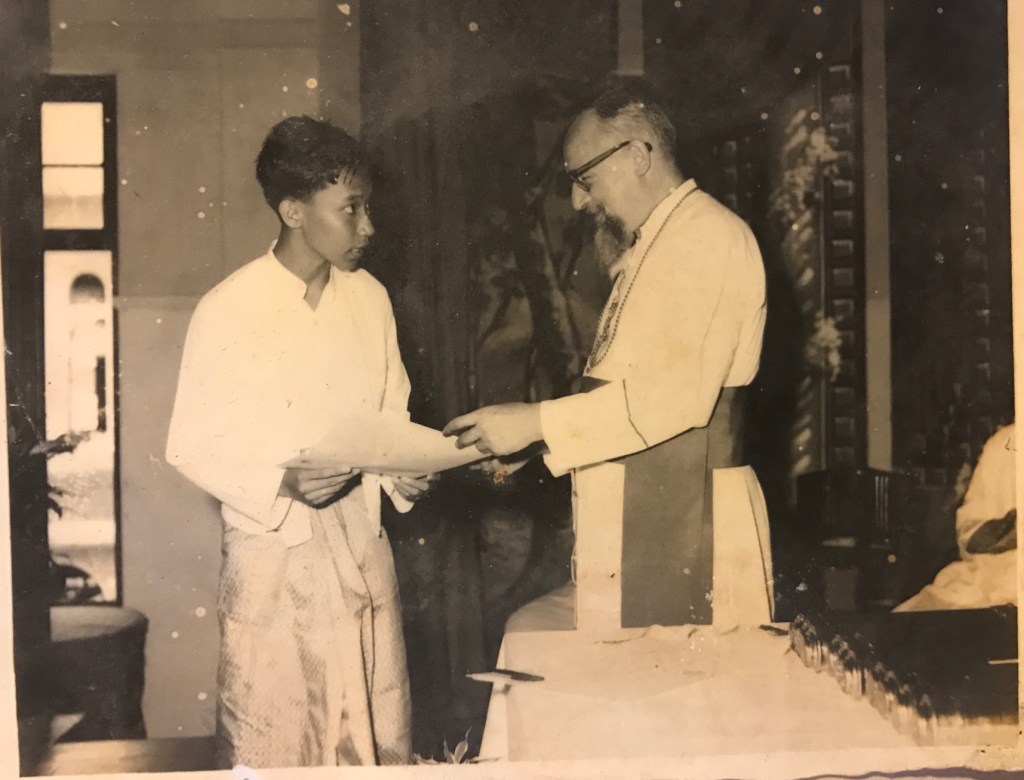
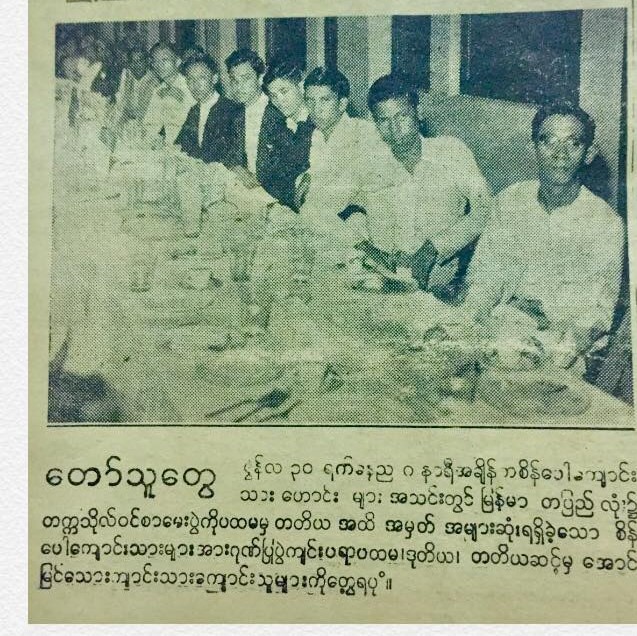
1963 : Dr. Khin Maung U (SPHS) : First Dr. Min Oo (SPHS) : Second / Mathematics Dr. Myo San (Freddie Ba San) : Third / GBNF Dr. Nyunt Wai (Victor Nyunt) : Fourth Dr. Thein Wai (SPHS) : Fifth Kenny Wong (MEHS) : Sixth / Mechanical Hla Min (SPHS) : Seventh / Computer Science Dr. Winnie Aung (Branch Convent) : Eighth Dr. Johnny Maung Maung (Aung Kyaw Zaw, SPHS) : Ninth Maung Maung Kyi (SPHS) : Eleventh / Chemical Dr. Khin Tun (SJDBS – St. John’s Diocesan) : Twelveth Aung Thu Yein (Brownie Way, SPHS) : Thirteenth / Electrical Dr. Frank Gale (Khin Maung Zaw, SPHS) : Seventeenth
1964 : Dr. Cherry Hlaing (St. John’s Convent) : First Dr. Lyn Aung Thet (MEHS) : Lost tie breaker with ILA Dr. Aung Win Chiong (SPHS) : Third (in raw marks) Indian Lady : Fourth Dr. Min Lwin (Maurice Hla Kyi, SPHS) : Fifth (in raw marks)
1965 : Bernard Khaw (SPHS) : First : Retired in USA Maung Aye (SPHS) : Second : Doctorate from USA Winston Sein Maung (SPHS, GBNF) : Third Cherry Than Tin : Fourth : Moved to Singapore Dr. Yi Thway (Edwin) : Admitted to IM(1) as Roll Number (1) : Admission was based on ILA : Moved to UK Dr. Paing Soe (Freddie) : Admitted to IM(1) as Roll Number (2) : Tied in raw marks with Dr. Yi Thway : Retired as Deputy Minister of Health
Hla Min (SPHS63)
Early Matriculates
U Kyaw Myint (Bar-at-law) stood First in Burma with distinction in all subjects. He matriculated from “Government High School”.
U Ba Khin (Vipassana Teacher, Auditor General, SPHS) stood First in Burma.
Four Generations and Five Members (headed by U Hoke Sein) stood First in Burma (which is literally unbeatable). U Hoke Sein (Compiler of Pali-English-Burmese Dictionary) Son : U Saw Hlaing Grand daughter : Dr. Cherry Hlaing Two Great Grand Children
The Fifth month of the old Roman calendar had 30 days. It was renamed July in honor of Emperor Julius Caesar and was given an extra day.
July is the Seventh month of the Gregorian Calendar. It has 31 days.
My father’s birthday
My beloved father was born on July 1.
US Independence
US Independence falls on the 4th of July.
First moon landing in 1969
Apollo 11 landed on the Moon on July 20, 1969. Apollo 11 landed in Tranquility Bay on the Moon in July 20, 1969
Neil Armstrong (Civilian Mission Commander) became the first man on the moon.
Buzz Aldrin (Lunar Module Pilot) became the second man on the moon. His request to step down first on the moon was denied by NASA officials.
The Golden Jubilee was celebrated by NASA in July, 2019.
I wrote a poem “Men on the Moon”. Ashin Ananda gave copy of my poem to Mr. Hall, Information Officer of USIS to be forwarded to NASA and the astronauts. He gave a copy to the Guardian newspaper for local publication.
19th July 1947
Nine Arzanis — Bogyoke Aung San, six Cabinet Ministers, one Cabinet Secretary and one Body guard — were brutally gunned down at the Secretariat on July 19, 1947.
Bogyoke Aung San
Thakin Mya
Deedoke U Ba Cho
Mahn Ba Khine
Mong Pawn Sawbwa Sao San Htun
U Ba Win (Bogyoke’s elder brother)
U Razak
U Ohn Maung (ICS)
Yebaw Maung Htwe (body guard of U Razak)
Eight perished on July 19, 1947.
Sao San Htun succumbed a day later on July 20, 1947.
There are books (e.g. by Kin Oung) and documentaries (e.g. by BBC) on the “unsolved mystery”.
7th July 1962
Burma had two more dark days in July 1962.
Students’ protest that was brutally crushed on July 7, 1962
According to the newspapers, 17 died on July 7, 1962.
Ko Aung Khin was stuck by a stray bullet as he was returning home to Windermere Road from RUBC (Rangoon University Boat Club). Ko Aung Khin was listed as the 17th victim.
The celebration of the 7th July Anniversary in the following year (1963) ended with the closure of Universities (with the exception of the Faculties of Medical and Engineering).
8th July 1962
Demolition of the revered Rangoon University Student’s Union Building took place on July 8, 1962