He received Sc.D. (Doctor of Science) from MIT (Massachusetts Institute of Technology). At MIT, he helped “fresh” scholars including Saya Dr. Aung Gyi and Saya U Min Wun acclimatize with the environment and studies.
He served as DG (Director General) of UBARI (Union of Burma Applied Research Institute) and Advisor for the Ministry of National Planning. He was a supporter of UCC Project and served as a member of the Board of Directors and as an External Examiner for the Computer Science graduates.
Daw Myint Thwe (Saya’s spouse) is the sister of Saya U Tin U (C), Saya U Ba Than (M, GBNF), Dr. Daw Win Hlaing, Dr. Myo Tint (GBNF), U Tin Htoon (A60), Saya U Myo Min (UCC), Thaung Lwin (EC66) and Daw Cho Cho Hlaing.
Saya’s children Daw Tin Tin Hlaing and U Tha Hlaing (EC83) are UCC Alumni. U Htay Aung (EC80, spouse of Daw Tin Tin Hlaing and nephew of Saya U Sein Hlaing) and team “programmed” a PROM (Programmable Read Only Memory) to print Burmese characters on the Cromemco System Three micro-computer. He worked on Burmese Word Processing for Wang Computers. He migrated to Australia. For the past few years, U Htay Aung came back to Yangon to volunteer as an interpreter for the “10-day Mediation Retreat for Foreign Yogis” at the Mahasi Sasana Yeik Tha.
During my visit to Sydney in 2006, Saya U Aung Zaw hosted a UCC reunion and mini-PZP (Pu Zaw Pwe) for Saya F Ba Hli and Saya Chit.
U Sein Win (GBNF)
U Sein Win
Saya U Sein Win (GBNF) is the younger brother of Dr. Tin U (Medical Superintendent, Rangoon Children’s Hospital) and Dr. Saw Lwin.
Saya served as Technical Advisor for UCC. Saya worked closely with U Win Htein (Purdue University, EE at PWD, GBNF) for the design and maintenance of the Electrical Systems (including Motor Alternator, Diesel Generator, Air conditioning) at UCC.
Saya was a top student at the University of Michigan. His friends jokingly called him “Khone Swa Khone Swa” referring to his brisk walking style.
Saya served as Lecturer in the Department of Electrical Engineering. When the EE Department was formally reorganized into EC (Electrical Communications, also known as EcE and Electronics Engineering) and EP (Electrical Power), Saya U Sein Win served as Professor of EP. Saya Dr. San Tint served as Professor of EC.
Grapevine says that Saya is an absent minded Professor. Saya married late. One day, Saya drove Sayagadaw to Bogyoke Market. He taught (or discussed with) his students for quite some time and almost forgot to pick up Sayagadaw. There are variations on this anecdote regarding the place (e.g. Hledan Zay).
Saya served as Line Judge at the RUBC (Rangoon University Boat Club) Regattas. Saya managed the RIT Swimming and Water Polo team.
Saya stays fit by swimming regularly (even when he was visiting Singapore on a business trip).
Saya has a vast knowledge. Saya Dr. San Hla Aung (C58) remembers Saya U Sein Win discussing about Civil Engineering and other subjects.
U Win Htein (GBNF)
U Win Htein matriculated from SPHS in 1956 with Saya U Soe Paing and Saya U Ko Ko Lay.
They were selected as State Scholars to study in the USA. U Win Htein studied at Purdue University. Saya Paing and Saya Lay studied at Stanford University.
Upon his return, he joined PWD.
He was EE during our UCC days.
For the UCC project, U Win Htein and his team maintained the Electrical Systems (including Motor Alternator, Diesel Generator, Air conditioning) at UCC.
U Win Htein is the elder brother of U Myo Myint (EC67) and Daw Myint Myint Thein (Susan, FERD).
Dr. San Tint (GBNF)
Dr. San Tint
Saya Dr. San Tint (GBNF) graduated in 1961 and joined the EE (Electrical Engineering) Department at RIT. He later served as Professor of EC (Electrical Communications AKA Electronics Engineering).
Saya served as External Examiner at UCC.
He played on the RIT Saya Soccer team with U Soe Paing (EE), Dr. Tin Win (M), Dr. Aung Soe (C), U Aung Soe (Maths), U Tin Maung Nyunt (M) and Des Rodgers (English).
Saya suffered stroke and his right hand was paralyzed. He practiced writing with his left hand hoping that he will recover and continue teaching.
Saya spent four decades teaching and passing the torch to the younger generation.
His nephew U Hlaing Myint (UCC) was with Saya in Saya’s final days.
I joined Toastmasters International over a decade to hone my Public Speaking and Leadership skills.
I completed DTM (Distinguished Toastmaster). I also volunteered as Club Ambassador.
I was a member of five Toastmasters Clubs (not concurrently). Although all clubs follow the general guidelines, they tweak the meeting agenda.
My last club was founded by Silicon Valley Entrepreneurs. It is special in one aspect. It holds a mini “Pitch Practice” on the first meeting of every month and a full Pitch Practice on the middle month of every quarter. One has to state the problem, solution, the differentiators and finally ask for cooperation or funding (as appropriate). All in two minutes or less.
There were no Toastmasters clubs in Myanmar. There have been TEDx talks for three years or so.
In our younger days, there was a Rotary Club which had a public speaking component.
In a previous year, three women set the record by placing First, Second and Third in the “World Championship of Public Speaking”. It has been a decade since there was a woman Champion. The runner-up was from China. The winner and third place winner were from the USA.
In the past few years, the winners were from Asia and the Middle East.
Listening and evaluation are important in communications.
During our High School days, we had a visiting Brother. He told a story and asked us to repeat the tongue twister.
“A city, which was plagued with pickpockets, asked someone to tackle the problem. The problem went away. How and Why?
When he saw a pickpocket pick the pocket of a man he picked the pocket of the pickpocket and put the pickings in the pocket of the man whose pocket the pickpocket had picked. “
Uzin Aung Chaw (Victor, C69) added :
When he saw the pickpocket picked the pocket, he picked the pocket of the pickpocket and repocket the pickings into the pocket whose pocket was picked by the pickpocket.
Ashin Pannagavesaka wrote :
The very first one I ever learnt was: She sells seashells on the seashore! Another one from our primary school days was: Peter Piper picked a peck of pickled peppers. So, if Peter Piper picked a peck of pickled 🌶 peppers, where is the peck of pickled peppers that Peter Piper picked?
Good habits allow us to perform things in auto-pilot mode.
Bad habits (e.g. addiction) are easy to develop, but difficult to quit. With patience and practice, we can modify and substitute the bad components in the habit with good ones. The triggers may remain the same, but good actions can yield satisfactory results.
My Experience
Hla Min
I spent a lot of time playing the Solitaire Card Games. I received a sense of gratification with the awards : Bronze, Silver, Gold, Diamond and Perfect.
I stopped playing Solitaire and spent more time writing and sharing my knowledge and experience via my Posts. I now receive a sense of gratification with the “kind words” by my readers.
Smoking
My uncle smoke two packs of cigarettes every day. He successfully quit smoking partly due to his doctor’s advice and partly due to his determination to live a long, healthy life. He lived to his 80s. It could have been more if he did not have a fall. There was no immediate signs of danger, but he passed away a few days later.
My teacher tried to quit smoking. His buddies and students offered him cigarettes to keep them company. He also tried the substitution method using Chewing Gums. He added one more addiction. It would take some time before he kicked both habits.
Habitual Kamma
Habitual Kamma (e.g. meditating every day) is important.
U Po Sa would recite “Mora Sutta” (Daung Min Payeik) before going for a daily morning walk along Inya Road with his close friends. Knowing U Po Sa’s habit, the kidnappers waited in the early morning and kidnapped him. U Po Sa got free. Some attributed U Po Sa’s release to Habitual Kamma (e.g. recital of the Mora Sutta).
Books
“Seven Habits of Highly Effective People” by Stephen Covey is a Best Seller.
Covey also wrote another book on the Eighth Habit.
“The Power of Habit” by Charles Duhigg is another Best Seller. Duhigg points out where to “break” the cycle in a habit.
Many books are available as e-Book and Audio book.
If one just wants to have teasers or summaries before buying a book, one can subscribe to Blinkist.com
Original Publisher : Dhammachakka Meditation Center, 1991
Republished with other articles : Tathagata Meditation Center
Other articles included the book
(1) “Instructions to Meditation Practice” by Mahasi Sayadaw (2) “Benefits of Walking Meditation” by Sayadaw U Silananda (3) “Guidance for Yogis at Interview” by Sayadaw U Pandita (4) “An Interview with Mahasi Sayadaw” by Thamanaykyaw, translated by U Hla Myint
He served as a member of Executive Committee (EC), Board of Directors (BOD), Editorial Board for Dhammananda Newsletter and the publication “Homage to Sayadaw U Silananda”.
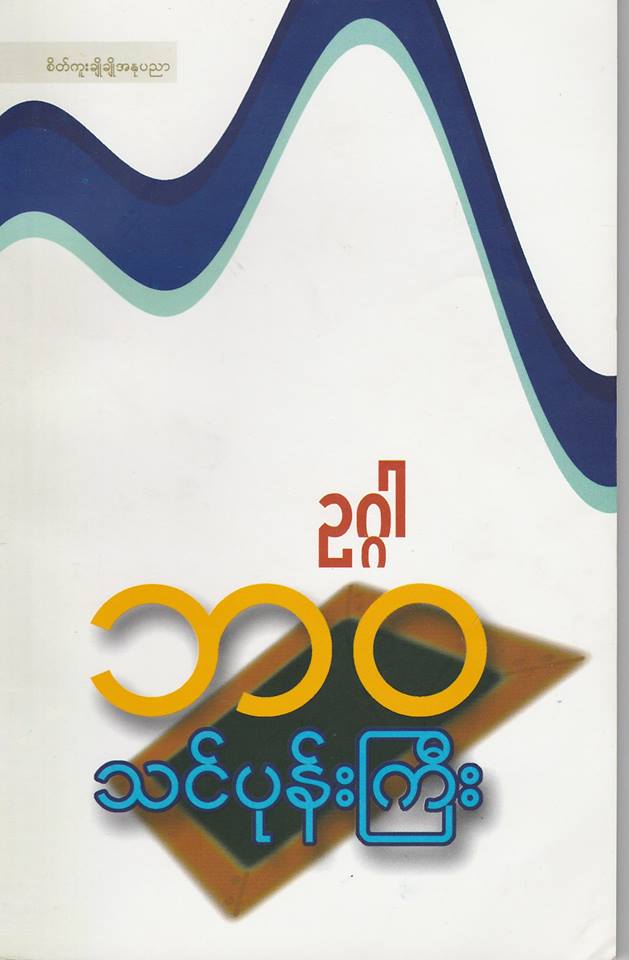
He has published four books in Myanmar (by Seik Koo Cho Cho Press).





 HlaMin